World
Exclusive: European Parliament rejects minute of silence for French nationalist student

The death of Quentin Deranque has provoked intense political reactions in France and abroad, only weeks before local elections in which both the far left and the far right are expected to make substantial gains. A commemoration could still be held in the EU Parliament’s next plenary.



NEWYou can now listen to Fox News articles!
Iran’s Islamic Revolutionary Guard Corps said Thursday it killed five members of the Democratic Party of Iranian Kurdistan, while the Kurdish opposition group told Fox News Digital that six of its Peshmerga — a term commonly used for Kurdish fighters — were killed in what it described as an Islamic Revolutionary Guard Corps ambush in northwest Iran.
The clash marks another escalation in Iran’s Kurdish-majority west after days of reported attacks and clashes involving Iranian security forces, the Islamic Revolutionary Guard Corps and Kurdish armed factions.
It also underscores the current position of Iranian Kurdish opposition groups that recently were viewed by U.S. and Israeli officials as a possible pressure point against Tehran during the U.S.-Israeli war with Iran but ultimately stayed out of the conflict amid mixed signals from Washington and pressure from both Iran and Turkey.
WAVE OF ATTACKS ON IRAN’S IRGC RAISES QUESTIONS ABOUT RENEWED KURDISH INSURGENCY
The Democratic Party of Iranian Kurdistan said six of its Peshmerga — Karo Hormuziari, Fardin Changizi, Mohammad Khaki, Abdullah Mohammadpour, Twana Osmani and Mohammad Amin Bayezidi — were killed in a clash with Iran’s Islamic Revolutionary Guard Corps near Piranshahr in Iranian Kurdistan July 1, 2026. (The Democratic Party of Iranian Kurdistan)
Majeed Gly, president of the American Kurdish Committee, told Fox News Digital the latest clashes should not be read as a full-scale uprising, but also should not be dismissed as routine border violence.
“What I’m hearing is, this is not business as usual,” Gly said. “This is not like periodic clashes on the border. This is operations, and it seems to be deep inside.”
Gly said Kurdish frustration has grown sharply after months of Iranian attacks on Kurdish areas and opposition-linked sites, including in the Kurdistan Region of Iraq. He said the region has been hit by more than 850 attacks since February, leaving at least six civilians dead and dozens more wounded.
Hejar Berenji, the U.S. representative of the Democratic Party of Iranian Kurdistan, or PDKI, confirmed to Fox News Digital that six PDKI Peshmerga were killed in a clash with IRGC forces in the Piranshahr area of Iranian Kurdistan.
Iran’s Revolutionary Guard said it had killed five members of the banned PDKI in northwest Iran, Reuters reported Thursday, citing state media. The IRGC said the group was ambushed after entering Iranian territory in mountainous border areas near Piranshahr in West Azerbaijan Province.
WAVE OF ATTACKS ON IRAN’S IRGC RAISES QUESTIONS ABOUT RENEWED KURDISH INSURGENCY
Kurdish separatists attempted an Iran crossing from Iraq amid protests. (Mustafa Ozer/AFP via Getty Images)
Berenji identified the six Peshmerga as Karo Hormuziari, Fardin Changizi, Mohammad Khaki, Abdullah Mohammadpour, Twana Osmani and Mohammad Amin Bayezidi. He said the incident took place Wednesday night in the village of Qizqapan, near Piranshahr, and said the PDKI unit was on a “political and organizational mission” when it was “ambushed by a large and heavily equipped IRGC force.”
“This should be understood in the broader context of the Islamic Republic’s continued repression in Iranian Kurdistan and its repeated attacks on Iranian Kurdish civilian camps in the Kurdistan Region of Iraq, even during ceasefire and negotiation periods,” Berenji said. “The regime has increased pressure on Kurdish communities because it understands that Iranian Kurds remain among the most organized and determined democratic forces inside Iran.”
The PDKI is one of Iran’s oldest Kurdish opposition movements. The group has been involved in decades of intermittent conflict with the Islamic Republic, while Tehran has long viewed Kurdish armed groups as separatist threats, while others describe it as a historic, centrist and nationalist Iranian Kurdish opposition group that Iran has targeted for years, including through assassinations of its leaders decades ago.
The Kurds are one of the largest stateless ethnic groups in the Middle East with communities spread across Iran, Iraq, Syria and Turkey. In Iran, many Kurds live in the country’s mountainous west and northwest, where Kurdish opposition groups have long accused Tehran of repression, executions, forced assimilation and military crackdowns. Iranian authorities view armed Kurdish factions as separatist or “terrorist threats.”
The latest clash followed several days of violence in western Iran. A similar incident near Piranshahr was reported by Iranian state media Tuesday, with the IRGC saying it had killed six members of what it called an “opposition and separatist group.”
Two IRGC members were killed and two wounded in a shooting in Kermanshah Province Monday evening, an attack claimed by a newly formed Kurdish armed group seeking retaliation for the IRGC’s role in suppressing the 2022–2023 protest movement, according to the Kurdish rights group Hengaw.
Iran also appeared to be expanding pressure on Kurdish opposition groups beyond PJAK, the Kurdistan Free Life Party, after days of clashes between PJAK and the IRGC, The Jerusalem Post reported Thursday.
Berenji said the latest clash was not a response to ongoing U.S.–Iran memorandum of understanding negotiations, which remain unresolved as talks continue without a finalized agreement.
WAVE OF ATTACKS ON IRAN’S IRGC RAISES QUESTIONS ABOUT RENEWED KURDISH INSURGENCY
Vice President JD Vance (center) speaks with Army Chief and Field Marshal Syed Asim Munir (left) and Pakistan Foreign Minister Ishaq Dar after arriving for the U.S.-Iran peace talks in Islamabad April 11, 2026. (Jacquelyn Martin/Pool/AFP via Getty Images)
“The Kurdish struggle for freedom, democracy and national rights predates the current negotiations and is not dependent on them,” Berenji said. “At the same time, any agreement that ignores the Kurdish question, the regime’s attacks on Kurdish civilians and the repression inside Iran will not bring real stability.”
Gly said Kurdish anger has been compounded by language in the U.S.–Iran memorandum of understanding that critics interpret as Washington agreeing not to interfere in Iran’s internal affairs.
KHAMENEI BODY IN COLD STORAGE AS FEARED BASIJ MOBILIZES AHEAD OF HISTORIC IRAN FUNERAL
People take part in a march in Erbil, Iraq, April 21, 2026, expressing support for the unity of Iranian Kurdish parties and condemning Iranian missile strikes and military actions against Kurdish groups in the Kurdistan Region of Iraq. (Rasul Gawhari/Middle East Images/AFP via Getty Images)
“This sentence has taken every Iranian opposition group the wrong way, especially the Kurds,” Gly said.
He argued that even during negotiations with hostile powers, the United States should not abandon its public support for freedom movements, invoking former President Ronald Reagan’s approach to the Soviet Union during the Cold War.
Gly said he does not see clear evidence that Kurdish groups have gained major new military capabilities but said the perception of Iran’s strength has changed.
“What has changed is the perception of weakness of Iran,” Gly told Fox News Digital. “They are less afraid of the regime.”
The new violence carries broader significance for Washington because Iranian Kurdish opposition groups were recently discussed as a possible ground pressure point against Tehran.
U.S. officials and Kurdish groups had discussed a potential military operation against Iranian security forces in western Iran, Reuters reported in March, while a separate report said Israel was backing Iranian Kurdish plans to seize Iranian border areas, though such an operation would likely require U.S. and Israeli support.
But those expectations quickly faltered. In April, Kurdish fighters ultimately stayed out of the war because of mixed signals from Washington and Israel and Iranian threats and strikes against Kurdish positions in Iraq. Turkish President Recep Tayyip Erdogan urged President Donald Trump during the conflict to prevent Kurdish forces from launching a ground operation inside Iran, reflecting Ankara’s longstanding opposition to Kurdish armed movements gaining ground in the region, Reuters also reported.
During the conflict, Trump told Reuters he would be “all for it” if the Kurds wanted to move against Iran and said their objective should be “to win,” but Kurdish commanders were frustrated by the lack of a clear U.S. or Israeli strategy.
Berenji said the PDKI does not seek chaos, but insisted Kurdish forces have the right to defend themselves.
CLICK HERE TO DOWNLOAD THE FOX NEWS APP
Naval units from Iran and Russia simulate the rescue of a hijacked vessel during joint drills at the Port of Bandar Abbas in Hormozgan, Iran, on Feb. 19, 2026. (Iranian Army/Handout/Anadolu via Getty Images)
“We seek a democratic, pluralistic, secular and federal Iran where all nations and communities can live with dignity and rights,” he said. “But the Kurdish people also have the right to defend themselves against repression, intimidation, and attacks by the IRGC.”
Fox News Digital has reached out to Iran’s mission to the United Nations for comment.

Pakistan has warned India over the Indus Water Treaty.
The Indus Water Treaty lays out how the river’s resources are to be shared between India and Pakistan.
Brokered in 1960, it has survived decades of conflict between the neighbours.
list of 3 itemsend of listRecommended Stories
But recently, the agreement was put to the test after New Delhi suspended its participation.
That came after an attack India said was carried out by armed groups linked to Pakistan, which it denied.
This week, Islamabad has said India cannot suspend the agreement on its own.
It says its share of the Indus River is a red line and has threatened consequences.
So, how could they avoid a further escalation?
Presenter: Mohammed Jamjoom
Guests:
Siddharth Varadarajan – Founding editor of The Wire, an independent investigative news organisation
Michael Kugelman – Senior fellow for South Asia at the Atlantic Council
Zeeshan Salahuddin – Advisory director at Tabadlab, a think tank and consultancy on geopolitics
Published On 2 Jul 2026
-

 World58 seconds ago
US Resumes Dollar Transfers to Iraq, NYT Reports
-

 Health31 minutes ago
She Ate High-Protein Ice Cream Daily and Lost 193 Lbs—Her Keys to Success
-
 Lifestyle46 minutes ago
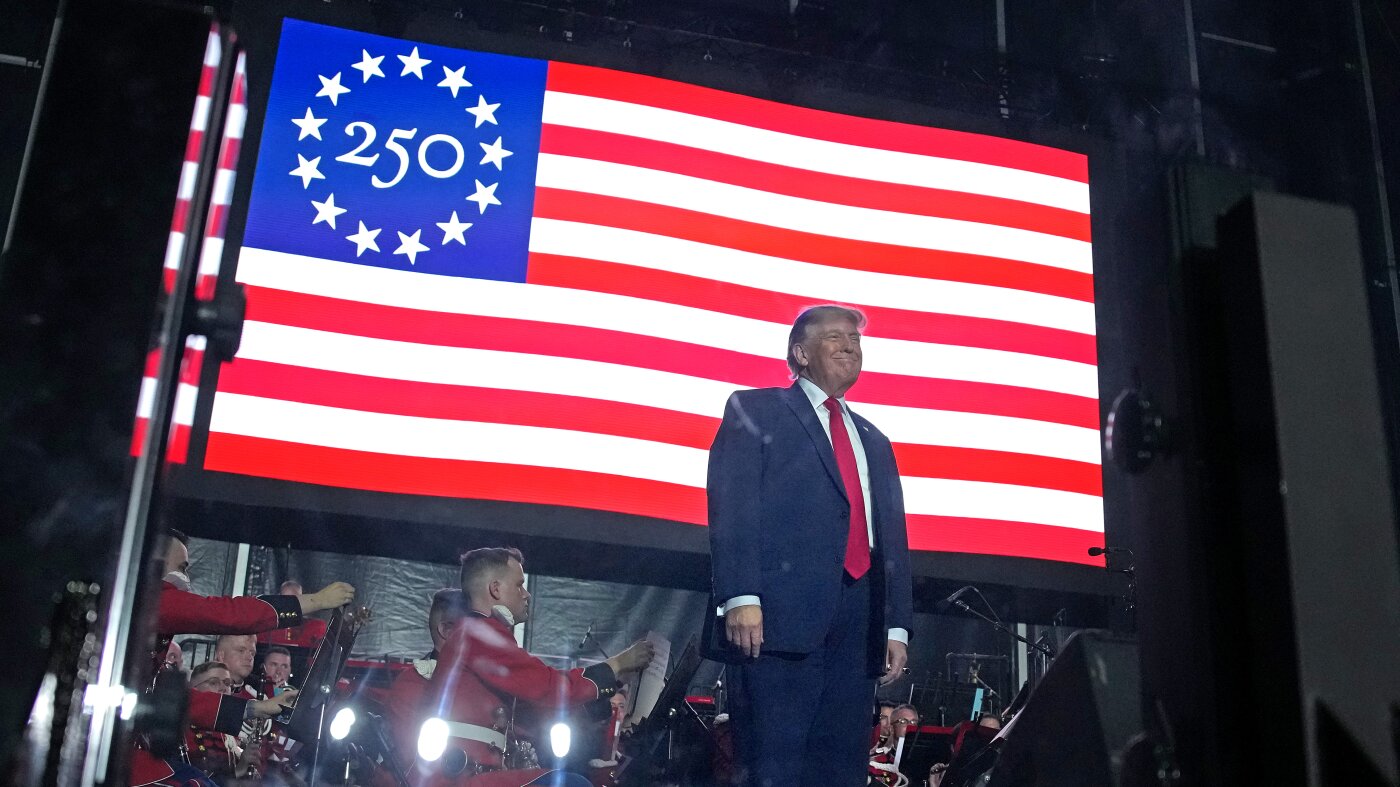
House Democrats accuse Trump of ‘hijacking’ America’s 250th birthday for his own gain
-

 Technology58 minutes ago
Tesla driver faces manslaughter charges over Texas crash that killed a woman inside her home
-

 World1 hour ago
Six Kurdish fighters killed in IRGC ambush as clashes spread across western Iran
-

 Politics1 hour ago
Sanctuary county refused 615 ICE transfer requests, turned over just 11 illegal immigrants, records show
-

 Health1 hour ago
Mystery parasite leaves Americans battling ‘explosive’ illness as CDC investigates
-

 Sports1 hour ago
2026 World Cup Round Of 16 Odds: Who’s Favored To Advance?

