World
Epstein files fallout: Muted US response vs political reckoning in Europe


British politician Peter Mandelson has been released on bail after detectives questioned him for hours over the alleged leaking of sensitive government information to the late convicted paedophile, Jeffrey Epstein, while a government minister in the early 2000s.
The former United Kingdom ambassador to Washington was arrested on suspicion of misconduct in public office on Tuesday. His arrest followed the detention of Prince Andrew, now known as Andrew Mountbatten-Windsor, who was also questioned over similar misconduct linked to Epstein.
list of 3 itemsend of listRecommended Stories
The Epstein revelations have triggered investigations and resignations in Europe, but the fallout has been muted in the United States.
How have the Epstein files affected British politics?
The developments mark one of the sharpest reversals in recent British political life. Only months ago, Mandelson held one of the most senior (and coveted) diplomatic roles in the country.
He has since lost his post, faced a police raid at his home and now confronts the possibility of criminal charges. He has been forced to step down from the House of Lords, the unelected upper chamber of the UK parliament, and could be stripped of his title.
If convicted, he could face a maximum sentence of life imprisonment.
Prime Minister Keir Starmer’s decision to appoint Mandelson as British ambassador – a move made while his popularity has plunged – triggered the resignation of his chief of staff, Morgan McSweeney, and has raised questions about whether he can see out his term.
The scandal has also engulfed the royal family. After Andrew was arrested for leaking sensitive reports during his time as British trade envoy – the first arrest of a senior royal in centuries – King Charles III said “the law must take its course.”
British royal biographer Andrew Lownie, who interviewed the late Virginia Giuffre – who accused Epstein of forcing her to have sex with Prince Andrew three times when she was 17 – has warned that the fallout could also “bring down King Charles”, as scrutiny intensifies over what he knew about his brother’s conduct.
The cases form part of a broader European response to newly released troves of Epstein-related documents from the US.
Across the continent, authorities have opened investigations, and several public figures have stepped down or lost positions.

What’s happened in Europe?
France has also moved. Former Culture Minister Jack Lang resigned from his role leading a Paris cultural institution after the Ministry for Europe and Foreign Affairs sought to question him over contacts with Epstein.
In Norway, former Prime Minister Thorbjorn Jagland has been charged with “gross corruption” following disclosures that he stayed at Epstein’s properties in New York and Florida and visited his private island, as well as having the late sex offender cover his expenses and those of his family. He faces up to a decade in prison if convicted.
Norway’s ambassador to Jordan, Mona Juul, also resigned after reports that Epstein left $10m to her children in his will.
Meanwhile, Crown Princess Mette-Marit of Norway apologised after documents showed she had holidayed at one of Epstein’s properties.
In Slovakia, national security adviser Miroslav Lajcak stepped down after disclosures about his association with Epstein surfaced. Prime Minister Robert Fico confirmed he accepted the resignation.
For many in Europe, simply appearing in the files has triggered public scrutiny, investigations or resignations.
Governments have treated the document releases as grounds for formal inquiry, even when criminal liability remains unclear.
Why has there been less of a fallout in the United States?
In the US, public anger has simmered for years. Democratic Congressman Ro Khanna and Republican Thomas Massie have led a bipartisan effort to release the files, using the term “Epstein class” to describe a wealthy elite who believe themselves to be above the law.
Yet criminal accountability beyond Epstein and his longtime associate Ghislaine Maxwell has remained limited. Maxwell is serving a 20-year sentence for sex trafficking offences.
FBI documents identify eight alleged co-conspirators, including the former CEO of Victoria’s Secret, Lex Wexner, Epstein’s former secretary Lesley Groff and modelling agent Jean-Luc Brunel, who died in custody in France.
None, apart from Maxwell, has faced a US criminal conviction in connection with Epstein’s trafficking case.
The lack of accountability has spanned Democratic and Republican presidents.
Epstein first avoided federal prosecution in 2007-08 through a controversial non-prosecution agreement reached during the administration of George W Bush.
Subsequent administrations under Barack Obama, Donald Trump’s first terms and Joe Biden did not bring sweeping new prosecutions tied to the broader network named in the files.
There is no sign that any prosecutions are under way, despite Congress forcing Trump to release the files.
Who has been affected in the US?
Several prominent Americans have stepped back from roles or faced reputational damage.
Former US Treasury Secretary Lawrence Summers took leave from academic duties at Harvard University after scrutiny over his ties to Epstein.
Lawyer Brad Karp resigned as chair of the law firm Paul Weiss. The National Football League said it would review correspondence between Epstein and New York Giants co-owner Steve Tisch.
Longevity specialist and high-profile physician Peter Attia issued an apology and resigned from his role as chief science officer at David Protein over emails exchanged with Epstein. He also stepped down as a CBS News contributor.
Others named in communications with Epstein have not faced formal charges.
Among them are former White House strategist Steve Bannon, Commerce Secretary Howard Lutnick and technology billionaire Elon Musk, who has said he never visited Epstein’s island despite discussing the possibility in emails.
Former President Bill Clinton has testified before Congress regarding his friendship with Epstein.
Trump, who also knew Epstein for years and appears thousands of times in the released documents, has denied wrongdoing, as has the White House.



As Europe braces for hotter summers, cities are reopening rivers once written off as polluted waterways. From Paris to Copenhagen, local authorities are investing in cleaner, swimmable rivers to adapt to rising temperatures and meet citizens’ needs.
Marine Le Pen, the leader of France’s far-right political party, launched her fourth bid for the presidency on Wednesday. Her campaign rally comes a day after a court upheld her embezzlement conviction and shortened a ban on her eligibility to run for public office.

NEWYou can now listen to Fox News articles!
As Iran, Russia’s war with Ukraine and NATO’s defense spending dominate the organization’s summit in Ankara, one issue that has escaped the media glare is the increasingly antisemitic rhetoric coming from Turkish leaders.
As relations between Turkey and Israel continue to hit new lows, a war of words between the two nations has erupted.
In a July 2 interview with CNN Türk, Turkish Foreign Minister Hakan Fidan said Israel has “become a burden that humanity can no longer bear,” The Jerusalem Post reported.
Fidan also said Israel is representative of “humanity’s common problems,” and asked other countries to apply pressure to the Jewish State, according to Israel National News.
ISRAELI OFFICIAL SAYS EU SANCTIONS REVEAL ANTISEMITISM HIDING BEHIND ‘SOCIALLY ACCEPTABLE MASK’
Anti-Israel protesters rally in Istanbul, Turkey, Feb. 17, 2024, over the ongoing war between Israel and Hamas. (AP Photo/Khalil Hamra)
In a press statement, Israeli Foreign Minister Gideon Sa’ar called Fidan’s words “a clear call for genocide. The Jewish people know very well what happens when such words are allowed to go unchallenged. The first step on the road to genocide is dehumanization.
“This is a sentence that sounds very familiar to sentences from about 100 years ago,” Sa’ar added. “To speak about a people as a ‘problem for humanity.’ What do you do with a ‘burden that you can no longer bear?’” he asked.
Sinan Ciddi, a senior fellow at the Foundation for Defense of Democracies and director of FDD’s Turkey program, told Fox News Digital Fidan’s statement was “some of the vilest rhetoric to come out of any statesman since the Holocaust.”
Turkish President Tayyip Erdoğan speaks during a rally in solidarity with Palestinians in Gaza amid the ongoing conflict between Israel and the Palestinian Islamist group Hamas in Istanbul, Turkey, Oct. 28, 2023. (Dilara Senkaya/Reuters)
SIGN UP FOR ANTISEMITISM EXPOSED NEWSLETTER
Ciddi said escalated anti-Israel rhetoric in Turkey “goes all the way back to 2008,” when President Recep Tayyip Erdoğan “began the process of ripping apart the bilateral relationship between Israel and Turkey. But, after Oct. 7, it just went into overdrive,” he said. “I have never heard any Arab leader utter the words that Foreign Minister Fidan has said.”
Yet Erdoğan has condemned antisemitism; the Turkish Minute reported that he told Turkish religious minority representatives at an Ankara dinner in March that “just as Islamophobia is a crime against humanity, antisemitism is also a crime, an evil that cannot be considered reasonable or legitimate.”
Despite his recent condemnation, he and other ministers have continued with their rhetoric against the Jewish state.
In June, Turkish Interior Minister Mustafa Ҁiftҁi said the world would “witness the liberation of Jerusalem,” according to the Times of Israel.
WHO IS TURKEY’S RECEP TAYYIP ERDOĞAN? HOW NATO’S MOST UNPREDICTABLE LEADER KEEPS REINVENTING HIMSELF
In May 2021, the Times of Israel reported that Erdoğan called Israelis “murderers,” claiming they were “only satisfied by sucking their [victims’] blood.” At the time, the State Department spokesperson issued a strong condemnation of Erdoğan’s “antisemitic comments regarding the Jewish people,” calling them “reprehensible.”
In May 2025, Erdoğan invoked similar language, accusing Israel of being “a terror state that feeds on the blood, lives and tears of the innocent,” Israel National News reported.
Israeli Foreign Minister Gideon Sa’ar, right, and Israeli Ambassador to the U.N. Danny Danon speak to journalists ahead of a United Nations Security Council meeting at U.N. headquarters on August 5, 2025 in New York (Angela Weiss/AFP via Getty Images)
Anti-Israel sentiment in Turkey has infiltrated far beyond leadership. A Pew Research poll from June found that Turkey had the highest level of anti-Israel sentiment of any polled country, with 91% of the population holding “very unfavorable” views on Israel, 6% holding an “unfavorable” view, and just 1% expressing any favor of Israel.
In response to questions about whether the State Department plans to respond to antisemitic statements from Turkish leadership, a spokesperson told Fox News Digital that “Turkey is a longstanding and valued NATO ally, and we continue to engage on all aspects of our important and multi-faceted relationship.”
Ciddi said there are “numerous channels” for the State Department and Trump administration to reprimand Turkey for its unchecked hatred.
“The president could obviously pull aside a Turkish counterpart and demand an apology,” he explained, while the State Department could address the comments or place Turkey on a watchlist.
CLICK HERE TO DOWNLOAD THE FOX NEWS APP
NATO leaders participate in a summit in The Hague, Netherlands, June 25, 2025. (Handout/Latin America News Agency via Reuters Connect)
As the two-day NATO summit winds down in Ankara, Ciddi said Turkey “is going to try and overshadow anything else” and “promote itself as the sort of premiere NATO ally, so we need to watch out for Turkey’s whitewashing of its human rights record.
“We cannot safeguard our allies’ democratic norms, rights and practices if we don’t hold member states like Turkey accountable for the threats that it presents.”
The Turkish Embassy in Washington, D.C., did not respond to Fox News Digital’s request for comment.
-
Business29 seconds ago
Commentary: Trump wants to let companies make fewer disclosures, thus keeping investors in the dark
-
 Entertainment7 minutes ago
Justin Baldoni and wife break silence after ‘It Ends With Us’ legal battle with Blake Lively
-
 Lifestyle10 minutes ago
A meal with an animated Mona Lisa? Immersive dining goes high tech — but will L.A. eat it up?
-
 Politics15 minutes ago
Nexstar launches its first digital subscription service with The Hill Insider, aimed at political junkies
-
 Science22 minutes ago
Not everyone is leaving California. A new commercial battery maker just landed in Sacramento
-
 Sports25 minutes ago
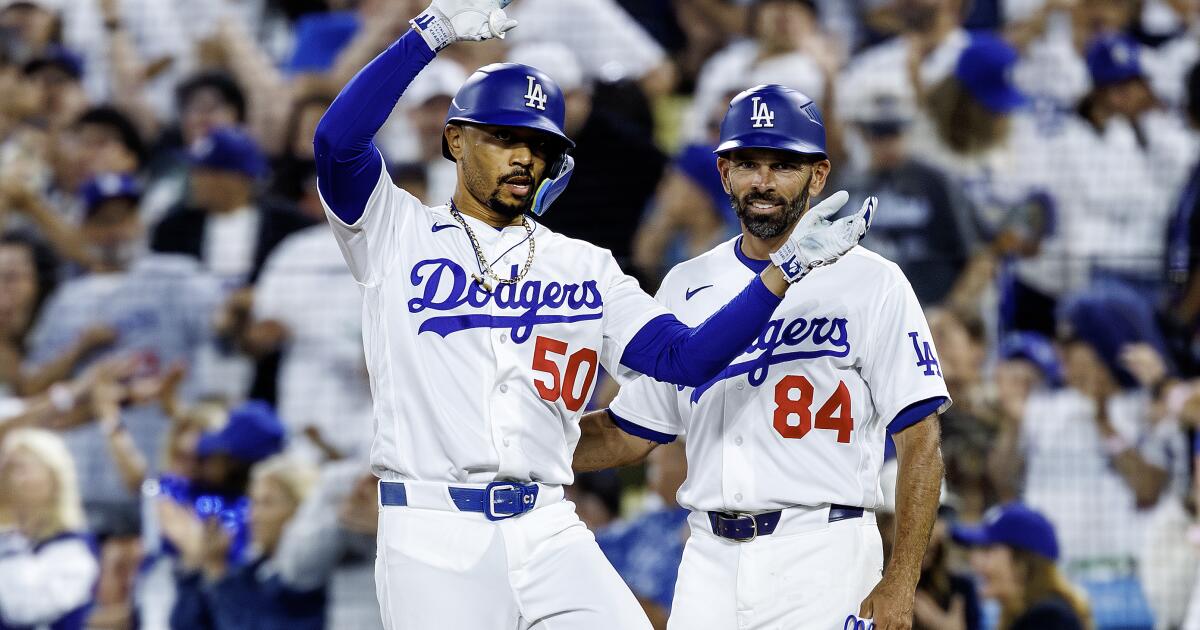
Mookie Betts’ eighth-inning single gives Dodgers the win over the Rockies
-
World37 minutes ago
From sewers to swimming sites: how Europe's cities reclaim their rivers
-

 News1 hour ago
Three more people charged with damaging Reflecting Pool after Trump’s multimillion-dollar restoration | CNN Politics


