Virginia
1.2 million Virginians expected to travel for Memorial Day despite economic concerns and rising gas prices


RICHMOND, Va. — Nearly 1.23 million Virginians are expected to travel over the Memorial Day holiday weekend despite economic concerns, according to AAA Mid-Atlantic.
The number is slightly higher than last year but represents the lowest year-over-year growth rate for the holiday in nearly a decade.
“We know that economic uncertainty, cost of goods, things like that, is top of mind for a lot of people. So, that could be part of the reason why the growth this year isn’t as much as it’s been over the past couple of years,” AAA Mid-Atlantic spokesperson Morgan Dean said.
More than one million Virginians will drive to their holiday destinations, AAA reported. Dean said that figure is very similar to the record number of travelers who hit the road for Memorial Day back in 2005.
“It’s going to be busy no matter how you’re traveling, be it getting to the airport or if you’re hitting the roadway or perhaps hitting the railways or grabbing a bus,” he said. “There’s going to be a good amount of people out there, and that’s a big reminder.”
AAA shared that gas prices are on the rise, but they’re still about 40 cents cheaper than this time last year.
Meanwhile, Virginia State Police warned all available troopers and supervisors will be working over the holiday weekend.
VSP said their troopers investigated 13 fatalities on Virginia’s roads during the four-day holiday last year.
Troopers cited more than 3,500 drivers for speeding and 1,400 drivers for reckless driving during that time period last year. They arrested 92 people for driving under the influence and cited 303 drivers for violating the “hands-free” phone law.
The state’s “Click it or Ticket” campaign is in full effect this weekend, too.
“This is a tremendously busy time of year, with graduations, vacations, parties and moves,” Superintendent of Virginia State Police Colonel Matthew Hanley said. “We need Virginians to slow down, to exercise patience, drive safely and arrive alive. We would rather you arrive late and alive than not at all.”
Funds generated from summonses issued by Virginia State Police go directly to court fees and the state’s Literary Fund, which benefits public school construction, technology funding and teacher retirement.
This is a developing story. Email the CBS 6 Newsroom if you have additional information to share.
📲: CONNECT WITH US
Blue Sky| Facebook| Instagram| X| Threads| TikTok| YouTube
This story was initially reported by a journalist and has been converted to this platform with the assistance of AI. Our editorial team verifies all reporting on all platforms for fairness and accuracy.



PDF Box
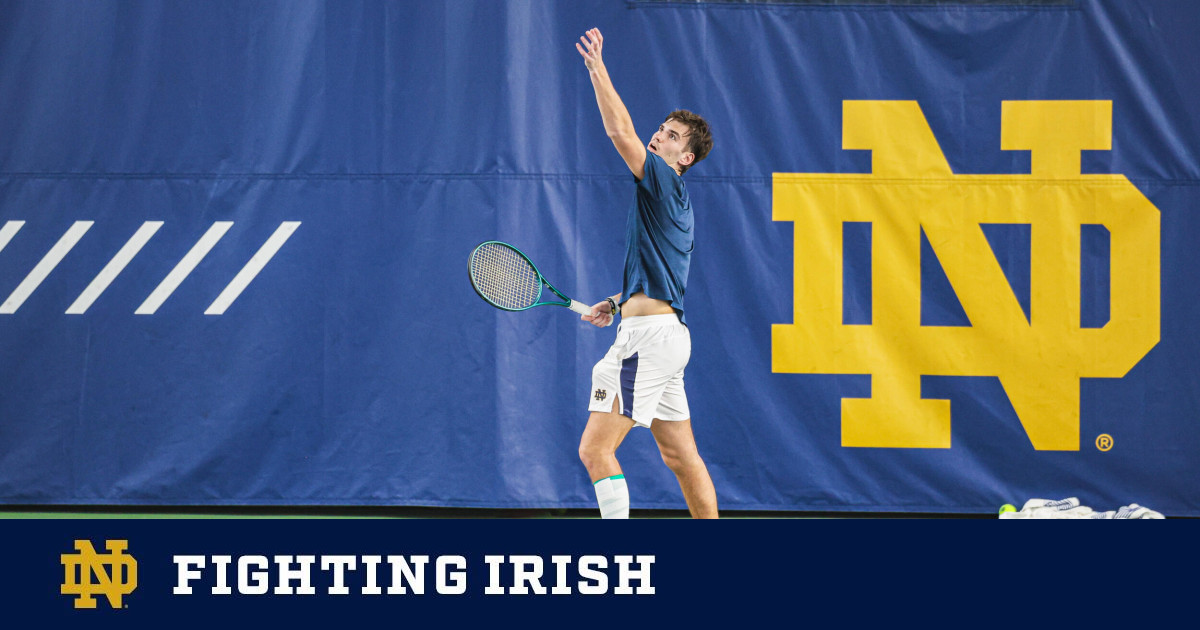
#17 Notre Dame (19-5, 8-3) – 1 | #4 Virginia (18-3, 10-1) – 4
DOUBLES – 3, 2
1. Dominko/Gregg (ND) vs. #5 Dahlberg/Dietrich (UVA), 2-4, 4-4, 5-4, 6-5, unfinished
2. Rice/Brockett (UVA) def. #47 Llorens Saracho/Nad (ND), 7-5
3. Santamarta/Kim (UVA) def. Lee/Patrick (ND), 6-0
SINGLES – 2, 4, 6
1. #2 Dylan Dietrich (UVA) def. #15 Sebastian Dominko (ND), 6-2, 2-6, 6-2
2. #14 Keegan Rice (UVA) def. #72 Perry Gregg (ND), 6-3, 6-3
3. #40 Andres Santamarta Roig (UVA) vs. Giuseppe Cerasuolo (ND), 6-3, 6-5, unfinished
4. Peter Nad (ND) def. #102 Jangjun Kim (UVA), 1-6, 6-1, 6-3
5. Kyran Magimay (ND) vs. Stiles Brockett (UVA), 6-1, 5-7, 1-1, unfinished
6. Douglas Yaffa (UVA) def. Luis Llorens Saracho (ND), 6-3, 0-6, 6-1

Virginia
The Virginia International Tattoo: Where 250 Years of Freedom Takes the Stage – VisitNorfolk

If you’re uncertain what the words “Tattoo” and “Hullabaloo” mean in the context of Norfolk, Virginia’s largest annual event, Scott Jackson is happy to explain.
“About 15 years ago, I took a trip to Edinburgh, Scotland, to see the Edinburgh tattoo, which is the biggest tattoo in the world and the most famous,” says Jackson, Producer/Director of the military-themed spectacle known as the Virginia International Tattoo. “My hotel was at the bottom of a road called the Royal Mile… and when you walk up this mile on the night of a tattoo performance, it’s totally vibrant. It’s so exciting. There’s music on every corner. There’s street performers. There’s food, there’s beer. When I got to the castle, I already felt great. I was already in a great mood.”
The annual Virginia International Tattoo runs April 16–19, 2026, and this year it carries the theme of America’s 250th anniversary. The timing is not lost on Jackson, a student of military history who discovered, in preparing for this year, that George Washington himself called for the first tattoo in American history.
“At that time, a tattoo was a small military ceremony,” Jackson explains. “It was basically a time each night when soldiers were called back to a base, and there was a roll call, and a military ceremony, sometimes called a beating retreat.”
From that origin story, Jackson has built a show that threads 1776 through every act. The Old Guard Fife and Drum Corps, performing in 1776 uniforms, will demonstrate how fifes, drums and bugles once served as battlefield communication, the original radio operators of the Continental Army. The French Navy Band and a Royal Air Force rifle display team called the King’s Color Squadron represent the allies who stood with the colonies.
“There’s a great line from the musical Hamilton,” Jackson says, “‘I want to be in the room where it happened.’ Well, these were the countries that were in the room where it happened.”
South Korea’s Army Band provides a “a giant umbrella of Korean culture,” with traditional dance and costumes, a taekwondo display team, and two K-pop stars currently serving their mandatory military service.
“In the U.S. in the ’50s, Elvis Presley was drafted into the Army, who felt like it was a distraction, so they actually staged him in Germany. He basically had a desk job,” Jackson says. “Well, the South Koreans said, ‘Oh, you’re a K-pop star, we’re drafting you. We’re sending you to Virginia Tattoo to represent.’”
More than 800 civilian and military performers from six nations will fill Scope’s arena floor. For those making the drive from the Richmond region and beyond, the experience begins well before curtain. According to Jackson, that is precisely what you don’t want to miss.
The festivities aren’t just inside the arena, Jackson notes. For several hours before each performance, the exterior Scope Plaza comes alive with brass quintets, traditional Celtic dancers, beer tastings, festival food and a market of makers selling Tattoo-related merchandise. This is the Hullabaloo, a free pre-show open to the public and Jackson’s answer to Edinburgh’s Royal Mile.
“When you can, come early and relax, because then when the show starts, you’re already in a great place,” he says. “If you haven’t gone yet, this is the year to go.”
Tickets are available at vafest.org or by calling (757) 282-2822. Show times are Thursday–Saturday at 7:30 p.m. and Sunday at 2:30 p.m.

‘Downtown Takeover’ in Detroit leads to several teens being detained, dozens in the streets

How to watch San Francisco Giants vs. New York Mets

Dallas Deputy Mayor Pro Tem defends City Manager Kim Tolbert after uproar over future of City Hall

Deputies respond to reports of bomb threat at Baptist Hospital in SW Miami-Dade – WSVN 7News | Miami News, Weather, Sports | Fort Lauderdale

‘Boston Blue’: Ernie Hudson Teases the Truth About Lena’s Father After Pivotal Episode

Florida High School Football Rankings: Top 25 teams – Oct. 21

How old is Bo Nix? What to know about Oregon quarterback ahead of 2024 NFL Draft

Cleary's 21 help Le Moyne down Central Connecticut State 69-64 in OT

99th annual Pony Swim held in Virginia

Indiana Members Credit Union announced as new anchor tenant at Bottleworks District

Video: Search and Rescue Underway After Iran Downs U.S. Fighter Jet

Nebraska Senate candidate restructures campaign after complaint over payments to family: report

Two dozen Democrat-led states sue Trump over mail-in ballot limits

Trump’s ballroom fight sheds new light on an underground White House bunker

Video: Trump Struck Iran. Now Farmers Are Paying the Price.
-

 Culture1 week ago
Wil Wheaton Discusses ‘Stand By Me’ and Narrating ‘The Body’ Audiobook
-

 South-Carolina6 days ago
South Carolina vs TCU predictions for Elite Eight game in March Madness
-

 Culture1 week ago
What Happens When We Die? This Wallace Stevens Poem Has Thoughts.
-

 Miami, FL1 week ago
Jannik Sinner’s Girlfriend Laila Hasanovic Stuns in Ab-Revealing Post Amid Miami Open
-

 Minneapolis, MN1 week ago
Boy who shielded classmate during school shooting receives Medal of Honor
-

 Education1 week ago
Video: Transgender Athletes Barred From Women’s Olympic Events
-

 Vermont6 days ago
Skier dies after fall at Sugarbush Resort
-

 Politics6 days ago
Trump’s Ballroom Design Has Barely Been Scrutinized