Texas
Texas mayor starts charity to help Christians suffering attacks in Nigeria


Nigeria continues to face anti-Christian violence that began nearly a decade ago in Africa’s most populous country.
Open Doors UK says Christians in Nigeria continue to be terrorized with devastating impunity by Islamic militants and armed “bandits” – particularly in the north and central regions of the country.

Nigeria has around 230 million people, almost evenly divided by Christians and Muslims.
Open Doors UK says more Christians are killed for their faith in Nigeria each year than everywhere else in the world combined, and notes men and boys are often specifically targeted, with women and girls often abduction and sexually assaulted.
Most of the attacks against Christians come from Boko Haram – an Islamist militant group in the predominantly Muslim north of the country – and Islamic Fulani militants primarily located in the middle of the country, which is more mixed between Christians and Muslims.
Mike Arnold, the mayor of the Texas city of Blanco, visits Nigeria quite often, supporting the Christian communities in the African nation.
Currently, there are over 2.2 million internally displaced persons (IDP’s) in the country fleeing anti-Christian attacks.
Arnold just recently returned from a visit to Nigeria, where he has established the Africa Arise charity to support the education of the internally displaced children.
“From my experience and observation, most IDPs are women and children, widows and orphans. Literally countless numbers of these live in abject squalor due to no fault of their own. Many are highly educated and qualified professionals but are stuck in impoverished camps with seemingly no way out,” the Texas mayor told Crux.
“Incredibly, the children who live as IDPs today are the lucky ones, who escaped massacre, sex slavery and the harsh elements to survive. These are divided into two primary groups, those who were made orphans by Boko Haram and saw their parents brutally slaughtered, and now a multitude who were born and are growing up displaced,” Arnold said.
2Many know nothing about this world other than the sub-human encampments they were born into. Yet everywhere I visit with IDPs in Nigeria, I find them to be faithful, bright, hopeful, and dedicated to doing their part to make things better,” he added.
What follows is the full interview by Crux with Arnold.
Crux: Can you tell us something about the displaced Christians in Nigeria?
Arnold: Nigeria’s internal displacement crisis began in 2013 with the genocidal onslaught of Boko Haram, and it persists to this day due to regional unrest which drives the ongoing massacre and displace primarily of Christians.
Estimates from international organizations say today there are anywhere from 3-5 million IDPs [Internally Displaced Persons] in Nigeria. Some informed observers say it could be two or three times that. From first-hand experience, I know of numerous camps whose existence is denied by the government, so I tend to think the larger estimates are more accurate.
Only a fraction live in formal, recognized camps. (Many refuse invitations to these camps because they believe they will be required to convert to Islam to eventually leave them.) Nobody knows for sure the number of informal encampments that are scattered all over the country. Many live as homeless, and others are taken in by family, or churches. Some eventually find footing to start a new life, while for the majority mere survival is all they can achieve.
From my experience and observation, most IDPs are women and children, widows and orphans. Literally countless numbers of these live in abject squalor due to no fault of their own. Many are highly educated and qualified professionals but are stuck in impoverished camps with seemingly no way out.

Incredibly, the children who live as IDPs today are the lucky ones, who escaped massacre, sex slavery and the harsh elements to survive. These are divided into two primary groups, those who were made orphans by Boko Haram and saw their parents brutally slaughtered, and now a multitude who were born and are growing up displaced. Many know nothing about this world other than the sub-human encampments they were born into.
Yet everywhere I visit with IDPs in Nigeria, I find them to be faithful, bright, hopeful, and dedicated to doing their part to make things better.
Which areas are most affected?
Boko Haram and the continued unrest are centered in the far North and Northeast regions of Nigeria, which have been under Sharia law for nearly a thousand years.
That said, the IDP crisis affects the entire nation. IDP camps, informal encampments, and homeless are all over the country. The drain on resources is felt by all. The economy is hurt by the removal from the labor force of such a number of capable people. And in the big picture, this ongoing injustice undermines the peace, unity and spiritual environment of everyone in Nigeria.
Why should Americans particularly care about what is going on there? And do you think the U.S. government could do more to help?
Americans should care for a number of reasons.
Practically speaking, most don’t know that Nigerian Americans are the wealthiest and best educated segment of our population. By and large, Nigerian people are bright, entrepreneurial, faithful and uphold the highest values and integrity. Nigeria is the sixth largest nation on earth by population, the largest economy in Africa, and contains nearly a quarter of the population of the entire continent. It is one of the top 5 nations in OPEC, rich with natural resources of all kinds. They have great potential to rise in global prominence, and this is a good thing.
Spiritually, Nigerian Christians have unashamedly and without wavering held the line on upholding traditional, Biblical theology. In the face of unimaginable hardship, they live a life of vibrant, sincere Christian faith. They are an example and inspiration.
Culturally, we’re not so different. English is the official language of the nation. I’ve found Nigerians of all ages easy to communicate with and relate to personally.
Nigeria is around half Christian – but there are many denominations. Is the current anti-Christian violence help bring Christians together?
In a practical sense, yes, I find Nigerian Christians united across denominations unified in their practice of true and pure religion, which is selfless service to humanity. In the field, as we serve together, pray together, and worship together, nobody ever bothers asking what church you go to. We who are many form one Body as we focus on Christ and the work He called us to.
And yes, those in threatened communities, and living displaced, seem to have put aside all denominations and nuanced theological disputes, as they are pressed together by shared tribulation.
Years ago, under selfless leadership, including a term by John Cardinal Onaiyekan, the Christian Association of Nigeria was a broad-based and influential group. Unfortunately, it has drifted into being largely irrelevant due to political infighting and perhaps misguided motivations.
You are a Texan, but have been involved in Nigeria for years – what initially brought you there, and why do you keep going back?
In 2010, a good friend of mine was invited to keynote a large, 20th annual international ministry leadership conference in Nigeria, organized by the inter-denominational group Unity for Africa. My friend invited me along as a traveling companion… and then, at the last minute he had to back out! The organizers were stuck, and I was unexpectedly thrust into that position. Something must have clicked, because they invited me back to do it again the next year, and I was eager to return.

Through that, I was blessed to be closely mentored for several years by an amazing man of God, the late Prof. John Ofoegbu, the founder of Unity for Africa. We lived in the same hometown in the U.S. and traveled Nigeria together extensively till his untimely passing.
He helped me discover a deep spiritual connection to the nation and its people, and a compelling vision of its potential to advance the Kingdom of God. I believe that what man has long called the Dark Continent, God is bringing forth as the Continent of Light in this generation. I often beg them to send missionaries to us!
There are times I feel more at home there than I do here. At first I felt sorry for them because of what they lack that we take for granted. Things like stable electricity, orderly traffic, air conditioning, drinkable tap water, public sanitation, and such. But after awhile, that sentiment has shifted 180 degrees. Now I feel sorry for us, for things we lack but they take for granted. Like family, integrity, faith-centered life, hard work, honor. To me, these are what matter most in a community, and I at home when I’m surrounded by people like that.
Ultimately, I keep going back because I feel called by God to do so. I believe God has a bright future in store for Nigeria, and I want to be part of what He is doing. He has gripped me with a vision and passion for these people and their amazing potential. My dearest, deepest friends in the world are in Nigeria, as are the people I most admire and respect. And God has given me access and favor at the highest levels there, as I’ve pursued my calling.
Can you tell us more about the Africa Arise charity?
Africa Arise is comprised of a 501c3 charity in the U.S., with a sister entity in Nigeria. It was founded in 2019 by me and my covenant brother Pastor Jed D’Grace in Abuja, Nigeria. We started out primarily focused on evangelism and leadership development, until a series of unexpected events led us to discover the New Kuchingoro IDP camp, right in the nation’s capital.
The people in this camp were displaced by the Gwoza Massacre, nearly 500 miles away in far Northeast Nigeria, surviving horrific trauma and hardship. For dark political reasons, the camp itself is officially denied by their government as well as the UN. The IDPs, including numerous college graduates, are forced to live in shanties they built themselves, with no sanitation, water, electricity, or any formal of support.
When I asked a woman in camp how we could help, she didn’t ask for food, water, money, housing, healthcare, or anything else they obviously lack. Instead, she asked us to help teach the children of the camp. She said with an education, they will have strength of character, vision for the future, and a path out of the camp.
In the summer of 2020, we founded the Arise Academy to serve youth stuck in IDP camps, starting in the Abuja area. Today we employ 15 full-time teachers and provide a free, high-quality education to some 520 IDP children. We have schools running in two camps, have broken ground for a school in a new camp. We are able to do this through donations from individuals, civic organizations, and church mission boards.
We have identified numerous other camps in the area which need schools, and know there are countless more around the country. We aim to keep growing to meet the needs until all Nigeria IDPs are able to go home in peace.
Presently we are working on a documentary film of the highest caliber, to bring this story to the world’s attention. We have launched an online petition at www.change.org/idpjustice, and are engaging top Nigerian Christian influencers to spread the word. Also, we are working with the dean of Nigerian Gospel music, Panam Percy Paul, and others to produce a series of large, music-based outreach events across Nigeria this fall, to raise awareness and funds for IDP restoration.
Follow Charles Collins on X: @CharlesinRome



A day off at the pool — and a little sunburn — didn’t stop the Minnesota Twins’ momentum.
Brooks Lee hit a three-run homer as Minnesota scored multiple runs in the first inning for the third consecutive game, and the Twins went on to complete a series sweep of the Texas Rangers with a 9-3 win Thursday.
Minnesota has won four games in a row and scored 25 runs in the three-games series in Texas. The two teams had a rare, mid-series day off on Wednesday with the England-Croatia World Cup game being played in Arlington.
“We’re locked in every day,” Lee told Audra Martin on the team’s broadcast. “Yesterday, taking time off, lay out by the pool, get a little burnt and then right back to it. We did a good job getting focused. I feel like we do that with rain delays, too, just lock back in and we’re doing it.”
Lee’s 12th homer capped a four-run first off Jack Leiter (3-7). Trevor Larnach made it 6-0 in the fourth with a two-run shot to straightaway center that just cleared the extended glove of leaping Alejandro Osuna. Larnach’s third hit was an RBI single in the fifth, and Ryan Kriedler hit a two-run homer in the eighth.
Joe Ryan (5-3) struck out seven but needed 97 pitches to get through five scoreless innings while allowing three singles. Leiter was done after the fourth, and has given up 17 runs while losing three starts in a row.
The Twins never trailed in the sweep that extended their winning streak to four, matching their longest this season. Their 14-5 record at Globe Life Field is the best for any American League opponent since the ballpark opened in 2020.
Wyatt Langford, Ezequiel Duran and Justin Foscue hit solo homers for the Rangers, who have lost five of six games. They are 0-15 when giving up multiple runs in the first inning.
Twins DH Josh Bell, who was born in nearby Irving and grew up in the area, had an RBI single before Lee’s homer. Bell hit a three-run homer in the first inning of the series-opening 4-2 win Monday, and had an RBI single for a 2-0 lead in the first of a 12-2 win on Tuesday.
“We’re just passing the baton each time,” Lee said of the offensive output. “Our guys are hot. They feel good and they came out swinging today. It was awesome to see. We’ve done that for a while now.”
Up next
Twins rookie left-hander Connor Prielipp (2-4, 5.26 ERA) starts Friday at Arizona. The Diamondbacks are scheduled to start right-hander Michael Soroka (8-3, 3.11).

Watch CBS News

A Texas state trooper was killed in a crash in the Panhandle, becoming the 244th Texas Department of Public Safety officer to die in the line of duty since 1823, according to the agency.
Sergio Romero, 27, died Wednesday after a semi-truck pulled in front of him as he attempted a traffic stop around 4 p.m. on U.S. 287 in Childress County, DPS said.
In a statement, Col. Freeman F. Martin praised Romero’s courage, integrity, and service.
“Today, we grieve the loss of one of our own,” Martin said. “… Our hearts break alongside his family, friends, fellow troopers, and all who loved him. We will never forget the ultimate sacrifice he made in service of his fellow Texans.”
Romero previously served with the Hall County Sheriff’s Office before joining DPS as part of Class B-2025 in Childress, the agency said.
He is survived by his wife, Francisca, and their two young sons.
Funeral arrangements are pending. The crash remains under investigation.
-

 Health3 minutes ago
New At-Home DNA Test Reveals if GLP-1 Weight-Loss Drugs Will Work for You
-
 Lifestyle18 minutes ago
What does freedom actually look like? : It’s Been a Minute
-

 Technology28 minutes ago
Barret Zoph is out at OpenAI again after just five months
-

 World33 minutes ago
Iran hardliner behind US deal warns Tehran won’t honor agreement if Trump fails to deliver
-

 Politics40 minutes ago
Top GOP lawmaker rallies around conservative school board member facing calls to resign
-

 Sports48 minutes ago
2026 World Cup Odds: How Far Can Mexico Go After Winning Group A?
-

 Technology55 minutes ago
6 in 10 identity crimes now begin with a new account
-
 Business58 minutes ago
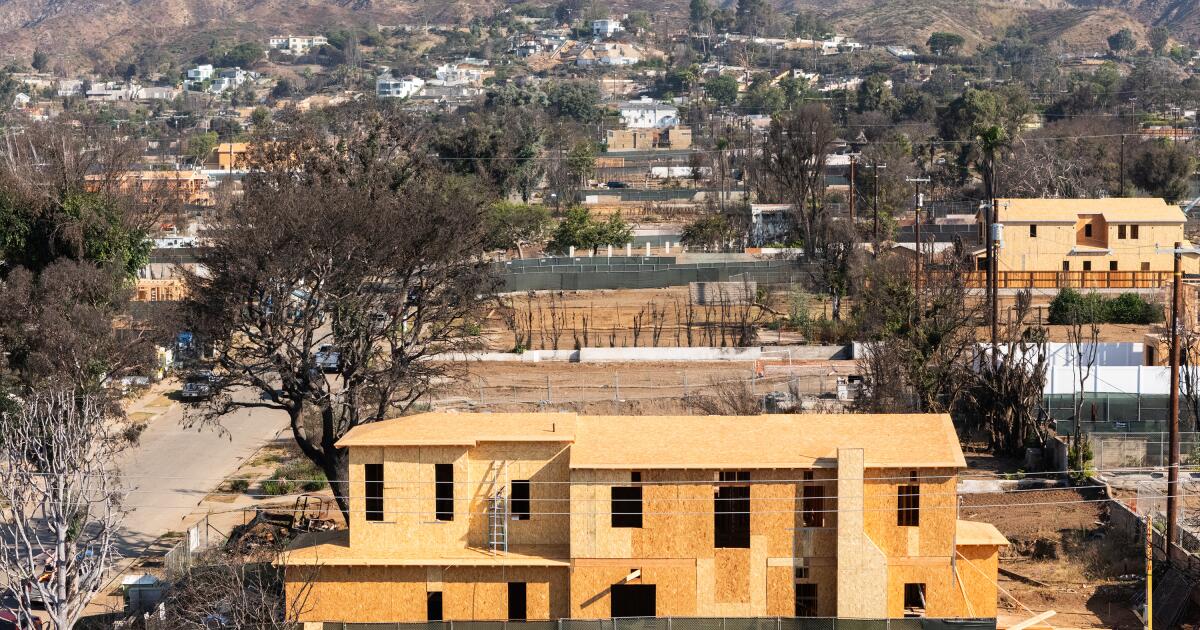
January 2025 wildfire victims seek tougher penalties against State Farm over claims handling

