Tennessee
Tennessee State’s $43M Bailout Is Your College Planning Wake-Up Call


University sign and building
As someone who’s spent over a decade helping families navigate the complexities of college financial planning, I’ve never seen a situation that better illustrates the changing landscape of higher education than Tennessee State University’s recent $43 million emergency funding package. If you’re a parent saving for your child’s education or a student planning your academic future, this situation offers crucial lessons about college planning in 2024 and beyond
The Wake-Up Call We All Needed
When I first read about Tennessee State’s situation in Higher Ed Dive’s comprehensive coverage, the numbers stopped me in my tracks. The university’s first-year enrollment plummeted from 3,500 students to just 880 – a decline so severe it threatened the institution’s very existence. According to Tennessee’s State Comptroller’s office, this led to the layoff of 114 employees and required emergency intervention to keep the university operating.
But here’s what really caught my attention as a financial advisor: this wasn’t just another COVID story.
Why This Crisis Matters for Your Family
Through my conversations with hundreds of families about college planning, I’ve noticed that most focus primarily on saving enough money. While that’s crucial, Tennessee State’s situation reveals why we need to think more broadly about protecting our educational investments. Here’s what the data tells us:
The Demographic Cliff Is Real
According to Deloitte’s 2024 Higher Education Trends report and verified enrollment data from the National Student Clearinghouse Research Center, we’re approaching a significant demographic cliff. Peak enrollment of traditional college-age students is predicted as soon as 2025. This isn’t just a statistic – it’s a fundamental shift that could affect your child’s college experience and your family’s financial planning.
Financial Warning Signs Matter
The Tennessee State situation revealed several verified red flags that families should watch for when evaluating any university:
- Documentation from state auditors showed the university allocated one-time funds for ongoing student aid without sustainable planning
- Public records confirmed the institution struggled to honor scholarship commitments
- Federal financial reports indicated depleted emergency funds without adequate replacement strategies
Protecting Your Family’s College Investment
Based on my analysis of Tennessee State’s documented challenges and extensive discussions with education finance experts, here’s how to better protect your family’s college investment:
1. Research Financial Health
Don’t just look at the college’s sticker price. Use these verified resources:
2. Create a Backup Plan
In my experience advising families, those who fare best in uncertain situations have multiple contingency plans:
- Research transfer pathways between your chosen school and potential backup institutions
- Consider tuition insurance (typically 1-5% of tuition) to protect against unexpected withdrawals
- Understand your state’s credit transfer guarantees between public institutions
3. Monitor Warning Signs
Stay informed about your chosen institution’s health by tracking:
- Enrollment trends (available through the Common Data Set)
- State funding levels (public records for state institutions)
- News about faculty staffing and program changes
Looking Ahead
When I started my college career, the conversation focused primarily on saving and scholarships. Today, as Tennessee State’s situation demonstrates, we need a more comprehensive approach to protect our educational investments.
The traditional metrics of college selection – rankings, campus amenities, and historical reputation – still matter. However, as confirmed by Deloitte’s research and the experiences of institutions nationwide, families need to prioritize an institution’s financial sustainability and ability to deliver consistent educational value.


NASHVILLE, Tenn. (WSMV) – Home power bills are feeling the impact of data centers opening across Tennessee communities, according to a new report from ThinkTennessee.
Researchers found electricity usage has increased by more than 7.2 times over the past five years as data centers opened in the Tennessee Valley region. Areas with data centers saw average power bills rise more than the state average, but the increase was not distributed evenly among customers in those areas.
“Tennessee’s data center growth is arriving faster than the rules designed to manage that growth,” research director Chris Candelaria said. “Our report isn’t saying whether data centers are good or bad. Instead, we’re trying to highlight the issues that communities and policymakers need to know about.”
Residential customers hit harder than businesses
Residential customers in communities with data centers saw their bills jump 3.2 percent, to an average of $149 a month, between 2023 and 2024, the report found.
During that same period, commercial customers, including data centers themselves, saw their bills slightly decrease. By comparison, the statewide average power bill over the same period increased 1.3 percent.
Candelaria said the findings are tied directly to where the data centers are located and signal what may be ahead for the rest of the state.
“Residents seeing these higher prices and that’s associated with where the data centers are located,” Candelaria said. “We know that the data centers are coming, and the report’s really just forecasting that this situation may play out in more places across the state. This is an issue that city and community leaders will need to address directly.”
He said the trend warrants close attention, but stopped short of drawing firm conclusions in their report based on the data analyzed.
Tennessee emerges as a data center hub
The report, titled “Powering the Boom,” describes Tennessee as an emerging data center market that has likely not yet seen the full scale of potential growth. For roughly 15 years, the state’s electricity consumption was essentially flat or declining before the current surge began around 2020.
Data center facilities planned, operating or under construction in Tennessee represent approximately 2,177 megawatts of demand capacity which is roughly equivalent to powering more than 1.3 million homes for a year. Those facilities are concentrated in and around Memphis, Nashville and Knoxville.
Grid strain, costly outages a concern
Candelaria said the study drew on data from across the country to examine how data centers are already affecting communities and what Middle Tennessee should plan for.
“As we get requests for more data centers, there’s an issue with how is that going to affect our current grid infrastructure? This is the key question,” Candelaria said. “We also provide in the report some studies from other states. If you over-strain the system, what does that mean? Well, it could lead to costly outages. We’re just trying to think strategically.”
Alex Kardokus is among the more than 500,000 people who signed a petition against a proposed data center near the Nashville Zoo. He said his concerns have since expanded to the broader impact data centers could have across the city after learning about this report.
“NES, we don’t want that (bill) to go higher because it’s already expensive in Nashville. Don’t want that to be a raising,” Kardokus said.
Policy seen as key to managing growth
Candelaria said policies, including data center zoning restrictions Metro Council is currently working on, will be key to protecting families from further cost increases. He said the decisions made now will shape whether the growth benefits or burdens Tennessee residents.
“The policy choices that we make now on pricing and grid planning will determine whether that growth is going to strengthen the state’s economy or whether that’s going to shift costs onto everyday households,” Candelaria said.
He added that the situation requires a balancing act, as data centers also bring jobs and economic opportunities to the communities where they operate.
ThinkTennessee said a second installment of the “Powering the Boom” series is expected to lay out policy options aimed at protecting ratepayers while the sector continues to grow.
Copyright 2026 WSMV. All rights reserved.


Tennessee goes wild for In-N-Out’s burgers east of the Mississippi
Animal‑style arrives in Tennessee, In‑N‑Out’s first locations east of the Mississippi River.
In-N-Out Burger will soon be opening its fifth Tennessee store.
The beloved burger chain lists six locations as “opening soon” on the Grand Openings page of its website, including a restaurant in Madison. The Madison location will open at 1900 Gallatin Pike North, about 13 miles northeast of Nashville.
The store also plans to open stores in Arizona, Utah, Idaho and two in California, USA TODAY reported.
Find your next meal on DoorDash
In-N-Out, which announced plans for a major expansion and a new headquarters in Tennessee in 2023, opened its first Tennessee restaurants in December 2025.
The chain, known for animal-style fries and double-double burgers, opened locations in Nashville’s Antioch neighborhood, Murfreesboro and Lebanon in early December. It then opened a fourth Tennessee restaurant in Franklin just a few months later.
Here’s what else to know about the West Coast-based company’s expansion into the Volunteer State.
Why is In-N-Out expanding to Tennessee?
In-N-Out is moving to Tennessee to establish a $125 million corporate hub in Franklin, on the Berry Farms site near Interstate 65. It’s estimated that In-N-Out’s expansion into Tennessee will create 275 jobs and a $125 million investment in the state.
Lynsi Snyder confirms relocation to Tennessee
In 2025, billionaire heiress Lynsi Snyder announced she would relocate her family to the Volunteer State as the company expands eastward.
In a podcast appearance with conservative host Allie Beth Stuckey, Snyder cited frustrations with California’s high costs and regulatory burdens on businesses and families.
“There’s a lot of great things about California, but raising a family is not easy here. Doing business is not easy here,” Snyder said. “The bulk of our stores are still going to be here in California, but it will be wonderful having an office out there, growing out there.”
After facing criticism for her comments, Snyder clarified that moving to Tennessee offers In-N-Out associates “wonderful opportunities” to buy homes, raise families, and participate in the company’s growth in a new region.
In a video posted to social media, she called the move “a very healthy plan for our growth,” highlighting opportunities for employees in Tennessee and potentially neighboring states.
How many In-N-Out stores are coming to Tennessee?
During a Nashville Business Journal event in 2025, Snyder said that the company is eyeing 35 locations across Tennessee in the coming years.
How many stores does In-N-Out currently operate in Tennessee?
As of July 2026, In-N-Out operates the following stores in Tennessee:
- Antioch: 4242 Century Farms Terrace
- Franklin: 1951 Double Double Drive
- Lebanon: 915 South Hartmann Drive
- Murfreesboro: 2508 Medical Center Parkway
- Madison: 1900 Gallatin Pike North (Opening soon)
Diana Leyva covers trending news and service journalism for The Tennessean. Contact her at Dleyva@gannett.com.
Tennessee
A Tennessee woman was heard screaming, ‘he’s got a gun.’ Now her husband is pleading guilty to her murder.

BYRDSTOWN, Tenn. (WSMV) – A 72-year-old man in Pickett County entered a guilty plea to the second-degree murder of his wife Theresa Marie Foutch.
Johnny Ray Foutch was sentenced to 20 years in custody of the Department of Corrections at 100% day for day, said District Attorney Bryant C. Dunaway.
Theresa’s adult sons were consulted about the plea and were supportive of the sentence.
Dunaway said that the incident in question took place on July 13, 2025, at their home in Byrdstown. The Pickett County Sheriff’s Office paid a visit to their home after Johnny’s daughter requested that officers check on the married couple.
When Chief Deputy Steve Wilbur arrived at the home and approached the front of the house, he says he overheard a man and a woman arguing inside.
He said he then heard the female voice yell, “He’s got a gun.” That’s when he says he heard a gunshot.
The deputy took cover outside the home. Moments later, Johnny walked out the front door holding a Sig Sauer handgun.
Wilbur secured Johnny and went into the home, where he found Theresa lying face down in the living room. She appeared to have been shot in the back.
Officers searched the home and said they found a shell casing on the floor of the dining room, just 10 to 15 feet away from Theresa’s body.
Dunaway said that a forensic pathologist who performed an autopsy determined that Theresa’s cause of death was a gunshot wound to her back. The manner of her death, the pathologist said, was homicide.
Copyright 2026 WSMV. All rights reserved.
-

 Alaska6 minutes ago
Outmigration, inflation, choice schools: Alaska school closures likely to continue without changes
-
 Arizona9 minutes ago
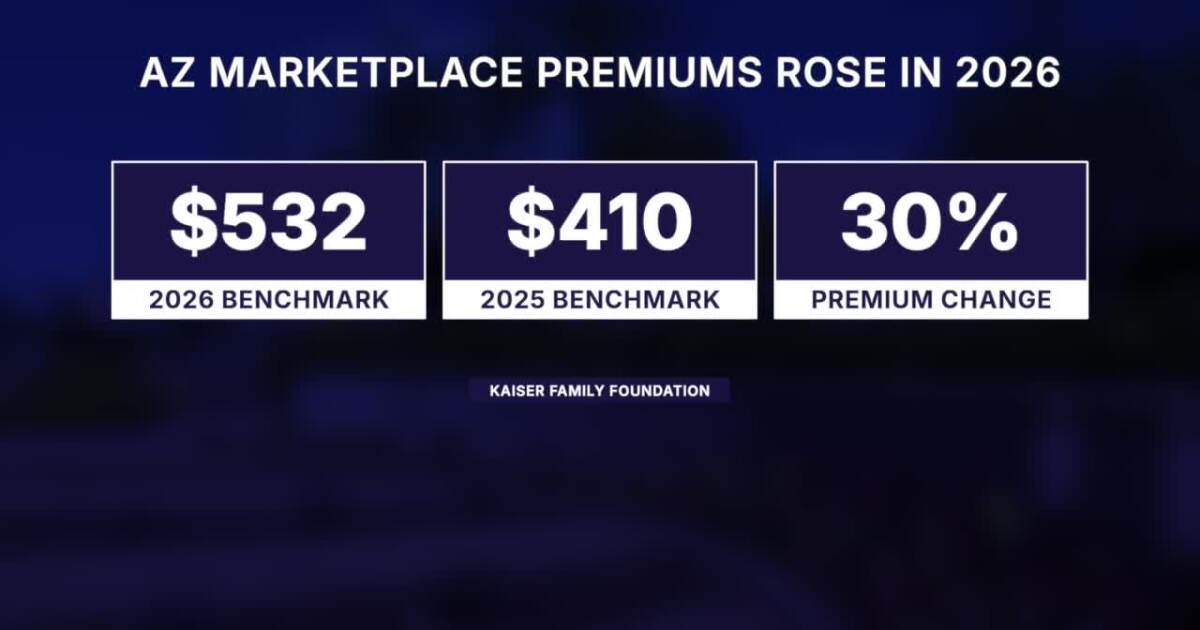
WATCH: Arizona’s health insurance marketplace is seeing dropping enrollment
-

 Arkansas14 minutes ago
ARKANSAS SIGHTSEEING: Randolph County can claim many firsts in Arkansas | Northwest Arkansas Democrat-Gazette
-

 California21 minutes ago
Toddler sustains brain injury in fall after California childcare worker threw him into the air, lawsuit says
-

 Colorado24 minutes ago
‘Saleabration’ comes back to Colorado Springs for third year
-

 Connecticut29 minutes ago
‘It’s a neighborhood effort’: Improvements made to Quinnipiac River Park
-

 Delaware36 minutes ago
Kids get hands-on learning during summer camp at Delaware County Technical School
-

 Florida39 minutes ago
Iranian drones in Cuba could threaten South Florida, officials warn

