Mississippi
Want a hippopotamus for Christmas? What MS law says about wild, exotic pets


Gayla Peevey returns to OKC Zoo to celebrate her hippo holiday hit
The Oklahoma native, who was 10 when she recorded the ditty, used the song’s popularity to help the OKC Zoo raise money to buy a real hippo in 1953.
If you want a hippopotamus for Christmas, there are some hurdles to legal and responsible pet ownership in Mississippi.
There are plenty of exotic species, like birds, reptiles and rodents that are considered safe pets. They can be bought next to cat and dog supplies at pet stores and exotic animal shows.
But some people, only a hippopotamus will do. Baby hippos, like Fiona and Moo Deng, can make the species look cute and, well, manageable. (The same can be said of many species that can grow up to be a menace, like baby big cats.) And as much as the song pleads, a garage isn’t the best home for a hippo hero.
Mississippi has laws about owning pets that are considered inherently dangerous, like monkeys or wild dog species. If you’re planning to get an exotic animal as a pet, it helps to know which animals are on the list. If you want to give an unusual species as a Christmas gift, be sure the new owner can meet the criteria so they won’t end up in a tricky legal situation.
Colt Mooney, Exotic Species Program leader of the Mississippi Department of Wildlife, Fisheries and Parks said animals on the list aren’t totally banned in a previous interview with the Clarion Ledger. But owners have to apply for a permit and meet several requirements.
And permitting isn’t a one-and-done process. There will be an annual follow up, and it could get expensive over the lifetime of the animal. That’s not even accounting for the costs of specialty veterinary care.
Here’s what to know about which dangerous animals you need a permit for in Mississippi, whether you can own a wild animal native to the Magnolia State and what the permitting process requires and costs.
Can I own an exotic pet in Mississippi?
Yes, but you have to have a permit for certain species, like big cats, bears and primates.
It’s illegal to sell, give, deliver, or transfer an animal on the state’s list of dangerous animals unless the recipient has a permit or is an exempt organization.
“It’s mostly due to their ability to inflict damage if something goes wrong,” Mooney said. “The potential is always there.
“They’re not pets. All it takes is one slip-up, one moment, to cause a life-threatening incident.”
What exotic animals do I need a permit for in Mississippi?
The state defines several animals as “inherently dangerous,” including elephants, rhinoceroses, African buffaloes and, yes, hippopotamuses.
If those sound like large pets, there are plenty of small primates and carnivores on the list too. (Lions and tigers and bears, oh my!)
Carnivoras:
- Wolves, including crosses between wolves and domestic animals
- Jackals
- Dingos
- Red dogs
- African hunting dogs
- Bears (all species)
- Wolverines
- Hyenas (all species)
- Lions
- Tigers
- Jaguars
- Leopards
- Cheetahs
- Cougars (all sub-species)
Primates:
- Gibbons
- Orangutans
- Chimpanzees
- Siamangs
- Gorillas
- Macaques
- Mandrils
- Baboons
What do Mississippi exotic animal permits cover?
Each permit is good for one year, according to information from the Mississippi Commission on Wildlife, Fisheries and Parks. It’s only for the species specified, and a permit is needed for each animal.
At base level, applicants must:
- Be at least 21 years old with no convictions involving wildlife offenses or cruelty to animals within the past 3 years
- Have 2 years of experience with care and handling of the species or be able to pass a DWFP test on biology, diet, health care and habit needs
- Have a plan to quickly and safely capture the animal if it escapes, including how to put it down or kill it if it can’t be caught
Personal permits don’t cover exhibiting the animal, like making money by showing it at a fair or appearing at parties. They must have a full-time caretaker on the grounds where the animal will be kept. Applicants must have a letter from a vet stating that all the owner’s pets are vaccinated and receive yearly care. Proof of liability insurance of $100,000 per animal and up to $1 million is also required.
If your own version of Cousin Eddie wants to start a petting zoo, don’t buy him animals. At least not until he has the permits.
Public zoos have multiple criteria to meet, including being the designated zoo of a town or city and being accredited by the American Zoo and Aquarium Association.
Zoos and exhibitors must hold a USDA Class “C” Exhibitor’s License. Exhibitors also have other extensive requirements.
Rehabbers and sanctuaries also have conditions. Like they can’t make a profit from exhibiting, breeding or selling the animals. They also must have 501(c)(3) Federal tax-exempt status and meet state and federal permitting requirements.
How much do dangerous animal permits cost in Mississippi?
According to MDWFP, the personal permit cost depends on the type of animal:
- Canids (wolves, jackals, etc.): $75
- Primates (gorillas, chimpanzees, orangutans, etc.): $150
- All species of bears: $200
- Big cats (lions, tigers, cheetahs, jaguars, etc.): $300
- Wolverines: $300
- Hyenas: $300
- Elephants: $300
- Rhinoceroses: $300
- Hippopotamuses: $300
- African buffalo: $300
Exhibitor fees range from $100 for up to 30 days or $300 for up to a year.
How do I apply to get a permit?
Email Colt.Mooney@wfp.ms.gov or call MDWFP at 601-432-2199.
Some organizations, like “public zoos, university research facilities, governmental agencies, exhibitors, and rehabilitation/sanctuary facilities may be exempted from having a permit,” according to the commission. MDWFP or the commission would have to approve the exemption.
Can I keep a wild animal as a pet in Missississippi?
There are several wild animals native to Mississippi, like deer, raccoons and opossums. The state does not allow people to keep wild native species as pets.
“They’re a public resource that’s held in trust by the state, or public, to enjoy,” Mooney said. “It’s the people of Mississippi’s animals.”
Do you have a story idea? Contact Brian Broom at 601-961-7225 or bbroom@gannett.com.
Bonnie Bolden is the Deep South Connect reporter for Mississippi with Gannett/USA Today. Email her at bbolden@gannett.com.



Mississippi teen found dead on Horn Island. Investigation is ongoing
Authorities ID’d a body found on Horn Island as Mississippi teen Nolan Wells, who went missing on July 4. Deputies are investigating what happened.
Attorney Ben Crump says Nolan Xavier Wells’ family is pursuing an independent autopsy. Investigators continue working to determine what happened to the 18-year-old after his body was found on Horn Island this week.
Wells, 18, went missing on Saturday, July 4, after taking a boat to the island with friends. A body was found Monday, ending a two-day search.
Jackson County Coroner Bruce Lynd told the Sun Herald on Tuesday that the body was identified as Wells. The State Medical Examiner’s Office used dental records to confirm his identity. Officials did not release his cause of death.
In an exclusive interview with Don Lemon on Wednesday, Crump said the body was being flown to Washington, D.C., for a medical examiner to study.
Wells’ disappearance led to an outpouring of prayers, volunteer efforts and community support. By Wednesday morning, a GoFundMe to help the family had raised more than $237,000.
There are still many questions about why Wells was on the island after the boat with his high school friends left. What happened before his death remains unclear.
On Tuesday, his family hired nationally known civil rights attorney Crump and his team to help them find answers in the case.
What was Nolan Wells’ cause of death?
Crump said the second autopsy will find out “if he had any physical injuries to his body beyond drowning.” He was unaware of the physical condition of the body at the time of the interview.
The remains were being flown to Washington on Wednesday. Crump said his team expects the results on Friday.
Crump said investigators in Mississippi have not given them information about the state’s autopsy.
Crump says family is living in a nightmare
Crump told Lemon the family is living in a nightmare, and they still have many questions about the young man’s death.
He was clear, however, that his investigation is still in very early stages and they are not sure yet if they will find signs of foul play. If they do, he said, they will work with local law enforcement and the state if there’s anyone who should face criminal charges.
According to the attorney, the sheriff’s office has not shared information with the family about what happened and whether the sheriff’s office suspects criminal behavior.
“There’s no information that we have right now that would lead us to believe that a crime has occurred,” Jackson County Sheriff John Ledbetter told ABC News earlier this week.
He said the family has concerns about “inconsistencies” including texts deleted from Wells’ phone. They don’t want Wells’ death to be called an accident and swept under the rug if it wasn’t.
Crump said Wells had a tryout to play Division I football on Monday. The teen was reportedly avoiding substances that could affect his performance. His family said he was an extraordinary athlete and strong swimmer.
There was allegedly an argument on the island, Crump said. Now, Wells’ family isn’t accepting that his death could be a coincidence.
Lemon asked if they knew what the argument was and if Wells and his group were involved. Crump said they have an investigator talking to Wells’ friends. He plans to share the information when the issue becomes clear.
Crump said investigation, not speculation, is the goal.
Questions remain after Horn Island death
Ledbetter said the county’s investigation is still active.
According to reporting from TMZ, the sheriff’s office was investigating a video shared on social media that appears to show people arguing on Horn Island on the holiday. It’s unclear if the footage, which shows a crowded beach, is related to the case.
Crump and his legal team are planning their independent review. They have committed to urging “the timely release of all records, witness accounts, and autopsy findings.”
What investigators know so far
Wells was reported missing over the holiday weekend after traveling to Horn Island with friends on July 4. The barrier island is part of Gulf Islands National Seashore.
Wells, who also went by Nono, was last seen on the northwest tip of Horn Island on the afternoon of Saturday, July 4. He did not come back to the mainland with his group, and his mom reported him missing that night.
The Jackson County Sheriff’s Office led a search on land and water Sunday and Monday. The Mississippi Department of Marine Resources, National Park Service employees and the U.S. Coast Guard helped with the search. The United Cajun Navy and other volunteers also worked to find Wells.
His mother, Christine Wonsley, said during the search that she and his father had received Wells’ phone. Location tracking wasn’t an option while they looked for him.
A park ranger found the body Monday morning. The identification was confirmed Tuesday following an autopsy.
Investigators are still trying to determine why he didn’t leave the island and who he was with. They’re limiting the information released at this time as deputies work to find witnesses and collect evidence.
Authorities seek witnesses, photos and video
Ledbetter issued a statement saying rumors, commentary and unchecked information spreading on social media have been a challenge in the investigation.
Deputies need to speak to people who were at Horn Island. They’re also looking for original photos, video or sound recordings.
They are asking anyone who saw or heard an “argument, disturbance or other unusual activity” on the island to come forward.
Call 228-769-3065 during regular business hours or 228-769-3063 after hours if you have firsthand information about the case.
Bonnie Bolden is the Deep South Connect reporter for Mississippi with USA TODAY Network. Email her at bbolden@usatodayco.com.

PEARL, Miss. (WLBT) – Mississippi’s first Dutch Bros is now open in Pearl!
The coffee shop had its grand opening on Wednesday, July 8, around 5 a.m. It is located at 200 Bass Pro Dr.
To celebrate the grand opening, customers can enjoy $3 medium drinks on Wednesday.
Store hours are Sun-Thurs: 5 a.m.- 10 p.m., Fri-Sat: 5 a.m.- 11 p.m.
Dutch Bros now has stores in 26 states.
Want more WLBT news in your inbox? Click here to subscribe to our newsletter.
See a spelling or grammar error in our story? Please click here to report it and include the headline of the story in your email.
Copyright 2026 WLBT. All rights reserved.
Mississippi
Police investigating video of Nolan Wells’ alleged argument on Horn Island before Mississippi teen went missing

MIAMI – Police are said to be investigating a video that allegedly shows a heated argument before Mississippi teen Nolan Xavier Wells went missing and was later found dead – as his grandfather said: “There’s nothing right about this.”
The 18-year-old star football player vanished during a Fourth of July boat trip with friends Saturday and a body which authorities said matched his description was found Monday morning.
Wells was last seen around 3 p.m. Saturday “talking to a girl” at the north end of Horn Island, a popular barrier island about 10 miles off the Mississippi Gulf Coast, the Cajun Navy Jackson County Sheriff’s Department said.
Law enforcement have been looking into a viral clip circulated online which appears to show several people having an “intense” argument near the shoreline, TMZ reported.
It sparked speculation that the tense moment could be connected to Wells’ disappearance.
However, authorities have not confirmed that the footage is authentic or whether the people seen in it have any connection to the college student.
Jackson County Sheriff John Ledbetter said that Wells’ friends had left the island and gone back without him, ABC News reported.
“From what we understand, he chose to stay there,” Ledbetter added.
Ledbetter said in a statement released Tuesday afternoon that officers want to speak with anyone who “observed or heard an argument, disturbance, or other unusual activity while on the island that day.”
Meanwhile, the family of the teen – who played as a wide receiver at Southwest Mississippi Community College – said they were seeking answers.
“Too many unanswered questions — how can a Island that was searched yesterday produce my grandsons body this morning,” his grandfather Christopher Wells Sr. wrote on Facebook on Monday.
“There’s nothing right about this, Nolan Xavier Wells deserved the same things that people he knew and associated with will enjoy in life.”
Wells Sr. later said Wells’ mom Christine and dad Elmore had “prayed for a positive outcome but they also had to prepare themselves for the worst”, adding that “it’s time for answers.”
Photos of the 6-foot-1, 180-pound teen showed him shirtless while sporting blue swim trunks, sunglasses and grinning alongside friends on a boat before he went missing.
The United Cajun Navy non-profit disaster relief organization launched aerial reconnaissance during the search to scour the waters between Horn Island and Ship Island, stretching south to the Chandelier Islands.
The United States Coast Guard, the Mississippi Department of Marine Resources, and the Harrison County Sheriff’s Department also reportedly assisted in the frantic search.
-

 Health4 seconds ago
Deadly Legionnaires’ disease outbreak sparks concern in major US city: Know the symptoms
-

 Sports7 minutes ago
Caitlin Clark’s return falls flat after Fever coach limits her in loss to shorthanded Sparks
-
Business15 minutes ago
Commentary: Trump wants to let companies make fewer disclosures, thus keeping investors in the dark
-
 Entertainment22 minutes ago
Justin Baldoni and wife break silence after ‘It Ends With Us’ legal battle with Blake Lively
-
 Lifestyle25 minutes ago
A meal with an animated Mona Lisa? Immersive dining goes high tech — but will L.A. eat it up?
-
 Politics30 minutes ago
Nexstar launches its first digital subscription service with The Hill Insider, aimed at political junkies
-
 Science37 minutes ago
Not everyone is leaving California. A new commercial battery maker just landed in Sacramento
-
 Sports40 minutes ago
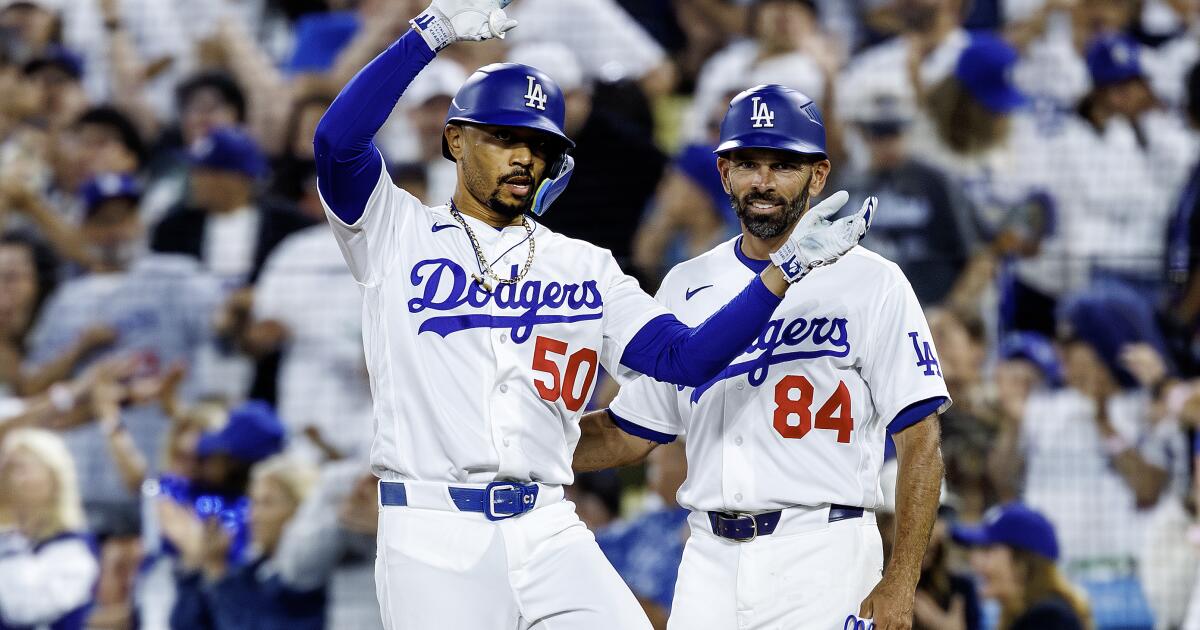
Mookie Betts’ eighth-inning single gives Dodgers the win over the Rockies


