Politics
Newsom pledges to move forward with Delta water tunnel in California


SACRAMENTO — Gov. Gavin Newsom said his administration is “moving forward aggressively” to continue laying the groundwork for a giant tunnel beneath the Sacramento-San Joaquin River Delta to replumb the state’s water system.
“We got to move faster. Move faster,” Newsom said to regulators during a speech Thursday at a conference held by the Assn. of California Water Agencies. “We all have to be held to a higher level of accountability.”
California’s 40th governor provided a chronological look back at his water policies since taking office in 2019 and asserted the need to continue his effort to modernize state infrastructure to provide for cities and farms into the future.
Newsom cast the tunnel as a “climate adaptation project,” noting that climate change is projected to shrink the amount of water the state can deliver with its current infrastructure.
With his term expiring at the end of the year, Newsom acknowledged that he will soon “pass the baton” on water policy to the next governor. Democrat or Republican, that person could decide the fate of his signature water project.
“The Delta Conveyance, if we had it last year alone, would have provided enough water, in terms of what we could have captured with an updated system, enough water for 9.8 million Californians’ needs for over a year,” Newsom said. “We’ve got to get that done.”
Water has been a focus of the Newsom administration since his first day in office, when the governor took his cabinet to Monterey Park Tract, a rural Central Valley community that lacked access to safe drinking water.
Described by Newsom as “the forever problem” in California, water policy is also among the most politically contentious issues in the state.
The tunnel would create a second route to transport water from new intakes on the Sacramento River to the south side of the Delta, where pumps send water into the aqueducts of the State Water Project.
The project is particularly acrimonious, drawing out geographical battles between north and south and thorny fights between officials who want to build the tunnel and environmentalists and Delta residents seeking to protect the local ecosystem and their way of life.
Newsom and other supporters have said the tunnel would protect the state’s water system as climate change intensifies severe droughts and deluges. Opponents call the project a costly boondoggle, arguing it’s not necessary and would destroy the Delta.
It’s been mired with regulatory hurdles and other challenges for years.
The State Water Resources Control Board is considering a petition by the Newsom administration to amend permits so water could be tapped where the tunnel intakes would be built.
There have also been other complications. A state appeals court in December rejected the state’s plan for financing the project, and the California Supreme Court in April declined to take up the case. The state Department of Water Resources said it still plans to issue bonds to finance the project.
Other court challenges by Delta-area counties and environmental groups are also pending.
Whether the project is ultimately built may hinge on whether large water agencies, including the Metropolitan Water District of Southern California, decide to participate and pay for its building.
State officials have said that the tunnel, called the Delta Conveyance Project, ultimately would be paid for by participating water agencies.
The state estimated in 2024 that the tunnel would cost $20.1 billion, while opponents say it could cost three to five times more than that.
In the last seven years, California has invested $11 billion in water infrastructure, Newsom said.
The Democratic governor reflected on other parts of his water policies, saying he has prioritized securing funds to provide clean drinking water to more communities where Californians live with contaminated tap water.
He said while there has been progress in bringing safe drinking water to more communities, there is still “a lot more work to be done.”
Newsom touted his administration’s investment in replenishing groundwater in the Central Valley and its efforts supporting plans to build the Sites Reservoir near Sacramento.
Newsom said the Sites Reservoir is critical for the state’s future, and he indicated some frustration about the pace at which it’s advancing.
“We’ve got to do the groundbreaking at Sites,” he said. “If you can’t agree to an off-stream investment in this world of weather whiplash, we’re as dumb as we want to be.”
He said his administration has also made progress on environmental projects including restoring wetlands around the shrinking Salton Sea, removing dams on the Klamath River, and developing a strategy to help salmon, which have suffered major declines in recent years.
Touching on issues that generate heated debate, Newsom talked about a controversial plan for new water rules in the Delta that relies on so-called voluntary agreements in which water agencies would contribute funding for wetland habitat restoration projects and other measures.
Newsom described the approach, called the Healthy Rivers and Landscapes program, as a solution to break away from the traditional conflict-ridden regulatory approach and improve the Delta’s ecological health.
“Got to maintain the vigilance on these voluntary agreements. At peril, we go back to our old ways,” he said.
Environmental advocates argue that the proposed approach, which is widely supported by water agencies, would take too much water out of the Delta and threaten native fish that are already in severe decline.
Newsom said climate change is increasingly driving “weather whiplash” in California and that the state must prepare. He noted that his tenure included the extreme drought from 2020-22, followed by extremely wet conditions in 2023, which revived Tulare Lake on thousands of acres of farmland.
He said the state needs to manage water differently because the effects of climate change have been apparent over the last several years: “The hots were getting a lot hotter, the dries were getting a lot drier, and the wets were getting a lot wetter.”

Politics
Double endorsement drama: Trump backs second candidate in red state’s GOP gubernatorial runoff

NEWYou can now listen to Fox News articles!
President Donald Trump is making an 11th-hour endorsement in the final stretch ahead of Tuesday’s high-profile Republican gubernatorial runoff in solidly red South Carolina, saying he “can’t hurt one of them by only Endorsing the other.”
Trump on Friday took to Truth Social to say that he was supporting longtime South Carolina Attorney General Alan Wilson and Lt. Gov. Pamela Evette in the battle for the GOP nomination in the race to succeed term-limited Republican Gov. Henry McMaster.
“I can’t hurt one of them by only Endorsing the other, so, therefore, I am going to Endorse, for Governor of South Carolina, both Pam Evette and Alan Wilson!” Trump wrote, adding: “With either one you can’t go wrong.”
The endorsement of Wilson appears to be a move by Trump to hedge his bets, because Trump is already backing Evette, who is also supported by McMaster, a longtime top ally of the president.
The South Carolina runoff had been viewed as the latest test of Trump’s immense grip over the GOP and the power of his endorsements in Republican nominating contests.
DEMOCRACY ’26: STAY UP TO DATE WITH THE FOX NEWS ELECTION HUB
South Carolina Attorney General Alan Wilson announced his candidacy for governor on Monday, June 23, 2025, accompanied by his family. (Tracy Glantz/The State/Tribune News Service via Getty Images)
And his decision to back both Evette and Wilson isn’t the first time he’s made dual endorsements in the same Republican race. He was backing both Gina Swoboda and Jay Feely in next month’s Republican primary in Arizona’s 1st Congressional District before Swoboda dropped out of the congressional race to run for secretary of state.
Most famously, Trump endorsed “ERIC” in the 2022 GOP Senate primary in Missouri, where the two major candidates were Eric Schmitt and Eric Greitens. Both candidates claimed the endorsement, with Schmitt ultimately winning the nomination.
In South Carolina, Trump endorsed Evette late last month, a week and a half before the gubernatorial primary.
Evette finished on top of a crowded field of contenders in the primary election, with Wilson second. The field also included Reps. Nancy Mace and Ralph Norman, and multimillionaire businessman Rom Reddy. Since no candidate won a majority of the vote, as the top two finishers, Evette and Wilson advanced to the June 23 runoff.
Mace and Norman endorsed Wilson after failing to advance to the runoff. And Wilson was also backed a week ago by Sen. Ted Cruz, the conservative firebrand from Texas.
The runoff between Evette and Wilson has become combustible, and in Tuesday’s final debate both candidates launched personal attacks and accused each other of lying and misrepresenting their records.
Wilson has worked to contrast his tenure as attorney general with what he’s argued is Evette’s largely ceremonial role as lieutenant governor. And he has spotlighted his experience as a combat veteran, prosecutor, and the state’s top law enforcement official.
Evette has showcased herself as an outsider and a Trump-endorsed businesswoman, while casting Wilson as a career politician.
Sen. Tim Scott of South Carolina, who is supporting Wilson and has helped with fundraising, made calls on behalf of Wilson and encouraged the president’s endorsement of the state attorney general, a source familiar told Fox News Digital.
It’s been 28 years since a Democrat won a gubernatorial election in South Carolina, and the winner of the GOP runoff will be considered the clear favorite in the general election against Democratic nominee Jermaine Johnson, a state representative.
South Carolina Lt. Gov. Pamela Evette announces her bid for the Republican nomination for governor at The Smokestack at Judson Mill in South Carolina on July 14, 2025. (Joshua Boucher/The State/Tribune News Service/Getty Images)
The brute force of the president’s endorsement power has been on display in GOP primaries over the past two months, with his candidates ousting incumbents he targeted in showdowns in Indiana, Louisiana, Kentucky and Texas that grabbed plenty of national attention.
But Trump’s endorsement streak in statewide and congressional Republican primaries was snapped three weeks ago when his last minute endorsement of Republican Rep. Randy Feenstra of Iowa in the race to succeed retiring GOP Gov. Kim Reynolds wasn’t enough to propel the three-term congressman to victory.
Feenstra was narrowly edged by Zach Lahn, a businessman, farmer and former political strategist who was backed by the political wings of MAHA — the acronym for the Make America Healthy Again movement aligned with Trump Health Secretary Robert F. Kennedy Jr. — and Turning Point USA, the powerful conservative organization co-founded by the late Charlie Kirk.
Zach Lahn raises his fist in celebration after defeating his primary opponent in Iowa’s GOP gubernatorial race on Tuesday, June 2, 2026. (Zach Lahn for Governor via Facebook)
Trump rebounded a week later, as Evette finished first in the GOP gubernatorial primary and longtime Trump ally Sen. Lindsey Graham of South Carolina won a majority of the vote in the Republican Senate primary, and avoided a runoff.
Graham, who was endorsed by Trump, was facing primary challenges from five candidates, including conservative businessman Mark Lynch, who took aim at the senator over his support for the war in Iran. Lynch was backed by some MAGA leaders who have been critical of the president.
And a couple of days ago, Trump-backed candidates won two of the three top races in Georgia and Alabama, with the one setback coming against a billionaire businessman who shelled out over $100 million of his own money to boost his campaign.
Rep. Barry Moore, a House Freedom Caucus member and longtime Trump supporter who was endorsed by the president, comfortably defeated rival Jared Hudson, a former Navy SEAL sniper who was supported by some top names on the right, in solidly red Alabama’s GOP Senate runoff.
In battleground Georgia’s Republican Senate runoff, an 11th hour endorsement by Trump this past weekend helped boost Rep. Mike Collins, a MAGA champion, to victory over former college football coach Derek Dooley, who was backed by popular conservative Gov. Brian Kemp.
Collins will face Democratic Sen. Jon Ossoff in the general election in a race that’s among a handful that will likely decide if the GOP holds its slim majority in the chamber in the midterms.
Republican gubernatorial candidate Rick Jackson speaks to supporters at a campaign stop in Alpharetta, Ga., on June 14, 2026. (Paul Steinhauser/Fox News)
Jones regularly showcased his Trump endorsement, but Jackson, who launched his bid in February long after the president had endorsed Jones, repeatedly said that Trump had inspired him to run.
But in Georgia’s GOP gubernatorial runoff, the candidate Trump backed, Lt. Gov. Burt Jones, who was also endorsed by Kemp this past weekend, was defeated by Rick Jackson, who ran as an outsider.
CLICK HERE TO DOWNLOAD THE FOX NEWS APP
A Trump political operative, pointing to Tuesday’s loss by Trump-backed Jones, noted that “Rick Jackson set a record for spending in a statewide Republican primary. He spent Tom Steyer level money in a state a fraction of the size of California. That’s going to have an impact.”
And the operative, who asked to remain anonymous to speak more freely, also emphasized that “Rick bearhugged Trump. All of his ads and material was about how he’s going to be Trump’s favorite governor. So the race was not really a referendum on Trump.”
Fox News’ Luke Trevisan contributed to this report
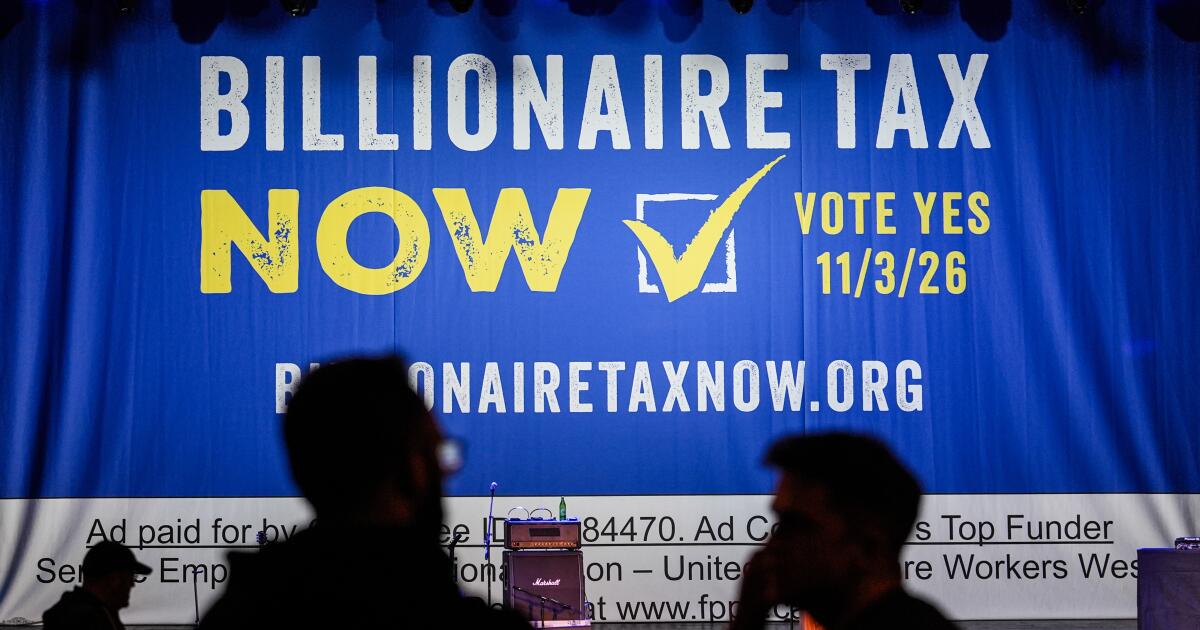
A contentious proposal to tax California billionaires to alleviate federal healthcare cuts moved closer to landing on the November ballot this week, but efforts to defeat the measure before it reaches voters have already escalated.
The California secretary of state’s office said Wednesday that the proposal had enough valid signatures to be eligible for the Nov. 3 ballot. But discussions that have included the governor’s administration and lawmakers are underway about a potential deal that could prevent the initiative from being put in front of voters, according to people familiar with the negotiations.
Supporters have until June 25 to withdraw the initiative or go forward with placing it on the ballot. The negotiations highlight the escalating debate surrounding the billionaire tax, an idea that has divided the Democratic Party and drawn fresh opposition from healthcare and education groups. The negotiations are in flux, and the outcome remains uncertain.
The initiative would impose a one-time tax of up to 5% on taxpayers and trusts with assets valued at more than $1 billion, with some exceptions, such as property. The levy could be paid over five years. Ninety percent of the revenue would fund healthcare programs, and the remaining funds would be spent on food assistance and education programs. The proposal would cost the state’s richest residents about $100 billion if a majority of voters support it.
Backers of the proposed tax say it’s crucial to compensate for federal healthcare funding cuts, approved by President Trump and the Republican-controlled Congress, that will harm millions of the state’s most vulnerable residents. In April, supporters of the billionaire tax submitted nearly 1.6 million signatures, roughly double the number needed to qualify.
A poll released in March showed 52% of registered voters supported the billionaire tax, while 33% said they opposed it. Fifteen percent were undecided. The survey was conducted by UC Berkeley’s Institute of Governmental Studies and co-sponsored by The Times.
Opponents of the measure say the proposal is an ineffective attempt to address the long-term effects of the healthcare cuts and would harm California’s economy and budget.
The state budget in California is already largely dependent on income taxes paid by its highest earners. Because of that, revenues are prone to volatility, hinging on capital gains from investments, bonuses to executives and windfalls from new stock offerings, and are notoriously difficult for the state to predict.
The proposal already triggered a fierce debate, accentuating the divide between the rich and poor in a state that’s expensive to live in.
The Service Employees International Union-United Healthcare Workers West and other supporters of the billionaire tax say that it would raise $100 billion, offsetting federal funding cuts to healthcare as well as funding education and state food assistance. The SEIU-UHWW has spent more than $31 million qualifying the proposal for the ballot.
“David won the second round against Goliath, but healthcare workers and our allies won’t quit until we protect patients from the looming California healthcare collapse manufactured by Trump and Congress,” said Debru Carthan, a spokeswoman for the Billionaire Tax Now Coalition in a statement. The SEIU-UHWW funds the group.
But supporters face strong opposition from billionaires and influential groups with deep pockets. Tech executives and other business leaders oppose the idea and some have moved to other states. Opponents say taxing billionaires would harm California’s economy while not addressing underlying financial issues.
Campaign efforts against the proposal intensified this week with the launch of a new bipartisan coalition that’s fighting the wealth tax proposal. The group, called the Californians to Protect Funding for Schools, Healthcare and Public Safety, posted a long list of opponents that include healthcare groups, labor unions, business organizations, politicians and more.
An ad released by the group calls the wealth tax “a dangerous experiment” that could cost Californians tax revenue, send jobs out of state and cut funding. Planned Parenthood, the California School Boards Assn. and labor unions are cited in the ad as opponents.
“California can’t afford the reckless wealth tax experiment,” the ad says. The California Primary Care Assn. and California Medical Assn. are funding the coalition.
Jodi Hicks, chief executive and president of Planned Parenthood Affiliates of California, said that while the group believes that the wealthy should pay their fair share of taxes, the proposal fails to get at the root of the problem.
“We believe that this particular measure is shortsighted, doesn’t have specificity and accountability. It’s volatile,” she said.
The group wants to focus on holding Congress accountable and restoring critical funding rather than finding a “temporary solution that may do more harm,” Hicks said.
The proposal also has divided progressive politicians, including influential members of the Democratic Party. California Gov. Gavin Newsom spoke out against the billionaire tax, expressing fears that those wealthy residents would move out of the state. But U.S. lawmakers such as Rep. Ro Khanna (D-Fremont) and Sen. Bernie Sanders (I-Vt.) have backed a billionaire tax, saying the rich should pay their fair share to fund essential services.
Newsom tried to stop the proposal’s supporters from placing it on the ballot because he feared it would affect the state’s finances regardless of whether voters approved it, according to a person connected to the governor who was involved in the negotiations. After these efforts failed, the governor’s advisors sought to create a broad coalition opposing the proposal in order to weaken the union’s bargaining powers.
The union proposing the billionaire tax urged Newsom on Thursday to support a bill enacting a 2% tax on the state’s billionaires and said that if he got it approved by the state Legislature, it would withdraw its proposed ballot measure by the June 25 deadline.
Saying that Newsom has vocalized how devastating the federal healthcare funding cuts will be to California’s most vulnerable residents, a coalition funded by the union argued in an open letter that their proposed stopgap measure could prevent needless patient deaths.
“Governor Newsom, you have taken bold action when California needed it in the past,” the letter read. “This is one of those moments. The ask is clear. The timeline is tight but achievable. And the payoff — preventing widespread hospital and community clinic closures and saving patient lives — is real and immediate.”
A Newsom representative bluntly opposed the proposal.
“The Governor has been clear that he is strongly opposed to a California-only wealth tax,” said spokesperson Tara Gallegos in a written statement. “The Governor supports making the wealthiest Americans pay their fair share, but this poorly designed state-only measure will defund teachers, schools, clinics, and public safety. Changing the tax rate doesn’t change this measure’s fundamental flaws that harm working Californians.”
Business executives have already poured millions of dollars into groups that oppose the billionaire tax or are promoting alternative solutions to wealth inequality.
Tech executives, venture capitalists and business leaders have donated roughly $118 million to a nonprofit called Building a Better California, according to data on the secretary of state’s website. Most of the funding comes from Google co-founder Sergey Brin, who has given more than $82 million to the group. Executives from DoorDash, Ripple, Stripe and other companies also have contributed.
The group says it supports policies such as expanding access to affordable housing, protecting innovation, requiring government transparency and securing more stable education funding.
PayPal and Palantir co-founder Peter Thiel has contributed $3 million to the California Business Roundtable, which opposes the tax. Former Google Chief Executive Eric Schmidt donated $1 million to that group as well.
California would probably collect tens of billions of dollars from the wealth tax if it passed, but it could also lose other tax revenue, a December letter from the state legislative analyst’s office said. The office also mentioned that it’s tough to predict the exact amount the state would collect due to factors that can affect a billionaire’s wealth, such as fluctuating stock prices.
California billionaires who were residents of the state as of Jan. 1 would be affected by the ballot measure if it passes. Some wealthy residents announced plans to move out of state. On Dec. 31, venture capitalist David Sacks announced he was opening an office in Austin, Texas, the same day Thiel publicized his firm had opened a new office in Miami.
Measures that could nullify the billionaire tax are another hurdle facing the initiative’s supporters. One initiative known as the Improving Transparency, Effectiveness & Efficiency in California Government Act could cancel out the billionaire tax.
It appears likely that the transparency act will also qualify for the ballot, as its supporters have said they’ve gathered enough signatures. If voters approve conflicting ballot measures, the one with more “yes” votes would take effect.

By John Ismay, Gilad Thaler, Nikolay Nikolov, Rafaela Balster, Stephanie Swart and Whitney Shefte
June 19, 2026
-

 Alaska4 minutes ago
Pilot dies in small plane crash southeast of Cordova
-

 Arizona6 minutes ago
Arizona’s Rugged Wilderness Area Has Gorgeous Mountain Trails And Scenic Camping Spots – Islands
-

 Arkansas11 minutes ago
Tulsa downs Northwest Arkansas | Northwest Arkansas Democrat-Gazette
-

 California19 minutes ago
California man arrested for alleged lewd acts, exploitation involving juveniles
-

 Colorado21 minutes ago
Colorado neighbors lament likely closure of Roxborough library; $22 million regional library breaks ground nearby
-

 Connecticut26 minutes ago
Diesel fuel spill shuts two lanes on I-91 north in Wethersfield
-

 Delaware34 minutes ago
Delaware history in News Journal archives June 21-27: Sussex flood
-

 Florida37 minutes ago
7 of our favorite Florida restaurants in Vero Beach and Fellsmere

