🏠 News From Your Neighborhood
Miami, FL
Miami’s ‘Little Venezuela’ fears Trump’s moves against migration


Wilmer Escaray left Venezuela in 2007 and enrolled at Miami Dade College, opening his first restaurant six years later.
Today he has a dozen businesses that hire Venezuelan migrants like he once was, workers who are now terrified by what could be the end of their legal shield from deportation.
Since the start of February the Trump administration has ended two federal programs that together allowed more 700,000 Venezuelans to live and work legally in the U.S. along with hundreds of thousands of Cubans, Haitians and Nicaraguans.
In the largest Venezuelan community in the United States, people dread what could face them if lawsuits that aim to stop the government fail. It’s all anyone discusses in “Little Venezuela” or “Doralzuela,” a city of 80,000 people surrounded by Miami sprawl, freeways and the Florida Everglades.
Deportation fears in Doralzuela
People who lose their protections would have to remain illegally at the risk of being deported or return home, an unlikely route given the political and economic turmoil in Venezuela.
“It’s really quite unfortunate to lose that human capital because there are people who do work here that other people won’t do,” Escaray, 37, said at one of his “Sabor Venezolano” restaurants.
Spanish is more common than English in shopping centers along Doral’s wide avenues, and Venezuelans feel like they’re back home but with more security and comfort.
A sweet scent wafts from round, flat cornmeal arepas sold at many establishments. Stores at gas stations sell flour and white cheese used to make arepas and T-shirts and hats with the yellow, blue and red stripes of the Venezuelan flag.
New lives at risk
John came from Venezuela nine years ago and bought a growing construction company with a partner. He and his wife are on Temporary Protected Status, or TPS, which Congress created in 1990 for people in the United States whose homelands are considered unsafe to return due to natural disaster or civil strife. Beneficiaries can live and work while it lasts but TPS carries no path to citizenship.
Born in the U.S., their 5-year-old daughter is a citizen. John, 37, asked to be identified by first name only for fear of being deported.
His wife helps with administration at their construction business while working as a real-estate broker. The couple told their daughter that they may have to leave the United States. Venezuela is not an option.
“It hurts us that the government is turning its back on us,” John said. “We aren’t people who came to commit crimes; we came to work, to build.”
A federal judge ordered on March 31 that temporary protected statuswould stand until a legal challenge’s next stage in court and at least 350,000 Venezuelans were temporarily spared becoming illegal. Escaray, the owner of the restaurants, said nearly all of his 150 employees are Venezuelan and more than 100 are on TPS.
The federal immigration program that allowed more than 500,000 Cubans, Venezuelans, Haitians and Nicaraguans to work and live legally in the U.S. — humanitarian parole — expires April 24 absent court intervention.
Politics of migration
Venezuelans were one of the main beneficiaries when former President Joe Biden sharply expanded TPS and other temporary protections. Trump tried to end them in his first term and now his second.
The end of the temporary protections has generated little political reaction among Republicans except for three Cuban-American representatives from Florida who called for avoiding the deportations of affected Venezuelans. Mario Díaz Ballart, Carlos Gimenez and Maria Elvira Salazar have urged the government to spare Venezuelans without criminal records from deportation and review TPS beneficiaries on a case-by-case basis.
The mayor of Doral, home to a Trump golf club since 2012, wrote a letter to the president asking him to find a legal pathway for Venezuelans who haven’t committed crimes.
“These families do not want handouts,” said Christi Fraga, a daughter of Cuban exiles. “They want an opportunity to continue working, building, and investing in the United States.”
A country’s elite, followed by the working class
About 8 million people have fled Venezuela since 2014, settling first in neighboring countries in Latin America and the Caribbean. After the COVID-19 pandemic, they increasingly set their sights on the United States, walking through the notorious jungle in Colombia and Panama or flying to the United States on humanitarian parole with a financial sponsor.
In Doral, upper-middle-class professionals and entrepreneurs came to invest in property and businesses when socialist Hugo Chávez won the presidency in the late 1990s. They were followed by political opponents and entrepreneurs who set up small businesses. In recent years, more lower-income Venezuelans have come for work in service industries.
They are doctors, lawyers, beauticians, construction workers and house cleaners. Some are naturalized U.S. citizens or live in the country illegally with U.S.-born children. Others overstay tourist visas, seek asylum or have some form of temporary status.
Thousands went to Doral as Miami International Airport facilitated decades of growth.
Frank Carreño, president of the Venezuelan American Chamber of Commerce and a Doral resident for 18 years, said there is an air of uncertainty.
“What is going to happen? People don’t want to return or can’t return to Venezuela,” he said.


Wives of several men being held at the Federal Detention Center in downtown Miami are alleging their husbands are facing inhumane conditions following a transfer from the Krome Detention Center, where detainees were evacuated due to recent wildfires.
The women gathered outside the downtown Miami facility on Wednesday to call for basic humane treatment for their husbands.
The Federal Detention Center is operated by the Federal Bureau of Prisons, not U.S. Immigration and Customs Enforcement. While ICE transferred the detainees to the federal facility, the Bureau of Prisons is responsible for conditions inside.
Among those speaking out was Judith Castellanos, whose husband, 51-year-old Marlon Cervelo, has been in immigration detention since 2023.
“He is my husband, my brother, my confidant, my everything,” Castellanos said, adding that she fears for his life.
According to Castellanos, Cervelo was detained following his annual immigration appointment in 2023. Since then, he has been held at multiple facilities, including Alligator Alcatraz, Krome Detention Center and now the Federal Detention Center in downtown Miami.
Castellanos said the detainees are requesting basic necessities.
“They want something similar to what they had in Krome,” Castellanos said, noting the need for clean clothing and reliable access to drinking water.
Arianne Betancourt, an activist with the social justice organization The Workers Circle, echoed the families’ concerns.
“Nobody should be denied access to water,” Betancourt said during a news conference.
While CBS News Miami was covering the event, Castellanos received a call from her husband inside the facility. Speaking in Spanish, Cervelo claimed conditions remain difficult.
“We still have no air conditioning in the rooms and no medicines,” Cervelo said.
Another spouse says deportation isn’t an option
Another spouse, Annette Uset, said her husband, Daikel Dumont, is being held in solitary confinement.
“He told me the conditions that he was in, and I went ahead and contacted the news,” Uset said.
Anisley Cortez said she is concerned for her husband, 41-year-old Noslen Sendra, who suffers from diabetes and acute pancreatitis. She alleged he is not receiving the necessary medication.
The three women said their husbands share similar immigration histories. Each was detained by immigration authorities after serving prison sentences for past criminal convictions. Because Cuba has not accepted their deportation, they have remained in federal custody.
CBS News Miami requested a response from the Federal Bureau of Prisons regarding the allegations.
In a statement, the agency acknowledged the facility experienced water pressure problems on July 1, but said inmates were provided additional bottled water while repairs were underway. Officials said the issue was resolved the following day.
The Bureau of Prisons also confirmed that one of the facility’s air-conditioning chillers malfunctioned on July 6, but stated the problem has been repaired and both chillers are operating normally.
Despite those assurances, the families said they will continue to speak out until they see meaningful improvements in the treatment of their loved ones.
When asked if she would follow her husband to Cuba if deportation were an option, Castellanos replied, “I would follow him.”
According to the families, however, immigration officials have encouraged their husbands to self-deport to a third country, an option all three men have declined.

If you’re a diehard pizza fanatic in Miami, you’ll soon be able to check another renowned style off your list without leaving home. Arriving in October 2026, Royale Pizza Napoletana will debut at 1680 Meridian Avenue, introducing South Florida to the exceptionally precise world of Tokyo-style Neapolitan pizza. This highly anticipated opening marks the monumental stateside arrival of legendary Japanese pizzaiolo Chef Bun, the mastermind behind Tokyo’s genre-defining concept, Savoy.
RECOMMENDED: Where to find the best pizza in Miami
The restaurant is the brainchild of banking entrepreneur and restaurateur Jess Varughese, the innovator behind Miami’s ultra-exclusive, members-only hotspot, Haiku. After experiencing Chef Bun’s “perfect pizzas” during a trip to Japan, Varughese envisioned bringing this science-driven culinary movement to sunny South Florida. To ensure absolute authenticity, Varughese assembled an elite culinary team. Alongside Chef Bun, the kitchen features Haiku Executive Chef Albert Diaz and Chef Dalila Sabatino, a rising pizzaiola talent praised by Bun who previously trained at Los Angeles’ acclaimed Pizzeria Sei.
What sets Tokyo-style Neapolitan pizza apart is its rigorous, chemistry-like execution. At Royale, the dough undergoes a meticulous 30+ hour fermentation process. Varughese and his team spent hundreds of hours adjusting the recipe, combining artisan flours with the Autolyse technique and even altering Miami’s water softness to match Japan’s famously soft water. Pizzas are then baked fresh in an 800-degree oven. The resulting crust achieves an ethereal balance of lightness, chewiness, char and crunch. As Varughese notes, having Chef Bun’s 20-plus years of innovation on board elevates the entire culinary game.
Royale will be fast-casual, yet polished, with seating for 65 guests including a large community table at its center. Staying true to an accessible vibe, the restaurant will operate on a first-come, first-served walk-in basis with no reservations, though takeout and delivery will be available. You’ll order at a main counter from a carefully curated menu featuring antipasti, two pastas, two mains and seven distinct pizzas—including four traditional options and three specials. This is a pizza spot that deserves the hype, so stay up to date on their progress at @royalenapoletana ahead of the official October launch.

MIAMI-DADE COUNTY, Fla. — A 12-year-old girl was shot in the arm after gunfire erupted in a northwest Miami-Dade neighborhood early Tuesday morning, according to the Miami-Dade Sheriff’s Office.
Deputies said they responded just before 1 a.m. to the area of Northwest 64th Street and Northwest 21st Avenue in the county’s Gladeview area, where they found three vehicles struck by gunfire, including a silver Hyundai.
“The car was parked outside of the residence. It was occupied by three juveniles, so it was the girl and her two siblings that were in the vehicle. The mom was outside of the vehicle at the time, so this could have been a very different outcome,” MDSO Detective Samantha Choon said.
Authorities said Miami-Dade Fire Rescue medics transported the girl to a nearby hospital in stable condition.
A family member of the victim told Local 10’s Jackie Pascale that the girl is now home and doing OK.
They said neither her siblings nor their mother was injured in the shooting.
According to investigators, no arrests have been made, and detectives have not released any suspect information at this time.
Neighbor Marie Grimes said she was shaken after hearing multiple gunshots.
“I heard the booms — boom, boom, boom, boom — and I said, ‘Oh my God, what’s happening?’” she said. “Maybe five or six, ’cause look at that right there. I’m just glad the little girl is OK.”
Investigators asked neighbors to check their surveillance or Ring camera footage from around 1 a.m. and contact authorities with any information.
Anyone with information on the shooting is urged to contact Miami-Dade Crime Stoppers at 305-471-8477. Anonymous tips are accepted.
Copyright 2026 by WPLG Local10.com – All rights reserved.
-

 World4 minutes ago
WATCH: Russian soldier thrown through air as Soviet-era helicopter gun spins out of control
-

 Politics10 minutes ago
Lindsey Graham’s final act reverberates in Senate as sister is urged to “keep pedaling”
-

 Health16 minutes ago
Is lettuce still safe to eat amid Taco Bell illness probe? Doctors answer
-

 Sports22 minutes ago
Marcello Hernández roasts Jake Paul, Tiger Woods and Bill Belichick in ESPYS monologue
-

 Technology28 minutes ago
You paid for it. So why is your device showing ads?
-
 Business34 minutes ago
Paramount shareholder lawsuit accuses Ellisons of corruption
-
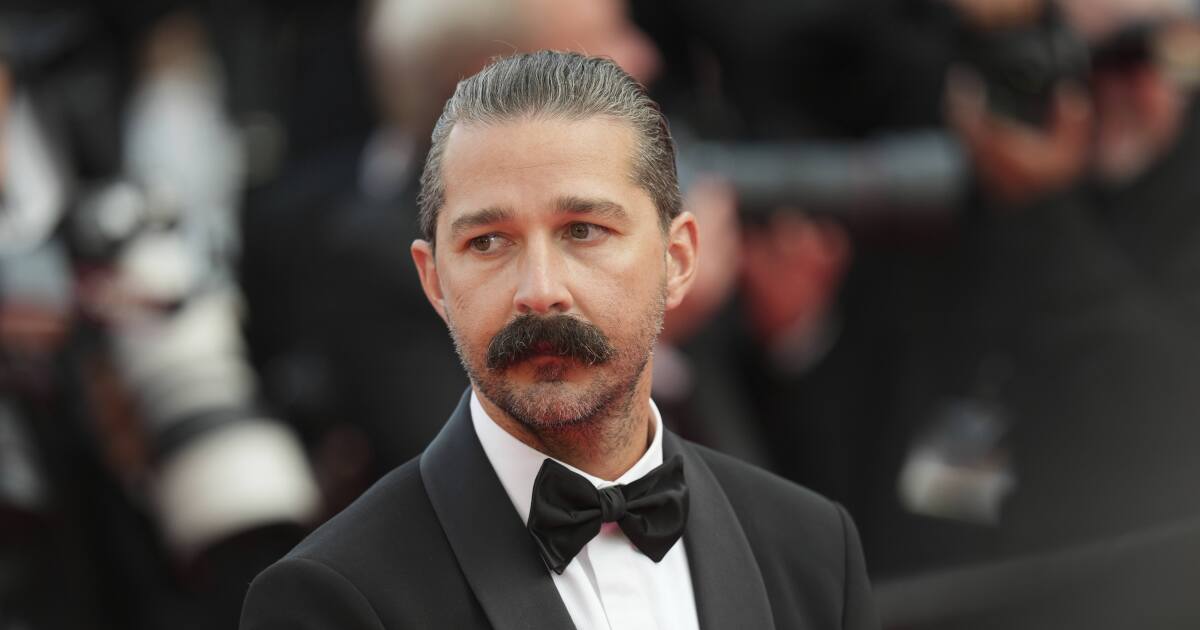 Entertainment40 minutes ago
‘You’re scaring my people.’ Shia LaBeouf’s alleged stalker arrested after posting viral video
-
 Politics52 minutes ago
Californians back Becerra and reject AI data centers by big margins, poll finds

