Maryland
Maryland hopes to recruit young dentists to workforce shortage areas – Maryland Matters


Maryland has about 70 dentists per 100,000 residents, according data from the Centers for Disease Control and Prevention in 2020, but that doesn’t mean that they are equally distributed across the state.
State health officials and dental health advocates say that Baltimore and parts of the Eastern Shore and Western Maryland not only lack dentists, but have other barriers that make it difficult for residents to keep up with their oral health.
The Maryland Department of Health aims to change that with a new program urging dental students to launch their careers in areas with dental health care shortages.
The Pathways to Bright Futures program, which launched Wednesday, will educate those students about the dentistry profession in hopes of easing shortage in targeted areas.
Dr. Nilesh Kalyanaraman, the health department’s deputy secretary for public health services said Wednesday that fixing the workforce shortage “won’t be easy and is not going to happen overnight,” but improving access to dental services will help improve overall health equity in Maryland.
“When I think about our vision for health equity in Maryland, I see everyone in our state having a fair and just opportunity to be as healthy as possible. It’s going to take hard work … to ensure that health equity includes healthy mouths, teeth and gums for all Marylanders,” he said.
Dr. Debony Hughes, director of the department’s Office of Oral Health, said that many areas in Western Maryland, the Eastern Shore and Baltimore have fewer than 20 dentists per 100,000 residents, well below the national average of 61 dentists per 100,000 residents.
“This program is a collaborative effort to work with students and foster their interests in the oral health field and provide support to those who know they want to practice in the profession,” Hughes said Wednesday during the program kickoff at the Dr. Samuel D. Harris National Museum of Dentistry in Baltimore
Pathways to Bright Futures is funded by a grant to the state from the federal Health Resources and Service Administration. At Wednesday’s event, six dental health students were awarded funds to help pay their dental school tuition.Each of the students plan to practice dentistry in one of the state’s dental shortage areas.
“Cavities in children and adults, and gum disease especially in adults, are among the most prevalent chronic diseases in the United States,” Kalyanaraman said. “The main reason why oral disease is so prevalent is that far too many Marylanders experience barriers to preventative and essential dental care.”
He noted that when Maryland dentists set up their practice, they tend to gather in “more populated and higher income areas, creating significant gaps in access to dental care across other regions of the state.”
“This shortage creates an uneven distribution of dental professionals across the state, which leads to decreased access to dental care, especially in already underserved communities,” Kalyanaraman said.
Dr. George Shepley, a general dentist in Baltimore since 1978 who previously served as president of the American Dental Association, said dental care can help identify other health needs.
“They’re connected. Totally. Especially with things like diabetes and cardiac disease,” Shepley said Wednesday. “And in the world of dentistry, you’ll get insight into well-being overall. You’ll help diagnose other conditions and empower people to really take responsibility for their lives.”
Mary Backley, CEO of the Maryland Dental Action Coalition, said there are a multitude of logistical and economic barriers that can make it challenging for some Marylanders to get to a dental appointment.
Besides a lack of equal access to the state’s 4,300 registered dentists, another issue in dentist shortage areas is transportation, particularly for the more rural communities in Western Maryland and on the Eastern Shore.
“The biggest barriers, rural-wise, is the distance … It can take miles and miles and miles to get to a provider,” Backley said after Wednesday’s event.
Baltimore residents are more likely to be face a long waitlist to get a dental appointment, according to Backley. And both rural and city residents may struggle to afford child care or take time off work to go to the dentist in the first place.
There are also financial hurdles that make it harder for families to afford a trip to the dentist.
As of January 2023, Medicaid in Maryland began to cover certain dental services for adults. And the General Assembly this year passed legislation to study the feasibility of including full and partial dentures under Medicaid coverage. Gov. Wes Moore (D) signed the bill in May.
The state Medicaid expansions can help many low-income families receive dental health care, so long as they have access to a provider that accepts Medicaid. Not all dentists in Maryland do.
Backley hopes that the Pathways to Bright Futures program will encourage more young people to look to dentistry as a career path and help fill in some of the coverage gaps in the state.
On the bright side, Backley said that residents and Maryland health officials are taking dental health care seriously.
“It’s been incremental, but each year there has been progress,” she said. “People understand the importance of oral health. And the importance of oral health to overall health.”



ELLICOTT CITY, Md. — A t-bone crash involving a motorcycle left a 24-year-old Hampstead man dead on Saturday evening.
It happened around 6:30pm, along Marriottsville Road in Howard County.
That’s where a Yamaha FZ09 was heading northbound when it collided with an oncoming Nissan Rogue that was trying to make a left turn onto Warwick Way.
“Preliminary investigation suggests the motorcycle was traveling at a high rate of speed,” Howard County Police said in a press release.
The motorcycle rider later died at University of Maryland Shock Trauma.
Police say the Nissan driver, who was not hurt, remained on scene and cooperated with investigators.
Marriottsville Road was reopened after being closed for about three-hours.


Powerball, Mega Millions jackpots: What to know in case you win
Here’s what to know in case you win the Powerball or Mega Millions jackpot.
Just the FAQs, USA TODAY
The Maryland Lottery offers several draw games for those aiming to win big.
Here’s a look at April 18, 2026, results for each game:
Winning Powerball numbers from April 18 drawing
24-25-39-46-61, Powerball: 01, Power Play: 5
Check Powerball payouts and previous drawings here.
Winning Pick 3 numbers from April 18 drawing
Midday: 9-4-0
Evening: 9-3-4
Check Pick 3 payouts and previous drawings here.
Winning Pick 4 numbers from April 18 drawing
Midday: 8-3-0-6
Evening: 7-2-1-2
Check Pick 4 payouts and previous drawings here.
Winning Pick 5 numbers from April 18 drawing
Midday: 5-3-8-8-7
Evening: 6-7-3-8-9
Check Pick 5 payouts and previous drawings here.
Winning Cash Pop numbers from April 18 drawing
9 a.m.: 03
1 p.m.: 14
6 p.m.: 10
11 p.m.: 08
Check Cash Pop payouts and previous drawings here.
Winning Bonus Match 5 numbers from April 18 drawing
06-20-33-34-36, Bonus: 11
Check Bonus Match 5 payouts and previous drawings here.
Winning Powerball Double Play numbers from April 18 drawing
02-38-45-53-63, Powerball: 21
Check Powerball Double Play payouts and previous drawings here.
Keno
Drawings are held every four minutes. Check winning numbers here.
Feeling lucky? Explore the latest lottery news & results
Are you a winner? Here’s how to claim your lottery prize
Maryland Lottery retailers will redeem prizes up to $600. For prizes above $600, winners can claim by mail or in person from the Maryland Lottery office, an Expanded Cashing Authority Program location or cashiers’ windows at Maryland casinos. Prizes over $5,000 must be claimed in person.
Claiming by Mail
Sign your winning ticket and complete a claim form. Include a photocopy of a valid government-issued ID and a copy of a document that shows proof of your Social Security number or Federal Tax ID number. Mail these to:
Maryland Lottery Customer Resource Center
1800 Washington Boulevard
Suite 330
Baltimore, MD 21230
For prizes over $600, bring your signed ticket, a government-issued photo ID, and proof of your Social Security or Federal Tax ID number to Maryland Lottery headquarters, 1800 Washington Boulevard, Baltimore, MD. Claims are by appointment only, Monday through Friday from 8:30 a.m. to 4:30 p.m. This location handles all prize amounts, including prizes over $5,000.
Winning Tickets Worth $25,000 or Less
Maryland Lottery headquarters and select Maryland casinos can redeem winning tickets valued up to $25,000. Note that casinos cannot cash prizes over $600 for non-resident and resident aliens (tax ID beginning with “9”). You must be at least 21 years of age to enter a Maryland casino. Locations include:
- Horseshoe Casino: 1525 Russell Street, Baltimore, MD
- MGM National Harbor: 101 MGM National Avenue, Oxon Hill, MD
- Live! Casino: 7002 Arundel Mills Circle, Hanover, MD
- Ocean Downs Casino: 10218 Racetrack Road, Berlin, MD
- Hollywood Casino: 1201 Chesapeake Overlook Parkway, Perryville, MD
- Rocky Gap Casino: 16701 Lakeview Road NE, Flintstone, MD
Check previous winning numbers and payouts at Maryland Lottery.
When are the Maryland Lottery drawings held?
- Powerball: 11 p.m. ET Monday, Wednesday and Saturday.
- Mega Millions: 11 p.m. ET Tuesday and Friday.
- Pick 3, Pick 4 and Pick 5 Midday: 12:27 p.m. ET Monday through Friday, 12:28 p.m. ET Saturday and Sunday.
- Pick 3, 4 and 5 Evening: 7:56 p.m. ET Monday through Saturday, 8:10 p.m. ET on Sunday.
- Cash4Life: 9 p.m. ET daily.
- Cash Pop: 9 a.m., 1 p.m., 6 p.m. and 11 p.m. daily.
- Bonus Match 5: 7:56 p.m. ET Monday through Saturday, 8:10 p.m. ET on Sunday.
- MultiMatch: 7:56 p.m. Monday and Thursday.
- Powerball Double Play: 11 p.m. Monday, Wednesday and Saturday.
This results page was generated automatically using information from TinBu and a template written and reviewed by a Maryland editor. You can send feedback using this form.

Buzz Williams has brought the number of new players joining the Maryland Terrapins next season to eight.
The Terps have the nation’s No. 8 freshmen recruiting class, consisting of four players including five-star small forward Baba Oladotun. Now, they have just as many transfer portal additions.
Their latest acquisition is forward Maban Jabriel, who previously spent two years with Queens University of Charlotte, a member of the ASUN.
Jabriel announced his commitment to Maryland on his Instagram account:
During his sophomore campaign with the Royals, Jabriel played in all 35 games, mainly off the bench, and averaged 7.7 points, 3.8 rebounds, and 1.0 assists in 19.8 minutes.
Shooting is Jabriel’s greatest strength. At 6’9″, he has the size to win battles close to the basket, but the Waterloo, Ontario native can score from all over the court.
Jabriel shot 49.5% from the field, 43.2% from deep, and 77.4% at the free throw line last season. The Terps can certainly use the help after being the worst shooting team (40.7% overall) not just in the Big Ten, but across all the Power conferences.
The rest of Maryland’s transfer class looks like this:
- Tomislav Buljan – power forward who averaged 13.1 points, 10.3 rebounds, 1.5 assists for New Mexico last season.
- Robert Jennings II – power forward who averaged 5.4 points, 3.4 rebounds, and 0.3 assists for Oklahoma State in 2024-25 (injured most of last season).
- Bishop Boswell – combo guard who averaged 6.2 points, 4.4 rebounds, and 3.1 assists for Tennessee last season.
Put together, the Terps currently have the No. 4 incoming crop of players, according to 247 Sports. That figure was as high as No. 1 this offseason and could rise back up with additional moves.
Maryland is confirmed to be keeping at least three players from last season: Rakease Passmore, who redshirted due to injury, along with Andre Mills and George Turkson Jr.
Pharrel Payne also wishes to return but is waiting for his medical hardship waiver to be approved by the NCAA.
That leaves Buzz with three scholarship spots to fill – either with more transfers or the undecided members of last year’s team, Myles Rice and Guillermo Del Pino.
Players only have until this Tuesday, April 21 to enter the portal, so a decision for both Rice and Del Pino will be made soon.
Maryland On SI will continue to cover the Terps’ transfer portal transactions as they occur.
More from Maryland On SI
Stay up to date with the Terrapins by bookmarking Maryland On SI and follow us on Twitter.
Follow
-

 Sports3 minutes ago
‘Demon’ Finn Balor settles score with Dominik Mysterio at WrestleMania 42
-

 Technology9 minutes ago
iPhone and Samsung flashlight tricks you should know
-
 Business15 minutes ago
David Ellison hits CinemaCon, vowing to make more movies with Paramount-Warner Bros.
-
 Entertainment21 minutes ago
Larry David discusses ‘Curb Your Enthusiasm,’ ‘Seinfeld’ legacies and new HBO series
-
 Lifestyle26 minutes ago
Nine non-negotiable items for a well-designed life
-
 Politics33 minutes ago
Supreme Court weighs phone searches to find criminals amid complaints of ‘digital dragnets’
-
 Sports45 minutes ago
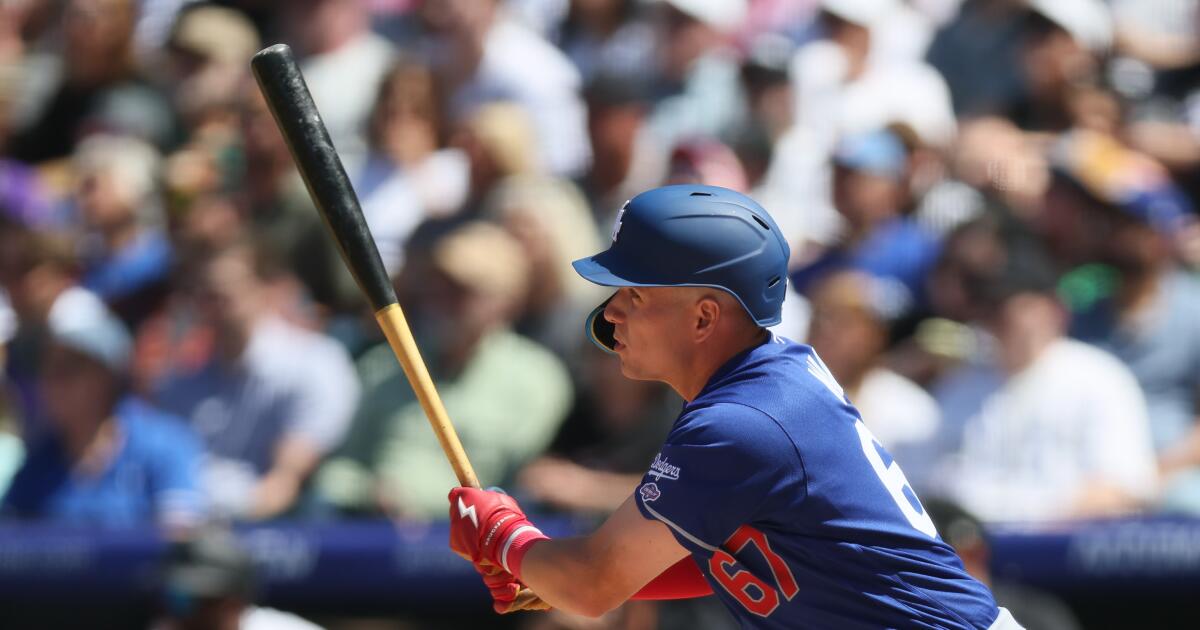
Ryan Ward has a solid debut, but bullpen blows it again as Dodgers lose to Rockies
-

 World57 minutes ago
Schools, shops shut in northern Israel to protest the Lebanon ceasefire