Lifestyle
The Gen X Career Meltdown


Listen to this story with Steven Kurutz’s commentary about why he wrote it.
In “Generation X,” the 1991 novel that defined the generation born in the 1960s and 1970s, Douglas Coupland chronicled a group of young adults who learn to reconcile themselves to “diminishing expectations of material wealth.” Lessness, Mr. Coupland called this philosophy.
For many of the Gen X-ers who embarked on creative careers in the years after the novel was published, lessness has come to define their professional lives.
If you entered media or image-making in the ’90s — magazine publishing, newspaper journalism, photography, graphic design, advertising, music, film, TV — there’s a good chance that you are now doing something else for work. That’s because those industries have shrunk or transformed themselves radically, shutting out those whose skills were once in high demand.
“I am having conversations every day with people whose careers are sort of over,” said Chris Wilcha, a 53-year-old film and TV director in Los Angeles.
Talk with people in their late 40s and 50s who once imagined they would be able to achieve great heights — or at least a solid career while flexing their creative muscles — and you are likely to hear about the photographer whose work dried up, the designer who can’t get hired or the magazine journalist who isn’t doing much of anything.
Gen X-ers grew up as the younger siblings of the baby boomers, but the media landscape of their early adult years closely resembled that of the 1950s: a tactile analog environment of landline telephones, tube TV sets, vinyl records, glossy magazines and newspapers that left ink on your hands.
When digital technology began seeping into their lives, with its AOL email accounts, Myspace pages and Napster downloads, it didn’t seem like a threat. But by the time they entered the primes of their careers, much of their expertise had become all but obsolete.
More than a dozen members of Generation X interviewed for this article said they now find themselves shut out, economically and culturally, from their chosen fields.
“My peers, friends and I continue to navigate the unforeseen obsolescence of the career paths we chose in our early 20s,” Mr. Wilcha said. “The skills you cultivated, the craft you honed — it’s just gone. It’s startling.”
Every generation has its burdens. The particular plight of Gen X is to have grown up in one world only to hit middle age in a strange new land. It’s as if they were making candlesticks when electricity came in. The market value of their skills plummeted.
Karen McKinley, 55, an advertising executive in Minneapolis, has seen talented colleagues “thrown away,” she said, as agencies have merged, trimmed staff and focused on fast, cheap social media content over elaborate photo shoots.
“Twenty years ago, you would actually have a shoot,” Ms. McKinley said. “Now, you may use influencers who have no advertising background.”
In the wake of the influencers comes another threat, artificial intelligence, which seems likely to replace many of the remaining Gen X copywriters, photographers and designers. By 2030, ad agencies in the United States will lose 32,000 jobs, or 7.5 percent of the industry’s work force, to the technology, according to the research firm Forrester.
Last September, Ms. McKinley co-founded Geezer Creative, an ad agency intended to be a haven for Gen X talent. “We’ve been absolutely bombarded by creative folks over 50 — or even approaching 50 — because they’re terrified,” she said.
The shedding of jobs and upending of longstanding business models have come at a bad time for Gen X-ers. The cost of living has skyrocketed, especially in coastal cities, and the burdens of mortgages, children’s college tuitions and elder care can be heaviest in middle age. Retirement isn’t that far off, theoretically — but Gen X-ers are less secure financially than baby boomers and lack sufficient retirement savings, according to recent surveys.
The old economy still holds sway in a few places — legacy media companies that didn’t get devoured by the internet, film studios that remain flush with cash. But even at those businesses the number of jobs has gone down, and the workers are uneasy. What’s to prevent their little island from going under with the next wave of change?
“The cruel irony is, the thing I perceived as the sellout move is in free-fall.”
— Chris Wilcha, film director
‘Death Throes’
Steve Kandell couldn’t believe his luck. Growing up as a fan of punk and alternative rock in suburban New Jersey in the 1980s, he had been an avid reader of music magazines — and now here he was, working for Spin, the Gen-X successor to Rolling Stone.
He assigned and edited features. He wrote cover stories about Bruce Springsteen, Amy Winehouse and U2. Spin paid for his reporting trips and gave him weeks to write his articles, which could run as long as 5,000 words.
In keeping with the generational stereotype, Mr. Kandell had been a slacker in his 20s. He landed his first big job in New York in 2002, when he was 30. It was the early days of the internet, but print publications were still thick with ads.
So he was happy to sign on as an assistant editor at Maxim, a magazine that was part of the short-lived “laddie” trend. At its height, it had a paid monthly circulation of more than 2.5 million, far surpassing the readerships of GQ and Esquire, which began to look staid by comparison.
“I was in my 30s, making $31,000 a year,” Mr. Kandell said. “I remember an editor said, ‘You don’t want to work here? There will be a line around the block.’ There was this sense that you get to do this.”
By the time he joined Spin in 2007, the industry was in trouble. As readers spent more time online, magazines reliant on print ads were flailing. In the early 2000s, Spin’s monthly circulation was 530,000; by 2011, it was 460,000 and falling fast.
Like many other publications, Spin tried to remake itself as an online brand. It started an iPad version and beefed up its website to compete with a digital rival, Pitchfork. In 2012, the print edition went bimonthly, and Spin started charging less for ads. Then it was sold to Buzzmedia, an owner of music and celebrity websites. The print edition folded.
“We were in the death throes,” Mr. Kandell said, “whether we knew it or not.”
The changes affected other fields, too. When photography went digital, photo lab technicians and manual retouchers were suddenly as inessential as medieval scribes. The ubiquity of smartphone cameras and easy-to-use editing software made those in possession of the old skills seem almost quaint.
Chris Gentile, who was the creative director of the in-house photo studio at the magazine company Condé Nast from 2004 to 2011, said that top photographers used to earn five figures for a shoot. “Now,” he said, “you can hire a 20-year-old kid who will do the job for $500.”
Carl Chisolm, a photographer who grew up in Harlem and whose credits include shooting Anna Wintour for a MasterClass campaign, said that editorial budgets were already shrinking by the time he started his career in New York in the mid-2000s. “There’s no way you can survive anymore being strong at one thing,” Mr. Chisolm, 45, said. “I worked at a studio, I photo-assisted, I did production work — all while shooting small jobs for myself.”
Even now, he added, “if things are truly slow, I’m not above assisting friends on their shoots. I have a family.”
In advertising, brands ditched print and TV campaigns that required large crews for marketing plans that relied on social media posts, a trend that started with the debut of Instagram in 2010.
“That TV spot you spent six months on now becomes a TikTok execution you spend six days on,” said Greg Paull, principal of R3, a marketing consultancy.
Pam Morris, 54, a freelance prop stylist, noticed another unsettling trend a few years ago, when a U.S. client asked her to art-direct a crew in Asia remotely for a shoot. “They’re just outsourcing,” she said. “It must be cheaper.”
Ms. Morris added that, in her group chats with colleagues, the main topic lately has been the effect of A.I. and computer generated imagery on ad campaigns. “If an art director can say, ‘Give me an image of X, Y, Z,’ what does that mean for our jobs, if they don’t need to have actual photo shoots anymore?” she said.
Similar shifts have taken place in music, television and film. Software like Pro Tools has reduced the need for audio engineers and dedicated recording studios; A.I., some fear, may soon take the place of actual musicians. Streaming platforms typically order fewer episodes per season than the networks did in the heyday of “Friends” and “ER.” Big studios have slashed budgets, making life for production crews more financially precarious.
Typically, workers in their 40s and 50s are entering their peak earning years. But for many Gen-X creatives, compensation has remained flat or decreased, factoring in the rising cost of living. The usual rate for freelance journalists is 50 cents to $1 per word — the same as it was 25 years ago.
The precariousness has affected even those who have risen to corporate posts in the media industry. For nearly 20 years, Liza Demby managed writers in the marketing department at Nickelodeon, the children’s cable network. She started there in 2005, the year YouTube went live.
When viewers started dropping cable subscriptions, revenues declined. Ms. Demby learned to embrace new technology while surviving “around eight billion rounds of layoffs,” she said.
“My job never stayed the same,” she added, “because the industry was transforming under our feet.”
Last August, Nickelodeon’s corporate parent, Paramount, cut $500 million in costs and eliminated thousands of employees. In her 40s, Ms. Demby was out of a job.
Divorced and living in a rented apartment in Brooklyn with her two school-age children, she is drawing from her severance package while considering her next career move. Working freelance, she has come up with marketing ideas and creative content for family-oriented media brands.
“It’s exhilarating, but there’s an undercurrent of terror,” Ms. Demby said. “My severance goes until July.”
“That TV spot you spent six months on now becomes a TikTok execution you spend six days on.”
— Greg Paull, marketing consultant
‘Very Scary’
It seems fitting that Gen X-ers would reach middle age amid an upheaval. They always had cursed timing.
Their moment on the cultural center stage was brief — roughly between the release of Nirvana’s “Nevermind” in 1991 and the rise of Britney Spears at decade’s end. Many Gen X icons died young and tragically, a list that includes Kurt Cobain, the Notorious B.I.G., Aaliyah, Philip Seymour Hoffman, Anna Nicole Smith, Tupac Shakur, Brittany Murphy, David Foster Wallace, Shannen Doherty, Elliott Smith, Adam Yauch and Elizabeth Wurtzel.
“As a Gen X-er, you more or less expected to get reamed,” the author Jeff Gordinier wrote in the cultural history “X Saves the World.”
Ms. Morris, the prop stylist, didn’t work for six months during the Covid-19 pandemic. “It was very scary,” she said. She and her husband, who have a teenage daughter together, sold their Brooklyn apartment and moved into a rental.
The profit from the sale allowed them to pay off debt and put some savings aside. But then Ms. Morris’s husband, a 59-year-old creative director and artist, was laid off, turning them both into gig workers.
Ms. Morris recently took a course to become a postpartum doula. “I’ve been making images to sell things to people for many, many years now,” she said. “I’m looking for the next act.”
Aside from lost income, there is the emotional toll — feelings of grief and loss — experienced by those whose careers are short-circuited. Some may say that the Gen X-ers in publishing, music, advertising and entertainment were lucky to have such jobs at all, that they stayed too long at the party. But it’s hard to leave a vocation that provided fulfillment and a sense of identity. And it isn’t easy to reinvent yourself in your 50s, especially in industries that put a premium on youth culture.
“I know people who said, ‘Screw this, I’m going to become a postal worker,’” said Ms. McKinley, the ad industry veteran. “There are still a lot of people who are freelancing, but it’s dried up quite a bit in recent years. It’s painful.”
“There’s no way you can survive anymore being strong at one thing.”
— Carl Chisolm, photographer
‘What Now?’
As opportunities and incomes dwindle, Gen X-ers in creative fields are weighing their options. Move to a lower-cost place and remain committed to the work you love? Look for a bland corporate job that might provide health insurance and a steady paycheck until retirement?
One of the many Gen X-ers asking these questions is Mr. Wilcha, the TV and movie director. In the mid-2000s, he made a devil’s bargain for someone who grew up on punk rock: He started shooting commercials for Chevrolet, Facebook and Apple, among other companies, to support his family and fund his passion, documentary films.
He had a cult hit with his debut, “The Target Shoots First.” It was a deadpan chronicle comprising footage he had shot during his first job out of college, at Columbia Records; HBO broadcast it in 2001. But cult hits don’t pay the bills. When he shifted his focus to making TV commercials, his documentary projects remained unfinished.
Then came a plot twist. Those commercial jobs grew scarce because of the consolidation of ad agencies and the rise of marketing content plucked from social media. And with Hollywood banking on superhero movies, Mr. Wilcha faced new competition from acclaimed directors who had once specialized in the kind of mid-budget films that the studios had practically stopped making.
“Now it’s a knife fight for every job,” he said. “The cruel irony is, the thing I perceived as the sellout move is in free-fall.”
He decided to recommit to his first love. The result, the documentary “Flipside,” released last year, is a personal film about the trade-offs required to support yourself as an artist. In it, he weaves together footage from his unfinished projects while grappling with his career choices in a wry voice-over narrative.
For the theatrical release, he worked with Oscilloscope, an independent distributor founded by Mr. Yauch of the Beastie Boys, and he often presented the film himself.
“It felt very ’90s,” he said. “It was that indie rock model: Get in the van, tour with the thing, get bodies in the seats. It made no money. But what it did do — and this is what I believe as a Gen X creative person — it confirmed my belief that continuing to make stuff is the path forward.”
Mr. Gentile, the former photo studio manager at Condé Nast, went through something similar. The company was cutting costs as the consultancy McKinsey & Company roamed the halls, and he came face to face with his own irrelevance. He was 40, with an artistic background.
“Who would hire me?” he thought. “Maybe this is where I jump off.”
As a sideline, Mr. Gentile, an avid surfer, had opened a surf shop, Pilgrim, in Williamsburg, Brooklyn. He quit his day job and dedicated himself to the store. He and his wife, Erin Norfleet Gentile, have since expanded it into a clothing brand.
“One thing I’m grateful for, and it’s a strength of my generation, is we weren’t promised anything,” Mr. Gentile said. “I was prepared to struggle.”
Mr. Kandell, the former magazine editor, also had a reckoning.
After Spin stopped appearing on newsstands, he took a job at BuzzFeed, the news and entertainment site that was seen as the future of media at the time. By 2017 BuzzFeed was just another struggling outlet that was doing mass layoffs. Mr. Kandell, then in his mid-40s, married with a child, left for another media outlet. His wife also worked in media.
“Then we had a second kid, and we lived in a small New York apartment,” he said. “And it felt like the only thing we and our friends talked about was, ‘Well, what now’?”
He and his family moved to California, where he took an editorial position at a tech company. The job gave him some security and allowed him to contemplate a second career.
He went back to school and earned a master’s degree in clinical psychology. For the past three years, Mr. Kandell has continued at the tech company while practicing as a therapist on nights and weekends to earn his state license.
He’s still adjusting, though, after having had a career as a Gen X rock guy. “It’s not the same as working at a scrappy music magazine, where you have all the back issues in an attic somewhere,” he said. And yet, he added, he likes having a job that is separate from his old identity. And the mental health sector seems likely to survive the next disruption — and perhaps even benefit from it.
At a party recently, someone asked Mr. Kandell what he did for a living. He took a breath and for the first time he answered, “I’m a therapist.”



The Kennedy Center on June 28, with its facade signage still covered by a tarp and scaffolding.
Alex Wroblewski/AFP via Getty Images
hide caption
toggle caption
Alex Wroblewski/AFP via Getty Images
On Wednesday, a federal appeals court denied President Trump’s request to stop the removal of his name from Washington, D.C.’s Kennedy Center. The signage on the building has been covered with tarp and scaffolding since June 13, but in a court filing last month, the center’s current executive director said that Trump’s name has been removed.
In their decision, three judges from the U.S. District Court of Appeals for the District of Columbia Circuit said that the president had failed to prove that the arts center would be “irreparably injured” without Trump’s name attached to it.

NPR requested comment from the Kennedy Center, but did not receive an immediate reply.
This latest round of court decisions is part of the ongoing litigation filed by Rep. Joyce Beatty, D-Ohio, against President Trump and the board of the Kennedy Center. In a statement emailed Wednesday to NPR, Beatty said: “Today’s ruling again affirms that this administration’s efforts to rename the Kennedy Center were unlawful. His name no longer desecrates this sacred memorial, which belongs to the American people. Now it is time for the Trump administration to accept this, comply with the law, and take the tarps down.”
In previous court filings, Trump’s legal team had asserted that removing the president’s name from the arts complex, both on the physical building and in its digital materials, would inflict irreparable harm in both time and money already spent. In the denial, the three judges — Patricia Millett, Robert Wilkins and Gregory Katsas — wrote that since Trump’s name has already been removed, “a stay would not avert those harms.”
Furthermore, Trump had claimed that without his name attached, future fundraising would be threatened “and [will] contribute to the financial decline of the Center.” In response, the appeals judges wrote: “Appellants, however, have failed to support this assertion with any specific facts or evidence. They offer only the conclusory assertions of the Kennedy Center’s Executive Director that were made in a factually unsupported declaration.” The center’s current executive director, Matt Floca, specializes in physical plant management.

The presiding judge in the case, Christopher R. Cooper, has ordered that the center provide him a status report on the center’s operation and programming before the end of this month. As of Wednesday, the center’s calendar lists a small roster of programs, including outdoor free movie screenings, workshops for children, and five free live performances in July on its Millennium Stage. In the past, the Kennedy Center presented over 2,000 arts and education events each year, including free daily Millennium Stage performances.

Lifestyle
A meal with an animated Mona Lisa? Immersive dining goes high tech — but will L.A. eat it up?

My dinner course is served. It is a Campbell’s-inspired soup can, lightly angled so strands of broccoli are peeking out. I lift the can to uncover a slow-braised short rib and mashed potatoes. An American dish to represent an American artist, here Andy Warhol.
The room is overtaken with projections, scenes of bustling New York traffic paired with bachelor-pad-like guitar riffs. Shown on a wall above a dinner table is a selection of Warhol silkscreens. It’s a Friday night in West Hollywood, and I’m surrounded by a mix of out-of-towners and those celebrating an anniversary. And while this is a special occasion, we’re urged to get a little messy with our food — to use our hands, to paint with a salad, to draw on a cookie.
The main course: A tomato soup can? “7 Paintings” is an immersive event that occasionally hides dishes in artist-inspired presentations.
(Christina House / Los Angeles Times)
Play is the primary side dish at “7 Paintings,” a tech-infused dinner theater that aims to be a crash course in fine art. That selection of veggies paired with multiple mini cups of colorful dressings? Guests are encouraged to mix and match the vinaigrettes into a mess of hues, a nod to abstractionist Jackson Pollock. And yellowfin tuna with dashes of avocado and taro chips? That’s an edible tribute to Banksy, of course. What does raw fish have to do with stenciled street art? It’s bold, heavily angled and has a short shelf life? Maybe? Perhaps don’t overthink it.

Even the paper is edible.
(Christina House / Los Angeles Times)
“Have you ever eaten a painting before?” says Nadine Beshir, the Dubai-based creator of “7 Paintings.” “We try to get people out of their comfort zones and eating paper. I want to bring out the child in them.”
“7 Paintings,” held at Sunset House L.A. through the end of August, is the latest example of immersive dining to arrive in this city. These experiences often involve guest participation and are accentuated with advanced multimedia technology and sometimes theatrical elements.
Worldwide, there have been standouts. For instance, Eatrenalin at Germany’s Europa-Park, a dining room-meets-ride where participants are whisked around the space on trackless “floating chairs,” has just received a coveted Michelin star. Ibiza’s Sublimotion has similar haute ambitions, pairing 12 diners together in a room that will come alive with otherworldly projections and performers. At times, diners will win don virtual reality headgear.
But tech-driven immersive dining experiences have never quite taken off in Los Angeles as a trend. Last year, the Gallery, where fantastical cityscapes and projections surrounded downtown L.A. diners, stood just a couple months before the concept was abandoned.

“7 Paintings” pairs food with art and music. It’s “fun dining, not fine dining,” says its founder.
(Christina House / Los Angeles Times)

Bartender Luca Famulari shakes a cocktail at the immersive dining event.
(Christina House / Los Angeles Times)
“The economics of a restaurant are not the same as the economics of theater and the challenge of combining the two lies in thinking outside the box with respect to pricing and cost structure, such that the customer perceives high value from both the food and the experience,” says the Gallery co-founder Daren Ulmer.
Entrepreneurs keep aiming for that careful balance. “Le Petit Chef and Friends” is currently running at Tangier at downtown’s Hotel Figueroa, an event in which a fully animated film is projected on our plates and tables. Long-running pop-up event Fork N’ Film leans more dinner and movie, pairing dishes directly inspired by what is happening on screen. Upcoming films include “Ratatouille” and “Lilo and Stitch.”
The field comes with challenges. “The costs are very high,” says Joanna Garner, an immersive designer and former creative director with experiential art firm Meow Wolf. Garner has been experimenting herself with communal, immersive dinner events, and her next, the flirtatious “Please Open Your Mouth,” is set for July 11. (No tech there, as Garner is after a more sensual, adult-focused gathering.) Tickets for her event are $150 and a spot in the “7 Paintings” dining room runs $175, priced on par with a number of city’s most acclaimed restaurants.
There is also the reality that all public dining is in some fashion immersive, usually requiring varying combinations of engagement, communication and presentation. And then, are all these added elements distracting?

An animated Mona Lisa sits on the wall as guests enjoy their meals. Throughout the dinner, the painting provides factoids on various artists.
(Christina House / Los Angeles Times)
Throughout “7 Paintings,” for instance, an animated Mona Lisa, situated on the wall next to the main dinner table, will provide brief biographical details of each artist represented.
“Being able to nail the food, and nail the story, those are two very difficult threads to weave,” Garner says. “I do think, ultimately, people come to a dinner table to talk to the people at the table and to have intimate experiences. To have an experience where you’re constantly being taken away from the food, I’m not so sure if that’s what people are looking for.”
Food is framed as a star of “7 Paintings” but tasting it is just one component. At one point, we must uncover a cheese course in a tiny treasure chest, the code for the lock hidden in the projections (don’t stress, it’s not a hard puzzle). Beshir highlights the Pollock-inspired salad course, which is accentuated with a jazz soundtrack, as the thesis of the evening.
1

2

1. A guest uses a silicon brush to apply sauces onto an entree, a nod to abstractionist Jackson Pollock. 2. Projections fill up the dining table during meals.
“This course is really about getting people to free their minds from preconceived ideas,” Beshir says. “Like, you have to eat with a fork and knife, or the salad comes and then the dressing. No, the dressing comes and then the salad, and it’s trying with big brushes to paint the way he did. A lot of people do not understand Abstract Expressionism, and they think it’s people just splashing colors around. But when you understand the link between the rhythm of the music and painting, you live it. We give you time to paint with your salad dressing.”
In L.A., Beshir has partnered with nightlife impresario Kim Kelly, who is plotting a “Sleep No More”-inspired walk-around theatrical show for the Sunset House venue later this year. “7 Paintings,” however, is fully seated, and purposefully a little silly. Beshir and Kelly have been evolving it during its L.A. run, recently adding a stronger painting component by giving guests their own canvas to work on throughout the evening. Each night crowns a winner.
“Everyone comes over to look at their art,” Kelly says. “It just kind of changed the whole thing, to be honest. People are now being creative throughout the entire evening. Instead of just watching and occasionally painting, you’re now painting the whole time.”
As for what, perhaps, soba noodles with edamame and mushrooms have to do with Pablo Picasso, or why Salvador Dali gets an unexpected dessert course of a white chocolate potato souffle, Beshir clarifies the goal of the evening. While the animated Mona Lisa will provide backstories on each painter, this isn’t an educational night. “It’s fun dining, not fine dining,” Beshir says.
And by the end of my night, strangers were socializing, showing off their painted cookie creations, sharing Banksy tidbits and asking for recommendations on various vinaigrette combinations. Ultimately, it’s an evening of discovery, packed with surprises like finding an entire course hidden under a canvas.

Darryl Mayes of Charlotte, N.C., left, and Taylor Smith of North Hollywood, right, uncover their course.
(Christina House / Los Angeles Times)
“We try not to have too much sophistication, like fried ants or something. I’m personally very adventurous in how I eat, but if I want to have this in 100 cities around the world, I cannot be too meticulous.”
And Beshir has big goals.
“I want this be your movie and dinner thing,” Beshir says. “I want people to be waiting for our next show, and to be able to afford to come every couple months.”
And to come home not with leftovers, but perhaps a painting of their own.
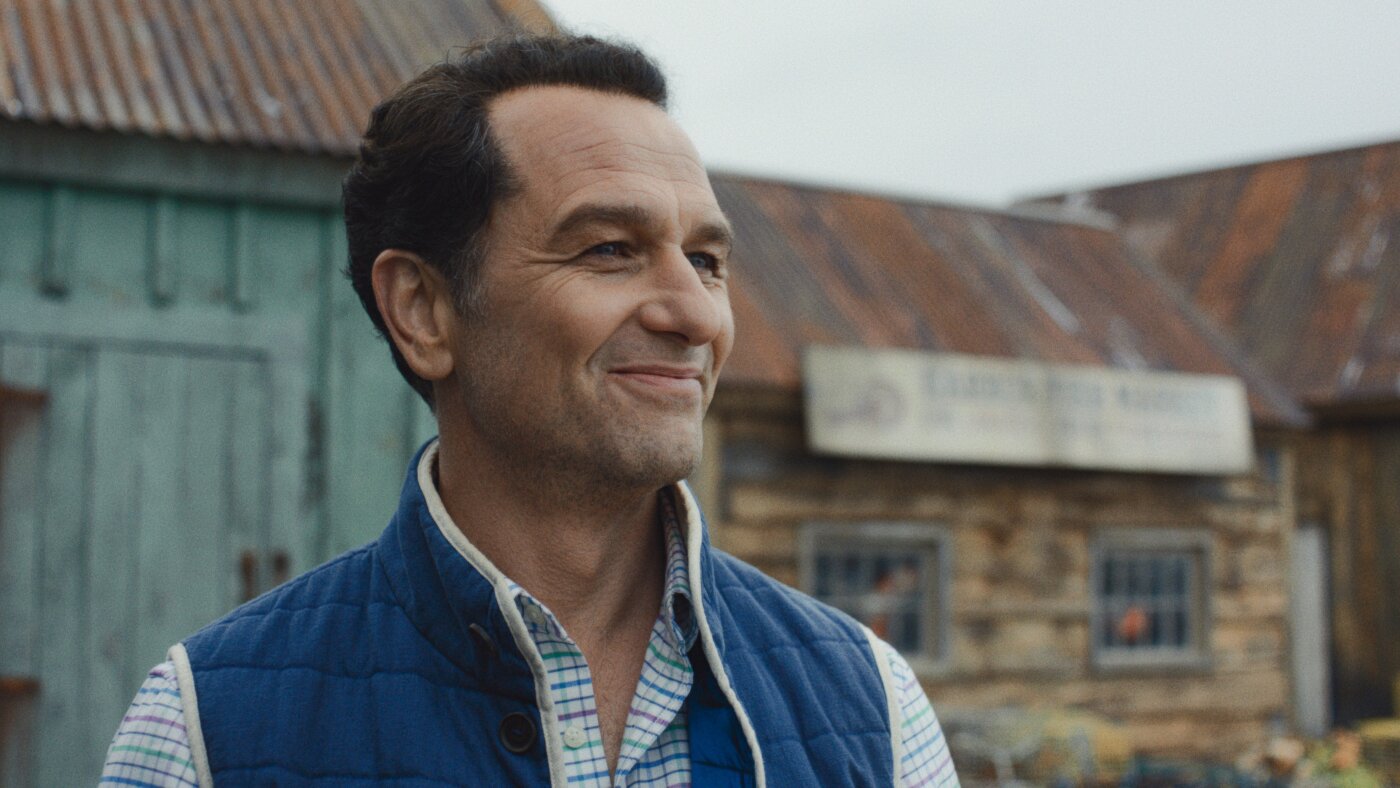
Matthew Rhys was nominated for his role in Widow’s Bay.
Apple TV
hide caption
toggle caption
Apple TV
The 2026 Emmy nominations are here. We’re unpacking the record-breaking nominations for Hacks, plus a big day for Widow’s Bay, The Pitt, and The Bear. We’ll also talk about the snubs and make some early predictions of who will win.
Connect with Pop Culture Happy Hour:
Letterboxd / Facebook
Our weekly newsletter
Support Pop Culture Happy Hour+
-
Politics7 minutes ago
Column: Trump decries ‘communism’ while his government takes ownership of companies
-
 Science10 minutes ago
‘I’d rather my house burn down than get cancer’: Herbicide use upends California’s fight to save forests
-
 Sports15 minutes ago
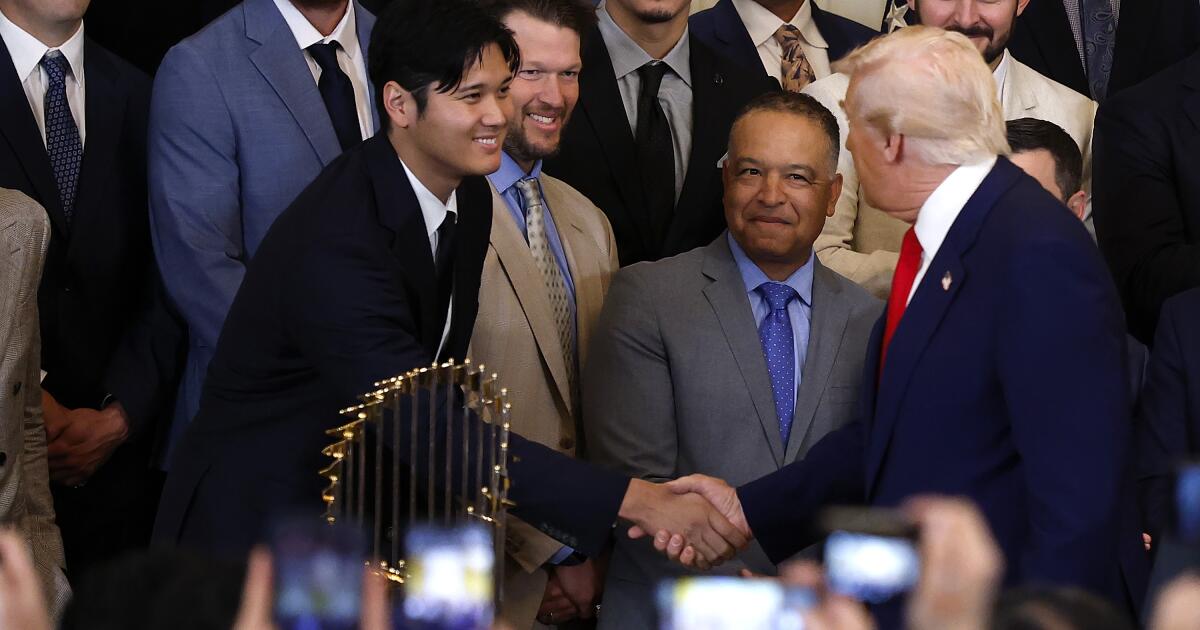
Dodgers scheduled to visit White House in late July to celebrate 2025 World Series win
-

 World25 minutes ago
Former US Olympian pleads not guilty in DC reflecting pool vandalism case
-
 News52 minutes ago
Former Olympian pleads not guilty in reflecting pool vandalism charges
-

 Los Angeles, Ca2 hours ago
Heat advisory, beach hazards in effect as Southern California sizzles
-

 Detroit, MI2 hours ago
Teen on moped hit by car after cruising through stop sign in Detroit
-

 San Francisco, CA3 hours ago
Flight of fancy: San Francisco moves to build private luxury airport terminal

