BATON ROUGE, La. — Louisiana’s Republican-controlled Senate advanced a bill Monday that would empower state and local law enforcement to arrest and jail people in the state who entered the U.S. illegally, similar to embattled legislation in Texas.
Louisiana
Louisiana proposes bill similar to Texas’ migrant arrest law


Proponents of the bill, such as the legislation’s author GOP state Sen. Valarie Hodges, say Louisiana has the “right to defend our nation.” Hodges has accused the federal government of neglecting responsibilities to enforce immigration law, an argument heard from GOP leaders across the country.
Opponents argue the bill is unconstitutional, will not do anything to make the state safer, and will only fuel negative and false rhetoric directed toward migrants.
Across the nation, reliably red legislatures have advanced tougher immigration enforcement measures. The Oklahoma House passed a bill that would prohibit state revenue from being used to provide benefits to those living in the state illegally. A bill in Tennessee, which is awaiting the governor’s signature, would require law enforcement agencies in the state to communicate with federal immigration authorities if they discover people who are in the country illegally. Measures that mirror parts of the Texas law are awaiting the governor’s signature in Iowa, while another is pending in Idaho’s statehouse.
Although Louisiana does not border Mexico, bills and policies targeting migrants suspected of entering the country illegally have been pushed to the forefront over the past four months under new conservative leadership. One bill looks to ban sanctuary city policies that allow local law enforcement to refuse to cooperate with federal immigration officials unless ordered by a court. Another would set up funding to send Louisiana National Guard members to the U.S.-Mexico border in Texas. New Republican Gov. Jeff Landry has also begun directing state agencies to collect and publish data on migrants in the state.
“I think all of us in here know that we have a crisis at the border and our federal government is not doing anything to help the states,” Sen. Hodges said during floor debate Monday.
Louisiana’s bill would create the crime of “illegal entry or reentry” into Louisiana. Illegal reentry includes people who were previously “denied admission, excluded, deported, or otherwise removed from the U.S.” The bill passed the Senate along party lines after 10 minutes of debate and now heads to the House.
Like the Texas law, which has been put on hold by a federal appeals court panel that is considering whether to continue blocking enforcement pending further appeals, Louisiana’s bill would expand the authority of state and local law enforcement. In addition, Hodges said it would “start the deportation process.” Currently, enforcement of immigration law regarding illegal entry and deportations has long been the exclusive domain of federal law enforcement.
Under Louisiana’s bill, anyone who violates the proposed law would face up to a year in prison and a $4,000 fine for a first offense, and up to two years in prison and a $10,000 fine for a second offense. Necessary witnesses or victims of certain crimes — such as murder, rape, human trafficking, kidnapping, involuntary servitude and blackmail — would be the exception.
In addition, the bill would authorize Gov. Landry to make an interstate compact with Texas and other states willing to participate in Texas’ state-led border security efforts. Proponents say the provision will help prevent illegal border crossings by sharing information and “state resources to build surveillance systems and physical barriers to deter illegal activity along the border.”
Opponents of Louisiana’s bill say it is an overreach of state authority, would increase racial profiling and could clog court systems.
“It’s going to create a backlog in our courts, it’s going to drain state resources, and it’s not going to actually reduce crime or make Louisiana any safer,” Huey Fischer García, a staff attorney at the Southern Poverty Law Center, said during a hearing on the bill last month.
If Louisiana’s bill is approved by the House and signed by the governor, who Hodges says supports the measure, it would take effect only if the Supreme Court upholds the Texas law or if the U.S. Constitution is amended to increase local border enforcement authority.
This story has been updated to correct that Louisiana’s migrant arrest bill was advanced by the state Senate on Monday, April 8, not Tuesday.
Associated Press writers Hannah Fingerhut in Des Moines, Iowa, Sean Murphy in Oklahoma City, Jonathan Mattise in Nashville, Tennessee, and Rebecca Boone in Boise, Idaho, contributed to this report.



Meta Platforms Inc. has committed to spending an additional $40 billion on its sprawling data center campus in Louisiana, pushing its total expected investment beyond $250 billion for the site as it continues to grow its artificial intelligence computing footprint.

NEWTON COUNTY, Texas. (KPLC) – A DeRidder man reported missing was found dead in the Sabine River Sunday morning, according to the Newton County Sheriff’s Office.
Newton County Sheriff Colton Havard said Jordan Jamal Allen was located around 7:50 a.m. on July 12 with help from Texas Parks and Wildlife game wardens, the Beauregard Parish Sheriff’s Office, and 409 Search and Rescue.
Authorities say the body was recovered not far from where Allen went under Friday night near the U.S. 190 bridge east of Bon Wier at the Texas-Louisiana state line.
The sheriff said that Allen and a woman were said to be wading across the river Friday when the current began pulling the woman.
The sheriff said Allen tried to help her, but went under around 8:45 p.m. and wasn’t seen again. He said the woman made it back to land safely.
We will have more in this story as it develops.
Copyright 2026 KPLC. All rights reserved.

MONDAY
RED STICK FLY FISHERS PROGRAM: 7 p.m., Bluebonnet Regional Library, 9200 Bluebonnet Blvd., Baton Rouge. Open to the public. Email Brian Roberts: roberts.brian84@gmail.com. Website: rsff.org
WEDNESDAY
FLIES & FLIGHTS: 7-9 p.m, Rally Cap Brewing, 11212 Pennywood Ave., Baton Rouge. Casual fly tying. Open to public. Email Chris Williams: thefatfingeredflytyer@gmail.com
THURSDAY
ACADIANA FLY RODDERS PROGRAM: 6 p.m., Pack and Paddle, 601 E. Pinhook, Lafayette. Open to public. Email Darin Lee: at cbrsandcdc@gmail.com. Website: acadianaflyrodders.org
FRIENDS OF NRA/SOUTHWEST LA BANQUET: 6 p.m., Riverside Bar & Grill, 3748 Louisiana 3059, Lake Charles. Call Brack Cole 337-912-1620. Email: jbcoleair@yahoo.com
ONGOING
STATEWIDE TOURNAMENT & ANGLERS RODEO/S.T.A.R.: Through Sept. 7, Coastal Conservation Association’s summer-long fishing event. Tagged redfish, coastal/offshore species categories & youth division. CCA membership required. Website: ccalouisiana.com/star
LOTTERY HUNTS
DOVE/TEAL: July 27 application deadline for dove hunt on Elbow Slough Wildlife Management Area and teal hunt on White Lake Wetlands Conservation Area. Website applications only on Wildlife & Fisheries/Louisiana Outdoors License, Permits and Tags webpage. Fee $8.50. Details: dove hunt, David Hayden at dhayden@wlf.la.gov; teal hunt, Lance Ardoin at lardoin@wlf.la.gov
AROUND THE CORNER
JULY 21 — LAFAYETTE KAYAK FISHING CLUB MEETING: 6 p.m., Pack and Paddle, 601 E. Pinhook, Lafayette. Call 337-232-5854. Website: lafayettekayakfishing.com
JULY 21-22 — GULF COUNCIL SHRIMP COMMITTEE MEETING: Gulf Council office, 4107 W. Spruce St., Tampa, Florida. In conjunction with Scientific and Statistical committees. Website: gulfcouncil.org
JULY 23 — ACADIANA BUGS & BREWS: 6 p.m., Pack and Paddle, 601 E. Pinhook, Lafayette. Casual fly tying and local beers provided. Open to the public. Email Darin Lee: cbrsandcdc@gmail.com. Website: packpaddle.com
JULY 23-25 — International Grand Isle Tarpon Rodeo, Grand Isle Marina & Otto Candies Pavilion, Grand Isle. Website: tarponrodeo.org
JULY 24-25—BASSMASTER JUNIOR CHAMPIONSHIP: Kentucky Lake, Paris, Tennessee. Website: bassmaster.com
JULY 26 — SOUTH LOUISIANA HIGHPOWER CLUB MATCH: 8:30 a.m., Ascension Parish Sheriff’s Range, St. Landry Road, Gonzales. NRA XTC & F-Class match rifle or service rifle, 200-yard/50-rounds match course. Fee $15 members, $20 nonmembers, $5 juniors. $25 annual club (first match free) and Civilian Marksmanship Program membership (allows purchases from CMP). Call Mike Burke, 337-380-8120. Email: SouthLAHighPower@hotmail.com
FISHING/SHRIMPING
SHRIMP: Spring inshore season closed except for Breton/Chandeleur sounds; all outside waters open.
OPEN RECREATIONAL SEASONS: Private recreational red snapper; gray triggerfish; flounder; lane, blackfin, queen and silk snappers and wenchmen among other snapper species; all groupers except closed for goliath and Nassau groupers in state/federal waters.
CLOSED SEASONS: Greater amberjack; bluefin tuna; gag, goliath and Nassau groupers in state/federal waters. Commercial greater amberjack season closed.
LDWF UPDATES
Closed: Roads on Pomme de Terre, Richard Yancey & Bogue Chitto WMAs (flooding)
Drawdowns: Saline Lake (Natchitoches/Winn parishes through Oct. 5); Iatt Lake (Grant Parish through Oct. 5).
-

 World5 minutes ago
EU sanctions Russia’s VK Company for helping expose Putin’s critics
-

 News35 minutes ago
One person killed in Maine in second fatal ICE-involved shooting in less than a week | CNN
-

 New York2 hours ago
How a Family of 5 Lives on $46,000 a Year in Wakefield
-

 Los Angeles, Ca2 hours ago
Southern California braces for 110-degree heat, thunderstorms this week
-
 Detroit, MI3 hours ago
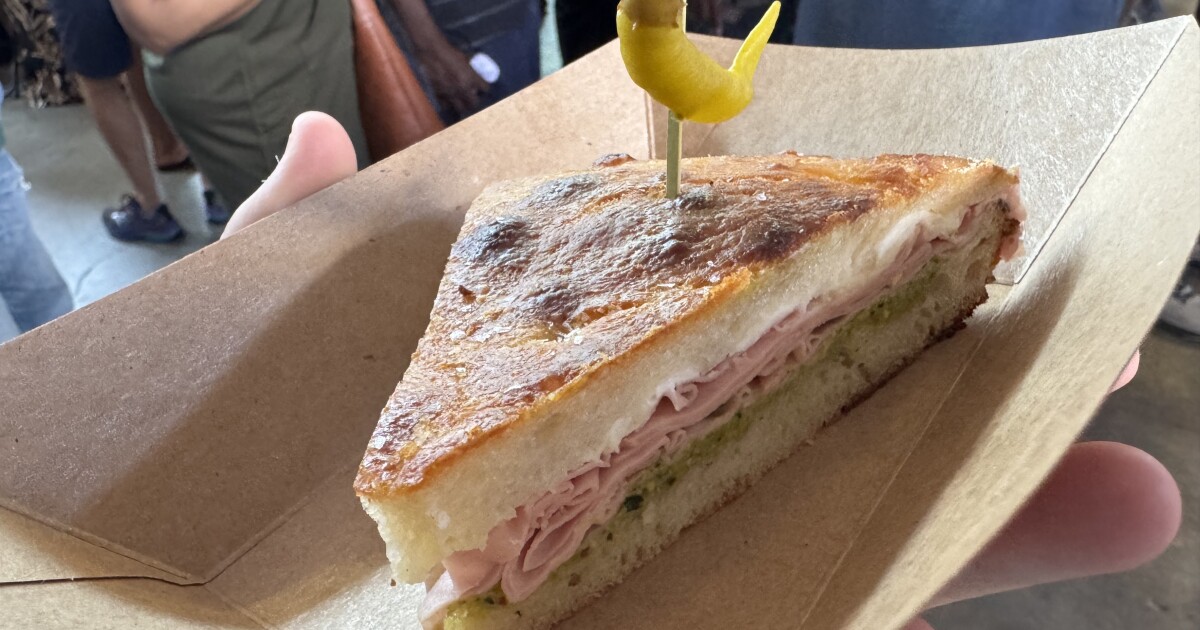
Detroit Sandwich Party returns to Eastern Market on Sept. 6
-

 San Francisco, CA3 hours ago
A Leak of San Francisco Police Drone Footage Exposes the New Reality of Urban Surveillance
-

 Dallas, TX3 hours ago
Viral East Dallas coffee shop fears major sales drop amid six-week road closure
-

 Miami, FL3 hours ago
3 hurt in fire on Lincoln Road that started underground

