Six years ago, when Kendrick Fisher asked Louisianaâs governor to soften the sentence he received for slaying Timothy Dunn, the request opened a floodgate of emotions for Dunnâs family.
It dredged up the anger and despair Dunn’s daughter and then-wife, Timolen Dunn and Lenasa Scott, felt in the days after his death. The mother and daughter went back and forth for months over whether Fisher deserved a second chance.
âI questioned her: âDo you think you would (support releasing him) if this happened to your son, and it was 30-plus years from now?ââ recalled Scott.
But at Fisherâs parole hearing late last year, a board member read a letter from Timolen Dunn that left Fisher speechless: She wanted him to walk free. It was a complete reversal from a hearing several years earlier where she argued for him to remain locked away.
âI imagined the person I was at 18,â Timolen Dunn said in an interview. âI am so far from that same person, and I have to believe that he is too.”
Eight years of leadership by Gov. John Bel Edwards saw an historic expansion of second chances for incarcerated people and a major reduction in Louisianaâs nation-leading prison rolls.
Now a new tough-on-crime Republican governor, Jeff Landry, wants to roll back a slew of those laws. When lawmakers convene this week at Landryâs request to debate sweeping changes to the stateâs public safety system, a debate over whether to keep people in jail longer or show them second chances â one the Dunn family knows all too well â will be at the center of their deliberations.
Timolen Dunn speaks during an interview/poses for a portrait at State Capitol Park on Thursday, February 1, 2024. Dunnâs father was killed by Kendrick Fisher when she was 2 years old and recently supported Fisherâs case for clemency.
Driven by a view that tougher sentences will improve public safety â an outlook contested by data analysts and some conservative policy groups â Landry and his allies want to do away with many of those opportunities. If they get their way, the state will see restrictions on parole and rollback of opportunities for prisoners to shave time off their sentences for good behavior. Seventeen-year-olds would be placed in the adult legal system. And death row prisoners who hoped for mercy under Edwards would again face the real prospect of execution, perhaps by methods that a bill under consideration seeks to expand.
âNo one, regardless of their neighborhood or zip code, should feel unsafe. We all want safer communities,â Landry said in a statement. âWe will defend and uplift our law enforcement officials and deliver true justice to crime victims who have been overlooked for far too long.â

Governor Jeff Landry speaks during a press conference on his plan to deploy national guard troops to the U.S.-Mexico border in Texas at the state capitol on Thursday, February 8, 2024.
A fresh start
Fisher, now 46, benefitted both from Edwardsâ generous use of his clemency pen and from a 2021 law that granted parole eligibility to a group of lifers who have served 20 years and are at least 45 years old. Under a bill filed in Landry’s special session, people who commit crimes going forward would not receive the same parole opportunities.
Convicted of shooting Dunn to death during an argument at Southern University, Fisher was sentenced under Louisianaâs second-degree murder statute and became one of a nation-leading swath of men to face life in prison. He arrived at the State Penitentiary at Angola in the 1990s; on one of his first days there, he saw an argument between two men escalate until one smashed another in the head with a 45-pound plate.
At that moment, Fisher chose to abandon the âfictitious personaâ he maintained as a young man cloaked in violence and bravado. He opted to make the most of the rehabilitative services Angola offers. Over the years, he racked up class credits on subjects ranging from anger management to woodworking; along with three vocational certificates, he secured a bachelorâs degree. He obtained 700 daysâ worth of âgood timeâ credits, which prisoners receive for good behavior and can lead to early release.

Parole Project director Andrew Hundley, left, and Kendrick Fisher, right, pose together for a picture at the Parole Project office on Tuesday, January 30, 2024. Fisher was released last month from the Louisiana State Penitentiary at Angola after serving 29 years. Hundley also had served time at Angola.
He asked the parole board for mercy late last year, apologizing for the pain he had caused Timothy Dunnâs family. The board granted his request, and he was soon freed.
Last weekend, he arrived in Houston, his home city, where the Louisiana Parole Project has set him up with an apartment and a job mentoring boys at a youth center about how to avoid the pitfalls that landed him in prison.
âI donât even think they have a word in the dictionary that could explain it,â he said before making the drive to Texas from Baton Rouge. âEvery moment I wake up, every experience that I get to relive life again, I look at it in a different light now.â
Strict sentencing, limited parole
Laws Landry wants changed include a number of statutes that grant people parole eligibility. But he has signaled the Legislature should not stop there, asking lawmakers to whittle back sentencing relief of all kinds, restart the death penalty and expand gun rights, among other policy changes.
One measure filed for the special session would eliminate âgood timeâ credits earned by people held in jail before they are convicted. Landry and his backers say it would simplify sentencing calculations and make sentencing more transparent, while critics contend it raises equity concerns and could pressure people to plead even when they are not guilty. A different bill would require people in state prisons to serve 85% of their sentences before they can be released on good time credits.

Henry Montgomery, 75, left, walks out past the gate of Louisiana State Penitentiary at Angola a free man after his release shortly after noon, Wednesday, Nov. 17, 2021.
Other legislation would eliminate parole for everyone who commits a crime in the state on or after Aug. 1, save for certain people convicted as juveniles, in an overhaul that conservatives say will create more transparency by making criminals serve precisely the number of years to which theyâre sentenced. The policy disregards Louisiana Department of Corrections data, critics say, showing that people approved for parole reoffend at less than half the rate of others who leave prison.
Lawmakers have also proposed rolling back legislation that gave district attorneys authority to negotiate plea deals with defendants after convictions. Measures seeking stiffer penalties for carjacking and firearm possession have been filed, too.
âWeâre not trying to deny anyone legitimate post-conviction relief, but we are trying to limit the scope of exhaustive, repetitive submissions that can be overly burdensome,â said Rep. Julie Emerson, R-Carencro, whoâs sponsoring the bill to limit post-conviction plea negotiations. âThe state doesnât have an obligation to provide post-conviction relief. We do it to allow for legitimate claims, but we also have an obligation to victims to limit continual attempts to bring up a matter that has already been settled.â
Some analysts say Landryâs sentencing priorities would do little to curb crime. Jeff Asher, a data consultant at the firm AH Datalytics, said his research shows no evidence that toughening penalties and growing the stateâs prison rolls would reduce violent crime, which rose in Louisiana during the pandemic but has since fallen in New Orleans and Baton Rouge.

In this Aug. 18, 2011 photo, a prison guard rides a horse alongside prisoners as they return from farm work detail at the Louisiana State Penitentiary in Angola, La. (AP Photo/Gerald Herbert)
Louisiana has reduced its incarceration rate 13 times since 1979, Asher said. In the years following the reductions, the stateâs crime rate rose seven times and fell six times. He added that there has likewise been no discernible correlation between crime and prison population after years in which the stateâs prison rolls grew.
âItâs not entirely clear what problem (the session is) trying to solve other than reversing reforms,â Asher said.
Illustrating the breadth of conservativesâ goals on criminal justice issues, Landryâs directive for the session went beyond enacting tougher sentencing.Â
At his request, lawmakers filed bills to expand methods for carrying out the death penalty to include nitrogen gas and electrocution and to legalize permitless concealed carry of handguns, among 28 bills filed by Friday. Political insiders expect Republicans to broadly back the governorâs goals.
More rights than victims?Â
In pushing for their vision of justice, Landry and his allies have raised the profile of a certain kind of crime victim â those whose loved ones would like to see sentences carried out on the precise terms meted out by judges and juries, without changes brought by parole or other opportunities for early release. Thatâs the case for Jinnylynn Griffin, whose sister, Linda Frickey, was dragged to her death in 2022 in a brutal New Orleans carjacking by several teens.
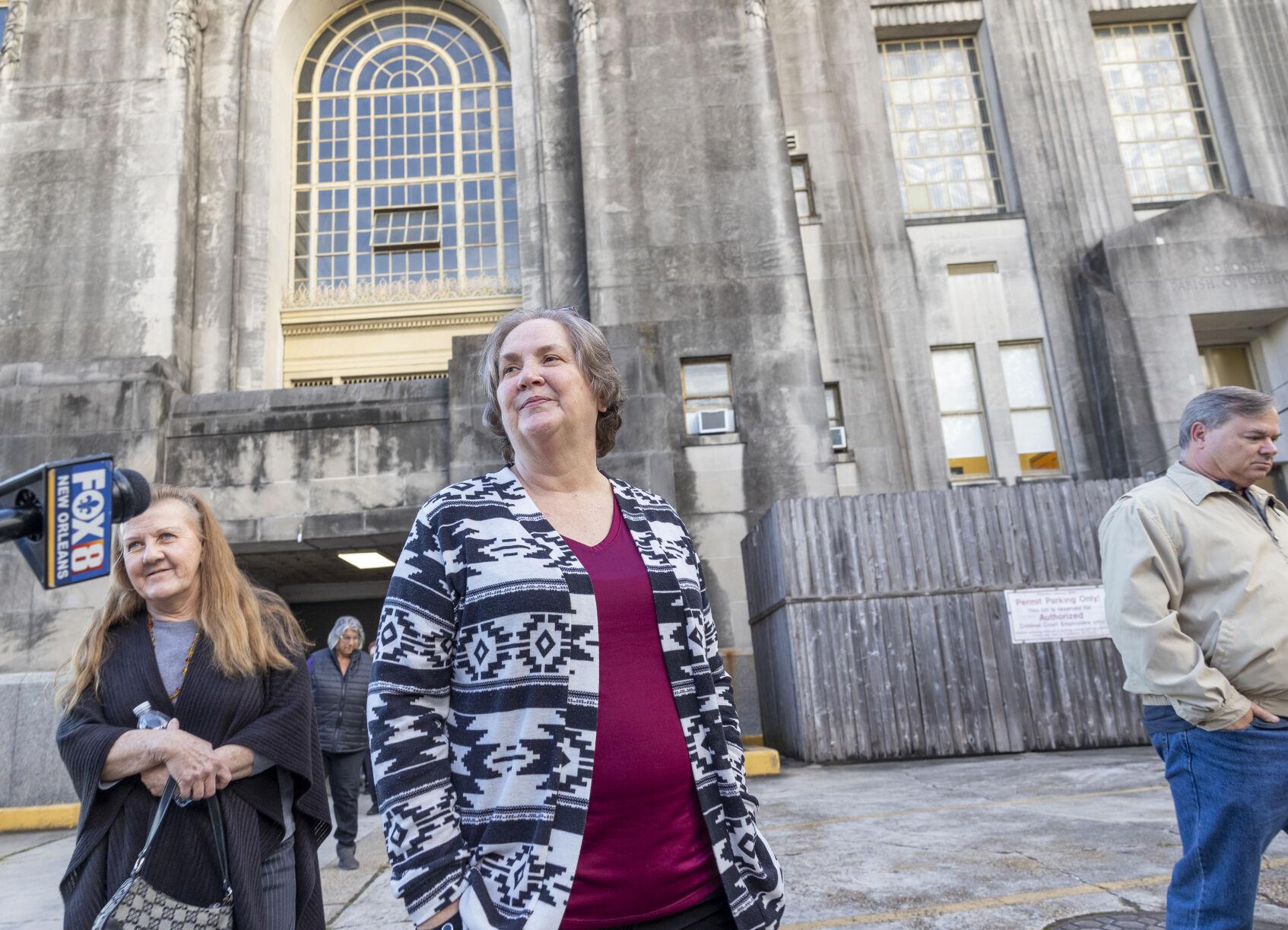
Jinnylynn Griffin, center, sister to Linda Frickey, and Kathy Richard, left center, sister-in-law to Frickey, walk with family outside the Orleans Parish Criminal District Court as the jury deliberates on the murder trial of Linda Frickey in New Orleans on Monday, November 27, 2023. (Photo by Chris Granger, The Times-Picayune)
âThe criminals, they have more rights (than the victims) in the current system,â Griffin said in an interview. âThe victims only have what happened that day.â
The sessionâs proposed changes to the youth justice system have also drawn scrutiny. Curtis Nelson, the stateâs outgoing Office of Juvenile Justice head, has warned against undoing the so-called âRaise the Ageâ statute, the law that aligned Louisiana with most other states by placing 17-year-olds in the youth justice system rather than the adult one. A Senate bill filed for the special session would reverse the law, which took effect in 2019. Nelson said the state should take an evidence-based, rehabilitative approach â something his agency promised years ago to implement but has failed to make reality â or risk getting sued again by the federal government for treating kids like adults.
âIf Louisiana were to repeal âRaise the Age,â itâs almost like weâre going backwards,â Nelson said.
Still, some see opportunities to work with Landry.
âI believe Jeff Landry can be known as the governor whoâs holding people accountable, but also as the governor who ensured that after people were held accountable, they were given opportunities to change their lives,â said Andrew Hundley, director of the Louisiana Parole Project, which helped Fisher transition to life outside Angola.

Timolen Dunn poses for a portrait at State Capitol Park on Thursday, February 1, 2024. Dunnâs father was killed by Kendrick Fisher when she was 2 years old and recently supported Fisherâs case for clemency.
Timolen Dunn does not consider herself political.
But with substantial changes to the justice system looming, she hopes lawmakers will center rehabilitation in their decisions.
âMy belief is prison is supposed to be like a rehab,â Dunn said. âYou commit a crime, thereâs a punishment, youâre supposed to learn from your mistake. If there comes a time when you do learn from your mistake, then you should be released. Otherwise, youâre just torturing people.â
Staff writer Meghan Friedmann contributed reporting.