Florida
University of Florida Drops All DEI Positions


The University of Florida has shut down its diversity, equity, and inclusion efforts, an administrative memo revealed on Friday, in response to new state restrictions on the use of funding. The memo says the school closed the Office of the Chief Diversity Officer, “eliminated DEI positions and administrative appointments, and halted DEI-focused contracts with outside vendors,” ABC News reports. The move eliminated about a dozen full-time positions, per Politico. “DEI is toxic and has no place in our public universities,” Gov. Ron DeSantis, who has led the move against DEI efforts, posted on X. “I’m glad that Florida was the first state to eliminate DEI and I hope more states follow suit.”
Three senior university officials said in the memo that the school nevertheless will carry on with “our commitment to universal human dignity.” The steps against DEI have been overseen by Ben Sasse, the former Republican US senator whose appointment elicited opposition. US Rep. Steven Horsford, chairman of the Congressional Black Caucus, took issue with DeSantis’ comment, saying “intolerance is toxic,” per NBC News. A state legislator called the firings “the most recent manifestation of the policies of an out of touch legislature, and a Governor’s failed Presidential bid,” per the Gainesville Sun. “We can’t call ourselves the ‘free State of Florida’ when children aren’t free to learn the truth of their history, and see the diversity of humanity,” Democratic Rep. Dianne Hart said. Every public college and university in Florida will be affected by the new law, per the AP. (More Florida stories.)



Immigration advocates in Florida have decried a “cruel and harmful” new rule by education officials aligned to hard-right Republican governor Ron DeSantis to ban undocumented students from state colleges and universities.
The Florida board of education voted on Tuesday to bar access to its 28 state-funded institutions to anybody not a US citizen or “lawfully present” in the country. It follows Florida’s move last year to strip discounted in-state tuition rates for certain immigrant students.
Opponents on Wednesday assailed the new directive, which some analysts estimate could cost Florida up to $15m annually in lost tuition and other fees. They also questioned if it was legal, given that it was approved by DeSantis’s hand-picked board of seven, instead of the elected state legislature.
“The rule-making process is supposed to implement existing legislation and laws that were passed, not create its own, and not create its own policies, which is exactly what the department is trying to do,” said Alexis Tsoukalas, senior analyst of the Florida Policy Institute, at a press conference hosted by the Florida Immigrant Coalition.
She said the action ran contrary to DeSantis’s own “Sail to 60” goal, a 2019 policy that sought to lift the number of Florida residents with “high-value” post-secondary education from below 50% to at least 60%.
“The Florida college system is already struggling with declining enrollment, this has been the case for the past several years, and it’s only gotten worse,” she said.
“It’s not like there are students waiting in the wings to enroll when others are denied admission. Florida cannot reach its attainment goal if a shrinking share are enrolling, so it is very much a concern for the state.”
Alexander Vallejos, a so-called Dreamer and computer science student at the University of Central Florida, who came with his family from South America in 2001 as a one-year-old, said it was cruel to dash the hopes of immigrant children who worked though the school system to graduate high school, only to find their pathway to higher education blocked.
“This ruling sends a painful message to young people who have done everything right,” he said. “It tells them that their hard work isn’t enough, and that their dreams are less because of something they have no control over.
“Behind every policy is a real person, a student’s story, where they’re staying up late to study, a young person working two jobs to pay just to pay for college, a future engineer, teacher, nurse, entrepreneur. They just want the chance to succeed.”
Luisa Santos, an elected member of the Miami-Dade school, who was brought to the US by her family from Columbia as an eight-year-old, said the state faced “serious consequences” for moving ahead with the ban.
“[It’s] everything from the $15m in lost tuition and fees estimated as a result of this, and even our governor getting in his own way of stated goals like Sail to 60, which so many school districts around Florida have worked so hard to try to accomplish,” she said.
“What I really want to focus on is how cruel, harmful, and just unnecessary this rule is right now. These rule changes took me back to the darkest days of high school, where, like Alexander, I felt the world caving in on me.
“No matter how hard I worked, I felt like opportunities were being taken away.”
Republican state senator Don Gaetz told the Florida Phoenix that only citizens and documented immigrants should be allowed to attend the state’s colleges and universities.
“The policy issue is: should illegal aliens receive taxpayer-funded higher education in Florida? And in my view, the answer to that question should be no,” he said.
“And if necessary, I will file legislation to ensure that the decision of the state board is enshrined in statute.”
But Anna Eskamani, a Democratic state representative running to become Orlando mayor, spoke by telephone during the public comment section of Tuesday’s board of education meeting to denounce the policy, according to the outlet.
“The attempt to restrict a child’s access to higher education based on the documentation status that is no fault of their own is un-American, it’s unfaithful, and it’s absolutely also constitutionally concerning because, obviously, we did not pass legislation on this matter,” she said.
Florida
New Florida domestic violence laws take effect, adding tougher penalties and new victim protections

Several new Florida laws aimed at strengthening the state’s response to domestic violence and dating violence took effect Wednesday, including tougher penalties for repeat offenders.
The changes come right after as investigators in Jacksonville responded to a Northside shooting that police say stemmed from a domestic dispute and left a 4-year-old girl dead and her 2-year-old sister and their mother in life-threatening condition.
The new laws also arrive months after a high-profile domestic violence case in Bradford County. Deputies said a mother, Rachael Kerr, was killed in an apparent murder-suicide on Jan. 29 after her estranged husband shot her. Investigators said their two children were inside the home at the time.
Below is a breakdown of what’s changing under the new laws.
Tougher penalties for repeat domestic violence offenders (HB 277)
One of the biggest changes is a new penalty enhancement for people who commit a domestic violence crime and already have a prior domestic violence conviction.
Under HB 277, the penalty level for a new domestic violence offense can be reclassified upward if the person has a prior conviction for domestic violence.
Here’s the breakdown in the new law:
-
A second-degree misdemeanor can be reclassified to a first-degree misdemeanor
-
A first-degree misdemeanor can be reclassified to a third-degree felony
-
A third-degree felony can be reclassified to a second-degree felony
-
A second-degree felony can be reclassified to a first-degree felony
-
A first-degree felony can be reclassified to a life felony
Electronic monitoring pilot programs for certain domestic violence and injunction cases (HB 277)
HB 277 also creates new electronic monitoring pilot programs that can apply in certain cases involving domestic violence crimes and violations of protective injunctions when a court has issued a no-contact order as a condition of probation.
The law creates:
-
A misdemeanor-level pilot program in Pinellas County (July 1, 2026 through June 30, 2028)
-
A felony-level pilot program in Florida’s Sixth Judicial Circuit (July 1, 2026 through June 30, 2028)
In those pilot areas, the law allows a judge to order electronic monitoring as a condition of probation. It also requires monitoring in certain situations if a judge finds clear and convincing evidence the defendant poses a threat of violence or physical harm to the victim.
The law also requires evaluations and reports to the Legislature on how the pilot programs are working.
Expanded address confidentiality protections for dating violence victims (SB 296)
Another new law, SB 296, expands Florida’s Address Confidentiality Program to include victims of dating violence, not just domestic violence.
The Address Confidentiality Program is designed to help victims keep their residential, work or school addresses from being publicly disclosed through records requests.
SB 296 also defines “dating violence” in state law for purposes of the program, describing a range of violent acts or threats committed by someone in a continuing and significant romantic or intimate relationship with the victim.
New 911 alert system feasibility study (SB 296)
SB 296 also directs the state to explore the creation of a web-based 911 alert system for victims of domestic violence and dating violence.
The law says the study should look at whether an alert system could do things like:
-
Create a unique telephone number for each user that connects to a public safety answering point (PSAP)
-
Allow a user to enter a code or phrase after contacting 911 to indicate they need immediate law enforcement help
-
Support real-time data sharing between 911 centers and law enforcement agencies
The Division of Telecommunications within the Department of Management Services must report the results of that study to the Legislature by Jan. 31, 2027, according to the law.
Help is available
If you or someone you know is experiencing domestic violence, help is available 24/7 through the National Domestic Violence Hotline at 1-800-799-SAFE.
Resources
If you or someone you know is experiencing domestic violence — help is available 24/7 through the National Domestic Violence Hotline at 1-800-799-SAFE.
Additionally, there are a number of resources in the Jacksonville area that provide help for victims of domestic violence.
Hubbard House
The Hubbard House has a hotline open 24/7 with operators who will talk confidentially to anyone experiencing domestic violence or questioning aspects of their relationship.
Operators can be contacted at 904-354-3114.
Victim services
The City of Jacksonville’s Social Services Division provides referral and victim advocacy services to victims of crime. Services are intended to help reduce trauma associated with domestic violence crimes.
Calls made to 904-630-6300 are all confidential.
InVEST (Intimate Violence Enhanced Services Team)
InVEST is a program aimed at increasing victim safety in the most potentially lethal cases. It’s a joint effort by the Jacksonville Sheriff’s Office, City of Jacksonville, and Hubbard House.
On a daily basis, InVEST staff review police reports and assess cases for lethal indicators. They then contact the victim to offer services.
For further information, please call (904) 255-3388.
Trinity Rescue Mission
Trinity Rescue Mission offers services to women who are trying to escape from dangerous circumstances and situations. It’s not a certified shelter, but it will provide assistance.
Copyright 2026 by WJXT News4JAX – All rights reserved.

A 37-year-old man was jailed June 29 after Port St. Lucie Police reported finding nearly 5 ounces of cocaine, other drugs and firearms at his home, according to an affidavit.
Wallick Cooper, of the 800 block of Southwest Monica Street in Port St. Lucie, was arrested on charges including a single count of cocaine trafficking; two counts of possession of controlled substance without prescription; and three counts possession of firearm or ammunition by a felon.
Police conducting surveillance June 25 at a gas station in the 300 block of Southwest Port St. Lucie Boulevard reported a Mercedes-Benz arrived and backed in. Detectives reported seeing a suspected drug transaction between the driver and a man who approached the driver’s window.
Investigators stopped the Mercedes after it left, alleging the window tint was illegal. Cooper, the only occupant, reportedly “immediately began lying about where he was coming from and where he was heading,” an affidavit states.
He let police search the vehicle. They found no drugs but turned up about $1,000 they suspected came from drug sales, though Cooper “smirked and denied accusations,” the affidavit states.
Cooper was released from the scene.
Police told his probation officer about the encounter, and the probation officer on June 29 reported finding suspected drugs in Cooper’s home.
Ultimately, police got a search warrant, and they reported finding about 4.92 ounces of cocaine; about 12.9 ounces of marijuana; three firearms; and a small amount of pills.
Cooper has a medical marijuana card, but hadn’t gotten pot since February, according to police. Police reported the recovered marijuana wasn’t packaged “consistent with legally possessed marijuana.”
Cooper was held July 1 in the St. Lucie County Jail on no bond, a jail official said.
Will Greenlee is a breaking news reporter for TCPalm. Follow Will on X @OffTheBeatTweet or reach him by phone at 772-267-7926. E-mail him at will.greenlee@tcpalm.com.
-

 Health14 minutes ago
She Ate High-Protein Ice Cream Daily and Lost 193 Lbs—Her Keys to Success
-
 Lifestyle29 minutes ago
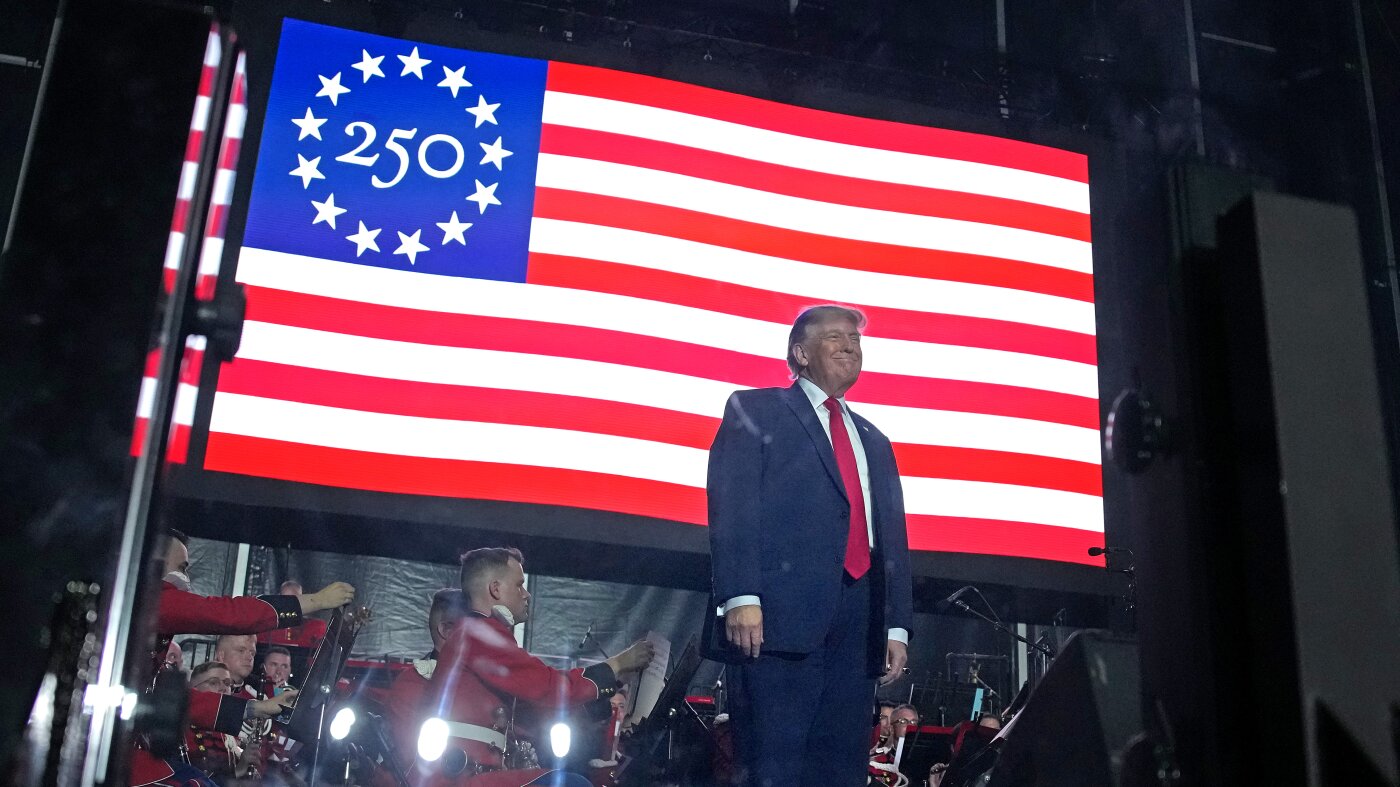
House Democrats accuse Trump of ‘hijacking’ America’s 250th birthday for his own gain
-

 Technology41 minutes ago
Tesla driver faces manslaughter charges over Texas crash that killed a woman inside her home
-

 World44 minutes ago
Six Kurdish fighters killed in IRGC ambush as clashes spread across western Iran
-

 Politics49 minutes ago
Sanctuary county refused 615 ICE transfer requests, turned over just 11 illegal immigrants, records show
-

 Health56 minutes ago
Mystery parasite leaves Americans battling ‘explosive’ illness as CDC investigates
-

 Sports59 minutes ago
2026 World Cup Round Of 16 Odds: Who’s Favored To Advance?
-

 Technology1 hour ago
Fox News AI Newsletter: American manufacturer says AI is creating jobs, not replacing them

