Florida
‘Living and working in Florida is like being in a toxic relationship,’ but the Northeast shows jarring differences, real estate founder says | Fortune


In a candid interview, top real estate agent and founder of SYKES Properties, Erin Sykes, got real about the state of the Florida real estate market. “Living and working in Florida is like being in a toxic relationship,” she said at the ResiDay conference in an interview with ResiClub editor Meghan Malas.
Now, Skykes, whose firm showcases multimillion-dollar deals in both Florida and the Northeast, said she’s watching two Americas diverge in real time. In the Northeast, she’s seeing bidding wars have returned in commuter suburbs like Monmouth County, N.J., and mid-Long Island, where buyers still fight for an acre and an elite school district. In Florida, by contrast, she described a market in withdrawal, nursing a hangover after a flurry of activity. “Just a couple years ago, we were being love-bombed and told how great we were,” she said, citing Florida’s burgeoning status as “Wall Street South,” a new finance hub. Now, things are “flat” or even heading downward.
Home prices in Florida have fallen 5.4% year-over-year, dragged down by a glut of aging condos facing six-figure special assessments and post-Surfside safety mandates. Single-family homes, meanwhile, remain relatively resilient, she noted. She characterized the Sunshine State’s housing scene as a cycle of boom, bust, and burnout. She’s always fueled by the belief that somehow, the next round will be different.
“Now we’re being told, ‘Oh, you’re too expensive,’ and kind of being discarded,” Sykes said. “You know, the conversation changes by the day, really.”
Noting that Florida has always been a boom-or-bust state, she said she sees signs of moderation rather than collapse. “Rather than being the boom up here and the bust way down here like we saw in 2008 and 2009, the waves are becoming flatter,” she said. While there may be a pullback in prices, “really, a 5% pullback is nothing when your house has appreciated 25%.”
For Florida, Sykes argued, even a flat market signals stability after years of breakneck appreciation—especially in Palm Beach, where home values have jumped as much as 200% in the past few years.
The challenge of dual market personalities
Sykes described jarring regional differences. In Florida as an agent, you’re “just trying to really push and pull and drag deals together, you’re getting discounts of 5%, 10%, 20% off list price,” but then in the Northeast you find yourself going into a bidding war. “It’s like having a multiple personality disorder.”
That volatility, she noted, reflects a broader split between regions that overheated during the pandemic and those returning to normal. The migration wave that sent high earners south may have turbocharged Florida’s boom but also exposed its fragility. Now, Sykes said, agents and homeowners alike are navigating two competing realities: the Northeast’s cautious recovery and the Southeast’s cooling after years of mania.
She also outlined a bifurcation within the Florida housing market: while single-family homes remain robust thanks to demand for space among incoming families, condos face mounting challenges. That’s difficult because they are “really what has been driving down the Florida market,” and they are facing new challenges from special assessments, strengthened structural regulations, and fallout from incidents like the Surfside collapse. Pre-selling of new-construction condos continues apace, she said, with West Palm Beach alone seeing many significant developments underway.
Sykes described a bifurcation between single-family homes and condos in Florida, since its exploding population is full of people who left Manhattan or Chicago and “wanted their own space.” She said single-family homes are doing well, and then “We’re seeing condos bifurcated, and then within that bifurcation of condos, a secondary bifurcation.”
“Florida,” she concluded, “you have to always take with a grain of salt.”







Florida
Florida college Republicans group chat reveals racist texts: ‘Avoid the coloreds like the plague’

It only took three weeks for a group chat for conservative students at Florida International University (FIU) to become a place where participants eagerly used racist slurs, prompting widespread condemnation from community leaders.
Abel Alexander Carvajal, secretary of Miami-Dade county’s Republican party and a student at FIU’s College of Law, reportedly started the chat after the killing of Charlie Kirk, the founder of Turning Point USA, in September 2025.
But on Wednesday, the Miami Herald published leaked WhatsApp conversations in which the college Republicans made racist, sexist, antisemitic and homophobic comments, including variations of the N-word used more than 400 times. Knowledge of the chat’s existence was revealed on the same day that Republican lawmakers in Florida pushed forward a bill to rename a one-mile stretch of road alongside FIU in honor of Kirk.
William Bejerano, who the Herald noted once tried to start an anti-abortion group at Miami Dade College, was the most prolific user of the N-word. Using the slur, Bejerano called for dozens of acts of extreme violence against Black people, including crucifying, beheading and dissecting.
Dariel Gonzalez, then the College Republicans’ recruitment chair, who has recently applied to become a GOP committee member, responded to the calls for violence by saying: “How edgy.” He repeatedly used “colored” to describe Black people, including writing: “Ew you had colored professors?!” and “Avoid the coloreds like the plague,” according to the Herald.
Carvajal, who was appointed to a two-year role on the city of Hialeah’s planning and zoning board earlier this year, confirmed to the paper that the group chat was his doing, but he denied knowledge of the problematic comments until the publication contacted him about its logs last week.
“It’s been five months since this was sent and this is the first time I’ve seen this message,” Carvajal told the Herald.
“I guess to an extent, I bear some responsibility, cause I created a chat. But if I had seen this at the moment, I would have removed [Bejerano] from the chat. I probably would have even blocked his number.”
The Herald found that Carvajal had deleted 14 messages sent by other participants in the chat and 42 of his own messages before the publication obtained the chat’s logs.
He also participated in some of the racist discussions. While referring to a Black student who allegedly left FIU’s College Republicans after a member of the group “called her a [N-word]”, the Floridian reported that Carvajal wrote: “Why didn’t miggress leave?” Elsewhere in the chat, the publication reported that Carvajal used “Miggress”, “Migglet” and “Migger” to refer to Black women, Black children and Black people, in general.
At one point, Gonzalez wrote: “You can fuck all the [K-word, a slur for Jewish people] you want. Just don’t marry them and procreate.”
Ian Valdes, the Turning Point USA FIU chapter president, responded, “I would def not marry a Jew,” before changing the group chat’s name from “Uber [R-word slur for disabled people] Yapping” to “Gooning in Agartha”. “Gooning” is a gen-Z slang term for male masturbation, while “Agartha” is a mythical white civilization promoted by Heinrich Himmler, one of the most powerful leaders in Nazi Germany next to Hitler.
Gonzalez reportedly described Agartha to the group chat as “Nazi heaven sort of”.
Kevin Cooper, the first Jewish chair of the Miami Dade Republican party, condemned the group chat in a statement published to X and called for Carvajal’s resignation.
“The majority of our board voted to request Carvajal’s resignation. We have commenced removal proceedings and look forward to resolution from the Republican Party of Florida,” he wrote.
That call was echoed by Juan Porras, a Republican state representative and Miami-Dade GOP state committee member, who said in a statement: “Leadership carries responsibility. When someone in a leadership role engages in this kind of behavior, it damages the trust placed in our party by voters across Florida. For that reason, I am asking the Miami Dade Republican party secretary to step down from this position.”
In a joint statement, Florida Republican state senators Alexis Calatayud, Ileana Garcia and Ana Maria Rodriguez denounced the chats and called for the expulsion from party leadership of its participants.
“The individuals in the group chat have exposed how profoundly misaligned their beliefs are to the views of the Republican party of Florida,” their statement said. “We call for the immediate expulsion of the individuals disseminating from any level of leadership of the Miami-Dade Republican Party … We will not tolerate bigotry or discrimination.”
Multiple leaked group chats from young Republicans have created controversy in recent years.
Last year, Politico published messages from a group chat of more than 100 conservatives across the country in which users also made racist and antisemitic comments. In 2022, a Young Republican group chat from North Dakota was revealed as a cesspool of homophobic and antisemitic rhetoric.
Florida
Gas prices rise in South Florida amid U.S. and Israel’s conflict with Iran, as the stock market also reports a dip

Four days into the Iranian conflict, gas prices are rising at many stations in South Florida.
“I’ve traveled all over the United States,” says Stacey Williams. CBS Miami spoke to him as he was gassing up on the turnpike. He paid $66 for 20 gallons of diesel to fill his pickup truck. Williams has noted the fluctuations in fuel as he drives to locations for his work on turbines. He just spent three weeks at the Turkey Point Nuclear Power Plant south of Miami.
“The salary we get paid per hour does not add up to what we pay for gas, housing, and food,” he says.
Mitchell Gershon is also dealing with the higher gas prices. He has to fill three vehicles constantly for his business—Thrifty Gypsy, a pop-up store at musical venues. He’s back and forth from Orlando to Miami and says fuel is costing him 20% more. When asked how he handles these fluctuations, he said, “Have a little backup cash so you are ready for it.”
The rise in oil prices contributed to a drop in the stock market on Tuesday, which means some retirement accounts dipped, too. CBS Miami talked to Chad NeSmith, director of investments at Tobias Financial Advisors in Plantation, for perspective on the drop.
“We are seeing most of the pullback today. Yesterday was a shock,” he says. He’s not expecting runaway oil prices but says investors should stay in the loop: “Pay attention to your portfolio. Stick to your goals. Have a plan because these things are completely unpredictable.”
That unpredictability has Williams adjusting his budget. “You just cut back, cut corners, all you can do,” he says.

Is ‘Josie and the Pussycats’ (2001) Really Even A Rock N Roll Movie? (FILM REVIEW) – Glide Magazine

Intense Israeli strikes hit Iran and Lebanon as US warns the bombardment will ‘surge dramatically’

Video: President Fires Noem as Homeland Security Secretary

GLP-1 Drugs Linked to Osteoporosis and Gout: Here’s How To Stay Safe
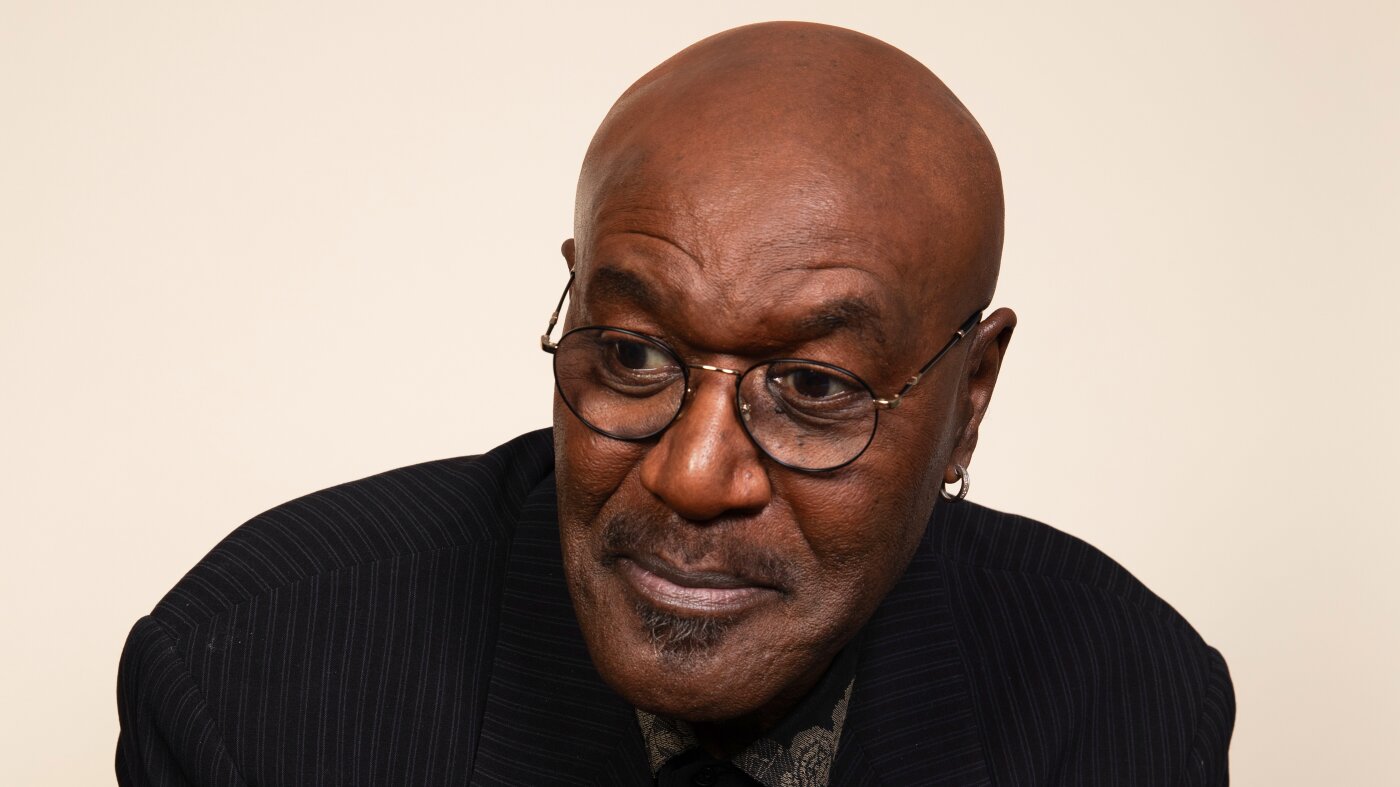
No matter what happens at the Oscars, Delroy Lindo embraces ‘the joy of this moment’

Florida High School Football Rankings: Top 25 teams – Oct. 21

Cleary's 21 help Le Moyne down Central Connecticut State 69-64 in OT

How old is Bo Nix? What to know about Oregon quarterback ahead of 2024 NFL Draft

99th annual Pony Swim held in Virginia

Indiana Members Credit Union announced as new anchor tenant at Bottleworks District

DOJ continues Biden autopen probe despite former president unlikely to face charges
Fact check: Did French border guards mock influencers returning from Dubai amid Iran war?

Iran’s fight for survival / The widening war / Trump’s nebulous goals : Sources & Methods

Map: 4.9-Magnitude Earthquake Shakes Louisiana

Paxton vows he’s ‘staying in this race’ even if Trump backs Cornyn in Texas GOP clash
-

 World1 week ago
Exclusive: DeepSeek withholds latest AI model from US chipmakers including Nvidia, sources say
-

 Wisconsin4 days ago
Setting sail on iceboats across a frozen lake in Wisconsin
-

 Massachusetts1 week ago
Mother and daughter injured in Taunton house explosion
-

 Maryland5 days ago
AM showers Sunday in Maryland
-

 Massachusetts3 days ago
Massachusetts man awaits word from family in Iran after attacks
-

 Florida5 days ago
Florida man rescued after being stuck in shoulder-deep mud for days
-

 Denver, CO1 week ago
10 acres charred, 5 injured in Thornton grass fire, evacuation orders lifted
-

 Oregon6 days ago
2026 OSAA Oregon Wrestling State Championship Results And Brackets – FloWrestling