Florida
DeSantis signs bill that will provide $20 million in compensation to Dozier School for Boys victims • Florida Phoenix

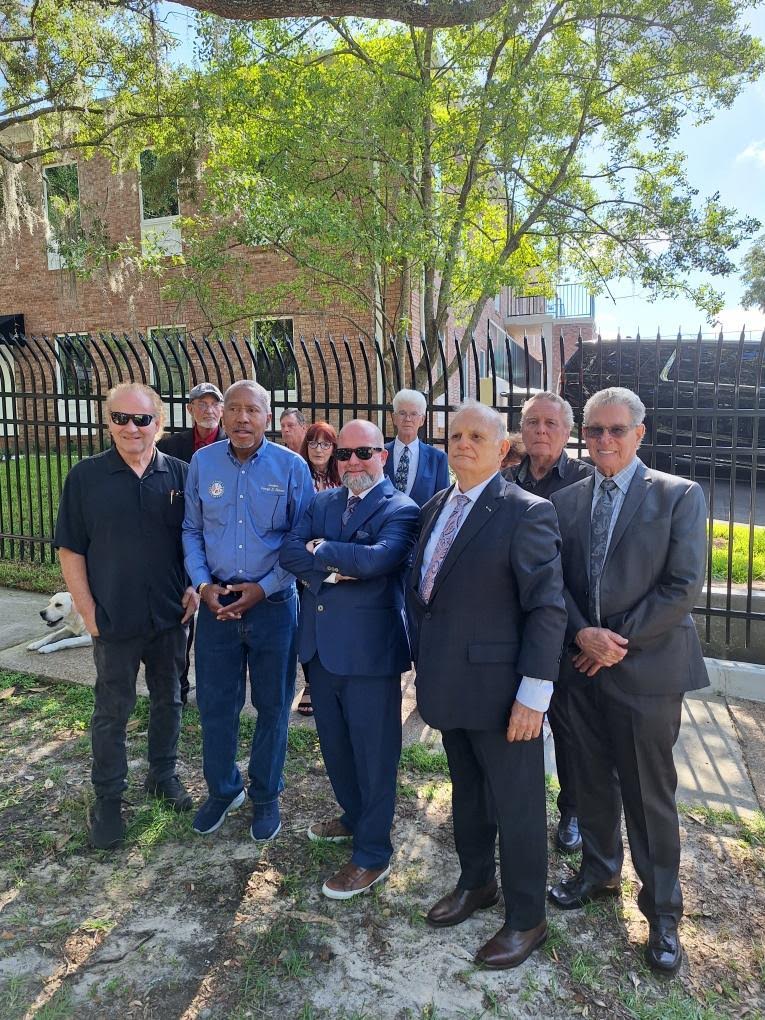
Gov. Ron DeSantis has approved a measure that will finally provide reparations for hundreds of men who as children were beaten and raped for decades while in the custody of the state.
The law (HB 21) signed by the governor on Friday morning will divide $20 million in compensation between those who attended the Arthur G. Dozier School for Boys in North Florida between 1940 and 1975, as well as the Okeechobee School, another state-based institution known for its abusive nature.
According to a bill analysis, there were reports of children being chained to walls in irons, brutal whippings, and peonage at Dozier as early as 1901. In the first 13 years of operation, six state-led investigations took place. After former Dozier School students began to publish accounts of the abuse, their complaints gained traction.
Ultimately, then-Gov. Charlie Crist in 2008 directed the Florida Department of Law Enforcement to investigate the Dozier School and the deaths alleged there.
Meanwhile, the school was closed following a federal investigation in 2011 and lawmakers gave a formal apology to the survivors in 2017.
Over those years, some of the still-living victims of rape and physical beatings by officers repeatedly made their way to Tallahassee to tell state lawmakers about the horrors suffered at those state-run institutions. They’ve been dubbed “the White House Boys” for the building on the Dozier campus in Marianna where boys were — among other abuse — beaten with a leather strap attached to a wooden handle.
Retired Army Ranger Capt. Bryant Middleton was one of those victims who made the trek to Tallahassee for years. Earlier this year, he told a state Senate committee not to think of him as the man in his late 70s, but as a young boy decades ago, when he and other boys endured abuse at the Dozier School.
“I would ask you: If it were your child that came home from school, your child said to you, ‘They took me to a room and beat me with a paddle.’ Your daughter comes home and says, ‘They took me into a room and they did something to me that made me uncomfortable.’ That’s what we endured,” he said.
“We were children”

“We were children. Don’t look at me as an adult. Think of me as a young child being beaten and molested and tormented, day in and day out. That’s what the school was really about. The beatings? We got over those. Those children that were raped at the age 6 and 7 and 8 — I don’t think they over got over that.”
Somewhat surprisingly, the governor’s office invited no news reporters or cameras to the bill signing, although about 15 of the men who have regularly visited the Legislature to lobby for the measure were there, along with the legislators who sponsored the measure — St. Petersburg state Sen. Darryl Rouson and House Republicans Michele Salzman from the Panhandle area and Kiyan Michael from Jacksonville.
“It came down to a crunch, you know, the final tranche of bills, and I know he has a very busy schedule,” Rouson said. “The important thing was to get it signed, and that’s what happened.”
The bill is set to go into effect on July 1. Applications for individuals eligible for compensation will go to the state Department of Legal Affairs, which will review and approve or deny applications.
Applications accepted through year’s end
The law says that only those who were confined to the Dozier School for Boys or the Okeechobee School between 1940 and 1975 are eligible; personal representatives or estates of those who attended the school but have died “may not file an application for or receive compensation” the law says. Applications will be accepted until Dec. 31 of this year.
Although it has been frequently mentioned that there are approximately 400 living survivors of the two institutions who are eligible to be compensated, one of the survivors, 80-year-old Tampa resident Gene Luker, told the Phoenix after the measure passed in the Florida Senate in March that he believes that far fewer than that are still alive.
“I don’t believe that,” he said at the time of the higher number. “I think if there’s around 100-150 from that time limit” — although he joked that more might “come out of the woodwork” now that it looks more possible than ever that the living victims will receive financial compensation.
After the measure passed out of a Senate committee in March, Broward County Democratic Sen. Rosalind Osgood approached one of the men who testified for the legislation.
“I’m deeply sorry for what happened to you,” Osgood said. “I know that no amount of money or no words can take away your pain, but I do want to tell you this morning that I love you. I love you. And I pray in the days to come that you will have at least a sense of peace and knowing that we care, and that we are doing the best we can to acknowledge that.”
Rouson has been pushing for the living victims at Dozier to be compensated for years. He said on Friday that he was “elated” after the governor signed the bill.
“It’s a poignant moment,” he said. “You can’t do anything about the 55 unmarked graves — individuals who we may never know. But we can do something about those still living, and who witnessed the trauma of beatings, disappearances, and injuries, both psychological and physical. It’s significant for them, and that’s why they showed up today.”



A diver who was reported missing near the Fort Pierce Inlet has been found dead, according to the St. Lucie County Sheriff’s Office.
The U.S. Coast Guard received a mayday call around 11:30 a.m. June 27 about the missing diver. The Coast Guard then notified the Florida Fish and Wildlife Conservation Commission, which deployed four boats to assist in the search, according to a social media post by the Sheriff’s Office. The St. Lucie County Sheriff’s Office marine unit also responded.
Friends of the missing diver joined the search, departing from Fort Pierce Inlet around 1 p.m.
The search, which included aerial support from the Coast Guard and FWC, focused on an area about six to seven miles north-northeast of the Fort Pierce Inlet, near Avalon State Park.
Around 4:10 p.m., the group of civilian divers entered the water and located the missing diver at the bottom of the ocean in about 55 feet of water. The diver was recovered and pronounced dead.
The body was transported to Coast Guard Station Fort Pierce. The St. Lucie County Sheriff’s Office Criminal Investigations Division is investigating the incident.
No additional information is available at this time.
This story was created by Colleen Wixon, colleen.wixon@tcpalm.com, with the assistance of Artificial Intelligence (AI). Journalists were involved in every step of the information gathering, review, editing and publishing process. Learn more at cm.usatoday.com/ethical-conduct.
Colleen Wixon is the Indian River County government watchdog reporter for TCPalm and Treasure Coast Newspapers.

The Florida Lottery offers several draw games for those hoping to win one of the available jackpots.
Here’s a look at the winning numbers for games played on Friday, June 26, 2026.
Winning Mega Millions numbers from June 26 drawing
05-13-30-33-52, Mega Ball: 06
Check Mega Millions payouts and previous drawings here.
Winning Jackpot Triple Play numbers from June 26 drawing
09-12-15-25-30-38
Check Jackpot Triple Play payouts and previous drawings here.
Winning Fantasy 5 numbers from June 26 drawing
Midday: 05-11-19-27-31
Evening: 17-24-29-34-35
Check Fantasy 5 payouts and previous drawings here.
Winning Cash Pop numbers from June 26 drawing
Morning: 11
Matinee: 08
Afternoon: 14
Evening: 03
Late Night: 01
Check Cash Pop payouts and previous drawings here.
Powerball, Mega Millions jackpots: What to know in case you win
Here’s what to know in case you win the Powerball or Mega Millions jackpot.
Just the FAQs, USA TODAY
Winning Pick 2 numbers from June 26 drawing
Midday: 2-7, FB: 1
Evening: 3-5, FB: 8
Check Pick 2 payouts and previous drawings here.
Winning Pick 3 numbers from June 26 drawing
Midday: 2-8-7, FB: 1
Evening: 7-0-4, FB: 8
Check Pick 3 payouts and previous drawings here.
Winning Pick 4 numbers from June 26 drawing
Midday: 3-4-9-0, FB: 1
Evening: 4-2-7-4, FB: 8
Check Pick 4 payouts and previous drawings here.
Winning Pick 5 numbers from June 26 drawing
Midday: 0-5-3-4-6, FB: 1
Evening: 7-0-0-4-5, FB: 8
Check Pick 5 payouts and previous drawings here.
Where can you buy Florida Lottery tickets?
Tickets can be purchased in person at any authorized retailer throughout Florida, including gas stations, convenience stores and grocery stores. To find a retailer near you, go to Find Florida Lottery Retailers.
Feeling lucky? Explore the latest lottery news & results
Are you a winner? Here’s how to claim your prize
- Prizes of $599 or less: Claim at any authorized Florida Lottery retailer or Florida Lottery district office.
- Prizes for $600 to $1 million: Must be claimed in person at any Florida Lottery district office for games that do not offer an annual payment option.
- Prizes greater than $1 million and all prizes with an annual payment option: Must be claimed at Florida Lottery headquarters, except Mega Millions and Powerball prizes, which can be claimed at any Florida Lottery district office.
You also can claim your winnings by mail if the prize is $250,000 or less. Mail your ticket to the Florida Lottery with the required documentation.
Florida law requires public disclosure of winners
If you’re a winner, Florida law mandates the following information is public record:
- Full name
- City of residence
- Game won
- Date won
- Amount won
- Name and location of the retailer where the winning ticket was purchased.
When are the Florida Lottery drawings held?
- Powerball: 10:59 p.m. Monday, Wednesday and Saturday.
- Mega Millions: 11 p.m. Tuesday and Friday.
- Florida Lotto: 11:15 p.m. Wednesday and Saturday.
- Jackpot Triple Play: 11:15 p.m. Tuesday and Friday.
- Fantasy 5: Daily at 1:05 p.m. and 11:15 p.m.
- Cash Pop: Daily at 8:45 a.m., 11:45 a.m., 2:45 p.m., 6:45 p.m. and 11:45 p.m.
- Pick 2, 3, 4, 5: Daily at 1:30 p.m. and 9:45 p.m.
This results page was generated automatically using information from TinBu and a template written and reviewed by a Florida digital producer. You can send feedback using this form.

The Agrculture Department says the error rate in the SNAP food program for low-income families is high and might trigger a nearly $1 billion penalty.
Florida is not performing well when it comes to managing food assistance money.
The U.S. Department of Agriculture released its fiscal year 2025 Supplemental Nutrition Assistance Program payment error rates that measure how accurately states determine who qualifies for SNAP and how much they should receive.
Florida’s error rate for 2025 was 12.97%, which covers both overpayments and underpayments. The national payment error rate for fiscal year 2025 is 10.62%. The 12.97% is more than double the federal threshold of 6% percent that Congress says is acceptable.
The result is the state will have to pay a nearly $1 billion penalty and subsequently could impact the 3 million mostly lower-income Floridians, who rely on that program. Florida is now required to submit a corrective action plan to the USDA detailing a solution.
Florida’s rate is actually down from the 15.1% error rate the year before, it’s still above a 10% threshold that would require Florida and other states to contribute to the program’s future costs. That would come to about $984 million for Florida in the fiscal year that begins in 2028.
Change is part of President Trump’s ‘One Big Beautiful Bill’
This change is part of President Donald Trump’s “One Big Beautiful Bill” that focused on finding waste, fraud and abuse in numerous federal programs.
“These payment error rates are further proof that state accountability is severely lacking in SNAP,” U.S. Agriculture Secretary Brooke Rollins said in a statement.
Critics predict huge cost shift to state
The Florida Policy Institute, a nonprofit research and advocacy group, called the change a “massive cost shift” from the federal government to the state.
“Now, unless Florida lawmakers act to raise revenue to preserve SNAP and make up for the loss in federal funds, we will see a cut to SNAP program eligibility or benefits, or cuts in other areas of the state budget,” said Holly Bullard, FPI’s chief strategy and development officer.
The Legislature did approve about $4 million in the new state budget for improved methods of finding errors so the rate will go down further.
The federal bill pushed by Trump also cuts SNAP nationally by about $187 billion over 10 years. In Florida, in the first five months since the bill took effect, participation in SNAP (formerly known as food stamps) has dropped by about 10% statewide — more than 277,000 people.
Curt Anderson is the Policy and Politics Reporter for The USA TODAY NETWORK-FLORIDA. You can get all of Florida’s best content directly in your inbox each weekday day by signing up for the free newsletter, Florida TODAY at https://tallahassee.com/newsletters.
-
 News2 minutes ago
As Supreme Court expands Trump’s immigration power, experts warn of steeper U.S. population decline
-

 Los Angeles, Ca1 hour ago
About 20 detained after armed suspect call sparks LAPD response in Koreatown
-

 Detroit, MI2 hours ago
With Jack Flaherty returning, AJ Hinch ponders Tigers’ starting rotation
-
 San Francisco, CA2 hours ago
Serving up a slice of Palestine at Old Jerusalem in the Mission District
-

 Dallas, TX2 hours ago
All-day restaurant and patio coming to Dallas’ Knox and more top stories
-

 Miami, FL2 hours ago
Bugtopia takes center stage at Zoo Miami
-

 Boston, MA2 hours ago
What JJ Peterka Will Add to the Bruins’ Roster, ‘He’s Got an Elite Shot’ | Boston Bruins
-

 Denver, CO2 hours ago
This Boulder farm dinner serves up midsummer Slavic vibes with James Beard-worthy fare

