Dallas, TX
On Nov. 22, 1963, Dallas became ground zero for conspiracy thinking


In 2013, Mayor Mike Rawling shepherded into existence “the 50th,” the first-ever city-sponsored Nov. 22 event held in Dealey Plaza. Finally, Dallas citizens had a civically sanctioned event that allowed them permission to publicly honor a fallen president. At the time, Rawlings discreetly sidestepped the most controversial of the issues attached to the assassination: Who actually killed John Kennedy?
Today in Dallas, more than six decades after the fact, it is important that we finally and unapologetically address that issue: There was no great conspiracy. Lee Harvey Oswald acted alone when he killed the president. Jack Ruby acted alone when he shot Oswald. The Warren Commission got it right. It is well past time for this historical reckoning, and it is particularly important that it be pronounced here.
In Dallas, we’ve borne an immense historical burden because of our conspiracy-mongering past. In the aftermath of the assassination, the whole city became a pariah, its citizens treated like accomplices to the murder. We were labeled “the City of Hate,” and it took us decades to recover from the toxic fallout.
A month before Kennedy’s visit, Time magazine had already labeled Dallas “A City Disgraced.” This followed the ugly incident at Adlai Stevenson’s Dallas appearance and recalled the embarrassing 1960 “Mink Coat Mob” incident, where Lyndon and Lady Bird Johnson were jostled and spat upon.
By 1963, Dallas had proved itself, in the eyes of the rest of America, as a hotbed of virulent Red Scare paranoia that could not tolerate civil debate. Kennedy’s advisers warned him not to visit Dallas because of the likelihood of violence. Kennedy himself explained to his staff as he made his final approach to Dallas: “We’re heading into nut country today.”
When he left Dallas, he was in a coffin, and the script for our ostracization had already been written.
Nut Country
Today, our entire nation is in danger of becoming “Nut Country.” Those 1963 events in Dallas have become the origin point of a newer, more infectious strain of conspiracy paranoia.
Today our contemporary culture has become so mired in conspiracy thinking that our ability to confront the greatest challenges of our age is threatened. The World Health Organization has called it an “infodemic.” A study published in the American Journal of Tropical Medicine and Hygiene in 2020 found that at least 800 people may have died due to coronavirus-related misinformation during the first three months of 2020. We are less prepared to respond to the next pandemic, climate change or the misinformation that plagues our elections than ever before. All of this, to a large extent, because of the brain-fog produced by conspiracy beliefs.
Conspiracy narratives are attractive; they help simplify a mystifying world. Take a few established facts, weave them into a comprehensive narrative — taking whatever leaps of logic and dismissing any inconvenient counter evidence necessary — and there you have it: a complex situation reduced to a simple parable.
Jim Marrs provides a good illustration of this process. The former Fort Worth journalist’s 1993 book, Crossfire: The Plot That Killed Kennedy, became a “go-to” conspiracy guide. As he sold more books, he expanded his focus, eventually concocting an entire conspiracy universe, involving the Trilateral Commission, Freemasons, the pyramids of Giza and space aliens.
Marrs’ big career break occurred when he linked up with Oliver Stone for the 1991 film JFK. As Stone transformed Dealey Plaza into a huge stage set for his grand conspiracy spectacle, he and Marrs used New Orleans prosecutor Jim Garrison’s 1967 Clay Shaw conspiracy case as their template for demonstrating a massive government JFK cover-up.
The actual Shaw case was dismissed by the jury in less than an hour, and Garrison’s lack of supporting evidence was considered a great embarrassment by even conspiracy buffs. Hugh Aynesworth wrote in Newsweek: “If only no one were living through it — and standing trial for it — the case against Shaw would be a merry kind of parody of conspiracy theories, a can-you-top-this of arbitrarily conjoined improbabilities.”
Nonetheless, Stone’s film was a Hollywood blockbuster. If the big JFK assassination conspiracy did not exist in fact, Stone and Marrs had ensured its existence in Hollywood myth.
Mainstream conspiracies
Three decades after the assassination, JFK conspiracy theorizing had gone mainstream. With the advent of the internet in the 1990s, the world of conspiracy speculation was supercharged. As a new generation of hyperconnected conspiracist thinkers was figuring out new ways to spread and monetize their work, the Kennedy conspiracy fable became the template for an amazingly versatile, all-purpose conspiracy system available for any ideology. It became a powerful and influential American myth.
Of course, conspiracies do exist. At any one time there are a number of significant conspiracy cases winding their way through our legal system. Prominent past cases include business fraud against Enron, a number of criminal cases brought against organized crime groups, and the conspiracy charges brought against the accomplices of John Wilkes Booth in the death of Abraham Lincoln. Even with rigorous demands of veracity and rules of evidence, it is possible to prove actual conspiracy in our legal system.
On the other hand, it is also possible to disprove bogus conspiracy accusations. Garrison’s case against Clay Shaw is a case in point. As are the scores of cases alleging the 2020 presidential election was stolen. Conspiracy theories, because they rely on missing information, do not often survive the scrutiny of the legal process.
Today, the court of public opinion is often divorced from systems of fact-checking. Our conspiracy theories bounce around in a super-heated media environment where there are fewer guardrails against misinformation than anytime in the past, and fewer procedures for validating evidence.
JFK researchers have performed a thoroughgoing critique of every aspect of the Warren Commission Report, but they have never disproved its basic assertions. You can watch the Zapruder film 1,000 times and each time it shows the results of the shots fired by Lee Havey Oswald from this sixth-floor perch. You can muck around in the gruesome photographic documentation of Kennedy’s autopsy and the same is true. We don’t need to exhume Oswald’s body from the grave again. It is well past time to end this macabre game-playing. Enough of “what could have happened”; it is time to reckon with what did.
There is no nefarious secret government that controls our lives. We live in a very messy democracy that is often difficult to understand. The true danger of conspiracy theories is that they inevitably manufacture an evil “other,” a secret cabal of adversaries intent on doing harm. This scapegoating often strips political or ideological opponents of their humanity, reducing them to villains rather than fellow citizens whom we might engage in dialogue.
Today, despite so much that unites us as Americans, we are a dangerously divided nation. Conspiracy thinking has contributed to this.
We do indeed live in an age when skepticism is a vital survival tool, but conspiracy thinking turns rational skepticism on its head, replacing facts with dangerous misinformation. President Kennedy did not die as the result of a conspiracy. His death was a tragedy, and that requires a deeper type of wisdom to fathom.
City of Truth
It is time to recognize the price this city has paid for its nurturing of conspiracy thinking and clearly pronounce: the JFK conspiracy theorists have utterly failed to make their case. After all this time, there is not a single JFK conspiracy theory that offers enough evidence to warrant serious consideration.
What history does show is that misplaced doubt about Kennedy’s death has contributed to the ever-expanding plague of conspiracy thinking that currently confounds our democracy.
Today, Dealey Plaza remains a mecca for conspiracy tourism. Each year it is the pilgrimage point for the Nov. 22 JFK Remembrance. Last year’s event was typical.
As 12:30 approached, the exact moment Kennedy was shot, one of the last speakers stepped to the podium. Judyth Vary Baker, who proclaims herself Oswald’s secret lover, recounted Oswald’s aborted mission to deliver a bioweapon to kill Fidel Castro and how Oswald was actually trying to save the president. It was also important, she said, to remember the government has a proven cure for cancer but is withholding it from the public to ensure higher profits for the medical industry.
Among the 200 or so attendees milled a newer generation of conspiracy thinkers. Many of these QAnon adherents wore distinctive T-shirts featuring images of John Kennedy, his son John, and Donald Trump, illustrating their theory that the two Kennedys would soon be resurrected to aid Trump in his battle with his political enemies who commonly kidnap children and feast on their blood.
At the JFK vigil, there was a striking divergence of views, but everyone was united in their conviction that our democracy has been stolen.
I suggest that on the 61st anniversary of the assassination, we find a better message. We can take up President Kennedy’s challenge to do something for our country and commence the hard work of taking care of the truth. We can take a huge stride toward reclaiming our democracy and the common ground of civil discourse by swearing off our growing addiction to conspiracy thinking.
Tim Cloward is author of “The City That Killed the President: A Cultural History of Dallas and the Assassination.”
We welcome your thoughts in a letter to the editor. See the guidelines and submit your letter here. If you have problems with the form, you can submit via email at letters@dallasnews.com



Editor’s note: See World Cup standings and scenarios updated in real time
Ivory Coast is headed to the knockout round at the 2026 World Cup.
With everything on the line Thursday afternoon, the Ivory Coast played perhaps its best match of the tournament so far to lock down second place in Group E and advance to the knockout stage of the tournament. Ivory Coast will head to Dallas where they will play their first elimination match on Tuesday, June 30 against the second-place team from Group I.
SHOP: Ivory Coast round of 32 World Cup tickets in Dallas
While we don’t yet know Ivory Coast’s opponent, we do know that it will either be France or Norway, meaning either way the African squad will have to defend against one of the best goal scorers in the world.
Here is everything you need to know in order to buy Ivory Coast World Cup tickets in Dallas.
Shop Ivory Coast Round of 32 tickets
Ivory Coast round of 32 World Cup tickets
As of publication, the cheapest round of 32 ticket to see Ivory Coast in Dallas on Tuesday, June 30 is $895, making this one of the cheapest tickets for the round of 32.
PRODUCT CARD
Ivory Coast Round of 32 opponent
As the runner-up of Group E, Ivory Coast will take on the second-place finisher from Group I. Ivory Coast’s opponent will be finalized on Friday, but given the current standings it will be either France or Norway.
Shop Ivory Coast Round of 32 tickets
Ivory Coast World Cup schedule
- Sunday, June 14 – Ivory Coast vs. Ecuador – WIN 1-0
- Saturday, June 20 – Ivory Coast vs. Germany – LOSS 2-1
- Thursday, June 25 – Ivory Coast vs. Curacao – WIN 2-0
- Tuesday, June 30 (Round of 32) – Ivory Coast vs. Group I runner up at AT&T Stadium in Dallas – Shop tickets
World Cup Group E standings
Shop Ivory Coast World Cup tickets

Oftentimes, it’s a good idea to extend players early. The Dallas Cowboys have learned this the hard way as they’ve allowed negotiations with key contributors such as Dak Prescott, CeeDee Lamb, and Micah Parsons to get out of hand.
Prescott was able to use his leverage to land a contract worth $60 million per season, which was a record at the time. Lamb held out during that same offseason, eventually landing a deal worth $34 million annually, whereas Parsons forced his way out after his negotiations stalled.
To their credit, the Cowboys might have tried to avoid more issues by signing a few players early. That includes guard Tyler Smith, who landed a four-year, $96 million extension in 2025. That has proven to be a home run, but the same can’t be said for another one of their big extensions.
Dallas decided to lock up cornerback DaRon Bland, signing the former fifth-round pick to a four-year, $92 million extension. This was a surprise move from the Cowboys since Bland was coming off a frustrating season, which was marred by a foot injury. The Cowboys were banking on Bland returning to the form we saw in 2023, but that wasn’t the case.
Bland continued to struggle with durability and wasn’t the impact player we saw during his breakout season when he was on the field. Now, he enters his fifth season in the league with a hefty price tag, and there are questions about his long-term status with the team.
DaRon Bland’s cap hit in 2026 is a problem
According to Over The Cap, Bland has the fifth-highest cap hit on the team this season. Bland, who is earning an annual average salary of $23 million, has a hit of $17 million this year.
The good news for the Cowboys is that they seemed to protect themselves slightly with this deal. While they can’t feasibly move on in 2026, even if Bland loses his starting job, they do have a way out of his deal next year.
Dallas can release Bland ahead of the 2027 season while absorbing a dead cap hit of $12.941 million. That would essentially make his deal a two-year contract for $36.355 million. That’s still not an ideal situation for the Cowboys, but that’s also what happens when the front office rolls the dice.
It’s also an unfortunate trend, as the Cowboys decided to extend Michael Gallup and Terence Steele while coming off injury-plagued seasons, and the results weren’t much better.
— Sign up for the Cowboys Daily Digest newsletter for more free coverage from Dallas Cowboys on SI —
 Add us as a preferred source on Google
Follow

Why Gabby Williams chose to play for Golden State Valkyries
Valkyries’ Gabby Williams shares with USAT’s Meghan L. Hall why she chose Golden State in the wild WNBA free agency.
Sports Seriously
When the Dallas Wings travel to Las Vegas for a clash with the Aces on Thursday night, they’ll be without one of their key players.
Alanna Smith is listed as out for Thursday on the latest WNBA injury report as she is in concussion protocol.
Smith seemingly suffered an injury to her face on Saturday night during the Wings’ 93-92 win over the Chicago Sky. In the first quarter, Smith was shaken up after a head-to-head collision with Gabriela Jaquez as Smith was defending the Sky rookie’s drive to the basket. At halftime, the team announced that Smith would not return to the game.
On Monday, Smith didn’t play in the Wings’ 112-110 overtime win over the Seattle Storm, listed as being out due to a face injury. Smith has worn a protective face mask after she suffered a nasal fracture in the Wings’ preseason game against the Aces on May 3.
Smith is the highest-paid player on the Dallas roster, signing a three-year deal worth about $3.7 million this offseason. Last season with the Minnesota Lynx, she was the co-Defensive Player of the Year, sharing the award with A’ja Wilson.
A 6-foot-4 forward from Australia who played collegiately at Stanford, Smith found a consistent role over the past two seasons with the Minnesota Lynx, starting in all 81 games she appeared in for Cheryl Reeve’s squad. Across two seasons in Minnesota, Smith averaged 9.1 points, 5.3 rebounds, 3.1 assists, 1.3 steals and 1.7 blocks per game, helping the Lynx make back-to-back playoff appearances — including a trip to the Finals in 2024.
With the Wings, she’s started in just seven of the 15 games she’s appeared in, playing an average of 15.1 minutes per game. She’s posting 3.5 points, 2.9 rebounds and 1.3 assists per game.
Dallas has instead turned to Jessica Shepard in the frontcourt, who also arrived via free agency after spending last season with the Lynx. The Notre Dame product is posting career-highs in points (14.2), rebounds (11.1) and assists (5.6) per game while shooting 57% from the floor.
Still, Smith brings an imposing presence on defense, one that would have come in handy against the Aces.
-
 Politics7 minutes ago
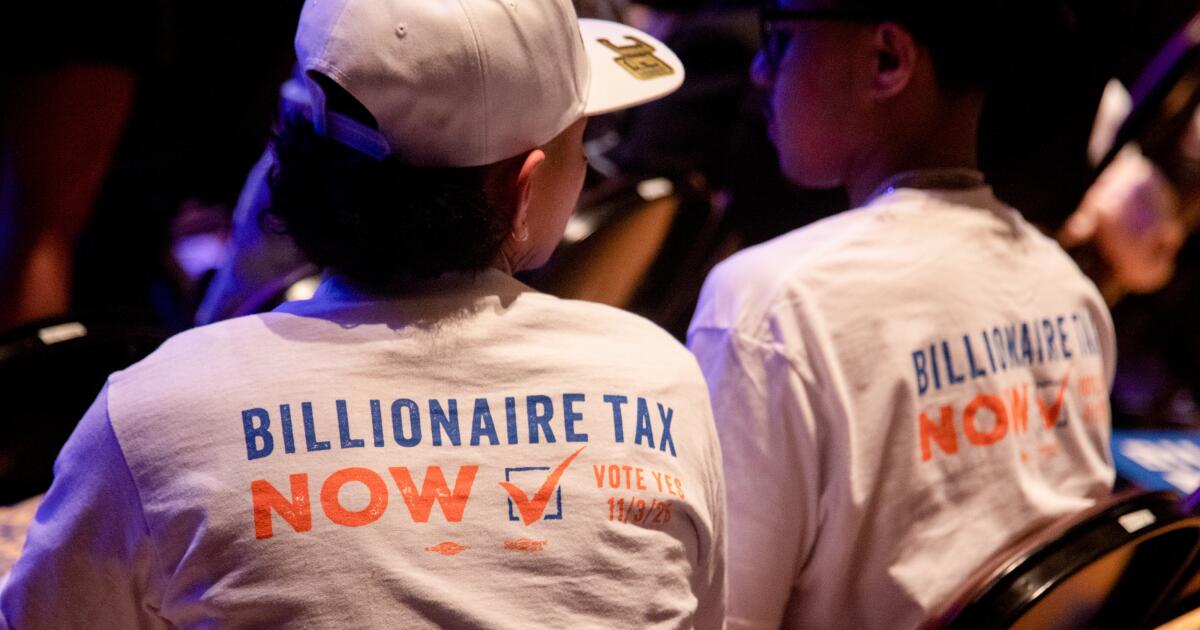
Controversial billionaire tax proposal will appear on November ballot
-
 Sports15 minutes ago
Shohei Ohtani is the first Dodger to be named 2026 All-Star
-

 World25 minutes ago
Who will control Africa’s AI infrastructure and at what cost
-
 News52 minutes ago
The Supreme Court says the U.S. can turn away asylum seekers at the border
-

 Los Angeles, Ca2 hours ago
Jury says it is deadlocked in trial of man accused in Palisades Fire
-

 Detroit, MI2 hours ago
Scene active as police shoot, kill man on Detroit’s west side
-

 San Francisco, CA3 hours ago
Civil grand jury report warns of wildfire risk at SF’s Glen Canyon Park
-

 Dallas, TX3 hours ago
Ivory Coast advances at World Cup, how to buy Ivory Coast tickets

