Austin, TX
This Austin Chef Moved From Oaxaca, but Oaxaca Never Left Her


When Austin chef Iliana de la Vega was growing up in Mexico City in the 1960s and ’70s, she and her family often traveled into Oaxaca on a long, narrow, and twisty road. “It would take 10, 12 hours to get there on this road that was all curves,” the chef recalls about those trips to visit her extended family. These journeys down a dangerous road to visit her extended family in Oaxaca shaped her life for decades to come as she made her way to Texas, where in 2012 she opened one of the premier Mexican restaurants in the country, El Naranjo, to showcase the heritage flavors of her ancestral homeland.
In Austin the fall of 2023 fall, de la Vega’s business went through many changes as she hands the reins of her restaurant to her daughter, Ana Torrealba, and expands her culinary tourism company into new Mexican cities. Throughout this, Oaxaca continues to drive de la Vega’s culinary inspiration. When she brings back groups of people to the same Oaxacan markets her great-grandmothers would have shopped, it’s full circle.
Oaxaca was considered a far-off place in the 1960s and ’70s, even to her friends in Mexico City, as it was cut off from the rest of the country by mountains and rivers. It wasn’t until 1994 that the Mexican government built a highway that connected Oaxaca, “rich in culture, poor in economy,” she says, to the rest of the country — and eventually the world.
:no_upscale()/cdn.vox-cdn.com/uploads/chorus_asset/file/25310040/El_Naranjo_DSC_7414.jpg)
:no_upscale()/cdn.vox-cdn.com/uploads/chorus_asset/file/25310039/El_Naranjo_DSC_7335.jpg)
In the Mexican tradition, culinary know-how is passed down through the maternal line. During de la Vega’s family trips to Oaxaca, she’d spend time with her grandmother, Justa, and her dozens of cousins and relatives. For her, it was where life revolved around food. Her grandmother had 12 children, and only three girls. Of those, de la Vega’s mother was the only one to have children, so the chef was perhaps destined to be the keeper of her family’s cooking knowledge.
After she graduated from high school in Mexico City, de la Vega tried six different majors in college, including literature, communication, pedagogy, and tourism management, but never graduated. “I had very good grades, but I got bored at school and I just wanted to cook,” she says. To her mother’s initial disappointment, she started selling baked goods and cookies while teaching small cooking classes that people found out about through word-of-mouth. “My mother was a chemist, and for her, cooking was a step back,” she says. “But I couldn’t resist it. I was just teaching them what I knew.”
After meeting Ernesto during high school, getting married, and having their two daughters, the family eventually moved to the city that shaped her culinary path. They opened the original El Naranjo restaurant — named after the Spanish word for “orange tree” — in Oaxaca City in 1997. Political unrest in the early 2000s forced the couple to close the business and move to the U.S. She landed in San Antonio at the Culinary Institute of America (CIA), where she taught Latin American foodways for five years. In 2012, the couple moved to Austin to reopen El Naranjo.
During de la Vega’s time at the CIA, she started getting requests from clients to take them on private culinary trips to Oaxaca. Eventually, she decided to start a side business to fill that niche called Mexican Culinary Traditions, which now operates more than a dozen culinary trips a year to four destinations in Mexico. During these weeklong trips, she teaches cooking classes and hosts walking tours exploring aspects of the culinary culture. Her daughter, Isabel Torrealba, an anthropologist and journalist, teaches attendees about the history, architecture, and culture of the destinations. The trips originally focused on Oaxaca and, fueled by her desire to showcase the diversity of Mexican cuisine, expanded to Morelia in 2021 and Mérida earlier in 2023.
De la Vega spends a lot of time writing recipes for her consulting clients — such as Stanford and the University of Massachusetts, which hire her to reboot campus dining halls — but draws inspiration from what’s in season during the trips. “We go to the market and we look around and see what is fresh,” she says. “I don’t even know what I am cooking that day until we go to the market.” Her approach reflects the Mexican approach to cooking, she says. “This is the way we cook in Mexico. It’s ‘What do I have and what can I do with what I have?’”
:no_upscale()/cdn.vox-cdn.com/uploads/chorus_asset/file/25310051/El_Naranjo_DSC_7253.jpg)
:no_upscale()/cdn.vox-cdn.com/uploads/chorus_asset/file/25310050/El_Naranjo_DSC_7237.jpg)
:no_upscale()/cdn.vox-cdn.com/uploads/chorus_asset/file/25310049/El_Naranjo_DSC_7160.jpg)
Many of her tour guests have never cooked without a recipe and often stress if they don’t have all the ingredients, but de la Vega relishes the opportunity to experiment outside of her restaurant. “I think that is more stressful than to go with the flow,” she says.
Through these trips, de la Vega has met hundreds of people from all over the world — India, Singapore, England, Spain — as well as Mexican tourists and Mexican Americans exploring their own country or heritage. “Some people will say, ‘Oh, my mom used to do that,’” she says as they point to a technique or way of serving a dish. “In a way, we open the door for them, so they feel they are taken care of.”
El Naranjo has transformed in Austin too, starting off as a food truck in 2012, growing into a physical restaurant on Rainey Street, and then relocating onto South Lamar. Then there was the pandemic and what de la Vega considers one of the biggest moments of her career with both pride and humility: her James Beard Award win in the first-ever Best Chef: Texas category in 2022, a feat for an Austin restaurant that focuses on interior Mexican food.
The medal is the kind of nod that most chefs only dream of but wasn’t one that kept her up at night. “I have never been a prize-seeker, but it felt good,” she says, “because you work hard and are trying to do something that makes a difference, so to get recognition makes me feel proud, but it didn’t change much in my daily life.”
After the award, she saw new faces in the restaurant and new interest in her culinary trips, but in many ways, she still feels like she is in survival mode with increased competition from new restaurants and diners’ hesitant to spend money due to economic uncertainties, not to mention rising food costs. “The pandemic was so, so hard,” she says. “We had just moved into the new location when COVID hit after seven years on Rainey. It’s a big step to still be here and be able to count on the people who still work with us.”
With her James Beard recognition, de la Vega is shifting from one chapter to the next. Earlier in 2023, her 35-year-old daughter officially took over the day-to-day management of the staff and the culinary operations at El Naranjo as chef de cuisine, giving de la Vega time to focus on her tours and consulting projects. De la Vega is now traveling more than ever, with 14 culinary trips a year scheduled.
Much like her mother, Ana Torrealba grew up surrounded by food, spending time at the family’s restaurants in Oaxaca and Austin. She studied baking and pastry at the CIA in Hyde Park before working at restaurants in New York and studying food engineering in Mexico City.
:no_upscale()/cdn.vox-cdn.com/uploads/chorus_asset/file/25310042/El_Naranjo_El_Naranjo_DSC_7425.jpg)
:no_upscale()/cdn.vox-cdn.com/uploads/chorus_asset/file/25310041/El_Naranjo_DSC_7441.jpg)
De la Vega didn’t dissuade her daughter from getting into the food world like her own mother did, “but I did tell her that it was a hard life,” she says. When Torrealba moved to Austin, she worked nights at Central Market’s bakery, and still made the decision that, even with the long hours, she wanted her hands covered in flour and masa, just like her mom.
De la Vega’s journey from Mexico City to Oaxaca to Texas while raising her daughters and building a community around one of the most lauded restaurants in the city, has been satisfying, but she’s not finished yet. The chef still does extensive consulting work. She also speaks on panels about women and diversity in the culinary industry, and is constantly researching to improve and expand her culinary trips. She also wants to take some time for herself. “My main goal now is to see my girls doing well. I’d like to retire and go back and forth between Oaxaca and here and travel with my husband.”
But semi-retirement won’t look like resting on her laurels.
“I don’t know how to sit still,” she says, noting that she has over 10 culinary trips scheduled already, many of which are already sold out.
It’s a lot easier to get to Oaxaca than it used to be, but in some ways, it’s harder to remember what it was like before it became one of the top tourism destinations in Mexico. But that’s the Oaxaca she tries to remember when she’s on the road, teaching chefs and tour guests about her culinary heritage. It’s a legacy she’s building one trip at a time.



AUSTIN, Texas – Vice President JD Vance is making a fundraising swing through Texas. His first stop is in Austin on Monday.
Why you should care:
Street barricades started going up around noon on Monday, March 23. The area in front of the Four Seasons Hotel, between Red River and Brazos, provided a protective buffer zone for a fundraising event featuring Vice President JD Vance.
The street closures may continue until Tuesday evening. The FAA has also issued a flight restriction notice over most of downtown Austin until Tuesday night.
Why is JD Vance in Austin?
The backstory:
The dinner at the Four Seasons with Vice President Vance is described as the Republican National Convention fundraiser for the midterm election.
Reportedly, individual tickets cost $50,000, with couples paying $100,000 and special access for couples costing a quarter of a million.
“Trips like this are absolutely critical because the midterms are critical,” said James dickey, the former chairman for the Texas GOP.
Dickey explained what big dollar donors are expecting to get from this high-profile meet-up.

AUBURN HILLS, MICHIGAN – MARCH 18: Vice President JD Vance speaks onstage at Engineering Design Services, Inc. on March 18, 2026 in Auburn Hills, Michigan. President Trump has appointed Vance as Vice Chairman of a newly formed Task Force to Eliminate
“I know what some of those donors are asking, which is, are you going to continue to fight? Are you going to continue to follow through on your promises? And what I hope and expect Vice President Vance and the administration will continue to say is what they have done, which we will keep our promises, we will execute the policies that will lead to a better, safer, more prosperous America,” said Dickey.
Software billionaire Joe Lonsdale reportedly is hosting the Austin event. He and other wealthy business owners, like Elon Musk, have now made Austin a destination for conservative politicians.
“Years ago, trips like this to Texas would only have happened in Dallas and Houston, then quickly came to San Antonio and Midland…It’s only fitting that now Austin takes its place among those other cities,” said Dickey.
Dig deeper:
But this realignment of fundraising territory, at least for now, isn’t about the Austin ballot box, according to SMU political analyst Mathew Wilson.
“The reality is that there’s a lot of money in Austin. We know that there has been a lot of tech entrepreneurship and Austin is increasingly important to the fundraising plans of people on both sides of the aisle, not just Democrats.
Vance’s visit to Austin, followed by stops in Dallas, and later in Nashville, is in a way, a case of catch-up. Texas Democrats announced back in February they were launching a $30 million campaign targeting key races in the Lone Star State.
Wilson believes Republicans will be able to make up ground and will have enough money to compete.
“But certainly, I think the reason that Vance is here now is that Republicans don’t want to be caught flat-footed, and you can’t wait until the summer to raise this money. So the money is there for Republicans, but they have to raise it, and they have to make their case to their donors that they’re taking these races seriously, that they can win. And more to the point that Democrats are a legitimate threat. And I think that’s the message that the vice president wants to convey to Republican donors is we can’t take things for granted in Texas,” said Wilson.
This visit is also a big chance for Vance to meet face to face with potential donors for his expected White House bid.
It gives him a head start of sorts on other possible contenders, like Secretary of State Marco Rubio.
The Source: Information from interviews conducted by FOX 7 Austin’s Rudy Koski


Jump to: Free | Friday | Saturday | Sunday | Kids | Adults
The best things to do in Austin this weekend, Mar 27 – Mar 29, include 2026 Cal Tri Austin, MotoGP Red Bull Grand Prix, and more!
I’ve rounded up the top events and activities happening across the city, from festivals and outdoor fun to live shows and family-friendly picks. Please scroll down for my picks or use the links above to skip to your favorite section!
Weather this Weekend – Mar 27 – Mar 29: Austin will remain very warm through Friday before a cold front brings slightly cooler, more seasonable temperatures and breezy conditions for the remainder of the weekend.
Editor’s Note: We work hard to provide you with accurate and up-to-date information. However, all details are subject to change. Please verify information before heading out.
This post may contain affiliate links. If you click and make a purchase, we may earn a small commission at no extra cost to you.
We only recommend experiences we truly believe in! Curious about how we choose our content? Here’s our process.
Check out our recent updates to our guides: April Events in Austin for Adults, April Events in Austin for Kids, and Spring Break Camps in Austin.
Free Things to Do in Austin this Weekend
Drink + Draw
Break out your sketchbooks and join the artists of Contracommon for a casual evening dedicated to creativity and camaraderie. Whether you arrive with a current project in hand or choose to dive into the provided supplies, you are invited to take a well-deserved break in a space free of expectations or judgments.
This month’s gathering runs from 5:00 PM to 8:00 PM and welcomes anyone working in any medium, regardless of their skill level.
Where: Contracommon, 12912 Hill Country Blvd f140, Bee Cave, TX 78738
When: Friday, March 27, 2026 | 5 pm – 8 pm
How Much: Free
Honk!TX
Experience the spontaneous energy of HONK!TX as street and brass bands from around the globe descend upon Austin for a free, community-driven musical takeover.
Follow the music as mobile and unamplified ensembles transform everyday public spaces into vibrant stages, dissolving the traditional line between the crowd and the performers. .
Where: Various locations in Austin
When: Friday, March 27 – 29, 2026
How Much: Free
Austin’s Spring Vibe Art Fair
Celebrate the season of creativity at Austin’s largest indoor artisan market as Vibe Artisan Markets returns for Spring 2026. You will find a weather-proof sanctuary filled with over 100 local artists, makers, and creators showcasing a stunning array of handmade goods.
From intricate metal and gemstone jewelry to unique ceramics and slow fashion, this two-day shopping experience offers you a direct connection to the talented individuals behind every handcrafted piece.
Where: Distribution Hall, 1500 E 4th St, Austin, TX 78702
When: Saturday, March 28 – 29, 2026
How Much: Free
City of Round Rock Arts and Culture presents Mainly Art
Stroll through the historic heart of downtown as the City of Round Rock Arts and Culture presents Mainly Art, a vibrant monthly outdoor market. Wander along Main Street and discover a curated selection of visual works from 15 different local artists, each showcasing their unique creative vision.
Where: Sharon Prete Main Street Plaza, 221 E Main St, Round Rock, TX 78664
When: Saturday, March 28, 2026 | 10 am
How Much: Free
Art in ATX: Babes Market
Image credit: The Gallery of ATX
Celebrate the creativity of women artists and makers at Babes Market, a vibrant community gathering held in honor of Women’s History Month. You can explore a curated selection of over 20 local vendors, each representing a unique woman-owned business and offering a diverse range of handcrafted goods.
Where: Central Machine Works Brewery, 4824 E Cesar Chavez St, Austin, TX 78702
When: Sunday, March 29, 2026 | 11 am – 4 pm
How Much: Free
Rise Fest
Pack your blankets and lawn chairs for Rise Fest, a vibrant community gathering dedicated to engaging activities, music, and meaningful discussion. Prepare to be immersed in a day of celebration that honors local history and the spirit of togetherness in an inviting outdoor setting.
Where: Pease District Park, 1100 Kingsbury St, Austin, TX 78703
When: Sunday, March 29, 2026 | 2 pm – 5 pm
How Much: Free
Sazón Latin Food Festival 2026
Bring your appetite to the Sazón Latin Food Festival 2026, a family-friendly outdoor celebration that honors the vibrant flavors of the Caribbean, Central, and South America.
You will find a curated selection of food vendors representing the very best of Latin American cuisine, from savory traditional dishes to indulgent desserts.
Where: Cabana Club, 5012 E 7th St, Austin, TX 78702
When: Sunday, March 29, 2026 | 12 pm – 5 pm
How Much: Free entry
Things to Do in Austin this Friday | Weekend Kickoff Events
Weather on Friday: Mostly sunny and unseasonably hot with a high of 88°F, a low of 56°F, and a 5% chance of precipitation.
MotoGP Red Bull Grand Prix of the Americas
Image credit: Circuit of the Americas
Rev your engines and prepare for the fastest show on two wheels as the MotoGP Red Bull Grand Prix of the Americas roars into Austin from March 27 through 29, 2026. Witness the world’s premier motorcycle racing series at its only North American stop, where elite riders compete in three days of high-stakes, bar-banging action at COTA.
Where: Circuit of the Americas, 9201 Circuit of the Americas Blvd, Del Valle, TX 78617
When: Friday, March 27 – 29, 2026
How Much: Starts at $89
Men on Boats
Step back in time to 1869 and join ten explorers as they navigate four small boats through the uncharted waters of the Grand Canyon. Follow the “true-ish” story of a one-armed captain and a crew of loyal misfits who set out to map the rugged wilderness of the American West.
This production of Men on Boats uses an innovative, gender-bent cast to offer a fresh perspective on the traditional tales of adventure and the nature of historical legacy.
Where: Genesis Creative Collective, 1507 Wilshire Blvd, Unit #1, Austin, TX 78722
When: Friday, March 27 – April 12, 2026
How Much: Starts at $27.38
Prohibition: A Musical Comedy
Step into the year 1923 and find yourself in the middle of a high-stakes battle over booze in the Capital City. Experience the clash between the “Wets” and the “Drys” in this high-energy musical comedy, where the tension of the Prohibition era is brought to life by a vibrant live band.
Where: Dougherty Arts Center, 1110 Barton Springs Rd, Austin, TX 78704
When: Friday, March 27 – 28, 2026
How Much: Starts at $15
RE:IMAGINED – A Decade of Dance
Celebrate a milestone in contemporary movement as Spaces of Fontana presents RE:IMAGINED – A Decade of Dance to mark their ten-year anniversary. Enjoy a retrospective that revisits and re-envisions the company’s most impactful works, from their 2016 origins in New York City to their current home in Austin.
The program also features powerful excerpts from signature pieces such as Connected Roots, Unfolded, and Becoming, offering a window into a decade of storytelling rooted in hope and human connection.
Where: East Side Performing Arts, 979 Springdale Rd Ste 815, Austin, TX 78702
When: Friday, March 27 – 28, 2026
How Much: $15 for kids | $30 for adults
The Fab Four: Beatles’ “Help!” and the Hits
Image credit: The Tobin Center
Celebrate the legacy of the Beatles’ second film, Help!, with a performance that features the iconic movie soundtrack alongside legendary hits from every era of the band’s career.
You can look forward to a setlist that includes timeless classics such as “Yesterday,” “A Day In The Life,” and “Twist And Shout,” as well as favorites like “Here Comes The Sun” and “Hey Jude.”
Where: The Paramount Theatre, 713 Congress Ave., Austin, TX 78701
When: Friday, March 27, 2026 | 8 pm
How Much: Not stated
Marie Antoinette: Vampire Queen of Versailles
Step into a mysteriously seductive reimagining of history as Stephen Mills transforms the infamous Marie Antoinette into a powerful creature of the night.
Follow the world premiere of this full-length production, where the queen wields her influence through a blend of allure, ambition, and an insatiable thirst for power. Drawing inspiration from the real events of Versailles, the performance masterfully blends high drama with the chilling intrigue of the supernatural.
Where: The Long Center for the Performing Arts, 701 W Riverside Dr, Austin, TX 78704
When: Friday, March 27 – 29, 2026
How Much: Not stated
Rodeo Austin
Experience the ultimate family tradition at the Travis County Expo Center as Rodeo Austin returns with its signature blend of high-octane ProRodeo events and livestock shows.
You can explore the sprawling fairgrounds starting at 10 am daily, where a world of carnival rides, games, and educational activities awaits. Families should also swing by Kidztown to visit the petting zoo or browse the diverse shopping and food stalls that capture the true spirit of Texas.
There is also a stellar 2026 concert lineup featuring heavy hitters like the Eli Young Band, Midland, Clint Black, and Aaron Watson. You can also catch performances by 49 Winchester, Hudson Westbrook, and Flatland Cavalry, alongside many other celebrated artists throughout the two-week celebration.
Where: Travis County Exposition Center, 7311 Decker Ln, Austin, TX 78724
When: Friday, March 27 – 28, 2026
How Much: Starts at $5
Things to Do in Austin this Weekend | Top Picks Saturday
Weather on Saturday: Partly cloudy and cooler with breezy north winds, a high of 76°F, a low of 55°F, and a 10% chance of precipitation.
Broadway Rave
Sing and dance your heart out as Resound Presents: Broadway Rave at the 29th St. Ballroom. Whether you are a lifelong fan of the classics or obsessed with the latest hits, you can expect an evening filled with fellow theater lovers celebrating the music that defines Broadway.
Where: 29th Street Ballroom, 2906 Fruth St, Austin, TX 78705
When: Saturday, March 28, 2026 | 10 pm
How Much: Starts at $17
Strange & Extraordinary Fest
Step into a world of the uncanny at the Strange & Extraordinary Fest, where the curious gather to explore the unexplained.
Discover the immersive Parapeculiar Museum of Haunted Items and wander through the Bizarre Bazaar to find unique treasures from another realm. And engage with leading paranormal researchers, occult historians, and psychic mediums who invite you to attend fascinating talks on the metaphysical and the mysterious.
Where: KMFA Classical 89.5, 41 Navasota St, Austin, TX 78702
When: Saturday, March 28, 2026
How Much: $45
The Neighbourhood
Don’t miss your chance to see The Neighbourhood live in concert as they take the stage at the Moody Center ATX for an unforgettable night of music. Enjoy the atmospheric sound and signature style that have made them a global sensation, all within one of Austin’s premier concert venues.
Where: Moody Center, 2001 Robert Dedman Dr, Austin, TX 78712
When: Saturday, March 28, 2026 | 7:30 pm
How Much: Not stated
Waterloo Ice House 50th Anniversary Party
Celebrate a half-century of food, friendship, and community as Waterloo Ice House marks its 50th Anniversary at the 360 & 2222 location.
Step back in time to 1976 by dressing in your finest ’70s attire and joining the festivities. Enjoy a nostalgic afternoon filled with live music and classic carnival games that capture the spirit of where it all began.
Where: Waterloo Ice House, 6203 N Capital of Texas Hwy, Austin, TX 78731
When: Saturday, March 28, 2026 | 11 am – 4 pm
How Much: No cover
Water Lantern Festival
Image credit: Water Lantern Festival
Experience a magical evening of light and connection as the Water Lantern Festival brings the community together for a celebration of love, hope, and happiness. As the sun sets, you will join thousands of others in releasing glowing lanterns onto the water, creating a breathtaking display that illuminates the night.
You can also enjoy a variety of local food trucks and live music while participating in engaging activities designed for all ages.
Where: Volente Beach Waterpark, 16107 Farm to Market Rd 2769 Suite D, Leander, TX 78641
When: Saturday, March 28, 2026 | 5 pm
How Much: Not stated
Dinner Detective Murder Mystery Dinner Show
Step into a world of intrigue and suspense at The Dinner Detective, where you can tackle a challenging crime while feasting on a multi-course dinner.
You will find yourself in the middle of a high-stakes investigation as the criminal lurks somewhere in the room, hidden in plain sight among the guests. Keep your wits about you, as you may find yourself becoming a prime suspect before the first course is even cleared.
Where: Hotel Indigo Austin Downtown – University by IHG, 810 Red River St, Austin, TX 78701
When: Saturday, March 28, 2026 | 6 pm
How Much: $69.99
Georgetown Palace Theatre presents Oklahoma!
Travel back to 1906 to experience the spirited rivalry between charming cowboy Curly McLain and the brooding Jud Fry. As they both vie for the hand of Laurey Williams, you’ll be swept up in a story that redefined the American musical through its seamless blend of song and character.
The show also features the playful, flirtatious romance of Will Parker and Ado Annie, adding a layer of humor to this classic frontier tale.
Where: Georgetown Palace Theatre, 810 S Austin Ave, Georgetown, TX 78626
When: Saturday, March 28 – April 19, 2026
How Much: Not stated
Story Starts: Improv for kids and their adults
Step into a world where the script hasn’t been written yet and your wildest suggestions take center stage at ColdTowne’s “Story Starts.” Here, kids and adults alike become the architects of the story.
Watch as a stellar adult cast from Excused Absence Comedy transforms your ideas into a high-energy, one-of-a-kind theatrical experience where the plot could veer in a million hilarious directions.
Where: ColdTowne Theater, 1700 E 2nd St, Austin, TX 78702
When: Saturday, March 28, 2026 (Every Saturday)
How Much: $6
Things to Do in Austin this Weekend | Sunday Funday
Weather on Sunday: Sunny and pleasant with light winds, a high of 85°F, a low of 59°F, and a 0% chance of precipitation.
2026 Cal Tri Austin
Image credit: Cal Tri Events
Join athletes from across the globe in “The Live Music Capital of the World” for the 2026 Cal Tri Austin, a premier multi-sport challenge featuring 18 distinct event options.
You can choose your perfect race from a massive lineup that includes traditional triathlons, run-bike-run duathlons, and specialized swim-bike or swim-run competitions.
Where: Walter E. Long Metropolitan Park, 6620 Blue Bluff Rd, Austin, TX 78724
When: Sunday, March 29, 2026 | 8 am
How Much: Starts at $47.49
Strength In The City Festival
Join your neighbors at the iconic Waterloo Park for the STRENGTH IN THE CITY Festival, a vibrant health and wellness celebration designed to immerse you in Austin’s active culture.
This intentionally curated event brings the community together for a full day of movement, mindfulness, and connection in the heart of the city. You can kick off the morning with a high-energy community run or walk, setting the perfect tone for a day dedicated to physical and mental well-being.
Where: Waterloo Park, 500 E 12th St, Austin, TX 78701
When: Sunday, March 29, 2026 | 9 am – 2 pm
How Much: Starts at $39
Sistine Chapel Experience
Step inside a breathtaking recreation of the Vatican’s most famous masterpiece at the Sistine Chapel Experience in Austin.
You can see Michelangelo’s legendary frescoes in a full-scale replica that brings every brushstroke and hidden detail within reach, accompanied by cinematic storytelling that explores the lives of Renaissance masters.
Where: Barton Creek Square, 2901 S Capital of Texas Hwy, Austin, TX 78746
When: Sunday, March 29 – April 26, 2026
How Much: Not stated
Things to Do in Austin this Weekend with Kids – Family Friendly Events
Rodeo Austin
Experience the ultimate family tradition at the Travis County Expo Center as Rodeo Austin returns with its signature blend of high-octane ProRodeo events and livestock shows.
You can explore the sprawling fairgrounds starting at 10 am daily, where a world of carnival rides, games, and educational activities awaits. Families should swing by Kidztown to visit the petting zoo or browse the diverse shopping and food stalls that capture the true spirit of Texas.
Additionally, prepare for a stellar musical experience with a 2026 concert lineup featuring heavy hitters like the Eli Young Band, Midland, Clint Black, and Aaron Watson. You can also catch performances by 49 Winchester, Hudson Westbrook, and Flatland Cavalry, alongside many other celebrated artists throughout the two-week celebration.
Where: Travis County Exposition Center, 7311 Decker Ln, Austin, TX 78724
When: Friday, March 27 – 28, 2026
How Much: Starts at $5
Austin’s Spring Vibe Art Fair
Celebrate the season of creativity at Austin’s largest indoor artisan market as Vibe Artisan Markets returns for Spring 2026. You will find a weather-proof sanctuary filled with over 100 local artists, makers, and creators showcasing a stunning array of handmade goods.
From intricate metal and gemstone jewelry to unique ceramics and slow fashion, this two-day shopping experience offers you a direct connection to the talented individuals behind every handcrafted piece.
Where: Distribution Hall, 1500 E 4th St, Austin, TX 78702
When: Saturday, March 28 – 29, 2026
How Much: Free
Waterloo Ice House 50th Anniversary Party
Celebrate a half-century of food, friendship, and community as Waterloo Ice House marks its 50th Anniversary at the 360 & 2222 location.
Step back in time to 1976 by dressing in your finest ’70s attire and joining the festivities. enjoy a nostalgic afternoon filled with live music and classic carnival games that capture the spirit of where it all began.
Where: Waterloo Ice House, 6203 N Capital of Texas Hwy, Austin, TX 78731
When: Saturday, March 28, 2026 | 11 am – 4 pm
How Much: No cover
City of Round Rock Arts and Culture presents Mainly Art
Stroll through the historic heart of downtown as the City of Round Rock Arts and Culture presents Mainly Art, a vibrant monthly outdoor market. Wander along Main Street and discover a curated selection of visual works from 15 different local artists, each showcasing their unique creative vision.
Where: Sharon Prete Main Street Plaza, 221 E Main St, Round Rock, TX 78664
When: Saturday, March 28, 2026 | 10 am
How Much: Free
Water Lantern Festival
Experience a magical evening of light and connection as the Water Lantern Festival brings the community together for a celebration of love, hope, and happiness. As the sun sets, you will join thousands of others in releasing glowing lanterns onto the water, creating a breathtaking display that illuminates the night.
You can also enjoy a variety of local food trucks and live music while participating in engaging activities designed for all ages.
Where: Volente Beach Waterpark, 16107 Farm to Market Rd 2769 Suite D, Leander, TX 78641
When: Saturday, March 28, 2026 | 5 pm
How Much: Not stated
Story Starts: Improv for kids and their adults
Step into a world where the script hasn’t been written yet and your wildest suggestions take center stage at ColdTowne’s “Story Starts.” Here, kids and adults alike become the architects of the story.
Watch as a stellar adult cast from Excused Absence Comedy transforms your ideas into a high-energy, one-of-a-kind theatrical experience where the plot could veer in a million hilarious directions.
Where: ColdTowne Theater, 1700 E 2nd St, Austin, TX 78702
When: Saturday, March 28, 2026 (Every Saturday)
How Much: $6
Art in ATX: Babes Market
Celebrate the creativity of women artists and makers at Babes Market, a vibrant community gathering held in honor of Women’s History Month. You can explore a curated selection of over 20 local vendors, each representing a unique woman-owned business and offering a diverse range of handcrafted goods.
Where: Central Machine Works Brewery, 4824 E Cesar Chavez St, Austin, TX 78702
When: Sunday, March 29, 2026 | 11 am – 4 pm
How Much: Free
Rise Fest
Pack your blankets and lawn chairs for Rise Fest, a vibrant community gathering dedicated to engaging activities, music, and meaningful discussion. Prepare to be immersed in a day of celebration that honors local history and the spirit of togetherness in an inviting outdoor setting.
Where: Pease District Park, 1100 Kingsbury St, Austin, TX 78703
When: Sunday, March 29, 2026 | 2 pm – 5 pm
How Much: Free
Sazón Latin Food Festival 2026
Bring your appetite to the Sazón Latin Food Festival 2026, a family-friendly outdoor celebration that honors the vibrant flavors of the Caribbean, Central, and South America.
You will find a curated selection of food vendors representing the very best of Latin American cuisine, from savory traditional dishes to indulgent desserts.
Where: Cabana Club, 5012 E 7th St, Austin, TX 78702
When: Sunday, March 29, 2026 | 12 pm – 5 pm
How Much: Free entry
Things to Do in Austin this Weekend for Adults
MotoGP Red Bull Grand Prix of the Americas
Rev your engines and prepare for the fastest show on two wheels as the MotoGP Red Bull Grand Prix of the Americas roars into Austin from March 27 through 29, 2026. Witness the world’s premier motorcycle racing series at its only North American stop, where elite riders compete in three days of high-stakes, bar-banging action at COTA.
Where: Circuit of the Americas, 9201 Circuit of the Americas Blvd, Del Valle, TX 78617
When: Friday, March 27 – 29, 2026
How Much: Starts at $89
Drink + Draw
Break out your sketchbooks and join the artists of Contracommon for a casual evening dedicated to creativity and camaraderie. Whether you arrive with a current project in hand or choose to dive into the provided supplies, you are invited to take a well-deserved break in a space free of expectations or judgments.
This month’s gathering runs from 5:00 PM to 8:00 PM and welcomes anyone working in any medium, regardless of their skill level.
Where: Contracommon, 12912 Hill Country Blvd f140, Bee Cave, TX 78738
When: Friday, March 27, 2026 | 5 pm – 8 pm
How Much: Free
Honk!TX
Experience the spontaneous energy of HONK!TX as street and brass bands from around the globe descend upon Austin for a free, community-driven musical takeover.
Follow the music as mobile and unamplified ensembles transform everyday public spaces into vibrant stages, dissolving the traditional line between the crowd and the performers. .
Where: Various locations in Austin
When: Friday, March 27 – 29, 2026
How Much: Free
Men on Boats
Step back in time to 1869 and join ten explorers as they navigate four small boats through the uncharted waters of the Grand Canyon. Follow the “true-ish” story of a one-armed captain and a crew of loyal misfits who set out to map the rugged wilderness of the American West.
This production of Men on Boats uses an innovative, gender-bent cast to offer a fresh perspective on the traditional tales of adventure and the nature of historical legacy.
Where: Genesis Creative Collective, 1507 Wilshire Blvd Unit #1, Austin, TX 78722
When: Friday, March 27 – April 12, 2026
How Much: Starts at $27.38
Prohibition: A Musical Comedy
Step into the year 1923 and find yourself in the middle of a high-stakes battle over booze in the Capital City. Experience the clash between the “Wets” and the “Drys” in this high-energy musical comedy, where the tension of the Prohibition era is brought to life by a vibrant live band.
Where: Dougherty Arts Center, 1110 Barton Springs Rd, Austin, TX 78704
When: Friday, March 27 – 28, 2026
How Much: Starts at $15
RE:IMAGINED – A Decade of Dance
Celebrate a milestone in contemporary movement as Spaces of Fontana presents RE:IMAGINED – A Decade of Dance to mark their ten-year anniversary. Enjoy a retrospective that revisits and re-envisions the company’s most impactful works, from their 2016 origins in New York City to their current home in Austin.
The program also features powerful excerpts from signature pieces such as Connected Roots, Unfolded, and Becoming, offering a window into a decade of storytelling rooted in hope and human connection.
Where: East Side Performing Arts, 979 Springdale Rd Ste 815, Austin, TX 78702
When: Friday, March 27 – 28, 2026
How Much: $15 for kids | $30 for adults
The Fab Four: Beatles’ “Help!” and the Hits
Celebrate the legacy of the Beatles’ second film, Help!, with a performance that features the iconic movie soundtrack alongside legendary hits from every era of the band’s career.
You can look forward to a setlist that includes timeless classics such as “Yesterday,” “A Day In The Life,” and “Twist And Shout,” as well as favorites like “Here Comes The Sun” and “Hey Jude.”
Where: The Paramount Theatre, 713 Congress Ave., Austin, TX 78701
When: Friday, March 27, 2026 | 8 pm
How Much: Not stated
Marie Antoinette: Vampire Queen of Versailles
Step into a mysteriously seductive reimagining of history as Stephen Mills transforms the infamous Marie Antoinette into a powerful creature of the night.
Follow the world premiere of this full-length production, where the queen wields her influence through a blend of allure, ambition, and an insatiable thirst for power. Drawing inspiration from the real events of Versailles, the performance masterfully blends high drama with the chilling intrigue of the supernatural.
Where: The Long Center for the Performing Arts, 701 W Riverside Dr, Austin, TX 78704
When: Friday, March 27 – 29, 2026
How Much: Not stated
Broadway Rave
Sing and dance your heart out as Resound Presents: Broadway Rave at the 29th St. Ballroom. Whether you are a lifelong fan of the classics or obsessed with the latest hits, you can expect an evening filled with fellow theater lovers celebrating the music that defines Broadway.
Where: 29th Street Ballroom, 2906 Fruth St, Austin, TX 78705
When: Saturday, March 28, 2026 | 10 pm
How Much: Starts at $17
Strange & Extraordinary Fest
Step into a world of the uncanny at the Strange & Extraordinary Fest, where the curious gather to explore the unexplained.
Discover the immersive Parapeculiar Museum of Haunted Items and wander through the Bizarre Bazaar to find unique treasures from another realm. And engage with leading paranormal researchers, occult historians, and psychic mediums who invite you to attend fascinating talks on the metaphysical and the mysterious.
Where: KMFA Classical 89.5, 41 Navasota St, Austin, TX 78702
When: Saturday, March 28, 2026
How Much: $45
The Neighbourhood
Don’t miss your chance to see The Neighbourhood live in concert as they take the stage at the Moody Center ATX for an unforgettable night of music. Enjoy the atmospheric sound and signature style that have made them a global sensation, all within one of Austin’s premier concert venues.
Where: Moody Center, 2001 Robert Dedman Dr, Austin, TX 78712
When: Saturday, March 28, 2026 | 7:30 pm
How Much: Not stated
Dinner Detective Murder Mystery Dinner Show
Step into a world of intrigue and suspense at The Dinner Detective, where you can tackle a challenging crime while feasting on a multi-course dinner.
You will find yourself in the middle of a high-stakes investigation as the criminal lurks somewhere in the room, hidden in plain sight among the guests. Keep your wits about you, as you may find yourself becoming a prime suspect before the first course is even cleared.
Where: Hotel Indigo Austin Downtown – University by IHG, 810 Red River St, Austin, TX 78701
When: Saturday, March 28, 2026 | 6 pm
How Much: $69.99
Georgetown Palace Theatre presents Oklahoma!
Travel back to 1906 to experience the spirited rivalry between charming cowboy Curly McLain and the brooding Jud Fry. As they both vie for the hand of Laurey Williams, you’ll be swept up in a story that redefined the American musical through its seamless blend of song and character.
The show also features the playful, flirtatious romance of Will Parker and Ado Annie, adding a layer of humor to this classic frontier tale.
Where: Georgetown Palace Theatre, 810 S Austin Ave, Georgetown, TX 78626
When: Saturday, March 28 – April 19, 2026
How Much: Not stated
2026 Cal Tri Austin
Join athletes from across the globe in “The Live Music Capital of the World” for the 2026 Cal Tri Austin, a premier multi-sport challenge featuring 18 distinct event options.
You can choose your perfect race from a massive lineup that includes traditional triathlons, run-bike-run duathlons, and specialized swim-bike or swim-run competitions.
Where: Walter E. Long Metropolitan Park, 6620 Blue Bluff Rd, Austin, TX 78724
When: Sunday, March 29, 2026 | 8 am
How Much: Starts at $47.49
Strength In The City Festival
Join your neighbors at the iconic Waterloo Park for the STRENGTH IN THE CITY Festival, a vibrant health and wellness celebration designed to immerse you in Austin’s active culture.
This intentionally curated event brings the community together for a full day of movement, mindfulness, and connection in the heart of the city. You can kick off the morning with a high-energy community run or walk, setting the perfect tone for a day dedicated to physical and mental well-being.
Where: Waterloo Park, 500 E 12th St, Austin, TX 78701
When: Sunday, March 29, 2026 | 9 am – 2 pm
How Much: Starts at $39
Looking for more local fun? Check out our master guide to Things to do in Austin this weekend!

AUSTIN, Texas – More than 400 walkers and runners lined up for the Race to Cure Sarcoma 5K Saturday morning, March 21st, at Mueller Lake Park in East Austin.
Race to Cure Sarcoma (Chikage Windler)
This was the second year for Austin to host the race, one of 14 held across the country.
Race participants included sarcoma survivors who wore yellow survivor shirts and were recognized during the pre-race ceremony.
Race to Cure Sarcoma (Chikage Windler)
Supporters came together to remember those lost and to rally around those fighting the disease.
Race to Cure Sarcoma (Chikage Windler)
CBS Austin’s Chikage Windler ran the 5K, which looped three times around Mueller Lake. The event also included a 1-mile option.
Race finishers received medals and cheers.
Race to Cure Sarcoma (Chikage Windler)
The race raises money for the Sarcoma Foundation of America, a nonprofit that funds research, education, and outreach for this rare type of cancer.
Race to Cure Sarcoma (Chikage Windler)
Sarcoma is a cancer that forms in bones or connective tissues. It has over 100 different subtypes, which makes it much more difficult to treat. According to the Sarcoma Foundation of America, over 236,000 people are living with Sarcoma in the US.
Race to Cure Sarcoma (Chikage Windler)
The largest team at the Austin Race to Cure Sarcoma was the Aubrie Peña Legacy Foundation Team. They had over 150 members take part in honor of Aubrie Peña, who lost her battle with Sarcoma two years after her diagnosis in 2022.
Race to Cure Sarcoma (Chikage Windler)
Aubrie Peña’s mother Maria hopes to grow the race in years to come, and welcomes volunteers who would like to help raise awareness about sarcoma.
Race to Cure Sarcoma (Chikage Windler)
Plans are already being made for the 2027 Austin Race to Cure Sarcoma. You can find the list of future race dates nationwide here.
Race to Cure Sarcoma (Chikage Windler)

Here’s what Metro Detroit homebuyers face heading into spring season

Preparations for SMART expansion to Healdsburg set to begin

Construction underway on Harold Simmons Park’s first attraction

‘Confident’ Bencic takes out Anisimova, eyes Gauff next in Miami

Bruins Sign James Hagens to AHL Amateur Tryout Agreement | Boston Bruins

Florida High School Football Rankings: Top 25 teams – Oct. 21

How old is Bo Nix? What to know about Oregon quarterback ahead of 2024 NFL Draft

Cleary's 21 help Le Moyne down Central Connecticut State 69-64 in OT

99th annual Pony Swim held in Virginia

Indiana Members Credit Union announced as new anchor tenant at Bottleworks District

See TSA Wait Times at Major U.S. Airports

Senate hopeful with deep Dem ties slapped with scathing complaint targeting alleged family payout ‘scheme’

How the Iran war is about to hit your wallet

Suspect in slaying of Loyola University student was in the country illegally, officials say

Video: Plane Collides With Vehicle at LaGuardia Airport
-

 Detroit, MI5 days ago
Drummer Brian Pastoria, longtime Detroit music advocate, dies at 68
-

 Oklahoma1 week ago
Family rallies around Oklahoma father after head-on crash
-

 Georgia1 week ago
How ICE plans for a detention warehouse pushed a Georgia town to fight back | CNN Politics
-
 Science1 week ago
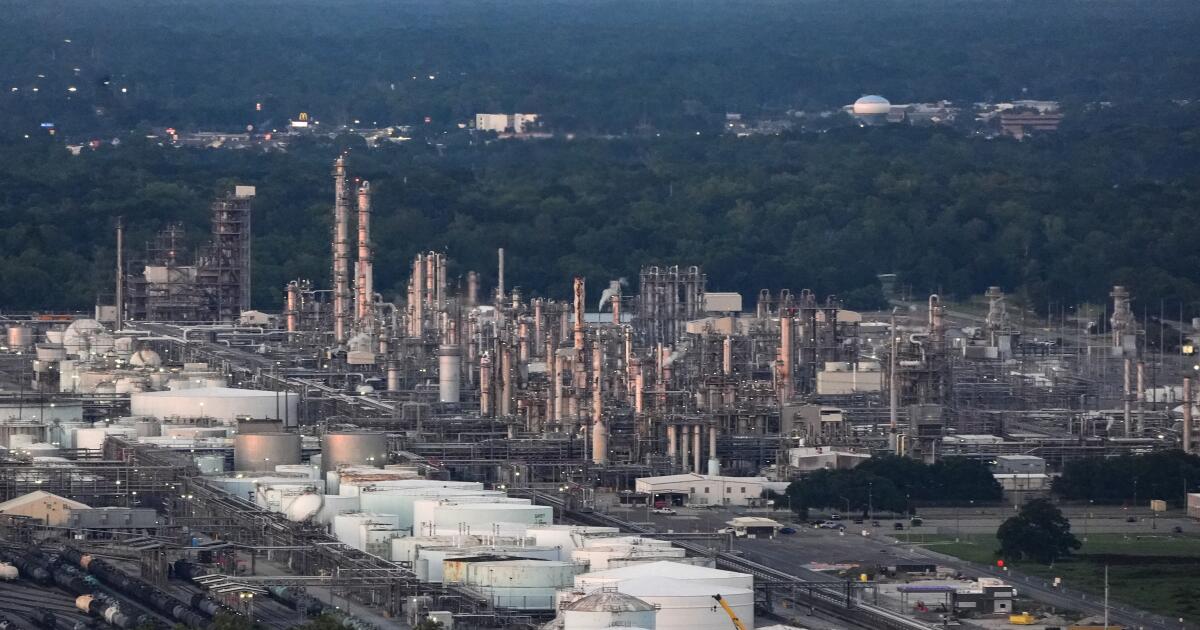
Federal EPA moves to roll back recent limits on ethylene oxide, a carcinogen
-

 Alaska1 week ago
Police looking for man considered ‘armed and dangerous’
-

 Movie Reviews5 days ago
‘Youth’ Twitter review: Ken Karunaas impresses audiences; Suraj Venjaramoodu adds charm; music wins praise | – The Times of India
-
 Science1 week ago
Long COVID leaves thousands of L.A. county residents sick, broke and ignored
-

 Education1 week ago
Video: Turning Point USA Clubs Expand to High Schools Across America