Austin, TX
Mountaineers non-competitive in 94-58 loss at Texas – WV MetroNews


Texas came out firing from the outset of Saturday’s contest with West Virginia at the Moody Center.
The Mountaineers never countered back, and as a result, remained winless away from home this season while suffering the program’s most lopsided loss in nine years.
Dylan Disu scored 19 of his game-high 27 points in the first half on 7-for-7 shooting with five three-pointers, helping the Longhorns build a 25-point advantage en route their 94-58 victory.
Texas (16-8, 5-6) made 23-of-35 field goals in the first half, including half of its 16 three-point attempts.
“There’s a lot of things we can point at defensively that we didn’t do correct,” WVU interim head coach Josh Eilert said. “Their game plan right off the bat was to put [WVU center Jesse Edwards] in a ball screen and pick and pop with Disu. Credit to him. He was 4 for 4 from three to start the game. He knocked down shots and once you see a couple go down, we’ve seen it ourselves in the Kansas game, the floodgates can open for you.”
Outside of a 2-0 lead off an Edwards layup on the game’s first possession, West Virginia (8-15, 3-7) never led in what marked its most lopsided defeat since a 39-point season-ending loss to Kentucky in March 2015.
Two Disu triples and one from Max Abmas on three consecutive possessions allowed the Longhorns to turn a two-point advantage into an 18-7 lead in a matter of 49 seconds.
Disu made another triple with 9:26 left in the half to give Texas a 32-14 lead. He was from alone in doing damage to the Mountaineers over the first 20 minutes, as teammate Chendall Weaver was 4 for 4 with nine points and Dillion Mitchell added 10 on 5-for-7 shooting.
Leading 55-30 at halftime, Texas had 17 assists and two turnovers. The Mountaineers had 10 turnovers and five assists, though they made half of their field-goal attempts (12 for 24) on the strength of Edwards’ 13 points on 5-for-6 shooting.
Disu picked up where he left off to start the second half by connecting from long range and the Longhorns gained their first 30-point advantage to 70-40 when Abmas made his second of consecutive triples.
Texas’ largest lead was 43 at 92-49 before the Mountaineers ran off nine of the final 11 points.
The Mountaineers lost their final two trips to Austin while the Longhorns were members of the Big 12 by a total of 70 points.
“Really felt like it was deja vu here looking at this box score in this arena,” Eilert said. “Like I told the guys in the locker room, one way or another, I didn’t have you all ready to play and that’s on me.”
Disu finished 10 for 16 and made 7-of-10 threes. Abmas added five triples and 19 points, while Tyrese Hunter scored 19 as well on 8-of-12 shooting, including 3 of 4 from deep.
Weaver added 13 points on five shots and Mitchell scored 12 to go with a team-high eight rebounds.
The Longhorns’ starting five combined for all but four of the team’s points.
Texas finished with 28 assists and five turnovers.
“That’s the game right there. They were 100 percent the aggressor,” Eilert said. “They took it to us. They were physical with us and understand we struggle with that. That was their game plan and they executed to a T.”
Edwards led the Mountaineers with 17 points and nine rebounds.
“He was good,” Eilert said. “We tried to establish a presence inside.”
Noah Farrakhan added 11 points and eight boards.
Although WVU finished with a 37-36 rebounding advantage, the Mountaineers scored six points off turnovers to the Longhorns’ 29.
West Virginia, which has lost its first five Big 12 road games by an average of 20.2 points, is back in action Monday at TCU.
“We have to learn quick, but flush it and understand TCU is No. 1 in the country in fast break points,” Eilert said. “They really get downhill and turn people over. Texas doesn’t really turn you over much, but they did tonight. If we turn it over in Fort Worth, it could be ugly. I’ll take it on the chin and we weren’t ready to play. That’s on us.”


AUSTIN (KXAN) — As flood threats continue across parts of South Central Texas, Austin Pets Alive! has activated emergency response efforts to support animal shelters affected by the inclement weather.
In a social media post, APA! wrote, “We began offering aid last night, working to secure fosters for 10 dogs in the Castroville shelter, an open-air shelter that sits at the bottom of a valley.”
APA! said the situation escalated overnight with additional shelters reporting flooding. One shelter confirmed that floodwaters reached its facility, APA! added.
Communities overwhelmed due to weather include Uvalde, Castroville and Sabinal.
The nonprofit is asking the Austin community to foster, adopt or donate to free up capacity for animals displaced by the disaster. APA! needs to clear out its facilities to assist the animals in need of shelter.
Here are ways you can help:
- Adopt: APA! is offering a “Name Your Own Adoption Fee” on all animals.
- Foster: The shelter is seeking foster homes for a minimum of three weeks.
- Donate: Proceeds will fund vans and response teams setting up a staging and triage center at the heart of the disaster zone, along with an expanded stockpile of preventatives, PPE and additional supplies.
If you would like to donate, click here.

AUSTIN, Texas — With heavy rain expected across parts of Central Texas this week and flooding top of mind, the city of Austin is proposing to put more money toward flood mitigation improvements in next year’s budget.
The proposal would invest in new flood infrastructure, add staff, and help move flood mitigation projects forward, according to city leaders. Austin City Councilmember Ryan Alter said the investments are aimed at keeping the city prepared for future flooding.
Residents who live near waterways say they have seen how quickly conditions can change. David Haderspeck, who lives near Shoal Creek, said the creek “fills up pretty fast” and “gets a lot higher than you’d expect.” He said he has watched the water rise dramatically after rain.
“I’ve seen it come up probably 10 to 15 feet to the ordinary high-water mark,” he said.
This week, parts of Central Texas, including the Hill Country, are expected to get heavy downpours. While Austin is not expecting the same impacts as parts of the Hill Country, leaders said the city is using this year’s budget planning to continue investing in flood safety.
Alter said the city has the expertise to address flooding risks but needs to follow through on projects.
ALSO| Central Texas urged to prepare as heavy rainfall sits in forecast over next two days
“We have the experts. We just have to put the plans into practice, and that’s what we’re doing in this budget,” he said.
Under the budget proposal, the city would provide about $134.5 million for the Drainage Utility Fund, which helps pay for flood mitigation, drainage infrastructure and watershed protection efforts.
Alter said the proposal would shift more of the funding balance toward building new infrastructure.
“What we’re going to do is shift that balance a little bit more to building new infrastructure so that when we do have large flooding events, we’ve got that infrastructure in place to keep people safe,” he said.
The proposal also adds staff and invests in both new and existing flood mitigation projects across the city.
Asked whether the proposed investments would be enough moving forward, Alter said, “I do…I think we’re doing the right thing and just making sure that our residents have the infrastructure to stay safe.”
Alter said heavy rain cannot be prevented, but the city’s goal is to have infrastructure in place to help keep people safe when it happens.

FILE – LinkedIn logos are displayed on an iPhone and computer screen. (Photo by Carl Court/Getty Images)
AUSTIN, Texas – The Texas Attorney General’s office has opened an investigation into LinkedIn over allegations that the professional networking platform misleads consumers with advertising and profiting from misleading or fake job listings, otherwise known as “ghost jobs.”
LinkedIn investigation

In this photo illustration a Linkedin logo seen displayed on a mobile phone. (Photo Illustration by Stanislav Kogiku/SOPA Images/LightRocket via Getty Images)
What we know:
Texas announced on Tuesday it has issued a Civil Investigative Demand (CID) seeking documents, data and internal communications related to LinkedIn’s advertising, marketing, job listing verification practices and its Premium subscription services.
The investigation centers on whether LinkedIn violated Texas’ consumer protection laws by promoting paid subscription services while allegedly failing to disclose that some job listings on the platform may not actually be representative of hiring opportunities.
What is a ‘ghost job’?
An image of a woman holding a cell phone in front of a LinkedIn logo displayed on a computer screen. On Tuesday, January 12, 2021, in Edmonton, Alberta, Canada. (Photo by Artur Widak/NurPhoto via Getty Images)
Dig deeper:
LinkedIn is owned by Microsoft and the world’s largest professional networking platform, with more than 1 billion registered users worldwide.
A “ghost job” generally refers to a position advertised online that either is no longer available or that an employer has no immediate intention of filling. The attorney general’s office cited independent studies estimating that ghost jobs account for between one-fifth and one-third of online job postings.
Texas AG targets Premium Subscription Fees
Photographer: Mark Felix/Bloomberg via Getty Images
What they’re saying:
According to the office of the attorney general, LinkedIn does not independently verify the hiring status of most job listings on its platform. Ken Paxton’s office alleges that the company’s marketing for its Premium subscription services does not disclose that a significant number of postings could be inactive, unfilled or not reflect genuine employment opportunity.
“I will use every resource available to my office to help job-seeking Texans find and secure real employment opportunities,” Paxton said in a statement. “LinkedIn has a duty to provide the services it advertises and ensure that consumers paying for Premium subscriptions are receiving access to legitimate job postings.”
Texas officials said LinkedIn’s Premium Career and Premium Business subscriptions cost about $39.99 and $69.99 per month, respectively, and are marketed to jobseekers looking to improve their employment prospects.
What’s next:
The investigation does not include any formal allegations of wrongdoing, and no lawsuit has been filed.
The Source: Information in this article was provided by the Texas Attorney General’s Office.
-

 Politics3 minutes ago
Lindsey Graham’s final act reverberates in Senate as sister is urged to “keep pedaling”
-

 Health9 minutes ago
Is lettuce still safe to eat amid Taco Bell illness probe? Doctors answer
-

 Sports15 minutes ago
Marcello Hernández roasts Jake Paul, Tiger Woods and Bill Belichick in ESPYS monologue
-

 Technology21 minutes ago
You paid for it. So why is your device showing ads?
-
 Business27 minutes ago
Paramount shareholder lawsuit accuses Ellisons of corruption
-
 Entertainment33 minutes ago
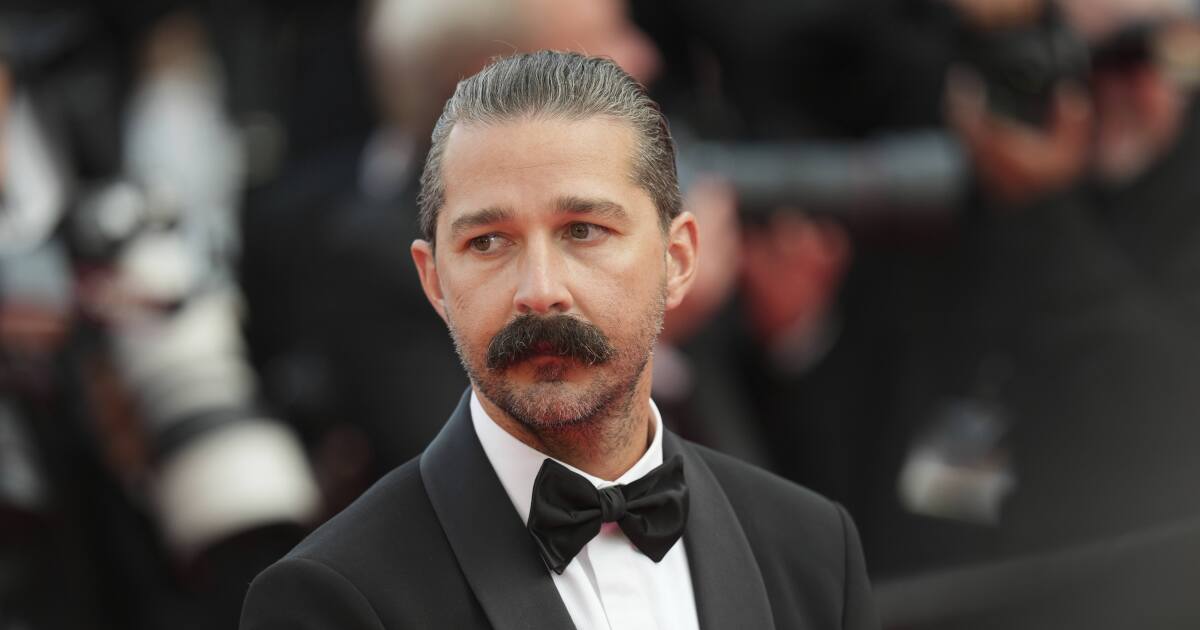
‘You’re scaring my people.’ Shia LaBeouf’s alleged stalker arrested after posting viral video
-
 Politics45 minutes ago
Californians back Becerra and reject AI data centers by big margins, poll finds
-
 Science51 minutes ago
How to eat safely amid outbreak of diarrhea-causing cyclosporiasis

