Austin, TX
Better Luck Next Year? • The Austin Chronicle


Mapping Chaos
Six months into his second term as president, Donald Trump was nervous about the chances for keeping a Republican majority in the U.S. House of Representatives after the 2026 elections. So in July, Trump demanded that Texas Republicans discard decades of precedent and redistrict the state’s congressional districts in the middle of the decade. Texas Republicans were more than happy to deliver.
The maps redrew the districts of some of the most effective Black leaders in the country and crammed Austin’s 35th and 37th congressional districts into one, to remove either Rep. Greg Casar or Rep. Lloyd Doggett from office. To stop the redistricting, 56 Democratic House members, including Austin Reps. John Bucy, Gina Hinojosa, James Talarico, Donna Howard, and Lulu Flores, left Texas to deny Republicans the quorum necessary to finalize the gerrymander.
The Dems stayed away two weeks, long enough to educate voters nationwide about what was happening. Then they returned and were steamrolled by Republicans, who approved the redistricting plan on a party line vote. (The GOP majority twisted the knife by enacting punitive new measures to discourage future resistance from their colleagues.) A federal court blocked the gerrymandered map last month, ruling that it illegally discriminates against people of color. But the U.S. Supreme Court temporarily paused the lower court’s ruling while the legal battle rages on, allowing the map to stand for the midterm election. For now at least, Trump got exactly what he asked for. – Brant Bingamon

Unthinkable Loss
Within hours, a torrent of rain quickly overwhelmed the banks of the Guadalupe River over the Independence Day weekend. Fast-rising floodwaters and swollen rivers destroyed multiple towns and took over 135 lives, mostly in Kerr County, to become one of the most devastating natural disasters in Texas history. At Camp Mystic, an all-girls sleepaway summer camp along the Guadalupe in Hunt, 25 children and three staff members were lost in the deluge.
In those first days, the casualty count rose horrifically, and then slowed as the missing were accounted for. In the days and weeks that followed, Central Texans pitched in to aid their neighbors, first by clearing debris and searching for survivors, then by gathering resources and raising funds for those impacted. Then, Texans began to point to their lawmakers, asking what the state should have done to prevent the tragedy. In the second special legislative session, the Texas Legislature addressed some of those failings, investing in flood sirens and evacuation plans. The parents who lost their children at Camp Mystic are still in an active lawsuit against the summer camp, suing for failing to evacuate the campers, gross negligence, and wrongful death, even as the camp seeks to reopen next summer. – Sammie Seamon

The Lege Marches Texas Farther Right …
With the GOP now even more empowered to pass legislation, no matter how overtly some bills appeared unconstitutional and aligned with far-right, Christian nationalist values, the 89th legislative session (and the two special sessions that followed) greenlit a host of bills targeting public education, the immigrant and queer communities, abortion access, and more.
A requirement to hang the Ten Commandments and dedicate prayer and Bible reading time in public school classrooms. A law that blocks Texans from using the bathroom aligned with their gender identity in public schools, universities, and any government-run building. Police must partner with ICE in 2026. A bill that takes away librarians’ authority to approve school library books, when ever-more titles containing diverse perspectives have been banned by the state. The creation of a bounty hunter system that allows a next-door neighbor to tattle on people trying to access abortion pills. While most laws went into effect Sept. 1, more became effective as recently as Dec. 4, and advocates say their effects have already begun to be felt by Texans. – Sammie Seamon

… and Abbott Finally Gets His School Vouchers
For Texas students, parents, and school districts, another catastrophe in this year’s legislative session was the state’s creation of private school vouchers. The voucher bill, signed into law in May, will allow parents to take approximately $10,000 of taxpayer money per child from the state’s coffers to spend on their children’s private schooling. Applications will open in the spring.
The voucher vote was an epochal loss for public school supporters who had fought since the 1950s to stop previous versions of the measure. For the Republican leaders who championed it, particularly Gov. Greg Abbott, the vote concluded a years-long campaign to impose their will not just on the electorate, who were never hugely supportive of vouchers, but also on their fellow Republicans, particularly those from rural areas, who had crossed the aisle to vote with Democrats to keep vouchers from becoming law.
Advocates say the program will slowly drain funds from schools that are already underfunded, hurting poor students and undermining public education in general. The state allocated $1 billion for the program in 2026, but that figure is expected to balloon to $5 billion by the beginning of the next decade. – Brant Bingamon

One Big Barfing Sound
If there are two traits you can count on from the Trump administration, they are stupidity and cruelty. First, the name of budget reconciliation measure HR 1 was nonsensical: The president’s lackeys have called it One Big Beautiful Bill, making it the nonsensical One Big Beautiful Bill Act when it passed because they are idiots who don’t understand how words or the legislative process work. But beyond the stupidity was the cruelty of vast spending cuts, including an estimated $155.3 million gouging of promised finances for the City of Austin alone. The list included FEMA grant to improve flood protection for power and water treatment plants, money to cap and cover stretches of the I-35 project, and an all-out attack on plans to decrease the city’s reliance on fossil fuels, plus there’s the massive local impact of cutting funds for federal agencies and programs like Medicaid and SNAP. Of course, it’s Texas’ fault: HR 1 was authored by Lubbock Republican Jodey C. Arrington. – Richard Whittaker

Stuck in Neutral
Maybe we’re just getting older and grumpier, but we seem to encounter construction on every trip we take around town. Let’s not talk too much about the I-35 expansion, which will be a Top 10 story for the next decade or so (sigh). To make matters worse, the prospect of those caps over the highway are looking less impressive after the fed took back $100 million slated for the project (another casualty of the OBBBA). Remember the flurry of excitement when the Travis County Commissioners Court voted in October to fund a study on the feasibility of a rail line between ATX and SATX? Last we heard, that plan could be completed before the I-35 project but was counting on a big investment from the federal government. Sounds pretty unfeasible to us. Those with an even better memory will remember Project Connect’s rail plan that locals voted to fund in 2020. This year the city solicited proposals for the multibillion-dollar final design and construction contract. Fingers crossed. – James Renovitch

Prop Flop
It didn’t seem particularly controversial when the Council approved a budget last August which necessitated a tax rate election. The election, dubbed Proposition Q, asked voters to raise their property taxes by an average of around $200 per year.
But Prop Q got controversial in a hurry. In October, the Statesman published a series of articles questioning spending by city leaders on lunches and travel and focusing on the city’s $1 million logo. Opponents of Prop Q threatened lawsuits against the political action campaign supporting the measure, argued that the higher taxes would worsen the city’s affordability crisis, and complained that the money generated by Prop Q would support the city’s “homeless industrial complex.” Gov. Greg Abbott kept the focus on the homeless, sending state troopers to clear out homeless camps in the weeks before the vote. Attorney General Ken Paxton threatened to sue the city’s largest provider of housing for homeless people, Foundation Communities, falsely suggesting that the group’s donations to the Prop Q PAC “might be illegal.”
In the end, Prop Q was defeated 63-37%. A revised city budget passed on Nov. 20, which reduced funding for homelessness, public safety, parks, and social services. Now, city leaders wait to see what they’re going to have to cut next year. – Brant Bingamon

AISD Makes Unpopular School Closure Decisions
In early September, the Texas Education Agency told Austin ISD administration that 33 of its campuses had fallen into dangerous waters, receiving failing accountability scores from the state agency for low STAAR performance. The TEA also gave 24 schools turnaround plans, giving them the option to close down or totally rehire faculty and revamp curriculum. The district has also found itself in dire financial straits: With declining enrollment, a lack of state funding, and half of their budget paid out in recapture payments, they’re predicting to run out of money by next school year. If the district fails to raise student performance, the TEA could take over management of AISD, as they did Fort Worth ISD in October.
In early October, the district decided to propose school closures to save money and respond to the TEA’s requirement for turnaround plans. In the weeks that followed, students and their families protested the dismantling of their neighborhood school communities, hoisting signs and chanting outside of TEA and AISD’s headquarters. Then, three schools were taken back off the closure list, leading to accusations that the district was favoring the loudest parents (which the district denied). On Nov. 21, after hours of rigorous debate, the AISD Board of Trustees ultimately voted to close eight elementary schools, two middle schools, and International High School next school year. – Sammie Seamon

ICE’s Dastardly Drive to Deport
This year has been unlike any other for a multitude of reasons, many of which can be attributed to the Trump administration’s aggressive decision-making – one of the most intense being the rollout of ICE agents across the nation, which Trump promised during his 2024 campaign. He stayed true to his word, deploying ICE agents on the very first day following his inauguration. According to the Transactional Records Access Clearinghouse, Texas currently has the most ICE detainees – 17,696 as of Nov. 28 – in the nation.
On April 1, ICE and other federal and state agents raided an Austin suburb Airbnb, where nearly 50 people were arrested, some of whom were children. The raid came as an attempt to deport members of the Venezuelan gang Tren de Aragua, the agencies involved claim, though advocates have said there has been no evidence provided that suggests any of the half a hundred individuals had any gang affiliation, but rather were targeted merely based on physical appearance.
Whether it’s 50 potential gang members or just one immigrant, such as the Boston student who was planning to fly home to Austin to see her family for Thanksgiving, only to be arrested and deported after she arrived for her flight, ICE has been relentless in its forceful attempts at deportation throughout the year. – Joe Ellett

Water Woes (and a Win)
It’s now a well-known and troubling truth: Texas, with our projected growth and draining aquifers, is running out of water. Moreover, the move of big tech to Austin and greater Central Texas is placing even more strain on our energy grid and water resources: By 2030, data centers are projected to multiply roughly tenfold across the state, with the average center using 300,000 gallons of water a day. Texas, which is currently experiencing higher temperatures than during the Dust Bowl, will face only further water loss from evaporation and hotter soil as drought conditions worsen with climate change.
On Nov. 4, Texans voted on Prop 4, a 20-year investment in the future of our state’s water availability, one that will funnel $1 billion annually out of state sales tax revenue toward water conservation and production projects. These projects include fixing leaky pipes, wastewater reuse, seawater desalination, and produced water reuse from fracking, plus others listed in the State Water Plan. – Sammie Seamon

Burnt Orange Bleeds Red
When far-right thought leader Chris Rufo urged conservatives to “lay siege” to UT at a campus talk in 2023, it was hard to imagine anyone taking him seriously. Two years later, it’s remarkable how much Rufo’s allies have accomplished.
Last year, UT eliminated diversity, equity, and inclusion programs and restricted students’ rights of free speech and assembly. Professors and administrators left in unprecedented numbers, including the president and provost, who were replaced with allies of Gov. Greg Abbott and Lt. Gov. Dan Patrick.
This year, Republicans approved SB 37, which ended the longstanding practice of including professors in choosing the university’s leaders and setting policy for the school, handing that power over to the board of regents. SB 37 also created the “Office of the Ombudsman,” an overseer appointed by Gov. Greg Abbott to investigate professors accused of violating state law.
SB 37 also gave the board of regents the power to decide which courses are taught at UT. The board is currently reviewing the content of hundreds of courses concerned in one way or another with gender and sexuality. Professors are bracing for changes in the curriculum and for the consolidation of programs like Women’s and Gender Studies, African Diaspora Studies, and other ethnic studies in the College of Liberal Arts. They’re also awaiting a decision from university leaders on the Trump compact, an offer promising federal research money in exchange for supporting Trump’s political agenda. Of the nine universities offered the deal, only UT expressed enthusiasm, demonstrating how far right the school’s leaders now lean. – Brant Bingamon


Key insights from local creatives

These are the plates I kept coming back to

Looking back at a year of bold, empathetic, boundary-pushing creations

The year’s best feature films, plus critics lists

Flooding and new parks in 2025 top the Day Tripping list

As decided by the Chronicle culture desk

A look back at the good and the bad of the Verde & Black

Nonprofits, clothing drives, and more that could use your support this holiday season
This article appears in December 19 • 2025.


The Austin-Travis County Wildfire Coalition is hosting a last round of public input meetings on the Community Wildfire Protection Plan, which is updated every 10 years.
The City of Austin released a press release about the final two meetings on Thursday. According to the release, the meetings are intended to provide an overview of the project, hear from subject matter experts, and capture public comments for incorporation into the plan.
Meeting Schedule
April 8, 6-8 p.m.; Del Valle Early College High School Cafeteria, 4715 Ross Rd.
April 9, 6-8 p.m.; St. Luke’s on the Lake Episcopal Church; 5600 RR 620 N.
The coalition asks that residents RSVP to the meetings online and take this public survey to provide information to the coalition as it updates the plan. Anyone may take the survey, but the coalition asks individuals who plan to attend one of the sessions to fill it out beforehand.
The Community Wildfire Protection Plan identifies areas of wildfire risk, prioritizes investments for mitigation funding, and provides recommendations for hazardous fuels reduction and homeowner risk reduction practices.
Additionally, the plan offers policymakers guidance on wildfire response capabilities and evacuation planning frameworks. The Austin-Travis County Wildfire Coalition updates the plan every decade to ensure it reflects current risk conditions, data, and community priorities.
Members of the coalition include the City of Austin, Austin 3-1-1, Austin Water, Austin Fire Department’s Wildfire Division, the Lower Colorado River Authority, Austin Energy, the city’s Homeland Security and Emergency Management division, and more.
Learn more about the coalition at its website here. And stay updated on the CWPP process as it unfolds here.

AUSTIN (KXAN) — You know the saying: ‘April showers bring May flowers’. A wetter-than-normal pattern is likely in Texas through early April, hopefully making a dent in our extreme drought, and lowering pollen totals!
It’s not just the Lone Star State; several storm systems will bring mountain snow, heavy rain, and the potential for severe weather across the country into the upcoming weekend, Saturday, April 4 through 5.
Severe Weather
The Storm Prediction Center has highlighted parts of the Southern Plains, Great Plains, and Midwest for potential severe weather on Friday. There is a level 3/5 (Enhanced) risk for cities such as St. Joseph, Ottumwa, Kirksville, Moberly, and Indianola.
There is a growing concern for large hail, damaging winds, and an isolated tornado in the highlighted area.
There is a level 2/5 (Slight) risk for cities such as Oklahoma City, Kansas City, Tulsa, Des Moines, and Overland Park on Friday.
Texas Travel
Traveling in Texas this weekend for Easter Sunday? Bring an umbrella and a rain jacket! Scattered thunderstorms, including a few strong-to-severe storms, are possible.
A strong cold front arrives on Saturday afternoon, bringing widespread rain chances. There is a level 1/5 (Marginal) risk for cities such as Houston, Shreveport, Jackson, Cleveland, and Buffalo.
High temperatures on Sunday will be cooler than normal. In Austin, we’ll likely remain in the 60s.
Wet Pattern
The Climate Prediction Center has high confidence in a wetter-than-normal pattern continuing through mid-April.

A few cold shots of late winter air will cool down parts of the Midwest and Northeast in the next week, with some late-season snow possible. Most of the country is trending warmer-than-normal.


Massachusetts secures $1B for water infrastructure

Minnesota housing reform proponents remain hopeful for movement

Desoto County native helps guide NASA’s Artemis II moon mission

Skeptical MO senators consider bill legalizing video lottery games

Montana Fouts Named to USA Softball 2026 Athlete Pool: Roll Call

Florida High School Football Rankings: Top 25 teams – Oct. 21

How old is Bo Nix? What to know about Oregon quarterback ahead of 2024 NFL Draft

Cleary's 21 help Le Moyne down Central Connecticut State 69-64 in OT

99th annual Pony Swim held in Virginia

Indiana Members Credit Union announced as new anchor tenant at Bottleworks District

Video: Trump Struck Iran. Now Farmers Are Paying the Price.

What B-52 bombers bring to Iran fight — and what it means for the war now

Podcast: Hungary elects: what is at stake and who is likely to win?
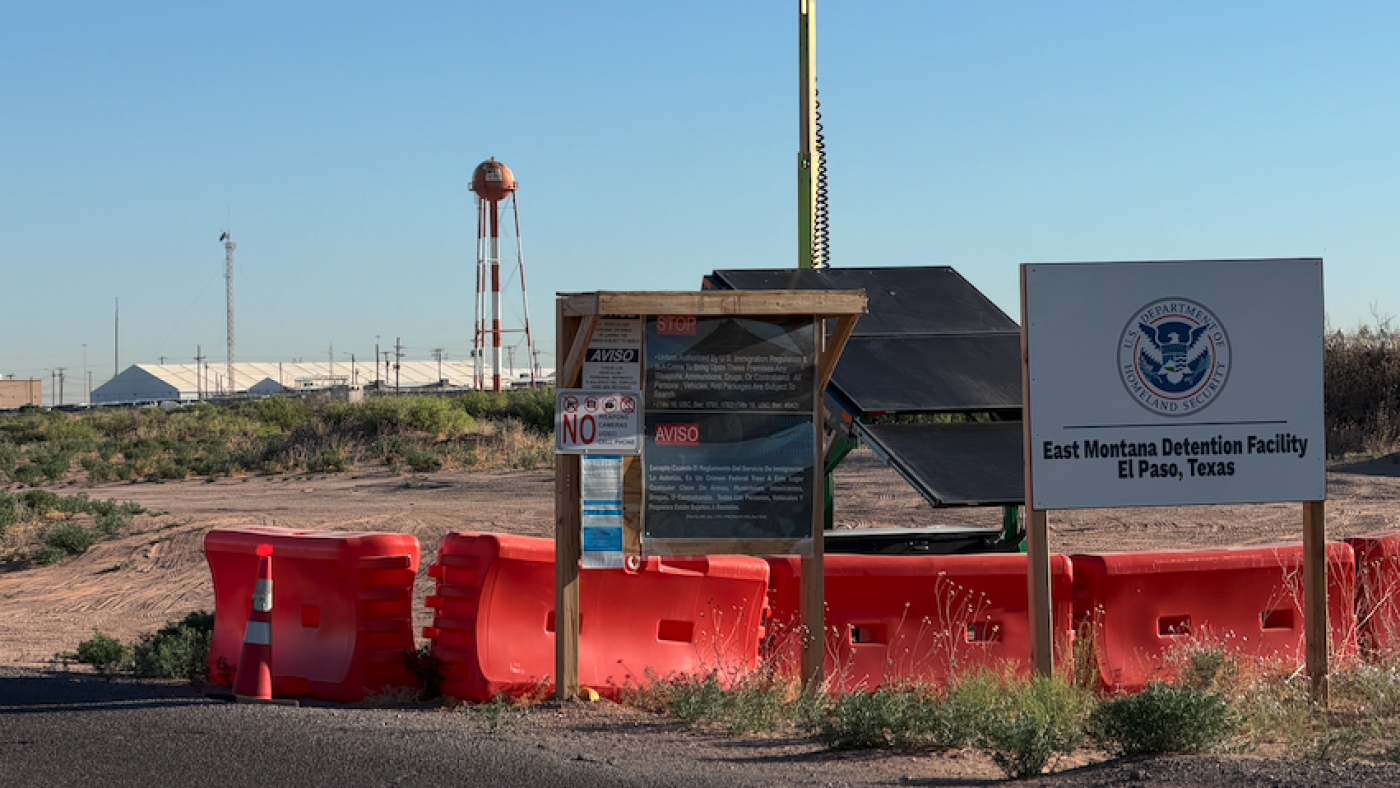
ICE detention deaths are on a record pace. One Texas facility bears the brunt

GOP rails against ‘s— sandwich’ deal as all eyes turn to House to end DHS shutdown
-

 South-Carolina5 days ago
South Carolina vs TCU predictions for Elite Eight game in March Madness
-

 Culture1 week ago
Wil Wheaton Discusses ‘Stand By Me’ and Narrating ‘The Body’ Audiobook
-

 Miami, FL1 week ago
Jannik Sinner’s Girlfriend Laila Hasanovic Stuns in Ab-Revealing Post Amid Miami Open
-

 Culture1 week ago
What Happens When We Die? This Wallace Stevens Poem Has Thoughts.
-

 Minneapolis, MN1 week ago
Boy who shielded classmate during school shooting receives Medal of Honor
-

 Vermont5 days ago
Skier dies after fall at Sugarbush Resort
-

 Education1 week ago
Video: Transgender Athletes Barred From Women’s Olympic Events
-

 Politics5 days ago
Trump’s Ballroom Design Has Barely Been Scrutinized