Science
Want to live to 100? That may depend on your sex


Do you want to live to 100? The path to becoming a healthy centenarian — as opposed to just a centenarian — is surprisingly different for those born as women and men, says social researcher and author Maddy Dychtwald. And it’s never too early to start on the journey, even when you’re young and spry. (We’re talking to you, zoomers.)
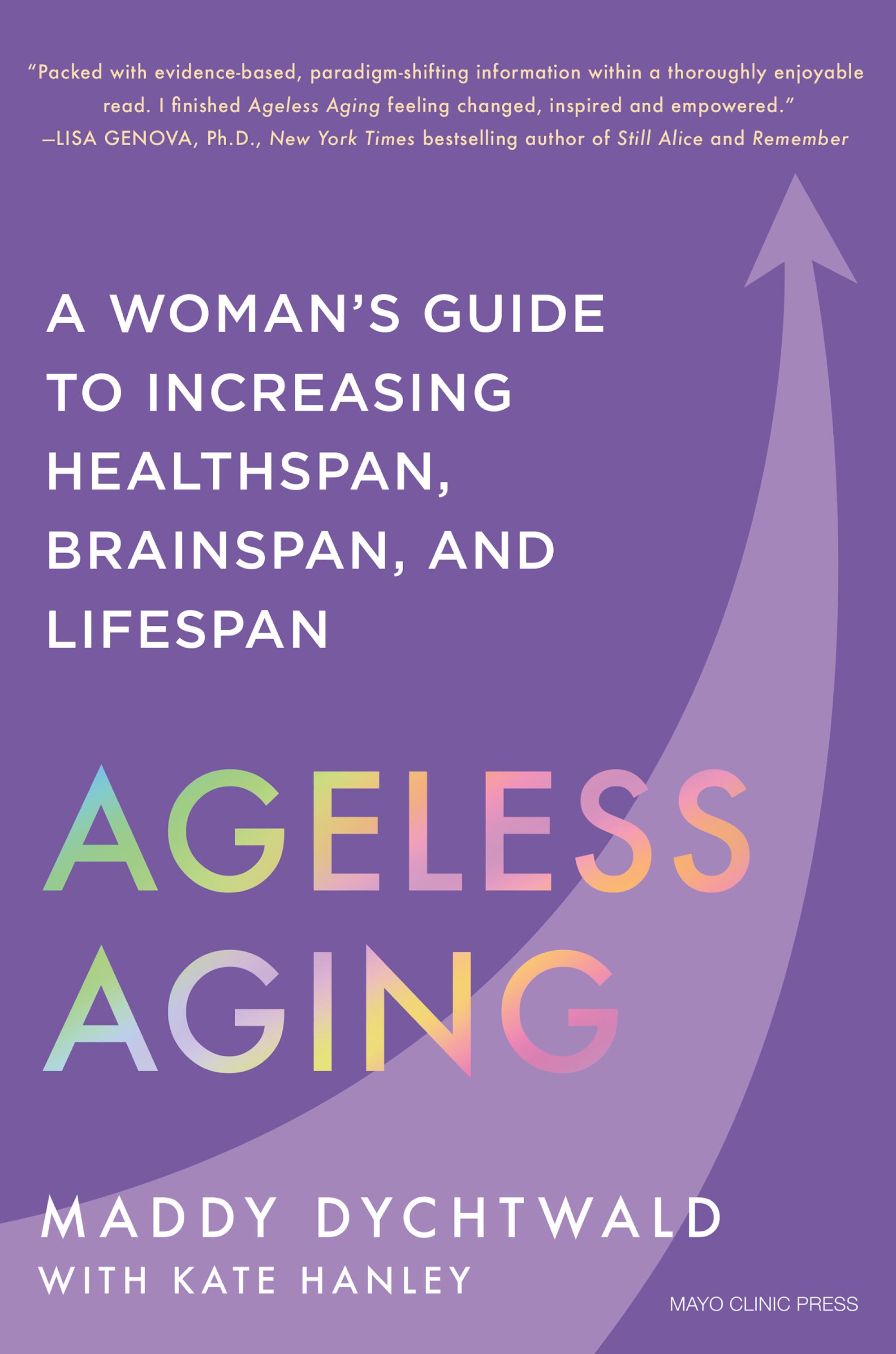
As co-founder of Age Wave, a nonprofit think tank focusing on longevity and aging, Dychtwald has been researching these topics for nearly 40 years. In her new book, “Ageless Aging: A Woman’s Guide to Increasing Healthspan, Brainspan, and Lifespan,” Dychtwald addresses the most recent aging picture for women and identifies a holistic plan for longevity. It weaves together science and medicine, psychology and spirituality, as well as financial advice in a research-based guidebook that’s brimming with actionable steps.
“There’s this ripple effect,” Dychtwald says of the lifestyle she recommends for maximizing healthspan — meaning how long you are living in good health, versus how long you are just living. “If you can impact one piece — sleep, nutrition, fitness, having a sense of purpose and connection — it begins to affect the others.” This interview has been edited for length and clarity.

Shelf Help is a new wellness column where we interview researchers, thinkers and writers about their latest books — all with the aim of learning how to live a more complete life.
How is longevity different for women than men?
Woman have actually won the longevity lottery. We live, on average in the United States, six years longer than men. So that’s incredibly positive. But there is a dark side to this. And that is: We women, on average, spend the last 12 to 14 years in declining health. So we are not doing a great job of matching our healthspan to our lifespan. There’s a gendered gap when it comes to healthspan. Why? I don’t know that the answer is clear, even in the minds of scientists. What we do know is that estrogen has protective properties for women. But once their estrogen levels decline, they have more health challenges than men do, as they get older. But it’s something scientists don’t fully understand yet.
If women are 51% of the population, doesn’t it stand to reason that scientists would better understand this by now?
You would think! I think the healthcare system, overall, is well-meaning. But it’s been created by men and as a result, the focus has really been more on men than women. One great example of how women can, as a community, really motivate physicians and researchers and scientists to change is the whole breast cancer issue. Women really spoke out on this and I think, as a result, we’ve seen great strides in research and survival rates and treatment methodologies.

Author Maddy Dychtwald.
(Lisa Keating Photography)
You endured a health challenge, which is one of the things that led to your writing this book. Can you tell us about that?
I’m a big exerciser, it’s how I manage stress. I started getting pain in my hips, to the point where I was limping. I did PT, I got cortisone treatments, I did a variety of things to manage the pain. But it wasn’t solving the problem. Turns out I needed double hip surgery — I was 68, which is young for the condition I had. But they couldn’t see me for months — and I was in excruciating pain. I started researching and learned, from experts in my network, that I needed to get my inflammation levels down. I went on an anti-inflammation diet — I cut out gluten, sugar and dairy — and I found that within six weeks all my pain went away. I thought: “Whoa, there are all these things that we can all do — and they don’t necessarily cost any money — to live better, longer.” I started looking at other things I could do. I worked with a psychiatrist at Harvard who taught me about meditation and affirmations. I was doing precovery, essentially — preparing for my surgery in advance. And it made a difference. This book is the distillation of all that, along with the work I’ve been doing at Age Wave for 40 years.
New research around genetics versus lifestyle choices also informs the book — and your decision to direct it at women. What does the latest research tell us about how to influence our destiny?
We used to just assume that genetics were our destiny. That whatever our genetic package is, that’s kind of the hand that we were dealt. But, in fact, according to the most recent science from Alphabet’s Calico Life Sciences and other research, up to 90% of our health and longevity are literally within our control. And I find that an incredibly empowering piece of information. It gives us almost total agency. I didn’t want to just keep that information to myself, I wanted to share it with the world. There are a lot of books out there on longevity, but there aren’t many that really focus in on women and longevity. And obviously, women and men are really different.
We used to just assume that genetics were our destiny. That whatever our genetic package is, that’s kind of the hand that we were dealt. But, in fact, according to the most recent science … up to 90% of our health and longevity are literally within our control.
— Maddy Dychtwald
During COVID, I was home more than I had been before. There were so many health issues I saw around me and I had an opportunity to really lean into my own sense of purpose. And in order to lean into it in a way that felt good to me, I wanted to [educate] women in their 40s, 50s, 60s and beyond. There are tens of millions of women just in the U.S. in that age group who are starting to feel the aches and pains of getting older, or who are coping with a chronic degenerative disease, or just dealing with the reality of menopause — and who are looking for solutions. I wanted to give women a one-stop resource to clear up the confusion, give them straightforward answers based on science as well as action steps to live better, longer.
You talk about a “holistic recipe” for healthy aging as a woman. What are the ingredients to that — what daily activities, for example, do you incorporate to promote longevity?
There are a lot of books out there on sleep or exercise or nutrition or hormones or having a positive attitude — and by the way, our attitudes toward our own aging can actually add 7½ years to our lifespan — but it’s not just about one thing, it’s all these things working together. They don’t exist in silos.
Take finances — there’s a gender pay gap. I encourage all women to take charge of their finances. If you don’t have your financial house in order, chances are it will affect your stress levels, your health, your well-being. And you may not even have the financial well-being to pay for your health — and that’s a scary place to be.
If you exercise effectively, it affects your mood and your stress. That helps with sleep, which helps with cognition and so many other things, including managing your finances. It’s cyclical.
Sleep is such a key ingredient. What do you do to manage that?
Sleep is not my superpower. But I learned there were things I could do. One was to really be mindful of my circadian rhythms; controlling our sleep-wake cycles are very important. I learned that what I did during the day was as important, if not more important, than what I did at night to go to sleep. It’s simple — anyone can do it — and it doesn’t cost a penny. Which is: When you get up first thing in the morning, watch the sun rise for 10 minutes. If it’s already up, get sun on your skin for 10 minutes. I do what I call “stacking my habits.” So at the same time, I do some breathing exercises that help me be calm and energetic simultaneously — what a great way to start my day.
One surprising piece of new research that you cite is that exercise has a bigger impact on health, and staving off brain decline later in life, for woman over men.
Yes. We already know that exercising in the morning is the best time of day to exercise, it brings optimal results, and it’s best on an empty stomach. But brand-new research, in a February 2024 study from the Smidt Heart Institute at Cedars-Sinai, says that women don’t have to exercise as hard, or as long, as men to get optimal results. They can get the same health benefits as men from exercise in less time.
For example, women can reduce their risk of death by 18% by doing 140 minutes of moderate aerobic exercise per week, while men need 300 minutes to achieve the same benefit. Women can also achieve the same survival benefit from moderate to vigorous aerobic exercise, like cycling or brisk walking, after 2½ hours per week, while men need about five hours. And when it comes to building muscle mass, strengthening exercises such as weightlifting or core exercises, women can achieve the same positive benefits after one session weekly while men need three sessions.
TAKEAWAYS
From “Ageless Aging”
You talk about two topics that demand the medical community’s much closer attention. What are they?
Brain health — no one wants to talk about anything above the neck — and hormones. Hormones affect our cognition, sleep, joints and bones, mood. If you’re not able to sleep at night, it affects your brain health, brainspan and longevity. If your bone density is impacted, you’re more likely to fall, and that could lead to health issues.
And Alzheimer’s disease is twice as likely to happen to women than men — people don’t want to talk about it. It’s super scary. But there are things we can do. Dr. Andrea Pfeifer, a neurosurgeon and CEO of AC Immune, a company working on a vaccine for Alzheimer’s, says probiotics are what she takes — the gut-brain connection is very real. Many physicians recommend the Mediterranean diet. I do the anti-inflammatory diet.
Another thing is limiting or stopping alcohol. And exercise — every single brain expert I spoke to said that’s the No. 1 thing to protect healthspan and brainspan. The fear of cognitive decline and Alzheimer’s for women is real, but only 4% of women have a genetic connection. And we can take steps to prevent or delay it.
Are there any positive sides of aging for women?
We gain a certain amount of wisdom and experience as we get older. According to recent studies we’ve done at Age Wave, women, as it turns out, from the age of 50 on, they seem to be gaining more confidence in themselves and their lives, whereas men seem to plateau out at around 50. This is all in general, of course. But for women, empowering.

Shelf Help is a new wellness column where we interview researchers, thinkers and writers about their latest books — all with the aim of learning how to live a more complete life. Want to pitch us? Email alyssa.bereznak@latimes.com.


For the next five years, the Environmental Protection Agency has indicated it will not require public water utilities to test for microplastics or pharmaceuticals in drinking water, according to a proposed rule published in the Federal Register.
On Friday, the EPA submitted a list of chemicals it plans to test for under the Unregulated Contaminant Monitoring Rule, a mandatory testing program used to collect information about concerning chemicals in drinking water that could be harming human health. It did not include microplastics or pharmaceuticals.
The omissions come after announcements by EPA Administrator Lee Zeldin earlier this year that his agency was designating microplastics and pharmaceuticals priority contaminants for testing.
“This is a direct response to the concern of millions of Americans who have long demanded answers about what they and their families are drinking every day,” he said at an April news conference with Health and Human Secretary Robert F. Kennedy Jr. at EPA headquarters.
Zeldin’s announcement was seen at the time as a move to placate the increasingly disgruntled Make America Healthy Again contingent of Trump supporters.
Now the agency says it has no validated or standardized method to test for the plastic particles in drinking water, and wouldn’t be able to develop one before December, when testing is required to begin.
Among the 33 chemicals the EPA will require water utilities to test for are seven PFAS, or forever chemicals, and three pesticide residues.
It will be five years before the EPA proposes another list.
The EPA did not respond to a request for comment.
The agency noted in its proposed rule that it will collaborate with other federal agencies to “evaluate risks and exposures” of microplastics for future monitoring.
Environmentalists reacted with frustration and resignation. They pointed out that the European Union has developed methods to test for the tiny plastic particles, which have been found in people’s blood, brains and lung tissue. California has one in the works.
“The California water board has spent a lot of time and money on how to measure in drinking water,” said Judith Enck, a former EPA regional administrator and president of the anti-plastic environmental group Beyond Plastics. “EPA should give them a call.”
California was required by a 2018 state law to establish a protocol for local water utilities to test for the particles in drinking water. The state has not yet begun reporting its results, but protocols were established in 2021. Blair Robertson, a spokesman for the State Water Resources Control Board, said it’s not “a fully validated, end-to-end regulatory method” yet.
At the April meeting, Zeldin announced that he would place microplastics on what is known as the Contaminant Candidate List, which acts as a preliminary “watch list” of unregulated, priority contaminants in drinking water. Like the mandatory monitoring list, it is updated only every five years. The most recent list was published on April 2 — the day he made his announcement.
“Americans have been ignored as they sound the alarm about plastics in their drinking water,” Zeldin said during the announcement. “That ends today by placing microplastics on the contaminant candidate list for the first time ever. EPA will follow the science, will pursue answers and will hold ourselves to the highest standards to protect the health of Americans.”
There appears to be no clear association between these two lists, although the contaminant list is supposed to inform the monitoring list. Seventy-five chemicals and four chemical groups (microplastics, pharmaceuticals, PFAS chemicals, and disinfection byproducts) were listed on the 2026 contaminant list. Only seven of those chemicals were also on the proposed monitoring list (as well as seven PFAS chemicals).
When Zeldin announced microplastics as “‘a priority contaminant for regulation,’ and called it ‘a historic action on microplastics,’ he made it seem like the administration was going to take microplastics seriously,” said Mary Grant, water policy director for the environmental group Food & Water Watch.
“By not including them, they made it clear they don’t actually have plans to immediately address this crisis by getting the real-world monitoring data that we need right now to really start correcting ourselves,” she said.
Craig Davis, senior director of plastics chemistry at the American Chemistry Council — the nation’s largest trade group for chemical companies — said that while his organization supports microplastic research, it also agrees with the EPA’s decision not to include them in the monitoring list.
“National drinking water monitoring should be based on validated, standardized methods that can produce reliable and comparable data,” said Davis in a statement. He said “limited” national monitoring resources should be focused where data can produce “actionable public health information.”
The public has 60 days to comment once the plan is published in the Federal Register.

The number of Angelenos who went to the hospital with throat pain and concerns about smoke inhalation spiked as a fire burned through the massive Lineage cold storage warehouse in Boyle Heights this month, The Times has learned.
The blaze burned for eight days beginning June 17 and involved solar panels, insulation foam and other industrial materials.
During that time, more than three times as many people went to emergency departments within 10 miles of the warehouse mentioning the fire or smoke inhalation compared with the two weeks prior, according to data from the Los Angeles County Department of Public Health obtained through a public records request.
The agency also noted a near doubling of patients mentioning throat pain within five miles of the fire June 21 — 1.9 times the baseline levels.
Usually, fewer than 50 people go to the emergency room each day for throat pain, and fewer than 20 people for smoke inhalation, the department said.
The hospitalization data was tracked through the department’s syndromic surveillance project, which monitors trends in what people report when they come to emergency departments in L.A. County, as well as diagnosis codes noted by providers. The system is not as comprehensive as full patient health records, and clinicians may not always include key words about “fire,” “smoke” or other circumstantial information in their diagnoses, the public health department said.
As such, it “cannot capture the true number of [emergency department] visits related to symptoms from the fire and likely underestimates the true burden of fire related symptoms,” the department said.
Perhaps unexpectedly, the department said it did not note a substantial increase in asthma, acute respiratory symptoms or chronic obstructive pulmonary disease-related emergency department visits during the fire.
But even these preliminary findings are concerning, experts said. The fire is believed to have started on the solar array on the roof of the 500,000 square-foot building, which housed 85 million pounds of frozen food. It then reached an ammonia line, prompting two brief shelter-in-place orders for nearby residents.
Over the next week, the fire continued to burn through dense insulation foam within the building’s walls and other unknown industrial materials, blanketing much of L.A. in acrid smoke. Residents in downtown L.A., northeast L.A., Burbank, the San Gabriel Valley and many other parts of the city and county reported seeing and smelling the fumes.
The South Coast Air Quality Management District issued multiple warnings about unhealthy levels of PM 2.5, or fine particulate matter. The city and county opened two smoke respite shelters in the immediate area so that people could breath cleaner air.
It is still unclear what exactly was in the smoke that people breathed in. Industrial fires release far more materials than the burned wood smoke that is emitted during wildfires.
“The makeup of the smoke can include toxic chemicals, fine particles and other serious risks to lung health depending on fire conditions and what is burned,” Will Barrett, assistant vice president for nationwide clean air policy at the American Lung Assn., said as the fire was burning. Children and elderly people are particularly at risk.
David Eisenman, director of the UCLA Center for Public Health and Disasters, said urban industrial fires also can represent a hazard that standard PM 2.5 warnings don’t always address. Those advisories are “blunt instruments” that don’t adequately capture emissions from burning man-made goods — or convey that the source of pollution may include burning batteries or toxic refrigerants, he said.
The fact that initial numbers don’t show a spike in asthma attacks is “somewhat reassuring,” Eisenman said. But “people may have gone to their primary care doctors, which this would not capture. This data deserves follow up.”
The air district and the U.S. Environmental Protection Agency deployed air monitors to assess particulate matter, airborne toxic metals and other harmful compounds during the early days of the blaze. The air district said it didn’t find significant levels of air toxics during the first two days of the fire, although it did record significantly elevated concentrations of particulate matter within the plume downwind.
Some of the measurements it took with mobile monitors, which are five-minute snapshots, also showed increased bromine and chlorine, which often are found when buildings burn and were at levels “below short-term health-based exposure thresholds,” the air district said. It began continuous PM 2.5. monitoring at two nearby elementary schools on the third day.
The L.A. Fire Department said it detected low-levels of toxic hydrogen fluoride on the second day of the fire, which can be a byproduct of burning lithium-ion batteries.
Lineage, the tenant-operator of the warehouse, said no concentrations of ammonia were detected in the air at any time.
“There’s no doubt this fire has had a huge impact on the local community, and we are committed to showing up in every way we can,” company officials wrote in a statement last week. They said Lineage worked closely with the Fire Department during the blaze and delivered masks, air purifiers and other supplies to the community, and will work to ensure the fastest cleanup possible.
The long-term health effects of the fire and its smoke probably won’t be known unless researchers conduct a follow-up study, said Eisenman of UCLA.
For example, there may have been delayed pulmonary effects from the hydrogen fluoride and burning insulation foam that — when combined with the elevated PM 2.5 levels in a dense urban environment — produced health effects that didn’t show up in the emergency room data.
“They will show up in increased primary care office visits and exacerbations of chronic disease over the next few weeks,” he said. “So from a public health standpoint, this fire is not over.”

LOS ANGELES — All the water unleashed onto the warehouse fire in Boyle Heights — some of it 480 gallons at a time by helicopter — had to end up somewhere.
That somewhere is the Los Angeles River.
Los Angeles Fire Department crews ripped through 50-foot walls filled with foam insulation to get to the building’s steel skeleton and its storage racks.
Charred chunks of foam have been floating from the burn site, partially blocking storm drains. Now organizers from East Yard Communities for Environmental Justice are teaming up with scientists from UCLA and Columbia University to find out more about what’s in the runoff.
“The community here is really interested in knowing, ‘Are there any contaminants that are potentially making their way down to the L.A. River?’” said Yoshira “Yoshi” Ornelas Van Horne, UCLA assistant professor in environmental health sciences. “We really can’t answer that unless we actually have measures and samples analyzed.”
Water samples collected directly from the warehouse fire runoff have been shipped to Columbia‘s Multi-Element Trace Analysis Laboratory in New York, which has a spectrometer that can identify trace levels of elements. The lab also has relationships with researchers in Southern California.
2

1. Emmanuel Carrera Ruedas, left, and Casey Cooper prep containers to take water samples from the L.A. River. 2. Casey Cooper holds a water sample. (Christina House / Los Angeles Times)
The data will then come back to UCLA for analysis. For now, the scientists and community advocates only have the money to test for copper, lead and arsenic, Ornelas Van Horne said. Residents have expressed interest in testing for more contaminants.
As the water from the firefighting efforts trickles through the warehouse in rivulets, it forms a stream at the corner of S. Indiana and Noakes streets, that gushed into the storm drain. On a recent visit, the water traversed a smoky 10-foot canyon of charred foam and twisted wall panels on its way to the drain.
From there, the water flows to the L.A. River. Despite the fact that its concrete design is intended to whisk water out of the city as fast as possible, life stubbornly persists in the river and nearby. Recreational swimming is not permitted, yet anglers fishing for tilapia, largemouth bass and carp are a common sight along the rocky sides of the soft-bottom areas.
The L.A. River, and all it carries with it, meets the ocean in Long Beach.
The L.A. County Public Works Department said it has deployed three containment booms — floating barriers — on the L.A. River, and is continuing to monitor the water as it makes its way to the ocean.

Emmanuel Carrera Ruedas takes a water sample.
(Christina House / Los Angeles Times)
Before it gets there, the river passes through the Dominguez wetlands, where Public Works is removing some number of dead fish. The wetland has absorbed toxic runoff from a warehouse fire before, resulting in a fish die-off.
“For so long, the L.A. River has been used as a dumping ground for all kinds of chemicals,” said Emmanuel Carrera Ruedas, a community scientist and member of East Yard Communities for Environmental Justice.
Pollution has plagued the L.A. River, but it does have allies. In the 1980s, the Friends of the LA River pushed to address street runoff and trash that had made the water body infamous. Significant progress from advocacy and government initiatives improved water conditions, but these efforts have not been equally distributed.
Carrera said the samples represent “proof of what’s actually going on, and accountability, too, for the city, of not just what’s happening in our air, but what’s actually happening in our waterways.”
The first samples for the project were taken last Friday, the second day of the fire.
They were the first of 20 samples the research groups have agreed to test at no cost to see if any exceed regulatory standards and could pose a risk to people nearby.
The warehouse fire represents the latest environmental disaster for people in Boyle Heights and East L.A. Just four weeks ago, a telecommunications crew accidentally struck one of the many oil pipelines beneath the L.A. area, spilling 25,000 gallons of crude oil near Eastern and Cesar Chavez avenues — including into storm drains feeding to the L.A. River.
“I think it really is difficult to see disaster after disaster hit the communities here, with not a lot of talk about how we can move through these disasters together,” said Casey Cooper, a volunteer community scientist involved in the sampling. They were inspired, they said, by the response of neighbors, and how people were supporting one another.
Results from the laboratory analysis could be back to Ornelas Van Horne within a month.
-

 Texas2 minutes ago
Phoenix Merchant Partners and Texas Capital Alternative Asset Management Form Strategic Relationship
-

 Utah5 minutes ago
Therapy dogs offer a welcome break for firefighters battling Utah’s Iron, Cherry fires
-

 Vermont10 minutes ago
She moved from Paris to Vermont and found her ‘dream job’ opening a bakery – The Boston Globe
-

 Virginia17 minutes ago
Reopening date set for Virginia Creeper Trail after months of work
-

 Washington20 minutes ago
Colorado Democrats punish Washington ties in primaries
-

 Wisconsin25 minutes ago
Missing Wisconsin teen Joniah Walker found safe 4 years after disappearing from home
-

 West Virginia32 minutes ago
Transmission line proposals raise ratepayer cost concerns in West Virginia
-

 Wyoming35 minutes ago
Wyoming Department of Health warns of scam callers using official phone number

