Science
MAHA says red meat and beef tallow will make you healthy. The American Heart Assn. isn’t buying it


In an earlier era, the American Heart Assn. and the U.S. federal government were very closely aligned on what the American public should eat and why.
Dietary guidelines from the cardiovascular research nonprofit largely mirrored those published by the U.S. Department of Health and Human Services. American Heart Assn. representatives advised the government on the science behind its dietary advice.
But as is the case with many public health issues these days, the distance between the policies recommended by established medical groups and those endorsed by Department of Health and Human Services Secretary Robert F. Kennedy Jr. appears to be growing wider.
On Tuesday, American Heart Assn. released its updated guidelines for a heart-healthy diet. Like the new federal dietary guidelines released back in January, the document cautions against processed foods and refined sugars.
But the group pressed back on some nutrition claims that Kennedy and Make America Healthy Again influencers have touted in public statements and written into federal policy.
Unlike the new federally authorized inverted food pyramid, which gives top billing to an enormous cut of steak, a tray of ground meat, a hunk of cheese and carton of whole milk, the American Heart Assn. urges plant-based proteins over red meat, and low- or nonfat dairy products over whole-fat options.
In contrast to Kennedy’s declaration in January that the U.S. was “ending the war on saturated fat,” the heart association continues to recommend unsaturated fat sources over saturated ones for the sake of cardiovascular health.
The heart association also pushes back on Kennedy’s well-publicized passion for beef tallow as a replacement for seed oils, which he has accused (despite shaky evidence) of “poisoning” Americans.
“Animal fats (eg, beef tallow and butter) and tropical oils (eg, coconut oil, cocoa butter, and palm oil) are relatively high in saturated fat, whereas nontropical plant oils (eg, soybean, canola, and olive oils) are relatively high in unsaturated fat,” the American Heart Assn. paper reads. “In summary, as part of heart-healthy dietary patterns, nontropical plant sources of fat should be used as part of food preparation in place of animal fats and tropical oils.”
In response to questions, both the American Heart Assn. and Department of Health and Human Services emphasized their shared objectives over any differences.
“The American Heart Association’s [paper] is aligned with the Dietary Guidelines on the major issues: eat real food, avoid highly processed food, and limit refined grains and added sugar,” said Andrew Nixon, a health department spokesman. “We look forward to working collaboratively with the [American Heart Assn.] to evangelize these core principles and reverse the diet-related chronic disease epidemic.”
The heart association and the federal government have different purposes when drafting their recommendations, said Dr. Simin Liu, director of UC Irvine’s Center for Global Cardiometabolic Health & Nutrition and a professor at the UC Irvine School of Medicine.
The heart association’s guidelines are intended to reflect the best available evidence on nutrition and cardiovascular health outcomes, whereas federal nutrition standards inform the content of federally funded meals served in schools, hospitals and military dining facilities, and help determine foods included under assistance plans like the Supplemental Nutrition Assistance Program.
The two sets of guidelines aren’t totally at odds. The heart association applauded the government’s warnings against added sugars, refined grains and processed foods in January, noting that the advice aligns with the organization’s long-standing recommendations.
“Those of us in the field have been pushing for food-based dietary recommendations, like advocating people eat actual foods instead of [processed] food products,” Liu said, but “the focus on animal product consumption is a bit off the mark.”
The administration’s hearty endorsement of animal protein sources surprised many health groups, as a diet rich in red meat is strongly associated with poorer cardiovascular health.
A supplemental report published alongside the federal guidelines noted that several members of the government’s advisory panel had financial ties to meat and dairy industry groups, including the National Cattlemen’s Beef Assn., the National Pork Board and the California Dairy Research Foundation.
The heart association’s guidelines better reflect the current scientific consensus on the relationship between food and cardiovascular health, said a spokesperson for the nonprofit Center for Science in the Public Interest, and “will be a valuable resource for anyone who was confused by the mixed messages” in the government’s earlier advice.


Federal agricultural inspectors detected a case of New World screwworm larvae — maggots that burrow into the flesh of living animals and sometimes humans — on a 3-week-old calf in south Texas, near the U.S.-Mexico border. Officials anticipated the arrival of screwworm in the United States and say they’re prepared to contain it.
New World screwworm, also known as Cochliomyia hominivorax, is starkly different from the average maggot that feeds on decaying organic matter such as garbage, rotting food or dead animals, said Tom Talbot, veterinarian and member of the California Cattlemen’s Assn.
That’s because a screwworm larva “attacks living flesh,” Talbot said.
On Thursday, the U.S. Department of Agriculture confirmed the detection of New World screwworm in the umbilical area of a bovine in Zavala County, Texas, more than 60 miles from the northern Mexico border.
As of Friday morning, there have been no additional cases of infected animals reported.
Screwworm is endemic in South America and parts of the Caribbean, according to the Centers for Disease Control and Prevention. However, the parasitic fly has been steadily moving north from Central America to Mexico since 2023.
The USDA says it has actively monitored the fly’s movement. Last month, the USDA was aware of more than 200 active screwworm infestation cases in the border states of Nuevo León and Tamaulipas, according to Mexico’s Secretary of Agriculture and Rural Development dashboard. There are currently more than 2,000 active cases throughout Mexico.
It was believed that the New World screwworm would enter the U.S. in 2025, “however, thanks to the hard work across the entire Trump administration and our industry, state, and local partners, we were able to buy time for this moment,” said Dudley Hoskins, undersecretary for Marketing and Regulatory Programs for the USDA, in a statement.
The potential economic impact of New World screwworm on the cattle industry due to import restrictions, reduced productivity and animal loss is substantial, said Sally DeNotta, director of the University of Florida’s Equine Performance Laboratory.
Last year, 175 key agricultural organizations signed a letter urging additional federal funding for screwworm-control measures, emphasizing USDA estimates that a New World screwworm outbreak in the U.S. could cost producers $4.3 billion annually and cause economic losses of more than $10.6 billion across the southern United States.
“While the fly does not survive at temperatures at or below freezing, infected animals could carry the parasite northward and spread infection during the summer months, and the temperate climate of Southern California could certainly support year-round New World screwworm populations,” DeNotta said.
Talbot said from the federal to the local level, everyone in the ranching community has been talking about the arrival of screwworm and how to combat it.
“My expectation is that there will be a minimal number of cases of [New World screwworm] in California,” he said.
That’s because there are several stations on the border in Southern California, he said, that are collecting data, monitoring for any incidents of the parasitic fly and trapping them.
Talbot says he’s confident that the proactive measures on behalf of the federal government will mitigate the screwworm’s reach and therefore not impact the beef supply locally or nationally.
How screwworm infection spreads
Female screwworm flies are attracted to the smell of wounds — that can be as small as a tick bite — and body openings such as the nose, eyes, ears and mouth where they can lay eggs, according to the CDC.
A female screwworm fly can lay 200 to 300 eggs at a time and may lay up to 3,000 eggs during her 10 to 30-day lifespan.
When the eggs hatch into maggots, the maggots eat live tissue, causing a worsening, often painful and foul-smelling wound, according to the CDC.
Screwworm has hit the United States before
There was a screwworm outbreak in the southwestern region of the United States in 1965 that prompted Mexican and U.S. livestock producers to sign a declaration to establish a joint program for the eradication of the screwworm from the states on either side of the Mexico-U.S. border, according to the National Agricultural Library.
By 1966, the United States had eradicated screwworms, but livestock remained vulnerable to reinfestation from screwworms migrating from Mexico.
Eradication was possible through the sterile insect technique, which uses gamma radiation to irradiate screwworm pupae and create sterile male flies.
The U.S. Department of Agriculture’s Animal and Plant Health Inspection Service maintains a screwworm pupae sterilization facility in North America and is currently building a new center in southern Texas.
When produced and released in large numbers, sterile male flies mate with wild female flies, which then lay unfertilized eggs, according to the USDA.
“Since female screwworm flies normally mate only once, the population progressively reduces and is, ultimately, eradicated,” according to USDA officials.
Last year, the Trump administration cut thousands of grants and programs from the U.S. Agency for International Development, which includes U.S.-funded animal disease monitoring projects operated by the United Nations Food and Agriculture Organization, Argi-Pulse Communications reported. Among the slashed programs were some dedicated to monitoring and containing New World screwworm in Central America.
Today, screwworm infestations aren’t a regular occurrence in the U.S., but cases have occurred in travelers returning from areas where the flies are present, according to the CDC.
Can infected animals be treated?
Infected wounds are cleaned and debrided to remove any screwworm larvae, after which the animal is treated with an approved insecticide, DeNotta said.
Last month, the U.S. Food and Drug Administration issued an emergency use authorization for several insecticides known to be effective against screwworm.
There are approved systemic and topical options for a variety of species, including cattle, horses, small ruminants, cats and dogs, DeNotta said.
“Multiple days of treatment are often required, and antibiotics and analgesics may also be administered to treat secondary infection and control pain,” she said.
If left untreated, the tissue destruction caused by flesh-eating larvae can be extensive and severe, often resulting in debilitation and eventual death of the host, DeNotta said.
“Animals that survive may suffer weight loss, poor growth and reduced productivity as a result of pain and discomfort,” she said.
Screwworm can infect humans
Human infection is rare, DeNotta said, but it can happen.
Humans are at risk of being infected by screwworms if they travel to an area where the flies are present, such as South America and the Caribbean, according to the CDC.
CDC officials said your risk of screwworm infection increases when you:
- Spend a lot of time outdoors during the day, especially if sleeping or unable to keep the flies at bay.
- Have any open wounds. A small break in the skin, including from a scratch, insect bite or recent surgery, may attract screwworm flies.
- Have a medical condition that causes bleeding or open sores, such as from skin or sinus cancer, or from treatments that can create breaks in the skin.
- Live, work or spend an extended amount of time with or near, livestock or other warm-blooded animals in areas where screwworm flies are present.
The symptoms humans experience when infected by screwworm
The following are symptoms of screwworm according to the CDC:
- Feeling maggots move or seeing maggots within a skin wound, sore or body opening.
- Painful skin wounds or sores that worsen within a few days.
- Foul-smelling odor from the site of the infestation.
- Bleeding from open sores.
Bacteria can also infect wounds where screwworm maggots are present and may cause an infection that can lead to symptoms like fever or chills.
To treat a screwworm infection, DeNotta said, people undergo the same combination of wound debridement and insecticides used in animals.

California researchers are leading a nationwide effort to find out why some Asian American communities have high rates of certain cancers.
It comes as health experts see rising rates of lung cancer among Asian American women who have never smoked and increasing rates of early-onset breast cancer.
“Asian Americans are actually the first racial and ethnic group for whom cancer is the leading cause of death,” said Scarlett Gomez, a cancer epidemiologist at UC San Francisco and a lead on the project.
UCSF joins researchers from UC Irvine, UC Davis, Cedars-Sinai and Temple University in launching a $12.5 million National Cancer Institute-funded study called the ASPIRE Cohort, that will follow 20,000 Asian Americans over time. Researchers say it’s the first large-scale longitudinal cancer study focused on Asian Americans.
Lung cancer incidence has declined across much of the United States as smoking rates have fallen. However, researchers have observed a slight increase among Asian Americans, despite relatively low smoking rates, particularly among women. More than half of Asian American women diagnosed with lung cancer are nonsmokers, they say.
Many existing studies of lung cancer risk among nonsmokers have been conducted in Asia, where exposure patterns can differ significantly from those in the United States, said Iona Cheng, a molecular epidemiologist at UCSF and also a lead on the project.
Researchers know that outdoor air pollution, secondhand smoke and cooking oil fumes can contribute to lung cancer risk. But it’s not clear if these explain disease patterns among Asian Americans in the United States.
Rising rates of breast cancer among Asian American women are also driving the push.
“Early onset breast cancer” — diagnosed before age 50 — “is going up the fastest among Asian Americans,” Gomez said. Recent data show rates among Asian Americans, Native Hawaiians and Pacific Islanders are approaching those of non-Hispanic white women, she said. Cancer experts don’t know why.
One of the central goals of the ASPIRE study is to move beyond treating Asian Americans as a single category. The term can include people with roots in dozens of countries from Sri Lanka to China’s border with Russia to Pacific islands, with completely different exposure patterns and cuisines.
“When we separate and look at all the distinct Asian ethnicities, we see a wide variation,” Cheng said.
Filipino women have a higher incidence of thyroid cancer, and stomach cancer has been more common among some Korean and Japanese people. Combining all Asian Americans into one category can make those differences impossible to detect.
The study also seeks to address longstanding gaps in representation. Although Asian Americans make up nearly 8% of the U.S. population, they have historically received little research funding.
Existing cancer studies have also often included too few Asian Americans to draw meaningful conclusions about specific ethnic groups, researchers said. Salma Shariff-Marco, a social and behavioral scientist at UCSF and also a lead on the projects, aid that has made it hard to show the need for more targeted research. The ASPIRE cohort, she said, is designed to show the variation by including a broader range of ethnic groups and more contemporary exposures than previous work.

Last summer, a NASA-funded asteroid impact warning system detected a mysterious object speeding through the solar system.
Scientists determined the object had entered the solar system from deep space, making it the third known object to have come from another star system.
NASA called it Comet 3I/ATLAS and said it didn’t pose a threat. But its discovery in July led to wild speculation that the object was a piece of extraterrestrial technology — maybe even an alien spacecraft.
The SETI Institute, a nonprofit that explores the origins of life and searches for extraterrestrial intelligence, said this week that a team of scientists had used a radio telescope to try to detect signals that could indicate extraterrestrial life on the comet.
But they found none.
“While observations strongly indicate that 3I/ATLAS is a natural object, interstellar visitors are also compelling technosignature targets because an artificial object — however unlikely — could represent detectable extraterrestrial technology and potentially provide the first evidence of life beyond Earth,” the institute said in a news release.
SETI scientists said they used the Allen Telescope Array at the Hat Creek Radio Observatory in Northern California to scan the object for seven hours, covering a spectrum of 1 to 9 gigahertz.
“This broad range allows scientists to search for narrowband radio signals, which are not produced in nature and would be evidence of technology,” the news release said.
The institute said the team identified nearly 74 million narrowband signals, but ultimately traced them back to technology on the Earth’s surface or orbiting satellites.
“The results from 3I/ATLAS show how realistic it is to detect a signal with the technology we have today,” said Valeria Garcia Lopez, one of scientists on the SETI team. “That is why it is important to keep searching for technosignatures, even from objects we might not expect to have signals.”
The institute said the researchers also can learn more about the natural properties of interstellar objects as they travel through our solar system.
“As more interstellar objects are discovered, each offers a new opportunity to probe the cosmos for technosignatures, advancing our understanding of both natural and possible technological phenomena beyond our Solar System,” the SETI statement said.
-

 South-Carolina3 minutes ago
Fatal collision in Florence Co.
-
 South Dakota8 minutes ago
2026 SDHSAA State Softball Saturday Scores
-
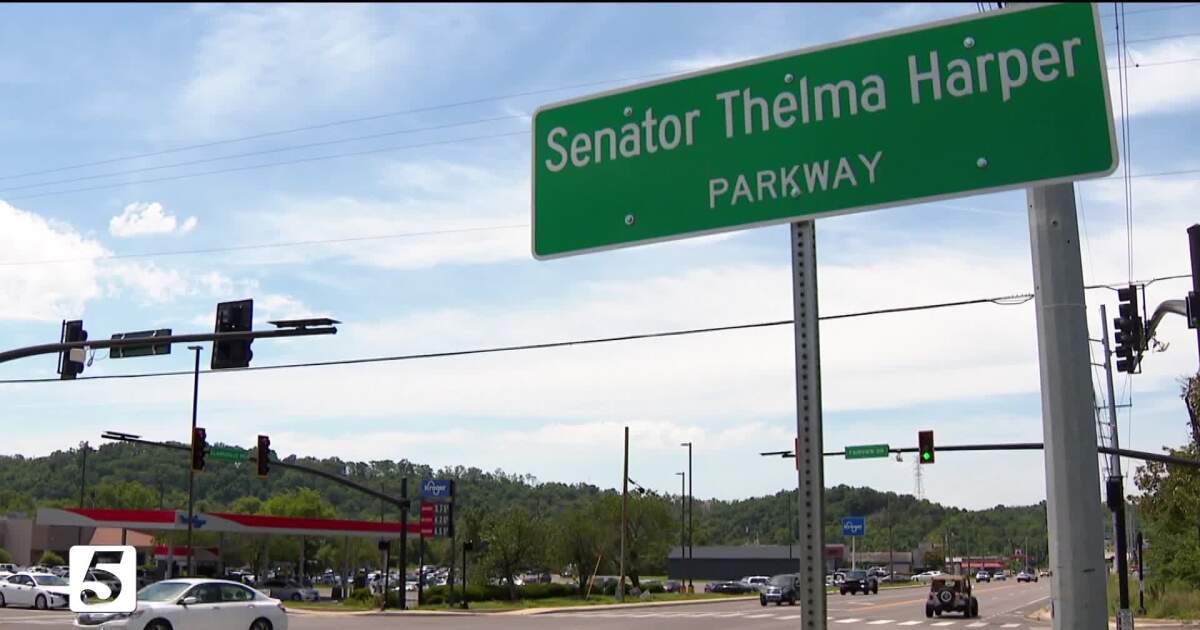 Tennessee15 minutes ago
Portion of Clarksville Pike dedicated in honor of trailblazing Sen. Thelma Harper in North Nashville
-

 Texas18 minutes ago
Texas cruise passengers complete hantavirus monitoring with no infections, state says
-

 Utah23 minutes ago
Appreciating the beauty and terror of Coyote Gulch
-
 Vermont30 minutes ago
Vermont to build Green Mountain Youth Center – Valley News
-

 Virginia33 minutes ago
Virginia trooper rescues kitten from I-395 in Alexandria
-

 Washington37 minutes ago
DC police swarm Washington Highlands neighborhood after shooting

