Politics
Who Are Elon Musk’s Friends, Investors and Family?


A look at the people who influence the world’s richest man, and those who stand to gain from their association with him now.
Elon Musk occupies a rare place at the center of American power.
As the “first buddy,” he has won the ear of President-elect Donald J. Trump, having spent over $250 million in the final months of 2024 to help him get elected. Mr. Musk has appeared in family photos at Mar-a-Lago and joined Mr. Trump on calls with world leaders and chief executives.
Mr. Musk has never had more influence over business, global politics and the American democratic system. He helped kill bipartisan legislation in Congress to avoid a government shutdown, though a bill was later passed.
Where does he go from here?
These are the people who influence Mr. Musk right now, and those whom he influences in turn. They are longtime friends, investors, staff members or party buddies — and sometimes, those boundaries blur.
They shape how Mr. Musk operates and views the world. Many have propped him up, in the good times and the bad, and some now stand to gain from his new position in U.S. politics.

These people have fueled Mr. Musk and his businesses. Over the years, they’ve invested millions of dollars in SpaceX, Tesla, Neuralink, the Boring Company, X and xAI. Some have gained board seats or become close friends with Mr. Musk for their loyalty.
Steve Jurvetson
Mr. Jurvetson is a longtime Silicon Valley venture capitalist and was an early investor in Mr. Musk’s SpaceX, where he is a board member. He is also a superfan of Mr. Musk’s. On a podcast in 2020, he praised the billionaire for being “the greatest gift of the American dream living right now.”
Marc Andreessen
The venture capitalist is one of Mr. Musk’s big financial supporters in Silicon Valley: His firm, Andreessen Horowitz, has backed SpaceX, X and xAI.
Shaun Maguire
A partner at Sequoia Capital, Mr. Maguire led the firm’s deals into Mr. Musk’s SpaceX, X, xAI and Boring Company, a tunneling venture. He has played a big role in Mr. Musk’s work during the presidential transition.
John Hering
Mr. Hering, a venture capitalist, invests in Mr. Musk’s companies and has become a trusted adviser. Recently, Mr. Hering has spent time in Palm Beach, Fla., helping with the presidential transition.
Peter Thiel
Mr. Thiel and Mr. Musk are members of the so-called PayPal Mafia, a group of founders and early employees of the payments company. While Mr. Thiel helped oust Mr. Musk from the company decades ago, he has recently become a political ally and supporter. Vice President-elect JD Vance once worked for Mr. Thiel’s venture capital firm, and Mr. Thiel was the one who introduced the running mates.
Roelof Botha
A fellow South African, Mr. Botha was a member of the PayPal Mafia. Now, as the managing partner of Sequoia Capital, he oversees the venture firm’s various investments into Mr. Musk’s companies, including X and xAI.
Larry Ellison
Mr. Ellison, the co-founder of Oracle, is a self-described good friend of Mr. Musk’s and has taken part in some Trump transition meetings. When Mr. Musk bought Twitter in 2022, Mr. Ellison committed $1 billion to the deal.
Mr. Musk’s friends come from different areas of his life. Some started as colleagues or investors, but later developed personal relationships with the billionaire — to the point where they’ve attended Burning Man or vacationed together.
Mr. Musk has also grown close with a number of figures in the tech scene around Austin, where he has been relocating some of his companies’ operations to, away from the San Francisco area.
Antonio Gracias
Mr. Gracias is one of Mr. Musk’s oldest friends; he was an early investor in SpaceX, Tesla and other companies, and he helped fund a pro-Trump super PAC started by Mr. Musk.
Ken Howery
A co-founder of PayPal, Mr. Howery is very involved in Republican politics. He and Mr. Musk are part of the same social circles in Austin.
Michael Kives
Mr. Musk has sometimes stayed with Mr. Kives, a Hollywood agent and Democratic financier, when he is in Los Angeles.
Luke Nosek
A close friend in Texas now and active in conservative politics, Mr. Nosek is one of the several entrepreneurs who helped start PayPal.
David Sacks
A PayPal Mafia associate, Mr. Sacks is a longtime friend who has grown closer to Mr. Musk after the acquisition of Twitter and his rightward political shift. Mr. Sacks has been picked to a tech position in Mr. Trump’s White House.
Sriram Krishnan
A former venture capitalist at Andreessen Horowitz, Mr. Krishnan was part of the crew that took over Twitter after Mr. Musk bought it. President-elect Trump recently tapped him to work with Mr. Sacks on artificial intelligence initiatives.
Joe Lonsdale
A co-founder of the software company Palantir, which has numerous Defense Department contracts, Mr. Lonsdale provided guidance to Mr. Musk’s pro-Trump super PAC and has helped advise the world’s richest man on the presidential transition.
Rupert Murdoch
Mr. Musk dined at Mr. Murdoch’s apartment just before Election Day. The media mogul has remained close with Mr. Musk even as his flagship newspaper, The Wall Street Journal, has reported critically on him.
James Murdoch
A current Tesla board member, as well as a SpaceX investor and a son of Rupert Murdoch’s, James Murdoch and Mr. Musk are friends who have vacationed together.
Joe Gebbia
A former Airbnb executive, Mr. Gebbia sits on Tesla’s board and is also part of the crowd that Mr. Musk hangs out with in Austin.
Jason Calacanis
A start-up investor and podcaster, Mr. Calacanis has been a longtime supporter of Mr. Musk’s from the early days at Tesla. He has attended Burning Man with Mr. Musk and most recently advised the billionaire during the takeover of Twitter.
Michael Dell
The billionaires have become closer as Mr. Musk has made Austin his home base. Mr. Dell has voiced his support of the government efficiency department and is developing computing infrastructure to help power Mr. Musk’s xAI.
Ari Emanuel
The Hollywood media mogul has grown close to Mr. Musk, who once sat on the board of his company, Endeavor. The SpaceX chief has vacationed with Mr. Emanuel and attended his wedding. Endeavor has also invested in X.
Robin Ren
Mr. Ren attended the University of Pennsylvania with Mr. Musk, who considered him to be better at physics during that time. Mr. Ren went on to work at Tesla as a vice president of business development and, for a time, led the company’s expansion into China. He also invested in Mr. Musk’s Twitter takeover.
Joe Rogan
The popular podcaster has hung out with Mr. Musk in Austin. Mr. Musk has appeared on his show five times in the last six years.
Mr. Musk has a large, complicated family. He has fathered at least 12 children with three different partners. He sometimes mixes business with family matters. His brother has sat on the boards of his companies, while his mother and young son have sat in on meetings for his companies and for his newly formed Department of Government Efficiency.
Kimbal Musk
Kimbal, Mr. Musk’s brother, has been a close confidant for years. He runs a restaurant business in Denver, but has long been involved in Elon’s companies: He was an early SpaceX and Tesla board member, in addition to advising on smaller endeavors.
James Musk
Mr. Musk’s younger cousin James now works as a trust engineer at X, after following Mr. Musk from company to company.
Errol Musk
Mr. Musk told a biographer that he and his father, Errol, are sometimes estranged, but Errol has said the two are in frequent contact. He has visited his son in Texas.
Tosca Musk
Mr. Musk’s sister, Tosca, is the head of a production company that focuses on adapting romance novels and erotic fan fiction. She has been a big Democratic donor, and helped host a fund-raiser for Stacey Abrams, the 2022 Democratic gubernatorial candidate for Georgia.
Grimes
The pop singer, born Claire Boucher, is the mother of three of Mr. Musk’s children and has been engaged in custody battles wtih him.
X Æ A-12 Musk
Mr. Musk’s eldest son with Grimes, the four-year-old X, as he is commonly known, has been a frequent presence with his father at his companies’ various offices and at Mar-a-Lago.
Justine Wilson Musk
Mr. Musk’s first wife and the mother of five of his eldest children, she helps parent some of those children with him. (Though one of the children, Vivian, has cut off ties with her father.)
Talulah Riley
Ms. Riley, an actress, is Mr. Musk’s second wife, having married and divorced him twice. They remain in contact.
Shivon Zilis
A former venture capitalist and current executive at Neuralink, Ms. Zilis is the mother of at least three children with Mr. Musk. She has been spotted at Mar-a-Lago after the election.
Maye Musk
Mr. Musk’s mother, a model and dietitian, frequently attends social and political events with her son.
With Mr. Musk leading six different companies, he’s kept a small circle of trusted advisers and deputies across those organizations to maintain operations. Some of these men and women have worked with Mr. Musk for more than a decade and joined Tesla or SpaceX in the early days, when neither company was a guaranteed success. Some of these lieutenants move from job to job with Mr. Musk as he deploys them on the latest issue he’s deemed important.
Alex Spiro
Mr. Spiro, an attorney with high-profile clients, notably defended Mr. Musk in a defamation lawsuit after the billionaire called a British cave explorer a “pedo guy” on Twitter in 2018. Recently, Mr. Spiro has become Mr. Musk’s attack dog against government regulators.
Chris Young
Mr. Young, a top Republican field operative, was hired to be Mr. Musk’s political adviser earlier this year. They did not know each other before the election, but Mr. Young has led Mr. Musk’s tactical work in Republican politics.
Terrence J. O’Shaughnessy
Mr. O’Shaughnessy, a retired Air Force general known as “Shags,” is one of Mr. Musk’s top lieutenants at SpaceX. He was recently pushed as a candidate for a Defense Department job.
Mark Juncosa
As the vice president of vehicle engineering at SpaceX, Mr. Juncosa has worked his way up the ranks in his more than 13 years at the company. He is one of Mr. Musk’s most trusted engineers.
Omead Afshar
Mr. Afshar, one of Mr. Musk’s right-hand men, previously oversaw the construction of Tesla’s factory in Austin, and is now involved with the production of the Starship rocket at SpaceX.
Tim Hughes
As a senior government affairs executive at SpaceX, Mr. Hughes has become vital to Mr. Musk as the company has looked to spread its influence and its satellite internet service, Starlink, outside the United States. Mr. Musk has put forth Mr. Hughes as a potential hire for the Department of Defense.
Ira Ehrenpreis
A current Tesla board member, Mr. Ehrenpreis helped push through a controversial pay package at Tesla that helped make Mr. Musk the richest man in the world.
Jared Birchall
Mr. Birchall, a former wealth manager at Morgan Stanley, is the longtime head of Mr. Musk’s family office, as well as of the Musk Foundation. He has also been advising the presidential transition.
Jehn Balajadia
Though she has the title of “operations coordinator” at the Boring Company, Ms. Balajadia is effectively Mr. Musk’s secretary, helping him with day-to-day tasks and scheduling. She often follows him as he travels, and was ever-present during his acqusition of Twitter.
Linda Yaccarino
A former executive at NBCUniversal, Ms. Yaccarino is the chief executive of X — and often parrots his political views and talking points.
Robyn Denholm
As the chair of Tesla’s board, the Australian business executive has exerted little oversight over Mr. Musk, who had to step down from his role as chairman after his fight with the Securities and Exchange Commission in 2018.
Tom Zhu
A senior vice preisdent at Tesla who oversees much of the company’s operations in China, an increasingly important market for the electric automaker.
Franz von Holzhausen
The lead designer at Tesla, he has been known to appear onstage with Mr. Musk during launch events. He has worked at the company for nearly 16 years and is one of Tesla’s longest-serving employees.
Ross Nordeen
One of Musk’s most trusted engineers, he has moved from Tesla to X and now to xAI. He has worked closely with Mr. Musk’s cousin James.
Steve Davis
Few people on this list have earned Mr. Musk’s trust more than Mr. Davis, who is often called upon to help with special situations. Mr. Davis, who by day is an executive at the Boring Company, has effectively led Mr. Musk’s work on the presidential transition.
Gwynne Shotwell
The second most powerful person at SpaceX, she has overseen the day-to-day operations of the rocket company as it has grown to be a major contractor of NASA and the Defense Department.
Mr. Musk’s introduction into the MAGA world has been swift, after his public endorsement of Mr. Trump’s candidacy in July. Since the election, Mr. Musk has become almost inseparable from the president-elect, building fast friendships not only with Mr. Trump, but also with some of his closest advisers. These alliances will become even more important, as Mr. Musk has said he will push to slash federal spending with his government efficiency organization.
Alex Lorusso
A business partner of Benny Johnson’s, the conservative media personality, Mr. Lorusso was a paid consultant for Mr. Musk’s super PAC. Mr. Lorusso is one of the several-high profile conservative voices who was once barred on Twitter and later reinstated by Mr. Musk.
Tucker Carlson
Before leaving Fox News, Mr. Carlson interviewed Mr. Musk for one of his last shows. Since then, the pair have bonded. Mr. Carlson posts episodes of his new online show on X, and has become one of Mr. Musk’s biggest defenders in media.
Vivek Ramaswamy
Leading up to the election, the pharmaceutical entrepreneur turned Republican presidential candidate was frequently cited online by Mr. Musk. Now, the two will be the co-leaders of the government efficiency department in an attempt to slash $2 trillion from the federal budget.
Stephen Miller
Mr. Musk has backed some of Mr. Miller’s prior political work. And the Trump senior adviser, known for his vocal stances on immigration issues that Mr. Musk cares deeply about, has worked side-by-side with the billionaire during the transition.
Nelson Peltz
Mr. Peltz has described himself as the “matchmaker” between Mr. Trump and Mr. Musk. Mr. Peltz, an activist investor, hosted a dinner at his home in Palm Beach this February where Mr. Musk first voiced his desire to become involved with the election.
Donald Trump
Though they did not know each other well six months ago, the two have appeared insperable since the election. Mr. Trump tapped Mr. Musk to be the co-head of the new effort to downsize government, and publicly, they often seem to be mesmerized by each other.



During his first Cabinet meeting since launching the U.S. war on Iran, President Trump spent 10 minutes talking about the price of ceremonial White House pens — which he claimed to have brought down, from $1,000 to $5, by switching to his favored Sharpie brand.
Trump was trying to make the point during the Thursday meeting that he’s a great money saver. He seemed chipper, joking with the other leaders of his administration at the table.
Late Thursday, when asked on “The Five” on Fox News about whether Iranian people have access to basic necessities such as drinking water and food, Trump complimented the looks of Dana Perino, the Fox host who’d asked the question, compared to when he’d met her years before.
“Now I’m not allowed to say this, it’s the end of my political career, but you may be even better looking, OK?” Trump said. “You’re not allowed to say a woman’s beautiful anymore.”
He then talked about Iranian authorities killing protesters, but said he’d been pleased with them more recently because they had given him a “present” by allowing oil ships through the Strait of Hormuz.
Through both discussions, Trump maintained a flippant, casual tone — the same he has maintained since the war began a month ago, and a vast departure from that of past wartime presidents.
For weeks, Trump has batted away criticisms of the war campaign and questions about why it was justified and how long it will last. He has derided reporters for asking questions about tactics and whether he’ll deploy boots on the ground as inappropriate and foolish, and repeatedly met concerns about the human toll of the war by shrugging them off or changing the subject.
Meanwhile, his war has cost the U.S. billions of dollars and depleted its global reserves of critical weapons systems such as Tomahawk missiles, which cost millions of dollars each and are needed to maintain U.S. security around the world, according to the Washington Post.
Entering its fifth week, the war has badly disrupted markets, with U.S. stocks falling Friday as Wall Street approached the end of its fifth straight losing week — the longest such streak in nearly four years — and oil prices rising again.
Markets have fluctuated based on Trump’s changing messages on an end to the war, planned and then postponed strikes on Iran’s power plants, strikes on oil and gas infrastructure across the Middle East and Iran’s stranglehold on the Strait of Hormuz, through which a quarter of global oil usually passes.
Trump has talked in recent days about an impending deal to end the war, but so far it has not materialized, with Iran downplaying the seriousness of the negotiations. Iran instead appeared to be formalizing its hold on the strait, including by creating what amounts to a toll on ships seeking passage through the channel from its Islamic Revolutionary Guard Corps.
The number of U.S. deaths in the conflict has held steady for days — at 13 — but the war continues to exact a daily, devastating toll in the Middle East. In Iran, thousands of targets continued being hit, with the death toll ticking toward 2,000.
Speaking by video during a Human Rights Council meeting in Geneva on Friday, Iranian Foreign Minister Abbas Araghchi accused the United States and Israel of harboring a “clear intent to commit genocide” in Iran, claiming that more than 600 schools had been damaged or demolished and more than 1,000 students and teachers “martyred or wounded.”
The discussion related in part to a Feb. 28 strike on an elementary school in Minab that killed more than 165 people, most of them children, which evidence reportedly suggests was the work of the U.S. and which the U.S. says is under investigation.
Casualties also continued in Gulf nations allied with the U.S., where Iran continues to strike U.S. military installations and other infrastructure, and in Lebanon, which Israel has invaded and bombed relentlessly in its own war with the Iranian-aligned Hezbollah force.
And yet, Trump has bounced between speaking engagements and more formal meetings with an apparent lightness — seeming unbothered by the weight of the conflict and acting as if U.S. victory were already at hand.
“We’ve already won the war. Militarily we’ve totally won the war,” he told “The Five” on Thursday.
After Trump’s exchange with Perino, fellow host Greg Gutfeld began to change the topic, saying, “I’m debating whether to be serious or not serious.”
“Do you think Biden would do this interview? Can you imagine? You think Biden — Sleepy Joe — he would do it?” Trump said.
He called the war a “little bit of a detour” from what he said were his otherwise winning economic policies, and asserted again — without providing evidence — that Iran was on the cusp of having a nuclear weapon and would have used it to cause devastation across the Middle East and to the U.S. if the U.S. hadn’t struck first, including when it bombed Iran’s nuclear sites last summer.
“You can’t let a madman or you can’t let a mad ideology have a nuclear weapon,” Trump said.
He repeated his long-pushed lie that he won the 2020 election, and suggested his support among his MAGA base remains at 100%.
An AP-NORC poll this week found that most Americans believe that the U.S. military campaign in Iran has gone too far — including about a quarter of Republicans — and that many are worried about gas prices.
During his Cabinet meeting Thursday, Trump seemed supremely confident, but also aware that the conflict was far from settled.
He said that the U.S. was “extremely — really a lot — ahead of schedule” in its war effort, and that “the Iranian regime is now admitting to itself that they have been decisively defeated.” But he also said that “even now, we don’t know if there are any mines” in the Strait of Hormuz, despite the U.S. having wiped out Iran’s “mine droppers,” and acknowledged that “if you think there may be a mine, that’s a bad thought and it stops things up.”
He said the U.S. has “decimated” about 99% of Iranian capabilities, but “the problem with the strait” is that the remaining 1% threat “is unacceptable, because 1% is a missile going into the hull of a ship that cost $1 billion.”
“If we do a 99% decimation, that’s no good,” he said.
During “The Five” interview, Trump was also asked if the CIA had told him that Supreme Leader Ayatollah Mojtaba Khamenei — who took on the Iranian leadership role after his father, Supreme Leader Ayatollah Ali Khamenei, was killed in initial strikes — is gay, which would be a crime under Iranian law.
“Well they did say that, but I don’t know if it was only them. I think a lot of people are saying that. Which puts him off to a bad start in that particular country, you know?” Trump said, in a stunning acknowledgment of a previously rumored intelligence briefing.

new video loaded: Trump’s Signature to Appear on Dollar Bills

By Shawn Paik
March 27, 2026
‘Can The President Be Impeached?’ We Answer Your Questions
2:21
How Kharg Island May Change the Trajectory of the Iran War
1:41
Senate Confirms Markwayne Mullin as Homeland Security Secretary
0:48
Trump Makes Pearl Harbor Joke In Meeting With Japan’s Prime Minister
1:58
Trump Says U.S. Doesn’t Need Help From U.S. Allies in Iran
1:05
‘We Don’t Need Anybody’: Trump Lashes Out at U.S. Allies
0:57
Today’s Videos
U.S.
Politics
Immigration
NY Region
Science
Business
Culture
Books
Wellness
World
Africa
Americas
Asia
South Asia
Donald Trump
Middle East Crisis
Russia-Ukraine Crisis
Visual Investigations
Opinion Video
Advertisement
SKIP ADVERTISEMENT

NEWYou can now listen to Fox News articles!
Congress is one step closer to ending the Homeland Security shutdown after the Senate advanced a new, last-minute deal, but it came at the price of Republicans ceding ground, temporarily, to Senate Minority Leader Chuck Schumer, D-N.Y.
The Senate unanimously advanced a deal to reopen most of the Department of Homeland Security (DHS) in the wee hours of Friday morning, 42 days into the shutdown that was spurred by the Trump administration’s immigration operations in Minnesota.
It was an agreement that largely gave Schumer and Senate Democrats what they wanted — no funding for Immigration and Customs Enforcement (ICE) and parts of Customs and Border Protection (CBP). But it lacked the stringent reforms they desired, like requiring judicial warrants or requiring agents to unmask.
SCHUMER, DEMS BLOCK DHS FUNDING AGAIN, TRUMP INTERVENES TO PAY TSA AGENTS
Senate Majority Leader John Thune, R-S.D., said that Republicans had made what was likely their “final” offer to Democrats to reopen DHS. (Stefani Reynolds/Bloomberg via Getty Images)
While the deal mirrors previous attempts by Democrats to pass similar legislation that carved out immigration funding, Thune argued that Democrats are still walking away empty-handed in the policy fight over immigration enforcement.
“We’ve been trying for weeks to fund the whole thing,” Thune said. “And, I mean, in the end, this is what they were willing to agree to. But again, it’s different that it has zero reforms in it. I mean, they got no reforms on DHS, which they could have had if they had been willing to work with us a little bit on that.”
Schumer said that if Republicans hadn’t blocked their initial attempts, “this could have been done three weeks ago.”
“This is exactly what we wanted,” Schumer said. “This is what we asked for, and I’m very proud of my caucus. My caucus held the line.”
The DHS funding deal now heads to the House, where Republicans aren’t enthusiastic about not funding key components of President Donald Trump’s immigration crackdown agenda.
The latest plan came after Senate Democrats blocked a seventh attempt to reopen DHS, after back-and-forth talks throughout the day on Thursday appeared to yield little progress toward a resolution. Trump also announced his intent to sign an order that would pay Transportation Security Administration (TSA) agents as major airports are rocked with staggering lines and eye-popping wait times amid the shutdown.
DEMS BLOCK DHS FUNDING AFTER GOP REJECTS THEIR COUNTER, THUNE SAYS SCHUMER ‘GOING IN CIRCLES’
Senate Minority Leader Chuck Schumer, D-N.Y., and Democrats rejected Republicans latest deal to reopen DHS, and have promised a counteroffer with reforms in return. (Alex Wong/Getty Images)
While a further concession to Democrats, in part, the underlying argument Republicans have made all along is that if Schumer and his caucus wanted reforms, they would have to agree to fund immigration enforcement.
And ICE and CBP are still flush with roughly $75 billion in cash from Trump’s “big, beautiful bill,” giving the agencies a buffer for a time.
“The good news is we anticipated this a year ago. I mean, one of the reasons we front loaded, pre-loaded up the ‘one big, beautiful bill’ with advanced funding for Homeland Security was because we anticipated this was likely going to happen, and it did,” Thune said. “I still think it’s unfortunate. The Dems wanted reforms. We tried to work with them on reforms. They ended up getting no reforms.”
The same process used to pass that colossal legislative package will likely be turned to again fund immigration enforcement.
DHS DEAL IN LIMBO AS DEMOCRATS DEMAND TOUGHER ICE CRACKDOWN DESPITE GOP COMPROMISE
A U.S. Immigration and Customs Enforcement officer’s badge and gear. (Michael Siluk/UCG/Universal Images Group via Getty Images)
Sen. Eric Schmitt, R-Mo., envisions funding ICE and CBP for several years.
“Democrats are trying to shut down ICE funding for the remainder of the fiscal year — ultimately they won’t be successful,” Schmitt said on X. “In response, I’ll be pushing to lock in funding for deportation operations and salaries for a decade.”
Doing so could be difficult, still, given that Republicans want to dump several other priorities into the mix, including portions of the Safeguarding American Voter Eligibility (SAVE) America Act and funding for the Iran war.
CLICK HERE TO DOWNLOAD THE FOX NEWS APP
And some Republicans are already couching expectations on what can and can’t be accomplished in the party-line process, given that anything in the bill has to pass muster with strict rules in the Senate.
“I think we have to set our sights a little bit lower on this reconciliation bill,” Sen. Roger Marshall, R-Kan., told Fox News Digital. “It’s got to be targeted to fund ICE for 10 years, I think that’s the number one thing to us.”
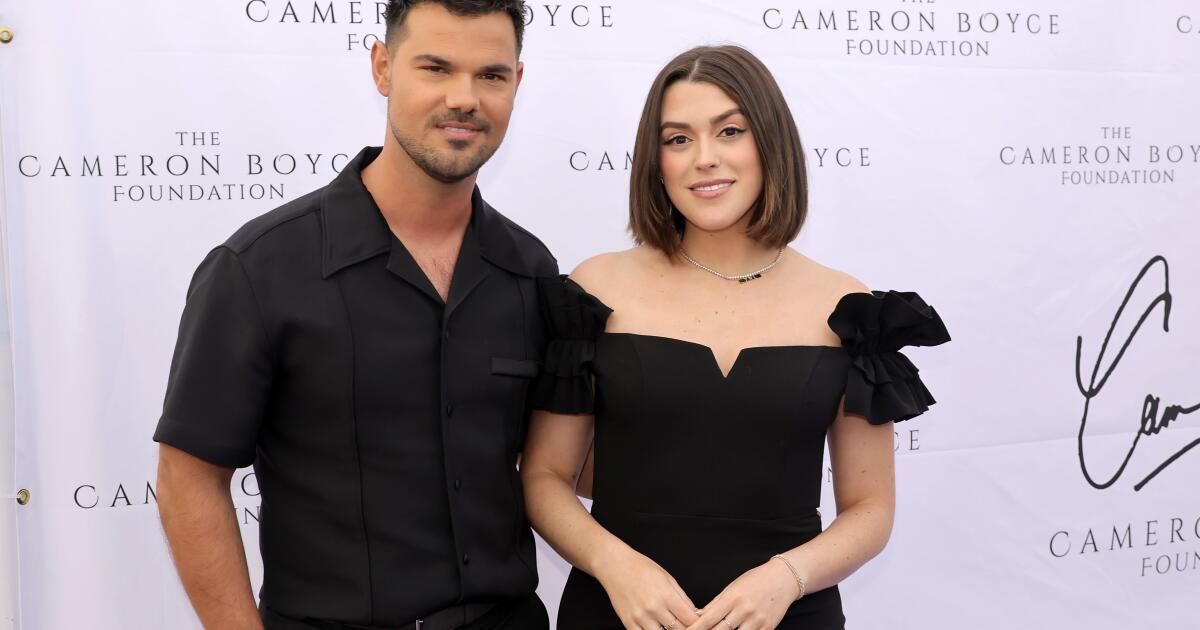
The two Taylor Lautners announce a baby Lautner is on the way

L.A. Affairs: Our night together reminded me of what I’d been missing this entire time
Trump jokes, rants, talks price of pens as Iran war enters fifth week

High school softball top 20 rankings for the Southland
Access Error

Florida High School Football Rankings: Top 25 teams – Oct. 21

How old is Bo Nix? What to know about Oregon quarterback ahead of 2024 NFL Draft

Cleary's 21 help Le Moyne down Central Connecticut State 69-64 in OT

99th annual Pony Swim held in Virginia

Indiana Members Credit Union announced as new anchor tenant at Bottleworks District

US diplomat Marco Rubio denounces settler violence, tolls in Hormuz strait

Iran-linked hackers have breached FBI Director Kash Patel’s personal emails | CNN Politics

Live: CPAC 2026 Day 2

Video: Will ICE Change Under Its New Leader?

DHS shutdown breakthrough comes at cost for Republicans as funding fights nears end
-

 Detroit, MI1 week ago
Drummer Brian Pastoria, longtime Detroit music advocate, dies at 68
-

 Movie Reviews1 week ago
‘Youth’ Twitter review: Ken Karunaas impresses audiences; Suraj Venjaramoodu adds charm; music wins praise | – The Times of India
-

 Sports6 days ago
IOC addresses execution of 19-year-old Iranian wrestler Saleh Mohammadi
-

 New Mexico5 days ago
Clovis shooting leaves one dead, four injured
-
 Business1 week ago
Disney’s new CEO says his focus is on storytelling and creativity
-

 Technology5 days ago
YouTube job scam text: How to spot it fast
-

 Tennessee4 days ago
Tennessee Police Investigating Alleged Assault Involving ‘Reacher’ Star Alan Ritchson
-

 Texas1 week ago
How to buy Houston vs. Texas A&M 2026 March Madness tickets