Politics
Supreme Court rejects payday lenders' challenge to Obama-era consumer protection bureau

The Supreme Court on Thursday upheld the U.S. consumer protection agency that was created under President Obama and congressional Democrats to protect Americans from financial scams.
By a 7-2 vote, the justices rejected a constitutional claim brought by a coalition of payday lenders who had won before a panel of three Trump appointees on the 5th Circuit Court of Appeals.
The lower court had questioned the legality of the agency, ruling it was not properly “accountable to Congress” because it did not receive its funding through an annual appropriation.
Writing for the majority, Justice Clarence Thomas said early American history shows that Congress could fund the government through different means, not just through an annual appropriation.
“Based on the Constitution’s text, the history against which that text was enacted, and congressional practice immediately following ratification, we conclude that appropriations need only identify a source of public funds and authorize the expenditure of those funds for designated purposes to satisfy the appropriations clause,” he wrote in CFPB vs. Consumer Financial Services Association.
Justices Samuel A. Alito Jr. and Neil M. Gorsuch dissented.
Alito faulted the court for upholding “a novel statutory scheme under which the powerful CFPB may bankroll its own agenda without any congressional control or oversight.”
Consumer advocates welcomed the decision.
“This ruling upholds the independent funding structure that has made the CFPB a successful advocate for protecting consumers and holding big banks, payday lenders, and other financial institutions accountable,” said Devon Ombres, a legal policy director for the Center for American Progress. A ruling upholding the 5th Circuit Court “could have placed the entire financial regulatory system at risk and roiled financial markets.”
“Predatory lenders and companies that rip consumers off with illegal junk fees have been trying to undermine the CFPB since it was created,” said Lauren Saunders, associate director of the National Consumer Law Center.
In creating the new bureau, Congress decided to fund it with lending fees from the Federal Reserve. If the Supreme Court had ruled such funding was unconstitutional, its decision would have cast doubt on the Federal Reserve as well.
In defense of the bureau, Biden administration attorneys argued that throughout American history, Congress has created agencies and bureaus such as the Post Office, the National Mint, the Customs Bureau and the Patent Office which were funded by fees, not an annual appropriation from Congress.
The CFPB called the decision “a resounding victory for American families and honest businesses alike, ensuring that consumers are protected from predatory corporations and that markets are fair, transparent, and competitive…For years, lawbreaking companies and Wall Street lobbyists have been scheming to defund essential consumer protection enforcement.”
Its statement said that since bureau opened its doors in 2011, “it has delivered more than $20 billion in consumer relief to hundreds of millions of consumers and has handled more than 4 million consumer complaints.”
Thursday’s decision is the latest sign that the Supreme Court’s conservatives are not ready to rubber stamp far-right rulings from Trump-appointed judges in Texas and Louisiana.
On Wednesday, the justices set aside a decision by two Trump appointees in Louisiana which would have blocked the use of new state election map with two majority Black districts.
Still pending before the court is a conservative challenge to the availability of abortion medication. Since 2000, the Food and Drug Administration has said these pills are safe and effective for ending early pregnancies. But anti-abortion doctors went to Texas and won rulings that could strictly limit dispensing the pills.
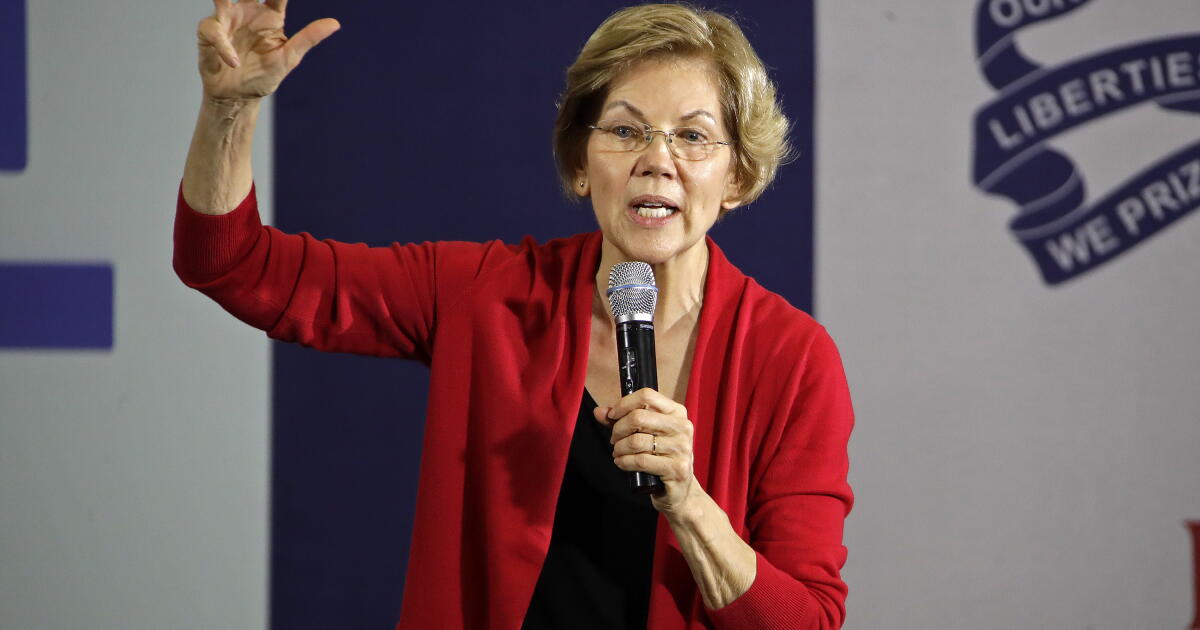
The consumer protection bureau that was upheld Thursday was conceived by Sen. Elizabeth Warren (D-Mass.) when she was a law professor.
The bureau became the centerpiece of the 2010 Dodd-Frank overhaul of financial regulations following the collapse of the mortgage market.
Its mission was to protect borrowers and consumers from deceptive and unfair practices by banks and mortgage lenders.
But it has been steadily opposed by much of the lending industry and by many Republicans who say the agency has too much unchecked power.
Congressional Democrats who created the bureau tried to shield it from the politics of Washington but that led to problems in the courts.
Under the 2010 legislation, the bureau’s director could not be removed by the president for political reasons, and the bureau’s budget was off-limits to Congress’ annual process of appropriations. Instead, its funding comes from the Federal Reserve, which earns fees from lending. The bureau used $641 million of that money last year.
The Supreme Court’s conservatives had cast a skeptical eye on the bureau. Four years ago, the justices in a 5-4 decision rejected the independent status of the director and ruled that person could be removed by the president for any reason, including political differences.
The current dispute began as a challenge to a proposed regulation of payday lenders.
In ruling for the lenders, the three judges of the 5th Circuit, all appointees of President Trump, said it violated the Constitution to shield the bureau from an annual fight over its appropriation.
Judge Cory Wilson said the “bureau’s perpetual insulation from Congress’ appropriations power, including the express exemption from congressional review of its funding, renders it … no longer accountable to Congress and, ultimately, to the people.”

Politics
JD Vance says Trump is ‘locked and loaded’ to restart military campaign against Iran if nuclear talks fail

NEWYou can now listen to Fox News articles!
Vice President JD Vance said Tuesday that President Donald Trump is still pursuing a diplomatic deal with Iran but remains “locked and loaded” to restart the military campaign if nuclear talks collapse.
“It takes two to tango,” Vance told reporters at a White House press briefing. “We are not going to have a deal that allows the Iranians to have a nuclear weapon.
“So as the president just told me, we’re locked and loaded,” Vance added. “We don’t want to go down that pathway. But the president is willing and able to go down that pathway if we have to.”
The administration sees two paths forward, according to Vance: a negotiated agreement that permanently blocks Iran from obtaining a nuclear weapon, or renewed U.S. military action.
VANCE WARNS IRAN THAT ‘ANOTHER OPTION ON THE TABLE’ IF NUCLEAR DEAL NOT REACHED
Vice President JD Vance spoke during a news conference on anti-fraud initiatives in the Indian Treaty Room of the Eisenhower Executive Office Building on May 13, 2026, in Washington, D.C. The Trump administration warned states they could lose Medicaid funding if they fail to comply with federal anti-fraud statutes. (Daniel Heuer/Bloomberg via Getty Images)
“We think the Iranians want to make a deal,” Vance said. “The president of the United States has asked us to negotiate in good faith. And that’s exactly what we’ve done.”
But Vance warned that diplomacy will not come at the cost of Trump’s core demand that Tehran never obtain a nuclear weapon.
“There’s an option B, and the option B is that we could restart the military campaign to continue to prosecute the case, to continue to try to achieve America’s objectives,” Vance said. “But that’s not what the president wants. And I don’t think it’s what the Iranians want either.”
TRUMP WARNS IRAN’S ‘CLOCK IS TICKING’: MOVE ‘FAST’ OR ‘THERE WON’T BE ANYTHING LEFT’
U.S. President Donald Trump speaks to members of the media after returning to the White House on May 15, 2026 in Washington, DC. President Trump is returning to Washington from his trip to China, where he and President Xi addressed ways to enhance bilateral economic cooperation and investment, and agreed that Iran should not be allowed to have a nuclear weapon. ( (Kevin Dietsch/Getty Images)
The exchange came after Trump said he was just an hour away from ordering fresh attacks on Iran on Monday night.
“We were getting ready to do a very major attack [Tuesday], and I put it off for a little while — hopefully maybe forever,” Trump said, “because we’ve had very big discussions with Iran, and we’ll see what they amount to.”
“There seems to be a very good chance that they can work something out,” Trump told reporters at the White House. “If we can do that without bombing the hell out of them, I’d be very happy.”
The announcement marked the latest shift in Trump’s handling of the fragile ceasefire reached in mid-April. For weeks, the president has warned Iran that fighting could resume if it did not accept a deal, while repeatedly setting deadlines and then backing away from them.
Ships are anchored in the Strait of Hormuz off Bandar Abbas in southern Iran on May 4. A report on May 15 said a ship was seized off the coast of the United Arab Emirates and is being brought toward Iranian waters. (Amirhossein Khorgooei/ISNA/AFP via Getty Images)
CLICK HERE TO DOWNLOAD THE FOX NEWS APP
Over the weekend, Trump warned that “the Clock is Ticking” and said Iran needed to move “FAST, or there won’t be anything left of them.”
Trump first disclosed the pause in a social media post Monday, saying he had ordered the U.S. military to be ready “to go forward with a full, large scale assault of Iran, on a moment’s notice” if an acceptable deal is not reached.
Politics
Hilton and Becerra lead in a tightening race in final weeks of California governor’s campaign, poll shows

Former Biden Cabinet member Xavier Becerra remains the top Democrat in the California governor’s race despite being targeted by a barrage of negative political ads and enduring sharp attacks from his rival candidates during recent debates, according to a new poll released Tuesday by the state Democratic Party.
Billionaire Tom Steyer, a Democrat who is shattering self-funding records for statewide office, has been flooding the television airwaves, internet and social media with ads ripping Becerra’s long record in public office, as well as for accepting campaign donations from oil giant Chevron. But, thus far, that has not been enough for Steyer to overtake Becerra.
The survey found that 21% of likely voters backed Becerra, who also served in Congress and as California’s attorney general, while 15% backed Steyer. Among the other top Democrats: Former Orange County congresswoman Katie Porter received 7%; San José Mayor Matt Mahan came in at 4%; and state Supt. of Public Instruction Tony Thurmond and former Los Angeles Mayor Antonio Villaraigosa registered at 1%.
Becerra on Tuesday said he believes he has climbed in the polls because voters are now paying attention to the race.
“They’re really looking closely at who’s out there, and I think I’ve been one of the beneficiaries of folks looking for a place that they can feel comfortable, where they can trust,” Becerra told reporters after a campaign event in South Los Angeles. “I think more and more as people look at the candidates, they’re going to start to crystallize behind somebody who won’t need training wheels, as I say, when they get into the governor’s office and can hit the ground running, day one.”
He said he thinks Steyer’s attacks aren’t working because Californians are skeptical of the billionaire.
“He’s spending like no one before, and he’s hitting like no one before, and so far, it hasn’t made a difference,” Becerra said. “We continue to surge, even after weeks of his barrage of lies and attacks…. California voters are not anxious to have someone who wants to buy the office.”
Leading all candidates in the race was Republican Steve Hilton, a former Fox News host, who was supported by 22% of likely voters. His top GOP challenger, Riverside County Sheriff Chad Bianco, was backed by 10%, the poll showed.
While Hilton and Becerra right now appear to be the likeliest candidates to finish in the top two in California’s June 2 primary, which is required to advance to the November general election, there still remains plenty of time for political fortunes and voter support to rise or fall. Ballots were mailed to the state’s 23.1 million registered voters and early voting sites opened earlier this month, but most Californians have not sent them in thus far.
For Becerra, the strong poll results indicate an astounding turnaround for a campaign that appeared all but dead just weeks ago. In early April, the California Democratic Party tracking poll showed Becerra with support from just 4% of likely voters. That changed after then-Northern California Rep. Eric Swalwell, who had been the front-running Democrat in the race, withdrew from the campaign and resigned from Congress after he was accused of sexual assault and misconduct.
The California Democratic Party launched a series of tracking polls in March after leaders and allies grew increasingly concerned that Republicans would win the top two spots in the primary, shutting the party out of the November general election. This prospect, while statistically possible given the crowded field of candidates running for governor, has grown increasingly less likely as California voters finally focused on the contest to lead the nation’s most populous state and the world’s fourth-largest economy.
Under California’s top-two primary system, only the candidates who finish in first and second place in the primary advance to the general election, regardless of their political party or affiliation.
The poll of 1,200 likely voters took place between May 14 and 16 and has a margin of error of 2.83% in either direction.

NEWYou can now listen to Fox News articles!
HEBRON, KY – Ed Gallrein, the Republican congressional candidate backed by President Donald Trump who is challenging Rep. Thomas Massie of Kentucky for the GOP nomination, landed extra firepower on the eve of the state’s primary.
Gallrein, a former Navy SEAL and Kentucky farmer, was joined on the campaign trail Monday by Secretary of War Pete Hegseth.
Massie has long been one of Trump’s most vocal GOP critics in Congress and the Republican primary in Kentucky’s 4th Congressional District, in the northeastern part of the state, the latest test of Trump’s immense grip over the GOP.
“President Trump needs reinforcements, and that’s what war fighters do. They stand behind leaders and have their back,” Hegseth said at an event organized by America First Works, a Trump-aligned nonprofit political advocacy group.
TRUMP SCORES MAJOR PRIMARY VICTORY AS CASSIDY OUSTED IN LOUSIANA
Defense Secretary Pete Hegseth, right, joins former Navy SEAL Ed Gallrein, at an event on the eve of Kentucky’s primary, in Hebron, Kentucky on May 18, 2026. Gallrein is backed by President Donald Trump as he primary challenges Rep. Thomas Massie for the GOP nomination in the state’s fourth congressional district. (Jessica Sonkin/Fox News)
Massie, a libertarian-minded lawmaker who repeatedly takes aim at the president over foreign policy, including the Iran war and unconditional U.S. military aid to Israel, also successfully pushed for the release of government files related to convicted sex offender Jeffrey Epstein.
But Hegseth argued that Massie’s record is one of “too much grandstanding, too few great votes, years of acting like being difficult is the same thing as being courageous. It’s not. Real courage means stepping up when the mission matters most, when we need that tough vote to beat left-wing lunatic Democrats the most.”
“President Trump does not need more people in Washington who are trying to make a point, especially from his own party. He needs people willing to help him win, to vote with him when it matters the most,” Hegseth added.
Hegseth’s remarks, which came soon after a stop at nearby Fort Campbell to award medals for service members, were rare for the civilian head of the nation’s military. Defense secretaries have traditionally avoided appearing at political events.
Ahead of the stop, Pentagon spokesman Sean Parnell said Hegseth would appear only “in his personal capacity” and that “no taxpayer dollars will be used to facilitate his visit.”
Hegseth noted the unusual appearance.
“I have to say up front, for the lawyers, that I’m here in my personal capacity as a private citizen, a fellow American, and a fellow combat veteran.”
DEMOCRACY ’26: STAY UP TO DATE WITH THE FOX NEWS ELECTION HUB
But Massie, who’s locked in a competitive clash with Gallrein in what’s become the most expensive congressional primary in history, claimed in a Fox News Digital interview on Monday that Hegseth’s stop “shows that I’m up in the polls. They wouldn’t be sending the Secretary of War to my congressional district if I weren’t.”
“I think it also shows I’m tougher than Iran, and I don’t even have a nuclear weapon. I mean, they are all in at this race. It’s basically a national race at this point, the most expensive race primary in congressional history, and that’s because, you know, I’m up there, I’m getting things done. I got the Epstein files released, I’m getting legislation in the farm bill, I’m getting legislation passed on the floor, and they want to shut me down,” Massie emphasized.
Gallrein, speaking with Fox News Digital ahead of his event with Hegseth, charged that Massie’s “running against President Trump, and the agenda that has been put forward by the Republican Party.”
Kentucky’s primary is being held two weeks after Indiana’s primary, where Trump-backed challengers ousted five sitting Republican state senators who last December teamed up with Democrats to defeat the president’s push for congressional redistricting in the GOP-dominated Midwestern state.
And the ballot box showdown in Kentucky comes three days after Republican Sen. Bill Cassidy of Louisiana was ousted as he sought renomination. The senator came in third in the primary, behind Trump-backed Rep. Julia Letlow and conservative Louisiana Treasurer John Fleming.
Cassidy’s political defeat came five and a half years after he voted to convict Trump after he was impeached by the House for his role in the violent Jan. 6 attack on the U.S. Capitol by supporters who aimed to upend congressional certification of former President Joe Biden’s 2020 election victory. Trump was acquitted by the Senate.
Massie said he “absolutely can” overcome the Trump endorsement of Gallrein. “I’ve got the groundswell here, like my events. I’ve got 100-200 sometimes 300 people show up. My opponent had to cancel events because he couldn’t get enough people, you know, to fill up a Dairy Queen, half a Dairy Queen.”
SCOOP: TRUMP-BACKED FORMER NAVY SEAL LAUNCHES GOP PRIMARY CHALLENGE AGAINST MASSIE
Republican Rep. Thomas Massie of Kentucky campaigns on the eve of his state’s primary, in Mason County, Kentucky on May 18, 2026. (Paul Steinhauser/Fox News)
The race has become the most expensive in House history in terms of ad spending, with over $32 million shelled out, according to the nationally known ad tracking firm AdImpact.
Much of that money has been shelled out by Trump’s allies and pro-Israel groups.
“Here’s the thing, I’ve got nothing against Israel. I just have never voted for foreign aid. When I said America First, I meant it. I don’t vote for foreign aid to Egypt, to Syria, to Ukraine. I’ve got a flawless record on this, and I’m not going to ruin it by sending foreign aid to one country,” Massie said as he defended his stance on Israel.
And Massie touted that while Trump’s allies and pro-Israel groups have spent tens of millions to take him out, he said, “I’ve got tens of thousands of grassroots donors who are funding me $50 at a time, $20 at a time. We’ve been able to match them to go toe to toe with them on TV using grassroots donors, and it’s really galvanized the nation.”
CLICK HERE TO DOWNLOAD THE FOX NEWS APP
U.S. Rep. Thomas Massie (R-KY) leaves to speak with the media after the House voted 427-1 to approve the Epstein Files Transparency Act and the release of documents and files at the U.S. Capitol on November 18, 2025 in Washington, DC. (Roberto Schmidt/Getty Images)
Trump has repeatedly targeted Massie in social media posts in the closing days of the primary campaign.
The president said in a video posted to Truth Social on Monday that he hoped Kentucky voters would put Massie “out of business” and that “we’re in a fight against the worst congressman in the history of our country.”
And Trump praised Gallrein as “a great guy” and “a great patriot.”
But Massie said Trump’s taunts on social media may backfire.
“It shows he’s losing sleep, his reputation is on the line. He really shouldn’t have got involved in this race, because I vote with him 90% of the time,” the congressman said.
-
 Lifestyle11 minutes ago
15 books our critics can’t wait for this summer
-

 Technology23 minutes ago
Kickstarter just killed its new mature content rules
-

 World29 minutes ago
Hezbollah grooms children for martyrdom through its scout movement, report claims
-

 Politics35 minutes ago
JD Vance says Trump is ‘locked and loaded’ to restart military campaign against Iran if nuclear talks fail
-

 Health41 minutes ago
Woman says she’s being held against her will after cruise ship hantavirus scare
-

 Sports47 minutes ago
NFL owners unanimously vote to bring Super Bowl LXIV to Nashville’s new $2 billion stadium in 2030
-

 Technology53 minutes ago
Rideable robot looks ready to stomp all over us
-
 Business59 minutes ago
Commentary: A surge in Nevada data center construction threatens the electricity supply for 49,000 Californians

