Politics
Litman: Trump's hush money trial is about to go to the jury. What's the most likely verdict?

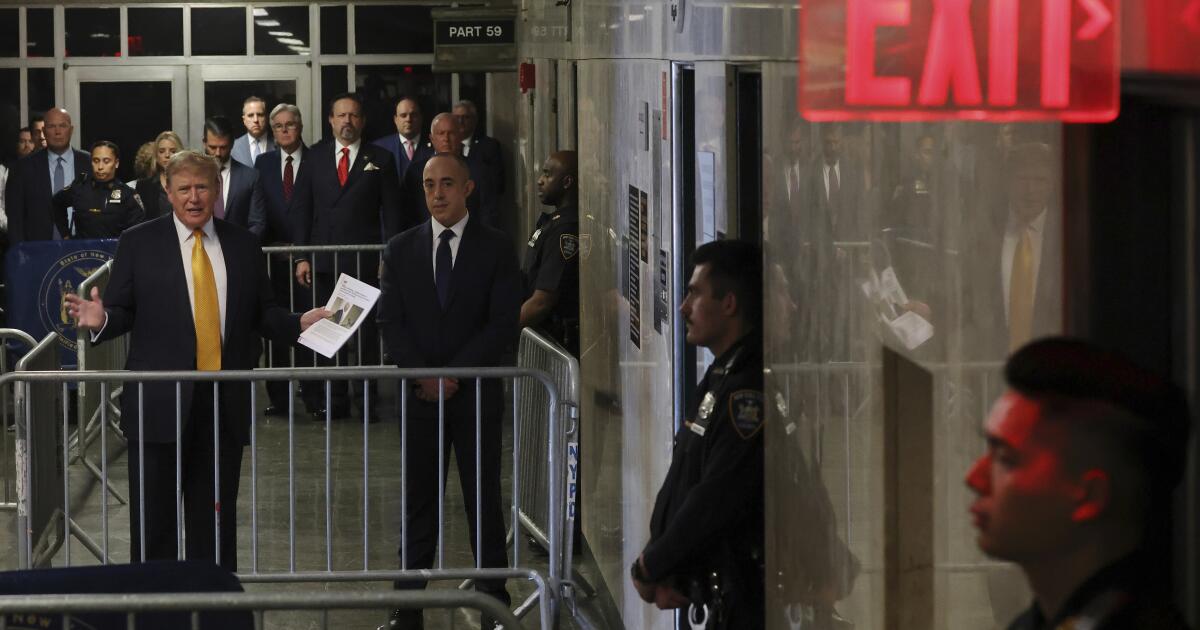
After 20 days, 22 witnesses and intermittent courtroom fireworks, the evidence in Donald Trump’s New York hush money trial is all in. The case will soon be in the hands of the jury.
Who holds the advantage at this critical juncture? My assessment, after attending much of the trial in person, is that it’s the prosecution’s case to lose.
With the standing caveat that it takes only one juror to block a unanimous guilty verdict — and that the law puts the greatest burden on prosecutors — the case as it has come in puts the district attorney’s office in the driver’s seat going into next week’s closing arguments.
The prosecution’s essential achievement was to provide a compelling, credible narrative that points toward only one plausible conclusion: that Trump is guilty as charged.
The defense, by contrast, took a scattershot approach focused on undermining the credibility of any and all of the prosecution’s witnesses, particularly Michael Cohen, Trump’s former attorney and fixer. But what Trump’s lawyers didn’t do is provide a counternarrative, a story compelling enough to leave jurors with a reasonable doubt as to which explanation of the facts is true.
Providing such a competing story isn’t the defense’s legal obligation, of course. The judge will instruct the jurors that if they have any reasonable doubt about the prosecution’s case, they should vote to acquit.
But my experience as a trial lawyer suggests a difference between freestanding doubt about one or more witnesses and a broader doubt about the rationale behind the charges — an alternative plotline that jurors might find believable. That’s the kind of defense being presented on behalf of Sen. Robert Menendez, for example, who is arguing that his wife is the guilty party.
From the first day of testimony, the prosecution has presented a tight, persuasive tale. It begins with an August 2015 meeting involving Trump, Cohen and tabloid executive David Pecker — who explained it to the jury from the stand — in which the parties agreed on a scheme to smother negative stories about Trump.
And sure enough, before the next year’s election, a series of scandal-mongers required neutralizing to insulate Trump from political damage. These episodes are akin to Acts II and III of the script, falling into place along the tracks that the Pecker testimony laid.
Hope Hicks’ testimony was brief but powerful given her longtime loyal service to Trump and her obvious candor notwithstanding her reluctance to harm her former boss, which seemed to cause her to break into tears. She confirmed in dramatic terms that Cohen and Allen Weisselberg, the Trump Organization’s then-chief financial officer, would not have cooked up the scheme to pay off the adult-film actor Stormy Daniels without Trump’s say-so.
The prosecution effectively corroborated in advance most of what would come from its last and most important witness, Cohen. At the same time, the prosecutors encouraged their own witnesses to disparage Cohen, lowering expectations before he took the stand.
When he did, Cohen was low-key, responsive and agreeable. With a few exceptions, he accepted the insults the defense served up, accounting for most of the discrepancies in his story by explaining that he had been telling the truth since he left the Trump fold.
A couple of low points in Cohen’s testimony got a lot of attention, and it’s natural for the media to zero in on dramatic moments. But the jury is more likely to evaluate the evidence in the context of the whole narrative and a witness’ general comportment.
Most important, jurors, like all of us, make overall judgments about credibility, which is the heart and soul of the jury system. Taking the measure of the people before them, they decide whether their accounts are basically trustworthy, notwithstanding the defects of the messengers. And all the stories in this case — not just Cohen’s but those of other flawed witnesses such as Pecker and Daniels — cohere and ring true.
It follows that the impertinence of Robert Costello, a defense witness who muttered in disagreement with Judge Juan M. Merchan’s rulings, probably caught the jury’s attention more than the flaws in Cohen’s largely even presentation — especially once Merchan forcefully rebuked Costello’s buffoonish grandstanding.
The prosecution’s cross-examination of Costello and redirect of both Cohen and Daniels were crisp, clear, textbook demolitions of the defense’s points. Trump’s team was more meandering and given to stray potshots, missing more than they hit.
I think the defense still has one largely overlooked escape hatch: the arcane legal instructions for deciding the felony charges. The charges require the prosecution to prove that Trump caused the alleged falsification of documents to further another crime. Prosecutors have offered up three different candidates for that other crime, each of which has flaws. I could see the jury, which includes two lawyers, considering the legal instructions very carefully and finding that the district attorney came up short. And in any event, the issue is sure to figure in an appeal.
But any appeal feels a millennium away. By the time that transpires, Trump will either be president, giving him extensive options for evading accountability, or a losing candidate facing three other criminal trials. This trial looks increasingly likely to be the only opportunity for a jury to decide for the first time whether a former president is a criminal. Going into the final act, I like the chances that he will be found guilty.
Harry Litman is the host of the “Talking Feds” podcast and the Talking San Diego speaker series. @harrylitman



NEWYou can now listen to Fox News articles!
President Donald Trump is taking his feud with Rep. Thomas Massie, R-Ky., to the libertarian lawmaker’s home turf on Wednesday.
Trump is expected to hold an event in Hebron, Kentucky, on Wednesday, the Republican Party of Kentucky announced on social media Monday. It’s located in the northern part of the state’s 4th Congressional District, which Massie represents.
Massie’s primary rival, Ed Gallrein, will attend the Hebron event, his campaign confirmed to Fox News Digital on Tuesday, while deferring all other questions on the matter to the White House.
Massie himself will miss the event due to a previously scheduled official engagement, his spokesperson told Fox News Digital.
KHANNA AND MASSIE THREATEN TO FORCE A VOTE ON IRAN AS PROSPECT OF US ATTACK LOOMS
President Donald Trump will be visiting Rep. Thomas Massie’s congressional district on Wednesday. (Win McNamee/Getty Images; Nathan Posner/Anadolu via Getty Images)
When asked about the visit, White House spokeswoman Liz Huston told Fox News Digital, “President Trump will visit the great states of Ohio and Kentucky on Wednesday to tout his economic victories and detail his Administration’s aggressive, ongoing efforts to lower prices and make America more affordable.”
The president has thrown his considerable influence behind Gallrein to unseat Massie after the GOP lawmaker publicly defied Trump on multiple occasions.
MASSIE, KHANNA TO VISIT DOJ TO REVIEW UNREDACTED EPSTEIN FILES
Massie most recently was one of two House Republicans to vote to stop Trump’s joint operation in Iran with Israel, though the legislation was successfully blocked by the majority of GOP lawmakers and a handful of Democrats.
Ed Gallrein, left, seen with President Donald Trump in the Oval Office at the White House. (Ed Gallrein congressional campaign)
He was also one of two Republicans to vote against Trump’s “big, beautiful bill” last year.
Trump in turn has hurled a slew of personal attacks against Massie, including calling him “weak and pathetic” in a statement endorsing Gallrein in October.
“He only votes against the Republican Party, making life very easy for the Radical Left. Unlike ‘lightweight’ Massie, a totally ineffective LOSER who has failed us so badly, CAPTAIN ED GALLREIN IS A WINNER WHO WILL NOT LET YOU DOWN,” Trump posted on Truth Social at the time, one of numerous criticisms targeting the Kentucky Republican through the years.
He called Massie the “worst Republican congressman” in July amid Massie’s bipartisan push to force the Department of Justice (DOJ) to release its files on Jeffrey Epstein.
Then-Rep. Marjorie Taylor Greene, a Republican from Georgia, Rep. Thomas Massie, a Republican from Kentucky, and Rep. Ro Khanna, a Democrat from California, during a news conference outside the U.S. Capitol in Washington, D.C., on Tuesday, Nov. 18, 2025. (Graeme Sloan/Bloomberg via Getty Images)
But Massie has so far appeared to defy political gravity despite making political enemies out of both Trump and House GOP leaders.
CLICK HERE TO DOWNLOAD THE FOX NEWS APP
He handily defeated multiple primary challengers in 2024 and 2022, despite public feuds with Trump, and has served his district since 2012.
Gallrein is a retired Navy SEAL and farmer who launched his campaign days after Trump made his endorsement. Their primary election day is May 19.
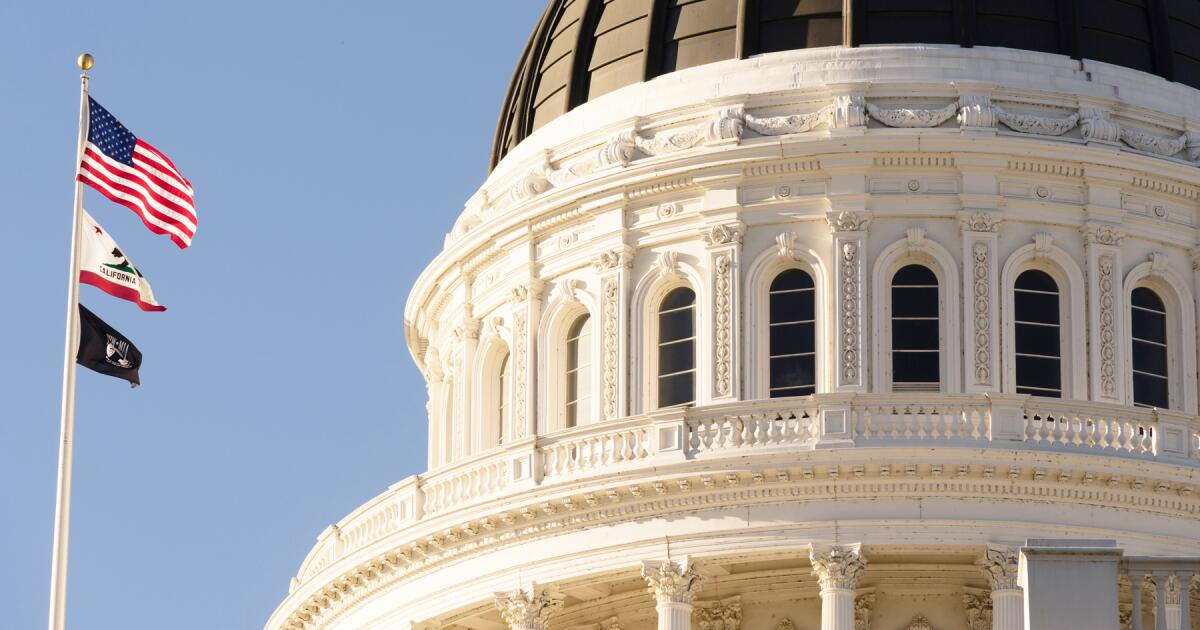
As anxiety mounts among California Democrats about the potential of a Republican being elected governor, the state party will spend hundreds of thousands of dollars on polling to assess the viability of the sprawling field of candidates hoping to replace termed-out Gov. Gavin Newsom, according to plans released Tuesday.
The move comes after nearly every Democratic candidate refused party leaders’ call last week to withdraw from the race to avoid splitting the vote in the June primary — an outcome that could lead to a Republican being elected to statewide office for the first time in two decades.
“Candidates have filed, and now they’ve got the opportunity to showcase their viability, their path to win. I want to simply ensure that everybody has information to fully understand the current state of the race,” said Rusty Hicks, the leader of the California Democratic Party.
As campaign season ramps up, the series of six polls will allow “candidates, supporters, the media, voters, anyone and everyone to have a clear understanding of what is or is not happening in this particular race,” he said.
The filing deadline to appear on the June 2 ballot was Friday. Three days earlier, Hicks released an open letter urging candidates who did not have a path to victory to withdraw from the race. Of the nine prominent Democrats who had announced runs for governor, only one heeded his call: former state Assembly Majority Leader Ian Calderon.
That means the eight other candidates’ names will appear on the ballot, regardless of whether they decide to later drop out. And that creates the possibility of a Republican winning the race because of how California elections are decided.
The state has a voter-approved top-two primary system, under which the two candidates who receive the most votes in the June primary advance to the November general election, regardless of party.
Two prominent Republicans will appear on the ballot: former conservative commentator Steve Hilton and Riverside County Sheriff Chad Bianco. Even though Democratic voters outnumber Republicans nearly 2 to 1, and the state’s electorate last elevated Republicans to statewide office in 2006, it is mathematically possible for Democrats to splinter the vote, allowing the two GOP candidates to advance.
Under such a scenario, not only would Republicans be guaranteed the leadership of the nation’s most-populous state, but Democratic voter turnout also would probably be depressed in November, potentially affecting down-ballot races such as those that could determine control of Congress.
Hicks’ call last week prompted concerns among candidates of color, including former U.S. Health and Human Services Secretary Xavier Becerra and state Supt. of Public Instruction Tony Thurmond, that the effort was aimed at every nonwhite candidate in the race.
The state party chairman responded that his letter was not aimed at any specific candidate.
“It’s not something I lose sleep over,” Hicks said when asked about the racial claims. But he added that the voter surveys will be conducted by Los Angeles-based Evitarus, the state’s only Black- and Latino-led full-service polling firm, and will oversample historically underrepresented communities: Latino, Black and Asian American voters.
Hicks said the polling will cost “multiple six figures” but did not specify the exact amount.
The first poll will be released on March 24, and then five additional surveys will come out every seven to 10 days until voters start receiving mail ballots in early May.
“We’re putting this forward to ensure everyone is armed with the information they need to clearly have an eyes-wide-open assessment of where the state of the race currently is between now and when ballots land in the mailboxes of voters,” Hicks said.
Politics
Trump reveals top issues GOP should focus on to secure midterms victory: ‘I’ve never been more confident’

NEWYou can now listen to Fox News articles!
President Donald Trump outlined five key items he believes will tip the upcoming midterm elections in the GOP’s favor — if Republicans can muscle them through Congress.
“No transgender mutilation surgery for our children,” Trump told an audience at the Republican Members’ Issues Conference. “Voter ID, citizenship [verification], mail-in ballots, we don’t want men playing in women’s sports.”
“It’s the best of Trump. Those are the best of Trump. This is the number one priority, it should be, for the House,” Trump said.
Trump’s exhortations to Republican lawmakers come as the GOP wages an uphill campaign to hang on to a controlling majority in the House of Representatives and the U.S. Senate. He framed his legislative priorities as a way for Republicans to capitalize on popular demands within the GOP base that would increase their chances of preserving a Republican governing trifecta.
President Donald Trump gestures as he boards Air Force One before departing Palm Beach International Airport in West Palm Beach, Florida, on March 1, 2026. (Mandel Ngan / AFP via Getty Images)
HOUSE REPUBLICANS PUSH ELECTION OVERHAUL WITH VOTER ID, MAIL-IN BALLOT CHANGES AHEAD OF MIDTERMS
Currently, Republicans hold just four more seats than Democrats in the House of Representatives.
The GOP holds six more than Democrats in the Senate.
To keep the numbers in their favor, Republicans will need to beat historical trends. In the vast majority of past cases, parties that capture the White House in presidential elections face blowback in the midterms. Notably, the last time a majority party gained seats in both chambers of Congress in the midterms came under the Bush administration in 2002, following devastating attacks on the World Trade Center.
House Speaker Mike Johnson, R-Louisiana, left, and President Donald Trump shake hands during an Invest America roundtable in the State Dining Room of the White House in Washington, District of Columbia, on June 9, 2025. (Yuri Gripas/Abaca/Bloomberg via Getty Images)
REPUBLICANS, TRUMP RUN INTO SENATE ROADBLOCK ON VOTER ID BILL
Trump said he believes Republicans have a shot at bucking the trend come November if they focus on his list.
“It’ll guarantee the midterms,” Trump said of his legislative priorities.
Republicans have already taken strikes towards two of them through the SAVE America Act, a piece of legislation that would require proof of citizenship to register to vote and cast a ballot. That bill cleared the House last month for a second time in the 119th Congress.
Its future is uncertain in the Senate, where Republicans would need the assistance of seven Democrats to overcome the 60-vote threshold to defeat a filibuster. Democrats, for their part, believe the legislation would disenfranchise voters who cannot readily provide documented proof of citizenship through a passport, REAL ID, or birth certificate.
Senate Majority Leader John Thune, R-S.D. has promised a vote on the package despite its long odds.
Sen. Mike Lee, R-Utah, talks with a guest during a “Only Citizens Vote Bus Tour” rally in Upper Senate Park to urge Congress to pass the Safeguard American Voter Eligibility (SAVE) Act on Wednesday, Sept. 10, 2025. (Tom Williams/CQ-Roll Call, Inc via Getty Images)
CLICK HERE TO DOWNLOAD THE FOX NEWS APP
Several members have introduced bills on transgender issues, although none of them have cleared either chamber.
“I’ve never been more confident that if we keep these promises and deliver on this popular agenda, the American people will stand with us in overwhelming numbers, just as they did in 2024,” Trump said.

Severe storm risk into tonight through early Wednesday morning

NCAA Wrestling Championships at-large bids announced

Glendale, KY, residents mourn death of solider killed in Iran conflict

Officials confirm Pensacola Beach residue is algae, not oil from Louisiana spill

Maryland parents push to hold drug dealers accountable in overdose deaths

Florida High School Football Rankings: Top 25 teams – Oct. 21

Cleary's 21 help Le Moyne down Central Connecticut State 69-64 in OT

How old is Bo Nix? What to know about Oregon quarterback ahead of 2024 NFL Draft

99th annual Pony Swim held in Virginia

Indiana Members Credit Union announced as new anchor tenant at Bottleworks District

Map: 2.3-Magnitude Earthquake Reported North of New York City

Trump stirs GOP primary drama with visit to Massie’s Kentucky home turf

Israeli air strike targets building in south Lebanon

Ed Martin, outspoken Justice Department lawyer, is formally accused of ethical violations | CNN Politics

Trump reveals top issues GOP should focus on to secure midterms victory: ‘I’ve never been more confident’
-

 Wisconsin1 week ago
Setting sail on iceboats across a frozen lake in Wisconsin
-

 Massachusetts1 week ago
Massachusetts man awaits word from family in Iran after attacks
-

 Maryland1 week ago
AM showers Sunday in Maryland
-

 Pennsylvania5 days ago
Pa. man found guilty of raping teen girl who he took to Mexico
-

 Florida1 week ago
Florida man rescued after being stuck in shoulder-deep mud for days
-

 Sports6 days ago
Keith Olbermann under fire for calling Lou Holtz a ‘scumbag’ after legendary coach’s death
-

 Detroit, MI4 days ago
U.S. Postal Service could run out of money within a year
-

 Miami, FL6 days ago
City of Miami celebrates reopening of Flagler Street as part of beautification project