Politics
Hundreds of Big Post-Election Donors Have Benefited From Trump’s Return to Office


Since President Trump was elected a second time, he and his allies have raised nearly $2 billion for his favored political causes and passion projects. That total, which was confirmed by four people involved in the fund-raising, likely eclipses the amount raised to support his 2024 campaign.
The astounding haul hints at a level of transactionalism for which it is difficult to find obvious comparisons in modern American history. The identities of the donors behind much of the cash are not legally required to be, and have not been, publicly disclosed. In some cases, Mr. Trump’s team has offered donors anonymity.
To shed light on what has been a largely opaque fund-raising apparatus, The New York Times conducted a comprehensive investigation. It relied on previously unreported documents and public campaign finance filings, as well as interviews with dozens of people who are familiar with the solicitations or are involved in the fund-raising. It traced a large portion of the funds raised — more than half a billion dollars’ worth — back to 346 donors who each gave at least $250,000. It also found that more than half of them have benefited, or are involved in an industry that has benefited, from the actions or statements of Mr. Trump, the White House or federal agencies.
It is not possible to prove that any of the donations directly led to favorable treatment from the Trump administration. And the contributions do not personally enrich Mr. Trump, unlike some of his family’s cryptocurrency ventures.
But many of the deep-pocketed individuals and corporations who have given large sums have a lot riding on the administration’s actions, raising questions about conflicts of interest.
Each of these dots represents a person or company that has given at least $250,000 to a group or project supported by Mr. Trump since he was elected to a second term.
The president’s inaugural committee raised nearly $240 million, more than double the record, which Mr. Trump himself set in 2017. The 284 donors shown here each gave at least $250,000.
284 red dots are arranged into a circle on the screen.
After Mr. Trump won, the fund-raising didn’t stop for a super PAC devoted to him and run by his advisers. At least 81 donors gave $250,000 or more to MAGA Inc. It raised $200 million from Nov. 7, 2024, to June 30, 2025.
81 of the dots separate from the main group and are highlighted.
According to Mr. Trump, $350 million has been raised for his White House ballroom project, which is largely being processed by the Trust for the National Mall. The Times has identified pledged or completed donations from 14 ballroom donors, which amount to about $100 million.
The original group of dots re-forms and a new group of 14 dots separates and is highlighted.
The biggest donors to the White House Historical Association to support this year’s Easter Egg Roll, including the four shown here, were offered new types of branding opportunities and access to an event beforehand with Melania Trump, the first lady.
The original group of dots re-forms and a new group of four dots separates and is highlighted.
The president’s team has also raised money for America250, a nonprofit group that was formed to produce celebrations for the country’s semiquincentennial birthday. Eight of the donors identified by The Times sponsored this group after the 2024 election.
altText:The original group of dots re-forms and a new group of 8 dots separates and is highlighted.
Of the 346 donors identified by The Times, at least 197 have benefited, or are in industries that have benefited, from policies or actions of Mr. Trump or his administration. Those include pardons, favorable regulatory moves, the dropping of legal cases, access to the president and more.
altText:The original group of dots re-forms and a new group of 197 dots separates and is highlighted.
Hover or tap on each of the circles here to learn more about the individual and corporate donors who have given at least $250,000 to Trump-approved causes. (Dollar figures may be undercounts, since some kinds of donations do not need to be disclosed.)
The dots return to their original arrangement in a circle.
Presidents of both parties have raised funds for their inaugurations, and many major companies have long histories of donating to them. But second-term presidents usually begin winding down their own fund-raising after their inaugurations, focusing instead on boosting their parties’ committees and candidates.
Mr. Trump, on the other hand, was emboldened by the record-breaking sum of nearly $240 million raised by his inaugural committee. He immediately tasked his fund-raising team, led by his campaign’s finance director, Meredith O’Rourke, to raise money for an array of groups and causes supported by the president, according to three people involved in the fund-raising. They requested anonymity to discuss nonpublic information, as did five others who discussed other elements of the fund-raising.
It is a buffet of options that allows donors to pay tribute to Mr. Trump and sometimes receive access to him to pitch their own interests. While the groups raising funds are independent from one another, and some are nonpartisan, they are presented to donors as part of a fund-raising apparatus to which Mr. Trump or his allies would like them to give, according to four people familiar with the fund-raising. They said Mr. Trump closely tracks which companies have given, and how much, debriefing regularly with Ms. O’Rourke.
Lobbyists with connections in Mr. Trump’s orbit recommend that their clients donate to these groups to try to win him over, said five people familiar with the fund-raising.
“In this town, money talks, and that is going to give you an opportunity to at least have a seat at the table,” said Harrison Fields, a former Trump White House official who left in August and became a lobbyist. His firm, CGCN Group, has represented companies that have donated to projects Mr. Trump supports, including the new White House ballroom, America250 and MAGA Inc.
“These people are not getting coerced. They are making business decisions,” said Mr. Fields.
At least 51 of the donors have given to more than one of the groups in this analysis since the election.
While MAGA Inc., the inaugural committee and the Republican National Committee (another entity for which Trump-allied fund-raisers are soliciting money) are required to disclose their donors to the Federal Election Commission, there is no such requirement for contributions to other groups for which the president’s allies are raising funds.
Those groups include the Trust for the National Mall, America250, the White House Historical Association, a political nonprofit group called Securing American Greatness and the John F. Kennedy Center for the Performing Arts, which Mr. Trump’s allies have remade in his own image, including adding his own name to the title and the building’s facade.
The Times’s investigation identified a number of donations, or potential benefits to donors, that had not been publicly known.
One $2.5 million contribution to MAGA Inc. was given by a South Florida woman whose father months later received an unusually lenient deal from top Justice Department officials to settle charges that he bribed Puerto Rico’s then-governor in 2020.
Another $2.5 million pledged donation — this one to Mr. Trump’s White House ballroom project — came from Parsons Corporation, an engineering firm that has won government contracts for years, including under Mr. Trump, and is jockeying for some of the more than $1 trillion in contracts that could be awarded to build a missile defense system proposed by the president called the “Golden Dome.” Also giving $2.5 million to the ballroom project was the chief executive of Roblox, a popular online video game company that has applauded a Trump executive order and other initiatives involving children’s use of artificial intelligence.
A couple who donated $1 million to Mr. Trump’s inaugural committee and $500,000 to MAGA Inc., as well as an undisclosed amount to the ballroom fund, saw Mr. Trump nominate their son to be U.S. ambassador to Finland.
And a company that was accused last year by the Justice Department of colluding over ticket prices donated $250,000 to Mr. Trump’s inauguration. The president pardoned the company’s co-founder in a separate case this month.
In other cases, The Times was able to quantify large donations for which the amounts were previously unknown. Those included gifts from the technology firm Palantir, which donated $10 million to the ballroom project and $5 million to America250. Additionally, the Palantir co-founder Alex Karp donated $1 million each to the inauguration and to MAGA Inc. In Mr. Trump’s second term, Palantir has secured federal contracts worth hundreds of millions of dollars, including to develop software to help Immigration and Customs Enforcement deport people. But a Palantir official said in a previously unpublished response to an inquiry from Senator Richard Blumenthal, Democrat of Connecticut, that the company did not seek and was not offered any special consideration for its donation to the ballroom project.
While a foundation funded by Miriam Adelson, a casino magnate, mostly supports Jewish and Israeli causes, it pledged to donate $25 million to the ballroom project, according to two people familiar with the donation. In a speech at a White House Hanukkah party last week, Mr. Trump praised Dr. Adelson, a physician by training, for donating tens of millions of dollars to help his campaigns and using her access to lobby for greater U.S. backing for Israel. Calling her to the lectern, Mr. Trump said, “When somebody can give you $250 million, I think that we should give her the opportunity to say hello.” The two embraced and bantered about how Dr. Adelson would be willing to donate $250 million more to help Mr. Trump seek an unconstitutional third term.
Mr. Trump’s continued fund-raising is all the more striking given his boasts during his first presidential campaign a decade ago that he was an outsider whose personal wealth made him impervious to Washington’s pay-to-play politics and the manipulation of major donors, including Dr. Adelson’s late husband.
Liz Huston, a White House spokeswoman, rejected the suggestion that donors were getting special treatment. She said in a statement that Mr. Trump’s “only motivation as the president of the United States is improving the lives of the American people and making our country greater than ever before.” Donors who support him “should be celebrated, not attacked,” she said.
Donors who received administration jobs, government contracts, partnerships and approvals
Hover to see donor details
While the donations far exceed most Americans’ means, the sums pale in comparison to the contracts being sought from the Trump administration.
Take Mr. Trump’s “Golden Dome” missile defense project, which could yield lucrative work for a number of contractors. Palantir has already held discussions about being involved. Firms including Lockheed Martin and Boeing also are expected to compete for pieces of the work; each company donated $1 million to Mr. Trump’s inaugural committee. That is the same amount they gave to President Joseph R. Biden Jr.’s inaugural committee.
But Lockheed Martin also donated $10 million to the Trust for the National Mall for Mr. Trump’s ballroom project and $5 million to America250, according to two people familiar with the sums. Lockheed is the primary maker of F-35 fighter jets, which cost about $80 million to $110 million each. While some national security officials have expressed concern about selling the jets to Saudi Arabia, Mr. Trump announced last month that he planned to approve such sales. The next day, Lockheed’s chief executive attended a black-tie dinner at the White House honoring Crown Prince Mohammed bin Salman of Saudi Arabia, which was also attended by executives for other defense contractors.
As for Boeing, two months after the inauguration, Mr. Trump announced that the company would be paid to build more than 180 new advanced fighter jets for the Air Force.
Major defense contracts can take years to develop, bid and execute, and there is no evidence that any such contracts were awarded as a direct result of donations.
Boeing’s ability to pursue federal contracts could have been hindered by criminal charges stemming from two fatal crashes of its planes during Mr. Trump’s first term. But this year, the Trump Justice Department dropped the case, entering into a settlement that required the company to improve its safety and compliance programs and pay hundreds of millions of dollars into a fund for victims.
Presidents have long awarded their campaigns’ top donors with ambassadorships, jobs and appointments to boards and commissions. Mr. Trump appears to have taken that tradition to a new level, tapping at least 32 people for an array of positions — including in his cabinet — who have donated at least $250,000 each to his causes after the election, or whose companies or families have made such donations.
Among them is Howard Brodie, now the U.S. ambassador to Finland. His parents, Elizabeth and Stefan Brodie, donated to the Trump inauguration, MAGA Inc. and the ballroom project after Mr. Trump’s victory in the 2024 election. The elder Brodies were invited to the White House dinner last month honoring the Saudi crown prince, and Stefan Brodie attended a dinner the month before for major donors who gave at least $2.5 million for the ballroom.
Another Trump ambassador nominee, the Miami mortgage lender Bernie Navarro, gave a little-noticed $1 million donation to the inaugural committee through an obscure company registered in Puerto Rico. Mr. Navarro, a close ally of Secretary of State Marco Rubio, said in a statement that the donation was unrelated to his interest in becoming an ambassador. “In retrospect, he is doing such an amazing job that I wish I would have done more,” Mr. Navarro said of Mr. Trump.
In all, more than a dozen donors have been nominated or confirmed for ambassadorships.
Where donors received ambassadorships
Warren Stephens
Gave $6 million
Melissa Argyros Gave $2 million
Dan Newlin
Gave at least $1.5 million
Howard Brodie
Parents gave at least $1.5 million Benjamin León Jr.
Gave at least $1 million
Melinda Hildebrand
Gave combined $1 million together with her husband
Ken Howery Gave $1 million
Tilman Fertitta
Gave $1 million
Bernie Navarro
Gave $1 million Anjani Sinha
Gave $1 million
Peter Lamelas
Gave $250,000
Nicole McGraw Gave $250,000
John Breslow
Gave $250,000
Benjamin Landa
Gave $250,000 Joseph Victor Popolo Jr.
Gave $250,000
Donor
Nominated or
confirmed ambassador to…
United Kingdom
Latvia
Colombia
Finland
Spain
Costa Rica
Denmark
Italy
Peru
Singapore
Argentina
Croatia
Cyprus
Hungary
Netherlands
It is not possible to definitively link donations to nominations.
Tommy Pigott, a spokesman for the State Department, in a statement called Mr. Trump’s ambassadors “an America first diplomatic A-team,” adding that they “were chosen to help drive forward historic wins for the American people, and they have done exactly that.”
Four of Mr. Trump’s cabinet officials made personal or corporate donations of more than $250,000.
They include Kelly Loeffler, the administrator of the Small Business Administration. She and her husband, Jeffrey C. Sprecher, the chief executive of the parent company of the New York Stock Exchange, donated a combined total of $11 million to groups Mr. Trump favors, including $1 million to the inaugural committee and $5 million to MAGA Inc., as well as previously unreported donations totaling $5 million for the ballroom, according to records and a person familiar with the fund-raising.
Donors who received pardons, relaxed enforcement and other relief
Hover to see donor details
Getting a reprieve from adverse state action can be just as valuable as winning a government contract or appointment.
Extremity Care, a company that makes a pricey form of bandages known as skin substitutes, donated $5 million to MAGA Inc. An executive from the company then attended a donor dinner in March at Mar-a-Lago where he lobbied Mr. Trump, whose administration announced the next month that it would delay a Biden-era plan to limit Medicare’s coverage of the bandages. Extremity Care or one of its affiliates subsequently donated $2.5 million to the ballroom.
And Mr. Trump has entered into deals with a number of drug makers, including several that donated to groups he supports, to lower prices in exchange for avoiding punitive measures including threatened tariffs.
In two instances, Mr. Trump pardoned people whose companies or families made donations.
In January, amid scrutiny from the Justice Department’s antitrust division, which had identified — but not charged — the venue management company Oak View Group in a lawsuit against Ticketmaster’s parent company, Oak View donated $250,000 to Mr. Trump’s inauguration.
The donation did not eliminate legal exposure for Oak View’s co-founder and then-chief executive, Timothy J. Leiweke. Months later, the antitrust division charged him in an unrelated case. He stepped down as head of Oak View, and the company agreed to pay $15 million in penalties. Mr. Leiweke pleaded not guilty. But this month, before the case went to trial, Mr. Trump pardoned him.
David B. Gerger, a lawyer for Mr. Leiweke, rejected a question about whether the donation was intended to avoid legal trouble.
“Any such innuendo — whether coming from ill will or just ignorance — is false,” he said in a statement.
In another case, the former health care entrepreneur Elizabeth Fago, after donating $1 million to MAGA Inc., attended a donor dinner with the president. Mr. Trump pardoned her son, Paul Walczak, less than three weeks later, sparing him from having to pay nearly $4.4 million in restitution and from reporting to prison for an 18-month sentence for employment tax crimes.
Another donor with an interest in the outcome of a criminal case was Isabela Herrera, who donated $2.5 million to MAGA Inc. late last year. At the time, her father, Julio Herrera Velutini, a Venezuelan-Italian banker, was being prosecuted by the Justice Department for trying to bribe the governor of Puerto Rico.
Mr. Herrera hired a former personal lawyer for Mr. Trump, who alleged that the case was an example of the political weaponization of the criminal justice system. Top Justice Department officials appeared to agree, authorizing a misdemeanor plea deal to settle the case and overruling career prosecutors who had pushed for a harsher sentence.
Mr. Herrera could still face a year in prison at sentencing, which is scheduled for next month.
Ms. Herrera and a lawyer for Mr. Herrera declined to comment.
A Justice Department spokeswoman said “the decision to settle this case was made through the proper channels and was not influenced by any donation to MAGA Inc.”
But John D. Keller, who oversaw the Justice Department division that handled the case, said in an interview that the difference between the deal and the more than 20 years Mr. Herrera could have faced if convicted of the original charges was “striking.” Mr. Keller, who resigned in protest when he was directed by Mr. Trump’s appointees to drop another politically fraught prosecution, said the Herrera case “appears to be another example of political considerations dictating the outcome in an individual criminal case.”
A broader relaxation of federal scrutiny has benefited cryptocurrency companies and other corporate interests that have showered donations on Mr. Trump’s groups.
The Securities and Exchange Commission largely abandoned its hard-line approach to crypto trading platforms, ending lawsuits against Coinbase, Kraken and Ripple after the companies each donated $1 million or more to Mr. Trump’s inaugural committee, and ending an investigation into Robinhood after it donated $2 million to the committee. Coinbase and Ripple also donated to the ballroom, while Coinbase gave to America250.
A spokesman for the S.E.C. said that “politics have had nothing to do with S.E.C. actions” on the cases. “Decisions on these cases turn on long held publicly expressed legal and policy views,” he added.
Donors in industries that benefited from administration policies
Hover to see donor details
In addition to specific benefits enjoyed by individual companies and people, Mr. Trump has also enacted sweeping tax cuts and taken other actions that more broadly advantage a wide range of industries, major corporations and wealthy individuals.
Last week, Mr. Trump signed an executive order to downgrade cannabis from the most restrictive category of drugs, easing some limitations and allowing for more research. It was a major victory for a burgeoning industry that has spent heavily since the election on lobbying and donations, including a $1 million donation to MAGA Inc. from American Rights and Reform PAC, a pro-cannabis political committee; and a $750,000 donation to the inaugural committee from Trulieve, a leading marijuana retailer. Kim Rivers, Trulieve’s co-founder and chief executive, urged Mr. Trump to make the move during multiple meetings with him, including a donor dinner at his New Jersey golf club in August, according to a person familiar with the event, which was first reported by the Wall Street Journal.
“We are really thankful for the president,” Ms. Rivers said in an interview on Thursday. “He has been consistently supportive,” she added. She declined to comment when asked if she would have been granted the presidential audiences without donating.
The crypto industry writ large has benefited from Mr. Trump’s cheerleading, as well as his championing and signing into law a bill creating the first federal rules for stablecoins, a popular form of digital currency. At least 27 companies or executives with interests in crypto gave a total of at least $58 million to groups Mr. Trump favors after the election, The Times found.
Mr. Trump has also favored the fossil fuel industry, directing tens of billions of dollars in incentives to companies, allowing drilling in the Alaska wilderness, and repealing environmental regulations. About two dozen companies with interests in oil, gas and coal donated at least $41 million.
Likewise, the administration has pushed regulatory changes and other executive actions that benefit Big Tech, tobacco interests, private equity firms and the defense and aerospace industry. (In all of the industries discussed here, individuals and firms may have benefited to different degrees from these actions.)
Danielle Alvarez, a spokeswoman for the R.N.C., said Mr. Trump “has governed and delivered results for every American,” citing his efforts to secure the Southern border and crack down on fentanyl trafficking, among other initiatives. She said Mr. Trump “is grateful to his donors, but unlike the politicians of the past, he isn’t bought by anyone.”
Donors who received invitations, access and praise
Hover to see donor details
Since retaking office, the president has lavished his post-election donors with praise and access to himself and his inner circle. In some cases, the attention can provide a competitive business advantage. In others, it may only mean bragging rights.
At least 100 donors have attended exclusive dinners and events with Mr. Trump at the White House, accompanied him on overseas trips that include meetings with foreign dignitaries and prospective business partners — or both. About half have popped up at multiple events. Regular visitors to 1600 Pennsylvania Avenue include Jensen Huang, chief executive of Nvidia; Lisa Su, chief executive of AMD; Tim Cook, chief executive of Apple; and others.
Mr. Trump is fond of using these presidential forums to call out friends and donors in the room.
“So many of you have been really, really generous,” Mr. Trump told donors to the ballroom project he convened at the White House for a thank-you dinner in October. He singled out defense contractor donors (representatives for Booz Allen Hamilton, Lockheed Martin and Palantir were in the room), saying the United States was “the greatest manufacturer of weapons.”
And it’s not just Mr. Trump.
The White House has used government platforms to praise major donors to a wider audience. At least 67 post-election donors have been positively featured, often multiple times, in official press releases, social media posts and other communications.
There is a flip side to Mr. Trump’s willingness to reward loyalty. His efforts to punish perpetrators of perceived slights have been an animating theme of his second term — and a motivating factor for at least some of the donors to his favored causes, according to three people familiar with the fund-raising.
They said that major donors and corporations fear incurring Mr. Trump’s wrath by not giving, or not giving as much as their rivals, and that they donate out of concern that he might publicly attack them or even use the levers of government against them. Donations, they said, serve as a form of protection — or, if things have already soured, as an olive branch.
But it’s no guarantee. For some companies that have given large sums since the election, Mr. Trump and his administration’s actions have not been exclusively helpful.
Pilgrim’s Pride, a massive poultry producer, donated $5 million to Mr. Trump’s inaugural committee, making it the biggest donor. Good news for the poultry industry followed: In April, the Trump administration withdrew a Biden-era proposal that would have required poultry companies to keep levels of salmonella bacteria under a certain threshold and to test for six dangerous salmonella strains.
And in June, after years of attempts, federal regulators approved a public listing on the New York Stock Exchange for JBS, the Brazilian firm that owns Pilgrim’s Pride. But then last month, Mr. Trump directed the Justice Department to investigate JBS and three other meat packing giants, accusing them of “driving up the price of beef through illicit collusion, price fixing and price manipulation.”
In another example, Mr. Trump’s relationship with Mark Zuckerberg has been a mixed bag over the years. But when Mr. Trump won last fall, Mr. Zuckerberg and Meta, the parent company of Facebook, Instagram and other platforms, took steps that seemed designed to appease the incoming president. Meta donated $1 million to his inauguration, as did other tech companies and executives that had occasionally been crosswise with Mr. Trump, including Amazon, Google and Apple’s chief executive, Mr. Cook. The companies’ executives were given prominent places behind Mr. Trump inside the Capitol rotunda as he was sworn in.
Days after the inauguration, Meta announced that it had agreed to pay $22 million to Mr. Trump’s library foundation to settle a lawsuit. Google agreed to donate a similar sum for the ballroom project to settle a similar suit. (Those settlement amounts are not included in the analysis presented in this article, nor are payments to the Trump library foundation by Paramount Global and ABC News to settle separate lawsuits brought by Mr. Trump.) Meta also donated at least $2.5 million for the ballroom project, according to a person familiar with the fund-raising.
And Amazon, Meta and Google each donated at least $200,000 to the White House Historical Association to sponsor the annual Easter Egg Roll. While Meta and Google had sponsored the event during the Biden administration, top sponsors have not traditionally been expressly offered access to a pre-event brunch with the first lady as a donor perk, according to a person familiar with the event.
The offer came from a private event production firm on contract with the association, and not the association itself, which does not offer access to the White House or first family as an inducement for donations, according to a person familiar with previous fund-raising efforts.
Mr. Zuckerberg unsuccessfully lobbied Mr. Trump and his aides to derail a federal antitrust lawsuit against Meta. (A judge dismissed the case on its merits last month.) But the company has won other victories from the administration. The Consumer Financial Protection Bureau ended an investigation into Meta’s advertising for financial products in September, amidst a Trump-led push to kill the agency. And Mr. Trump this month signed an executive order to neuter state laws that limit the artificial intelligence industry — a major growth area for Meta, Google and other tech companies.
(The New York Times has sued three tech companies that are among, or whose executives are among, the donors in this analysis — Microsoft, OpenAI and Perplexity — claiming copyright infringement of news content related to A.I. systems. The companies have denied the suits’ claims.)
As Mr. Trump’s term moves into its second year, there are signs that the president and his allies intend to continue the fund-raising push.
MAGA Inc. has already announced dinners for donors who give $1 million or more, with Mr. Trump at his golf club in the Virginia suburbs of Washington in January and at his Mar-a-Lago club in Palm Beach, Fla., in February, according to invitations reviewed by The Times.
And the Donald J. Trump Presidential Library Foundation has indicated in filings that it intends to raise $950 million before the beginning of Mr. Trump’s final year in office.
If anything, the buffet of options to which donors can give appears to be expanding.
Last week, Mr. Trump announced the creation of a new initiative called Freedom 250, which will raise money from corporations and donors to fund events and projects dear to him as part of the celebration of the 250th anniversary of the country’s independence. Those include an arch overlooking Washington in the style of the Arc de Triomphe in Paris, a National Garden of American Heroes, a prayer event on the National Mall and a four-day competition for high school athletes.
Freedom 250 will be housed inside the National Park Foundation, a nonpartisan nonprofit group. Last month, at the behest of the Trump administration, the foundation quietly added to its board Ms. O’Rourke, who will raise money for Freedom 250, and Chris LaCivita, who helped run Mr. Trump’s 2024 presidential campaign.
Ms. O’Rourke did not respond to a request for comment. Mr. LaCivita declined to comment.
Methodology
The Times created a database of every person, company and organization that Federal Election Commission filings indicated had donated at least $250,000 to the inaugural committee or MAGA Inc. after the 2024 election. After establishing this initial universe, The Times, through interviews and other reporting, expanded the database to include donors to Trump-supported groups and projects that — unlike the inaugural committee and MAGA Inc. — are not required to disclose their donors, including the White House ballroom project, the White House Easter Egg Roll and America250.
Reporters combed through documents and interviewed dozens of people to determine the donors behind each contribution (some of their identities were obscured in public filings by corporate structures), as well whether and how each donor may have benefited from actions by Mr. Trump or his administration. This involved reviewing lobbying disclosures; campaign finance and corporate filings; Securities and Exchange Commission reports; agency memos; government contracting databases; corporate and government press releases; White House pool reports; social media posts; transcripts, photographs and video from White House events; and other documents. The Times reached out to everyone identified as having benefited from actions by Mr. Trump or his administration. Some people and companies did not respond or declined to comment. Others said they did not benefit from the administration’s actions. And others did not dispute the characterization.
In some cases, companies had existing contractor relationships with the federal government; this analysis included new contracts and renewals only, not those awarded in previous administrations.



Politics
Double endorsement drama: Trump backs second candidate in red state’s GOP gubernatorial runoff

NEWYou can now listen to Fox News articles!
President Donald Trump is making an 11th-hour endorsement in the final stretch ahead of Tuesday’s high-profile Republican gubernatorial runoff in solidly red South Carolina, saying he “can’t hurt one of them by only Endorsing the other.”
Trump on Friday took to Truth Social to say that he was supporting longtime South Carolina Attorney General Alan Wilson and Lt. Gov. Pamela Evette in the battle for the GOP nomination in the race to succeed term-limited Republican Gov. Henry McMaster.
“I can’t hurt one of them by only Endorsing the other, so, therefore, I am going to Endorse, for Governor of South Carolina, both Pam Evette and Alan Wilson!” Trump wrote, adding: “With either one you can’t go wrong.”
The endorsement of Wilson appears to be a move by Trump to hedge his bets, because Trump is already backing Evette, who is also supported by McMaster, a longtime top ally of the president.
The South Carolina runoff had been viewed as the latest test of Trump’s immense grip over the GOP and the power of his endorsements in Republican nominating contests.
DEMOCRACY ’26: STAY UP TO DATE WITH THE FOX NEWS ELECTION HUB
South Carolina Attorney General Alan Wilson announced his candidacy for governor on Monday, June 23, 2025, accompanied by his family. (Tracy Glantz/The State/Tribune News Service via Getty Images)
And his decision to back both Evette and Wilson isn’t the first time he’s made dual endorsements in the same Republican race. He was backing both Gina Swoboda and Jay Feely in next month’s Republican primary in Arizona’s 1st Congressional District before Swoboda dropped out of the congressional race to run for secretary of state.
Most famously, Trump endorsed “ERIC” in the 2022 GOP Senate primary in Missouri, where the two major candidates were Eric Schmitt and Eric Greitens. Both candidates claimed the endorsement, with Schmitt ultimately winning the nomination.
In South Carolina, Trump endorsed Evette late last month, a week and a half before the gubernatorial primary.
Evette finished on top of a crowded field of contenders in the primary election, with Wilson second. The field also included Reps. Nancy Mace and Ralph Norman, and multimillionaire businessman Rom Reddy. Since no candidate won a majority of the vote, as the top two finishers, Evette and Wilson advanced to the June 23 runoff.
Mace and Norman endorsed Wilson after failing to advance to the runoff. And Wilson was also backed a week ago by Sen. Ted Cruz, the conservative firebrand from Texas.
The runoff between Evette and Wilson has become combustible, and in Tuesday’s final debate both candidates launched personal attacks and accused each other of lying and misrepresenting their records.
Wilson has worked to contrast his tenure as attorney general with what he’s argued is Evette’s largely ceremonial role as lieutenant governor. And he has spotlighted his experience as a combat veteran, prosecutor, and the state’s top law enforcement official.
Evette has showcased herself as an outsider and a Trump-endorsed businesswoman, while casting Wilson as a career politician.
Sen. Tim Scott of South Carolina, who is supporting Wilson and has helped with fundraising, made calls on behalf of Wilson and encouraged the president’s endorsement of the state attorney general, a source familiar told Fox News Digital.
It’s been 28 years since a Democrat won a gubernatorial election in South Carolina, and the winner of the GOP runoff will be considered the clear favorite in the general election against Democratic nominee Jermaine Johnson, a state representative.
South Carolina Lt. Gov. Pamela Evette announces her bid for the Republican nomination for governor at The Smokestack at Judson Mill in South Carolina on July 14, 2025. (Joshua Boucher/The State/Tribune News Service/Getty Images)
The brute force of the president’s endorsement power has been on display in GOP primaries over the past two months, with his candidates ousting incumbents he targeted in showdowns in Indiana, Louisiana, Kentucky and Texas that grabbed plenty of national attention.
But Trump’s endorsement streak in statewide and congressional Republican primaries was snapped three weeks ago when his last minute endorsement of Republican Rep. Randy Feenstra of Iowa in the race to succeed retiring GOP Gov. Kim Reynolds wasn’t enough to propel the three-term congressman to victory.
Feenstra was narrowly edged by Zach Lahn, a businessman, farmer and former political strategist who was backed by the political wings of MAHA — the acronym for the Make America Healthy Again movement aligned with Trump Health Secretary Robert F. Kennedy Jr. — and Turning Point USA, the powerful conservative organization co-founded by the late Charlie Kirk.
Zach Lahn raises his fist in celebration after defeating his primary opponent in Iowa’s GOP gubernatorial race on Tuesday, June 2, 2026. (Zach Lahn for Governor via Facebook)
Trump rebounded a week later, as Evette finished first in the GOP gubernatorial primary and longtime Trump ally Sen. Lindsey Graham of South Carolina won a majority of the vote in the Republican Senate primary, and avoided a runoff.
Graham, who was endorsed by Trump, was facing primary challenges from five candidates, including conservative businessman Mark Lynch, who took aim at the senator over his support for the war in Iran. Lynch was backed by some MAGA leaders who have been critical of the president.
And a couple of days ago, Trump-backed candidates won two of the three top races in Georgia and Alabama, with the one setback coming against a billionaire businessman who shelled out over $100 million of his own money to boost his campaign.
Rep. Barry Moore, a House Freedom Caucus member and longtime Trump supporter who was endorsed by the president, comfortably defeated rival Jared Hudson, a former Navy SEAL sniper who was supported by some top names on the right, in solidly red Alabama’s GOP Senate runoff.
In battleground Georgia’s Republican Senate runoff, an 11th hour endorsement by Trump this past weekend helped boost Rep. Mike Collins, a MAGA champion, to victory over former college football coach Derek Dooley, who was backed by popular conservative Gov. Brian Kemp.
Collins will face Democratic Sen. Jon Ossoff in the general election in a race that’s among a handful that will likely decide if the GOP holds its slim majority in the chamber in the midterms.
Republican gubernatorial candidate Rick Jackson speaks to supporters at a campaign stop in Alpharetta, Ga., on June 14, 2026. (Paul Steinhauser/Fox News)
Jones regularly showcased his Trump endorsement, but Jackson, who launched his bid in February long after the president had endorsed Jones, repeatedly said that Trump had inspired him to run.
But in Georgia’s GOP gubernatorial runoff, the candidate Trump backed, Lt. Gov. Burt Jones, who was also endorsed by Kemp this past weekend, was defeated by Rick Jackson, who ran as an outsider.
CLICK HERE TO DOWNLOAD THE FOX NEWS APP
A Trump political operative, pointing to Tuesday’s loss by Trump-backed Jones, noted that “Rick Jackson set a record for spending in a statewide Republican primary. He spent Tom Steyer level money in a state a fraction of the size of California. That’s going to have an impact.”
And the operative, who asked to remain anonymous to speak more freely, also emphasized that “Rick bearhugged Trump. All of his ads and material was about how he’s going to be Trump’s favorite governor. So the race was not really a referendum on Trump.”
Fox News’ Luke Trevisan contributed to this report
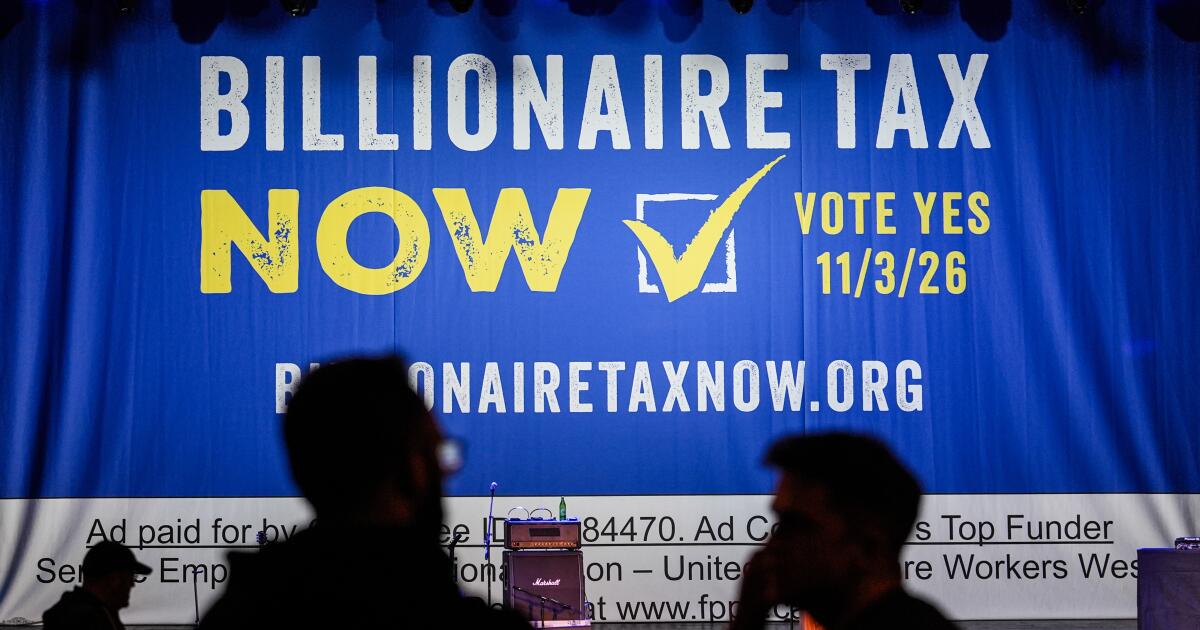
A contentious proposal to tax California billionaires to alleviate federal healthcare cuts moved closer to landing on the November ballot this week, but efforts to defeat the measure before it reaches voters have already escalated.
The California secretary of state’s office said Wednesday that the proposal had enough valid signatures to be eligible for the Nov. 3 ballot. But discussions that have included the governor’s administration and lawmakers are underway about a potential deal that could prevent the initiative from being put in front of voters, according to people familiar with the negotiations.
Supporters have until June 25 to withdraw the initiative or go forward with placing it on the ballot. The negotiations highlight the escalating debate surrounding the billionaire tax, an idea that has divided the Democratic Party and drawn fresh opposition from healthcare and education groups. The negotiations are in flux, and the outcome remains uncertain.
The initiative would impose a one-time tax of up to 5% on taxpayers and trusts with assets valued at more than $1 billion, with some exceptions, such as property. The levy could be paid over five years. Ninety percent of the revenue would fund healthcare programs, and the remaining funds would be spent on food assistance and education programs. The proposal would cost the state’s richest residents about $100 billion if a majority of voters support it.
Backers of the proposed tax say it’s crucial to compensate for federal healthcare funding cuts, approved by President Trump and the Republican-controlled Congress, that will harm millions of the state’s most vulnerable residents. In April, supporters of the billionaire tax submitted nearly 1.6 million signatures, roughly double the number needed to qualify.
A poll released in March showed 52% of registered voters supported the billionaire tax, while 33% said they opposed it. Fifteen percent were undecided. The survey was conducted by UC Berkeley’s Institute of Governmental Studies and co-sponsored by The Times.
Opponents of the measure say the proposal is an ineffective attempt to address the long-term effects of the healthcare cuts and would harm California’s economy and budget.
The state budget in California is already largely dependent on income taxes paid by its highest earners. Because of that, revenues are prone to volatility, hinging on capital gains from investments, bonuses to executives and windfalls from new stock offerings, and are notoriously difficult for the state to predict.
The proposal already triggered a fierce debate, accentuating the divide between the rich and poor in a state that’s expensive to live in.
The Service Employees International Union-United Healthcare Workers West and other supporters of the billionaire tax say that it would raise $100 billion, offsetting federal funding cuts to healthcare as well as funding education and state food assistance. The SEIU-UHWW has spent more than $31 million qualifying the proposal for the ballot.
“David won the second round against Goliath, but healthcare workers and our allies won’t quit until we protect patients from the looming California healthcare collapse manufactured by Trump and Congress,” said Debru Carthan, a spokeswoman for the Billionaire Tax Now Coalition in a statement. The SEIU-UHWW funds the group.
But supporters face strong opposition from billionaires and influential groups with deep pockets. Tech executives and other business leaders oppose the idea and some have moved to other states. Opponents say taxing billionaires would harm California’s economy while not addressing underlying financial issues.
Campaign efforts against the proposal intensified this week with the launch of a new bipartisan coalition that’s fighting the wealth tax proposal. The group, called the Californians to Protect Funding for Schools, Healthcare and Public Safety, posted a long list of opponents that include healthcare groups, labor unions, business organizations, politicians and more.
An ad released by the group calls the wealth tax “a dangerous experiment” that could cost Californians tax revenue, send jobs out of state and cut funding. Planned Parenthood, the California School Boards Assn. and labor unions are cited in the ad as opponents.
“California can’t afford the reckless wealth tax experiment,” the ad says. The California Primary Care Assn. and California Medical Assn. are funding the coalition.
Jodi Hicks, chief executive and president of Planned Parenthood Affiliates of California, said that while the group believes that the wealthy should pay their fair share of taxes, the proposal fails to get at the root of the problem.
“We believe that this particular measure is shortsighted, doesn’t have specificity and accountability. It’s volatile,” she said.
The group wants to focus on holding Congress accountable and restoring critical funding rather than finding a “temporary solution that may do more harm,” Hicks said.
The proposal also has divided progressive politicians, including influential members of the Democratic Party. California Gov. Gavin Newsom spoke out against the billionaire tax, expressing fears that those wealthy residents would move out of the state. But U.S. lawmakers such as Rep. Ro Khanna (D-Fremont) and Sen. Bernie Sanders (I-Vt.) have backed a billionaire tax, saying the rich should pay their fair share to fund essential services.
Newsom tried to stop the proposal’s supporters from placing it on the ballot because he feared it would affect the state’s finances regardless of whether voters approved it, according to a person connected to the governor who was involved in the negotiations. After these efforts failed, the governor’s advisors sought to create a broad coalition opposing the proposal in order to weaken the union’s bargaining powers.
The union proposing the billionaire tax urged Newsom on Thursday to support a bill enacting a 2% tax on the state’s billionaires and said that if he got it approved by the state Legislature, it would withdraw its proposed ballot measure by the June 25 deadline.
Saying that Newsom has vocalized how devastating the federal healthcare funding cuts will be to California’s most vulnerable residents, a coalition funded by the union argued in an open letter that their proposed stopgap measure could prevent needless patient deaths.
“Governor Newsom, you have taken bold action when California needed it in the past,” the letter read. “This is one of those moments. The ask is clear. The timeline is tight but achievable. And the payoff — preventing widespread hospital and community clinic closures and saving patient lives — is real and immediate.”
A Newsom representative bluntly opposed the proposal.
“The Governor has been clear that he is strongly opposed to a California-only wealth tax,” said spokesperson Tara Gallegos in a written statement. “The Governor supports making the wealthiest Americans pay their fair share, but this poorly designed state-only measure will defund teachers, schools, clinics, and public safety. Changing the tax rate doesn’t change this measure’s fundamental flaws that harm working Californians.”
Business executives have already poured millions of dollars into groups that oppose the billionaire tax or are promoting alternative solutions to wealth inequality.
Tech executives, venture capitalists and business leaders have donated roughly $118 million to a nonprofit called Building a Better California, according to data on the secretary of state’s website. Most of the funding comes from Google co-founder Sergey Brin, who has given more than $82 million to the group. Executives from DoorDash, Ripple, Stripe and other companies also have contributed.
The group says it supports policies such as expanding access to affordable housing, protecting innovation, requiring government transparency and securing more stable education funding.
PayPal and Palantir co-founder Peter Thiel has contributed $3 million to the California Business Roundtable, which opposes the tax. Former Google Chief Executive Eric Schmidt donated $1 million to that group as well.
California would probably collect tens of billions of dollars from the wealth tax if it passed, but it could also lose other tax revenue, a December letter from the state legislative analyst’s office said. The office also mentioned that it’s tough to predict the exact amount the state would collect due to factors that can affect a billionaire’s wealth, such as fluctuating stock prices.
California billionaires who were residents of the state as of Jan. 1 would be affected by the ballot measure if it passes. Some wealthy residents announced plans to move out of state. On Dec. 31, venture capitalist David Sacks announced he was opening an office in Austin, Texas, the same day Thiel publicized his firm had opened a new office in Miami.
Measures that could nullify the billionaire tax are another hurdle facing the initiative’s supporters. One initiative known as the Improving Transparency, Effectiveness & Efficiency in California Government Act could cancel out the billionaire tax.
It appears likely that the transparency act will also qualify for the ballot, as its supporters have said they’ve gathered enough signatures. If voters approve conflicting ballot measures, the one with more “yes” votes would take effect.

By John Ismay, Gilad Thaler, Nikolay Nikolov, Rafaela Balster, Stephanie Swart and Whitney Shefte
June 19, 2026
-

 Denver, CO3 minutes ago
Rockies ride Kyle Freeland’s gem, Braxton Fulford’s double to 4-3 win over Pirates
-

 Seattle, WA10 minutes ago
Suarez’s no-hit try ends on Naylor double in seventh, but Boston still tops Seattle
-

 San Diego, CA13 minutes ago
Neymar expected to return from right calf injury and play for Brazil in World Cup against Scotland
-
 Milwaukee, WI18 minutes ago
Today’s Summerfest schedule and picks: Saturday, June 20
-

 Atlanta, GA25 minutes ago
Atlanta Ballet Returns to the Fox Theatre to Present Cinderella for One Weekend Only This Fall
-

 Minneapolis, MN28 minutes ago
MERAUDER, JUDGE, ARKANGEL and many more announced for Minneapolis’ Snow and Flurry 2026
-

 Indianapolis, IN33 minutes ago
Third Public Safety Camera Added on Washington Street in Downtown Indy
-

 Pittsburg, PA40 minutes ago
Analysis: Most Pittsburgh‑area communities are losing residents — here’s why that might be OK

