Politics
Column: Voters who don't vote? This is one way democracy can die, by 20 million cuts


During China’s imperial age, those deemed guilty of the worst offenses were sometimes sentenced to death in a public square by a brutal form of execution known as lingchi. Soldiers — using sharp blades — would slice away pieces of flesh from the accused until they died. Translated, lingchi means “death by a thousand cuts.”
Maybe democracy does die in darkness, as journalist Bob Woodward often suggests. Or maybe democracy’s demise comes in the light of day, in a public forum, where everyone can bear witness. Sometimes those holding the knives are the oligarchs or elected officials drenched in corruption. And sometimes there’s blood on the hands of the people.
On Saturday, voters in San Antonio — the seventh-largest city in the country — are headed to the polls to decide the first open mayoral race since President Obama’s first term. Or at least some voters will be.
In November 2024, nearly 60% of the 1.3 million registered voters in the county cast a ballot in the general election. However, in the local election held last month, barely 10% showed up to the polls. Before anyone starts throwing shade at San Antonio, in Dallas the turnout was even lower.
Lackluster participation in an “off year” election is not new. However, the mayoral race in San Antonio has increased national interest because the outcome is being viewed as a litmus test for both the strength of the Democrats’ resistance and the public’s appetite for the White House’s policies.
Like other big blue cities nestled in legislatively red states, San Antonio’s progressive policies have been under constant assault from the governor’s mansion. And with neither the progressive candidate, Gina Ortiz Jones, or her MAGA-leaning opponent, Rolando Pablos, eclipsing 50% of the vote in May, the runoff has drawn more than $1 million in campaign spending from outside conservative groups looking to flip the traditionally blue stronghold.
The outcome could provide a possible glimpse into the 2026 mayoral race in Los Angeles, should the formerly Republican Rick Caruso decide to run against Mayor Karen Bass, a Democrat. When the two faced off in 2022, around 44% of the city’s registered voters went to the polls. Caruso lost by less than 90,000 votes in a city with 2.1 million registered voters — most of whom didn’t submit a ballot.
It is rather astonishing how little we actually participate in democracy, given the amount of tax dollars we have spent trying to convince other nations that our government system is the best on the planet. Capitulating to President Trump’s unsubstantiated claims of mass voter fraud, many local conservative elected officials have tried to ram through a litany of “voter integrity” policies under the guise of protecting democracy. However, democracy is not a delicate flower in need of protection. It’s a muscle in need of exercise.
“Some people find voting to be a chore,” Michele Carew, the elections administrator for Bexar County — which includes San Antonio — told me. “We need to make voting easier and quite frankly, fun. And we need to get those who don’t feel like their vote counts to see that it does. That means getting out and talking to people in our neighborhood, in our churches, in our grocery stores … about when elections are coming up and what’s at stake locally.”
Carew said that the added outside interest in the city’s election has driven up early voting a tick and that she expects to see roughly a 15% turnout, which is an increase over previous years. It could be worse. The city once elected a mayor with 7% turnout back in 2013. Carew also expressed concern about outside influence on local governing.
“One of the first times I saw these nonpartisan races become more political was in 2020, and so as time goes by it’s gotten even more so. I would like to think once the candidate is elected mayor they remain nonpartisan and do what’s best for the city and not their party.”
In 2024, a presidential election year when you’d expect the highest turnout, 1 in 3 registered voters across this country — roughly 20 million people — took a look around and said, “Nah, I’m good.” Or something like that.
The highest turnout was in Washington, D.C., where nearly 80% showed up. Too bad it’s not a state. Among the lowest turnout rates? Texas — which has the second-greatest number of voters, behind only California.
And therein lies the problem with trying to extrapolate national trends from local elections. Maybe Ortiz Jones will win in San Antonio this weekend. Maybe Caruso will win in L.A. next year. None of this tells us how the vast majority of Americans are really feeling.
Sure, it’s good fodder to debate around the table or on cable news shows, but ultimately the sample size of a mayoral election belies any claims about a result’s meaning. Turnout during an off year is just too low.
One thing we know for certain is most voters in America exercise their right to vote only once every four years. Oligarchs and corrupt officials are not great, but it’s hard for democracy to stay healthy and strong if that’s all the exercise it’s getting.
@LZGranderson


In 2023, California regulators levied more than $100,000 in fines against the private operator of a federal immigration facility, kicking off a three-year battle over whether detainees who do work at the facilities should be considered employees.
The question went beyond semantics: If considered employees, the detainees would be subject to state worker protection laws.
A legal settlement announced this week now affirms that private immigrant detention facilities are subject to California’s workplace safety and health requirements.
“Every worker deserves a safe and healthy workplace and should be able to report workplace hazards without fear of retaliation,” said Denisse Gómez, spokesperson for the California Division of Occupational Safety and Health or Cal/OSHA.
“Individuals who perform work in these facilities are entitled to workplace safety protections, and this settlement reinforces Cal/OSHA’s commitment to enforcing those protections and safeguarding vulnerable workers,” she added.
Under the settlement between California and the GEO Group, a Florida-based private prison company, the company recently withdrew its legal challenges and agreed to pay more than $100,000 in the fines.
The GEO Group did not respond to requests for comment.
Back in 2023, Cal/OSHA issued $104,510 in fines against the GEO Group. The agency had found six violations of state code by the company after detainees complained about a lack of protective equipment and proper training while cleaning the facility for $1 per day.
Detainees alleged they routinely wiped black mold off shower walls at the facility, saw black dust spew from air vents and used cleaning solutions that lacked instructions during the COVID-19 pandemic.
The biggest fine levied against the GEO Group was for failure to establish and maintain “effective written procedures to reduce employee risk of exposure to aerosol transmissible disease.”
Advocates viewed Cal/OSHA’S recognition of the detainees as workers as a victory that could pave the way for future labor rights fights at other detention centers in the state.
But the GEO Group appealed, arguing that detainees participating in ICE’s voluntary work program make their own schedules and aren’t employees, so hazard exposure couldn’t be “as a result of assigned duties,” as California law states. Plus, the company argued, there wasn’t enough evidence that detainees were exposed to any hazard.
Early last year, the state’s Occupational Safety and Health Appeals Board rejected the GEO Group’s argument and found that detainees should be considered “affected employees.”
The GEO Group sued, but three days before a California Superior Court hearing in May, the company and Cal/OSHA reached the settlement.
Along with paying the fines, the GEO Group agreed to draft plans for avoiding aerosol transmissions at 12 secure and reentry facilities in California, including five detention centers that hold immigrants.
“GEO ensures detainees are afforded the necessary tools, equipment, and personal protective equipment … to safely and effectively perform any necessary tasks,” the settlement states.
Gómez said the settlement also leaves intact the appeals board’s ruling that civil immigration detainees who participate in work programs can participate in proceedings anonymously, “acknowledging the potential for retaliation when individuals raise workplace safety concerns.”
But the question of whether detainees are employees and deserve certain protections isn’t entirely resolved — at least not for the federal government.
Last month, U.S. Immigration and Customs Enforcement released new standards for detention facilities across the country. The revised guidelines “emphasize that detainee volunteers participating in the voluntary work program are not considered facility and/or government employees” and thus not entitled to labor regulations.
Attorney Mariel Villarreal said the timing of the new detention standards made her question whether the GEO Group had asked ICE to specify in its standards that detainees are not workers in response to its battle with Cal/OSHA.
“To me, it’s a reaction to this very settlement,” she said. Villarreal works for the California Collaborative for Immigrant Justice, which filed the original complaint on behalf of detainees who said they worked in unsafe conditions.
Villarreal pointed to a Washington Post report that GEO Group executives privately asked ICE to specify that detainees are not employees of the facilities where they work. Two top Trump administration officials, border czar Tom Homan and acting ICE director David Venturella, previously worked for the GEO Group.
New versions of ICE detention standards take effect as contracts are established or modified, so this year’s rules won’t immediately apply to every facility.
An ICE spokesperson did not comment about the settlement. The spokesperson, who did not provide their name in an emailed statement Wednesday, said the agency has begun transitioning detention facilities to meet the 2026 standards, “building on its longstanding commitment to safe, secure, and professional detention operations.”
“ICE has consistently implemented many of these best practices independently, reinforcing its role as the leader in detention operations,” the spokesperson added.
The GEO Group and other immigrant detention center operators have faced other legal battles over workers’ rights, including lawsuits in Washington, Colorado and California over the $1-per-day payment.
Villarreal said she’s confident that the Cal/OSHA settlement would continue to hold even if California facilities incorporated the new standards. But she said she believes the statements are an attempt by the GEO Group to “sidestep responsibility” and avoid the possibility of being fined under similar circumstances in other states.
“These statements in the new standards are a way for them to try and preserve profits as much as possible,” she said. “GEO and ICE are so intertwined at this point that they have the same motives.”
Politics
Israel shares intelligence warning Iran plotted new assassination attempt against Trump: report

NEWYou can now listen to Fox News articles!
Israel recently shared intelligence with the United States indicating Iran had developed a fresh plan to assassinate President Donald Trump, according to a Wall Street Journal report Thursday citing people familiar with the matter.
The reported intelligence would mark an escalation in the longstanding threats against Trump, who Iran has repeatedly vowed to retaliate against over the 2020 U.S. strike that killed Islamic Revolutionary Guard Corps Gen. Qassem Soleimani.
The White House referred Fox News Digital to Trump’s remarks Wednesday when asked about the report.
TRUMP FACES UNPRECEDENTED THIRD ASSASSINATION ATTEMPT
President Donald Trump speaks during a news conference at the NATO Summit in Ankara, Turkey, July 8, 2026. Trump addressed threats against his life after a report said Israel shared intelligence with the United States about an alleged new Iranian assassination plot. (Kerem Uzel/Bloomberg via Getty Images)
“They want to take out the U.S. leader — me. I’m on whatever list. I saw this morning I’m on every single one of their lists,” Trump said. “And, so far, I guess I’ve been a bit lucky, but maybe that doesn’t last very long. These are evil, sick people. And we have to root out that cancer. That cancer. You know what you do? You’ve got to cut out cancer early. And that’s the way I feel.”
Fox News Digital has also reached out to Israel’s Embassy in Washington and Iran’s Mission to the United Nations for comment.
The Journal reported the intelligence surfaced as Trump and Israeli Prime Minister Benjamin Netanyahu have diverged in recent weeks over how to proceed after last month’s conflict with Iran. Netanyahu has advocated for continuing military pressure on Tehran, while Trump has sought to preserve a fragile ceasefire after U.S. strikes on Iranian nuclear sites.
NETANYAHU REJECTS REPORTS OF A RIFT WITH PRESIDENT TRUMP, SAYS THE TWO REMAIN ALIGNED ON IRAN
President Donald Trump, left, and Israeli Prime Minister Benjamin Netanyahu at the White House March 25, 2019. The leaders spoke Thursday after The Wall Street Journal reported Israel had shared intelligence with the United States about an alleged new Iranian plot targeting Trump. (AP Photo/Susan Walsh, File)
Trump and Netanyahu spoke Thursday and agreed to continue coordination between the two countries, according to a statement from Netanyahu’s office, which said Trump also updated the Israeli leader on recent U.S. activity in the Gulf.
Prime Minister Benjamin Netanyahu during his conversation with U.S. President Donald Trump. (Avi Ohayon/GPO)
CLICK HERE TO DOWNLOAD THE FOX NEWS APP
Iranian mourners at the funeral for Supreme Leader Ali Khamenei chanted for Trump’s death and displayed a banner that said, “We Will Kill Trump,” according to the Journal.
Iran has publicly vowed for years to retaliate against Trump over the U.S. operation that killed Soleimani, the former commander of the Islamic Revolutionary Guard Corps’ Quds Force, in Baghdad in January 2020.
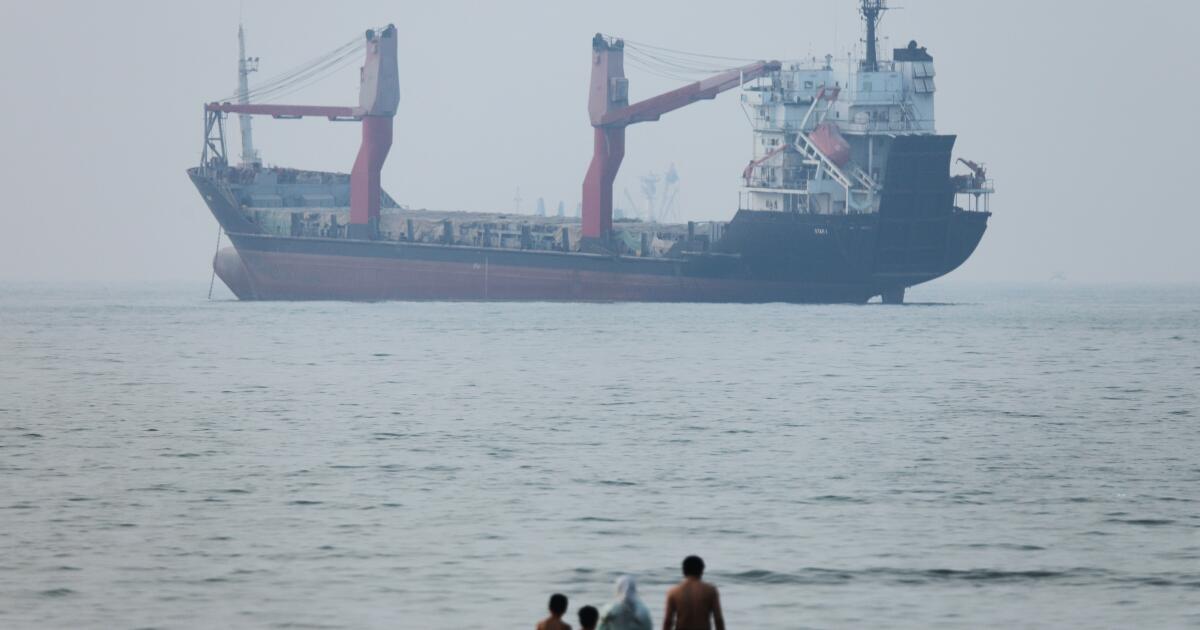
WASHINGTON — A tentative armistice between the United States and Iran reached less than a month ago appeared all but dead Wednesday after the two sides traded fresh military strikes, and as President Trump directed further attacks on the Islamic Republic.
The escalation marked a dramatic turn after the Trump administration spent weeks selling a diplomatic breakthrough with Tehran that proved controversial across the political aisle, lifting oil sanctions and a naval blockade on Iran in exchange for the promise of talks over the status of the Strait of Hormuz and its decades-old nuclear program.
Now, speaking to reporters at the NATO summit in Turkey, Trump said he believed the truce — which diplomats describe as a memorandum of understanding — was “over” and that it was a “waste of time” dealing with Iranian leadership.
“They’re scum. They’re sick people,” Trump said of Iranian leaders, whom he had characterized last month as “very rational people” and “very nice to deal with.”
The president’s dim views of the ceasefire agreement’s fate were shared by Iran’s foreign ministry, which issued a statement on Wednesday saying the American attacks, the reinstatement of a U.S. naval blockade on the Strait of Hormuz, and Israel’s continuing attacks in Lebanon rendered “important and fundamental” parts of the deal “ineffective.”
The truce’s unraveling was underscored by Trump ordering the U.S. military to launch a series of strikes against Iran on Wednesday afternoon to “further degrade their ability to threaten” the commercial shipping through the Strait of Hormuz.
“The United States is holding Iran accountable for recent unjustified aggression against commercial shipping and civilian crews freely navigating a vital international waterway,” U.S. Central Command said in a statement on social media.
Earlier in the day, Trump signaled that the United States planned to “hit them hard” and floated the possibility of taking over Kharg Island, which is vital to Iran’s economy. His remarks quickly prompted oil prices to rise and global stock markets to fall, a worry that Trump acknowledged but which did not seem to sway his decision-making in relation to Iran.
“If we hit Iran, oil goes up a little bit, it is all right,” Trump said. He later added that the United States may “do some other thing that could lift it a little bit, but I don’t think it’s gonna lift it a lot at all.”
As Trump signals the continuation of fighting, his administration has been seeking more than $67 billion in funding to cover expenses related to the Iran war, a request that Congress has not yet approved as lawmakers have been split over the president’s handling of the conflict.
“The American people are paying the price for Trump’s total failure in Iran,” Senate Minority Leader Chuck Schumer (D-N.Y.) said in a statement Wednesday. “Our troops are back in harm’s way and high gas costs are continuing to punish working families.”
The president’s stance on the war marked the latest setback to a fragile truce that has barely held since the 14-page agreement was signed June 17, as the U.S. and Iran engaged over the last few weeks in cycles of attacks and counterattacks.
Trump was noticeably angrier at Iran on Wednesday as he cast doubt over the deal. Last month, Trump had complimented Iranian leadership for trying to reach a peace deal and celebrated the reopening of the Strait of Hormuz, a crucial shipping route for the world’s oil and gas. But based on his remarks, it was clear he was out of patience.
“I am not happy with them,” Trump said. “They’re cuckoo. There’s something wrong with these people. For 47 years, they’ve been the bully of the Middle East and they are not the bully anymore. They are not the bully anymore.”
Trump expressed frustration with Iran’s negotiators and their resistance to abiding by U.S. demands to reopen the strait. When asked if he intended to send troops to Iran, the president dismissed the idea.
“Why would I go in now?” Trump said. “I’d go in when they’re completely eliminated or an agreement is made.”
Still, the president kept the door open for negotiations, saying that his envoys Steve Witkoff and Jared Kushner “want to negotiate.”
“They’re good people, Steve Witkoff, Jared Kushner, but they have to come back to me,” Trump said. “As far as I’m concerned, it’s just a waste of time dealing with [the Iranians]. They’re liars.”
The latest breakdown to the ceasefire followed a now-familiar chain reaction of tit-for-tat attacks, starting with a series of strikes on three oil tankers transiting the Strait of Hormuz on Tuesday, including a Qatari vessel carrying natural gas, according to the United Kingdom Maritime Trade Operations center.
The Qatari tanker was off the coast of Oman when it was hit and caught fire, the maritime monitor said, in what experts say was a move to thwart ships attempting to use an alternate transit route to the one Iran specified. Iran did not claim responsibility, but a report on Iranian state television said the Qatari tanker came under attack after ignoring warnings to turn back.
The two other vessels were damaged but were able to continue to their destination, according to the U.K. group.
Qatar, which has played a vital role in facilitating negotiations between the U.S. and Iran, condemned the attack on its tanker as “unacceptable.”
The U.S. responded with a wave of strikes against more than 80 Iranian targets aimed at “impos[ing] heavy costs for targeting and attacking commercial shipping crewed by innocent civilians in an international waterway,” according to a statement from U.S. Central Command. That tally included roughly 60 Islamic Revolutionary Guard Corps small boats in the strait.
Iranian state media said U.S. strikes targeted Sirik, Qeshm Island and Bushehr and Bandar Abbas, while a U.S. drone strike on the port city of Mahshahr killed one Revolutionary Guard member.
Ahead of the strikes, the White House revoked the 60-day temporary license given to Tehran to sell and deliver oil during the truce.
Iran’s military countered with its own strikes on 85 U.S. military facilities in Bahrain and Kuwait; it also shot down an MQ-9 drone, according to a statement on Wednesday.
Kuwait said its military intercepted two ballistic missiles and 13 drones, but that none had resulted in material damage or casualties.
Global oil prices surged 6% on news of Trump’s reversal on the deal, rising to more than $78 a barrel, down from the peak during the war but still above prewar levels.
The renewed violence appeared to have little effect on the funeral for Iran’s Supreme Leader Ayatollah Ali Khamenei, who was killed in an Israeli strike on Feb. 28, in the war’s opening hours.
The funeral, a days-long period of mourning, is set to end on Thursday, when Khamenei’s body will return from Iraq to be buried in the city of Mashhad, his birthplace. Negotiations were to begin once more.
In his remarks Wednesday, Trump said Iranian leaders had asked for a “timeout” to attend the funeral, and that he had promised not to kill them.
“And I said give it to them, and they start shooting missiles,” Trump said.
Whether those talks — which were meant to deal with the thorniest issues between the two countries, including the Strait of Hormuz and Iran’s nuclear program — will go ahead remains unclear. Iran, for its part, maintained a defiant attitude.
“The era of bullying and extortion is over,” wrote Mohammad Ghalibaf, Iran’s parliamentary speaker. “It leads nowhere. We don’t fold.”
Ali Akbar Velayati, a senior advisor to the supreme leader, posted on X that Trump’s policy had “driven the region towards fire.”
“We had previously warned that the region is not a place for the political gambling of small countries, and we have repeatedly proven that adventures are met with an immediate response,” he wrote.
He added that the Axis of Resistance — a reference to Iran’s network of allied groups in Lebanon, Iraq and Yemen — would not be “silent against humiliation and adventurism” and has “its finger on the trigger.”
Bulos reported from Beirut and Ceballos from Washington.
-
 Business4 minutes ago
Billionaire exodus? California drew 10 times more venture capital than any other state this year
-
 Entertainment7 minutes ago
Disney Channel maximalism to pop-star glam: What fans wore to Hilary Duff’s L.A. show
-
 Lifestyle12 minutes ago
L.A. Affairs: It’s hot when a man drives to me. But would this new guy make the trek from the Valley?
-
Politics19 minutes ago
Black mold and $1 wages: Settlement forces immigrant detention centers to protect workers
-
 Science22 minutes ago
Trump administration seeks to limit federal funding that doesn’t ‘advance’ presidential policies
-
 Sports27 minutes ago
Commentary: ‘I don’t want any handouts.’ Amid the Angels’ drought, a starry homecoming for Mike Trout
-

 World37 minutes ago
Does more World Cup history beckon for Norway? England stand in their way
-
 News1 hour ago
Waymo called the cops on teen riders, raising privacy concerns

