Politics
Column: How does California celebrate women's history month? With two male senators

The primaries are over and California has made one decision for certain: For the first time in 30 years, the Golden State will not send a woman to the Senate.
Welcome to women’s history month 2024, where even in California, progress feels like finding tampons in the public bathroom, then realizing they’re the kind with no tube.
For those blissfully not following election results, it looks like Adam Schiff or Steve Garvey will be joining Alex Padilla as our representatives in the higher house of Congress.
No hate to any of them. Gender obviously shouldn’t be the determining factor in who we vote for, despite what the “no balls to scratch” gentleman in a certain MSNBC viral video thinks.
But in an era of eroding gender rights, it does give pause.
Especially when you add to it that leadership in the state Legislature has gone all Y-chromosome. A few weeks ago, former president pro tem of the Senate Toni Atkins (D-San Diego), who in 2018 became the first women to ever hold that job, stepped down due to term limits, giving it to the very capable Mike McGuire (D-Healdsburg). That leaves McGuire and Assemblyman Robert Rivas in charge.
Atkins was the only woman — a queer one at that — to have held both of the Legislature’s top jobs. Her leadership was marked by a bipartisan respect, a strength and wisdom that only a lesbian from the mountains of Appalachia could summon in a place known for rivalries as intense as they are petty.
If you don’t know Atkins’ backstory, it’s a lot like Dolly Parton’s — smart but poor kid in a backwoods cabin, no running water, few prospects, and a lot of heart.
She’s got grit, as they say — and doesn’t hoard it for herself. Atkins made sure other women had power, giving them leadership positions on key committees and helping them rise.
“Toni has taken more arrows to the chest than we will ever know,” recently elected Sen. Aisha Wahab (D-Hayward) told me, yet she’s “still willing to include you even if you are seen as the other.”
Now, of course, Atkins is running for governor — trying to become the first woman to hold that office in California (as are Lt. Gov. Eleni Kounalakis and former Controller Betty Yee).
Which brings me to the real point of this column.
It’s not the number of women in power. It’s the quality.
Thankfully, California has quality, the kind of women that don’t just fight to win, but fight for change.
You won’t find many Marjorie Taylor Greenes with their Jewish space lasers around the Golden State — at least, in office.
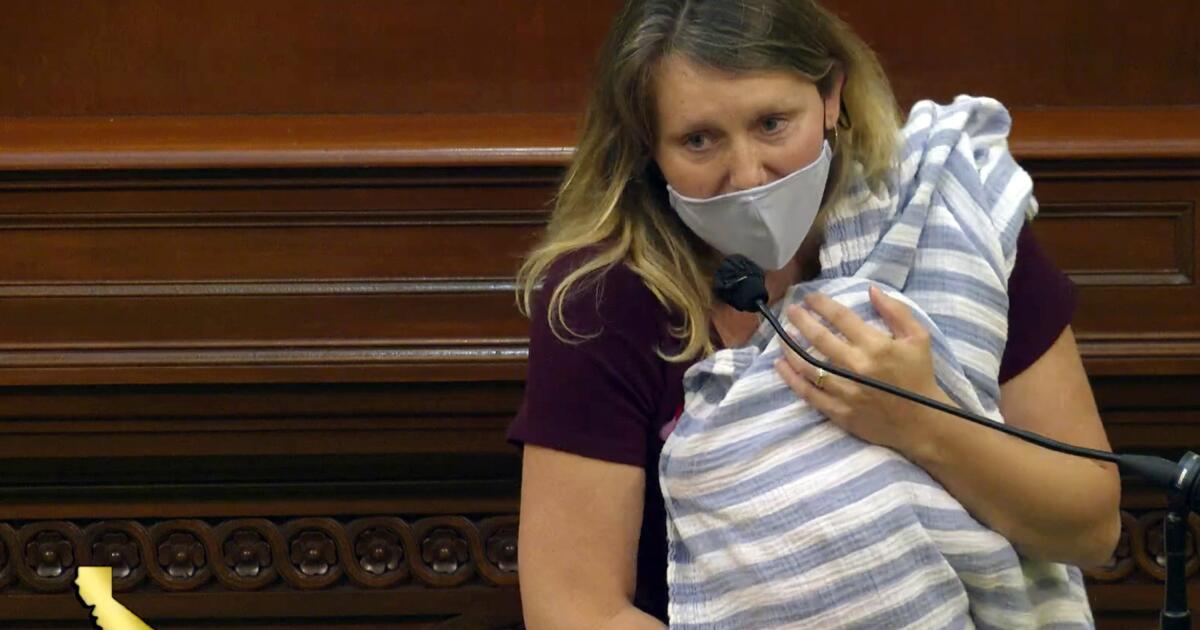
Instead, you will find Oakland Democrat Buffy Wicks — who in 2020 broke motherhood boundaries by, four weeks post-C-section, bringing her newborn daughter to the floor of the Assembly to vote when her colleagues refused to allow her to do so remotely.
“What I am going to do, leave her at home?” she quipped recently when I asked her about that.
You’ll find Karen Bass — first Black mayor of Los Angeles, first Black woman to serve as the speaker of any state legislature, not just California’s.
And, Atkins told me, one of the first to reach out to her when she became speaker herself, telling Atkins she knew what it felt like to be the only woman in the room.
“We are still friends today,” Atkins said.
You’ll find women like Wahab, the first Muslim and Afghan American to be elected to the state Senate. She grew up in foster care after losing her parents (her mom died when she was young, her father was murdered in a robbery).
Those early experiences left her acutely aware of the nexus of generational trauma and public policy, and a belief that, “There is no point for me to waste time, power and privilege on fear.”
You’ll find veterans like Nancy Skinner (D-Berkeley), who in her spare time from reforming the justice system and protecting kids on social media joined with colleagues to change what it meant to be a woman in the Legislature, because, as she puts it, “We have some catching up to do.”
About a decade ago, the few women under the dome — there were less than two dozen at the time — decided they wanted to accelerate that catching up and set out to get more females elected, not just ones from their own party or background.
So the women’s caucus, of which Skinner was one member of a formidable group, began not just recruiting other women to run — but vetting candidates to make sure they could win. That didn’t mean gate-keeping for a certain type, just making sure they were “viable,” Skinner told me.
Money, honey.
The caucus started helping candidates with mentoring and the backing to raise cash — even from skeptical donors who were still more comfortable with cigars than children.
Because before the vote there is the campaign, and if you can’t pay for it, you can’t win. And men didn’t want to give money to women, because they didn’t believe they could win, a circular logic that kept women sidelined.
“Whether it was conscious or not, there was that kind of bias that women candidates can’t raise the money,” Skinner said.
But women like Skinner and her caucus see viability differently than the establishment. That has led not only to more women in office, but diverse women.
Skip ahead 15 years and the effect of that intentional focus from the women’s caucus is clear.
There is currently a record number of women in the state Legislature, 50 out of a total of 120 possible spots. That’s about 42% women, in a state where half the population is female.
Organizations such as Emily’s List use the same approach to making sure female candidates have money, and across the country, the almost-equal ascent of women continues.
Other states, however, have done better than California. Nevada, believe it or not, is the only state to have had a majority-female legislature. Thirty-two states have elected female governors, sometimes more than once.
And nearly everywhere, it’s still controversial to show up with a baby, or be a woman with a wife, or in some places, even — as Missouri recently suggested — show your shoulders.
“It’s great to see,” Atkins says of California’s progress, and the progress of women in general.
But still, “The room doesn’t always act like we belong there.”


NEWYou can now listen to Fox News articles!
The Justice Department is turning to former Trump attorney Joeseph diGenova to spearhead a probe into ex-CIA Director John Brennan and others over the origins of the Trump-Russia investigation, as the department reshuffles leadership of the sprawling inquiry.
Acting Attorney General Todd Blanche has tapped diGenova to serve as counsel overseeing the matter, according to a New York Times report, putting a former Trump attorney in a key role in the high-profile probe. A federal grand jury seated in Miami has been impaneled since late last year.
The Department of Justice did not immediately respond to Fox News Digital’s request for comment.
DOJ ACTIVELY PREPARING TO ISSUE GRAND JURY SUBPOENAS RELATING TO JOHN BRENNAN INVESTIGATION: SOURCES
Joseph diGenova represented President Donald Trump during special counsel Robert Mueller’s investigation. (Tom Williams/CQ-Roll Call/Getty Images)
DiGenova, a former U.S. attorney in Washington, D.C., who represented Trump during special counsel Robert Mueller’s investigation, has repeatedly accused Brennan of misconduct tied to the origins of the Russia probe—allegations that have not resulted in criminal charges.
He also said in a 2018 appearance on Fox News that Brennan colluded with the FBI and DOJ to frame Trump.
The origins of the Russia investigation have been the subject of ongoing scrutiny by Trump allies, who have argued that intelligence and law enforcement officials improperly launched the probe.
BRENNAN INDICTMENT COULD COME WITHIN ‘WEEKS’ AS PROSECUTORS REQUEST OFFICIAL TRANSCRIPTS
Joseph diGenova has previously said that ex-CIA chief John Brennan colluded with the FBI and DOJ to frame Trump. (Tom Williams/CQ-Roll Call/Getty Images)
DiGenova’s appointment follows the ouster of Maria Medetis Long, a national security prosecutor in the South Florida U.S. attorney’s office. She had been overseeing the inquiry, including a false statements probe related to Brennan and broader conspiracy-related investigations.
As the investigation continues, federal investigators have issued subpoenas seeking information related to intelligence assessments of Russian interference in the 2016 election.
CLICK HERE TO DOWNLOAD THE FOX NEWS APP
John Brennan has denied any wrongdoing related to the Russia investigation. (William B. Plowman/NBC/NBC NewsWire via Getty Images; Alex Wong/Getty Images)
Brennan has previously denied wrongdoing related to the Russia investigation and has defended the intelligence community’s assessment that Moscow interfered in the 2016 election.
Politics
Supreme Court weighs phone searches to find criminals amid complaints of ‘digital dragnets’

WASHINGTON — A man carrying a gun and a cellphone entered a federal credit union in a small town in central Virginia in May 2019 and demanded cash.
He left with $195,000 in a bag and no clue to his identity. But his smartphone was keeping track of him.
What happened next could yield a landmark ruling from the Supreme Court on the 4th Amendment and its restrictions against “unreasonable searches.” The court will hear arguments on the issue on April 27.
Typically, police use tips or leads to find suspects, then seek a search warrant from a judge to enter a house or other private area to seize the evidence that can prove a crime.
Civil libertarians say the new “digital dragnets” work in reverse.
“It’s grab the data and search first. Suspicion later. That’s opposite of how our system has worked, and it’s really dangerous,” said Jake Laperruque, an attorney for the Center for Democracy & Technology.
But these new data scans can be effective in finding criminals.
Lacking leads in the Virginia bank robbery, a police detective turned to what one judge in the case called a “groundbreaking investigative tool … enabling the relentless collection of eerily precise location data.”
Cellphones can be tracked through towers, and Google stored this location history data for hundreds of millions of users. The detective sent Google a demand for information known as a “geofence warrant,” referring to a virtual fence around a particular geographic area at a specific time.
The officer sought phones that were within 150 yards of the bank during the hour of the robbery. He used that data to locate Okello Chatrie, then obtained a search warrant of his home where the cash and the holdup notes were found.
Chatrie entered a conditional guilty plea, but the Supreme Court will hear his appeal next week.
The justices agreed to decide whether geofence warrants violate the 4th Amendment.
The outcome may go beyond location tracking. At issue more broadly is the legal status of the vast amount of privately stored data that can be easily scanned.
This may include words or phrases found in Google searches or in emails. For example, investigators may want to know who searched for a particular address in the weeks before an arson or a murder took place there or who searched for information on making a particular type of bomb.
Judges are deeply divided on how this fits with the 4th Amendment.
Two years ago, the conservative U.S. Court of Appeals for the 5th Circuit in New Orleans ruled “geofence warrants are general warrants categorically prohibited by the 4th Amendment.”
Chief Justice John Roberts sided with the court’s liberals in a 4th Amendment privacy case in 2018.
(Alex Wong / Getty Images)
Historians of the 4th Amendment say the constitutional ban on “unreasonable searches and seizures” arose from the anger in the American colonies over British officers using general warrants to search homes and stores even when they had no reason to suspect any particular person of wrongdoing.
The National Assn. of Criminal Defense Lawyers relies on that contention in opposing geofence warrants.
Its lawyers argued the government obtained Chatrie’s “private location information … with an unconstitutional general warrant that compelled Google to conduct a fishing expedition through millions of Google accounts, without any basis for believing that any one of them would contain incriminating evidence.”
Meanwhile, the more liberal 4th Circuit in Virginia divided 7-7 to reject Chatrie’s appeal. Several judges explained the law was not clear, and the police officer had done nothing wrong.
“There was no search here,” Judge J. Harvie Wilkinson wrote in a concurring opinion that defended the use of this tracking data.
He pointed to Supreme Court rulings in the 1970s declaring that check records held by a bank or dialing records held by a phone company were not private and could be searched by investigators without a warrant.
Chatrie had agreed to having his location records held by Google. If financial records for several months are not private, the judge wrote, “surely this request for a two-hour snapshot of one’s public movements” is not private either.
Google changed its policy in 2023 and no longer stores location history data for all of its users. But cellphone carriers continue to receive warrants that seek tracking data.
Wilkinson, a prominent conservative from the Reagan era, also argued it would be a mistake for the courts to “frustrate law enforcement’s ability to keep pace with tech-savvy criminals” or cause “more cold cases to go unsolved. Think of a murder where the culprit leaves behind his encrypted phone and nothing else. No fingerprints, no witnesses, no murder weapon. But because the killer allowed Google to track his location, a geofence warrant can crack the case,” he wrote.
Judges in Los Angeles upheld the use of a geofence warrant to find and convict two men for a robbery and murder in a bank parking lot in Paramount.
The victim, Adbadalla Thabet, collected cash from gas stations in Downey, Bellflower, Compton and Lynwood early in the morning before driving to the bank.
After he was robbed and shot, a Los Angeles County sheriff’s detective found video surveillance that showed he had been followed by two cars whose license plates could not be seen.
The detective then sought a geofence warrant from a Superior Court judge that asked Google for location data for six designated spots on the morning of the murder.
That led to the identification of Daniel Meza and Walter Meneses, who pleaded guilty to the crimes. A California Court of Appeal rejected their 4th Amendment claim in 2023, even though the judges said they had legal doubts about the “novelty of the particular surveillance technique at issue.”
The Supreme Court has also been split on how to apply the 4th Amendment to new types of surveillance.
By a 5-4 vote, the court in 2018 ruled the FBI should have obtained a search warrant before it required a cellphone company to turn over 127 days of records for Timothy Carpenter, a suspect in a series of store robberies in Michigan.
The data confirmed Carpenter was nearby when four of the stores were robbed.
Chief Justice John G. Roberts, joined by four liberal justices, said this lengthy surveillance violated privacy rights protected by the 4th Amendment.
The “seismic shifts in technology” could permit total surveillance of the public, Roberts wrote, and “we decline to grant the state unrestricted access” to these databases.
But he described the Carpenter decision as “narrow” because it turned on the many weeks of surveillance data.
In dissent, four conservatives questioned how tracking someone’s driving violates their privacy. Surveillance cameras and license plate readers are commonly used by investigators and have rarely been challenged.
Solicitor Gen. D. John Sauer relies on that argument in his defense of Chatrie’s conviction. “An individual has no reasonable expectation of privacy in movements that anyone could see,” he wrote.
The justices will issue a decision by the end of June.
Politics
Trump renews bridge, power plant threat against Iran in push for deal, mocks ‘tough guy’ IRGC

NEWYou can now listen to Fox News articles!
President Donald Trump mocked the Islamic Revolutionary Guard on Sunday morning for staking claim to a Strait of Hormuz “blockade” the U.S. military had already put in place.
“Iran recently announced that they were closing the Strait, which is strange, because our BLOCKADE has already closed it,” Trump wrote on Truth Social. “They’re helping us without knowing, and they are the ones that lose with the closed passage, $500 Million Dollars a day! The United States loses nothing.
“In fact, many Ships are headed, right now, to the U.S., Texas, Louisiana, and Alaska, to load up, compliments of the IRGC, always wanting to be ‘the tough guy!’”
Trump declared Saturday’s IRGC fire was “a total violation” of the ceasefire.
“Iran decided to fire bullets yesterday in the Strait of Hormuz — A Total Violation of our Ceasefire Agreement!” his post began.
“Many of them were aimed at a French Ship, and a Freighter from the United Kingdom. That wasn’t nice, was it? My Representatives are going to Islamabad, Pakistan — They will be there tomorrow evening, for Negotiations.”
Trump remains hopeful about diplomacy, but is not ruling out a return to force, where he once warned about ending “civilation” in Iran as they know it.
“We’re offering a very fair and reasonable DEAL, and I hope they take it because, if they don’t, the United States is going to knock out every single Power Plant, and every single Bridge, in Iran,” Trump’s stern warning continued.
“NO MORE MR. NICE GUY!
“They’ll come down fast, they’ll come down easy and, if they don’t take the DEAL, it will be my Honor to do what has to be done, which should have been done to Iran, by other Presidents, for the last 47 years. IT’S TIME FOR THE IRAN KILLING MACHINE TO END!”
-
Missouri4 minutes ago
Missouri Lottery Pick 3, Pick 4 winning numbers for April 19, 2026
-
Montana10 minutes ago
Montana Lottery Big Sky Bonus results for April 19, 2026
-
Nebraska16 minutes ago
Nebraska Lottery results: See winning numbers for Pick 3, Pick 5 on April 19, 2026
-

 Nevada22 minutes ago
Armed Robbery at the Tamarack Casino
-
New Hampshire28 minutes ago
NH Lottery Pick 3 Day, Pick 3 Evening winning numbers for April 19, 2026
-
New Jersey34 minutes ago
NJ Lottery Pick-3, Pick-4, Cash 5, Millionaire for Life winning numbers for Sunday, April 19
-

 New Mexico40 minutes ago
Los Alamos Public Schools Students Compete At 2026 New Mexico State Science & Engineering Fair
-
North Carolina46 minutes ago
NC Lottery Pick 3 Day, Pick 3 Evening results for April 19, 2026