Vermont
West Windsor moves to regulate short-term rentals

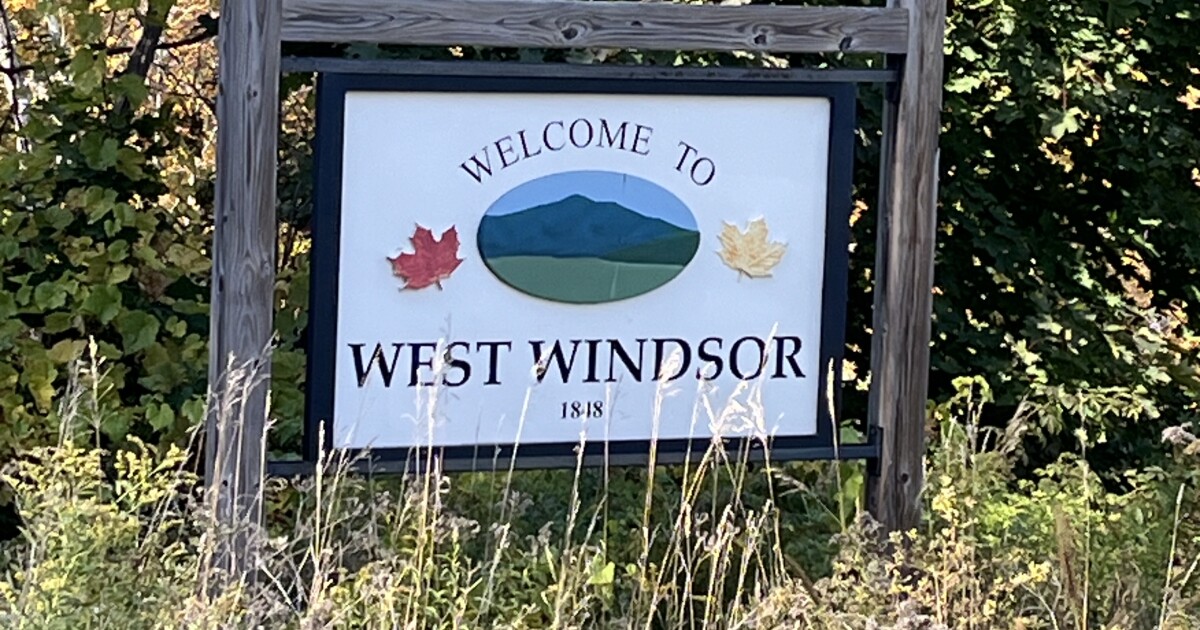
West Windsor is the latest town to adopt an ordinance regulating short-term rentals, such as Airbnbs or VRBOs.
The select board last month approved the new zoning regulation that requires property owners to register with the town every year.
Select Board Chairman Mark Higgins says the town has seen a big increase in short-term rentals since a local mountain bike and trails system opened nearby, and the board adopted the ordinance to address a housing shortage.
“We’ve got a housing issue,” Higgins said. “So we’re trying to figure out how a mountain, a hotel, a general store and STRs all work together to make sure this place stays vibrant.”
The number of short-term rentals across the state increased by more than 30% in just the last year, according to the most recent data — and since the pandemic, it’s more than doubled.
West Windsor is near the Mount Ascutney trail system, as well as the tourist town of Woodstock.
“We have a lot of people who love to come here,” said Higgins. “This is a land of second homes, but there’s a difference between enjoying it and monetizing it, so we’re trying to find the line between those two things.”
This is a land of second homes, but there’s a difference between enjoying it and monetizing it, so we’re trying to find the line between those two things.
Mark Higgins, West Windsor select board chairman
Under the new ordinance, which will start in May 2025, local operators would pay an annual fee of $150 per bedroom, while operators who do not live nearby would pay $300 per bedroom.
“I’m not really a fan of charging more based on residential status,” said Julie Marks, the Vermont Short Term Rental Alliance executive director. “However, that price point, I think, is absolutely reasonable.”
Marks says her group does not oppose local ordinances, but says they try to get members to engage with local select boards while the ordinance is under discussion to support what she calls “reasonable” regulations.
“It’s a very nuanced industry, and new to a lot of these markets,” Marks said. “There a lot of folks who are unfamiliar with how it works, so we’re very supportive of short-term rental operators to get involved with the conversation as early on as possible.”
The state enacted a 3% tax on short-term rentals in August, largely to address the education tax increase property owners saw this year.
Marks says more than 20 towns in Vermont have adopted local short-term rental ordinances.
Corey Dockser contributed the data visualization to this story.
Have questions, comments or tips? Send us a message.



Vermont has a new soccer team in town. Vermont Clover FC, a United Premier Soccer League club, made its official home debut at Saint Michael’s College in Colchester on Saturday, April 11. Clover FC put on a show for its first set of home fans, completing a 4-0 shutout win against the Maine Mystics and expanding its record to 2-0. The UPSL pits Clover FC against multiple clubs featuring college talent, designed as a pro-development league to improve those players across America. Clover FC features a lot of local talent on its roster in its debut season, including Westport, NY native Henry Gibson. The former Section VII standout for Boquet Valley High School and current player for the Clinton Community College Cougars scored his team’s second-ever home game goal after finishing a header from former Champlain Valley Union High School and VPA standout Miles Bergeson’s free kick. Clover FC will look to expand on its winning streak in its next home game at Duffy Field on Saturday, April 18, at 7 p.m. against Dorchester City FC.
Vermont has a new soccer team in town.
Vermont Clover FC, a United Premier Soccer League club, made its official home debut at Saint Michael’s College in Colchester on Saturday, April 11.
Clover FC put on a show for its first set of home fans, completing a 4-0 shutout win against the Maine Mystics and expanding its record to 2-0.
The UPSL pits Clover FC against multiple clubs featuring college talent, designed as a pro-development league to improve those players across America.
Clover FC features a lot of local talent on its roster in its debut season, including Westport, NY native Henry Gibson. The former Section VII standout for Boquet Valley High School and current player for the Clinton Community College Cougars scored his team’s second-ever home game goal after finishing a header from former Champlain Valley Union High School and VPA standout Miles Bergeson’s free kick.
Clover FC will look to expand on its winning streak in its next home game at Duffy Field on Saturday, April 18, at 7 p.m. against Dorchester City FC.

RUTLAND, Vt. (WCAX) – Vermont’s federal delegation is demanding the White House release funding for local community action groups.
Vermont congressional leaders wrote the Trump administration earlier this week to urge the release of community service block grant funding for the state. Vermont would have received $4 million, helping fund community action organizations. There are currently 5 scattered across the state.
Congresswoman Becca Balint told WCAX: “Any funding that we secured was not taking into account the fact that prices were going to go up even more because of the war. The whole reason the Republicans said they needed to pass the so called ‘Big Beautiful Bill’ last summer was to get people’s tax cuts.”
The funding provides financial aid and helps administer head start and energy assistance programs.
Copyright 2026 WCAX. All rights reserved.
Powerball, Mega Millions jackpots: What to know in case you win
Here’s what to know in case you win the Powerball or Mega Millions jackpot.
Just the FAQs, USA TODAY
The Vermont Lottery offers several draw games for those willing to make a bet to win big.
Those who want to play can enter the MegaBucks and Lucky for Life games as well as the national Powerball and Mega Millions games. Vermont also partners with New Hampshire and Maine for the Tri-State Lottery, which includes the Mega Bucks, Gimme 5 as well as the Pick 3 and Pick 4.
Drawings are held at regular days and times, check the end of this story to see the schedule.
Here’s a look at April 10, 2026, results for each game:
Winning Vermont Mega Millions numbers from April 10 drawing
03-18-36-42-49, Mega Ball: 06
Check Vermont Mega Millions payouts and previous drawings here.
Winning Gimme 5 numbers from April 10 drawing
05-13-27-28-36
Check Gimme 5 payouts and previous drawings here.
Winning Pick 3 numbers from April 10 drawing
Day: 9-5-2
Evening: 6-6-5
Check Pick 3 payouts and previous drawings here.
Winning Pick 4 numbers from April 10 drawing
Day: 8-9-4-3
Evening: 5-4-0-3
Check Pick 4 payouts and previous drawings here.
Winning Millionaire for Life numbers from April 10 drawing
13-20-26-32-54, Bonus: 01
Check Millionaire for Life payouts and previous drawings here.
Feeling lucky? Explore the latest lottery news & results
Are you a winner? Here’s how to claim your lottery prize
For Vermont Lottery prizes up to $499, winners can claim their prize at any authorized Vermont Lottery retailer or at the Vermont Lottery Headquarters by presenting the signed winning ticket for validation. Prizes between $500 and $5,000 can be claimed at any M&T Bank location in Vermont during the Vermont Lottery Office’s business hours, which are 8a.m.-4p.m. Monday through Friday, except state holidays.
For prizes over $5,000, claims must be made in person at the Vermont Lottery headquarters. In addition to signing your ticket, you will need to bring a government-issued photo ID, and a completed claim form.
All prize claims must be submitted within one year of the drawing date. For more information on prize claims or to download a Vermont Lottery Claim Form, visit the Vermont Lottery’s FAQ page or contact their customer service line at (802) 479-5686.
Vermont Lottery Headquarters
1311 US Route 302, Suite 100
Barre, VT
05641
When are the Vermont Lottery drawings held?
- Powerball: 10:59 p.m. Monday, Wednesday, and Saturday.
- Mega Millions: 11 p.m. Tuesday and Friday.
- Gimme 5: 6:55 p.m. Monday through Friday.
- Lucky for Life: 10:38 p.m. daily.
- Pick 3 Day: 1:10 p.m. daily.
- Pick 4 Day: 1:10 p.m. daily.
- Pick 3 Evening: 6:55 p.m. daily.
- Pick 4 Evening: 6:55 p.m. daily.
- Megabucks: 7:59 p.m. Monday, Wednesday and Saturday.
- Millionaire for Life: 11:15 p.m. daily
What is Vermont Lottery Second Chance?
Vermont’s 2nd Chance lottery lets players enter eligible non-winning instant scratch tickets into a drawing to win cash and/or other prizes. Players must register through the state’s official Lottery website or app. The drawings are held quarterly or are part of an additional promotion, and are done at Pollard Banknote Limited in Winnipeg, MB, Canada.
This results page was generated automatically using information from TinBu and a template written and reviewed by a Vermont editor. You can send feedback using this form.

Steelers Latest DK Metcalf Trade Projection is Bold to Say the Least

Week Ahead in Washington: April 12

Washington Wizards vs Cleveland Cavaliers Live Stream: How to Watch NBA

Austin weather: Flash flood warnings issued for parts of Central Texas

Deputies: Alabama teen arrested for threatening to kill student in Walton County

Florida High School Football Rankings: Top 25 teams – Oct. 21

How old is Bo Nix? What to know about Oregon quarterback ahead of 2024 NFL Draft

Cleary's 21 help Le Moyne down Central Connecticut State 69-64 in OT

99th annual Pony Swim held in Virginia

Indiana Members Credit Union announced as new anchor tenant at Bottleworks District

Carney casts himself as NATO defender amid Trump beef, despite Canada missing key benchmark for decades

‘Enough of war!’ says Pope Leo XIV who grows increasingly frustrated

Artemis II splashdown captures nationwide attention

Video: Police Fatally Shoot Man After Stabbings at Grand Central Subway Station

Trump blasts Spanberger ahead of Virginia meetings, says state faces tax base exodus like New York, California
-

 Atlanta, GA1 week ago
1 teenage girl killed, another injured in shooting at Piedmont Park, police say
-

 Georgia5 days ago
Georgia House Special Runoff Election 2026 Live Results
-

 Pennsylvania6 days ago
Parents charged after toddler injured by wolf at Pennsylvania zoo
-

 Arkansas2 days ago
Arkansas TV meteorologist Melinda Mayo retires after nearly four decades on air
-
 Milwaukee, WI6 days ago
Potawatomi Casino Hotel evacuated after fire breaks out in rooftop HVAC system
-

 Indianapolis, IN1 week ago
Fighting Illini begin Final Four preparations in Indianapolis
-

 Technology1 week ago
Anthropic essentially bans OpenClaw from Claude by making subscribers pay extra
-

 Austin, TX5 days ago
ABC Kite Fest Returns to Austin for Annual Celebration – Austin Today