Vermont
A Shelburne couple’s quest for VT to prevent bird deaths from windows


SHELBURNE — Just outside the window in front of Bruce and Marcia Fowle’s dining table recently, birds took their turns at a green feeder hanging off the side of the house. A grid of small square stickers on the window gave the couple confidence that their feathered friends wouldn’t fly into the glass.
The couple sat with John Lomas, a Hinesburg furniture maker, and tried to identify each bird that took its feed in the snowy yard. The gaggle had become friends over their mutual love for the avian animals — and their mutual concern about the threat buildings can pose to them.
“Any time there’s a bird and glass, there’s a threat. Anywhere. Not just in cities,” Marcia said.
More than 1 billion birds collide with glass every year in the United States, with most fatal collisions happening at homes and buildings shorter than four stories, according to the U.S. Fish and Wildlife Service. The collisions happen because reflections in glass tend to disorient birds, creating the appearance of a space in front of them rather than a flat surface.
Bruce, a New York City architect known for his environmentally sustainable designs, moved to Shelburne two-and-a-half years ago with Marcia, who for years ran a bird conservation group in the Big Apple. Since making the move, the couple, along with Lomas, said they think bird collisions receive too little attention in Vermont.
In November, the Fowles and Lomas helped host an event for about 40 architects at Burlington architecture firm TruexCullins to talk about bird-friendly designs with people in the industry. Lomas and the Fowles are pushing the latter’s retirement community, Wake Robin in Shelburne, to outfit windows with new features. And they hope to host some educational events in town this spring.
Kent McFarland, a conservation biologist at the Vermont Center for Ecostudies, said bird collisions are often less monitored in rural and suburban areas.
Though Vermont may not have towering sky scrapers, the state still has buildings with glass, making bird kills possible. “The ingredients (for collisions) are there,” McFarland said.
How can you prevent birds from hitting your windows?
Experts recommend buildings use alternatives to typical clear glass to prevent bird collisions. Glass that’s frosted or etched with patterns can give birds the image of a solid surface, rather than a reflection. Ultraviolet patterned glass is visible to birds but appears transparent to the human eye.
Bruce cofounded the firm that designed the Reuters building and The New York Times building and redesigned the Javits Center, all in New York. The latter is one he especially points to as an example of preventing bird collisions through building design. Lomas admires his work and the pair has bonded over a common idea: A building isn’t sustainable if it harms birds.
Naturally, Bruce’s pioneering bird friendly designs take inspiration from his wife. “I’m into birds because I’m married to Marcia,” he said.
Marcia grew up in a suburb of Boston where the Massachusetts Audubon Society was based, a place that fostered her love for birds. In the 1990s she joined the New York City Audubon Society, now called the New York City Bird Alliance.
When she later became the organization’s executive director, the organization started a project to monitor and research bird collisions in the city and spread awareness for the issue.
The org lobbied local leaders, and in 2020 the city passed a law aimed at reducing bird collisions. The law, called Local Law 15, requires developers to use bird-friendly designs and materials when undertaking new construction and some renovation projects.
According to the group, anywhere from 90,000 to 230,000 birds die in New York City each year from collisions with glass. Marcia and her colleagues have seen that phenomena up close.
Marcia said that one of her colleagues, on her way to work everyday, walked around the Twin Towers and picked up the bodies of dead birds, she said. It led the group to begin freezing the bodies and keeping a tally, Marcia said.
Then that work started to rub off on Marcia’s husband.
“I was ridden with guilt because I was designing high-rise buildings all over New York with lots of glass,” Bruce said.
In 2009, his firm began redesigning the Jacob K. Javits Center, a convention center on the west side of Manhattan. The original facade of the building was almost completely made of glass, some of which was opaque and some of which was transparent, Bruce said.
“It was nasty because it was a very dark but very highly reflective glass,” Bruce said. He knew that meant birds were flying into the surface.
The city, which was paying for the redesign, didn’t care about making the building more bird friendly, Bruce said. But officials did care about making it more energy efficient — so his firm considered all different types of glass.
“I had birds in mind the whole time, but I couldn’t say that,” Bruce said.
The final design used transparent glass covered in a dense pattern of dots. Bruce said the design reduced the energy consumption of the building by 25% and stopped birds from collisions. The design also replaced the original roof with one made of sedum plants, which lived on atop a thin membrane of earth and attracted birds to stop or nest. Last Bruce heard, birders had spotted 64 different species on the roof, he said.
“It’s easier for people to see the problem in a city. But the problem exists everywhere. And if we could see every dead bird that was killed in the state of Vermont, by glass, it would be enormous,” Marcia said.
McFarland, from the ecostudies center, said he’s never seen any research on bird collisions in Vermont, but he’s sure they happen. The Fowles and Lomas said the same thing.
McFarland said there are also simple measures people can take to prevent bird collisions with the windows at their home or office. Bug screens, sticker decals, tempura paint or string on the outside of windows can break up the image of a reflection for birds. Experts recommend spacing obstacles like paint or decals in a grid two inches apart.
Charlotte Oliver is a freelance journalist in Vermont.



Via Community News Service, a University of Vermont journalism internship, in partnership with Vermont Public
🎧 This story was produced for the ear. We highly recommend listening to the audio. We’ve also provided a print version of the story below.
On solar farms, the ground beneath the solar panels is often planted with turf grass and left alone. But some Vermonters are experimenting with productive ways to use that land: grazing livestock, growing crops, and creating habitat for threatened pollinators and birds.
Solar makes up about 16% of the energy Vermont generates, and that number has been growing for over a decade. As solar grows, so does Vermont’s capacity for agrivoltaics — the dual use of land on solar farms for agriculture.
Lewis Fox is a sheep farmer in Leicester, Vermont. With his wife, Niko Kochendoerfer, he runs a business called Agrivoltaic Solutions. They are hired by solar companies to manage the vegetation on solar farms. “We’re in charge of keeping the vegetation within certain limits, and the sheep are the tools that we use to do it,” Fox said.
Maeve Fairfax
/
Community News Service
Fox said that sheep are ready-made for solar farms. “They’re pretty short stature, so they can really fit into nooks and crannies,” he said. “They’re also not really interested in chewing on wires or jumping on panels.” The panels also provide sheep with protection from the elements and shade, which means that the sheep don’t need to drink as much water on hot days.
Fox and Kochendoerfer work with farmers from Buffalo, New York to Bangor, Maine, helping them learn the ropes of solar grazing. Fox is also a founding member of the American Solar Grazing Association, an organization that promotes solar grazing and provides educational materials for farmers who want to get into it.
In the winter, when there is no grazing to be done, Fox and Kochendoerfer breed the sheep and sell grass-fed lamb. Fox said that the additional revenue they earn from agrivoltaics is a huge help financially. “For us as livestock producers, being able to use the animals in another way is very significant in terms of farm viability,” he said.
Solar grazing has exploded in recent years. There are currently about 130,000 acres of solar arrays in the United States grazed by sheep. “We think it’s got a bright future,” Fox said.

Maeve Fairfax
/
Community News Service
Sheep aren’t the only animals that can find food on a solar farm.
The Weybridge-based nonprofit Bee the Change is turning solar fields into habitat for bees and other pollinators. Since 2015, they’ve created habitat on 30 solar sites.
Mike Kiernan is a co-founder of Bee the Change. He said one of the organization’s main goals is to support Vermont’s native bees, many of which are threatened by loss of habitat, disease or pesticides.
Kiernan said that although some invasive plant species can be helpful to pollinators, the team at Bee the Change tries to plant native species at these sites. “Our goal is to get the highest percentage possible of native plants, because they have the longest relationship with these species,” Kiernan said.
And their efforts are working.

Maeve Fairfax
/
Community News Service
Through careful monitoring, the leaders at Bee the Change have seen pollinator populations on their sites increase dramatically in both number and diversity.
Supporting pollinators also helps support the plants they pollinate, which helps people, too. “We’re all actually connected, and our survival is connected,” said Kiernan. “And when people see a habitat that is enriched with pollinators, they are appreciative.”
Encore Renewable Energy, a Vermont-based B Corp, has hired both Kiernan and Fox to manage the vegetation on its solar sites. The company specializes in community-scale solar projects.
Chad Farrell is the co-CEO of Encore Renewable Energy. He said the company prioritizes using agrivoltaics because it’s good for local economies and good for the environment.
Solar grazing is often cheaper than mowing, and it cuts down on emissions because mowers, which run on fossil fuels, are not needed as often.
Planting native plants to build pollinator habitat can increase the soil’s potential to store carbon by 65%. It’s also good for the soil’s overall health — potentially paving the way for future agriculture on the land. “At the end of the useful life of the project, we’re actually able to return that land in a better condition than what we found,” Farrell said.

Maeve Fairfax
/
Community News Service
Some Vermonters don’t like to see agricultural land repurposed for energy production, but agrivoltaics can help alleviate this tension. “Everybody loves driving by one of our projects and seeing a bunch of sheep out there doing their thing,” Farrell said.
Lewis Fox, the sheep farmer, agrees.
“It’s often difficult for people to see solar being built on ag land, for various reasons, and I think you could argue the merits either way,” he said. “But we can help bridge the gap in that. What we’re able to do is have solar production coexist with agriculture. And it’s not just window dressing. It’s real agriculture.”


This week, a bill that would make changes to Vermont’s Act 181 is receiving testimony in the House Committee on Environment. Certain provisions in Act 181 could trigger a permitting process through Vermont’s land use protection law, Act 250. A rule related to road building and some lands identified as “critical natural resource areas” by the state’s land use review board are expected to take effect this year. Last month, legislation passed the Senate and is currently in the House to push those deadlines back by a few years. For Corinth resident Neil Ryan, that not enough. “The group of people that was largely left out of the process: Rural Vermonters are having this imposed upon them with no say,” he said. Ryan and his family have built their own farms for generations. He believes if the provisions take effect, it would be very difficult for future generations to accomplish what he has. “The difficulty of the Act 250 process, the costs associated with the Act 250 process, we wouldn’t have started those farms likely,” he said. However, Ryan said he does support the portion of Act 181 that allows towns to opt into being exempt from the permitting process altogether. This is meant to assist housing development. On Tuesday, regional planning commissions told lawmakers that many towns have opted in. Still, Vermont is not on track for its goal of 40,000 + homes by 2030. “We’re not saying rural housing growth should stop or slow,” Executive Director of the Northwest RPC Catherine Dimitruk said. “Were saying those additional units that we need, we should be doing all we can to encourage and incentivize.”The bill will remain in House environment for the foreseeable future.
This week, a bill that would make changes to Vermont’s Act 181 is receiving testimony in the House Committee on Environment.
Certain provisions in Act 181 could trigger a permitting process through Vermont’s land use protection law, Act 250.
A rule related to road building and some lands identified as “critical natural resource areas” by the state’s land use review board are expected to take effect this year.
Last month, legislation passed the Senate and is currently in the House to push those deadlines back by a few years. For Corinth resident Neil Ryan, that not enough.
“The group of people that was largely left out of the process: Rural Vermonters are having this imposed upon them with no say,” he said.
Ryan and his family have built their own farms for generations. He believes if the provisions take effect, it would be very difficult for future generations to accomplish what he has.
“The difficulty of the Act 250 process, the costs associated with the Act 250 process, we wouldn’t have started those farms likely,” he said.
However, Ryan said he does support the portion of Act 181 that allows towns to opt into being exempt from the permitting process altogether. This is meant to assist housing development.
On Tuesday, regional planning commissions told lawmakers that many towns have opted in. Still, Vermont is not on track for its goal of 40,000 + homes by 2030.
“We’re not saying rural housing growth should stop or slow,” Executive Director of the Northwest RPC Catherine Dimitruk said. “Were saying those additional units that we need, we should be doing all we can to encourage and incentivize.”
The bill will remain in House environment for the foreseeable future.
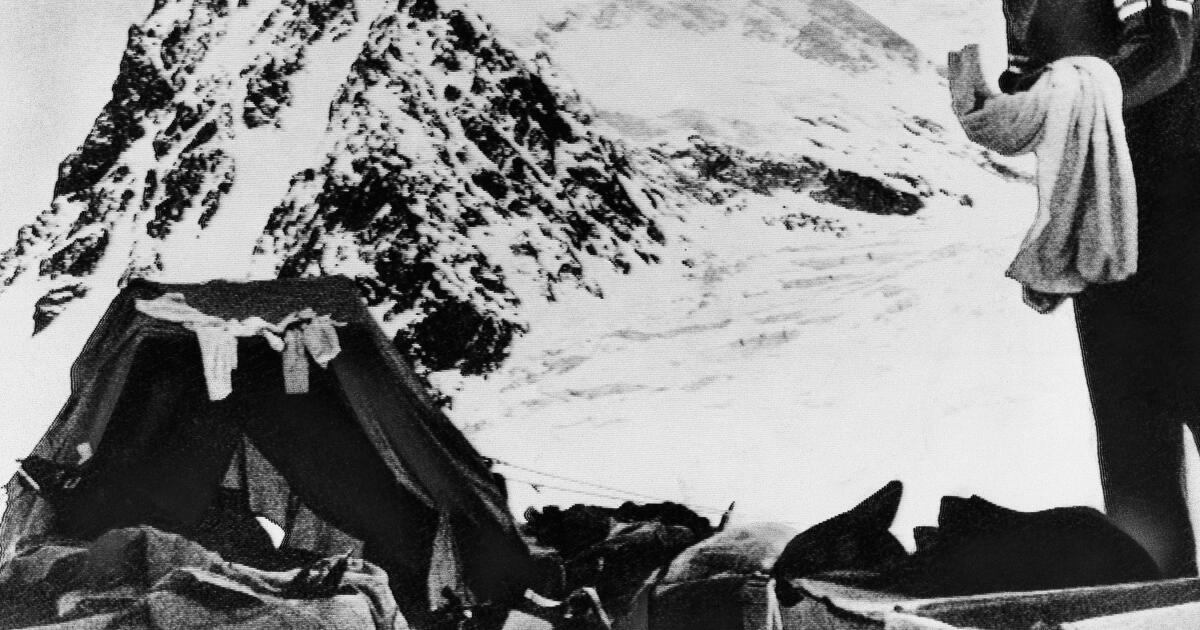
Jim Whittaker, first American climber to scale Mount Everest, has died

Newsletter: NATO holds amid fragile Iran ceasefire

Jim Whittaker, the first American to summit Mount Everest, dies at 97

Video: Suspect in Gilgo Beach Murders Pleads Guilty

Closed Detroit behavioral facility faces lawsuit over alleged sex abuse of teen

Florida High School Football Rankings: Top 25 teams – Oct. 21

How old is Bo Nix? What to know about Oregon quarterback ahead of 2024 NFL Draft

Cleary's 21 help Le Moyne down Central Connecticut State 69-64 in OT

99th annual Pony Swim held in Virginia

Indiana Members Credit Union announced as new anchor tenant at Bottleworks District
Newsletter: NATO holds amid fragile Iran ceasefire
Jim Whittaker, the first American to summit Mount Everest, dies at 97

Video: Military Families Bear the Burden of War, Again

Fox News Poll: Record number say taxes are too high; government spending seen as wasteful

‘Even the street cats ran’: Inside Israel’s deadliest attack on Beirut
-

 Atlanta, GA4 days ago
1 teenage girl killed, another injured in shooting at Piedmont Park, police say
-

 Culture1 week ago
Do You Know Where These Famous Authors Are Buried?
-

 Movie Reviews7 days ago
Vaazha 2 first half review: Hashir anchors a lively, chaos-filled teen tale
-

 Georgia2 days ago
Georgia House Special Runoff Election 2026 Live Results
-

 Pennsylvania2 days ago
Parents charged after toddler injured by wolf at Pennsylvania zoo
-

 Education1 week ago
Video: We Put Dyson’s $600 Vacuum to the Test
-
 Milwaukee, WI3 days ago
Potawatomi Casino Hotel evacuated after fire breaks out in rooftop HVAC system
-
 Entertainment1 week ago
Inside Ye’s first comeback show at SoFi Stadium