Minneapolis, MN
Minneapolis nightclub shooting: Mother seeks answers in son’s unsolved murder


MINNEAPOLIS (FOX 9) – The family of Gabriel Mendoza is still searching for justice more than three years after he was killed while working security outside a nightclub in Uptown.
Remembering a night that changed everything

What we know:
Mendoza was working security outside the Firehouse Restaurant and Lounge in Uptown when he was shot just before midnight on a Saturday in October 2022.
He was in the back of the building, surveying the area and making sure things were safe when shots were fired.
“He’s surveying the ground making sure things are safe and secure, gets caught in crossfire, gets hit in the neck and is still able to usher people inside who were out here into safety,” said Katrina Mendoza, Gabriel’s mother. “That’s what I believe, I don’t know for sure though.”
Police and Mendoza’s family believe there were many people outside the club that night who may have seen or heard something important.
Investigators think it’s possible some witnesses have not come forward, either because they believe their information is not significant or they assume someone else has already spoken to police.
The club where Mendoza worked is no longer there, but for his mother, returning to the area is still painful.
“I get a physical reaction when I come into this area like right now as I’m talking to you I feel completely nauseous. This is where somebody took my son’s life, and he was such a light in the world, not just our family but in the community,” said Mendoza.
A mother’s determination and community outreach
Why you should care:
Mendoza’s family has never stopped seeking justice. His mother, Katrina, has rented an LED billboard in hopes of getting answers and calls the investigator on the case weekly. She has also started a nonprofit called The Blue House to help other families dealing with unsolved murders find support and resources.
“I’m hoping the reason that people haven’t said anything is because they don’t think they have enough information, but they might have the missing piece of the puzzle,” said Mendoza.
When asked about her determination to find justice for her son, Mendoza said, “Until my last breath. I’ll be out here telling his story.”
Gabriel Mendoza was known for his serious, protective energy at work, but those who knew him personally remember his sense of humor, love for break dancing and music, and his talent in sports. He was a protector, especially for those who needed it most.
Mendoza’s family and police continue to ask anyone with information to call CrimeStoppers at 1-800-222-8477. Callers can remain anonymous, and every detail could help bring closure to a family and a community still searching for answers.
What we don’t know:
Police have not identified any suspects, and it’s still unclear who fired the shots that killed Mendoza.
It’s also unknown if any new leads have come in as a result of the billboard or nonprofit outreach.
The Source: This story uses information gathered by FOX 9’s Karen Scullin.



Minneapolis, MN
North Minneapolis Heritage Park tenants swelter as $500K grant sits locked for furnaces

Apartment complex A/C problem
Scorching heat is making life miserable for some at Heritage Park apartments in north Minneapolis. FOX 9’s Mike Manzoni explains the situation.
MINNEAPOLIS (FOX 9) – Tenants at a north Minneapolis apartment complex are struggling to stay cool as broken air conditioning and other problems remain unresolved during another day of high temperatures.
Tenants at Heritage Park turn to fans as heat rises
What we know:
Several tenants at Heritage Park are relying on fans to keep cool, but temperatures inside the apartments are still reaching the 80s.
“How I’m trying to keep cool is with this fan. I have another fan in that room,” Eddie Robinson, a tenant, told FOX 9 on Monday. “It’s an oven.”
Beyond the lack of air conditioning, tenants are facing other challenges inside and outside the building.
Some apartments have mold and dirty floors, while the exterior shows broken staircases and boarded-up windows.
Repairs and funding struggles at Heritage Park
The backstory:
The court-appointed receiver, Minnetonka-based Certus Financial, said it is waiting for a $5.1 million grant to help with repairs. There is $500,000 in city grant money available, but it can only be used for furnaces, which does not help tenants during the summer heat.
The property receives $85,000 each month from the federal government to help maintain the 200 public housing apartments.
Despite this, the complex is still losing $250,000 every month, according to the firm’s manager, Will Haase.
The property has 440 units, with nearly half set aside for public housing. More than half of the units are vacant, worsening the property’s financial situation.
Haase said his firm is working on patching 30 roofs to address leaks and has already replaced 168 furnaces. While there are still a couple of hundred open work orders, that number is down from more than 2,000 when the receivership began six months ago.
When asked if razing the complex could be an option, he said that is “never not in play.”
Minneapolis, MN
Minneapolis City Council abandons tax hike near George Floyd Square, revises development plan
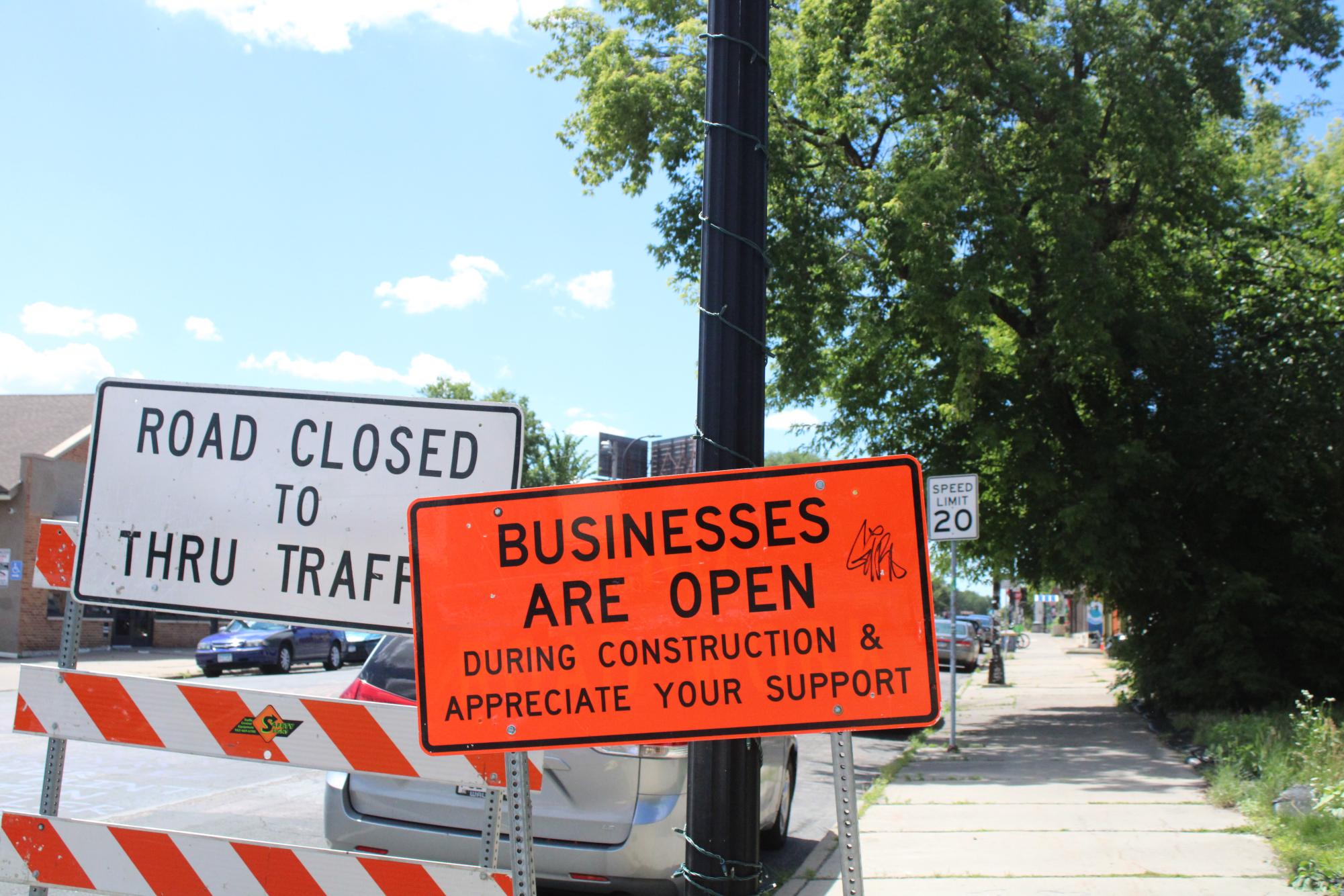
After community pushback, the Minneapolis City Council unanimously decided to cover about $630,000 in costs that property owners were originally required to pay to support the development of People’s Way, a former gas station turned memorial in George Floyd Square. Council members also voted down a contract with Minnesota Agape Movement, which submitted a plan for the development and was selected by Mayor Jacob Frey in May.
Edwin Reed had to close his business in George Floyd Square due to drops in revenue in July of last year. Reed said he was surprised to hear about the special assessment handed out.
Reed said the fact that the cost was to be offloaded to locals upset him. He believes the project should not be the people’s responsibility, but the city’s.
“We didn’t start it, they did,” Reed said. “To make us pay for it is just another slap in the face to me, my business was decimated up there.”
Hennepin County Commissioner Angela Conley lives near George Floyd Square. She said the city council’s original decision was unfair, and she’s glad the council took steps to reconsider.
“I think it’s great that the city reevaluated the assessments that would have been placed on residents and businesses,” Conley said. “When we set a levy that collects property taxes, it’s to do things like take care of the roads that we drive on.”
Self-proclaimed “Tourist Interrupter” of George Floyd Square and Minneapolis resident Marquise Bowie said the neighborhood has gone without city investment for far too long.
Bowie is a founder of the Agape Movement, a 40-year-old grassroots community safety organization based in South Minneapolis. Since Floyd’s death, he and others in the organization have tried to support the community in any way they can, a commitment that Bowie said he hasn’t seen from city officials.
“It’s been six years. Nobody’s really investing in our neighborhood without any fires. We’ve seen fires burn down buildings to the gravel that are built back up,” Bowie said. “We don’t have nothing permanent that lets people know anymore about George Floyd or about the community at large.”
Following the city’s purchase of Peoples’ Way in 2023, the Minneapolis City Council received submissions from four teams that pitched their development ideas for the People’s Way. The Agape Movement was chosen by Frey earlier this year, but the city council voted against the decision, opting to reconsider other applicants.
South Minneapolis resident Dee Thomas said restrooms are a need at George Floyd Square.
“They want people to come through here and do tours here, but there’s no place to use the bathroom,” Thomas said. “Where can the people that are here in the community day by day, watching over the square and keeping the people safe, get to use the restroom and wash our hands?”
South Minneapolis resident Roxy Drake sat alongside Thomas on a metal chair at People’s Way. She said she wants to see a recreational center built. Community members may soon have the development they’ve been hoping for, but struggles to agree on a developer bring further uncertainty to the project.
Conley said, given the survey distributed to community members, Rise and Remember was the more favored option.
“What you saw the city council do was deny the mayor’s recommendation and move forward with the recommendation of the people who were surveyed and who said Rise and Remember best represents what we want to see at the site,” Conley said. “I think the council was really honoring the voices of residents.”
While it may appear that for one developer to win the bid, another one must lose, Conley said there is plenty to go around with the 38th Street THRIVE Plan, a plan created by community members and the city of Minneapolis to drive engagement on 38th Street between Nicollet Avenue and Bloomington.
“We should be listening to the residents, and I think we need to really fund the 38th Street THRIVE Plan so that other development can happen,” Conley said. “One of them could be what Agape has presented. Why not both?”
The timeline for construction of the square remains the same, with the project set to be done in late 2027, though development action remains unclear. However, Minneapolis City Council members Soren Stevenson and Jason Chavez have made continuing efforts with the project, frequently meeting with Frey about what is best for People’s Way.
Though Stevenson declined an interview with the Minnesota Daily, a member of his team said the next steps are still undecided and will be publicly announced when ready.
Bowie said he wants the council to move forward with Agape Movement’s plans for the square.
“We’ve been here, we were open to working with whoever to try to build a better community,” Bowie said. “We don’t want to stay in activism mode forever and kick the can down the road. We want to start building.”
Minneapolis, MN
Broken A/C leaves 75-year-old cancer patient sweltering at north Minneapolis apartments

Apartment complex A/C problem
Scorching heat is making life miserable for some at heritage park apartments in north Minneapolis. FOX 9’s Mike Manzoni explains the situation.
MINNEAPOLIS (FOX 9) – Tenants at Heritage Park in north Minneapolis have had to settle for fans to cool off as broken air conditioning units remain unrepaired during a stretch of scorching heat.
Tenants say broken A/C units are just the latest problem
What we know:
Multiple tenants are dealing with broken air conditioning units, leaving their homes uncomfortably hot during the day and even hotter at night.
“I don’t like it very much at all. And especially with somebody running back and forth to the hospital, I don’t need all this stress,” said Eddie Robinson, a tenant at the complex. “It’s an oven.”
Temperatures inside Robinson’s apartment routinely climb into the 80s, and he said it gets even hotter at night because he must lock up his windows for safety.
“People will come in your house if they see a window open,” he said.
But Robinson said it is actually one of the better apartments he has lived in during his dozen years at Heritage Park.
“The first unit – the rats took it over,” he said.
None of the three air conditioning units outside his building were working on Monday, and he said he could not find anyone to fix them.
Other problems at the complex
The backstory:
Heritage Park has faced ongoing complaints from tenants about rats, mold, leaks and poor water pressure, among other concerns.
City Council Member Pearll Warren recently posted a video on social media showing moldy walls and dirty floors.
Outside the buildings, there are broken stairs, busted lights and boarded-up windows.
These issues have prompted the Minneapolis NAACP to call for the city’s public housing chief to step down.
The Minneapolis Public Housing Authority, which owns the land but does not maintain the property, said it is working with the court-appointed receiver to address hundreds of open maintenance orders. The agency said the previous owner ran into financial trouble and stopped making repairs. The property entered receivership in late 2025.
Robinson, who is 75 and battling cancer, said he is just trying to make it through the summer with his support dog, Lele.
“I got to keep water out for her all the time, you know. Otherwise, she’ll get dehydrated,” he said.
The management company, Property Solutions & Services Inc., said it is offering portable air conditioners to tenants with broken central units, but Robinson said he does not want one because they do not help.
-

 Finance1 minute ago
Google Cloud Pursues Financial Markets in FactSet Alliance | PYMNTS.com
-

 Fitness4 minutes ago
Boutique Fitness Is Redefining How Americans Work Out. Which Drop-In Classes Are Worth Booking?
-

 Movie Reviews16 minutes ago
‘Supergirl’ Movie Review
-

 World24 minutes ago
Map: 6.0-Magnitude Earthquake Shakes Off Mexico’s Coast
-

 News31 minutes ago
In the United States, Every World Cup Team Is a Home Team
-
 Lifestyle1 hour ago
How does the Kennedy Center board make decisions? This legal filing sheds some light
-

 Technology1 hour ago
Meta is adding ridiculous ‘rate limits’ and a soft paywall to its smart glasses
-

 World1 hour ago
Boy, 2, pulled alive from rubble six days after Venezuela’s devastating twin earthquakes

