Northeast
Trump shooter was not only suspicious person at Butler rally: Pennsylvania State Police Commissioner

BETHEL PARK, Pa. – In addition to would-be Trump assassin Thomas Matthew Crooks, other suspicious people were noted by security at the Butler, Pennsylvania event, Pennsylvania State Police Commissioner Christopher Paris told the House Committee on Homeland Security.
“Was [Crooks] the only one determined to be suspicious that day?” Rep. Andrew Garbarino asked Pennsylvania State Police Commissioner Christopher Paris on Tuesday.
“No, he was not,” Paris replied.
“They identified Crooks for not matriculating,” Colonel Paris said. “Crooks never made it through the secure perimeter into the venue space itself.”
TRUMP SHOOTING: TIMELINE OF ASSASSINATION ATTEMPT RAISES QUESTIONS ABOUT HOW GUNMAN EVADED SECURITY
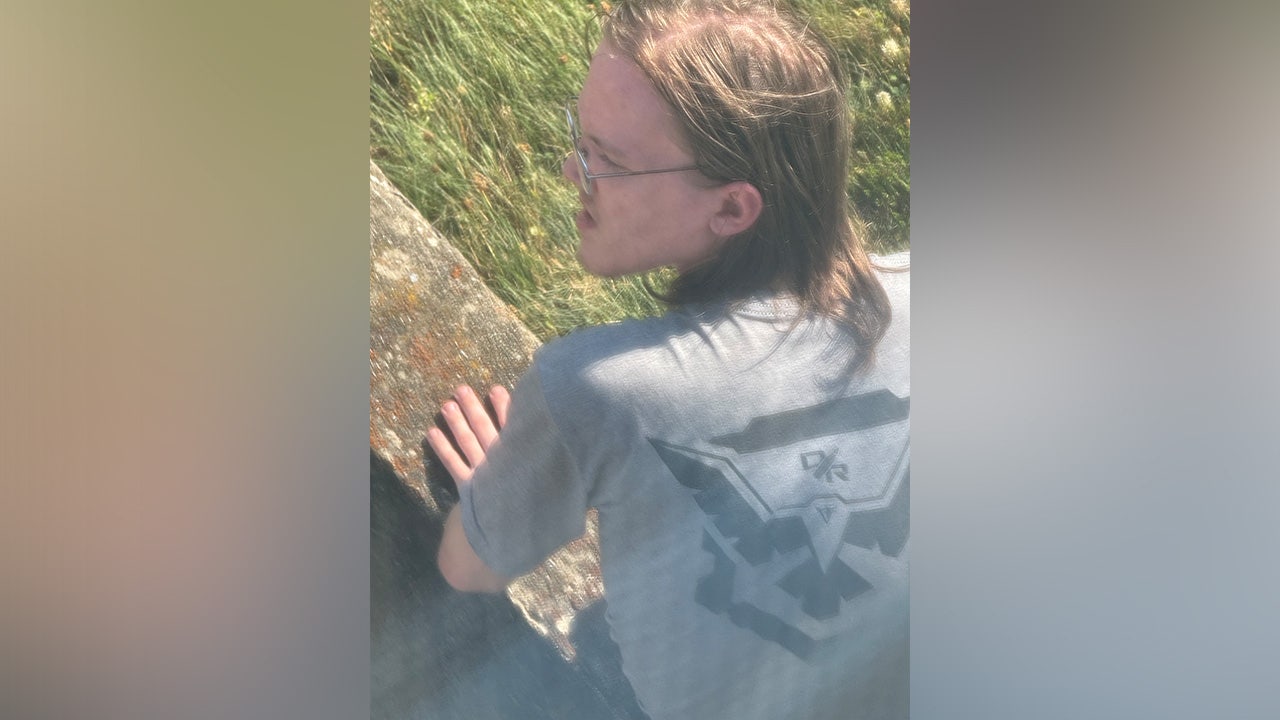
Undated file photo of Thomas Matthew Crooks. Crooks is alleged to be the shooter in the assassination attempt on former President Donald Trump in Butler, Pennsylvania on Saturday, July 13, 2024. (Obtained by Fox News Digital)
Col. Christopher L. Paris, Commissioner of the Pennsylvania State Police, testifies before the House Committee on Homeland Security during a hearing at the Canon House Office Building on July 23, 2024 in Washington, DC. The committee is examining the assassination attempt on former U.S. President Donald Trump on July 13th in Pennsylvania.
There were at least two other suspicious people identified and tracked by the law enforcement that day – but after spotting Crooks with a rangefinder, he became a “special individual,” who was “even more suspicious,” he said.
Law enforcement officials spotted 20-year-old Crooks at about 5:10 p.m. on July 13, identifying him as a “suspicious person of interest.”
At 5:41 p.m., about 20 minutes before former President Donald Trump took the stage, a sniper spotted Crooks looking at his phone and a rangefinder, snapped a photo and sent it to the “Sniper Group” chat.
FBI DIRECTOR WRAY REVEALS 5 KEY DETAILS ABOUT TRUMP SHOOTERS’ STASH OF EXPLOSIVES, WEAPONS
An undated image of Thomas Matthew Crooks. (Handout via AFP)
“There was a text thread that was going,” Paris said on Wednesday. “They took a photo of him at some point when he utilized the rangefinger. The suspicion was heightened… I know from an interview that was immediately relayed in the command post to the Secret Service.”
Just over ten minutes later, the Secret Service spotted him on the roof of a building about 150 yards away from the podium where Trump was set to address the crowd. A law enforcement officer was assigned to monitor the roof of the building – but a whistleblower told Missouri Sen. Josh Hawley that the officer left their post because it was “too hot.”
Less than 20 minutes afterward, Crooks fired a volley of shots from the roof.
DETAILS ABOUT HOW TRUMP SHOOTER SCALED BUTLER RALLY ROOF EMERGE IN FBI DIRECTOR CHRISTOPHER WRAY TESTIMONY
This graphic shows a bird’s eye view of the Trump rally in Butler, Pennsylvania, as well as the alleged would-be assassin’s vantage point. (Fox News)
“Before [Trump] went on to speak… just to be clear, [Crooks] was determined to be suspicious,” Paris said. “There was no information that he possessed a weapon.”
Crooks was also determined to be suspicious because “he was walking around and not moving into the venue,” Paris said.
“Just for some context, there were over 100 people that day that necessitated or required medical attention due to the heat, there was a missing six-year-old,” he added.
Fox News Digital did not immediately hear back from local Butler law enforcement, the Secret Service, and Pennsylvania State Police regarding any suspicious people identified or detained at the rally on July 13.
Fox News Digital’s Audrey Conklin contributed to this report.
Read the full article from Here

Boston, MA
Boston’s season stays alive with dramatic buzzer-beater to advance to conference title game

NEWYou can now listen to Fox News articles!
The Boston Terriers men’s basketball team advanced to the Patriot League finals on Sunday with a nail-biting victory over the Navy Midshipmen, 73-72.
And it couldn’t have come closer than what took place at the end of the second half.
CLICK HERE FOR MORE SPORTS COVERAGE ON FOXNEWS.COM
Boston University Terriers guard Michael McNair (20) drives to the basket against Northwestern Wildcats forward Arrinten Page (22) during the second half at Welsh-Ryan Arena on Nov. 7, 2025. (David Banks/Imagn Images)
Chance Gladden #2 of the Boston University Terriers is defended by Ben Eisendrath #5 of the Harvard Crimson during the 2025 college Basketball Hall of Fame Showcase game between Harvard Crimson and Boston University Terriers on Nov. 22, 2025, at Mohegan Sun Arena in Uncasville, Connecticut. (M. Anthony Nesmith/Icon Sportswire via Getty Images)
The Terriers came into the game as the No. 4 seed in the conference tournament. The Midshipmen had the best record in the conference and were the No. 1 seed. The game was tied at 70 apiece with Navy inbounding the ball from the other side of the court with about 8.4 seconds left in the game.
Navy’s Austin Benigni received the pass and took the ball coast-to-coast for the go-ahead layup.
Boston’s Chance Gladden received the ball quickly in a last-ditch effort to try to put the Terriers back up. He dribbled up the court, went behind his back as he crossed mid-court and threw up a prayer from well beyond the 3-point line. It went in.
Navy Midshipmen’s mascot, Bill the Goat, in the stand during the Army/Navy basketball game on Feb. 21, 2026, at Christl Arena in West Point, New York. (David Hahn/Icon Sportswire via Getty Images)
LEARN MORE ABOUT THE ULTIMATE COLLEGE HOOPS EXPERIENCE
The Terriers improved to 17-16 on the season and still have hopes that they could punch their ticket to the dance with a win in the Patriot League Championship. Navy, with a record of 26-7, may be on the outside looking into the NCAA Tournament this season.
Gladden finished with 26 points on 8-of-12 from the field. He made three 3-pointers and had four assists to his credit. Michael McNair added 22 points.
Navy’s Aidan Kehoe had 26 points, 12 rebounds and five steals in the loss. Benigni added 17 points.
A detailed view of the Patriot League conference logo shown on the floor before a college basketball game between the American Eagles and the Navy Midshipmen at Bender Arena on Jan. 12, 2026 in Washington, D.C. (Mitchell Layton/Getty Images)
CLICK HERE TO DOWNLOAD THE FOX NEWS APP
Boston will play Lehigh in the Patriot League Championship on Wednesday.
Follow Fox News Digital’s sports coverage on X and subscribe to the Fox News Sports Huddle newsletter.

Pittsburgh Panthers (12-19, 5-13 ACC) vs. Stanford Cardinal (20-11, 9-9 ACC)
Charlotte, North Carolina; Tuesday, 2 p.m. EDT
BOTTOM LINE: Stanford faces Pittsburgh in the ACC Tournament.
The Cardinal have gone 9-9 against ACC teams, with an 11-2 record in non-conference play. Stanford has a 3-2 record in games decided by less than 4 points.
The Panthers’ record in ACC games is 5-13. Pittsburgh has a 2-2 record in games decided by 3 points or fewer.
Stanford is shooting 43.7% from the field this season, 2.0 percentage points lower than the 45.7% Pittsburgh allows to opponents. Pittsburgh’s 43.6% shooting percentage from the field this season is 2.0 percentage points lower than Stanford has given up to its opponents (45.6%).
The teams square off for the second time this season. Stanford won the last meeting 75-67 on Feb. 26. Ebuka Okorie scored 34 to help lead Stanford to the win, and Cameron Corhen scored 22 points for Pittsburgh.
TOP PERFORMERS: Okorie is scoring 23.1 points per game with 3.7 rebounds and 3.6 assists for the Cardinal. Benny Gealer is averaging 13.1 points and 1.7 steals over the past 10 games.
Corhen is scoring 13.1 points per game with 6.8 rebounds and 1.9 assists for the Panthers. Barry Dunning Jr. is averaging 13.1 points and 6.9 rebounds over the last 10 games.
LAST 10 GAMES: Cardinal: 6-4, averaging 77.9 points, 29.6 rebounds, 11.5 assists, 8.2 steals and 4.4 blocks per game while shooting 46.8% from the field. Their opponents have averaged 73.4 points per game.
Panthers: 3-7, averaging 64.2 points, 29.4 rebounds, 13.6 assists, 6.6 steals and 2.6 blocks per game while shooting 42.2% from the field. Their opponents have averaged 70.8 points.
___
The Associated Press created this story using technology provided by Data Skrive and data from Sportradar.

A man was charged with murder and interfering with police on Sunday night.
According to police, officers were dispatched to an apartment on Washington Street for a wellness check of a woman who was reportedly unconscious and not breathing.
When officers arrived, they made contact with a man in the apartment who refused to cooperate and would not allow officers access. They then had to force entry into the apartment where they located the victim suffering from severe head trauma as well as the aggressive male, police said.
The man was secured and transported to the Hartford Police Detention Facility and is being held on a million-dollar bond.
The victim was revealed to be 76-year-old Linda Anthony and was pronounced deceased on scene.
The Hartford Police Major Crimes and Crime Scene Divisions responded to the scene and assumed the investigation.

Miami Dolphins releasing quarterback Tua Tagovailoa, team says

Boston’s season stays alive with dramatic buzzer-beater to advance to conference title game

Sprint to the Summit: Inside the ‘whirlwind 14 months’ to launch Denver’s NWSL team

SEEN FROM WEST SEATTLE: Downtown drone show

SDPD investigating suspicious death

Florida High School Football Rankings: Top 25 teams – Oct. 21

How old is Bo Nix? What to know about Oregon quarterback ahead of 2024 NFL Draft

Cleary's 21 help Le Moyne down Central Connecticut State 69-64 in OT

99th annual Pony Swim held in Virginia

Indiana Members Credit Union announced as new anchor tenant at Bottleworks District

Video: Airports Struggle to Staff T.S.A. During Partial Government Shutdown

Before-and-after satellite imagery offers a rare look at damage inside Iran
Hungary's opposition leader Péter Magyar calls on Russia to refrain from election interference

Video appears to show U.S. cruise missile striking Iranian school compound

Trump vows block on signing new laws until SAVE America Act passes Senate
-

 Wisconsin1 week ago
Setting sail on iceboats across a frozen lake in Wisconsin
-

 Massachusetts6 days ago
Massachusetts man awaits word from family in Iran after attacks
-

 Maryland1 week ago
AM showers Sunday in Maryland
-

 Florida1 week ago
Florida man rescued after being stuck in shoulder-deep mud for days
-

 Pennsylvania4 days ago
Pa. man found guilty of raping teen girl who he took to Mexico
-

 Oregon1 week ago
2026 OSAA Oregon Wrestling State Championship Results And Brackets – FloWrestling
-

 News1 week ago
2 Survivors Describe the Terror and Tragedy of the Tahoe Avalanche
-

 Sports4 days ago
Keith Olbermann under fire for calling Lou Holtz a ‘scumbag’ after legendary coach’s death