Lifestyle
How to create a DIY water feature for a habitat garden without breaking the bank

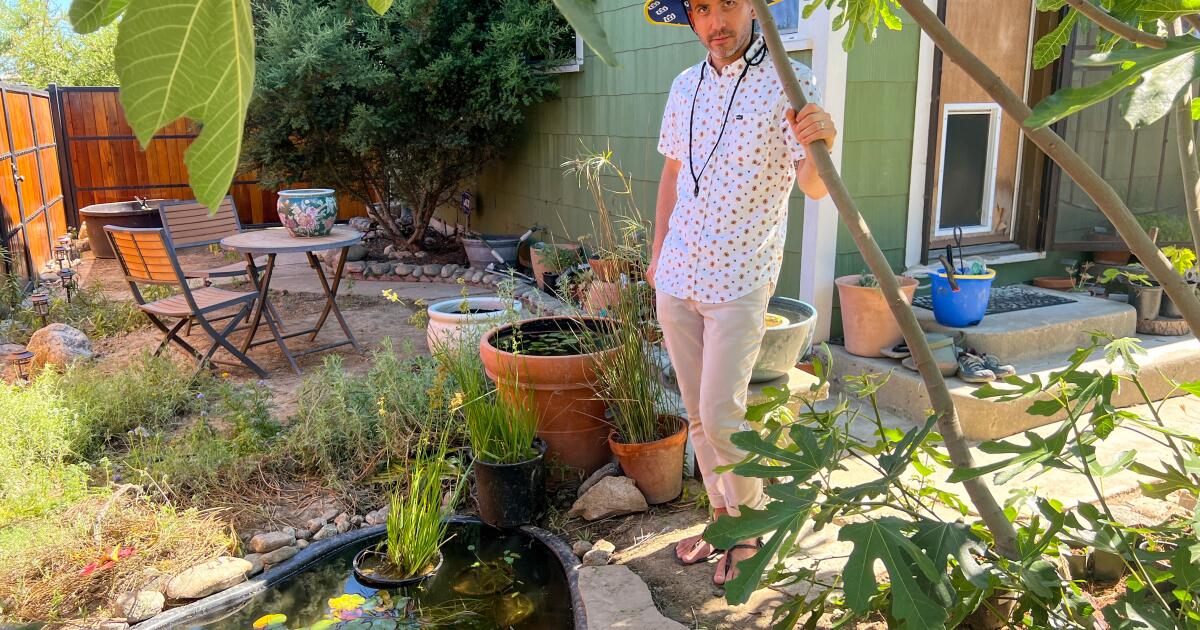
These days, habitat gardens are all the rage among eco-conscious Californians. They add native plants to their yards, patios or even balconies to provide food and shelter for wildlife.
But here’s the bitter truth: It’s not a real habitat garden if it doesn’t have a water source, as in a place where bees and butterflies can reliably sip without drowning or where birds can splash and preen.

In L.A., water rules everything around us. Drink up, cool off and dive into our stories about hydrating and recreating in the city.
I have been pining for a water feature for years, but I’ve always been too intimidated to proceed. Store-bought fountains are pricy and their setup seems daunting. And while I’ve long lusted over hand-built fountains and elaborate ponds, I’m a klutz when it comes to building things from scratch.
All I wanted was a simple recirculating fountain near my bedroom window, so I could fall asleep to the soothing sounds of gurgling water. But the fear of failure always stopped me until I talked to people who have created their own water features and learned a few crucial tips:
- You don’t need a dedicated water line or even electricity and a pump to create a simple water feature. All you need is a big, watertight pot, wider than deep, a few water plants and a handful of little fish to keep mosquitoes at bay.
- Anyone with time, muscle and access to YouTube (or the library) can build a small pond or simple water feature, but there will be some labor and unavoidable expenses, so try to have all your materials assembled before you engage — unless you like interrupting your project to dash to the store.
- Proceed boldly, but prepare yourself mentally, because something always goes wrong, said Chris Elwell, co-owner (with his husband, Kory Odell) of the fabled Casa Apocalyptica, an arresting landscape of salvaged rubble, water features and native plants around their home in Mid-Wilshire.
“Just know you’re going to make a lot of mistakes,” said Odell, a civil engineer who built an 8-by-12-foot in-ground pond for their front yard. “You’ll screw it up, and then you’re going to fix it, and that’s how you’re going to learn.”
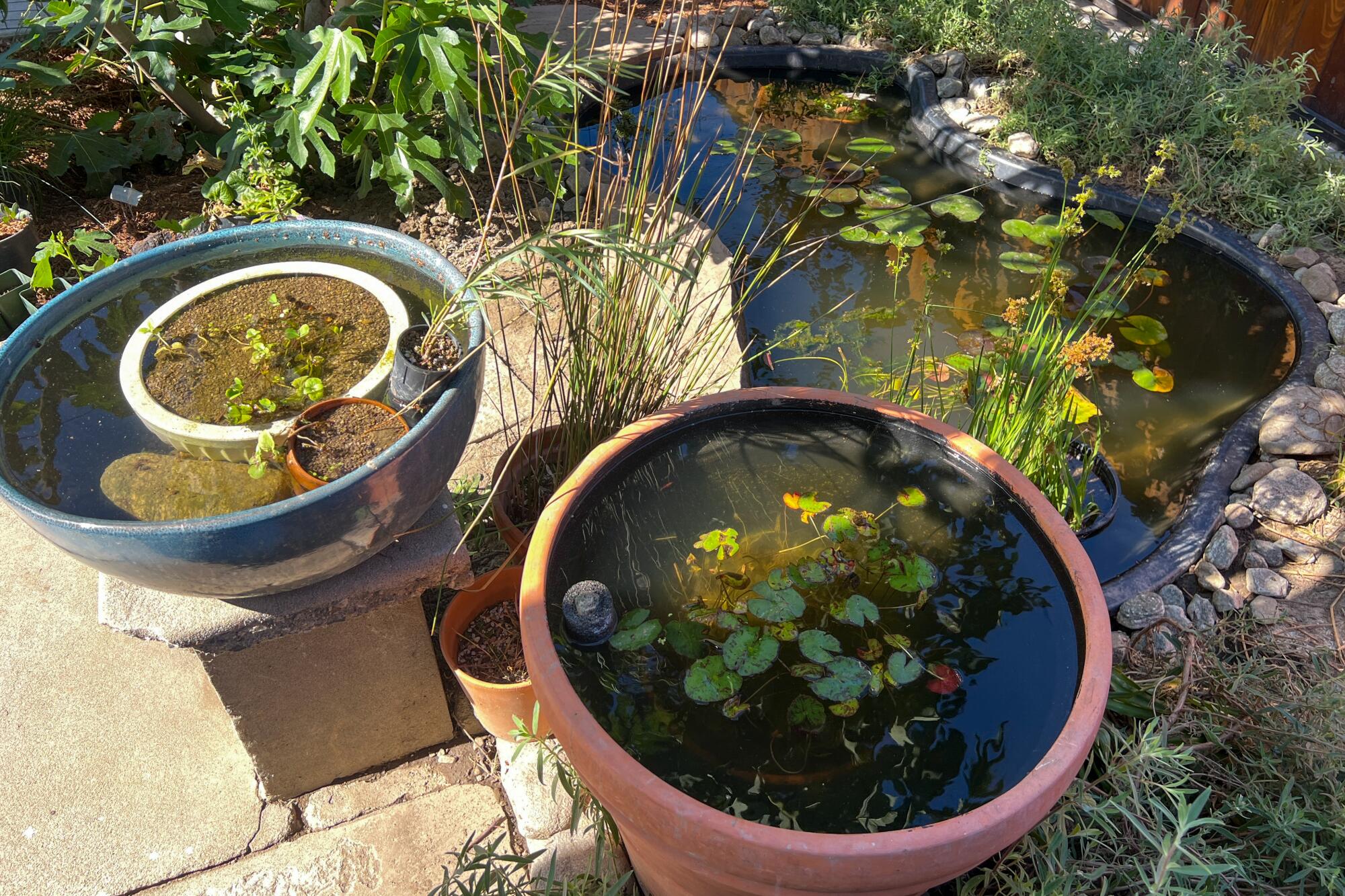
DIY water features instructor Andrew Chaves has created water gardens in recycled plant pots in his Long Beach yard.
(Jeanette Marantos / Los Angeles Times)
Stand-alones are simplest
Experimentation and patience are the most important tools for creating your own water feature, said DIY water features instructor Andrew Chaves, director of operations at Rancho Los Alamitos Historic Ranch and Gardens in Long Beach. He’s offering a class called Water Gardening in Small Spaces at the rancho on Aug. 4, and expects to teach another this fall at his former place of employment, the Theodore Payne Foundation.
Chaves doesn’t object to fountains with pumps, but he prefers the simplicity of still water features so he doesn’t have to worry about power cords or special water lines.
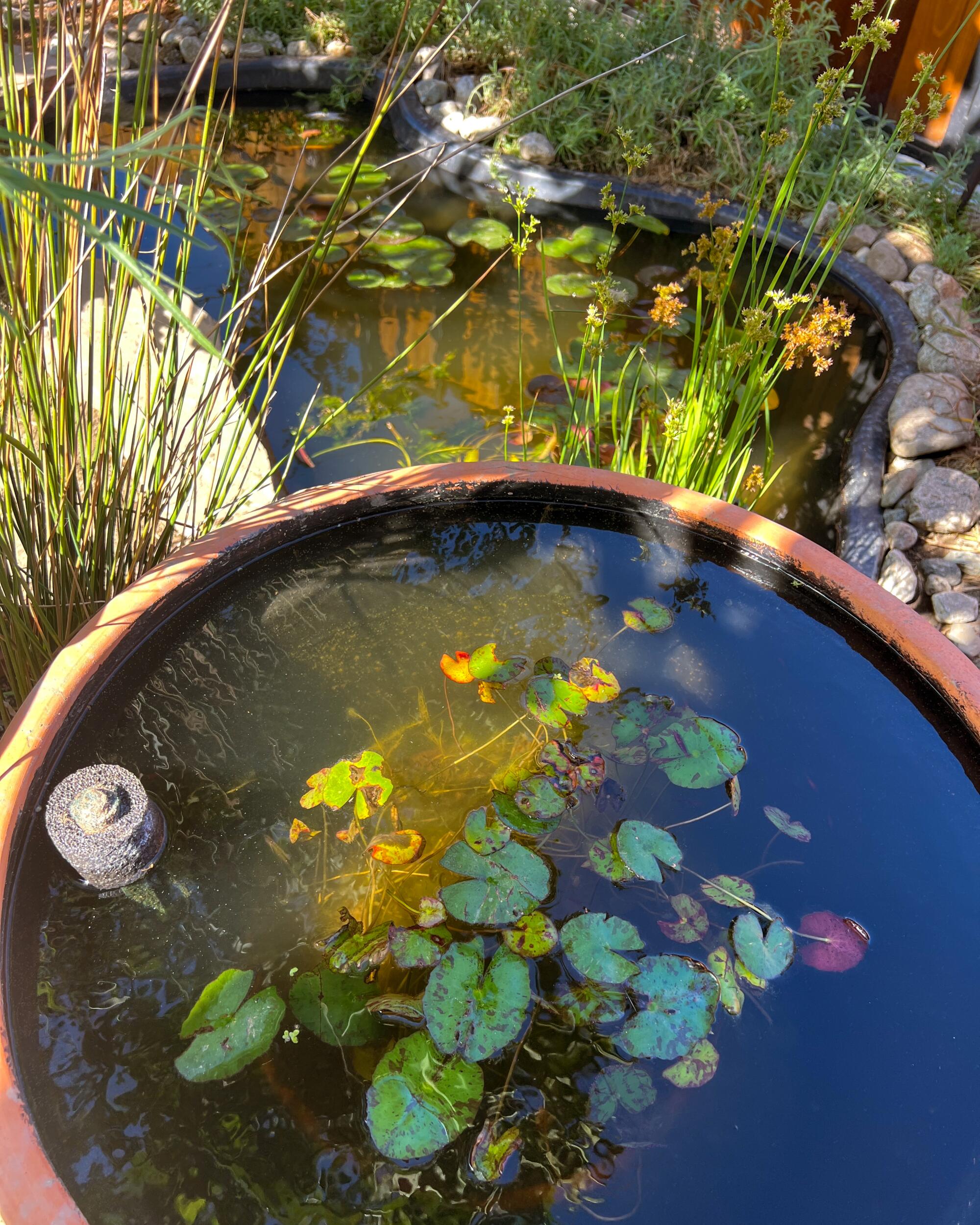
Andrew Chaves’ water garden, in a 24-inch-tall sealed clay pot, is a simple, serene way to bring water to a habitat garden.
(Jeanette Marantos / Los Angeles Times)
He creates “water gardens” in large, watertight pots with (mostly) native water plants that give insects and other tiny drinkers a safe place to perch on floating plants like duckweed (Lemna minor), mosquito fern (Azolla filiculoides) and miniature water lilies, which also shade the water and keep it cool. He keeps mosquitoes away with a dozen or so tiny fish that devour their larvae.
Chaves and his wife, Amanda, also dug out a roughly 4-foot-by-6-foot hole for a preformed plastic pond that a colleague gave them when he couldn’t use it. Fitting the pond into the ground was a difficult project, they said, because the hole had to align with the inflexible contours of the pond and sit flush against the ground. If he did it again, he said, he probably would use a heavy-duty pond liner instead, because it would be easier to press the liner into the hole and disguise the edges with rocks and plants.
Covering the edges of a pond is always a challenge, said Elwell, even if you use a pond liner, because it’s hard to make it look natural. People buy decorative rocks or materials that look pretty in the store “but end up looking hokey around the pond because you don’t see those materials anywhere else in the yard,” he said. “You’re better off using something from your yard, even if it’s ugly, because it looks like it belongs.”
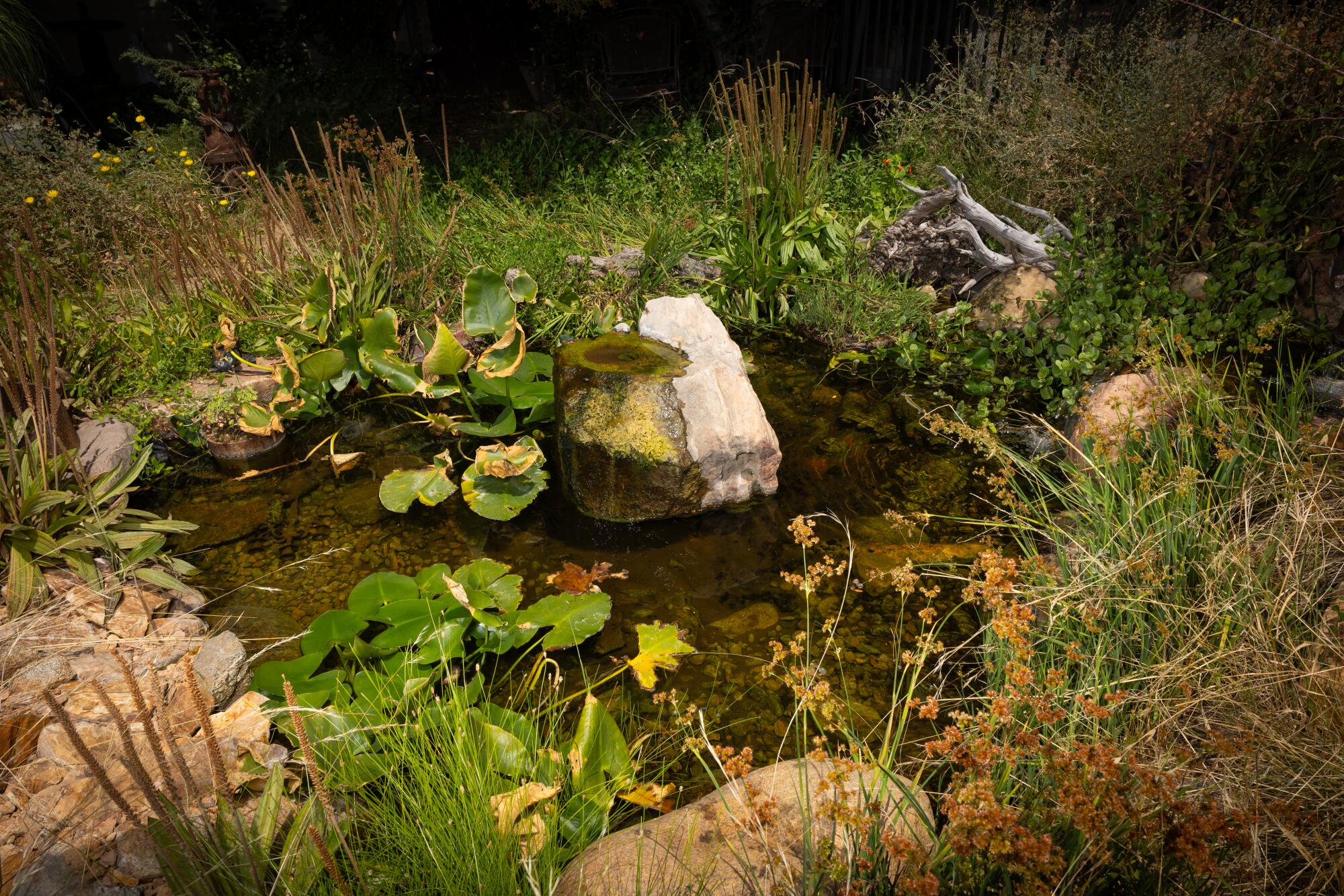
Kory Odell built this small pond with help from his husband, Chris Elwell, in their Mid-Wilshire yard to create a habitat of native plants, water features and salvaged rubble dubbed Casa Apocalyptica.
(Christina House / Los Angeles Times)
At night, their ponds are alive with frog song, and they do whatever they can to nurture their croakers. That’s why Elwell, Odell and Chaves don’t keep fish in their ponds; they don’t want hungry fish to gobble up frog eggs or tiny tadpoles.
Elwell and Odell have a recirculating waterfall in their pond that provides enough movement to deter mosquitoes. Chaves uses mosquito dunks, beige, doughnut-shaped floats that kill mosquito larvae but are nontoxic to other creatures.
In his small water gardens, however, Chaves prefers to use Japanese rice fish, which come in several colors, grow about an inch long and tend to leave beneficial insects alone, unlike mosquito fish, which eat almost anything in their path, he said. Tiny snails and shrimp known as daphnia eat algae and provide additional food for the fish.
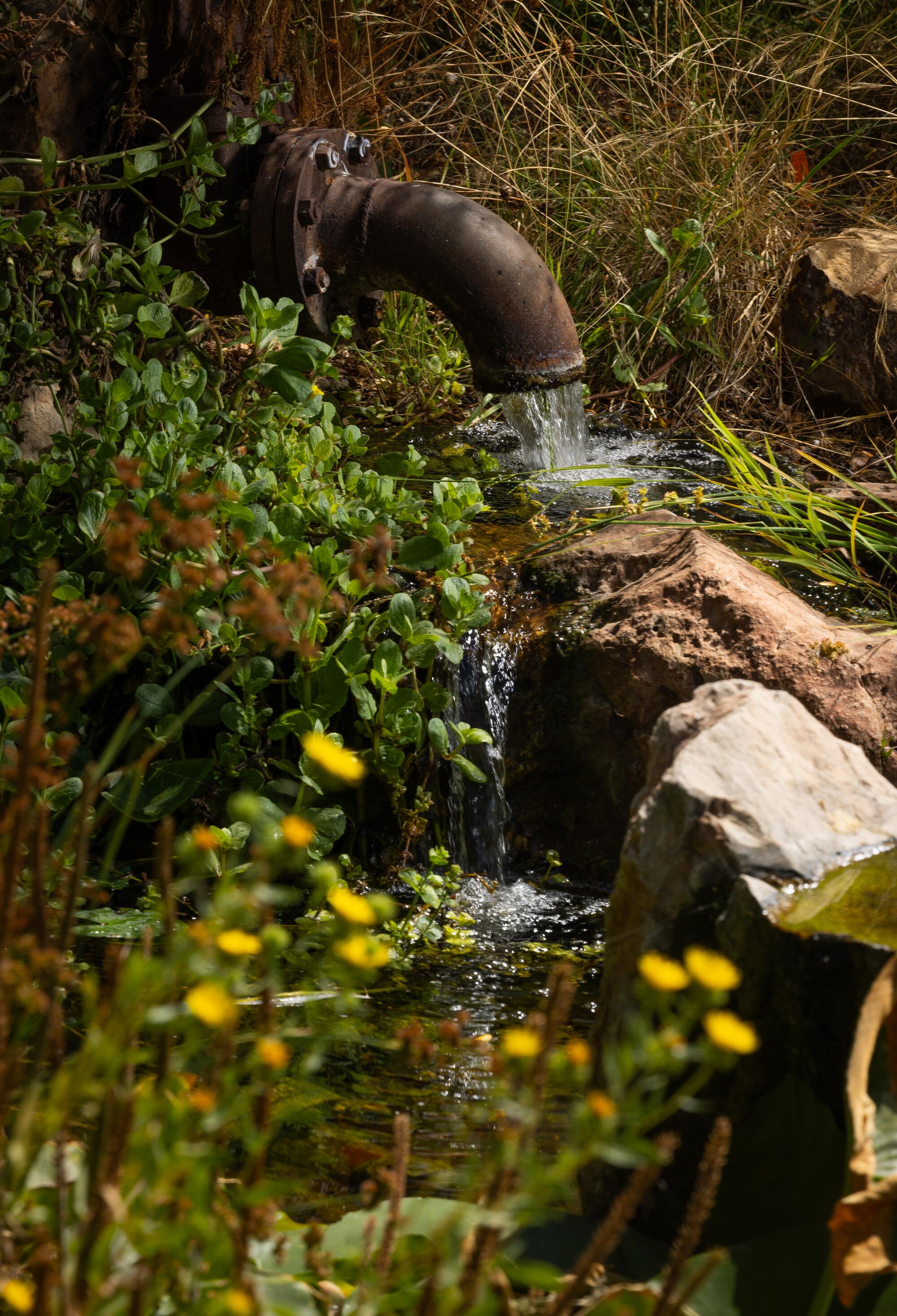
A rusty repurposed industrial-sized spigot spills recirculating water into a small waterfall and pond at Casa Apocalyptica.
(Christina House / Los Angeles Times)
He has several other tips:
- The best pots are wider than they are deep to give plants more surface space, but the best depth is 18 inches, to give the fish room to dive into cooler waters and hide. If you want to use deeper pots, you’ll need a brick or shelf at the bottom so plants that like their roots submerged, like water lilies, can still reach the surface.
- Unglazed pots like terracotta should be sealed on the inside with a rubber-based paint like Flex Seal, which the company says is safe around plants and animals once it’s fully cured (after at least 24 hours). The sealant is expensive — about $35 a quart — but Chaves has covered three large clay pots with that amount. He uses Gorilla epoxy stick putty to fill the container holes.
- Some water plants like to have their roots totally submerged, but you can’t grow them in ordinary potting soil, which will just float away. Some people use special potting soils for pond plants or pea gravel, but Chaves prefers a fragrance-free clay kitty litter, which is less expensive and heavy enough to stay in place in the water.
- Water should be dechlorinated before you add fish, by using special tablets or letting the water sit in an open bucket for at least 24 hours so the chlorine can dissipate. Chaves also recommends adding the plants and snails a week or two before adding a few fish, to build up a culture of bacteria that can consume the poop the fish will produce. Otherwise the fish could die from ammonia poisoning.
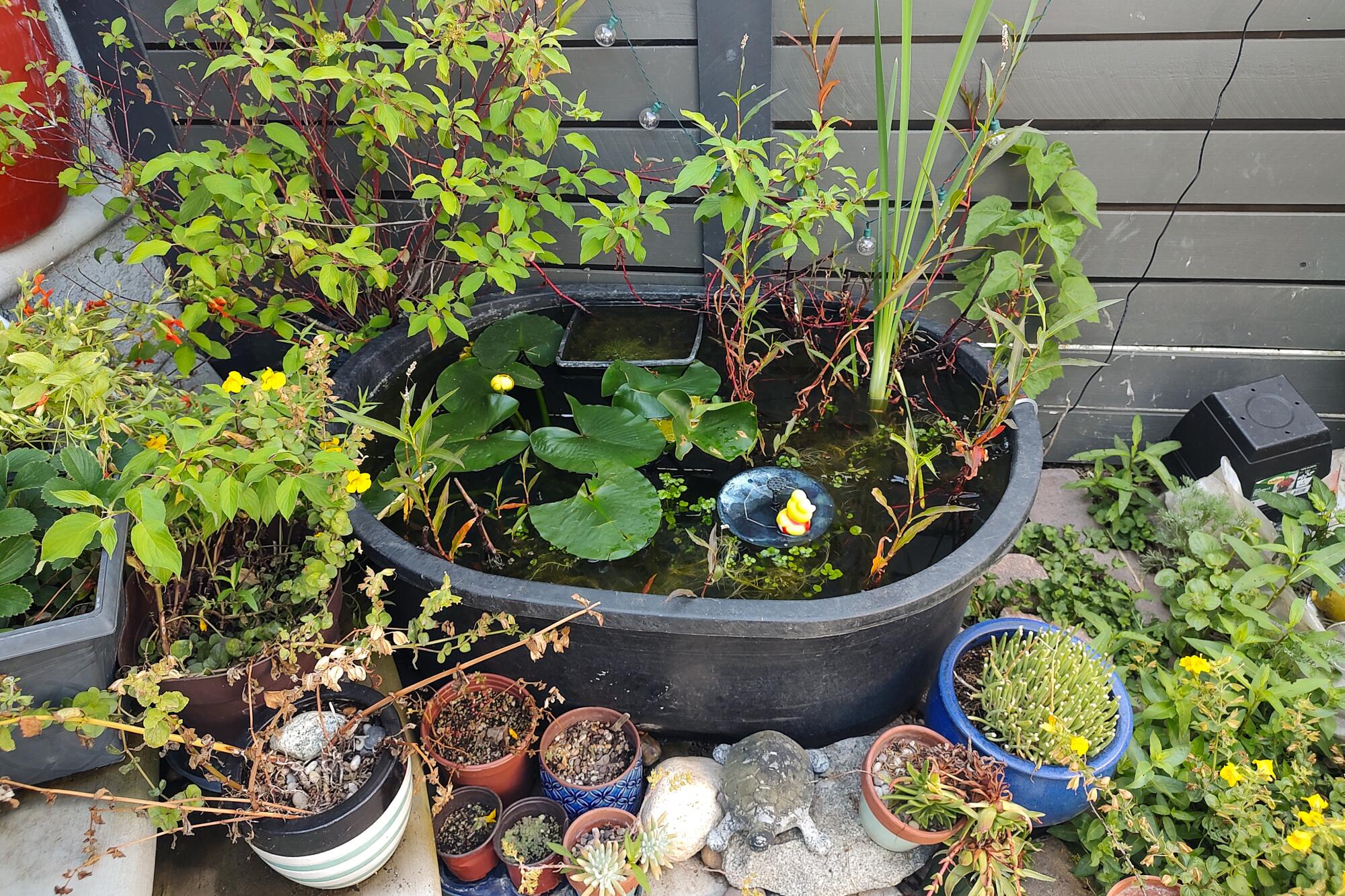
Jesse Chang’s oval tub pond stands about 18 inches above the ground in his Monterey Park yard, surrounded by tall, California-native water plants to attract pollinators.
(Jesse Chang)
Ponds can be above ground
Jesse Chang, executive director of Catalyst San Gabriel Valley, is another fan of experimentation, along with heavy research. He credits “The Tub Pond Handbook” by Ted Coletti and the “California Native Water Plants and Life” Facebook group with helping him maintain the 85-gallon aboveground “tub pond” he installed outside his Monterey Park home.
Chang bought his roughly 3-by-4-foot oval tub secondhand for under $100 (a similar tub costs $133 new on DK Hardware) at the handbook’s recommendation because he wanted to discourage raccoons. Those animals can be pretty destructive, moving around rocks and plants in search of food — both Chaves and Casa Apocalyptica have had to contend with prying paws — but it’s harder for them to mess with a pond that stands 18 inches above the ground, Chang said.
Instead of lining his pond with rocks, he’s surrounded the tub with water-loving potted plants like monkey flowers and rushes to draw in pollinators and soften the hard edges.
He’s using plain old minnows in his pond for now to deter mosquitoes because he was worried that dragonfly larvae would eat his tiny fish. Minnows are much less expensive than rice fish — “about 20 cents versus $4” — so he started with minnows in case his investment got eaten. He’s lost a few, but most are looking healthier than the ones in the store.
Taking the plunge
These water gardens were lovely and relatively simple, but I still wanted the soothing sound of burbling water.
So summoning up my courage, I followed Elwell’s advice and began scouring YouTube for easy DIY fountains. That’s how I found a cheerful tutorial by permaculture landscape designer Daryl Lindsey of Yardfarmer in Salt Lake City with a title right up my alley: “Make This EASY, FAST, DIY Water Feature for Local Wildlife!”
Astonishingly, I did, although it wasn’t as easy or fast as I had hoped. It took me most of a weekend, multiple trips for things I forgot and a hard lesson in pump mechanics, but by Sunday evening, my little turquoise fountain was ready to turn on.
Following Lindsey’s advice, I rummaged through my collection of containers and found a large ceramic pot without a drain hole to use as my reservoir — saving myself at least $50 to $100 — and purchased the following:
- A submersible recirculating pump with 6.5 feet of half-inch tubing and several connectors ($30 from Amazon).
- A tall black pot to fit upside down in my reservoir, to cover the pump and give my water feature some extra height ($20 on sale at Lowe’s).
- Three black bricks to give the internal pot even more height (about $4 at Lowe’s).
- Three glazed plant saucers to stack above the black pot and hold pretty rocks I’ve been collecting for years. Deciding what to use took most of the day. ($47 from Green Thumb Ventura).
- A half-inch titanium drill bit to drill holes in my saucers ($15 at Lowe’s).
- A tube of silicone adhesive and a couple of half-inch clamps to make sure the hose stayed attached ($8 and $5, respectively, at Lowe’s).
The total? About $130, plus a day of wandering around garden centers fretting about what saucers and pots to choose and how to stack them.
The hardest part was drilling holes in the middle of the glazed saucers. You must drill slowly to avoid cracking or chipping the ceramic plates and spray the surface frequently with water so it doesn’t get too hot.
When the holes were drilled and the fountain was assembled, it weighed a ton, even without water. (Pro tip: Do your assembling where you plan to keep the fountain, or be sure you have a dolly or Hercules to move it.)
Finally, with the reservoir filled with water, I plugged in the pump and stood over my creation with bated breath. I expected to see a gently gurgling fountain. I had purchased a submersible recirculating water pump that moves 880 gallons per hour — I reasoned that bigger was better, right?
Wrong. After a few seconds I was hit full force by an 8-foot-tall geyser, and there wasn’t any lever on the pump that reduced the force. In desperation I piled some bigger rocks on top of the spout, which forced the water into submission. I’m hoping the rocks will keep Old Faithful under control until I can purchase a pump that only moves about 100 gallons per hour.
At long last, however, I went to sleep listening to the soothing babble of running water outside my bedroom window. And I dreamed about using that 880-gallon-per-hour pump to create a little waterfall and pond in my front yard.


Since leaving office, former Vice President Mike Pence founded the policy and advocacy organization Advancing American Freedom.
Drew Angerer/Getty Images
hide caption
toggle caption
Drew Angerer/Getty Images

Since leaving office, former Vice President Mike Pence founded the policy and advocacy organization Advancing American Freedom.
Drew Angerer/Getty Images
Former Vice President Mike Pence played a key role in bringing President Trump to power in 2016. By putting his name on the Republican ticket, he helped reassure the Republican establishment and evangelical voters who were wary of Trump’s brash brand of populism.
Pence’s departure from Trump’s leadership of the Republican party began when Trump called on Pence to refuse to certify the results of the 2020 election — pressure Pence rejected.
“For four years, we had a close working relationship. It did not end well,” Pence wrote in his memoir So Help Me God, which was released in 2022.
In the years since leaving office, Pence has been advocating for an ideological restructure of the Republican party, and founded the policy and advocacy organization Advancing American Freedom. Pence builds on the theme of reimagining the Republican party in his new book What Conservatives Want, which provides a critique of the second Trump administration and what he terms the “populist right.”
In an interview with Morning Edition, Pence detailed to NPR’s Steve Inskeep his critique of the second Trump administration, shared his perspective on civil rights legislation and challenged Trump’s tariffs and other interventions in the economy.
Listen to the full interview by clicking on the blue play button above; and read highlights from the conversation below.
‘The populist right’ does not represent conservative beliefs
Pence believes that Trump has embraced “the populist right” over traditional conservatives in the Republican party.
The sale of economic American company U.S. Steel to Nippon Steel in Japan exemplifies this shift, Pence said.
In his first term, President Trump opposed the sale. But in his second term, he approved the sale and took a golden share — a class of shares in which a government can own a very small percentage of the company but has outsized voting rights.
Pence said that he was taken aback by Trump’s decision to take a golden share.
Free trade is essential to American conservatism
Pence takes umbrage with his former boss’ tariff-laden economic policy.
Pence said it violates conservatism’s bedrock belief in the power of free trade, and Trump has gone about granting exceptions to tariffs in an unfair way.
Granting waivers to large corporations from certain tariffs is “one of the lesser reported aspects of the tariff regime that’s been imposed by the administration,” Pence added.
Trump and Pence ran in 2020 on a mission to “drain the swamp,” rooting out government corruption and wasteful spending. However, Pence said Trump appears to have shifted from those goals.
“There’s maybe nothing more swampy than the battle over getting tariff waivers for big business,” Pence said.
Women’s rights on the right
There is a debate among the ultraconservative right about the role of women in civic life.
The concept of “household voting,” has become a familiar talking point for ultra-right-wing communities online. Supporters of “household voting” advocate that every American household should get one vote, the vote being that of the husband’s. This concept has been promoted by figures such as Abby Johnson, a prominent anti-abortion activist who spoke at the 2020 Republican National Convention. When asked about whether he supported household voting, Pence said he is not aligned
“It’s one person, one vote in this country. And people have bled and died for that principle throughout the years of our history,” Pence said.
He added that American families don’t need to be propped up by government programs to boost childbirth. “What American families need is an application of the kind of principles that will create higher wages, more opportunities, more jobs,” Pence said.
Should conservatives stand for civil rights?
Pence said he was an admirer of senator and one-time presidential candidate Barry Goldwater.
Notably, Goldwater voted against the Civil Rights Act of 1964.
“Should conservatives stand for civil rights?” asked Inskeep.
Pence responded that civil rights are important to conservatives, but that equality of opportunity is what legislation ought to enshrine, not equality of outcome.
Pence added that he stood by the Supreme Court’s decision to ban partisan gerrymandering on the basis of race, rendering ineffective a key provision of the Voting Rights Act of 1965.


Milly Alcock in Supergirl.
Warner Bros. Pictures
hide caption
toggle caption
Warner Bros. Pictures
Hollywood’s newest Supergirl is kind of a dirtbag — in the good way. Fearless and grumpy, Supergirl (Milly Alcock) sets out on a quest to support a new pal’s revenge journey and to make a point that should be clear by now: Never mess with a lady’s dog. Also featuring David Corenswet and Jason Momoa, is Supergirl a worthy follow up to Superman?
If you want more DC superhero action, check out these episodes:
‘Superman’ takes off and nails the landing
‘The Batman’ puts the emo in emote
Connect with Pop Culture Happy Hour:
Letterboxd / Facebook
Our weekly newsletter
Support Pop Culture Happy Hour+
-

 Los Angeles, Ca59 minutes ago
Man found guilty of sex trafficking victim along L.A.’s Figueroa Corridor
-

 Detroit, MI1 hour ago
No. 23 overall pick in the 2026 NHL draft | Detroit Red Wings
-

 San Francisco, CA1 hour ago
San Francisco Pride kicks off with rainbow lasers, ValQueeries celebrate at Valkyries Pride Night
-

 Dallas, TX2 hours ago
How to buy Egypt vs. Australia World Cup soccer tickets
-

 Miami, FL2 hours ago
Helping Venezuela: Miami search-and-rescue team prepares to deploy
-

 Boston, MA2 hours ago
How to buy Paraguay vs. Germany 2026 World Cup tickets in Boston
-

 Denver, CO2 hours ago
Denver Broncos Roster Breakdown: Center—The Depth Question
-

 Seattle, WA2 hours ago
Iran-Egypt: Seattle World Cup Pride match updates

