Sign up for the Today newsletter
Get everything you need to know to start your day, delivered right to your inbox every morning.

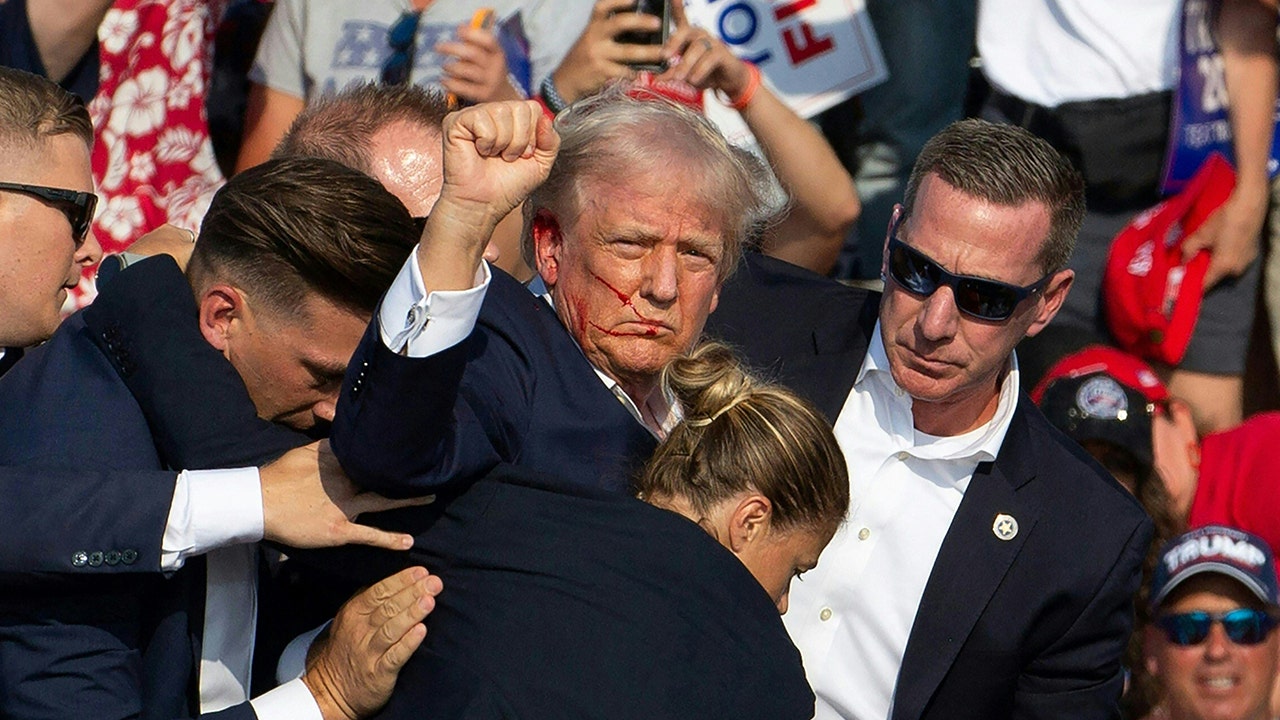
The U.S. Secret Service on Friday published a summary of the agency’s independent investigation into the July 13 assassination attempt against former President Donald Trump, which concluded that certain agents’ actions and behaviors may warrant disciplinary action.
The agency’s investigation, called a Mission Assurance Inquiry, “identified several instances of behaviors and acts by multiple employees that warrant review for corrective counseling and, potentially, disciplinary action,” the USSS synopsis says.
“All Secret Service employees are held to a high standard of conduct in the performance of their duties when providing protection to those that entrust us with their well-being and the safety of their families,” the document states.
In particular, the internal review, which will be shared with Congress, found communications deficiencies, an unclear understanding of duties among some personnel working for USSS, and certain planning failures leading up to and during Trump’s campaign rally in Butler, Pennsylvania, where gunman Thomas Crooks shot Trump, the bullet skimming the former president’s ear.
SECRET SERVICE KNEW AIRSPACE PROTECTION WOULD END WITH FORMER PRESIDENT ONSTAGE
Former President Donald Trump was shot during a campaign rally in Butler, Pennsylvania on July 13, 2024. (Rebecca Droke/AFP via Getty Images)
Crooks, 20, killed rally attendee Corey Comperatore and critically wounded two other attendees, David Dutch and James Copenhaver, in his attempt to kill Trump.
The report acknowledged that some of the Homeland Security Investigations (HSI) personnel tapped with assisting USSS in its security procedures that day “conveyed the belief that they were inadequately prepared due to insufficient instruction,” while others did feel prepared.
“July 13, 2024, was a failure for the Secret Service.”
USSS also found that the agency “did not have adequate command and control over the radio communications for the rally.”
WATCH: VIDEO SHOWS TRUMP SHOOTING VICTIM’S POV
Certain agents failed to “adequately relay” critical information through the radio and “instead relayed critical pieces of information conveyed by law enforcement partners via telephone and text message to some, but not all, Secret Service personnel at the site.”
Additionally, certain agents failed to “command the appropriate dispatch of personnel” to the area of the American Glass Research (AGR) building, where Crooks positioned himself on the roof and fired eight rounds, “after learning about a suspicious individual with a range finder” approximately one hour before shots rang out.
SECRET SERVICE, FBI RESPOND TO TRUMP RALLY VIDEO SHOWING FIGURE ON ROOF MINUTES BEFORE GUNFIRE
Thomas Matthew Crooks crawling on a roof moments before he attempted to assassinate former President Donald Trump. (DJ Laughery. Inset: Obtained by Fox News Digital)
Two state and local law enforcement agencies with prior experience working with USSS determined that Secret Service “planning for the Butler rally lacked detail, cohesion, and clear understanding of who was in charge, all of which contributed to the overall lack of coordination.”
The agency also noted in its report that the rally attracted a large crowd of about 15,000 attendees in 90-degree weather, contributing to a reported 251 requests for medical assistance that day at the rally.
Former President Donald Trump raises his fist in the air defiantly after an attempted assassination left him with a wounded ear in Butler, Pennsylvania. (Photo by Jeff Swensen/Getty Images)
USSS also pointed to a “lack of coordination” with Trump campaign staff that “caused a higher-than-expected proportion of security personnel to be diverted into assisting with medical responses.”
The investigation summary concluded that the July 13 rally was a “failure for the Secret Service” that warranted “several operational, policy, and organizational changes, some because of the findings and recommendations of the Mission Assurance Inquiry, and others done proactively in the wake of the July 13 incident.”
SECRET SERVICE TURNED DOWN LOCAL DRONE ‘REPEATEDLY’ AHEAD OF TRUMP JULY 13 RALLY: WHISTLEBLOWER
Officers surround Thomas Crooks on the AGR roof after countersnipers killed him. (Butler Twp Police Dept.)
The changes include: providing the “highest level” of USSS protection to Trump and Vice President Kamala Harris that is comparable “to the level of the president”; increased staffing of agents assigned to Trump’s detail; expanded use of unmanned aerial systems and counter unmanned aerial systems; radio fixes, including deployed personnel assisting with the development of radio networks; agreements with federal partners to secure more law enforcement “personnel and assets”; expanded USSS tactical coverage; expanded use of ballistic countermeasures at Secret Service-protected campaign sites; expanded use of technical countermeasures to enhance Trump’s security; and “organizational changes to better align enabling technologies … to give the Secret Service a technical advantage over its adversaries.”
“The Secret Service will continue to make further changes and implement viable recommendations that it receives from various entities. The agency is devoted to the mission entrusted to us and will work vigilantly to restore the trust bestowed upon us by the people we protect, the Congress, and the American people,” the Mission Assurance Inquiry report concluded.
Congress and other oversight committees continue to investigate the July 13 assassination attempt.
Read the full article from Here


On March 2, Spurwink will join community partners for a special viewing of Building Hope: Ending Homelessness in Maine at the University of Southern Maine’s McGoldrick Hall.
Directed by Richard Kane and produced by Melody Lewis-Kane, the film shines a compassionate light on the realities of Maine’s homelessness crisis. Through deeply personal stories, Building Hope explores the challenges faced by unhoused individuals and families, while highlighting the hope that emerges when communities come together to create solutions. It’s been praised for its honesty, dignity, and inspiring message: change is possible when we work together.
Following the screening, a panel of local leaders and advocates will discuss the film and the ongoing effort in Maine to end homelessness. Panelists will include Katherine Rodney, Director of Spurwink’s Living Room Crisis Center; Cullen Ryan, Chief Strategic Officer at 3Rivers; Donna Wampole, Assistant Professor of Social Work at USM; and Preble Street staff. Catherine Ryder, Spurwink’s Senior Director of Strategic Initiatives, will bring her expertise in trauma-informed care and community collaboration to the panel as the moderator.
This event is free and open to the public.
McGoldrick Center, USM Portland campus
05:00 PM – 07:30 PM on Mon, 2 Mar 2026

EASTON, Mass. (WBZ) — Police body camera video shows an Easton, Massachusetts, officer rescuing a 78-year-old Raynham man from a burning car on Friday morning.
A Mack dump truck was experiencing problems on the side of Turnpike Street just after 2 a.m. when a Ford pickup truck struck the back of it, according to police.
The pickup truck then became stuck under the dump truck, trapping the driver, Francis Leverone, inside. A Toyota Camry then hit the back of the pickup truck and caught fire, police said.
Easton police officer Dean Soucie arrived at the crash and saw that the two vehicles were on fire. Video shows Soucie rushing over before breaking the driver’s side window and then, with the help of the two witnesses, freeing Leverone from the pickup truck. Soucie said he was confused but conscious.
“As I reached inside the vehicle, one of the passersby — he actually jumped into the cab of the truck, and he helped me free the individual,” Soucie said.
They then carried the driver to safety.
Leverone was taken to a nearby hospital before being transferred to a Boston hospital. He received serious but non-life-threatening injuries.
No one else was injured in the crash.
Dee Leverone told WBZ her husband is doing OK. “I’m just thankful for the people that got him out,” she said. “Very thankful.”
After watching the police body-cam video on the news she said, “I was shocked, I was like ‘Oh my God!’ I just couldn’t believe it. His truck is like melted.”
She says she realized that something was wrong last night when her husband never made it home from work.
“I kept trying to call him and call him, and I finally got a hold of him at like 4:30 a.m., and he was at (Good Samaritan Hospital) and he told me he’s gotten in an accident,” Dee said.
She says he’s recovering at the Boston Medical Center and being treated for a dislocated hip.
“He’s a trooper,” Dee said. “He’s a strong man — and you know he’s 78, but you know he’s a toughie. He definitely is a toughie.”
Soucie commended the help of the two witnesses and said that before he arrived at the crash, they had attempted to put out the flames with a fire extinguisher and removed a gasoline tank from the pickup truck before it could ignite.
“They jumped into action like it was nothing,” Soucie said. “Those two individuals were absolutely awesome.”
Easton Police Chief Keith Boone said that he is “extremely proud” of Soucie and the witnesses.
“He saved a life last night,” Chief Boone said. “He is an exemplary police officer and this is just one example. I think he’s a hero.”
Turnpike Street was closed for several hours following the crash. Easton Police are investigating.
=htmlentities(get_the_title())?>%0D%0A%0D%0A=get_permalink()?>%0D%0A%0D%0A=htmlentities(‘For more stories like this one, be sure to visit https://www.eastidahonews.com/ for all of the latest news, community events and more.’)?>&subject=Check%20out%20this%20story%20from%20EastIdahoNews” class=”fa-stack jDialog”>

Local News
A new photo has been released of the victim in a nearly 30-year-long unsolved murder case, in the hope of finding any new potential witnesses in the cold case, New Hampshire officials said.
“Our family wants to know what happened, who did this and why,” the family of Rosalie Miller said in a press release. “We miss her and want to give her peace.”
Miller was last seen on December 8, 1996 at her apartment in Manchester. At the time of her disappearance, Miller had plans on meeting friends in the Auburn, New Hampshire area, officials said.
Her body was found on January 20, 1997 in a partially wooded spot on a residential lot along the Londonderry Turnpike in Auburn, officials said in the release.
The autopsy report declared Miller’s death a homicide by asphyxiation due to ligature strangulation, N.H. officials wrote.
As part of a new effort to garner public help with the case, an “uncirculated” photo of Miller, 36, is being distributed “in hopes it may jog the memory of someone who saw or spoke with her in the winter of 1996,” Attorney General John M. Formella and New Hampshire State Police Colonel Mark B. Hall announced on behalf of the New Hampshire Cold Case Unit in a joint press release.
Investigators are especially hoping to talk to anyone who was in contact with Miller in December of 1996 or anyone “who may have seen her in the vicinity of the Londonderry Turnpike in Auburn during that time,” officials said in the release.
“We are releasing this new photograph today because we believe someone out there has information, perhaps a detail they thought was insignificant at the time, that could be the key to solving this case and bringing justice for Rosalie and those who loved her,” Senior Assistant Attorney General R. Christopher Knowles, New Hampshire Cold Case Unit Chief said in the release.
The New Hampshire Cold Case Unit encourages anyone with any amount of information to contact the group at [email protected] or (603) 271-2663.
Get everything you need to know to start your day, delivered right to your inbox every morning.





Exclusive: DeepSeek withholds latest AI model from US chipmakers including Nvidia, sources say


Mother and daughter injured in Taunton house explosion


10 acres charred, 5 injured in Thornton grass fire, evacuation orders lifted


Wildfire near Gum Swamp Road in Livingston Parish now under control; more than 200 acres burned


YouTube TV billing scam emails are hitting inboxes


OpenAI didn’t contact police despite employees flagging mass shooter’s concerning chatbot interactions: REPORT


Stellantis is in a crisis of its own making


World reacts as US top court limits Trump’s tariff powers