Rhode Island
URI to build new dormitories to boost on-campus housing by 1,100 beds – The Boston Globe


PROVIDENCE — Plans to build new dormitories that will provide more than 1,100 additional beds at the University of Rhode Island are moving forward after school officials selected a developer as part of what they described as a new, public-private partnership.
The school picked Providence-based Gilbane Development Company for the project on its Kingston Campus in South Kingstown, R.I., which, when complete, will house undergraduate and graduate students, URI said in a statement.
Construction is anticipated to begin in fall 2025, after a feasibility study is completed.
Gilbane was selected following a request-for-information and request-for-proposal process “that drew interest from several development companies,” school officials said.
Under the partnership, the university will lease land to the development and building company, which in turn will “plan, finance, design, construct, and operate the new residence halls,” school officials said.
“This public-private partnership offers many benefits to the University and our students,” Abby Benson, URI’s vice president for administration and finance, said in a statement.
“The partnership enables us to address the growing demand for on-campus housing expressed by URI students. It also enables us to develop new housing on an accelerated timeline while ensuring fiscal responsibility.”
The plan currently calls for several new residential buildings, outfitted with apartment-style suites, according to URI. Students are expected to move in starting in the 2027 fall semester.
The plan arrives as Rhode Island and New England face a housing crisis, with rents and sales prices driven up by a lack of inventory amid high demand.
The neighboring town of Narragansett has sought to prohibit more than three college students from living in any non-owner-occupied dwelling unit in town. The provision doesn’t specifically target URI students, but the university has a significant off-campus presence in Narragansett.
Increasing on-campus housing is part of URI’s 10-year strategic plan, or “Focus URI,” that was put in place last year.
When the latest project is completed, URI will have added more than 2,000 on-campus beds since 2012, school officials said. Most recently, the school opened the 500-bed Brookside Hall in 2020 and Hillside Hall, which houses more than 400 beds, in 2012, they said.
URI has more than 14,000 undergraduates and more than 2,000 graduate students enrolled for the 2024-2025 school year.
“We know many of our students want to live on campus and value the many benefits of on-campus living, including convenient access to campus resources and amenities,” Ellen Reynolds, URI’s vice president for student affairs, said in a statement. “We are excited to move these plans forward and to offer additional and enhanced on-campus living opportunities for our students.”
Follow Christopher Gavin on X @chris_m_gavin and on Bluesky @chrisgavin.bsky.social.
Christopher Gavin can be reached at christopher.gavin@globe.com.



Governor’s executive order targets Rhode Island health care costs
Rhode Island Gov. Dan McKee takes action to lower health care costs and improve affordability through new executive order.
The doctor is not in, and there’s not one on the way either. Many Rhode Islanders are well aware that the state is facing a harrowing shortage of primary care physicians. As native Rhode Islanders and physicians invested in quality accessible primary care for our community, we are dedicated to working towards policies to support our state.
A medical school at the University of Rhode Island is not the solution to solve the primary care crisis. A medical school at URI would not provide a timely solution, would likely not achieve the target outcome of increasing the number of primary care physicians in the state, and would likely not address the underlying issue of getting doctors to stay. Instead, resources should be allocated now to supporting primary care in ways that would make sustainable change.
Lack of access to primary care is hurting patients now. A medical school at URI would not be a short- or long-term solution. In addition to the time needed to engineer an accredited medical school, it takes seven years to produce an inexperienced primary care physician. Once trained, there still must be an incentive to stay in Rhode Island. Patients do not have access to necessary care for acute and chronic conditions. The burden on our health care system, impacting ER wait times and hospital capacity, impacts everyone. We cannot afford to wait another decade for a solution.
More physicians does not equal more physicians in primary care or in Rhode Island. If the aim is to produce more physicians from URI’s medical school, this will certainly occur, but we should not delude ourselves into believing it will fix primary care. It’s not due to lack of opportunities. In 2019, the National Resident Matching Program offered a record number of primary care positions, yet the percentage filled by students graduating from MD-granting medical schools in the United States was a new low. Of 8,116 internal medical positions that were offered, just 41.5% were filled by U.S. students; most residency spots went to foreign-trained and U.S.-trained osteopathic physicians.
As medical schools across the country look to debt reduction as a means of encouraging students to enter primary care specialties, their goals have fallen far short. In 2018, The New York University School of Medicine offered full-tuition scholarships to every medical student, regardless of merit or need. In 2024, only 14% of NYU’s graduating seniors entered primary care, lower than the national average of 30%.
There must be an incentive to stay in Rhode Island (or at least not a disadvantage). Our efforts must shift to recruiting and maintaining physicians in primary care. Inequitable reimbursement from commercial insurers between Rhode Island and neighboring states (leading to significantly lower salaries than if you lived here and traveled to Attleboro to care for patients), the lack of loan repayment(average medical student debt is $250,000, forcing the choice between meaning and money), and the ongoing administrative burdens are amongst the drivers away from primary care. Rhode Island needs to get on par with surrounding states to prevent physicians from going elsewhere.
The motivations behind opening a medical school are well intended in terms of wanting to increase the number of primary care providers by enabling local talent to train close to home. Training more people in Rhode Island will not keep them here; it will invest significant resources without addressing the root of the issue. Until there are comparable salaries between Rhode Island and our neighbors, until loan repayment is improved and the administrative burdens are reduced, primary care in the state will forever be fighting an uphill battle. Both providers and patients suffer the consequences.
Dr. Kelly McGarry is the director of the General Internal Medicine Residency at Rhode Island Hospital. Dr. Maria Iannotti is a first-year resident, a Rhode Islander intent on practicing primary care in Rhode Island.

Rhode Island court tosses Justin Chandler conviction
Rhode Island Supreme Court overturns Justin Chandler’s murder conviction due to prejudicial texts, orders new trial.
The trucking industry will have to pay its own legal bills for the unsuccessful eight-year-old lawsuit it brought to stop Rhode Island’s truck toll system, a federal judge ruled Friday, March 27.
The American Trucking Associations was seeking $21 million in attorneys fees and other costs from the state, but a decision from U.S. District Judge John McConnell Jr. says the truckers lost the case and will have to pick up the tab.
The state had previously filed a counterclaim for reimbursement of $9 million in legal bills, but an earlier recommendation from U.S. Magistrate Judge Patricia Sullivan had already thrown cold water on that possibility.
McConnell ordered American Trucking Associations to pay Rhode Island $199,281, a tiny fraction of the amount the state spent defending the network of tolls on tractor trailers.
Settling the lawyer tab may finally bring an end to a court fight that bounced back and forth through the federal judiciary since the toll system launched and the truckers brought suit in 2018.
As it stands, the state’s truck toll network has been mothballed since 2022 when a since-overturned judge’s ruling temporarily ruled it unconstitutional.
The Rhode Island Department of Transportation said it hopes to relaunch the tolls around March 2027.
The court costs fight hinged on which side could claim legal “prevailing party” status as the winner of the lawsuit.
The trucking industry claimed that it had won because the First Circuit Court of Appeals ruled an in-state trucker discount mechanism, known as caps, in the original truck toll system was unconstitutional.
But Rhode Island argued that it is the winner because the appeals court had ruled that the larger system and broad concept of truck tolls is constitutional and can relaunch with the discounts stripped out.
“The Court determines that ATA has vastly overstated the benefit, if any, that they have received from the ultimate resolution of their challenge to the RhodeWorks program,” McConnell wrote.
The truckers “failed to obtain any practical benefit from the First Circuit’s severance of the [in-state toll] caps,” he went on. “Specifically, the evidence from this dispute confirmed that the lack of daily caps will result in ATA paying a higher amount in daily tolls and that it does not receive any tangible financial benefit from their elimination.”
In her December analysis of the legal fees question, Sullivan had concluded that the Trucking Associations’ outside counsel had overbilled and overstaffed the case.
But she had recommended that the industry be reimbursed $2.7 million for its bills, while McConnell’s ruling gives it nothing.

Video: Iran to Allow More Oil Ships Through Strait of Hormuz, Trump Says

What to Know about NASA’s Artemis II Moon Mission

The iconic South African theater that took on apartheid

All the latest in AI ‘music’

US allows Russian oil tanker to reach Cuba amid blockade as Trump says island ‘has to survive’

Florida High School Football Rankings: Top 25 teams – Oct. 21

How old is Bo Nix? What to know about Oregon quarterback ahead of 2024 NFL Draft

Cleary's 21 help Le Moyne down Central Connecticut State 69-64 in OT

99th annual Pony Swim held in Virginia

Indiana Members Credit Union announced as new anchor tenant at Bottleworks District
Video: Iran to Allow More Oil Ships Through Strait of Hormuz, Trump Says

Dem senator warns deportation could let Virginia woman’s illegal immigrant killer ‘escape accountability’

Newsletter: G7 ministers to hold talks on war’s economic fallout
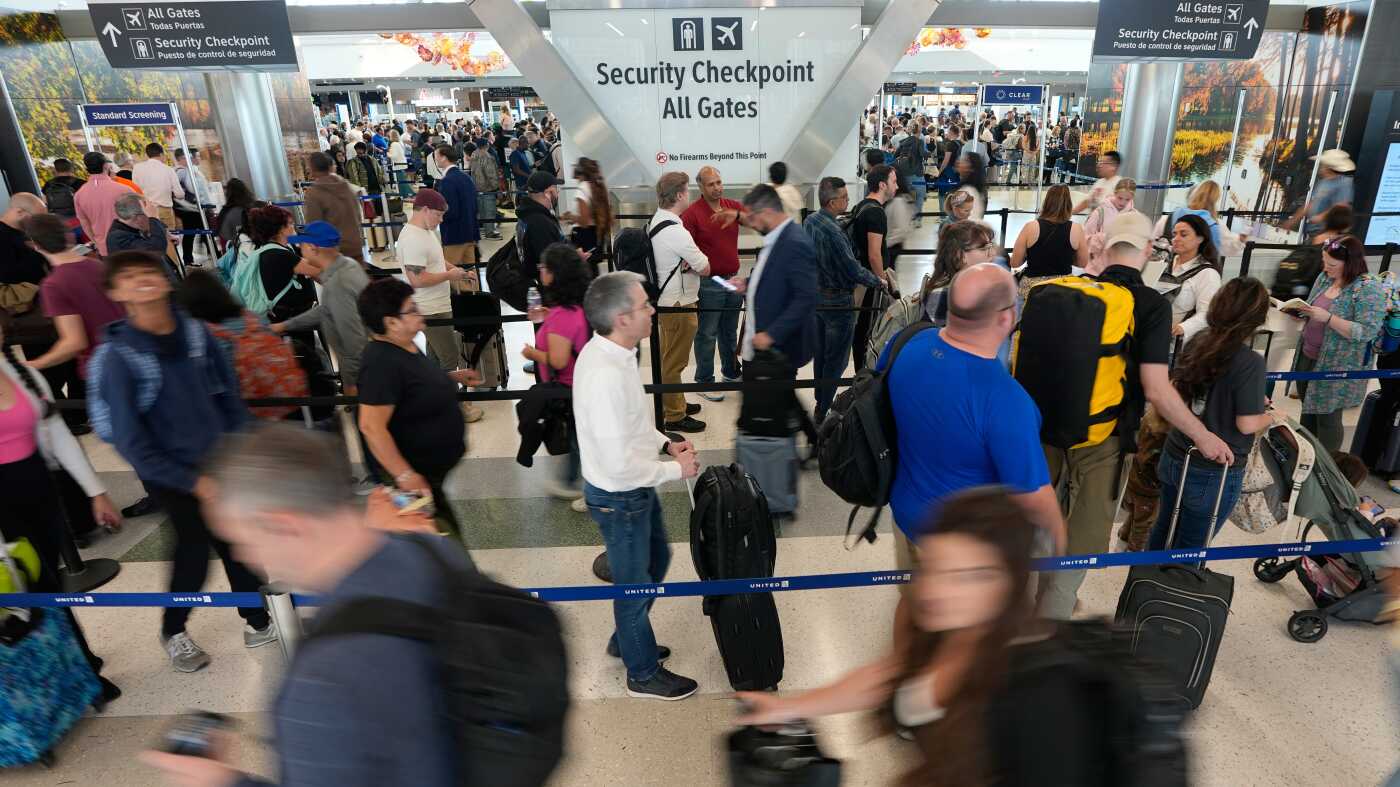
ICE officers could remain at airports after TSA workers are paid

Scathing report claims nation’s oldest labor union ‘betrayed’ MAGA members through ‘shocking’ spending
-

 Sports1 week ago
IOC addresses execution of 19-year-old Iranian wrestler Saleh Mohammadi
-

 New Mexico1 week ago
Clovis shooting leaves one dead, four injured
-

 Miami, FL4 days ago
Jannik Sinner’s Girlfriend Laila Hasanovic Stuns in Ab-Revealing Post Amid Miami Open
-

 Tennessee6 days ago
Tennessee Police Investigating Alleged Assault Involving ‘Reacher’ Star Alan Ritchson
-

 Minneapolis, MN4 days ago
Boy who shielded classmate during school shooting receives Medal of Honor
-

 Politics1 week ago
Schumer gambit fails as DHS shutdown hits 36 days and airport lines grow
-

 Science1 week ago
Record Heat Meets a Major Snow Drought Across the West
-

 Technology1 week ago
YouTube job scam text: How to spot it fast