Rhode Island
For survivors, Rhode Island clergy abuse report brings vindication and renewed demands


PROVIDENCE, R.I. — The sound of the school nurse’s office door opening. Light reflecting off a stained-glass window. Tearful outbursts and fear of getting on the school bus.
For many survivors of clergy abuse, memories like these linger for decades.
A report released this week by the Rhode Island attorney general detailed decades of abuse inside the state’s Catholic Diocese of Providence, identifying 75 clergy members who sexually abused more than 300 children since 1950. The investigation drew on thousands of church records and years of interviews with victims and witnesses. Officials said the true number of victims is likely much higher.
But survivors say the numbers capture only part of the story. Behind each case, they say, are childhood fragments that resurface years later — along with the long struggle to understand what happened.
Many survivors spent decades searching for answers and pressing authorities to investigate. Now some are speaking publicly about what they endured and what they hope will come next: broader support for survivors, help from the church to pay for therapy and counseling, and accountability from Catholic leaders.
From survivor to advocate
“I can still hear the click of the hardware in that metal door opening to this very day,” said Dr. Herbert “Hub” Brennan, an internal medicine doctor who lives and works in his hometown of East Greenwich, Rhode Island, where he grew up in a devoutly Catholic family.
Brennan was sexually abused in elementary school by the Rev. Brendan Smyth, an Irish priest who arrived in the community in the 1960s. Brennan was an altar server at Our Lady of Mercy Parish when the abuse began in the church sacristy.
Dr. Herbert “Hub” Brennan, a clergy abuse survivor, displays a 1995 newspaper showing a headline that reads “Diocese has no complaints about jailed priest” at his internal medicine office in East Greenwich, R.I., Thursday, March 5, 2026. Credit: AP/Leah Willingham
Brennan says a nun would pull him from class and send him to wait in the principal’s office until Smyth arrived and led him into the nurse’s room.
“They say that rape is one of the few crimes where the victim feels the shame,” Brennan said. “But the shame is enormous. And then the secrecy that follows to hide that shame gets in the way of healing.”
Brennan confronted it years later when a newspaper arrived on his doorstep in 1995. The headline about Smyth’s arrest in Ireland read: “Diocese has no complaints against jailed priest.”
Smyth was later convicted of assaulting children at least 100 times over four decades.
Dr. Herbert “Hub” Brennan, a clergy abuse survivor, shows at a 1995 newspaper article about the arrest of the Rev. Brendan Smyth while at his internal medicine office in East Greenwich, R.I., Thursday, March 5, 2026. Credit: AP/Leah Willingham

When Brennan later tried to discuss the abuse with a parish priest, he said he was assured there had been no complaints, only to learn later the priest had been Smyth’s roommate.
The revelation pushed Brennan to seek accountability. He later worked with attorney Mitchell Garabedian and settled in Massachusetts Superior Court.
“I needed to make sure that others knew exactly what was going on in this diocese — if it happened to others, who was responsible and how they were hiding it,” Brennan said.
The report released this week felt like a culmination of that effort, he said: “That allowed me to switch from survivor-victim to advocate.”
Breaking the ‘wall of secrecy’
For Claude Leboeuf, amber light streaming through stained-glass windows still triggers painful memories.
Leboeuf, who was abused by a priest as a child in neighboring Massachusetts and now advocates for victims in Rhode Island, called the report an important step toward dismantling what he calls the church’s “wall of secrecy.”
Leboeuf said his memories resurfaced only a few years ago, prompting him to pursue legal action and speak publicly about what happened to him.
“There’s a need to do something for these people — something real: money, tuition, therapy,” he said. “The effects are real; they last a long, long time.”
In a video statement, Bishop of Providence Bruce Lewandowski said the report describes a “tragic history” of abuse that caused lasting harm to victims and their families. He said he felt “extreme sadness” and “intense shame” while reading it and apologized to survivors for church leaders’ past failures to protect children. Lewandowski said the diocese has since implemented safeguards aimed at responding quickly to allegations and preventing abuse.
Leboeuf rejects that framing.
“It’s not old history. It’s justice denied for more than 60 years for some people,” he said. “These are people who brought their complaints to the diocese as kids in the 1960s, and they were ignored, ridiculed, even punished.”
Fighting to be believed
Ann Hagan Webb remembers the dread she felt before the school bus arrived each morning. Webb was only a kindergartner when her parish priest began sexually abusing her at school in Rhode Island.
The abuse took place between 1957 and 1965, during which Webb — who was abused from the age of 5 to 12 — remembers tearful outbursts before school, sometimes needing to be pulled onto the bus.
It wasn’t until decades later, at 40, that Webb turned to therapy to help process the memories. But when she was ready to report the abuse, Webb was met with hostility.
Initially, she asked only for compensation to cover her therapy bills. Still, she was met with skepticism, with leaders at the Diocese of Providence demanding her medical records and questioning the veracity of her claims.
Webb turned to advocacy, becoming known as a force for survivors of clergy abuse. In 2019, she helped convince the Rhode Island Legislature to enact legislation dubbed “Annie’s Law,” which allows child sexual abusers to be held civilly accountable to victims.
The advocacy has been exhausting, Webb said, and she still faces stigma when speaking publicly. Her abuse is often overlooked, she says, because many assume clergy abuse affected only boys.
“For 32 years, the diocese has called me not credible. I can’t tell you what that feels like,” Webb said.
The release of the attorney general’s investigation has renewed her hope that change and justice are still on the horizon.
“It feels like vindication,” she said.
“I hope the public demands their church be different,” she added.
A long-coming reckoning
The Rhode Island investigation comes at a time when examining possible clergy abuse is no longer unusual.
The shift is a far cry from 2002, when The Boston Globe exposed the Boston Archdiocese’s practice of moving abusive priests between parishes without warning parents or police, prompting investigations around the world.
That reckoning took decades longer in Rhode Island. With one of the highest Catholic populations per capita in the country — nearly 40% — the Diocese of Providence maintained secrecy around clergy abuse even as accusations and lawsuits surfaced over the years.
Attorney Tim Conlon, who has long represented sex abuse victims in Rhode Island, said that when he first filed suits against the Diocese of Providence, many people were unwilling to believe such allegations could be true in their own parishes. At one point in the late 1990s, he said, even his mother questioned whether he was doing the right thing.
State law has also made it difficult for victims to seek justice, Conlon said, citing strict limits on civil suits against institutions like the Catholic Church and narrow statutes of limitations for second-degree sexual assault.
“Clearly there’s a call for reform,” Conlon said. “The magnitude of the need is well documented.”



Governor’s executive order targets Rhode Island health care costs
Rhode Island Gov. Dan McKee takes action to lower health care costs and improve affordability through new executive order.
The doctor is not in, and there’s not one on the way either. Many Rhode Islanders are well aware that the state is facing a harrowing shortage of primary care physicians. As native Rhode Islanders and physicians invested in quality accessible primary care for our community, we are dedicated to working towards policies to support our state.
A medical school at the University of Rhode Island is not the solution to solve the primary care crisis. A medical school at URI would not provide a timely solution, would likely not achieve the target outcome of increasing the number of primary care physicians in the state, and would likely not address the underlying issue of getting doctors to stay. Instead, resources should be allocated now to supporting primary care in ways that would make sustainable change.
Lack of access to primary care is hurting patients now. A medical school at URI would not be a short- or long-term solution. In addition to the time needed to engineer an accredited medical school, it takes seven years to produce an inexperienced primary care physician. Once trained, there still must be an incentive to stay in Rhode Island. Patients do not have access to necessary care for acute and chronic conditions. The burden on our health care system, impacting ER wait times and hospital capacity, impacts everyone. We cannot afford to wait another decade for a solution.
More physicians does not equal more physicians in primary care or in Rhode Island. If the aim is to produce more physicians from URI’s medical school, this will certainly occur, but we should not delude ourselves into believing it will fix primary care. It’s not due to lack of opportunities. In 2019, the National Resident Matching Program offered a record number of primary care positions, yet the percentage filled by students graduating from MD-granting medical schools in the United States was a new low. Of 8,116 internal medical positions that were offered, just 41.5% were filled by U.S. students; most residency spots went to foreign-trained and U.S.-trained osteopathic physicians.
As medical schools across the country look to debt reduction as a means of encouraging students to enter primary care specialties, their goals have fallen far short. In 2018, The New York University School of Medicine offered full-tuition scholarships to every medical student, regardless of merit or need. In 2024, only 14% of NYU’s graduating seniors entered primary care, lower than the national average of 30%.
There must be an incentive to stay in Rhode Island (or at least not a disadvantage). Our efforts must shift to recruiting and maintaining physicians in primary care. Inequitable reimbursement from commercial insurers between Rhode Island and neighboring states (leading to significantly lower salaries than if you lived here and traveled to Attleboro to care for patients), the lack of loan repayment(average medical student debt is $250,000, forcing the choice between meaning and money), and the ongoing administrative burdens are amongst the drivers away from primary care. Rhode Island needs to get on par with surrounding states to prevent physicians from going elsewhere.
The motivations behind opening a medical school are well intended in terms of wanting to increase the number of primary care providers by enabling local talent to train close to home. Training more people in Rhode Island will not keep them here; it will invest significant resources without addressing the root of the issue. Until there are comparable salaries between Rhode Island and our neighbors, until loan repayment is improved and the administrative burdens are reduced, primary care in the state will forever be fighting an uphill battle. Both providers and patients suffer the consequences.
Dr. Kelly McGarry is the director of the General Internal Medicine Residency at Rhode Island Hospital. Dr. Maria Iannotti is a first-year resident, a Rhode Islander intent on practicing primary care in Rhode Island.

Rhode Island court tosses Justin Chandler conviction
Rhode Island Supreme Court overturns Justin Chandler’s murder conviction due to prejudicial texts, orders new trial.
The trucking industry will have to pay its own legal bills for the unsuccessful eight-year-old lawsuit it brought to stop Rhode Island’s truck toll system, a federal judge ruled Friday, March 27.
The American Trucking Associations was seeking $21 million in attorneys fees and other costs from the state, but a decision from U.S. District Judge John McConnell Jr. says the truckers lost the case and will have to pick up the tab.
The state had previously filed a counterclaim for reimbursement of $9 million in legal bills, but an earlier recommendation from U.S. Magistrate Judge Patricia Sullivan had already thrown cold water on that possibility.
McConnell ordered American Trucking Associations to pay Rhode Island $199,281, a tiny fraction of the amount the state spent defending the network of tolls on tractor trailers.
Settling the lawyer tab may finally bring an end to a court fight that bounced back and forth through the federal judiciary since the toll system launched and the truckers brought suit in 2018.
As it stands, the state’s truck toll network has been mothballed since 2022 when a since-overturned judge’s ruling temporarily ruled it unconstitutional.
The Rhode Island Department of Transportation said it hopes to relaunch the tolls around March 2027.
The court costs fight hinged on which side could claim legal “prevailing party” status as the winner of the lawsuit.
The trucking industry claimed that it had won because the First Circuit Court of Appeals ruled an in-state trucker discount mechanism, known as caps, in the original truck toll system was unconstitutional.
But Rhode Island argued that it is the winner because the appeals court had ruled that the larger system and broad concept of truck tolls is constitutional and can relaunch with the discounts stripped out.
“The Court determines that ATA has vastly overstated the benefit, if any, that they have received from the ultimate resolution of their challenge to the RhodeWorks program,” McConnell wrote.
The truckers “failed to obtain any practical benefit from the First Circuit’s severance of the [in-state toll] caps,” he went on. “Specifically, the evidence from this dispute confirmed that the lack of daily caps will result in ATA paying a higher amount in daily tolls and that it does not receive any tangible financial benefit from their elimination.”
In her December analysis of the legal fees question, Sullivan had concluded that the Trucking Associations’ outside counsel had overbilled and overstaffed the case.
But she had recommended that the industry be reimbursed $2.7 million for its bills, while McConnell’s ruling gives it nothing.
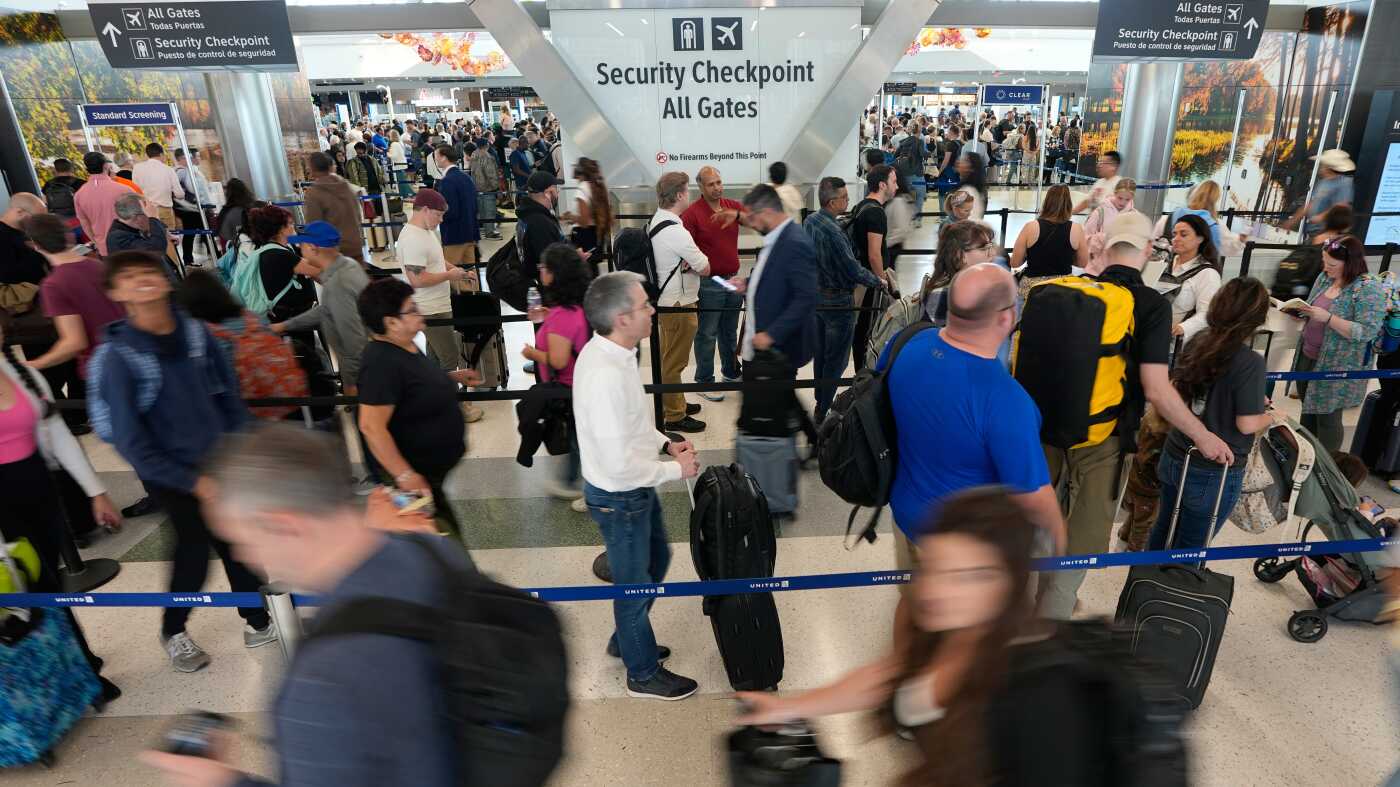
ICE officers could remain at airports after TSA workers are paid

Wolverines make Frozen Four

Bay Area residents hold rally in SF as war with Iran enters 2nd month

Dallas Jenkins says he is the ‘evangelical mascot of the LDS church’ and talks Easter celebrations

New video shows aftermath of police shooting in Downtown Miami

Florida High School Football Rankings: Top 25 teams – Oct. 21

How old is Bo Nix? What to know about Oregon quarterback ahead of 2024 NFL Draft

Cleary's 21 help Le Moyne down Central Connecticut State 69-64 in OT

99th annual Pony Swim held in Virginia

Indiana Members Credit Union announced as new anchor tenant at Bottleworks District
ICE officers could remain at airports after TSA workers are paid

Scathing report claims nation’s oldest labor union ‘betrayed’ MAGA members through ‘shocking’ spending

Republican US lawmaker demands Congress vote on any Iran troop deployment

So you went to a No Kings protest. Now what?

JD Vance says he was ‘obsessed’ with UFOs, believes aliens are actually ‘demons’
-

 Sports1 week ago
IOC addresses execution of 19-year-old Iranian wrestler Saleh Mohammadi
-

 New Mexico1 week ago
Clovis shooting leaves one dead, four injured
-

 Miami, FL4 days ago
Jannik Sinner’s Girlfriend Laila Hasanovic Stuns in Ab-Revealing Post Amid Miami Open
-

 Tennessee6 days ago
Tennessee Police Investigating Alleged Assault Involving ‘Reacher’ Star Alan Ritchson
-

 Minneapolis, MN4 days ago
Boy who shielded classmate during school shooting receives Medal of Honor
-

 Politics1 week ago
Schumer gambit fails as DHS shutdown hits 36 days and airport lines grow
-

 Science1 week ago
Record Heat Meets a Major Snow Drought Across the West
-

 Technology1 week ago
YouTube job scam text: How to spot it fast