Rhode Island
Beware costs of truck tolls on RI roads: Letters


Beware costs of truck tolls
You think that food prices are high now, just wait until Gov. McKee starts up those truck tolls again. I can’t believe that our politicians are so dense that they think that the truckers are going to pay those tolls. Oh, sure, they will pay them up front, but they will just jack up their delivery prices to the stores; then the stores will jack up their price increases to “guess who”, the Rhode Island taxpayers, you and me. It’s just another tax on us. It won’t be long before we all have to go to the food pantries to get food. When will Rhode Island politicians stop saying spend, spend, spend and say cut, cut, cut? Oh, that’s right they will probably blame Trump for the hikes.
Thayer Donovan, Middletown
Your home’s value is under attack, unless you act
Rhode Island’s legislature recently passed laws that are likely to lower your home’s value, limit your control of your community’s future and reduce your quality of life.
The legislature has very quietly enacted roughly 30 laws that all but end the ability of local communities to control their own zoning and place it firmly in the hands of state agencies. Their goal is to force Rhode Island’s 39 municipalities to allow more high-density housing.
These laws mean we residents now have much less control over how our community will look in the future. This loss of local control of zoning is almost certain to cause a decline in home values as three-story multifamily housing is fast-tracked in formerly single-family zoned neighborhoods. Falling property values plus greater demand on municipal services from a spike in population are likely to cause municipalities to raise taxes.
These laws were passed quietly without the participation of or even communications with the state’s municipalities or residents. Why? Probably to minimize resistance that would likely rise if it became widely known control of local zoning was being taken away. Who wants local zoning in the hands of remote state agencies?
One of the principles clearly stated in Rhode Island’s constitution is local control. Power is to remain in local hands except where it must be exercised at the state or federal levels. These new state laws violate this long-standing principle that enables communities to tailor laws to meet residents’ wishes. The laws also raise serious state and federal constitution violation issues.
What can you do to stop this bureaucratic power grab?
1. Tell your town or city council you want them to fight for your zoning rights. For example, Portsmouth’s Town Council has drafted a resolution seeking a court injunction to stop enforcement of the new zoning laws. The Council is also contacting other municipalities to join forces in opposing the state takeover.
2. Write letters to the editor. The Newport Daily News (450-word limit), editor@newportri.com. The Providence Journal (250 words), letters@providencejournal.com.
3. Contact your state legislators. Tell them you want control of zoning returned to local government.
4. Let Speaker of Rhode Island’s House of Representatives K. Joseph Shekarchi know how you feel, rep-shekarchi@rilegislature.gov. It is highly unlikely these laws would have passed without Speaker Shekarchi’s blessing, if not instigation.
Regaining control of your community’s future requires your immediate action. If you do nothing, your community may soon be unrecognizable and unaffordable.
Bill Welch, Portsmouth



WATCH: Jake Bauer wins the Rhode Island Amateur over Tyler Cooke
WATCH: Jake Bauer wins the Rhode Island Amateur over Tyler Cooke on Friday, July 10, at Ledgemont Country Club.
SEEKONK, MA – If given a choice, Jake Bauer would have traveled a different road.
Friday felt like nothing but potholes and lane closures until the afternoon conclusion at Ledgemont Country Club. It was far from an uneventful ride.
The destination was something he’s chased for nearly a decade – a second crown at the 121st Amateur Championship – one that came thanks to a sensational rally past Tyler Cooke.
Bauer’s three straight birdies to start what proved to be his final five holes of the week allowed him to catch and pass Cooke. A sizeable morning deficit was gone in the 36-hole match play title round, and Bauer was suddenly on his way to a 2 and 1 triumph.
“For any golfers out there – cash games, junior golfers – don’t do it,” Bauer said. “It’s not fun. But if you do pull through, it’s a really, really cool story to say you did it.”
Cooke was 6 up after the opening morning nine and looked at times like he would cruise to his first championship. Bauer started applying pressure with an immaculate second nine holes and continued to push until finally breaking through. His curling uphill birdie putt at the par-3 15th – the 33rd hole of the match – found the cup to give Bauer a lead he never relinquished.
“I don’t even know what just happened on the last six or seven holes,” Bauer said. “You sort of just black out. I’m speechless.”
Bauer added a par at the 16th to go 2 up and only needed to halve either of the remaining two holes with Cooke to get the job done. Each made bogey at the uphill par-4 17th, with Bauer lagging his par putt to within inches. Cooke conceded the final stroke, and Bauer was able to take a deep breath while hugging his father and caddie, Jim.
“My dad was really good,” Bauer said. “He doesn’t really get too technical with me. He’s a very calm soul to have on the bag.”
Bauer needed every bit of that even temperament to survive the early stages. Cooke collected seven birdies through his first 23 holes, the last coming at the par-4 fifth. That gave him a 3-up lead, and he was able to remain in front until Bauer buried clutch putts at the par-4 13th, the par-4 14th and the 187-yard downhill tester.
“[The birdie putt] definitely had some speed,” Bauer said. “I think if that didn’t go in we would have probably been on 18 or in extra holes.”
Bauer carded five bogeys on his opening nine before a solid birdie at the par-4 10th gave him a first taste of momentum. He racked up seven pars and another birdie at the par-4 18th before entering the lunch break just 2 down. It was a similar charge to the one Bauer made in the quarterfinals, as he won five of the last six holes to edge Jason Kalin, 1 up.
“I performed really well this whole week in stroke play and other matches,” Bauer said. “I said if I just stick to that same game plan I will end up on top.”
Cooke battled his way into the match play bracket after an opening 76 in Monday’s steady rain. He rebounded with a 73 under more precipitation Tuesday and immediately produced an upset by knocking out No. 4 seed Sam Powell. Cooke has been a steady winner since an All-State career at Toll Gate and college tenure at Connecticut, including a record five titles at the Four-Ball Championship with brother-in-law Bobby Leopold.
Bauer had just graduated from Johnson & Wales when he won for the first time here, an impressive victory over Matt Broome. He fell in last year’s final to Mike Calef, surrendering a late lead in a 1 up loss at Rhode Island Country Club in Barrington. Bauer wasted no time booking a third appearance in the title match and did so with some extra support – his wife, McKenna, was in the gallery less than a month after they exchanged vows in June.
“We didn’t even know each other back in 2018,” Bauer said. “For her to experience this – I don’t even know what emotions she was going through. I’m really happy to share it with her.”
bkoch@providencejournal.com
On X: @BillKoch25
Rhode Island
Our Favorite Write-Ins From the 2026 Best of Rhode Island Readers’ Poll – Rhode Island Monthly

If you haven’t heard, our upcoming Best of Rhode Island party has many exciting additions and surprises this year, and we at Rhode Island Monthly cannot wait to celebrate with all of you at the WaterFire Arts Center on July 23 (get your tickets here if you haven’t already!). But to tide us all over in the meantime, we decided to continue the tradition of sharing some of the silliest write-in entries we came across while tallying the Best of Rhode Island Readers’ Poll.
But first, let me provide a quick refresher of the process. As many know, the ballot is made up entirely of write-in entries, meaning you can submit whatever you like for Best Restaurant, Best Influencer, Best Wedding Venue, etc. And believe me when I tell you that people do truly submit whatever they like. This year we had the task of combing through more than 100,000 (!) votes and once again (see examples from 2022, 2023, 2024, and 2025) found ourselves chuckling at quite a few along the way. Below you’ll find a roundup of some of our favorites, as well as what was going through my mind as I noted and compiled them. (And as always, I’d like to throw in the disclaimer that I am just as much a victim of my own typing skills, so these are all in good fun!). Enjoy!
FOUND UNDER STATEWIDE RESTAURANT
“Daddychill” and “Daddychillllll”
— If I had a nickel for every time someone said this, I’d have two nickels — which isn’t a lot, but it’s weird that it happened twice.
“Blinked to Beauty”
via GIPHY
“Christina Erne” and “TJ Delsanto”
— Christina and TJ are meteorologists, not meat.
“All Four Paws” and “Mind Your Dog”
— “Hello, is this PETA?”
“Altered images tattoo” and “Massage envy”
— I think you’ll satisfy different kinds of cravings and needs here.
“Boozy book club”
— Yo Reilley, you got snacks?
“Buns and bites”
— Sorry to have to disappoint, but Laura serves looks and recs, not meals.
“Comedy bus”
— It’s taking everything in me not to recycle my (terrible) joke from last year.
“Same day content Reel Candid”
— I guess the camera always eats first.
“Vampire (hallie)”
— Are you trying to be the main course?
FOUND UNDER STATEWIDE NEW RESTAURANT
“Applebees”
via GIPHY
“Timmtuffknuckles”
— How are his knuckle sandwiches?
FOUND UNDER STATEWIDE LATIN RESTAURANT
“Lklk”
— Not me trying to see if this is a latin root.
FOUND UNDER STATEWIDE ASIAN RESTAURANT
“Quads n. Attleboro”
— Geography class really isn’t what it used to be, huh.
(My clearly grumpy, not-so-gentle reminder that we’re looking for the best of Rhode Island).
FOUND UNDER STATEWIDE INDIAN RESTAURANT
“Ho HoHOHO”
— Why did I read this like Santa tried a spicy curry for the first time and had a rough go of it.
FOUND UNDER STATEWIDE BREAKFAST SANDWICHES
“Duncan donuts” and “Dunking donts”
— I don’t know what I’m judging more: the voting for a national chain or the misspelling of said very, very popular chain.
“Bacon egg and cheese on a croissant.”
“Women & Infants Hospital – No, I’m not kidding! IYKYK”
— Well, now we know. Still hope I don’t have reason to find out for myself any time soon 😅
FOUND UNDER STATEWIDE BRUNCH
“Cry cafe”
— You know, after a few mimosas, sometimes brunch is the best time to have a good cry. Not that I’m speaking from experience.
*Typo translation: Cru Cafe
“Karies (used to be jiggers south)”
— We found a real Rhode Islander, folks.
FOUND UNDER STATEWIDE CHEAP EATS
“They don’t exist in ri”
Not in this economy.
FOUND UNDER STATEWIDE COCKTAIL BAR
“Jefferson speakeasy??”
— Wanna think about it for a sec?
“Bar Lizzo”
— I mean, she is 100% that b*tch.
*Typo Translation: Bar’Lino
“Justine’s RIP”
— Yeah, this one hurts. Pour one out for the homie.
FOUND UNDER STATEWIDE WINERY
“Kingdom of the hawk”
— Sick name. Wrong state.
FOUND UNDER STATEWIDE DIVE BAR
“Oooogie’s”
via GIPHY
“(Against my better judgement) scurvy dog”
— Woof.
“BRADLEY CAFFEEEEEEEE”
— Love the enthusiasm.
“Irish Spring Soap”
— Alright smartass. There’s only room for one us here.
“O’roughs”
— Looks like someone had one too many at O’Rourke‘s the night prior.
FOUND UNDER STATEWIDE OYSTER BAR
You’d think after all the fire and the new location headlines, people would remember how to spell Matunuck. Alas, we still got:
“Matonk,” “Matoonik,” “Mahtunuck,” “Mattunuack,” “Mettunic,” “Matunickk,” “Metacunack” and many, many, many more.
*Typo Translation: Matunuck Oyster Bar
“THE OYSTER BAR”
— THANKS JANET BUT WHICH ONE?
FOUND UNDER STATEWIDE BARBER SHOP
“City hall”
— Is that what they do there?
FOUND UNDER STATEWIDE INDEPENDENT BOOKSTORE
“Barnes and Noble”
— You and I have different definitions of independent.
FOUND UNDER STATEWIDE TV METEOROLOGIST FEMALE
“Dylan Drier, SORRY she’s the BEST”
— SORRY but not in RHODE ISLAND.
“Kathy bates”
— Yes, and I’m the one in Misery.
*Typo translation: Kelly Bates
FOUND UNDER STATEWIDE SPORTSCASTER
“[redacted], new and upcoming”
— When I Googled this name I could only find criminal court cases (and no Rhode Island sportscasters) so, yea, I’m gonna go ahead and agree that this person has a lot more coming up to do.
“Channel 10 reporter”
— You can Google too, ya know.
FOUND UNDER STATEWIDE TELEVISION NEWS REPORTER
“Jamie coelho”
— She is always ready for her closeup!
“jean value cent”
— I really thought I had seen all the spellings at this point, but someone always proves me wrong.
*Typo translation: Gene Valicenti
FOUND UNDER STATEWIDE MORNING SHOW
“Drew Barrymore”
via GIPHY
“Road show”
— C’mon. Have some respect for the pun.
*Typo translation: The Rhode Show
FOUND UNDER STATEWIDE LOCAL NEWS SHOWS
“r/Providence (Providence reddit page)”
— I’d be lying if I said I hadn’t also gotten my news from this thread some days…
FOUND UNDER STATEWIDE LOCAL MUSICIAN/BAND
“No exit 5”
— You’re right, there is none.
*Typo translation: No Exit 4
“Dropkick Murphy’s”
— Does owning Yellow Door make them local? I’ll take it.
“Taylor Swift”
— Well, maybe if she had tied the knot here… (No we aren’t bitter).
“I am a god!!!!!!!!!!!!!!!!!!”
— I know this is an actual band name, but this was still a jump scare.
FOUND UNDER STATEWIDE LOCAL FASHION DESIGNER
“DADDDDDDDDYYYYYYYYYYYY I want you badddddd”
— Okay someone’s gotta be effing with me.
FOUND UNDER STATEWIDE LOCAL ARTISAN
“Fankiemademedoit”
— I don’t think that will hold up in court.
FOUND UNDER STATEWIDE FOODIE INFLUENCER
“Jamie Coelho”
— No arguments here.
FOUND UNDER STATEWIDE DATE NIGHT
“catching rats with butterfly nets in kennedy plaza.”
— Jotting that one down.
“Eating out and a movie”
via GIPHY
FOUND UNDER STATEWIDE CANNABIS DISPENSARY
“All suck tbh”
— Daddy chill. (This might be my new favorite term).
“Northeastern”
— You know you don’t have to buy from your college roommate any more, right?
*Typo translation: Northeast Alternatives in Fall River and Seekonk 😮💨
FOUND UNDER PROVIDENCE RESTAURANT
“Ed the barber”
— I see the Sweeney Todd fan has returned.
“Permission.”
Granted, you may proceed.
*Typo translation: Persimmon
“Seeking tailor”
— Did you think we were ChatGPT?
FOUND UNDER PROVIDENCE VEGAN/VEGETARIAN RESTAURANT
“Pianta pianta pianta!”
— Is this how the kids play Bloody Mary nowadays? Does a Veggie Tales character show up? (Honestly that would terrify me more.)
FOUND UNDER PROVIDENCE OUTDOOR DINING
“Federal hill”
via GIPHY
FOUND UNDER PROVIDENCE DINER
“1st one I wrote is actually in Blackstone valley”
— Thank you for your candor.
“Haven’t bros”
— I think they have.
*Typo translation: Haven Brothers
FOUND UNDER PROVIDENCE SANDWICH SHOP
“Wise guys in Cumberland”
— Not very wise of you.
FOUND UNDER PROVIDENCE INDEPENDENT BOOKSTORE
“Heartless”
— I think Penny would beg to differ!
*Typo translation: Heartleaf Books
FOUND UNDER PROVIDENCE LOCALLY OWNED CLOTHING BOUTIQUE
“Locally owned clothing boutique”
via GIPHY
FOUND UNDER PROVIDENCE CONSIGNMENT SHOP
“The one on brook near wickenden”
via GIPHY
FOUND UNDER PROVIDENCE MUSIC VENUE
“Lupo’s heartbreak hotel”
— Who knew they’d still be breaking hearts all these years later.
FOUND UNDER PROVIDENCE LOCAL EVENT
“Best of RI”
— Eeeyyyyy
“BEYBLADE X TOURNAMENTS”
— I didn’t know this was a thing and now I am intrigued.
“TJ Delsanto Facebook Photos of RI and stories of beaches in RI”
— TJ is that you?
FOUND UNDER SOUTH COUNTY NEIGHBORHOOD BAR
“Cheers!”
— I’ll be sure to call up Sam and Diane.
FOUND UNDER SOUTH COUNTY INDEPENDENT BOOKSTORE
“Waldens in Wakefield”
— What a throwback.
FOUND UNDER NEWPORT COUNTY ANIMAL SHELTER
“Bahaha Cat Cafe”
via GIPHY
*Typo translation: Bajah’s Cat Cafe
FOUND UNDER NEWPORT COUNTY DELI
“Garlic Clove”
— So close.
*Typo translation: The Roasted Clove
FOUND UNDER EAST BAY RESTAURANT
“Chello is great family restaurant to take your family the waitress and waiter are great”
— Shout out to that waitress and waiter.
FOUND UNDER EAST BAY ITALIAN RESTAURANT
“Olive Garden, south Attleboro”
via GIPHY
FOUND UNDER EAST BAY BREAKFAST
“Green eggs and ham”
— Okay sam I am.
*Typo translation: Green Eggs
FOUND UNDER EAST BAY BURGER
“Chimp”
— … Has anyone checked in on Punch lately?
Typo translation: Chomp Kitchen and Drinks
FOUND UNDER EAST BAY SPECIALTY FOOD STORE
“Johnson’s Toadside Market”
— That’s sure is a specialty food.
*Typo translation: Johnson’s Roadside Farm Market in Swansea 😮💨😮💨😮💨
FOUND UNDER EAST BAY LOCAL MUSIC VENUE
“Bring back Bold Point!”
— I’d sign this petition.
FOUND UNDER EAST BAY LOCAL EVENT
“Oops”
— I am concerned.
FOUND UNDER WEST BAY BREAKFAST
“Dante’s inferno”
— That would certainly wake me up.
*Typo translation: Dante’s Kitchen
FOUND UNDER WEST BAY BURGER
“Vegan. Don’t Eat.”
— PETA thanks you for your service.
FOUND UNDER BLACKSTONE VALLEY RESTAURANT
“Hotel for Homeless Dogs.”
— …But really do I need to call PETA?
For those who made it this far, I hope you enjoyed the ride! Don’t forget if you want to learn who the actual winners are before the rest of the state (and party with them) you can still pick up tickets to the event here.

“Temporary water use advisories will be posted where applicable and nearby residents and visitors should keep pets from drinking from these waters for at least three days,” the release said
The herbicide treatments target specific invasive aquatic plants, including variable water milfoil, fanwort, water chestnut, sacred lotus, and various algae species, according to the release.
-

 Detroit, MI3 minutes ago
Metro Detroit weather forecast, July 10, 2026 — 11 p.m. Update
-

 San Francisco, CA13 minutes ago
Classical music series helps reconnect downtown San Francisco community
-

 Dallas, TX18 minutes ago
Dallas police officers, paramedics recall saving woman stuck in a ravine for days;
-

 Boston, MA28 minutes ago
Red Sox win 7th straight game just hours after landing in New York
-
 Denver, CO33 minutes ago
One tree at a time: Denver nonprofit works to close shade gap as heat dome threatens neighborhoods
-

 Seattle, WA40 minutes ago
VIDEO: West Seattle Summer Fest 2026 day 1, evening report
-

 San Diego, CA43 minutes ago
The World’s Number One Wellness Retreat is Right in Our Backyard
-
 Milwaukee, WI48 minutes ago
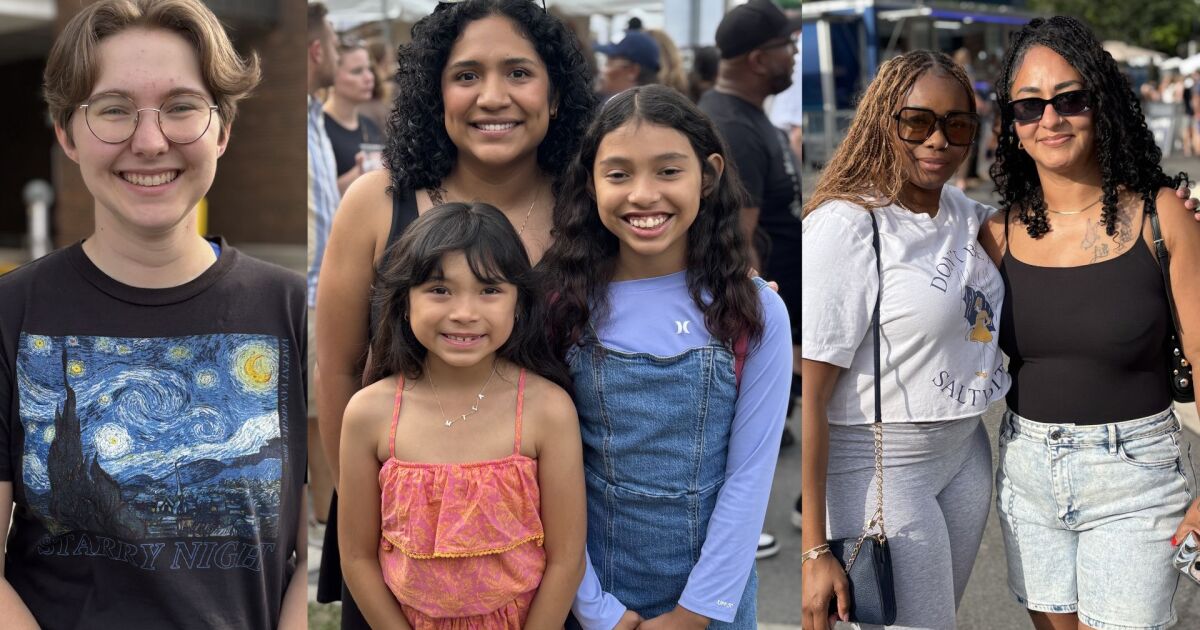
Festivalgoers say Milwaukee’s summer events fill a gap in downtown entertainment

