Pennsylvania
Nothing “Fair” about Fairness West Virginia’s Hostile Takeover of Pennsylvania LGBTQ Advocacy – Philadelphia Gay News


Fairness West Virginia is soon planning to launch a statewide project that aims to take over LGBTQ advocacy in Pennsylvania, but there is nothing fair about West Virginians seizing political control of Pennsylvania’s LGBTQ communities.
When I heard an organization from West Virginia wanted to wrest statewide LGBTQ leadership away from Pennsylvanians, I immediately reached out to connect. I was among the first to meet with Fairness West Virginia’s Executive Director Andrew Schneider in 2022 on their proposed project.
As a longtime advocate in LGBTQ policy work across Pennsylvania, I wanted to learn more about Fairness West Virginia’s interest in our state. I earnestly listened and responded with multiple ideas about how they could work with LGBTQ Pennsylvanians instead of bulldozing over our commonwealth to take command. I met with numerous LGBTQ leaders to devise and suggest plans to work together. Outside LGBTQ groups have come into PA before on discrete projects, but never to dominate the entire advocacy space.
All requests for collaboration went unanswered by Fairness West Virginia. That told me they have no interest in working with LGBTQ Pennsylvanians on the ground doing this vital work.
Still, through 2023, I would get calls from LGBTQ community leaders who were approached by Fairness West Virginia asking for money — not to collaborate but to subordinate under their efforts as a board member of their project.
When I asked Fairness West Virginia’s Executive Director “why” they wanted to do this, there was never a substantial reason given. Over time, Fairness West Virginia’s entire approach has given me great pause and chilling concerns about what is to come.
The real challenge in Pennsylvania is getting more LGBTQ-affirming legislators elected — not an absence of leadership from nonprofit organizations until now. Having an out-of-state organization control a lobbyist in the halls of our state Capitol won’t really change that fundamental issue. However, it will confuse legislators and send needed resources out of state.
This may be a pet project for Fairness West Virginia, but the very lives of LGBTQ Pennsylvanians are at stake.
We’ve seen this before
The last time a similar entity came to Pennsylvania was in 2015, in which massive amounts of money were squandered and led to burned relationships in the state Senate — it took years for us to clean up their mess.
I recently learned Fairness West Virginia is attempting to validate their Pennsylvania project because there is no full-time paid lobbyist for LGBTQ issues in Harrisburg and they believe there needs to be a successor organization to Equality Pennsylvania.
But the legacy of Equality Pennsylvania is not dissimilar to those in other states across our nation.
There was a mainstream statewide LGBTQ advocacy organization with a board composed of political donors from a few major cities who aimed to promote their relevance to receive funding and clout. When the time came for difficult decisions, they reverted to organizational preservation rather than community empowerment or effectiveness. Some groups betrayed those they purported to represent by lifting up individuals who harmed LGBTQ people or ran their organizations into the ground.
Following the passage of marriage equality, many of the statewide LGBTQ organizations shut down in the Northeast. They weren’t connected to their communities and the engaged political class turned their resources elsewhere.
Recognizing that out-of-state organizations will continue to try to pilfer PA for their benefit, I helped the Pennsylvania Youth Congress create the Pennsylvania Coalition of LGBTQ Organizations in 2020. Over 50 LGBTQ organizations throughout the commonwealth have signed a joint statement of principles that invites outside organizations to work with LGBTQ Pennsylvanians and not around us.
In talking with national LGBTQ organizations since 2018, they often referenced that since there was no generalized statewide LGBTQ advocacy organization, they might need to come in one day to create a “Pennsylvania coalition” — national organizations that each buy a stake in a new entity that would control LGBTQ messaging and actions in PA. We wanted it to be clear that there indeed are strong LGBTQ Pennsylvania organizations already in existence that are happy to be partners in the important work ahead.
Pennsylvanians are already doing the work Fairness West Virginia wants to do
It is patently false and egregiously insulting to imply that Pennsylvania doesn’t have LGBTQ advocates in Harrisburg — and that only with Fairness West Virginia’s expansion into Pennsylvania can there be success.
I have been a full-time registered LGBTQ lobbyist in Harrisburg and I am not alone in that job experience. There are statewide LGBTQ groups like Keystone Equality, the Pennsylvania Equality Project, the Pennsylvania Youth Congress, a governor’s commission, and other organizations already helping to keep our diverse communities across the state connected and advocating for them regularly in the Capitol. Many have long-standing, respected voices and power in legislative advocacy.
Legislation and administrative policies have moved. Scores of policy wins in local and state government in Pennsylvania show how successful we are. We have more local LGBTQ-inclusive nondiscrimination ordinances than any state in the nation. We’ve had at least a dozen rallies and lobby days in Harrisburg in recent years.
What exactly do they claim is missing? We have a robust statewide campaign for nondiscrimination protections called Pennsylvania Values backed by Fortune 500 companies, dozens of chambers of commerce, and nearly 50 colleges and universities. Pennsylvanians have been able to advance positive legislation — like hate crimes protections — and have stopped negative policies like bans on trans youth healthcare. Registered lobbyists are hired by LGBTQ organizations when needed. We’ve done all this and more without Fairness West Virginia’s intervention.
It’s sad how many people will be deceived as Fairness West Virginia’s project is launched. I am gravely concerned about the impact a superimposed, out-of-state managed project will have on stunting real progress on LGBTQ policy in Pennsylvania.
While LGBTQ organizations across PA have ongoing advocacy efforts in Harrisburg, this new project from West Virginia will insert itself into legislative strategy meetings and actions to take credit to prove why they should exist. Since this entity is administered from West Virginia, advocates in Pennsylvania cannot influence what they direct their staff members to do. The decisions on making legislative deals or investing in types of public messaging will ultimately come from West Virginia through their Pennsylvania project’s board, at the calling of whatever entities are funding Fairness West Virginia. Despite having board members for their Pennsylvania project in our state, their website admits not a single one of them — including their project Chair — have current experience in a Pennsylvania LGBTQ organization. As they are not accountable as present leaders in LGBTQ organizations in Pennsylvania, the framework appears to be just as Equality Pennsylvania was: with individuals from political circles mostly in our cities who often make decisions not aligned with the long-term success of LGBTQ policy in our state.
I believe Pennsylvania lawmakers and donors are smarter than Fairness West Virginia believes them to be — no amount of glossy public relations can conceal the reality that an approach to create an Equality Pennsylvania 2.0 operated by an out-of-state organization will not lead to results we hope for.
This organization won’t be Pennsylvania’s superhero
To state the issue clearly: LGBTQ advocates in Pennsylvania continue to push as hard as anyone can to move our issues forward. The reason we don’t have more laws enacted is a result of our state legislature’s composition. Fairness West Virginia coming in will siphon funding, resources, and power.
They are not more likely to get results than any existing organization in Pennsylvania. In fact, if we look at WV’s landscape, it’s unclear how Fairness West Virginia is planning to manage a PA initiative when they cannot even secure basic LGBTQ policy wins across their own state.
Fairness West Virginia does not have untold millions of dollars to invest in PA or sage wisdom they can only pass along to us after they gain total control of LGBTQ advocacy in our state.
The problem is that when push comes to shove, Fairness West Virginia will be leading their Pennsylvania project’s board and staff members to make calls that could be disconnected from Pennsylvania LGBTQ communities.
Political nonprofits do not largely have access to institutional foundation support as they don’t provide public services. When those groups aren’t deeply rooted in broader LGBTQ communities, they are forced to raise money from private political donor networks. They do this by messaging whatever is necessary with potential supporters. This is especially true of organizations with board members who don’t answer directly to the communities they pledge to serve. When Western PA LGBTQ leaders understand that a nearby board member of Fairness West Virginia’s Pennsylvania project is complicit in a decision to undermine LGBTQ advocacy in our state or take credit for other people’s work, what is their check and balance? There is none.
Vulnerable LGBTQ Pennsylvanians will be harmed when resources and power are less accessible. Marginalized LGBTQ Pennsylvanians will be hurt when decisions influencing lawmakers are not ultimately directed by Pennsylvanians but by an out-of-state nonprofit through an unaccountable project’s board.
Over the coming months, Fairness West Virginia will need to demonstrate relevance in PA in order to justify their project as they introduce themselves to donors at bar fundraisers. That’s a divergent goal from helping people. Do we honestly think if an out-of-state manager is presented with a deal in Harrisburg that requires them to decide between chipping away at our existing rights and holding the line with vulnerable LGBTQ Pennsylvanians, they would be able to make the right decision?
As an advocate within Pennsylvania, there have been many times I’ve quietly helped stop anti-LGBTQ developments in the General Assembly. I could have easily blown up headlines to get myself in the newspaper. Maybe it would have raised money and prestige for the organizations I am part of, but that would have been a disservice to LGBTQ Pennsylvanians. Given how this project has come about and the individuals involved, I fear that a moral compass would always be secondary to their bottom lines of finding ways to be relevant and raising money. Nothing has been offered as evidence that despite this framework they will make more ethical decisions than Pennsylvania LGBTQ communities can be for ourselves.
While they have yet to announce who they are planning to hire, I am concerned it will be someone who does not have deep roots in LGBTQ communities throughout the entire state, nor someone who would still be an active organizer embedded in state LGBTQ work years from now. That person, who may be personally nice or have some experience in Harrisburg, may more easily advocate for positions they are told to by Fairness West Virginia over LGBTQ Pennsylvanians. Every action they take will still be ultimately called by West Virginians.
Even as Fairness West Virginia eventually tries to distance itself from their Pennsylvania project, it’s clear to me how their current board and mission are the perpetual ingredients for a generalized LGBTQ organization to be adversarial to local LGBTQ communities and not effective collaborators in the long term towards our goals of equity and liberation.
We can speak for ourselves
The true intentions of Fairness West Virginia are stated right on their Pennsylvania project’s website. I hope people believe who they say they are: “Fairness Pennsylvania is the statewide civil rights advocacy organization dedicated to fair treatment and civil rights for [LGBTQ] Pennsylvanians.” They intend to be the organization for Pennsylvania — not a partner or one of many statewide stakeholders. Scroll to the bottom of the page and it instructs people to send their checks to Fairness West Virginia in Charleston.
Performative advocacy from political operatives and a couple of politicians at their events are not going to save the lives of LGBTQ youth. They might say they will, but how can they when vulnerable communities were never part of conceiving their efforts or have direct control over their operations? Self-determination of people in the advocacy impacting their lives is essential to success.
As they launch and begin to attempt duplicating, dismantling and destabilizing decades of existing advocacy efforts in order to brand themselves as the one and only statewide LGBTQ organization in PA, I continue to hope they will course correct to stand behind LGBTQ Pennsylvanians — not speak on our behalf as the sole authority over our communities. There is still time for Fairness West Virginia to completely change direction. After all, their stated mission on their website is to be: “…the statewide civil rights advocacy organization dedicated to fair treatment and civil rights for [LGBT] West Virginians.” This objective says nothing about taking over neighboring states.
Where can we go from here?
Fairness West Virginia is demonstrating that their principles can reconcile with bulldozing over generations of LGBTQ work in Pennsylvania without blinking. Having tokenizing coffee meetings with several dozen LGBTQ people in 2023 to find board members for their project in Pennsylvania doesn’t count as a partnership.
What could Fairness West Virginia do at this point? They could issue a public statement apologizing for their actions — including how it is wrong for any out-of-state organization to claim to launch the new monolithic civil rights organization for all LGBTQ Pennsylvanians. They could divest their Pennsylvania project into a PA-based organization with LGBTQ community organization leaders on their board. They could identify true gaps in LGBTQ advocacy in Pennsylvania and send whatever resources they have raised so far to LGBTQ Pennsylvanians engaged around that area of work. They could promote LGBTQ organizations in PA or ask LGBTQ organization lobbyists in Pennsylvania today how they could help.
What can you do? When there is a fundraiser invite for Fairness West Virginia’s project in Pennsylvania: decline. If you know someone who said yes to being on their Pennsylvania project’s board, explain how this effort is inherently problematic. In general, if your local LGBTQ organizations are not universally co sponsoring an event with an outside enterprise like Fairness West Virginia’s Pennsylvania initiative, don’t lend your support.
I join with many others in hesitating to share my thoughts publicly on these developments. It would be much easier to be off the record with a reporter. The last thing I want is for someone to think my perspective is just one of an advocate in a war of organizations related to ‘turf’ issues. That could not be further from the truth.
I was among the young advocates who decided in 2011 to raise awareness about the former Equality Pennsylvania engaging in conduct harming young LGBTQ advocates. While I was thanked by many for the courage to say something, some were not happy about my “airing community laundry.” It was the right thing to do then, and I believe this is the right thing to do now. I have spent my life caring deeply and successfully fighting for LGBTQ Pennsylvanians.
The term “Fairness” is entirely subjective. Fairness does not mean justice, equity or liberation. What’s fair to you may not be fair to us. There is nothing ‘fair’ about West Virginia’s hostile takeover of LGBTQ advocacy in Pennsylvania.
Just because a state doesn’t currently have a mainstream LGBTQ group does not give a divine right for an outside group to come in to take us over when we didn’t ask for it. Is Equality Ohio going to start an Equality New York next?
No matter how it’s dressed up, Fairness West Virginia is about to steamroll LGBTQ communities in Pennsylvania with a smile. Will we be smart enough to say no? The policy work ahead in PA is too important to remain silent.
We’ve been here before in PA when outside organizations want to profiteer off of us. We will survive Fairness West Virginia’s project. I know that together as LGBTQ Pennsylvanians, we will succeed in the end because we are strong and resilient.



The boat dock at the entrance of Penn’s Cave.
HUNTER SMITH / THE EXPRESS

HUNTER SMITH / THE EXPRESS
The colored light room in Penn’s Cave.
BELLEFONTE — After four generations of family stewardship, the owners of Penn’s Cave and Wildlife Park are asking the state to take over one of Centre County’s most iconic attractions in an effort to preserve it from future development.
Following remarks from CEO Russ Schleiden and his daughter, Jeanine Watson, the Centre County Commissioners on Tuesday endorsed the plan to make the natural wonder Pennsylvania’s 126th state park.
“This has been a very difficult decision for us,” said Schleiden. “But we feel that it’s a very important part of, not only Centre County, but the Commonwealth of Pennsylvania, and that it should be preserved in perpetuity.”
The Schleiden family has spent decades as custodians of America’s only all-water, limestone cavern, working to expand and conserve Penn’s Cave, which contains the headwaters of Penn’s Creek. To ensure the 1,400 acres of land and its waters are around for generations to come, the family is petitioning the Pennsylvania Department of Conservation and Natural Resources (DCNR) to designate the Penn’s Cave estate a state park and take over its stewardship.
The proposed transfer includes the cavern, Cave House, surrounding land and waterways, five homes and several barns. Watson said the family has been working toward the proposal for three years.
“I know the state, DCNR, has wonderful plans and visions for enhancing it and taking it to that next level beyond what we could do,” she said.
Penn’s Creek, which starts in the cavern, flows 34 miles to Selinsgrove where it joins the Susquehanna River Basin before emptying into the Chesapeake. The state has made significant investments in protecting those waters, and the proposed transition would expand that work.
“The tributaries also support the native brook trout,” said Schleiden, naming specifically Little Poe and Big Poe creeks, which are known for their fishing.
Penn’s Cave, he said, has always been supportive of “wildlife for everyone.”
With the commissioners’ help, Penn’s Cave and Wildlife Park has invested $2 million into the local wetlands, protecting local fauna while improving the area’s accessibility. Schleiden said transferring ownership to the state would ensure that mission remains central to the property.
“We strongly desire this to go to the state to protect and continue to conserve, and have it available to the public,” Watson said.
The property also carries historical significance. Penn’s Cave and Hotel was listed on the National Register of Historic Places in April 1978 for its local importance.
The Cave House, or hotel, was built in 1885 by the Long family, who first commercialized the cavern. At the time, visitors traversed the cave by boat using lanterns. That changed in 1927, when the Campbell family, who emigrated from Scotland to the land, electrified the cave.
“It probably had electricity before more than most of the local residents,” Schleiden said.
State Rep. Kerry Benninghoff, who helped coordinate with the state on the proposed transition, also joined the commissioners for the discussion.
Benninghoff said the move would require the endorsement of the governor and both chambers of the General Assembly. The governor is aware of the plan and visited the site last year, and Benninghoff said he has drafted legislation outlining the mechanics of the transition.
“I can’t think of a better time in our country and our county’s history, at the semiquincentennial, to make this a reality,” he said. “If you want to look at Americana in its best, the park I think exemplifies that.”
“In the long run, I think this is a tremendous investment for the commonwealth,” Benninghoff said, noting the transition would not be easy but the commissioners’ endorsement could help move the project forward during this budget cycle.
The proposal also carries potential economic benefits for the region.
Penn’s Cave and Wildlife Park already attracts visitors from all 50 states and several countries. During its peak season, the park employs dozens of local community members. The attraction is a multigenerational employer in Gregg Township, providing jobs for members of the Schleiden family and their employees, many of whom are young adults and teens.
Transferring ownership to DCNR and becoming Pennsylvania’s 126th state park could increase tourism and economic engagement in the area, the owners said. State parks in rural communities often bring tourism dollars and expand employment opportunities as operations grow.
Benninghoff said he could envision additional public amenities, including a campground, while emphasizing the property would remain accessible.
“This is not going to be an exclusive property that no one can access,” she said. “It’s actually one we want more people to enjoy.”
The commissioners each praised the work Schleiden and Watson have done and expressed support for the state park designation, citing the conservation, education, historical, tourism and recreational benefits of the proposal.
“Penn’s Cave is a premier tourist attraction in Centre County,” said Commissioner Mark Higgins, who noted it is one of only a few caves accessible by boat worldwide. “With the trout in the water and the wild animals surrounding it in the wildlife park, it’s a really, really fun half-day attraction to visit.”
“It’s just irreplaceable,” he said.
Commissioner Amber Concepcion called the property “an outstanding area of natural beauty” and added that it provides an opportunity for education and recreation.
“It’s a great place for kids to learn and for adults and people of all ages to spend a summer afternoon,” she said. “It would make a fantastic state park.”
Dershem called the opportunity “once in a lifetime” and said it would be a “crying shame” if the property were developed instead.
“This is an amazing opportunity for the Commonwealth of Pennsylvania to invest in a property that is literally irreplaceable, iconic to our region and unique. I don’t know that you’ll find anything quite like it,” Dershem said. “It’s an amazing place.”
Penn’s Cave, he added, “represents who we are in Centre County” and is “natural splendor at its best.”
Benninghoff said their support will emphasize the urgency of completing the transition to state legislators.
“This endorsement by the county, visitors bureau and other people helps to emphasize that we’d really like to get this done, and time is of the essence,” he said. “People have been knocking on their door, wanting to purchase this land and break it all apart, and a lot of it would go into development.”

STATE COLLEGE, Pa. (WJAC) — It was a strong opening day in State College for the 60th anniversary of the Central Pennsylvania Festival of the Arts.
The festival kicked off with the traditional children’s day festivities.
Kids lined South Allen Street, displaying and selling their latest creations.
6 News spoke with one of the young businessmen there — Trevor Winterich — who was busy with his 3D toys.
On Thursday, the festival’s sidewalk sales open, featuring artists and performers from across the country.
BE THE FIRST TO COMMENT
The festival will then wrap up on Sunday.
Pennsylvania
Pennsylvania state trooper to be laid to rest after being fatally struck in Schuylkill County

BUTLER TWP., Pa. (WPVI) — A Pennsylvania State Trooper who was killed in a crash on Interstate 81 will be laid to rest Wednesday.
A public viewing for Trooper Michael Pahira, Jr., is scheduled from 8 a.m. to 10 a.m. at North Schuylkill High School in Butler Township.
A funeral will follow at 11 a.m.
Trooper Pahira was fatally struck on I-81 last week by a tractor-trailer while conducting a safety inspection on another truck in Cass Township, Schuylkill County.
According to state police, a passing commercial vehicle hit Pahira while he was conducting the inspection with his emergency lights activated.
The alleged driver, 33-year-old Michael Bon, is facing homicide charges. He is being held on $700,000 bail.
Pahira, 44, was assigned to Troop L, Frackville and had been with the state police for 20 years.
Copyright © 2026 WPVI-TV. All Rights Reserved.
-
 Business3 minutes ago
California soccer fans sue StubHub after it fails to deliver expensive World Cup tickets
-
 Entertainment6 minutes ago
Lucas Museum to give free annual passes to South L.A. neighbors, host community preview day
-
 Lifestyle11 minutes ago
Meow Wolf taps famed L.A. animation house for its new Los Angeles venue
-
Politics18 minutes ago
Column: Trump decries ‘communism’ while his government takes ownership of companies
-
 Science21 minutes ago
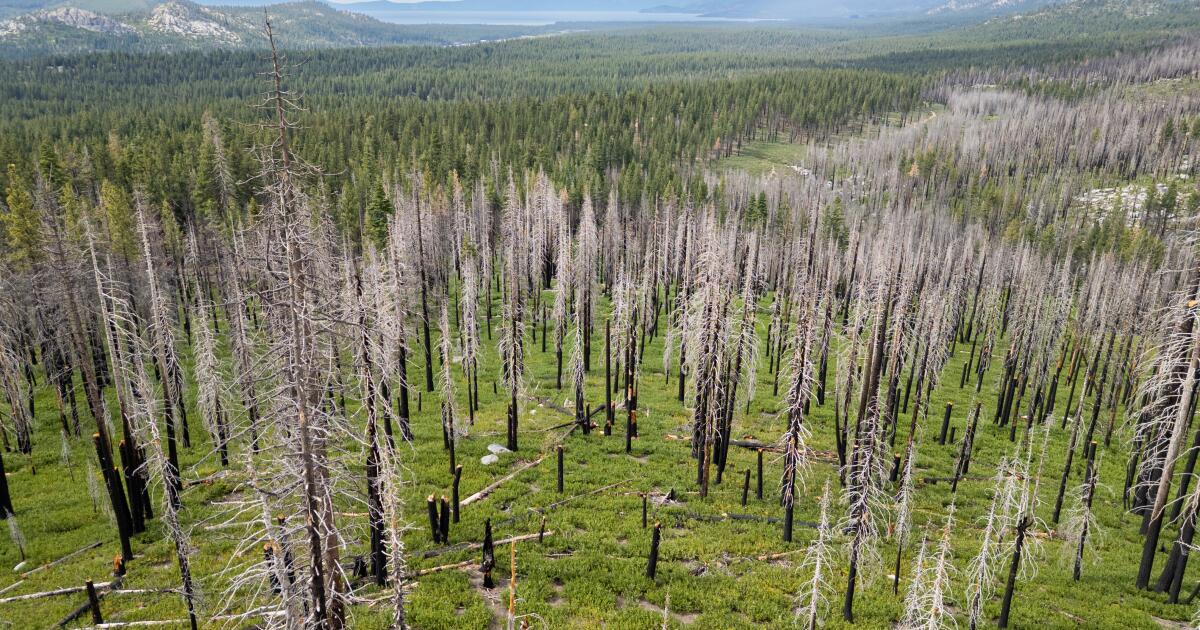
‘I’d rather my house burn down than get cancer’: Herbicide use upends California’s fight to save forests
-
 Sports26 minutes ago
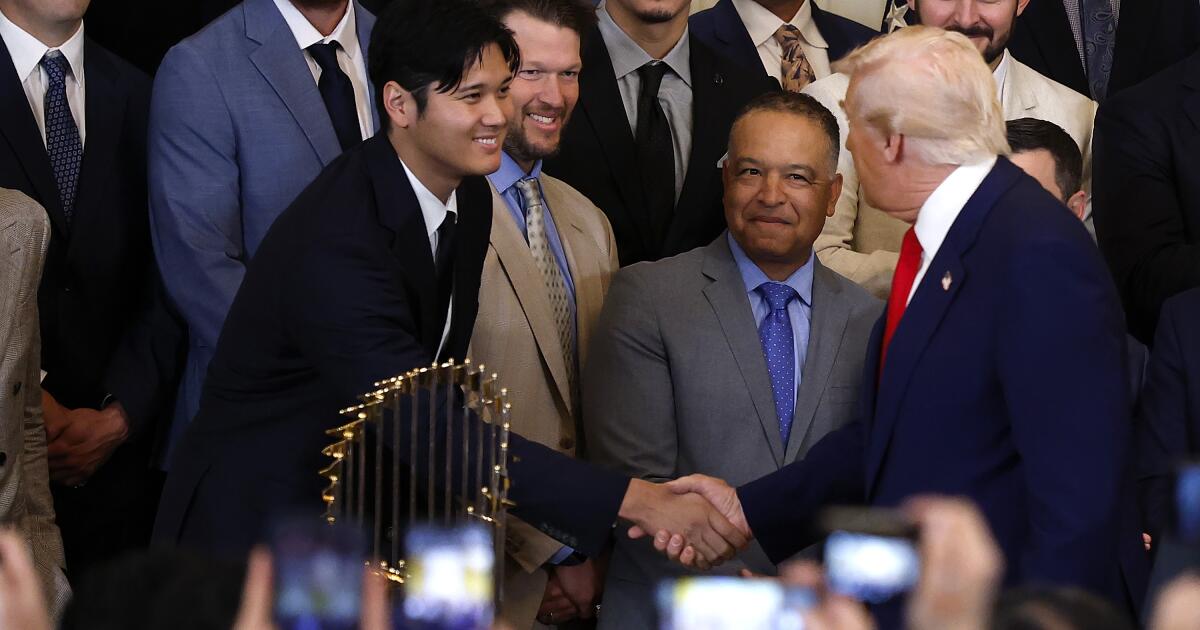
Dodgers scheduled to visit White House in late July to celebrate 2025 World Series win
-

 World36 minutes ago
Former US Olympian pleads not guilty in DC reflecting pool vandalism case
-
 News1 hour ago
Former Olympian pleads not guilty in reflecting pool vandalism charges


