Pennsylvania
Did the National Weather Service capture a photo of Bigfoot during a Pennsylvania storm survey?


FOX Nation’s Abby Hornacek shares inside look on how to explore some the country’s vast wilderness.
MESSMORE, Pa. – Meteorologists with the National Weather Service say they never know what they’ll encounter during a storm survey and while it’s not unusual to come across something unexpected, discovering a mysterious creature lurking in the background of one of their photos certainly makes for a memorable experience.
During a recent investigation into damage caused by severe weather, something unusual was spotted beyond a fallen tree – the appearance of what many refer to as “Bigfoot.”
The sighting occurred in Fayette County, Pennsylvania, an area nestled within the hills and the higher terrain of the Allegheny Mountains, north of West Virginia.
The figure appeared to be human-sized, if not larger, as it walked through the wooded landscape, but, according to an NWS meteorologist, there is no need to worry, as what was spotted was likely something purposely staged to add a bit of fun to people’s lives.
Locals said it’s rather common for residents to create figures out of iron or other similar materials, either for decoration or to spark curiosity from passersby.
National Weather Service damage survey in Fayette County, Pennsylvania.
(NOAA)
GIANT BUG FOUND AT AN ARKANSAS WALMART IDENTIFIED AS A JURASSIC-ERA INSECT
While the recent sighting may not have been an actual living creature, there have been historical reports of similar-sized entities in the region.
According to the Pennsylvania Bigfoot Society, in 1977, a family driving along a dark stretch of a nearby roadway spotted a six-foot-tall figure covered in shaggy, reddish-brown hair. When they shined their headlights at it, the creature reportedly disappeared over a 40-foot embankment, never to be seen again.
In 2004, in nearby Greene County, two friends reported seeing a 7-foot-tall creature making cat-like noises during their bike ride, and in 2013, a man reported seeing an 8-foot-tall creature with caveman-like features in the far distance.
According to the Bigfoot Field Researchers Organization, Pennsylvania is often a hotspot for sightings and ranks in the top ten of states with the most reports.
The earliest reports of Sasquatch sightings date back to at least the 1800s, according to the State of Washington.
Many of these early cases lacked photos or video evidence, so they were often dismissed as misunderstandings or gags.
Advancements in technology have led to numerous modern sightings captured on video or in photos, fueling ongoing debate about the existence of these creatures.
WAR TROPHY FROM GEORGE WASHINGTON’S ARMY DISCOVERED AMID BRITISH SHIPWRECK
Despite actually seeing apparitions of a figure, many believe there’s more to these encounters than meets the eye.
Studies over the years have pointed to some sightings actually being large bears, while others could be pranks or attempts by people to simply gain attention.
For now, there’s no conclusive evidence to prove the existence of Sasquatch, Bigfoot or whatever name you prefer to call it.
So, if you ever find yourself driving along Messmore Road in Fayette County, don’t be alarmed if you spot something out of the ordinary – it simply appears to be a lawn decoration meant to capture a passerby’s imagination.



A toddler was lightly injured by a wolf at a Pennsylvania theme park zoo after he crawled under a fence and stuck his hand into the animal’s enclosure, officials at the zoo confirmed Sunday.The child was never inside the wolf habitat at the ZooAmerica North American Wildlife Park, which is part of the Hersheypark theme park, and the officials characterized the injuries as minor without elaborating.After the “unsupervised” child reached the metal enclosure around the wolf habitat on Saturday morning and put his hand through, a wolf approached “and made contact with the child’s hand,” according to a statement from the zoo.”This type of response is consistent with natural animal behavior, and was not a sign of aggression,” the zoo said in a statement. “Our habitats are designed with multiple layers of protection, and clear signage and barriers are in place to help ensure safe viewing. Guests are expected to remain within designated areas and closely supervise children at all times.”The zoo is part of the entertainment complex in Hershey, Pennsylvania, featuring a chocolate-themed amusement park. The zoo’s website says it has three gray wolves.Hersheypark made headlines last summer when a lost boy wandering a monorail line above a crowd was rescued by a park visitor who climbed onto a building and jumped onto the rails. The child was unharmed and reunited with his family.
A toddler was lightly injured by a wolf at a Pennsylvania theme park zoo after he crawled under a fence and stuck his hand into the animal’s enclosure, officials at the zoo confirmed Sunday.
The child was never inside the wolf habitat at the ZooAmerica North American Wildlife Park, which is part of the Hersheypark theme park, and the officials characterized the injuries as minor without elaborating.
After the “unsupervised” child reached the metal enclosure around the wolf habitat on Saturday morning and put his hand through, a wolf approached “and made contact with the child’s hand,” according to a statement from the zoo.
“This type of response is consistent with natural animal behavior, and was not a sign of aggression,” the zoo said in a statement. “Our habitats are designed with multiple layers of protection, and clear signage and barriers are in place to help ensure safe viewing. Guests are expected to remain within designated areas and closely supervise children at all times.”
The zoo is part of the entertainment complex in Hershey, Pennsylvania, featuring a chocolate-themed amusement park. The zoo’s website says it has three gray wolves.
Hersheypark made headlines last summer when a lost boy wandering a monorail line above a crowd was rescued by a park visitor who climbed onto a building and jumped onto the rails. The child was unharmed and reunited with his family.

Michigan State football has locked in an official visit with an intriguing defensive back prospect from Pennsylvania.
Trey Hopkins of Wyndmoor, Pa. announced on Saturday that he’s scheduled an official visit to Michigan State for late May. According to a social media post from Hopkins, he will visit Michigan State on May 29.
Hopkins is currently unranked and unrated on 247Sports. He is listed at 6-foot-2 and 195 pounds, and plays for La Salle College. His position is listed as cornerback.
Michigan State extended Hopkins an offer in late February, and is one of nearly 20 schools to offer him, according to 247Sports. Other than his offer from the Spartans, Hopkins has received offers from Penn State, Maryland, UCLA, Virginia Tech, Maryland, Wake Forest, USF, Temple, James Madison, Liberty, Miami (OH) and some other group of five or FCS programs.
Michigan State will be the first of three currently scheduled official visits for Hopkins. According to 247Sports, he will also take official visits to Virginia Tech (June 5) and Penn State (June 11).
Contact/Follow us @The SpartansWire on X (formerly Twitter) and like our page on Facebook to follow ongoing coverage of Michigan State news, notes and opinion. You can also follow Robert Bondy on X @RobertBondy5.

A small airplane made an emergency landing on Interstate 78 in Allentown, Pennsylvania on Saturday morning, according to the Federal Aviation Administration.
The Rockwell Commander landed at around 9:20 a.m. after reporting engine issues, the FAA said.
The two people onboard were not injured, according to Pennsylvania State Police.
Dashcam video of the incident circulating on social media shows the plane flying low overhead before landing on the interstate and slowing down.
Emily Rivera, who posted the video, was traveling from Harrisburg to Lehigh Valley when she saw the plane make the landing.
“Honestly I was in disbelief because I never expected a plane to land in front of me!” Rivera said, adding that she was impressed with how the pilot landed.
Police said to expect delays in the area and that all traffic eastbound is being detoured onto exit 40. More information will be released later, police said.
The FAA is investigating the incident.

I Know Exactly How You Die – Review | Indie Slasher | Heaven of Horror

Artemis II astronauts race to set a new distance record from Earth and behold the moon’s far side

Video: NASA’s Artemis II Crew Prepares for Lunar Flyby on Monday

Zendaya brings ‘The Drama,’ we bring the spoilers : Pop Culture Happy Hour

Suno is a music copyright nightmare

Florida High School Football Rankings: Top 25 teams – Oct. 21

How old is Bo Nix? What to know about Oregon quarterback ahead of 2024 NFL Draft

Cleary's 21 help Le Moyne down Central Connecticut State 69-64 in OT

99th annual Pony Swim held in Virginia

Indiana Members Credit Union announced as new anchor tenant at Bottleworks District

GOP races to pass ICE, Border Patrol funding bill as priorities pile up, divisions emerge
Jet fuel crisis: Rationing triggered at four airports in Italy
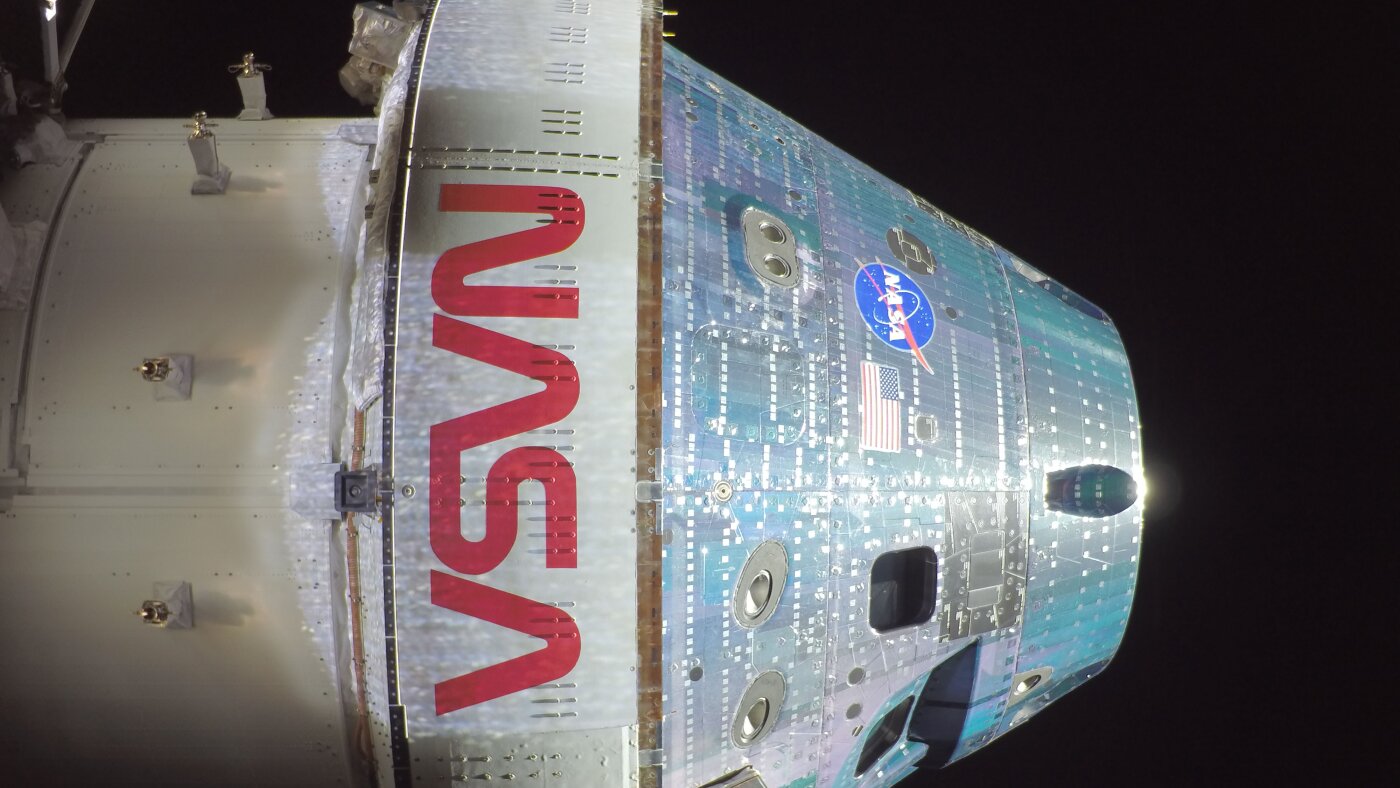
NASA’s Artemis II crew readies for Monday’s lunar flyby. Here’s what you need to know

Tax day is next week: Avoid these 5 common mistakes that can cost you money

Hamas armed wing says disarmament demands not acceptable
-

 South-Carolina1 week ago
South Carolina vs TCU predictions for Elite Eight game in March Madness
-

 Atlanta, GA1 day ago
1 teenage girl killed, another injured in shooting at Piedmont Park, police say
-

 Vermont1 week ago
Skier dies after fall at Sugarbush Resort
-

 Movie Reviews4 days ago
Vaazha 2 first half review: Hashir anchors a lively, chaos-filled teen tale
-

 Politics1 week ago
Trump’s Ballroom Design Has Barely Been Scrutinized
-

 Atlanta, GA1 week ago
Fetishist ‘No Kings’ protester in mask drags ‘Trump’ and ‘JD Vance’ behind her wheelchair
-
 Entertainment4 days ago
Inside Ye’s first comeback show at SoFi Stadium
-

 Politics1 week ago
JD Vance says he was ‘obsessed’ with UFOs, believes aliens are actually ‘demons’