Northeast
New York Judge Merchan to decide whether to dismiss Trump guilty verdict in Bragg case after election win

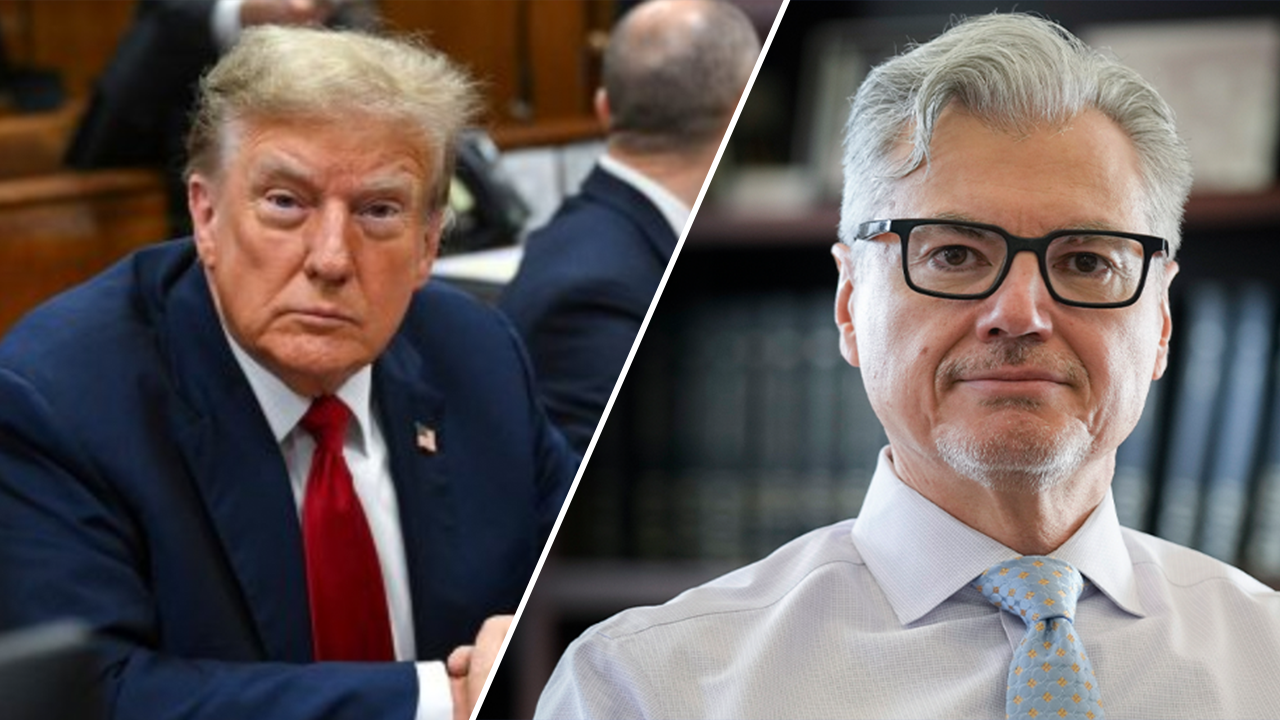
New York Judge Juan Merchan on Tuesday is expected to decide whether to uphold or dismiss President-elect Donald Trump’s guilty verdict in Manhattan District Attorney Alvin Bragg’s case against him.
Trump pleaded not guilty to all 34 counts of falsifying business records in the first degree, but was found guilty in May after a six-week-long unprecedented criminal trial in New York.
Merchan is expected to issue a written opinion Tuesday on the president-elect’s request to toss his conviction. Merchan could order a new trial or dismiss the indictment and charges altogether.
Merchan was expected to rule in September, but wanted to “avoid any appearance” he was trying to influence the 2024 presidential election.
Trump is currently scheduled for sentencing on Nov. 26. The sentencing was first set for July 11th, but then was delayed until September 18. Merchan delayed that sentencing date again until after the election.
WHERE DOES TRUMP’S NEW YORK SENTENCING STAND AFTER MASSIVE ELECTION WIN?
Manhattan District Attorney Alvin Bragg speaks to the media after a jury found former President Donald Trump guilty on 34 felony counts of falsifying business records on Thursday, May 30, 2024, in New York. (AP/Seth Wenig)
Trump’s attorneys have requested that Merchan overturn the guilty verdict, citing the United States Supreme Court’s decision that former presidents have substantial immunity from prosecution for official acts in office. Trump’s legal team argued that certain evidence presented by Bragg and New York prosecutors during the trial should not have been admitted, as they were “official acts.”
Specifically, Trump attorney Todd Blanche argued that testimony from former White House Communications Director Hope Hicks; former Special Assistant to the President Madeleine Westerhout; testimony regarding The Special Counsel’s Office and Congressional Investigations and the pardon power; testimony regarding President Trump’s response to FEC Inquiries; his presidential Twitter posts and other related testimony was impermissably admitted during trial.
Former President Donald Trump attends the first day of his trial at Manhattan Criminal Court in New York City on April 15. Judge Juan Merchan poses for a picture in his chambers on March 14 in New York. (Angela Weiss/AFP via AP, POOL/AP)
Trump attorneys also pointed to Trump’s disclosures to the Office of Government Ethics as president.
TRUMP REQUESTS NY JUDGE OVERTURN GUILTY VERDICT, INDICTMENT AFTER SCOTUS IMMUNITY RULING
Blanche said that “official-acts evidence” that Manhattan District Attorney Alvin Bragg presented to the grand jury “contravened the holding in Trump because Presidents ‘cannot be indicted based on conduct for which they are immune from prosecution,’” the motion read. “The Presidential immunity doctrine recognized in Trump pertains to all ‘criminal proceedings,’ including grand jury proceedings when a prosecutor ‘seeks to charge’ a former President using evidence of official acts.”
Former U.S. President Donald Trump, alongside his attorney Todd Blanche, speaks to the media as he arrives for his criminal trial for allegedly covering up hush money payments at Manhattan Criminal Court on May 30, 2024 in New York City. Judge Juan Merchan gave the jury their instructions, and deliberations are entering their second day. The former president faces 34 felony counts of falsifying business records in the first of his criminal cases to go to trial. (Michael M. Santiago/Pool via REUTERS)
Blanche argued that Bragg “violated the Presidential immunity doctrine by using similar official-acts evidence in the grand jury proceedings that gave rise to the politically motivated charges in this case.”
“Because an Indictment so tainted cannot stand, the charges must be dismissed,” Blanche argued.
Blanche also explained that the Supreme Court’s decision does not allow for an “overwhelming evidence” or “harmless error” exception to “the profound institutional interests at stake.”
The Supreme Court’s 6-3 decision on presidential immunity came from a question that stemmed from charges brought against Trump in a separate, federal case brought by special counsel Jack Smith related to the events on Jan. 6, 2021 and any alleged efforts to overturn the results of the 2020 election.
Trump pleaded not guilty to all charges in that case.
Smith is winding down his cases against Trump following his election as the 47th president of the United States.
Smith’s classified records case against Trump was dismissed by a federal judge in Florida earlier this year, who ruled that the special counsel was unlawfully appointed.
Read the full article from Here


Employees at the Institute of Contemporary Art / Boston are gearing up for contract negotiations with the Seaport museum after quietly opting to unionize last month.
Just over 90 employees, in roles ranging from visitor services to development to curation, are now being represented by the UAW Local 2110, a New York-based union, as they prepare to go to the bargaining table, seeking better pay and other job protections.
The ICA voluntarily recognized the union shortly after the workers went to museum leadership in early April, said Maida Rosenstein, UAW Local 2110’s director of organizing. That meant the employees could sidestep a formal election through the National Labor Relations Board and instead conduct a card-counting process.
“That all happened quite quickly,” said Rosenstein.
“Our experience with getting voluntary recognition was that the ICA was reasonable about the process,” she added. “So hopefully that will continue through the bargaining process.”
The next step, Rosenstein said, is for the workers to elect a bargaining committee from among their ranks, and then draw up some specific proposals. “We’re hopeful of being able to be negotiating this summer,” she said.
In a statement, the ICA’s director, Nora Burnett Abrams, who stepped into the top job last May, noted that “our exceptional staff are at the heart of what makes the museum so special.”
“We are voluntarily recognizing our employees’ choice to be represented by a union and view the decision to organize as an expression of their deep dedication to the institution,” Burnett Abrams said. “We look forward to working collaboratively and in good faith with Local UAW 2110 toward a collective agreement.”
The ICA is just the latest local institution to see labor action among its workforce. UAW Local 2110 also represents employees at the MFA Boston, who voted to unionize in 2020 and secured compensation increases and other benefit improvements when they ratified their first contract in 2022. Workers at MASS MoCa in North Adams, the Emily Dickinson Museum in Amherst, and the Portland Museum of Art in Maine are also represented by UAW Local 2110.
Carter Seggev, a 28-year-old events coordinator at the museum, said seeing the MFA go through its own unionization process served as something of a blueprint for the ICA workers.
“It has been a very helpful beginner example, to sort of be like, ‘Oh, yeah, they can do it,’ and especially that scale,” he said.
Rosenstein said a chief concern among workers is improving pay, which is currently “very slightly above minimum wage at the entry level,” she said. Other concerns include protections against layoffs and other “health and safety” provisions, such as adequate rest and seating for visitor-facing employees.
For Seggev, who earns $50,000 a year at the museum, better pay is only one piece of the puzzle. He wants more transparency from museum leadership into policy decisions — and a greater say in the institution’s future.
“I like the ICA a lot. It’s a fun workplace, and I would love to have more of a voice in making sure that everyone is being considered and everyone’s needs are being taken into account,” he said. “For me personally, that’s been the biggest driving force.”
He added that, since workers went public with their organizing efforts, he’s been happy with leadership’s willingness to talk with workers about their aims. He was also encouraged by the museum’s voluntary recognition of the union.
“I know that is a very rare thing, and so far, the communication has been very positive,” he said. “I think everyone’s sort of looking forward to working together to make the ICA better.”
The ICA, which has been housed in a gleaming glass building perched on the waterfront since 2006, had an operating surplus of about $800,000 in the fiscal year that ended in June 2025, according to its latest publicly released financial statements. That was up more than a quarter-million dollars from the previous year.
Dana Gerber can be reached at dana.gerber@globe.com. Follow her @danagerber6.


Connecticut is taking a major step to prepare its workforce for the growing influence of artificial intelligence, as Charter Oak State College announces a significant expansion of its AI Academy.
Through this initiative, developed in partnership with the Business-Higher Education Forum and Axim Collaborative, Charter Oak learners, job seekers, educators, and employees of small and mid-sized businesses will gain new pathways to in-demand careers using the Open edX platform.
Charter Oak, which is part of the Connecticut State Colleges & Universities (CSCU) system, is the state’s only public online college.
At a time when artificial intelligence is rapidly transforming industries ranging from healthcare to finance, the expansion reflects both urgency and opportunity. Employers are increasingly seeking workers who understand how to apply AI tools effectively, yet many job seekers and organizations lack access to affordable, relevant training. The AI Academy is intended to close that gap by aligning education directly with workforce needs.
This effort addresses a pressing economic challenge: ensuring that small and mid-sized businesses — which employ nearly half of Connecticut’s workforce — are not left behind as AI reshapes industries.
“Connecticut’s economic strength lies in its small and medium-sized businesses. The expansion of the AI Academy is a direct investment in those businesses, providing them with the high-level AI fluency typically reserved for large corporations. Furthermore, by bringing a tool-agnostic, mindset-first approach to our K-12 districts, we are helping educators move past the ‘hype’ and focus on the strategic deployment of AI. We aren’t just teaching people how to use AI; we are empowering Connecticut’s schools and businesses to lead with it,” said Dr. Dave Ferreira, Provost, Charter Oak State College.
The expanded AI Academy will offer stackable credentials over a three-year period, combining technical training with durable skills like communication, problem-solving, adaptability, and digital literacy. Learners will be able to progress at their own pace, building credentials that align with specific career pathways while remaining flexible enough to adapt to changing job market demands.
The program is designed with direct input from more than 100 leaders across business and higher education, including major employers in insurance, consulting, and technology. That collaboration ensures the curriculum reflects real-world needs, helping participants gain skills that are immediately applicable in the workplace.
A key component of the initiative is a new pathway for K-12 school districts. Rather than focusing on specific tools or platforms, the program emphasizes building an “AI mindset” — equipping educators and administrators with the knowledge to make informed, strategic decisions about how AI is used in classrooms and operations. This approach is intended to help school systems develop sustainable policies that can evolve alongside rapidly changing technology.
“The future of work demands a new kind of collaboration,” said Kristen Fox, CEO of the Business-Higher Education Forum. “When employers and institutions join forces to equip learners with AI skills and durable competencies, we create real pathways for people to unlock new opportunities, advance their careers, and thrive in an economy that is changing faster than any one sector can address alone. This is the model we need — and Connecticut is showing how it’s done.”
In addition to supporting businesses and schools, the initiative aims to expand access for individuals who have traditionally faced barriers to career advancement. By offering flexible online learning, the program is designed to reach underemployed workers, adult learners, and those seeking to transition into new fields.
The academy will begin with foundational AI coursework and expand into high-demand fields such as business, health technology, and cybersecurity — sectors where the need for skilled workers continues to grow. Over time, the program is expected to scale statewide before expanding nationally, with a goal of reaching 10,000 learners over the next five years.
“By partnering with employers to co-design AI-focused curricula, Charter Oak and BHEF are equipping learners with the skills and experiences they need to thrive in a changing economy while fueling regional economic development,” said Stephanie Khurana, CEO of Axim Collaborative.
The effort builds on Charter Oak’s existing CT AI Academy, launched in 2025, which has already served more than 3,500 residents with free AI training. That early success demonstrated strong demand for accessible AI education and helped lay the foundation for this expanded, more comprehensive model.
State higher education leaders say the initiative strengthens Connecticut’s long-term workforce pipeline while positioning the state as a model for others seeking to align education with economic development.
As artificial intelligence continues to reshape the workplace, Connecticut’s approach highlights how coordinated investment in education, business partnerships, and workforce development can help ensure that growth is both inclusive and sustainable — and that workers and employers alike are prepared for what comes next.
-

 Detroit, MI6 minutes ago
Detroit school district to showcase student stars at Fox Theatre
-

 San Francisco, CA17 minutes ago
Audit says San Francisco Zoo spent $12M without required approval
-

 Dallas, TX24 minutes ago
FC Dallas vs New York Red Bulls: Highlights and stats
-

 Miami, FL30 minutes ago
F1: How to Watch the 2026 Miami Grand Prix
-

 Boston, MA36 minutes ago
Workers at the ICA in Boston opt to unionize – The Boston Globe
-
 Denver, CO42 minutes ago
Hunter Lawrence wins Denver Supercross, heads to finale one point behind Ken Roczen
-

 Seattle, WA48 minutes ago
Seattle Mariners’ Raleigh day-to-day with ‘general soreness’
-

 San Diego, CA54 minutes ago
San Diego Padres vs. Los Angeles Dodgers (June 26-28)