New Jersey
New Jersey’s Declaration of Independence signers were not professional politicians – New Jersey Globe


Just one of the five New Jerseyans who signed the Declaration of Independence went on to run for public office.
Abraham Clark had served in the Continental Congress in 1776 and was the only New Jersey delegate who supported independence from the start. The pro-Independence legislature recalled their other four delegates and sent a new delegation to join Clark.
Two of his sons served in the Continental Army; both were captured and brutally tortured. The British offered to spare the lives of Clark’s sons if he would recant his signing of the Declaration of Independence, but he refused.
Clark ran again for Congress in 1791 and was the top vote-getter. He served in the Second and Third Congress from 1791 until he died in office in 1794.
Clark was the clerk of the New Jersey Provincial Assembly, before becoming Essex County Sheriff and a member of the Provincial Congress. Clark and four others were appointed the Continental Congress on June 21, 1776 when New Jersey replaced delegates who opposed separation.
After serving in the Continental Congress through 1778, he later represented Essex County on the New Jersey Legislative Council.
Richard Stockton, one of George Washington’s best friends, served on the New Jersey Provincial Council from 1768 to 1774, when he was named to the New Jersey Provincial Supreme Court.
While serving in the Continental Congress, Stockton ran for Governor of New Jersey. He and William Livingston tied on the first ballot and Livingston later won the race by one vote. As a consolation prize, Stockton was offered the post of Chief Justice of the New Jersey Supreme Court, but he declined the offer.
His son and grandson represented New Jersey in the United States Senate: Richard Stockton replaced Frederick Frelinghuysen in 1796 and served two years, lost three races for governor, and then served as a congressman from 1813 to 1815; and Robert Stockton served as Military Governor of California before serving in the Senate from 1851 to 1853.
Francis Hopkinson was the customs collector in Delaware before moving to Bordentown and taking a seat on the New Jersey Provincial Council.
President Washington nominated him to serve as a judge of the U.S. District Court for the District of Pennsylvania in 1789. He served on the bench until his death in 1791.
Some historians say that Hopkinson, and not Betsy Ross, was the designer of the U.S. Flag.
John Hart began his political career as a Hunterdon County Freeholder in 1750. He served in the New Jersey Colonial Assembly from 1761 to 1771 and later became of judge. He served as a member of the Revolutionary Assembly before joining the Continental Congress thirteen days before the signing of the Declaration of Independence.
In August 1776, Hart returned to New Jersey to serve as Speaker of the New Jersey General Assembly.
His great-great-great-grandson, John Hart Brewer, was a New Jersey Congressman from 1881 to 1895. Another descendant served as mayor of Hopewell and on the township committee until his defeat last year.
John Witherspoon, the president of a college that would become Princeton University, was sent to the Continental Congress in 1776 and served until 1784. He served two terms in the New Jersey Legislature.



NewJerseyDevils.com is the official web site of the New Jersey Devils, a member team of the National Hockey League (“NHL”). NHL, the NHL Shield, the word mark and image of the Stanley Cup and NHL Conference logos are registered trademarks of the National Hockey League. All NHL logos and marks and NHL team logos and marks as well as all other proprietary materials depicted herein are the property of the NHL and the respective NHL teams and may not be reproduced without the prior written consent of NHL Enterprises, L.P. Copyright © 1999-2025 New Jersey Devils and the National Hockey League. All Rights Reserved.


Russo Development CEO talks finishing Paramus NJ projects
Edward Russo, CEO of Russo Development, speaks to NorthJersey.com about their newest projects and opportunities for developers in Paramus.
One of three massive redevelopment projects at Paramus’ biggest shopping malls will finish construction this summer. Another will have to wait until 2027.
The two projects will bring hundreds of apartments and thousands of feet of additional retail space to Bergen Town Center and Paramus Park Mall, two of Bergen County’s biggest retail destinations. Both projects are the work of Carlstadt-based Russo Development LLC, which is also building a new headquarters in the borough.
The biggest mall redevelopment in town — a multiyear plan that could bring as many as 1,400 homes to Westfield Garden State Plaza — is also underway under the direction of a different developer. That project is expected to hold an official groundbreaking in the coming weeks.
The construction is “an opportunity for affordable housing to get built, which is certainly a big priority for almost every municipality in New Jersey right now,” Russo Development CEO Ed Russo said in a recent interview. He credited borough officials for making sure “there was additional investment and vibrance that was being added” to Paramus’ commercial center.
Paramus Park housing almost done
First in line for completion is Vermella Paramus, two mixed-use buildings with 360 one-, two- and three- bedroom apartments under construction next to the Paramus Park Mall, west of the Garden State Parkway.
The project will also have 8,000 square feet of onsite retail space. It will be built adjacent to the mall and the new Valley Hospital, according to a description on the company’s website.
One of the buildings will be finished next month, while the second is scheduled to finish construction in June, Russo said last week.
Bergen Town Center project has new name, timeline
The developer, alongside KRE Group, also plans to build two five-story buildings with 426 units and 5,000 square feet of retail at Bergen Town Center, off of Route 4. The project will be called Bergen Chapters, Russo said.
The housing will include 147 one-bedroom apartments to be sold at market rate and another 12 reserved as affordable. The project will also have 1,572 parking spaces, including lots from other areas of the mall property and two parking garages.
A building on the east side of the Bergen Town Center property that currently contains a former Kirkland’s, Red Robin and Recreational Equipment Inc will be knocked down for the project. Recreational Equipment Inc. closed in late January, so the property has only become vacant in the last month, said Russo. He expects the work to finish in late 2027.
Story continues after gallery.
Living at the mall
Paramus’ three big projects fueled speculation that other shopping centers in North Jersey would follow the example, as mall owners looked for ways to survive the rise of online retail.
But there hasn’t been a tremendous amount of mall redevelopment in New Jersey, Russo said.
Paramus’ situation is unique, he noted, with “three good size malls” all within the same town. Spurred in part by state affordable housing mandates, the borough council adopted zoning in 2016 that allowed for mixed-use development along its highway corridor. That was the impetus for the three mall makeovers, Russo said.
Other factors also made the borough’s commercial corridor especially suited for this type of hybrid development, he added.
“Paramus has always been considered, for many decades, as a shopping mecca between the malls, Route 17, Route 4 and the proximity to New York City,” said Russo. “It’s really been a vibrant retail community for many years.”
In addition to fulfilling affordable housing obligations, the zoning helped the borough attract new investment around the malls, boosting their long-term success, he added.
“The retail market has been affected in a larger part of New Jersey over the last number of years,” said Russo. “I think Paramus was very forward-thinking in the zoning that they did years ago.”

(TNS) — Artificial intelligence will be used to score most of the writing New Jersey students do on the new statewide standardized tests set to debut this spring, state education officials said.
The AI system will be used to grade student essays and short answers on the English Language Arts section of the statewide exams, according to a state-approved testing proposal. The “artificial intelligence” will be trained using scores generated by human scorers on practice tests that were given to students in October and November.
New Jersey is debuting a new type of state tests — called the New Jersey Student Learning Assessments-Adaptive — this spring. It will be given to students in grades 3 through 10 to test their knowledge of English, math and science.
There will also be a new version of the state’s high school exit exam for high school juniors, now called the New Jersey Graduation Proficiency Assessment-Adaptive.
Like the previous version of the test, known as the NJSLA, the exams will be given via computer. But the new version will be “adaptive,” meaning students will get different questions based on their previous answers on the exam — a practice that is supposed to make scoring the tests more precise.
The AI system will be used to score the essays and written questions, but there will still be some human scorers, state Department of Education Spokesperson Michael Yaple said.
If a student’s written response is identified as “unusual” or “borderline” it will be “flagged for human review,” Yaple said.
“The system regularly conducts quality assurance checks to ensure that the scores assigned by the automated scoring engine match human scores through strict quality controls,” he added.
Cambium, the company overseeing the new tests, does not use generative AI — the version of artificial intelligence used in ChatGPT-type platforms that can create something new and are known to sometimes hallucinate false or inaccurate information, Yaple said.
Instead, the automated scoring system will have strict parameters “with proven consistency, and human scoring remains the foundation of the process, validating accuracy at multiple checkpoints throughout the scoring workflow,” state education officials said in a statement.
Computerized scoring of New Jersey’s state tests is nothing new. Last year, about 90 percent of student essays on the NJSLA and the state high school exit exams were scored solely by an automated scoring system, Yaple said.
But some educators have concerns about the extensive use of AI to grade the new version of the tests that will eventually be taken by nearly all of New Jersey’s 1.3 million public school students.
Using a version of AI to score student writing is risky, said Steve Beatty, president of the New Jersey Education Association, the state’s largest teachers union.
He said he would hate to see “some student fail on a computer-graded test only to find out later on that there was some sort of error.”
The NJEA is against high stakes testing in general, Beatty said. But if the tests are going to continue “then we want trained educators — humans — doing” the scoring.
If a student fails the AI-scored sections of the exams, there should be a plan to have the writing reassessed by a human, he said.
“They should go back to a person to be verified,” Beatty said.
NEW TESTING CONTRACT
New Jersey students will begin taking the new NJSLA-Adaptive exams during a month-long testing window between April 27 and May 29. The tests are usually given over several consecutive days.
The testing window for the new NJGPA-Adaptive high school exit exam for high school juniors will be from March 16 to April 1, according to a state Department of Education testing schedule.
The new statewide NJSLA and NJGPA tests were developed by Cambium Assessment, a company that won a $58.7 million, two-year contract with the state.
According to the Cambium proposal, Measurement Incorporated, a company located in Durham, North Carolina, will be responsible for providing and training the people who will do the human “handscoring” when AI-generated essay and written response scores are flagged for review.
In its proposal to the state, Cambium said the company assumes “25 percent of the overall responses will be routed for trained handscoring.”
New Jersey officials said AI was not used to create test items on the new version of the tests and artificial intelligence will not be used to determine which questions students see on the adaptive assessments.
Jeffrey Hauger, who served as director of assessments for the state Department of Education from 2010 to 2018, said New Jersey has a long history of using computers to help score the written portion of state tests. He later worked as an adviser to Pearson, the company that previously had the contract to provide the state NJSLA tests.
Around 2016, Hauger said the state started implementing a system that used one human and one automated scorer to assess each piece of student writing.
If a large discrepancy between the two scores was found, the essay would be read by a second human, he said.
“It was a tool for efficiency, but the human was always involved throughout the process back then,” Hauger said.
AI scoring is now more sophisticated, he said.
“Technology has improved. And so, it’s not as big of a leap now as maybe people think it is,” Hauger said.
During Gov. Phil Murphy’s time in office, the department started relying more on automated scoring and moving away from having each piece of writing evaluated by both a machine and a human, he said.
FLAGGING PROBLEMS
AI scoring has been controversial in other states.
In Massachusetts, AI grading errors were blamed for 1,400 incorrect scores on the state’s Massachusetts Comprehensive Assessment System, known as the MCAS, last year.
In Texas, several districts questioned whether AI grading was fair on its statewide tests in recent years.
The Dallas Independent School District has challenged thousands of AI generated essay scores on Texas’ statewide STAAR standardized tests over the past two years.
Cambium and Pearson, the companies involved in New Jersey’s testing, both contributed to Texas’ standardized testing system.
In 2024, the Dallas school district asked the state to rescore 4,600 tests, sending them to the state to be rescored by humans.
About 44 percent of the rescored tests came back with higher scores after a human read them, said Jacob Cortez, Dallas’ assistant superintendent in charge of evaluation and assessment.
The district also sent thousands of AI-scored tests for rescoring last year and nearly 40 percent came back with higher scores from humans, the district said.
The accuracy rate for the AI-scored third grade tests was the most troubling, with 85 percent of those sent back showing an improved score when humans read the students’ work.
“That is not okay,” Cortez said.
The Dallas school district, which serves about 139,000 students, limited the number of tests it sent back for rescoring because it had to pay $50 for each test that did not receive an improved score, local officials said.
Cambium officials did not respond to requests for comment about the Dallas accuracy issues or the company’s AI scoring practices.
New Jersey officials declined to comment on questions about AI scoring accuracy in other states.
“New Jersey cannot comment on another state’s assessment and scoring process,” Yaple said.
Lily Laux, New Jersey’s new commissioner of education, also did not respond to a request to comment. In her previous job as Texas’ deputy commissioner of school programs, she helped design the state’s standardized testing system, according to her LinkedIn profile.
The problems with AI scoring in Dallas raise questions about the system, said Scott Marion, principal learning associate at the Center for Assessment, a nonprofit, nonpartisan consulting firm.
“Is it not being trained well? Is it not being trained on a diverse enough population?” Marion asked.
AI scoring makes financial sense but states also need to be careful not to overly rely on it, he said. He’s comfortable with about 80 percent AI-scored writing because systems still need human backups.
“We’ve been doing this for so long,” he said referring to the use of AI to score student writing.
Many students, teachers and parents may be surprised to know how much of writing in school is already scored by AI, education advocates said.
Many “parents have no idea this is a thing,” said Julie Borst, executive director of community organizing for Save Our Schools New Jersey, a statewide advocacy group.
She is concerned that students with unique writing styles might end up with lower scores on tests because AI is looking for specific words and phrases or a standard number of sentences for top scores.
Borst, whose organization has long-opposed high stakes standardized testing, said in the end, it will still be up to teachers to know where students are doing well and where they are struggling.
“The teacher is going to know where those weaknesses are. They’re going to know where those strengths lie,” she said. “You cannot tell that — at the student level — from a standardized test.”
©2026 Advance Local Media LLC. Distributed by Tribune Content Agency, LLC.

NBA cancels Hawks’ plans to celebrate Atlanta strip club

Paid Family Leave Act strains Minnesota businesses, Chamber says
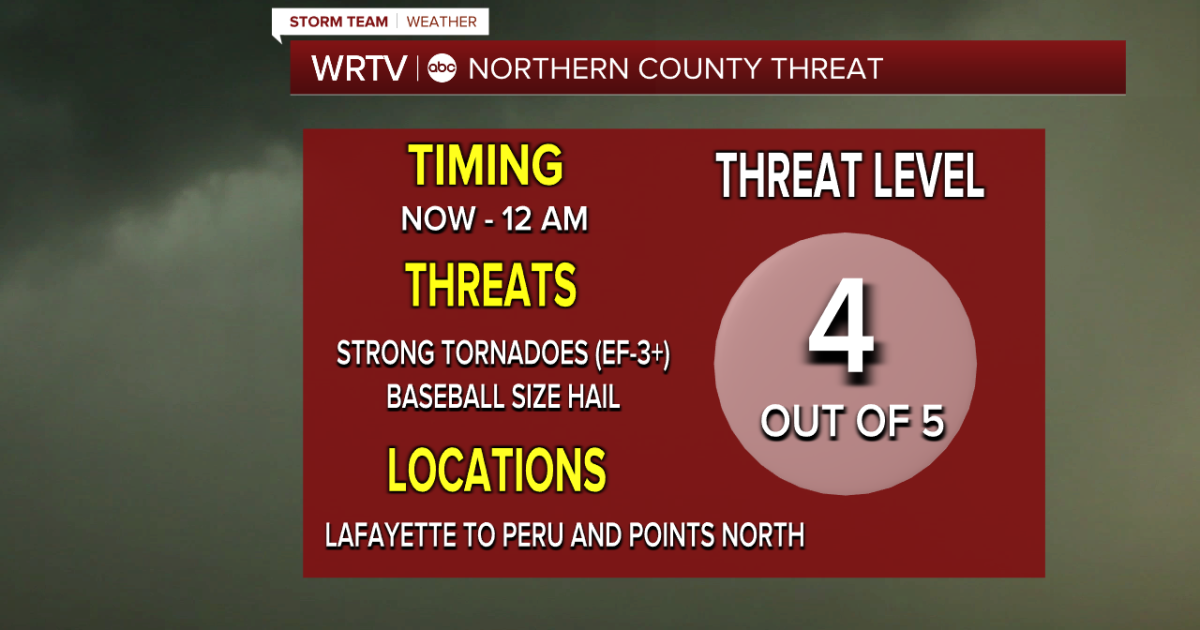
ALERT DAY: Tornado threat north this evening; severe threat sinks south overnight

Steelers Add Year to Cam Heyward’s Contract, Creating Cap Space

EARLY RESULTS: Special election underway for Ga. House District 130 seat

Florida High School Football Rankings: Top 25 teams – Oct. 21

Cleary's 21 help Le Moyne down Central Connecticut State 69-64 in OT

How old is Bo Nix? What to know about Oregon quarterback ahead of 2024 NFL Draft

99th annual Pony Swim held in Virginia

Indiana Members Credit Union announced as new anchor tenant at Bottleworks District

Map: 2.3-Magnitude Earthquake Reported North of New York City

Trump stirs GOP primary drama with visit to Massie’s Kentucky home turf

Israeli air strike targets building in south Lebanon

Ed Martin, outspoken Justice Department lawyer, is formally accused of ethical violations | CNN Politics

Trump reveals top issues GOP should focus on to secure midterms victory: ‘I’ve never been more confident’
-

 Wisconsin1 week ago
Setting sail on iceboats across a frozen lake in Wisconsin
-

 Massachusetts1 week ago
Massachusetts man awaits word from family in Iran after attacks
-

 Maryland1 week ago
AM showers Sunday in Maryland
-

 Pennsylvania5 days ago
Pa. man found guilty of raping teen girl who he took to Mexico
-

 Florida1 week ago
Florida man rescued after being stuck in shoulder-deep mud for days
-

 Detroit, MI5 days ago
U.S. Postal Service could run out of money within a year
-

 Miami, FL6 days ago
City of Miami celebrates reopening of Flagler Street as part of beautification project
-

 Sports6 days ago
Keith Olbermann under fire for calling Lou Holtz a ‘scumbag’ after legendary coach’s death