Connect with us

Northeast

Meet the American who reported the first sensational UFO encounters, Puritan leader John Winthrop

Published

on

Meet the American who reported the first sensational UFO encounters, Puritan leader John Winthrop

Join Fox News for access to this content

Plus special access to select articles and other premium content with your account – free of charge.

By entering your email and pushing continue, you are agreeing to Fox News’ Terms of Use and Privacy Policy, which includes our Notice of Financial Incentive.

Please enter a valid email address.

Having trouble? Click here.

Unidentified flying objects soared into American popular culture with the dawn of the jet age in the 1940s.

UFOs, it turns out, have mystified Americans since the earliest days of colonial settlement. 

Advertisement

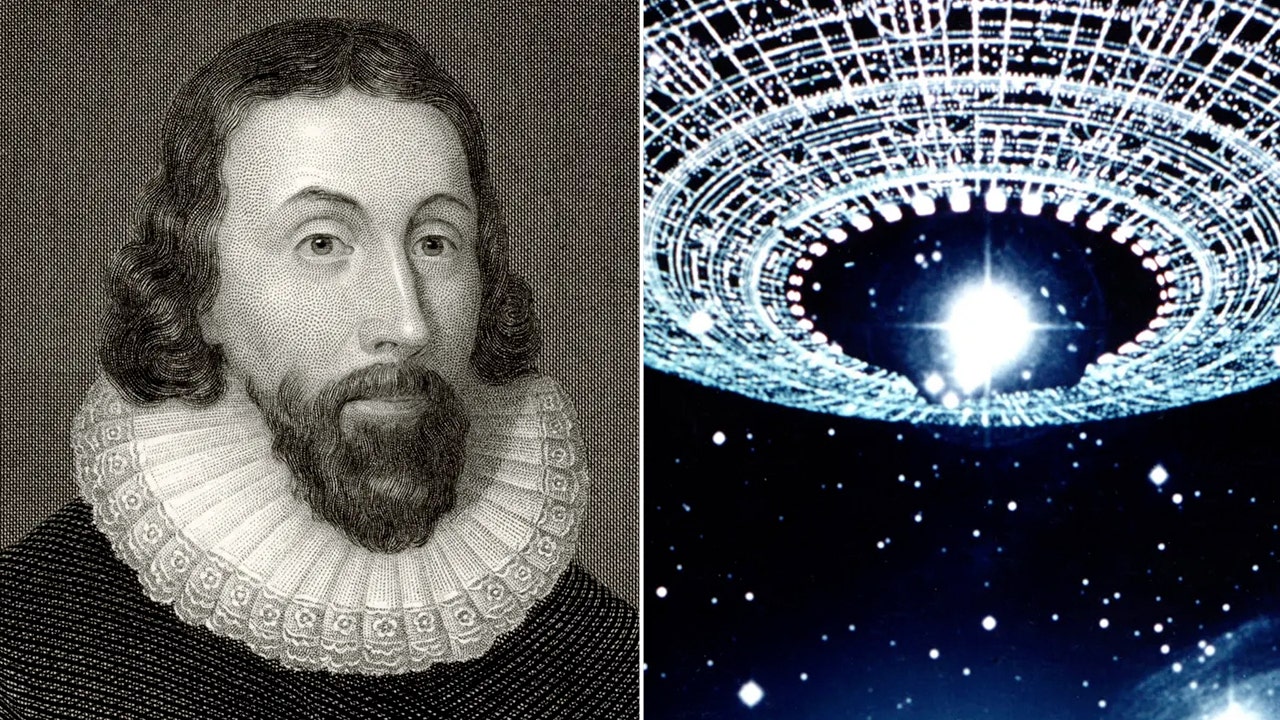
The first known UFO encounter in America was recorded in 1639 by pious Puritan and prolific journal-keeper John Winthrop. He is a foundational figure in the national pantheon and leader of the Massachusetts Bay Colony as it settled Boston. 

Winthrop’s sensational account of “a great light in the night” was witnessed by a group of “sober, discreet” and “credible persons” over Muddy River in Boston — a trickle of a creek that today wraps around American sports landmark Fenway Park. 

MEET THE AMERICAN WHO FIRST PLANTED APPLES IN THE COLONIES: WILLIAM BLAXTON, ECCENTRIC SETTLER

Winthrop’s leadership of the fledgling Massachusetts colony shaped the destiny of the United States, established more than a century after his death. 

He has serious street cred in academia, making his spectacular record of unexplained phenomena all the more remarkable. 

Advertisement

John Winthrop, who led the settlement of Boston in 1630, chronicled daily colonial life in his journal. His writing, widely esteemed among scholars, includes three reports of UFO sightings. (Universal History Archive/Getty Images; Sunset Boulevard/Corbis via Getty Images)

“John Winthrop’s journal has long served as a cornerstone of Massachusetts historical scholarship,” the Massachusetts Historical Society writes in a recent look at the Puritan’s UFO sightings.

“He diligently recorded the events of his life, along with the trials and tribulations of the people of the Massachusetts Bay Colony during the first 19 years of its existence.”

“John Winthrop’s journal has long served as a cornerstone of … historical scholarship.” — Massachusetts Historical Society

Winthrop’s incredible tales of aerial phenomena in early America, long unknown, generated sudden interest in recent years, after federal government and military officials admitted that it’s been studying UFOs for decades. 

Advertisement

Stories of paranormal and unexplained phenomena were effectively mainstreamed for academics and serious analysts. 

U.S. Deputy Director of Naval Intelligence Scott Bray explains a video of unidentified aerial phenomena, as he testifies before a House Intelligence Committee subcommittee hearing at the U.S. Capitol on May 17, 2022. Federal officials’ recent admissions that the government has been investigating UFOs for decades generated interest in reports of unexplained phenomena by Massachusetts Bay Colony founder John Winthrop.  (Kevin Dietsch/Getty Images)

Few Americans were more serious than Winthrop.

He was a devout Christian and an industrious nation builder. Despite the hardship of carving a new civilization from the wilderness, and governing a new society, he dutifully kept almost daily records of life in the colony for nearly two decades. 

One 2005 biography is titled “John Winthrop: America’s Forgotten Founding Father.”

Advertisement

“His energies seemed prodigious and inexhaustible.” 

“His energies seemed prodigious and inexhaustible,” PBS Frontline said of Winthrop. 

“Repeatedly elected governor, he was chiefly responsible for maintaining civic and social order.”

Born to establish ‘a city upon a hill’

John Winthrop was born on Jan. 12, 1587 or 1588, in Edwardstone, Suffolk County, England, to Adam and Anne (Browne) Winthrop.

The Arbella, a copy of Gov. John Winthrop’s flagship, moored in Forest River Park in Salem, Massachusetts, on the edge of a model pioneer village.     (Jerry Cooke/Getty Images)

Advertisement

Both his parents came from prosperous families, according to various accounts. 

He began journal-keeping in 1605 while still a teenager, chronicling his growing devotion to Christ. His faith was increasingly at odds with national sentiment after King Charles I, an Anglican sympathetic to Roman Catholicism, gained the throne in 1625.

Winthrop departed for the New World in the spring of 1630 aboard the Arbella with an expedition of Puritans to establish the Massachusetts Bay Colony, about 35 miles north of the Plymouth Colony settled by the Pilgrims in 1620. 

“For we must consider that we shall be as a city upon a hill.” — John Winthrop, 1630

Winthrop issued a message on the ship that has echoed through American history.

Advertisement

It’s remembered today as the “city upon a hill” sermon — inspired by several biblical passages and delivered to a daring people fleeing decrepit old Europe to create a New World in service of Christ.

“For we must consider that we shall be as a city upon a hill. The eyes of all people are upon us,” Winthrop said. 

Reception of a Narragansett warrior by John Winthrop, Massachusetts, c 1630s (c 1880). Winthrop was the leader of a group of Puritan settlers who established the Massachusetts Bay Colony in 1630. A print from “Cassell’s History of the United States” by Edmund Ollier, Volume I, Cassell Petter and Galpin, London, c 1880.  (The Print Collector/Print Collector/Getty Images)

“So that if we shall deal falsely with our God in this work we have undertaken, and so cause Him to withdraw His present help from us, we shall be made a story and a by-word through the world.”

The “city upon a hill” sermon helped establish the concept of American exceptionalism — a new society that would be a “model of Christian charity” for the world to admire and emulate. 

Advertisement

MEET THE AMERICAN WHO INSPIRED THE NATION IN TWO WORLD WARS: CHRISTIAN SOLDIER SGT. ALVIN YORK

The phrase “a city upon a hill” has been widely quoted by following generations, most notably by President Ronald Reagan, who cited Winthrop by name in his farewell address. 

“I’ve spoken of the shining city all my political life,” Reagan said to the nation on Jan. 11, 1989. 

John Winthrop, Puritan founder of the Massachusetts Bay Colony, chronicled the minutiae of nation-building for 19 years in a detailed journal. His March 1, 1639, entry includes the first report of a UFO encounter in America. He recorded two other UFO sightings in Boston in 1644. (Kerry J. Byrne/Fox News Digital)

“In my mind it was a tall, proud city built on rocks stronger than oceans, wind-swept, God-blessed, and teeming with people of all kinds living in harmony and peace … That’s how I saw it, and see it still.”

Advertisement

He reported mystifying events that defy explanation.  

Winthrop was God-fearing, intrepid, faithful, hard-working and diligent — serious in faith and deed. Few people in American history had less time, inclination or motive to devote to fantasy or foolishness.

‘Great light in the night’

Winthrop’s report of an eerie UFO encounter on a winter night in Boston is sandwiched between perfunctory passages about business dealings with the natives. 

The subject turned suddenly. 

Engraving depicting a lighter, a type of flat-bottomed barge used to transfer goods and passengers to and from moored ships. Dated 19th century. Puritan leader John Winthrop recorded America’s first UFO incident in 1639, witnessed by three men on a lighter similar to this one. His report hints they were also abducted. (World History Archive / Alamy Stock Photo)

Advertisement

“In this year one James Everell, a sober, discreet man, and two others, saw a great light in the night at Muddy River,” Winthrop wrote on March 1, 1639. 

“When it stood still, it flamed up, and was about three yards square; when it ran it was contracted into the figure of a swine.”

“James Everell, a sober, discreet man, and two others, saw a great light in the night at Muddy River.” — John Winthrop

Winthrop went on, “It ran swift as an arrow toward Charlton [Charlestown] and up and down about two or three hours. They were come down in their lighter [a small barge] about a mile, and, when it was over, they found themselves carried quite back against the tide to the place they came from. Divers[e] other persons saw the same light, after, about the same place.”

“That’s stunning,” UFO researcher Nick Pope told Fox News Digital after hearing the story for the first time. 

Advertisement

Nick Pope, a former UFO investigator for the U.K. Ministry of Defense and frequent contributor to “Ancient Aliens” on The History Channel, calls Puritan leader John Winthrop’s passages on UFO’s in early colonial Boston “pretty stunning.” (The History Channel)

Pope is a former UFO investigator for the U.K. Ministry of Defense and contributor to “Ancient Aliens” on The History Channel. 

Several sources say ignis fatuus, a spark of swamp gas, is the likely cause of the strange light. 

ANGELS IN OUR MIDST? ONE SCIENTIST EXPLAINS WHY THE BIBLE SUPPORTS EXTRATERRESTRIALS

But that doesn’t explain how the phantom light raced across the river — or why Everell and the other men in the boat wound up a mile downstream. 

Advertisement

“Most UFO witnesses, like Everell or Winthrop, are serious, sober individuals.”  — UFO expert Nick Pope

“Some researchers would interpret this as a possible alien abduction if it happened today,” authors Jacques Vallee and Chris Aubeck wrote in “Wonders in the Sky: Unexplained Aerial Objects from Antiquity to Modern Times.”

“Winthrop’s UFO” was an art installation placed in 2019 along Muddy River in Boston, where Puritan leader John Winthrop recorded America’s first UFO sighting in 1639. Artists Ann Hirsch and Jeremy Angier of A+J Art+Design created it; it represents the figure of a light in the shape of a swine, as Winthrop described.  (Courtesy A+J Art+Design)

Winthrop reported two more UFO sightings in 1644, the first on Jan. 18. 

“About midnight, three men, coming in a boat to Boston, saw two lights arise out of the water near the north point of the town cove, in form like a man, and went at a small distance to the town, and so to the south point, and there vanished away.”

Advertisement

MEET THE AMERICAN WHO ROWED WASHINGTON ACROSS THE DELAWARE ON CHRISTMAS: SAILOR-SOLDIER JOHN GLOVER

A week later another supernatural encounter was “seen by many,” he wrote.

“A light like the moon arose about the N.E. point in Boston, and met the former at Nottles Island, and there they closed in one, and then parted, and closed and parted diverse times, and so went over the hill in the island and vanished. Sometimes they shot out flames and sometimes sparkles.” 

Winthrop never mentioned the events again. 

His journal was not published until 1825. The mysterious passages were ignored amid the insight into colonial history culled from his voluminous writings. 

Advertisement

Muddy River in Boston on Jan. 18, 2022. John Wintrhop, Puritan founder of Massachusetts Bay Colony, recorded America’s first UFO sighting along Muddy River on March 1, 1639.  (Lane Turner/The Boston Globe via Getty Images)

The eerie objects remain unidentified today, yet come from one of the most trusted sources in American scholarship. 

“I think it speaks to the fact that those skeptics don’t like to admit, but most UFO witnesses, like Everell or Winthrop, are serious, sober individuals,” said Pope. 

For more Lifestyle articles, visit foxnews.com/lifestyle

“It doesn’t surprise me you have these very historical figures seeing these things. It’s vindication of what we see today. If you look at modern [UFO] accounts, very often they’re [from] police officers, pilots, military personnel, radar operators.”

Advertisement

‘No smoke without fire’

John Winthrop died of natural causes on March 26, 1649. He was 61 or 62 years old. 

He’s buried today in King’s Chapel Burying Ground in the heart of downtown Boston. 

Established in 1630, it’s one of the nation’s oldest cemeteries. 

John Winthrop, Illustration, “Ridpath’s History of the World,” Volume III, by John Clark Ridpath, LL. D., Merrill and Baker Publishers, New York, 1897.  (Universal History Archive/Universal Images Group via Getty Images)

Boston to this day comprises the bulk of Suffolk County, Massachusetts — the area still carrying the name of Winthrop’s homeland in England, some 400 years later. 

Advertisement

The town of Winthrop, next to Boston, juts proudly out into the harbor today. Winthrop Square is a landmark in downtown Boston. The Puritan leader is the namesake of schools, squares, communities and memorials around Massachusetts and in other parts of the country. 

More importantly for human events, the city he established and nurtured would, 145 years after he settled it, lead the charge for independence in the American Revolution.

Winthrop helped build a mighty “city upon a hill” — even while recording ephemeral mysteries that defied logic in 1639 and still defy it today. 

AlienCon, which returned to Pasadena, California, in March 2023 for the first time since 2019, is an exploration into the unexplained mysteries that exist between science fact and science fiction. (A+E Networks)

Advertisement

“People have this misconception that this all started with flying saucers and Roswell. It goes back to the dawn of time,” said Pope.

“What we’re just beginning to realize is that people have always seen these strange things. We have fiery chariots in the Bible and we have strange images in medieval and renaissance paintings and in old petroglyphs.”

To read more stories in this unique “Meet the American Who…” series from Fox News Digital, click here

He added, “There’s no smoke without fire. And the believers only have to be right once.” 

Advertisement

Read the full article from Here

Continue Reading
Click to comment

Leave a Reply

Your email address will not be published. Required fields are marked *

This site uses Akismet to reduce spam. Learn how your comment data is processed.

Maine

Opinion: What Maine’s candidates are missing about aging

Published

on

Opinion: What Maine’s candidates are missing about aging


The BDN Opinion section operates independently and does not set news policies or contribute to reporting or editing articles elsewhere in the newspaper or on bangordailynews.com

Kaitlyn Cunningham Morse is founder of Maine Aging Partners, a Maine-based consulting firm that helps families navigate aging and long-term care decisions.

In the coming election, Maine candidates will talk about housing. They will talk about workforce shortages, affordability, economic development and the future of our state.

Advertisement

What many will not do is confront the force tying those issues together: Maine is aging faster than our systems are adapting.

That omission matters.

Too much of our public conversation around aging still proceeds as though this is a manageable strain on an otherwise functional system — something that can be solved with another grant, another pilot program, another commission, or simply more patience.

But if that approach were working, it would be working by now.

Instead, we continue discussing the downstream effects of aging as if they are separate and unrelated problems.

Advertisement

We debate labor shortages. We debate housing shortages. We debate burnout. We debate economic stagnation.

All while ignoring the quiet reality unfolding behind closed doors across this state.

Somewhere in Maine, an older couple is beginning to struggle. One has fallen twice. The other is forgetting medications. The home that served them for 40 years no longer serves them now. And when no clear path exists — when there is no accessible support, no plan, no obvious next step — that problem does not stay within their household.

It lands downstream.

It lands in front of the daughter leaving work early because her father cannot be left alone. It lands in front of the employer wondering why a once-reliable manager is suddenly distracted. It lands in front of the small business losing a key employee to caregiving demands. It lands in front of the hospital trying to discharge someone with nowhere appropriate to send them. It lands in front of local leaders trying to solve workforce and housing issues while more residents quietly age out of independence.

Advertisement

That is what Maine’s aging crisis actually looks like.

Not simply older adults needing care. But families, employers and communities reorganizing themselves around a system under mounting strain.

Maine has the oldest population in the nation. Yet we still discuss aging as though it is a niche healthcare issue rather than a defining economic fact.

It is not separate from our workforce challenges. It is not separate from our housing crisis. It is not separate from our economic future.

When enough working-age adults reduce hours, leave jobs, delay advancement, or burn out because they are managing family caregiving in a fragmented system, the consequences ripple across the entire state.

Advertisement

This is no longer simply an elder care issue. It is a workforce issue. An economic issue. A housing issue. A civic issue.

And until our leaders begin treating aging as a central challenge shaping Maine’s future — rather than a specialized concern delegated to familiar institutions and stakeholder groups — we will continue mistaking downstream symptoms for unrelated problems.

We cannot build a thriving Maine while ignoring the demographic reality reshaping nearly every major policy debate before us.

The future of this state depends on our willingness to finally say so.


Source link

Advertisement
Continue Reading

Massachusetts

Sayres: Pet sale ban would take Massachusetts backwards

Published

on

Sayres: Pet sale ban would take Massachusetts backwards


Senate Bill 3028, under consideration by legislators, would ban the sale of dogs and cats at pet stores, closing several family-owned businesses in Massachusetts. Proponents of the legislation say that these small businesses are a necessary sacrifice in the name of finding more homes for shelter animals and combating “puppy mills,” or irresponsible dog breeders.

But as a longtime shelter animal advocate who used to advocate for bills like S. 3028, I’ve learned that these pet-sale bans simply don’t help on either front.

In theory, it might seem logical: Ban pet stores from selling dogs, and people will go to shelters instead. But in reality, that’s not what happens at all.

Families go to pet stores precisely because they are looking for dogs that aren’t at the local shelter. They often have a specific breed of dog in mind. They may need a hypoallergenic dog that doesn’t shed, or a dog with predictable temperament or behavioral traits.

Advertisement

If they can’t get a dog from a local store, then they’ll look elsewhere – typically on the Internet.

Go on TikTok or Craigslist, and you’ll find no shortage of people hawking puppies. Where do these dogs come from? It’s anyone’s guess, but it’s likely that many are sourced from puppy mills.

Which is ironic. Proponents of S. 3028 say banning retail pet sales will fight puppy mills. In reality, it will help puppy mills.

California gives proof to this. A Los Angeles Times investigation following the state’s ban on pet stores selling dogs found that “a network of resellers — including ex-cons and schemers — replaced pet stores as middlemen.”

Nor has California’s ban on retail pet sales reduced animal shelter overcrowding. Shelters in Los Angeles and San Francisco are struggling to deal with crowding in animal shelters more than five years after the ban was passed.

Advertisement

As the former head of the national ASPCA, and a former executive director of the San Francisco SPCA, I always advocate that people adopt from shelters. But I also recognize that people want choices in where to get a dog. We should make sure that these avenues are well-regulated for animal and consumer protection.

And that’s why S. 3028 is counterproductive: It drives dogs and families away from pet stores, which are regulated brick-and-mortar local businesses, and into the black market where there are essentially no regulations to protect people and animals.

If Massachusetts goes down this road, it won’t stop with dogs and cats. Activists will lobby, as they have in Cambridge, for the entire Commonwealth to ban the sale of all pets at pet stores. Fish, hamsters, guinea pigs, you name it.

Where then will people get pets?

Some families will just drive to New Hampshire, as some Bay Staters already do for other goods. But others, particularly less-advantaged people without personal vehicles, will either have to turn to shady online marketplaces or perhaps not get a pet at all.

Advertisement

The human-animal bond is something that all people should be able to experience and cherish. We can make the process of getting a pet both convenient and well-regulated so that animals and consumers are protected. Banning pet sales under S. 3028 would take us backwards.

Ed Sayres is the former CEO of the ASPCA and former president of the San Francisco Society for the Prevention of Cruelty to Animals, whose career in animal welfare spans four decades.


Source link

Advertisement
Continue Reading

New Hampshire

Constance Ann Raney – Concord Monitor

Published

on

Constance Ann Raney – Concord Monitor


Constance “Connie” Ann Raney

Loudon, NH – Constance “Connie” Ann Raney (Wells), age 89, of Loudon NH, passed away peacefully on Tuesday, April 28th, 2026, surrounded by her husband, children, grandchildren, and great grandchildren at her bedside.

Connie was born in Concord, NH on January 19th, 1937, to the late Guy and Gladys Wells. She was the beloved wife of Robert “Bob” Raney for 63 wonderful years, with whom she shared three children, eight grandchildren, and nine great grandchildren with. She was a devoted wife, mother, and grandmother.

Advertisement

Connie grew up on a working farm in Loudon, NH with her family. She then worked as a hairdresser at the Merrimack County Nursing Home where she retired after 21 years of service. In her free time, Connie enjoyed adventures, sightseeing, snowmobiling, and camping with her husband, friends, and family – most notably her time spent in the White Mountains of NH, and Totem Pole Campground on Lake Ossipee. She took her grandchildren fishing, looked forward to beach days with her family, and enjoyed basking in the sun on her porch. Connie was a lover of animals from wildlife, to farm animals, to dogs and cats. She also loved music – singing, and dancing; doing puzzles; watching Hallmark movies and Boston sports; and shopping. She was a socializer, and looked forward to events like Loudon Old Home Day, her great grandchildren’s birthday parties, and other family gatherings and holidays, especially Christmas. Connie was a dedicated member of the Loudon “Young At Heart” group, and also volunteered on the Loudon Cate Van, a service that helped to connect community members with essential services. Connie was a radiant, cheerful spirit with a knack for being silly and making people laugh, especially her family, who will miss her deeply.

In addition to her loving husband, Connie leaves behind her children, Scott Raney of Hopkinton, NH, Michelle Raney Benson and husband Peter Benson of Hopkinton, NH, and Bryant Raney and wife Denise Walker Raney of Loudon, NH; her grandchildren, Kaylee Raney Henriksen and husband Joshua Henriksen of Hopkinton, NH, Kelsie Benson Stuart and husband Collin Stuart of Acton, ME, Kendall Benson of South Portland, ME, Courtney Benson Karanasios and husband Tyler Karanasios of Hopkinton, NH, Peter Scott Benson II and wife Emma Benson of Hopkinton, NH, Hayden Benson and wife Nicole Benson of Jackson, WY, Steven Benson of Hopkinton NH, and Jacob Raney of Lake Tahoe; her great grandchildren Jaela Brown, Sylus Henriksen, Lincoln Stuart, Fletcher Stuart, Calvin Stuart, Wells Karanasios, Adley Benson, Raney Benson, and Sawyer Benson; many nieces and nephews; and her cherished dog, Duke. As Connie would always say, “Keep waving.”

Connie was predeceased by her parents and her four brothers: Omar “Smokey” Cochran, Russell Cochran, Edward Wells, and Arthur Wells.

A graveside service will be held on Thursday, May 7th at 10:00 am at the New Hampshire State Veterans Cemetery, 110 Daniel Webster Hwy, Boscawen, NH. The Veterans Cemetery requests that guests arrive 15 minutes early. A private celebration of life will take place at the home of Connie and Bob following the ceremony.

Click here to sign the guest book or honor their memory with flowers, donations, or other heartfelt tributes

Advertisement


Source link

Continue Reading
Advertisement

Trending

