Massachusetts
Western Massachusetts Baseball Hall of Fame inducts 5 new members


LONGMEADOW — The Western Massachusetts Baseball Hall of Fame forever immortalized five inductees Thursday night and also honored a man who helped document the region’s sports for decades.
The Class of 2024 was the 11th inducted into the regional Hall of Fame, established in 2014 to honor those who made lasting contributions to the game at all levels. The event was held at the Twin Hills Country Club.
The five Hall of Fame inductees were a perfectly pieced-together ensemble that consisted of three former major leaguers and two regional head coaching legends. In addition, a historic high school team out of Turners Falls defied the odds to go undefeated during the height of World War II.
Dalton’s Jeff Reardon
Former Major League Baseball World Series champion pitcher Jeff Reardon was also in attendance. To many, the Pittsfield native is also better known as “the pride of Dalton.”
Reardon’s professional career lasted 16 seasons, during which time he laced up cleats for over seven organizations, including the New York Mets, Montreal Expos, Minnesota Twins, Boston Red Sox, Atlanta Braves, Cincinnati Reds and New York Yankees.
Reardon ended his career with 367 saves, placing him 12th all-time on the MLB saves list. He was also a four-time all-star.
“It was great,” said Reardon, reflecting on his induction into Western Massachusetts annals. “I’m from a small town, Dalton, Massachusetts, which has about 5,000 people, and even though I’m part of many Hall of Fames, this honor truly means a lot, because I am from the area.”
In 2019, 6-year-old John Hart of Wilbraham became an honorary member of the Springfield College baseball team with a special draft-day signing ceremony at the college. This is John with his mom, Michelle, and Springfield College baseball coach Mark Simeone during the ceremony. (Don Treeger / The Republican, File)
Rounding out the ensemble of inductees were Mark Simeone, who just surpassed 500 wins this past Sunday as part of his 28th season of coaching for Springfield College, Bob Taylor and Don Strange, who both have ties to professional baseball and roots in Springfield.

Bob Taylor of Springfield played baseball for the Springfield Giants and spent the 1970 season with the San Francisco Giants. This is Taylor in his Springfield home. (Don Treeger / The Republican, File)
Taylor’s career spanned 16 seasons with multiple teams. His most notable was with the San Francisco Giants, where he shared the field with legends such as Willie Mays and Willie McCovey. Strange spent eight years in the Atlanta Braves farm system.
In 2022, Western Mass Baseball Hall of Fame inductee Patrick Strange, center, with his family. (Dave Roback / Special to The Republican, File)
In addition, legendary Turners Falls head coach Earl Lorden was inducted posthumously, along with the rest of his team, the 1942 state champions, whose spirit and legacy were kept alive by the last living member of the team, George Bush, and direct family members of other players in attendance.
Longtime Republican staffer
In 2004, Republican staffers Garry Brown, left, and Ron Chimelis. (Marla Pinsky / The Republican, File)Marla Pinsky / The Republican
Notable takeaways from the event included longtime Republican columnist Ron Chimelis being named the second recipient of the Garry Brown Award. The award is dedicated and presented in honor and legacy of the acclaimed Republican sports writer whose career spanned from the early 1950s until his passing at age 90 in early 2022.
A longtime columnist and community staple for 36 years, Chimelis’ career reflected his character and genuine nature. During this time, he had a front-row seat and witnessed the Boston Red Sox win three World Series championships in 2004, 2007 and 2013. His work has been recognized nationally and regionally as among the best in the business.
“It’s very gratifying, partly because I worked for years next to Garry at Fenway Park, along with the Springfield office,” said Chimelis after Thursday’s event.
As recipient of the honor, Chimelis expressed gratitude for his late colleague.
“There’s a humanity to this whole thing, and it is tremendously flattering to be linked with him in any way. (Browne) gave me a big boost when he nominated me for the Baseball Writers Association in 1998. And you have to be in that to do things such as be bestowed the ability to vote for Cooperstown. But it meant more that my longtime friend nominated me for it than some of the accolades I received.”
In 2018, Ron Chimelis of The Republican during an editorial board meeting. (Hoang ‘Leon’ Nguyen / The Republican, File)Hoang ‘Leon’ Nguyen / The Republican
Chimelis’ dedication and integrity expanded well beyond the realm of sports into the later years of his career, when he wrote news, features and editorials for The Republican.
Chimelis tackled tough questions and topics, demonstrating his simple, practical, every-man approach.
“Should Sox owner Tom Yawkey’s name be kept on a street outside Fenway Park in light of his racist history?” was one query. Another: “Do the likes of Pete Rose and any number of steroid users belong in the National Baseball Hall of Fame?” Both columns still can be found on Masslive.com.
“I think the media needs people who can connect readers with the story being told,” Chimelis said. “This approach allows me to explain the story in ways people can understand and feel comfortable with.”
Longtime colleague Cynthia Simison, Republican executive editor emerita, said she felt Chimelis was “richly deserving of this honor.”
“The poignancy of it being now named in honor of Garry Brown makes it even more special.”

Massachusetts
Wrong-way driving is becoming more common and deadly in Mass. The state is racing to prevent it. – The Boston Globe

In each of the last two years, the state issued more than 500 citations to drivers on state highways, the Massachusetts Turnpike, and the Boston Harbor tunnels, a Globe analysis of state data found. And 2026 is on track to outpace those figures, with the state already logging nearly 270 citations by late June.
Wrong-way crashes tend to be at least 12 times deadlier than other car accidents, studies show, and their causes are frustratingly difficult to pin down to a single source.
Now state officials are rushing to implement a new $75 million program that includes a constellation of cameras, new road signs, and infrastructure improvements designed to prevent wrong-way collisions.
Massachusetts supercharged the effort after the death of state Trooper Kevin Trainor spurred calls for stronger action, including from Governor Maura Healey, said Jonathan Gulliver, a state undersecretary of transportation.
Gulliver said the Massachusetts Department of Transportation now expects to mount 430 detection cameras by the end of 2027. The system notifies wrong-way drivers with an audible alarm, flashing signs, and a spotlight, then pings law enforcement if a driver does not turn around.
The installation underway builds off a smaller pilot program at 16 Massachusetts locations that flagged roughly 300 wrong-way incidents since 2022.
“I’m not sure that [wrong-way crashes] happened more or less years ago, but I am certain we didn’t hear about them as much when they did,” Gulliver said.
In all, wrong-way crashes are among the “most preventable” roadway accidents but difficult to eliminate because they cannot be tracked cleanly to one source, said AAA spokesperson Mark Schieldrop.
Persistent speeding, distracting and impaired driving, and an aging population of drivers confused behind the wheel are the leading contributors to wrong-way citations, experts said. Nationally, six in 10 wrong-way crashes involve an alcohol-impaired driver.
And the dark of night can’t take all the blame, either: nearly 45 percent of crashes in Massachusetts occurred during daylight hours.
And though a wrong-way incident can be as simple as sliding into the unintended lane on a ramp, a single mistake against the flow of traffic is often dangerous.
In Massachusetts, at least 135 people have died in 5,506 wrong-way crashes on Massachusetts roads since 2018, according to AAA. That includes 22 deaths in 2025, the most in a single year during that time frame.
State officials here are focusing first on divided highways, where high-speed crashes can be especially deadly. MassDOT has identified 100 high-risk spots for wrong-way detection cameras, which include crash-prone intersections already equipped with cameras in Danvers, Auburn, Braintree, Fall River, and Wheatley.
Roughly 70 other roads at risk for wrong-way crashes may require larger reconstruction projects down the line, Gulliver said.
State leaders also intend to install clearer “wrong way” and “do not enter” signage, improved pavement markings, directional arrows, and better lighting at highway ramps and interchanges.
Legislation tucked into the state’s $63 billion budget plan, sent to the governor’s desk Wednesday, also proposes a study to improve roadway safety for drivers over 70, an expansion of law enforcement training, and completion of an analysis of documented incidents of wrong-way driving.
At a press conference following a vote on the budget amendment, Nicole Dailey lauded the efforts to address the issue after her son Christopher Dailey, an 18‑year‑old Gloucester High School graduate and hockey team captain, died in a wrong-way crash on Route 128 last summer.
“I don’t want any other community to have to go through this,” said Dailey. “It’s . . . senseless.”
Across the country, fatal wrong-way crashes doubled in the decade after 2014. Recent crashes in Massachusetts have involved drivers under the influence or allegedly fleeing the State Police, but many incidents can be traced back to disorientation and poor signage. Winding roads and complicated overpasses — specific to the older infrastructure and circuitous traffic patterns in Massachusetts — can add to the problem, Gulliver said.
In response, state officials sourced detection technology from TAPCO, a Wisconsin-based transportation product company. The cameras, mounted on street light signals, use artificial intelligence and heat detection to identify wrong-way drivers and differentiate them from pedestrians, birds, and other hazards, Gulliver said.
The software-based system costs $20,000 per camera to install, less than half the $70,000 price tag associated with cameras in the previous state pilot program. Those cameras use “loop detection” to manually identify wrong-way drivers, using wiring in the roads that recognizes passing vehicles above.
An average of two wrong-way cameras are installed each week. Some have proved to be fruitful immediately.
At the intersection of Routes 128 and 35 in Danvers, where officials connected a camera on June 16, “the same day we activated it, we caught a wrong-way driver,” Gulliver said.
In the next few years, state officials also hope to have a system that automatically pings roadside message boards and GPS systems to notify drivers about wrong-way vehicles.
Still, Massachusetts is moving more slowly than other states.
Rhode Island — a “leader” in wrong-way crash detection, Gulliver said — did not have a single wrong-way driving death in the decade after it began its analysis of collision hotspots at 200 ramps statewide in 2015. Ultimately, additional wrong-way signs, lower to the ground and with flashing lights, worked in tandem with other low-cost measures to warn over 1,000 vehicles that they need to turn around, state data show.

Eva Zymaris, a spokesperson for the Connecticut Department of Transportation, said the installation of cameras bore similar results in that state, with 237 out of 400 planned locations operational to date.
Illuminated wrong-way signs flash when a driver is going the wrong way and pings two highway operations centers. That avoids the need for 911 calls that can otherwise pour in after an accident has already happened, Zymaris said.
In 2022, before the $81 million system was installed, 23 people died from wrong-way crashes in Connecticut. Preliminary data show there were four deaths in 2025.
“Seconds count here,” Zymaris said. “To be able to expedite that response time is huge to prevent crashes and fatalities.”
Now Vermont and Maine are also ramping up prevention efforts, after the number of wrong-way deaths rose in both states. And nationwide, states such as Ohio and Florida implemented detection technology roughly a decade ago. Nevada adopted harsher penalties for wrong-way driving in 2025.
Wrong-way crashes, typically the fault of an individual driver, can rarely be solved otherwise, said Peter Savolainen, a Michigan State University professor who studies road user behavior.
“A lot of times drivers don’t know until it’s too late that they’re going the wrong way,” he said. “So all states can do — and are doing — is try to make it more difficult for people to make that incorrect decision.”
Samantha J. Gross of the Globe staff contributed to this report.
Diti Kohli can be reached at diti.kohli@globe.com. Follow her @ditikohli_. Scooty Nickerson can be reached at scooty.nickerson@globe.com.

A motorcyclist was seriously hurt in a crash with another vehicle on July Fourth in Groton, Massachusetts.
The Groton Fire Department says the collision occurred around 8:34 a.m. Saturday in the area of Old Ayer Road and Boston Road (Route 119).
The motorcyclist, a man in his 40s, suffered a significant lower-body injury. He was taken by ambulance to a landing zone at the fire station on Farmers Row, then flown by a medical helicopter to UMass Memorial Medical Center in Worcester. His condition wasn’t immediately available.
The driver of the passenger vehicle reported no injuries, officials added.
It’s unclear what caused the crash. An investigation by the Groton Police Department is ongoing.
Massachusetts
EV sales have slowed down. That puts pressure on Massachusetts’ climate goals. – The Boston Globe

Higher gas prices due to the war in Iran have also increased interest in EVs. And Massachusetts has continued adding charging stations at a rapid pace. Legislators, too, could eventually restore tax breaks and other programs supporting electrification, if Democrats regain control of Congress and the White House.
“It’s more clear than ever that the transition to electric transportation is going to happen regardless of the decisions happening in Washington,” said Daniel Gatti, director of the transportation program at the nonprofit Acadia Center in Maine, pointing to the declining cost of batteries and improving technology around the world. “It’s just a question of the speed of that transition and some of the immediate headwinds that we’re facing.”
The Massachusetts climate plan to reduce fossil fuel emissions included a goal of getting almost 1 million EVs and plug-in hybrids on the road by 2030, or about one-fifth of all vehicles. But in the first quarter of 2026, the number of electric vehicles registered with the Registry of Motor Vehicles declined slightly from the end of last year to about 167,000, the first dip in four years.
Over the past six months, state drivers have registered fewer than 4,000 battery and battery-hybrid passenger vehicles, compared with more than 17,000 in the prior six months before the federal credit was eliminated. The RMV totals include new and used EVs that drivers register here, while subtracting vehicles taken off the road.
The state may have to adjust the date of its EV target due to the slowdown, Anna Vanderspek, EV program director at the Green Energy Consumers Alliance, said. But the transition is still needed as soon as possible to meet the state’s climate goal of cutting greenhouse-gas emissions in half, she said.
“The goal is based on the science and all the math that [the state] did in writing the clean energy and climate plan,” Vanderspek said. “We need to reduce transportation emissions this much to do that.”
EV sales have slowed nationwide since the Trump administration and Republicans in Congress killed the federal tax credit for EVs at the end of September. That prompted automakers to cancel production or US sales of nearly 20 models and take tens of billions of dollars in losses as they shuttered EV assembly lines.
Despite the setbacks, more affordable EVs will arrive over the next few years and charging stations are proliferating, Stephanie Valdez Streaty, director of insights at Cox Automotive, noted in the research firm’s first-quarter report. “Those longer-term fundamentals continue to support EV growth,” she wrote. “The timeline has shifted, but the direction hasn’t.”
In terms of the charging infrastructure, Massachusetts currently has 1,921 EV fast charging ports, according to the US Department of Energy. That’s up 36 percent from 1,408 a year earlier and double the number from two years ago.
Last week, the Massachusetts Department of Transportation christened its latest state-owned charging station behind a McDonald’s at a rest stop in Plymouth off Route 3. The four gleaming orange and white chargers, installed in just three months, can refill a battery at up to 320 kWh, adding about 200 miles of range to some of the latest EVs in 10 minutes.
Dave Depatie, a retired engineer who drives for Uber and Lyft, pulled up in his Hyundai Ioniq 6 sedan as the first customer. With current gas prices, Depatie said he is saving more than $200 a month with his EV, which he bought in January, compared to his prior car, a hybrid gas-powered sedan.
“I’m definitely going electric from now on,” Depatie, who lives on Cape Cod, said. “I haven’t touched the gas pump and had gas on my hands since January.”
With multiple incentives from the state, including one targeted at ride-sharing drivers, and an incentive from Uber, Depatie got $15,500 back in immediate incentive payments/credits for switching to an EV.
MassDOT has struggled at times to add fast chargers. The agency has yet to open any charging stations funded under the five-year-old National Electric Vehicle Infrastructure program. And improving the relatively slow chargers at rest stops on the Mass. Turnpike has been delayed after the contractor selected to revamp the stops backed out last year.
Still, the agency has other funds it can use, such as its regular capital budget that paid for the site in Plymouth and another opening soon in Barnstable.
“We said, well, let’s go with non-federal aid and just go with state funds for the Barnstable and Plymouth build-out,” Andrew Paul, MassDOT’s director of strategic initiatives and highway design, said.
With the opening of the Plymouth chargers, the state so far has built 12 fast charging stations with a total of 30 ports.
Other state agencies are also funding charging stations. Construction is starting over the summer on six fast charging stations, from Springfield to Brockton, chosen to be convenient for ride-sharing drivers. The state-funded Mass. Clean Energy Center paid for the installations, with four to eight ports each.
“Ride-sharing drivers are just such a valuable target for the state,” Acadia’s Gatti said. “They’re the some of the highest mileage drivers on the road, so you’re getting more bang from your buck in terms of emissions [reductions].”
At the same time, the private sector has been on a massive charging station expansion in the state. Tesla last year opened fast charging stations, now compatible with all EV brands, in Holyoke, Marlborough, Medford, Methuen, Plymouth, Revere, and Worcester. And new charging companies have entered the Massachusetts market, including Ionna, formed by major automakers with an emphasis on adding the same amenities found at gas stations.
The state is planning to add plain blue, square signs with an icon of an EV charger to alert drivers to the new stations in Plymouth and Barnstable.
“All the sites that come online will have something at least as simple as that,” MassDOT’s Paul said. “There could be some more sophisticated ways of communicating to drivers, but working with our traffic engineers who approve signs, it turns out it’s complicated.”
Aaron Pressman can be reached at aaron.pressman@globe.com. Follow him @ampressman.
-

 Health1 minute ago
Biohacker hoping to live to 160 reveals alarming diagnosis: ‘My stomach is eating itself’
-

 Sports4 minutes ago
FIFA president addresses Trump call amid scrutiny over decision on USA World Cup star
-

 Technology9 minutes ago
Fake Booking.com travel credit scam targets travelers
-
 Business16 minutes ago
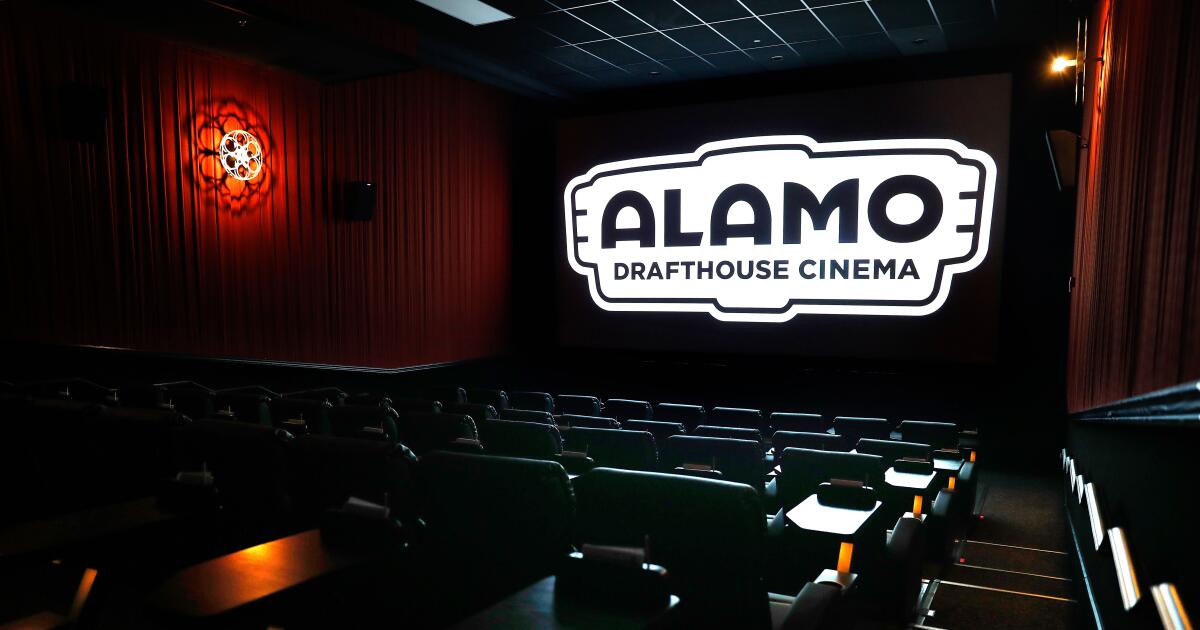
Many indie festival films struggle to get distribution. Alamo Drafthouse is trying to change that
-
 Entertainment19 minutes ago
AI actor Tilly Norwood to star in first movie
-
 Politics31 minutes ago
Trump says he disputed U.S. star player’s suspension, calling it ‘stain’ on World Cup
-
 Science34 minutes ago
14 propositions that could remake California taxes, housing, healthcare and elections
-
 Sports39 minutes ago
Lakers lose Rui Hachimura, who signs two-year deal with the Clippers

