Sign up for the Today newsletter
Get everything you need to know to start your day, delivered right to your inbox every morning.


Local News
With pandemic-era aid gone and grocery prices still rising, food insecurity is surging across Massachusetts, now affecting one in three adults, according to a new report from the Greater Boston Food Bank.
According to the latest annual study, conducted in collaboration with Mass General Brigham, 37% of Massachusetts households faced food insecurity this year, nearly doubling from 19% in 2019.
In addition, very low food security — the most severe form, where a person must skip meals or not eat for the entire day due to a lack of sufficient funds for food — has nearly quadrupled to 24% in 2024, from 6% in 2019.
“Hunger is not just an individual issue, it is a public emergency with astronomical economic and human cost,” said Catherine D’Amato, President and CEO of the Greater Boston Food Bank, in a statement.
Rising food insecurity is raising the alarm amid persistent economic uncertainty, fueled by tariffs, trade wars, and fears of recession.
Proposed federal budget cuts to programs like food stamps and school meals could exacerbate the situation.
The recent closure of Boston-area food donors, such as Daily Table, Freight Farms, and Boston Organics, adds pressure on local nonprofits.
“Far too many Massachusetts residents suffer from food insecurity, which has significant negative impacts on their health, well-being and security,” said Gov. Maura Healey in a statement. The administration partnered with the food bank to “keep working hard to combat hunger,” she added.
The report found that hunger exists in every part of the state, with Western Massachusetts and the Boston area seeing the highest levels of food insecurity. Berkshire, Bristol, Hampden, and Suffolk counties reported that more than 45% of adults experienced food insecurity in 2023.
Black households at 46%, Hispanic households at 62%, and LGBTQ+ households at 56% continue to experience outsized food insecurity, the report noted.
Lack of food security has led to other issues with 40% of people – or fives times the rate in food-secure households – saying they went without necessary medical, dental, or prescription care, according to the report.
This year’s survey and medical expenditure data estimated that food insecurity drives $1.3 billion in emergency room and inpatient hospitalization costs.
Households experiencing food insecurity reported that they needed only $60 more per week for food, which would require approximately $2 billion annually to help alleviate food insecurity in the state.
“Massachusetts may be doing all the right things, but without proper funding, benefits like SNAP and WIC are simply not enough to keep families fed, and many of them continue to make significant tradeoffs to put food on the table,” D’Amato said. “As a state, we can fix this. We have the power to solve hunger here in Massachusetts.”
The Greater Boston Food Bank has conducted annual research since the end of 2020 to examine the prevalence of food insecurity and barriers to accessing food assistance programs.
The Greater Boston Food Bank is the largest hunger-relief organization in New England and one of the largest food banks in the country.

Get everything you need to know to start your day, delivered right to your inbox every morning.


“The way we experience climate change is through extremes,” said Shel Winkley, a meteorologist at Climate Central. “All of that comes with a price tag.”
Across the region, officials are trying to figure out how to pay that price. The Massachusetts Department of Transportation has already spent more than $185 million on snow and ice removal this winter — about $20 million beyond what was spent during the “Snowmageddon” winter of 2015. State officials are weighing whether to seek aid from the Trump administration.
Providence has had to cap spending for the rest of the fiscal year after record-setting snowfall. In Boston, where officials have trimmed the snow removal budget, the city was on track to spend nearly double what it had set aside for winter cleanup — even before the February blizzard hit. Cambridge has spent $6 million, more than 10 times the placeholder amount it budgeted for winter cleanup.
“This is an additional pressure point on an already pressurized budget situation,” said Adam Chapdelaine, executive director of the Massachusetts Municipal Association. “In some communities, it’s likely going to force some hard decisions.”
In Edgartown, officials want to tap into budget reserves to make up the cost, a step that requires voter approval. If voters don’t support that move, it could mean raising taxes, said James Hagerty, the town administrator.
Local officials said federal funding would help, but they’re not counting on it. Some worried that partisan disparities in which states have received disaster funding under the Trump administration would put Massachusetts at a disadvantage.
“We are hopeful that the state and federal government might step in to assist, but it’s just waiting at this point,” said Gregory Berman, Chatham’s director of natural resources.
The skyrocketing costs are yet another reminder that winters here don’t feel the same. New England is largely trending toward shorter and milder winters. Massachusetts has lost about 30 days of snow cover each year over the last few decades.
However, experts say the relationship between climate change and total annual snowfall is more complicated. Think of it as two competing forces. On one hand, global warming increases the amount of moisture in the atmosphere; when conditions are cold enough, this added moisture can fuel heavier snowstorms. On the other hand, rising temperatures mean that winter precipitation falls more frequently as rain than snow.
The data reflect this mixed picture. An analysis of historic snowfall totals by Climate Central, a nonprofit that conducts climate change research, found that annual snowfall has actually increased over the past 50 years in Boston and parts of coastal Massachusetts, while inland areas have seen declines.
Looking ahead, researchers project that the most intense storms may become even heavier, producing more snow than blizzards past. This shift may already be underway. In the past 40 years, Boston has recorded 10 snowstorms that produced at least 20 inches of snow. In the eight decades prior to that, there were just three.
These massive storms can trigger extra expenses, as municipalities have to pay for equipment rentals, contractors, and overtime for cleanup around the clock.
Julie Wormser, chief climate officer in Cambridge, said that total snowfall data surprised her.
“Based on how quickly the ocean is heating up off New England, my bet is that the next 50 years of data will reverse that snowfall trend,” she said.
Cities and towns in Western Massachusetts, Cape Cod, and the North Shore were hit especially hard. This winter, they received more than two feet of snow above their average.

On Cape Cod, Sandwich officials overspent their snow budget by $250,000, driven largely by the February blizzard. Town Manager George “Bud” Dunham said a day of minor plowing and treating roads can cost about $10,000, but major storms push that figure past $50,000. The town is still cleaning up downed brush and tree limbs.
If not for the storm, Dunham said, the town might have invested in new snow equipment or set aside funds for retired employees’ health insurance costs.
Mattapoisett, a coastal community on Buzzards Bay, also blew through its budget, spending nearly triple what officials had set aside. Still, Michael Lorenco, the administrator, said the town should be able to absorb the hit within its $37 million budget without raising taxes.
“I’m not a scientist, but towns near the coast seem to be getting more snow than they normally would in the past,” Lorenco said.
That doesn’t change the city’s responsibilities.
“Climate change or not,” he added, “we have to clean up the roads.”
Ken Mahan of the Globe staff contributed reporting.
Kate Selig can be reached at kate.selig@globe.com. Follow her on X @kate_selig.

A Framingham institution that has been in business for more than a century closed its doors for the final time on Sunday.
Framingham Baking Company, known for its signature pizza trays, has officially shut down permanently. Crowds have been lining up around the block in the shop’s final days, with Sunday serving as their last day in business.
“That’s a wrap! Special thanks to all of our loyal customers! It was a great run. We love you!” Framingham Baking Company posted on Facebook Sunday after selling its final slices of pizza.
Founded in 1917, the bakery on Waverly Street became known for the square pizza slices.
The third-generation owners say they couldn’t find anyone to take over the business.
“We’re closing today after 109 years in business,” owner Joan Thomas said. “My grandparents, my parents, and my siblings – three generations have run this bakery.”
Customers explained why they were willing to wait in long lines to get their hands on some treats one more time.
“So many years of eating this pizza, and the bread, and the cookies. You had to be there for the end,” one woman said.
“My grandfather was a delivery guy for a long time. My first job was riding around with him in the van delivering to all the local restaurants. It’s tough to see it close, but it’s had an amazing run. Here for my last delivery. Bring some pizza home to my family,” another man added.
One customer waiting in line said it wasn’t just pizza the Framingham Baking Company provided, it was memories.
“Brought it to the cousins’ every birthday party, every gathering. Any time there was family there was pizza,” he said.

Here are five ways how you can save some money when food shopping.
Here are five ways how you can save some money when food shopping.
Your household can earn more than $200,000 a year and still be considered part of the “middle class” in Massachusetts, according to a recent study by SmartAsset.
Massachusetts ranks as the top state with the highest income range for households to be considered middle class, based on SmartAsset’s analysis using 2024 income data from the U.S. Census Bureau. The Pew Research Center defines the middle class as households earning roughly two-thirds to twice the national median household income.
According to a 2022 Gallup survey, about half of U.S. adults consider themselves middle class, with 38% identifying as “middle class” and 14% as “upper-middle class.” Higher-income Americans and college graduates were most likely to identify with the “middle class” or “upper-middle class,” while lower-income Americans and those without a college education generally identified as “working class” or “lower class.”
Here’s how much money your household would need to bring in annually to be considered middle class in Massachusetts.
In Massachusetts, households would need to earn between $69,900 and $209,656 annually to be considered middle class, according to SmartAsset. The Bay State has the highest income range in the country for middle-class households. The state’s median household income is $104,828.
In Boston, the range is slightly lower. Households need to earn between $65,194 and $195,582 annually to qualify as middle class, giving the city the 19th-highest income range among the 100 largest U.S. cities. Boston’s median household income is $97,791.
Massachusetts has the highest income range for middle-class households in New England. Here’s what households would have to earn in neighboring states:
Mississippi ranks last for the income range needed to be considered middle class, according to SmartAsset. Households there would need to earn between $39,418 and $118,254 annually. The state’s median household income is $59,127.







IOC addresses execution of 19-year-old Iranian wrestler Saleh Mohammadi


Jannik Sinner’s Girlfriend Laila Hasanovic Stuns in Ab-Revealing Post Amid Miami Open


Clovis shooting leaves one dead, four injured


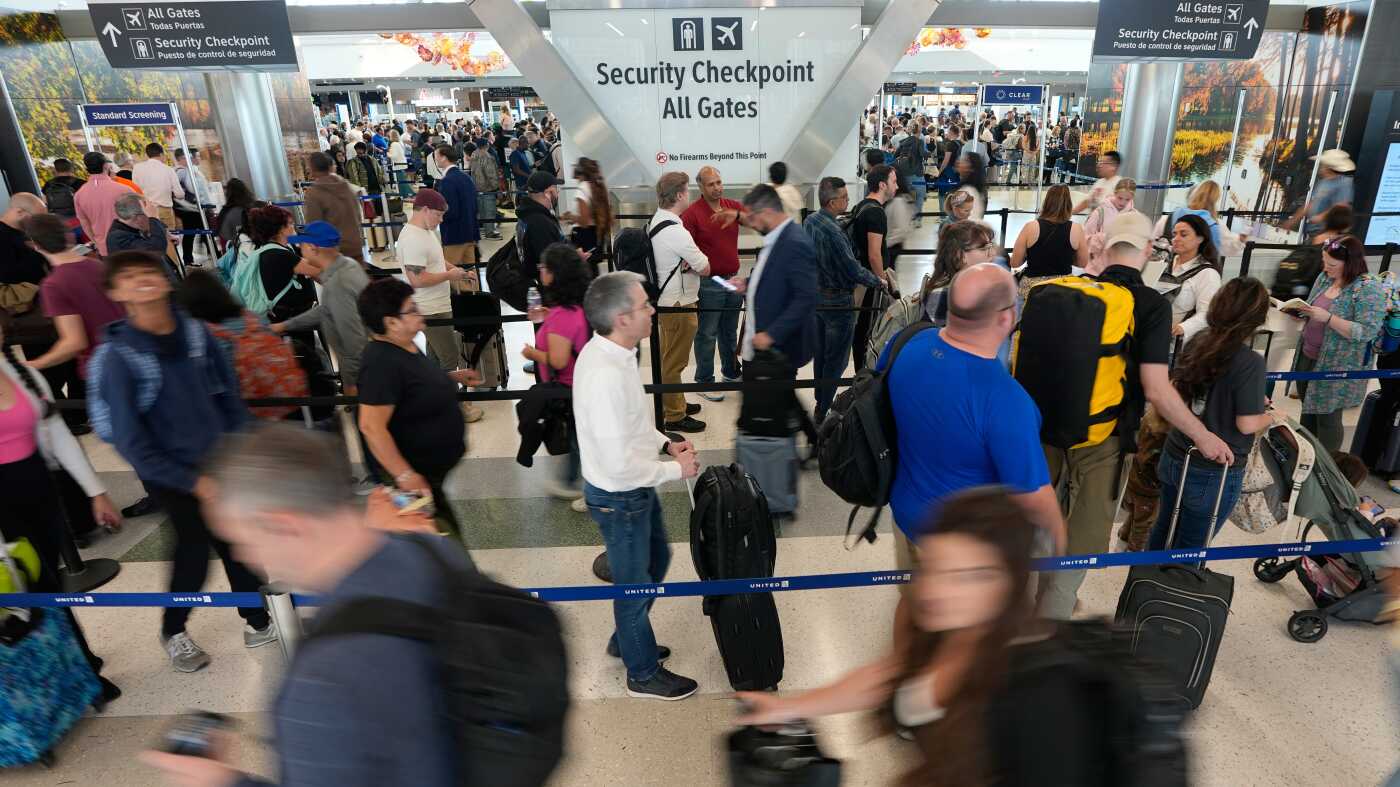
Schumer gambit fails as DHS shutdown hits 36 days and airport lines grow


Tennessee Police Investigating Alleged Assault Involving ‘Reacher’ Star Alan Ritchson


Boy who shielded classmate during school shooting receives Medal of Honor


Record Heat Meets a Major Snow Drought Across the West


South Carolina vs TCU predictions for Elite Eight game in March Madness


