Politics
Californians sharply divided along partisan lines about immigration raids, poll finds

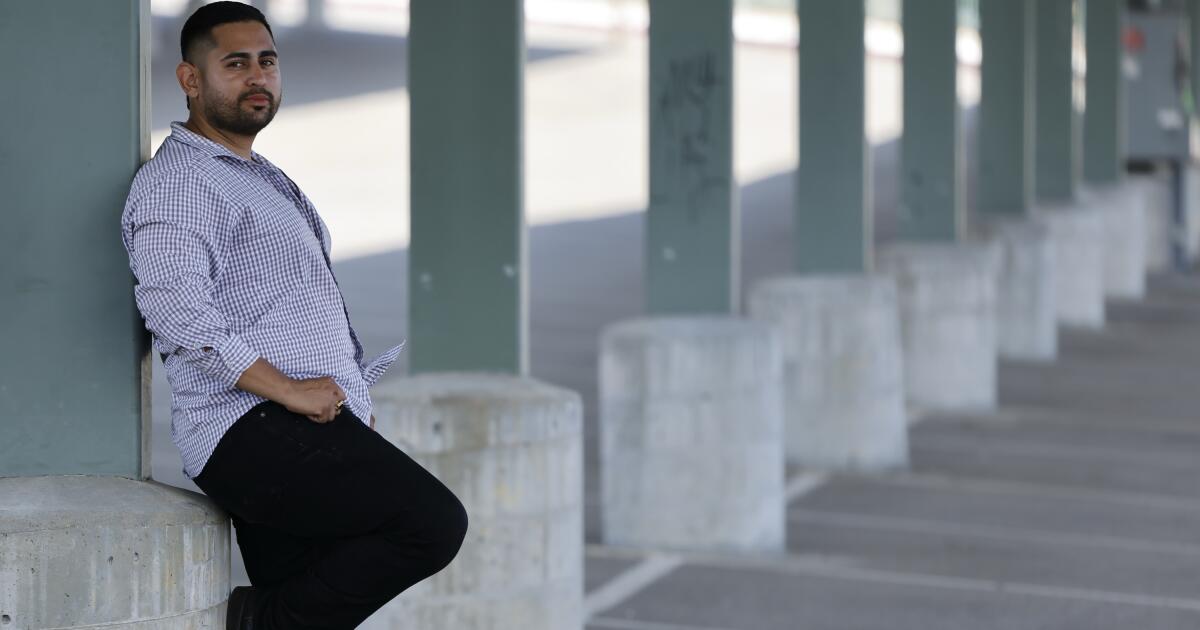
California voters are sharply divided along partisan lines over the Trump administration’s immigration raids this year in Los Angeles and across the nation, according to a new poll.
Just over half of the state’s registered voters oppose federal efforts to reduce undocumented immigration, and 61% are against deporting everyone in the nation who doesn’t have legal status, according to a recent poll by UC Berkeley’s Possibility Lab released to The Times on Wednesday.
But there is an acute difference in opinions based on political leanings.
Nearly 80% of Democrats oppose reducing the number of people entering the United States illegally, and 90% are against deporting everyone in the country who is undocumented, according to the poll. Among Republicans, 5% are against reducing the entries and 10% don’t believe all undocumented immigrants should be forced to leave.
“The big thing that we find, not surprisingly, is that Democrats and Republicans look really different,” said political scientist Amy Lerman, director of UC Berkeley’s Possibility Lab, who studies race, public opinion and political behavior. “On these perspectives, they fall pretty clearly along party lines. While there’s some variation within the parties by things like age and race, really, the big divide is between Democrats and Republicans.”
While there were some differences based on gender, age, income, geography and race, the results largely mirrored the partisan divide in the state, Lerman said.
One remarkable finding was that nearly a quarter of survey respondents personally knew or were acquainted with someone in their family or friend groups directly affected by the deportation efforts, Lerman said.
“That’s a really substantial proportion,” she said. “Similarly, the extent to which we see people reporting that people in their communities are concerned enough about deportation efforts that they’re not sending their kids to school, not shopping in local stores, not going to work,” not seeking medical care or attending church services.
The poll surveyed a sample of the state’s registered voters and did not include the sentiments of the most affected communities — unregistered voters or those who are ineligible to cast ballots because they are not citizens.
A little more than 23 million of California’s 39.5 million residents were registered to vote as of late October, according to the secretary of state’s office.
“So if we think about the California population generally, this is a really significant underestimate of the effects, even though we’re seeing really substantial effects on communities,” she said.
Earlier this year, U.S. Immigration and Customs Enforcement launched a series of raids in Los Angeles and surrounding communities that spiked in June, creating both fear and outrage in Latino communities. Despite opposition from Gov. Gavin Newsom, Los Angeles Mayor Karen Bass and other elected Democrats, the Trump administration also deployed the National Guard to the streets of the nation’s second-largest city to, federal officials said, protect federal immigration officials.
The months since have been chaotic, with masked, armed agents randomly pulling people — most of whom are Latino — off the streets and out of their workplaces and sending many to detention facilities, where some have died. Some deportees were flown to an El Salvador prison. Multiple lawsuits have been filed by state officials and civil rights groups.
In one notable local case, a federal district judge issued a ruling temporarily blocking federal agents from using racial profiling to carry out indiscriminate immigration arrests in the Los Angeles area. The Supreme Court granted an emergency appeal and lifted that order, while the case moves forward.
More than 7,100 undocumented immigrants have been arrested in the Los Angeles area by federal authorities since June 6, according to the Department of Homeland Security.
On Monday, Rep. Robert Garcia (D-Long Beach), Bass and other elected officials hosted a congressional hearing on the impact of immigration raids that have taken place across the country. Garcia, the top Democrat on the House’s oversight committee, also announced the creation of a tracker to document misconduct and abuse during ICE raids.
While Republican voters largely aligned with Trump’s actions on deportations, 16% said that they believed that the deportations will worsen the state’s economy.
Lerman said the university planned to study whether these numbers changed as the impacts on the economy are felt more greatly.
“If it continues to affect people, particularly, as we see really high rates of effects on the workforce, so construction, agriculture, all of the places where we’re as an economy really reliant [on immigrant labor], I can imagine some of these starting to shift even among Republicans,” she said.
Among Latinos, whose support of Trump grew in the 2024 election, there are multiple indications of growing dissatisfaction with the president, according to separate national polls.
Nearly eight in 10 Latinos said Trump’s policies have harmed their community, compared to 69% in 2019 during his first term, according to a national poll of adults in the United States released by the nonpartisan Pew Research Center on Monday. About 71% said the administration’s deportation efforts had gone too far, an increase from 56% in March. And it was the first time in the two decades that Pew has conducted its survey of Latino voters that the number of Latinos who said their standing in the United States had worsened increased, with more than two-thirds expressing the sentiment.
Another poll released earlier this month by Somos Votantes, a liberal group that urges Latino voters to support Democratic candidates, found that one-third of Latino voters who previously supported Trump rue their decision, according to a national poll.
Small business owner Brian Gavidia is among the Latino voters who supported Trump in November because of financial struggles.
“I was tired of struggling, I was tired of seeing my friends closing businesses,” the 30-year-old said. “When [President] Biden ran again I’m like, ‘I’m not going to vote for the same four years we just had’ … I was sad and I was heartbroken that our economy was failing and that’s the reason why I went that way.”
The East L.A. native, the son of immigrants from Colombia and El Salvador, said he wasn’t concerned about Trump’s immigration policies because the president promised to deport the “worst of the worst.”
He grew disgusted watching the raids that unfolded in Los Angeles earlier this year.
“They’re taking fruit vendors, day laborers, that’s the worst of the worst to you?” he remembered thinking.
Over a lunch of asada tortas and horchata in East L.A., Gavidia recounted being detained by Border Patrol agents in June while working at a Montebello tow yard. Agents shoved him against a metal gate, demanding to know what hospital he was born at after he said he was an American citizen, according to video of the incident.
After reviewing his ID, the agents eventually let Gavidia go. The Department of Homeland Security later claimed that Gavidia was detained for investigation for interference and released after being confirmed to be a U.S. citizen with no outstanding warrants. He is now a plaintiff in a lawsuit filed by the ACLU and immigrant advocacy groups alleging racial profiling during immigration raids.
“At that moment, I was the criminal, at that moment I was the worst of the worst, which is crazy because I went to go see who they were getting — the worst of the worst like they said they were going to get,” Gavidia said. “But turns out when I got there, I was the worst of the worst.”


NEWYou can now listen to Fox News articles!
Maine state Rep. Valli Geiger, a Rockland Democrat, former nurse and former mayor, is drawing sudden national attention after saying now-former Democratic Senate nominee Graham Platner encouraged her to consider taking his place on the ballot in the Maine Senate race.
While Geiger has not been named the replacement nominee, her name entered the Maine Senate scramble after she told local outlet WMTW that Platner called her Monday night, praised her as a “fighter” and asked whether he could put her name forward. Platner’s campaign told the outlet he had not made an endorsement decision but confirmed he encouraged Geiger to consider running if he stepped aside.
After Geiger said Platner called her about potentially putting her name forward, Geiger posted Tuesday she would not “throw Graham under the bus,” while also saying she would not “slander or accuse” Jenny Racicot, the woman who accused Platner of rape, “of anything more than telling the truth as she experienced it.”
By Wednesday, local outlets were reporting that Geiger said Platner had encouraged her to consider running if he withdrew. Platner, who suspended his campaign Wednesday night, has denied the claim.
WHAT HAPPENS NEXT IF PLATNER DROPS OUT? HERE’S WHO COULD REPLACE HIM ON THE BALLOT AND HOW IT COULD WORK
Graham Platner Maine State Rep. Valli Geiger (Maine State Legislature/Getty Images)
“For the movement to continue, it can’t be me. For that reason, we are suspending campaign operations,” Platner said in a video posted to social media.
Geiger is a third-term Democratic state representative from Rockland, according to her legislative biography, representing a coastal House district in Maine that includes Rockland, Criehaven Township, Matinicus Isle Plantation, the Muscle Ridge Islands, North Haven and part of Owls Head. Her biography says she serves on the Labor Committee and the Energy, Utilities and Technology Committee.
Before entering the state legislature, Geiger served six years on the Rockland City Council, including one year as mayor and four years on the Rockland Comprehensive Planning Commission, three of them as chair.
Her biography says she holds a master’s degree in sustainable design and built her own passive-solar, net-zero-energy house. It also describes her as a former nurse at Pen Bay Medical Center who later worked as a health policy analyst and health administrator, including as director of the Healthreach Hospice program and clinical director for Federally Qualified Health Centers around Maine.
The Maine State Capitol May 18, 2026, in Augusta, Maine. (Joe Raedle/Getty Images)
PLATNER CAMPAIGN PUTTING ‘THUMB ON SCALE’ TO INFLUENCE POSSIBLE REPLACEMENT, MAINE DEM ALLEGES
Geiger’s connection to Platner predates the latest replacement speculation. Local reporting has described her as a close Platner supporter, and WMTW reported she previously stood with him and credited him with helping secure funding for rape kit tracking in Maine.
In her Facebook post responding to Racicot’s allegation, Geiger wrote that Racicot’s story “seems credible” but added that “none of us knows the truth nor will we ever.” She also described Platner as “a man becoming a better man” and said she had hoped he would lead the political movement his campaign had built and will not “throw Graham under the bus.”
In the post, Geiger also praised Platner’s “passion for economic populism” and said she had granted him “an enormous amount of grace” for his behavior during what she described as his “dark years” after multiple deployments.
Dr. Nirav D. Shah, director of the Maine Center for Disease Control and Prevention, speaks during a news conference about COVID-19 at Maine Emergency Management Agency in Augusta. (Derek Davis/Portland Press Herald via Getty Images)
CLICK HERE TO DOWNLOAD THE FOX NEWS APP
The Maine state representative is not the only Democrat whose name has surfaced as Maine Democrats prepare for the possibility that Platner exits the race against Republican Sen. Susan Collins.
Several Democrats have expressed interest or are considering bids, including former gubernatorial candidate Troy Jackson, Secretary of State Shenna Bellows and former Maine CDC Director Nirav Shah.
Under Maine law, the Maine Democratic Party can replace him on the general election ballot by selecting a new nominee through its party process, with the replacement required to be chosen by July 27.
Fox News Digital’s Andrew Mark Miller and Paul Steinhauser contributed to this report.
Politics
Nexstar launches its first digital subscription service with The Hill Insider, aimed at political junkies

Nexstar Media Group’s The Hill, the political web site that started as a free newspaper read in most congressional offices in Washington, is launching a new direct-to-consumer streaming service that will be behind a paywall.
Starting Wednesday, Nexstar will offer The Hill Insider, which will carry daily streaming video programs and newsletters. Subscribers will also be able to interact with The Hill’s journalists and analysts, who will take questions live.
The service, available for $5.99 a month or $59.99 a year, is the first digital subscription product for the Irving, TX-based Nexstar, the largest owner of television stations in the U.S. Premium memberships are available for $9.99 a month, or $99.99 a year, which will be ad-free and offer access to live events presented by The Hill.
The endeavor is the first subscription streaming service offered by Nexstar. The Hill already produces a free ad-supported streaming channel distributed on such platforms as Roku.
The free version of The Hill is the most viewed political web site in the U.S. with 1.24 billion page views in 2025, a year-to-year increase of 7%, according to Comscore. The Hill is known for offering brisk, up-to-date reports out of each branch of government in Washington, and is often linked to on other websites.
Nexstar, which also owns the cable network NewsNation, acquired The Hill in 2021 from New York-based entrepreneur James Finkelstein for $130 million. NewsNation adapted The Hill brand name for its Washington-based programs, including a Sunday roundtable show with Chris Stirewalt, politics editor for The Hill and NewsNation.
NewsNation politics editor Chris Stirewalt on the set of “The Hill Sunday.”
(NewsNation)
Stirewalt and the Washington journalists and commentators seen on NewsNation programs will be featured on The Hill Insider. The service will also use the resources of Decision Desk HQ, the political media firm that was the first to call President Trump’s victory on election night in 2024. Decision Desk will be involved in a streaming show called “Data Nerds.”
The Hill Insider will be aimed at the political junkie who wants to go deeper on polling data and hear longer, in-depth discussion on issues. Bill Sammons, senior vice president of editorial content for Nexstar, said the company’s research shows there is a national appetite for such content, as only 5% of The Hill’s current audience is based in Washington.
The Hill has long touted itself as non-partisan and Stirewalt hopes users will gravitate to the subscription version to become better informed about legislative and political issues and not reaffirm their existing opinions.
“My imagined audience is of people in America who are not addicted to politics but are addicted to good citizenship and the idea of fulfilling their civic virtue,” Stirewalt said in a recent interview. “And they would like to do it in a way that doesn’t insult their intelligence.”
While the free version of The Hill has been growing, the new subscription product enters a crowded field of digital programs and platforms aimed at the consumers of political news.
The launch comes as journalists from legacy media such as former CNN anchor Jim Acosta, former ABC News correspondent Terry Moran, and Chuck Todd, the longtime moderator of NBC’s “Meet the Press,” have launched their own daily podcasts and newsletters as second acts in their careers.
MS NOW, the progressive-leaning cable news channel, is entering the direct to consumer market later this year making the channel available outside of pay-TV packages for the first time. Like The Hill Insider, the MS NOW streaming product is expected to offer users additional benefits, such as access to live events and content not seen on the cable network.
Original topical programming that does not have a shelf life is challenging to sustain on a streaming service. When Fox News Media launched its streaming service Fox Nation in 2018, it carried a line-up of live, politically-oriented shows aimed at its conservative-leaning audience. The service eventually pivoted to documentary, movies and lifestyle programming and became the home of the annual Fox News fan event, The Fox Nation Patriot Awards.

NEWYou can now listen to Fox News articles!
Political heavyweight Dana White, whose endorsement of President Donald Trump was instrumental in his 2024 victory, is now hinting that he may jump back into presidential politics in 2028 because he has “become really close” with Secretary of State Marco Rubio.
This comes as White’s UFC announced a rare “sports diplomacy” partnership with the State Department this week. White and Rubio signed a memorandum of understanding establishing the partnership last month, according to a UFC statement. The league said that as part of the agreement, UFC athletes and coaches will serve as “sports ambassadors” for young athletes around the world through the State Department’s Sports Envoy Program.
White was explicitly asked by OutKick’s Tomi Lahren, whether there are any leaders he is looking at for 2028, to which he responded, “It’s funny, As I was, leading up to the White House fight, doing all this media, you know, a lot of the left media was saying to me, ‘So, you’re out of politics after this, right?’ And I can’t remember who it was that I said it to but … I said, ‘I’ve become really close to Rubio.’ We’ve become really close.”
“People are asking me if I’m going to get out of politics when the president leaves and I just said, ‘I’ve become very close to Rubio.’ He and I have become friends,” he emphasized.
RUBIO ANNOUNCES FRAMEWORK DEAL BETWEEN ISRAEL AND LEBANON AS EXPERTS WARN IRAN WILL FIGHT TO SABOTAGE IT
UFC President and CEO Dana White and US Secretary of State Marco Rubio shake hands as htey participate in a Memorandum of Understanding signing ceremony at the State Department in Washington, DC, on June 11, 2026. (Brendan SMIALOWSKI / AFP via Getty Images)
White said that Rubio “is a great guy, I like him,” adding, “He’s smart, I like the way he handles himself.”
He also said, “I’ve met his sons, and I like his kids and, you know, so, never say never.”
Pressed on whether Rubio is his official pick to succeed Trump as president, White clarified, “I’m not saying I’m picking.” He noted that he also likes Vice President JD Vance, who, alongside Rubio, is a rumored 2028 presidential frontrunner.
“JD is a great guy too,” said White, adding, “It’s a tricky situation, and I don’t know enough about politics to even comment on that, but, yeah, I don’t know, but it’s not a bad thing to have two strong candidates.”
Rubio and Vance are the two Republicans most discussed as possible successors to Trump. While Rubio ran for president in 2016, he has expressed support for Vance, calling him a “close friend” and saying the vice president “would be a great nominee if he decides he wants to do that.”
VIRAL MARCO RUBIO CLIP ON HIS VISION FOR AMERICA SPARKS MORE 2028 SPECULATION
Vice President JD Vance speaks during a visit to ALTA Refrigeration Inc., Aug. 21, 2025, in Peachtree City, Georgia. (Brynn Anderson/The Associated Press)
Though White stopped short of issuing a full-throated endorsement of Rubio, his partnership with the State Department through UFC underscores the high regard he appears to have for the secretary.
This is the first time the UFC has entered into such a partnership with the State Department. The NFL, which entered into a similar agreement in January, is the only other major sports organization to have signed such a formal agreement with the department.
SIGN UP TO GET THE POLITICS NEWSLETTER
UFC Chief Operating Officer Lawrence Epstein said the league is “thrilled” about the partnership. He said it would allow the State Department and UFC to “work together to build bridges through community engagement.”
“We’re excited to join this program, led by Secretary Rubio, as UFC is a truly global organization with athletes representing 75 countries. We can’t wait to get started later this year,” said Epstein.
VANCE TAKES LEAD SELLING TRUMP’S IRAN GAMBLE AS RUBIO, HEGSETH AND RATCLIFFE CEDE SPOTLIGHT ON FRAGILE DEAL
President Donald Trump speaks with Secretary of State Marco Rubio and UFC CEO and President Dana White during UFC 327 at Kaseya Center on April 11, 2026 in Miami, Florida. (Julia Demaree Nikhinson – Pool / Getty Images)
CLICK HERE TO DOWNLOAD THE FOX NEWS APP
In turn, Rubio spoke very highly of the UFC, saying it “has become a global phenomenon by embracing values that resonate far beyond the Octagon: excellence, discipline, opportunity, and meritocracy.”
The secretary said the State Department is “proud” to launch the sports diplomacy partnership with UFC and to “continue growing the sport of MMA.”
-

 Oregon5 minutes ago
Pierce County Sheriff: Homicide ‘suspect was shot and killed by police in Seaside, Oregon’
-

 Pennsylvania12 minutes ago
‘Natural splendor at its best’: Penn’s Cave may become Pa.’s next state park
-

 Rhode Island15 minutes ago
Throwback: USS Rhode Island commissioned in Newport
-

 South-Carolina20 minutes ago
Watch out for SC’s 5 most common ticks and take steps to avoid bites
-
South Dakota27 minutes ago
SD Lottery Powerball, Lotto America winning numbers for July 8, 2026
-
Tennessee30 minutes ago
TN Lottery Powerball, Lotto America winning numbers for July 8, 2026
-

 Texas35 minutes ago
Texas reports 48 cyclospora cases and the source is still unknown
-

 Utah42 minutes ago
Utah Jazz vs Washington Wizards: Summer League Preview, start time, how to watch

