Maine
Lakes Region towns to test traffic-calming measures


The intersection of Routes 11 and 85, Webbs Mills in Casco, is one of several intersections in the Lakes Region that will receive temporary traffic-calming measures in 2025. Rory Sweeting / Lakes Region Weekly
The Lakes Region towns of Gray, Casco and Sebago will install temporary traffic-calming measures next year as part of a wider initiative to curb vehicle crashes in Maine.
These installations, which will last from June to October, allow planners to test out potential safety measures in the real world, and are part of the wider Vision Zero effort. In development for about a year, Vision Zero is focused on reducing fatalities and serious injuries on Maine’s roadways, with the ultimate goal of eliminating them entirely by 2045.
The Greater Portland Council of Governments has completed two plans as part of this effort. One of these plans is specifically designed for the city of Portland and its surrounding suburbs, while the other, tailored towards rural and island communities, is the basis behind the upcoming Lakes Region projects.
According to GPCOG Transportation Director Christopher Chop, the new projects are among several traffic-calming demonstration projects that have been implemented throughout the Portland area and some of the surrounding area. Within the Lakes Region, the Bicycle Coalition of Maine previously worked with Gray to install advisory bike lanes as a way to indicate that a street is designed for all modes of transportation.
These pilot projects, both in the urban area and the Lakes Region, will help GPCOG collect data to inform decisions on the most effective measures. Should the measures prove successful, GPCOG plans to replicate them elsewhere. However, if the measures are unsuccessful, Chop hopes that they can understand the reasons why (for example, if they used the wrong tool for the wrong area, or if there were maintenance issues) and avoid them in future projects. These measures, Chop noted, not only make travel safer for cyclists and pedestrians, but for everyone just by slowing traffic down.
The Lakes Region project costs $100,000, funded by a grant from the United States Department of Transportation. Chop said that the temporary measures provide a low-cost opportunity to test out different treatments, as opposed to the more expensive prospect of immediately installing permanent infrastructure. If successful, the GPCOG could look to provide permanent infrastructure to make the region safer.
“In the long run,” Chop said, “the Greater Portland Council of Governments and the Portland Area Comprehensive Transportation System … both are very committed to the Vision Zero effort, and there’s a number of different strategies to make our roads safer for all transportation users.”
Public reception to the traffic-calming measures has been mixed. While the measures were only recently made public in Gray, Town Manager Michael Foley noted that over the years, many residents have been pushing for safety improvements, and that they will be designed and shared with the public before being put into place. In Casco, Town Manager Anthony Ward said that while some in the town are very supportive of the measures, others are a little more hesitant because a previous traffic-calming effort was not well received.
However, Ward remained optimistic and said, “There was some hesitation about (the measures), but I think the vast majority will support (them).”
Ward also noted that since most of the roads in Casco where the temporary measures will be implemented are state highways, full implementation would take place in conjunction with the Maine Department of Transportation.
The efforts in Gray will focus on the area of Gray Village where three state highways converge, and will likely involve West Gray Road, Portland Road, Yarmouth Road, Main Street, Shaker Road and Brown Street. While Casco has not finalized the areas in which the measures will be implemented, it also plans to focus around the village, with some of the proposed areas including Pike Corner, Webbs Mills, and Cook Mills. Sebago will see measures implemented in East Sebago Village, Mac’s Corner, and a 2-mile section of Route 11 connecting the two areas.



A woman died Monday after a fire on East Main Street in Fort Kent.
Woman Died after Fire in Fort Kent
Fort Kent Fire and Rescue said “Upon arrival, Chief Pelletier was unable to confirm that all tenants of the apartment building were accounted for.”
Fire at the Front of the Building and Second Floor
Firefighters battled the blaze at the front of the building and another crew attacked the second floor.
First Floor Fire Put Out
The fire on the first floor was quickly extinguished.
Crews Learned Someone was Still in the Building
Crews got information that there was someone inside the building.
ALSO READ: One Person Died & One Injured after Rollover ATV Crash
Woman was Located in the Building and First Responders Tried Resuscitation
“Shortly thereafter, firefighters located a civilian victim and rescued her, unfortunately resuscitation efforts by ASI and Fort Kent firefighters were unsuccessful,” said Chief Pelletier with Fort Kent Fire and Rescue.
Maine Fire Marshal’s Office Investigating the Cause of the Fire
The Maine Fire Marshal’s Office responded to the scene and is investigating the cause of the fire.
MORE NEWS: Woman Shot and Seriously Injured with Gunshot Wound
Name and Age Not Released Pending Family Notification
The woman’s name and age were not released pending notification of the family.
READ MORE: Two Men Fled Crash & One Apprehended after Hitting Pole
Multiple Agencies Responded and Assisted with the Fire
Assisting Fort Kent Fire and Rescue were the Eagle Lake Fire Department, ASI, Fort Kent Public Works and the Red Cross.
LOOK: Are These 16 Classic American Meals Finally Making a Comeback?
From casserole-night favorites to full-on beige-on-beige comfort, these American dinners fell out of fashion — but could they be on their way back?
Gallery Credit: Stephen Lenz
LOOK: 21 Candies From the ’80s That You Probably Haven’t Thought About in Years
How many of these over-the-top ’80s candies — sweet, sour, and sometimes downright ridiculous — do you remember from your childhood?
Gallery Credit: Stephen Lenz

If you’re gluten-free or have celiac disease, you know the feeling: sometimes you just want what everyone else is eating. Wings, fries, pizza, those classic comfort foods that can often feel off-limits. Thankfully, Maine is really starting to show up for the gluten-free community. More restaurants are adding gluten-free options to their menus, and even better, more places are investing in separate fryers to help keep us safe.
One local favorite that deserves a reminder is 104 Main Public House in Topsham. They’ve been serving gluten-free wings, pizza, and fries for quite a while, but it’s worth highlighting again because they do it right. Their menu includes gluten-free wings and gluten-free pizza options, and they are known for accommodating gluten-free diners.
As someone who has personally eaten their wings, I can confidently say they’re delicious and I’ve always felt safe ordering them. Knowing they have a dedicated fryer makes all the difference when you’re navigating celiac disease and trying to enjoy a meal without worrying about cross-contact.
The real question is: are you a ranch or blue cheese person? Do you go for classic BBQ or are you all about the hot wings? Either way, if you’ve been craving crispy, flavorful wings this summer, 104 Main should be at the top of your list.
It’s great to see more Maine restaurants making gluten-free dining easier, and tastier, for all of us.
8 of the Best and Most Cozy Portland, Maine, Cafes
Gallery Credit: Allyssa Marson
12 Things That Absolutely Surprise People When They First Visit Maine
Let’s chat about the things that shock you when you visit the great Pine Tree state.
Gallery Credit: Lizzy Snyder
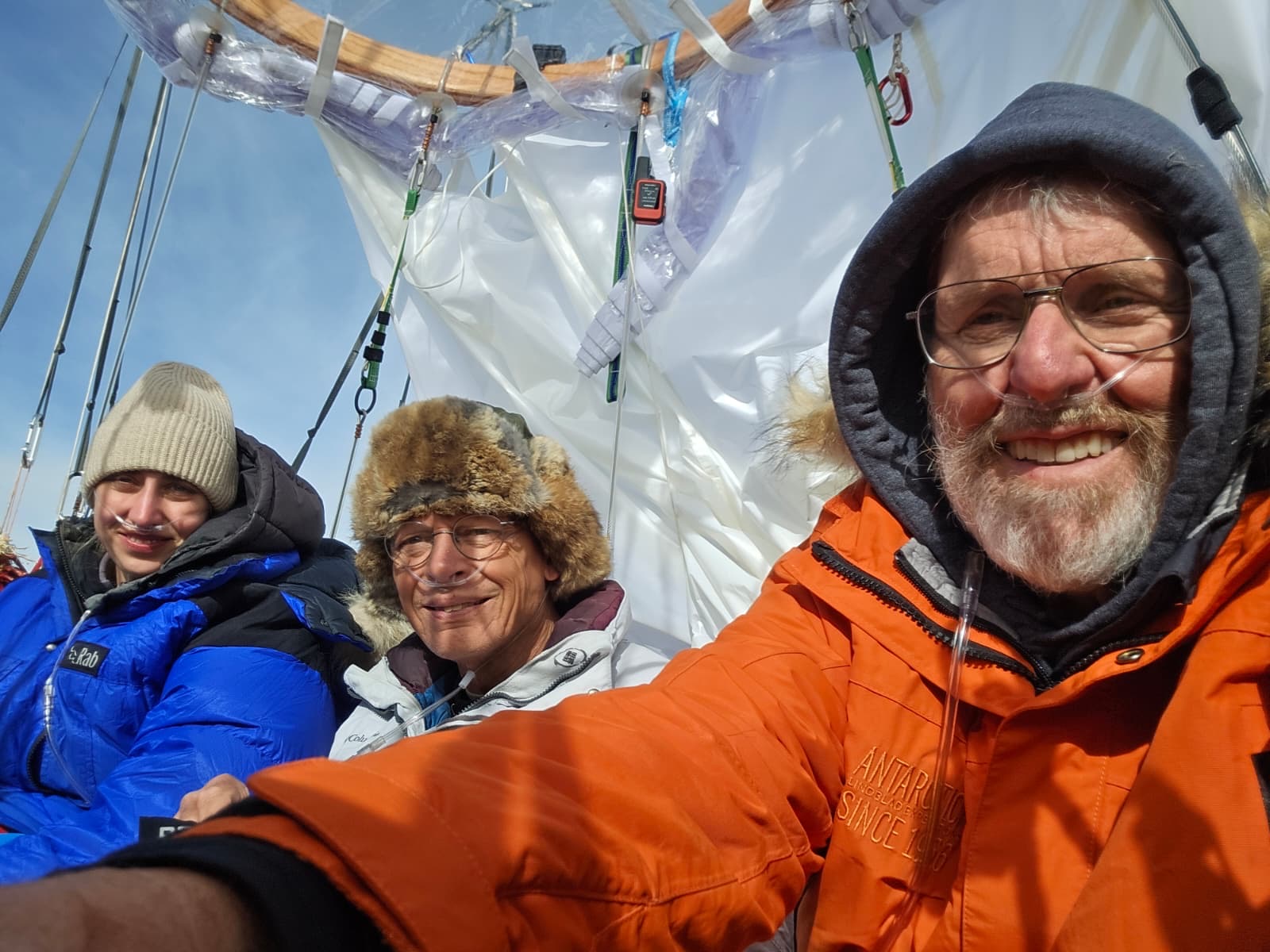
Pilots of the Atlantic Explorer, which lifted off from Presque Isle Thursday in a quest to make the first trans-Atlantic crossing by hydrogen balloon, smile after heading out over the open ocean Friday. From left are Alicia Hempleman-Adams, Bert Padelt and Peter Cuneo. (Courtesy of Peter Cuneo)
Days after Bert Padelt completed a history-making 2,852-mile balloon journey from Maine to Europe across the Atlantic Ocean, the whole experience still felt like a blur.
The closet-sized basket where he and his co-pilots endured torrential rain, snow and freezing temperatures was packed up, its voluminous canopy deflated, but the world record-holding American balloon builder couldn’t believe he had finally accomplished a lifelong dream.
“I kept waking up thinking, did this really happen?” Padelt said in an interview with the Bangor Daily News from Luxembourg, where the Atlantic Explorer landed on June 7. “It’s now starting to sink in, and it has turned out better than I ever thought it would.”
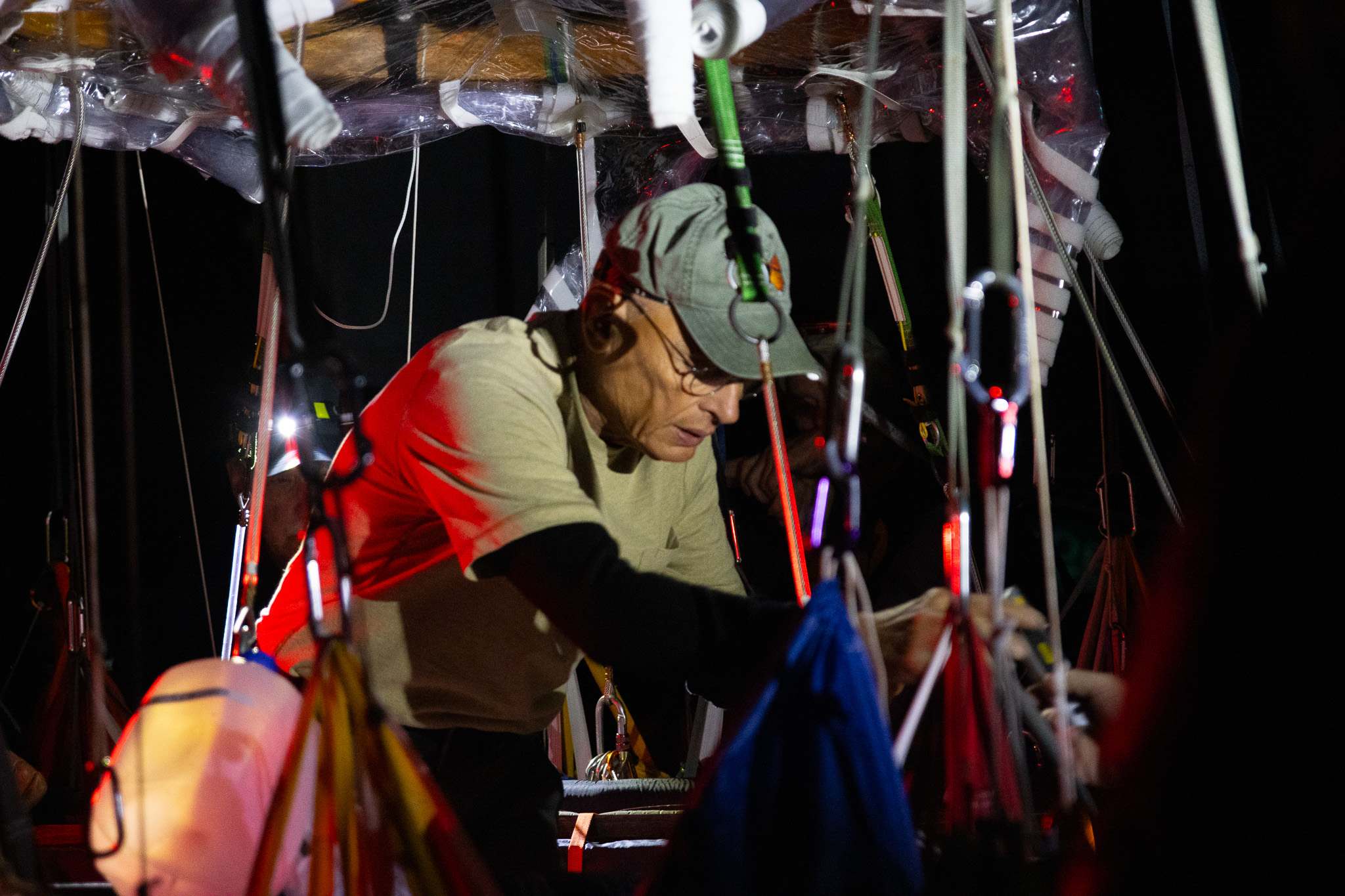
Padelt — who is from Pennsylvania — alongside fellow American Peter Cuneo and British explorer Alicia Hempleman-Adams, are now the first people to cross an ocean in a hydrogen-powered open-basket balloon, and just the 20th team ever to mount a successful trans-Atlantic balloon flight.
The trio spent more than 70 hours in the air after taking off from a Presque Isle field early June 4, traveling as fast as 90 miles an hour and as high as 25,000 feet as they navigated strong winds and a storm above the open ocean. They set down near the city of Diekirch in northeastern Luxembourg on a “very peaceful” morning, a stark contrast to the conditions they had faced earlier.
“It was almost like we were on another flight altogether,” Padelt said. “You could hear birds chirping, roosters crowing, cows mooing. You saw fog in the valleys, which was indicating calm winds. Our final hour in the air was an extremely peaceful, wonderful moment.”

The Atlantic Explorer set off from Presque Isle after hours of delays from high winds. The delay prevented the team from getting ahead of bad weather that would catch up to them later, Padelt speculated.
The first day went well, he said. All their equipment functioned perfectly and the balloon flew well. The team crossed New Brunswick, then Prince Edward Island over the first 12 hours, surpassing where the Atlantic Explorer had been forced down in its previous two attempts due to bad weather and a gas leak.
By that evening, they cleared Cape Breton Island and headed for Newfoundland, the last landmass before the open ocean. A few hours later, Padelt, Cuneo and Hempleman-Adams committed to the crossing and ventured out over the Atlantic.
Atmospheric conditions on the second day meant the team had to drop more ballast — jettisoning sand bags from the basket to gain altitude — than they wanted to.
“We basically knocked off two days of duration [of] ballast,” Padelt said. “But the saving grace is we knew that the speed was going to pick up, so we weren’t all that concerned.”
Then came the storm.
“It was a surprise,” Padelt said. “We knew the weather was there with the hopes that it was going to be south of us.”
With little more than a thin rain cover, the Atlantic Explorer battled heavy precipitation through the night. It rose into the clouds, where temperatures dropped as low as 17 degrees below zero and snow built up on top of the balloon, forcing it to sink. The snow turned to rain and then the process repeated itself.
“This continued probably for about four hours or so,” Padelt said. “But when the sun came up, it was a bright blue sky above us and [the storm] was beyond us.”
The pilots had projected a successful flight would take four to six days averaging around 35 miles per hour. But as the wind picked up and the sun beat down on the balloon the morning after the storm, the Explorer topped 90 miles per hour. The balloon crossed the open Atlantic Ocean in approximately 37 hours.
They passed over the beaches of Normandy along the French coast on the evening of June 6, the 82nd anniversary of the D-Day invasion, when the Allied forces used hydrogen powered barrage balloons to prevent German aircraft from attacking their position from a low altitude.
They flew inland overnight, crossing into Luxembourg as the sun rose on June 7, and landed in a field.
Besides being the first hydrogen-powered trans-Atlantic trip, the journey set a world distance record for the size and type of balloon. Hempleman-Adams, once the youngest person ever to visit the North Pole, also became the first woman to cross the Atlantic in a gas-powered balloon, and the second to do so in any type of balloon.
The balloon’s chase team reached the site within an hour. That group included Padelt’s wife, Joanie, with whom he built the Atlantic Explorer.
“All the times I’ve been thinking about this flight and how I wanted it to end, I wanted it to end with a stand-up landing with my wife there to see the balloon,” Padelt said. “The odds of that are very slim when you think about how far you’re flying … but as it turned out, it worked. And so when she arrived, there were some strong emotions, for sure.”
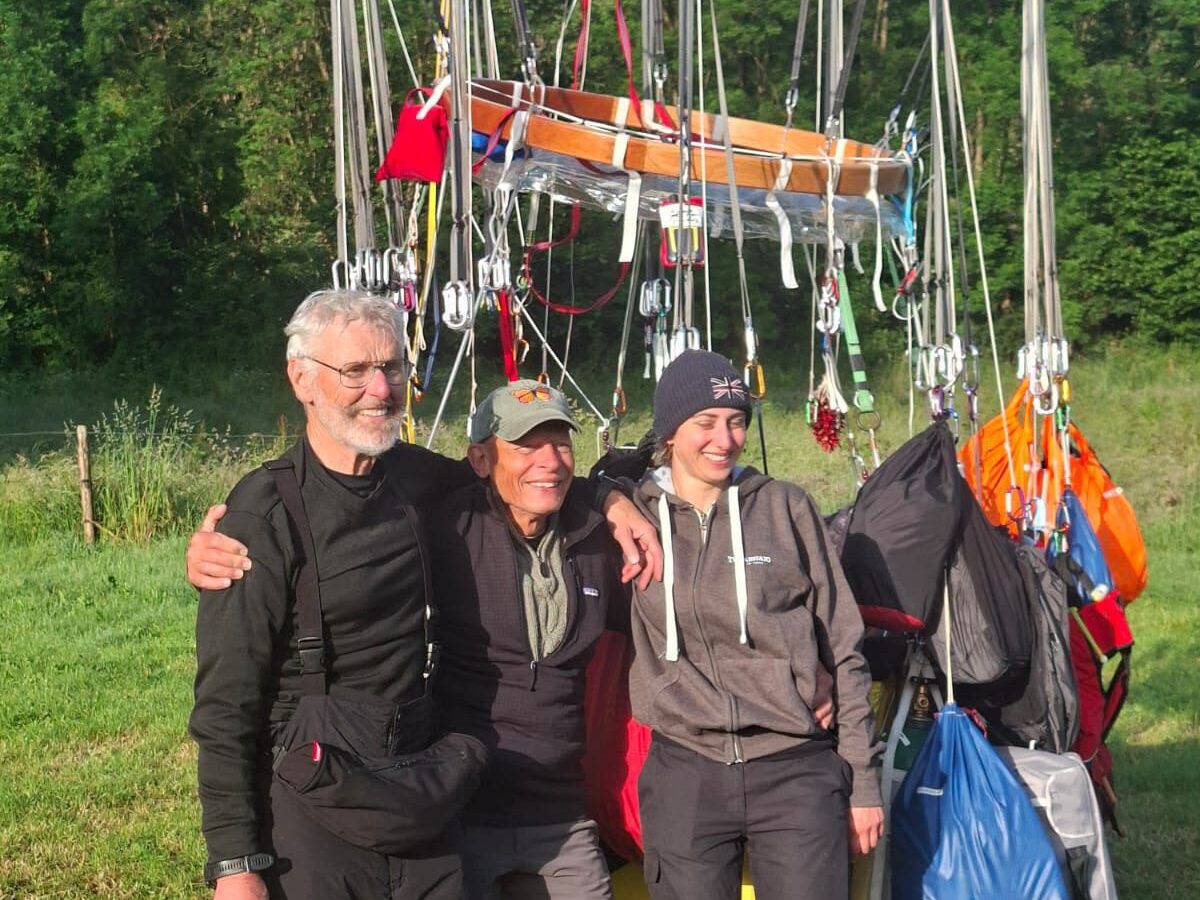
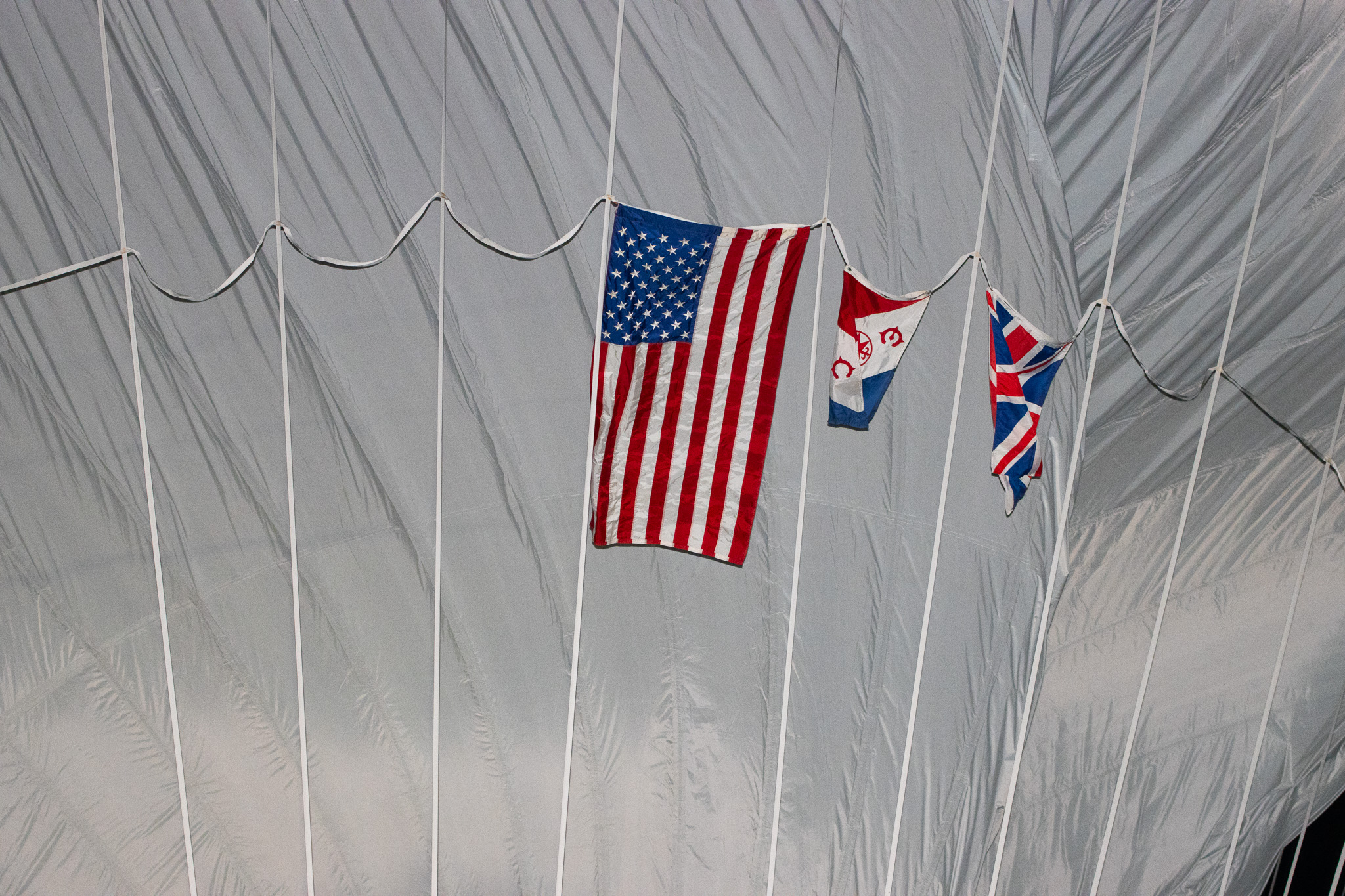
Members of the Cercle Luxembourgeois de l’Aérostation, a nearby balloon club, also arrived to help the crew deflate and pack up the balloon.
As their successful crossing drew attention, the royal family of Luxembourg invited the group to the Palais Grand-Ducal — the country’s royal palace. Padelt, Cuneo and the chase team met with the Grand Duke Henri, whom they presented with one of their final two bags of ballast from the flight.
“He was very, very interested in the flight and how it turned out,” Padelt said. “He was asking quite a few questions and so forth and went to great efforts to welcome us to Luxembourg.”
The crew headed back to the U.S. on Thursday, capping off an adventure Padelt had dreamt of since he was awed by the first trans-Atlantic balloon flight. That balloon, the Double Eagle II, launched from Presque Isle in 1978.
As the Atlantic Explorer took off from the same city last week, hidden in the canopy was a 1978 silver dollar, both a good luck charm and an homage to the Double Eagle II, as a new group of balloonists made history.
“I knew it would be hard. So there were no surprises,” Padelt said. “But the sense of reward afterwards is exactly the feeling I was looking for.”

-
Entertainment3 minutes ago
Yes, Zendaya and Tom Holland have already tied the knot. The groom confirmed it himself
-
 Lifestyle14 minutes ago
Inside the L.A. club where dads swap kid chaos for golf and grounding exercises
-
 Politics18 minutes ago
People are betting on elections in prediction markets. Congress is watching
-
 Science23 minutes ago
El Niño turns crumbling California pier into climate battleground over what to save — and who pays
-
 Sports30 minutes ago
Brendan Sorsby decides not to play for Texas Tech amid controversy over his eligibility
-

 World38 minutes ago
Israel seizes power over occupied West Bank mosque from Palestinians
-
 News1 hour ago
Trump further guts Education Dept. by shifting oversight of special ed, civil rights
-

 Los Angeles, Ca2 hours ago
Suspicious item leads to closure of Metro station on Tuesday morning

