Maine
As Maine’s farmers struggle through extreme weather, local restaurants feel the pinch – The Boston Globe


Scientists would soon find the culprit: longfin squid followed warmer waters into the Gulf of Maine migrating from farther south, which led to the collapse of the fishery. A decade later, as heating in the Gulf of Maine continues to outpace most bodies of water in the world, the shrimp fishery still hasn’t recovered.
The shrimp were an early sign of how changes in the climate can decimate a food source, affecting a harvest and the restaurants that depend on it.
Increasingly, those signs are hard to ignore. Farmers and fishermen around the state said erratic weather patterns are leading to regular crop failures, loss of infrastructure as roads and farm structures are battered by rain and wind, and more — issues that add costs and stress onto a livelihood that was already costly and stressful.
Restaurant owners — who also face dips in tourism during extended rainy periods, and expensive repairs when extreme heat pushes air conditioners past their limit — said local food is a core tenet of many of Maine’s vaunted restaurants. Losing those sources means losing a piece of what makes their food so special. Shipping food in from other places means sacrificing taste and quality, while also adding new sources of carbon emissions from long-haul deliveries.
“We get a lot of people in the restaurant who believe in the same stuff that we do,” said Jake Stevens, head chef and owner of Leeward in Portland. “They want to eat local food. They want to get organic food. But it does get to a tipping point . . . some people just can’t abide paying, you know, $75 for a pork chop. It’s just untenable.”
Independent restaurants such as Leeward are the fifth-largest employer in the United States, according to a recent report by the James Beard Foundation, and they are among the most vulnerable. More than a quarter fail in their first year of operation, and 59 percent fail in the first three years. While restaurant revenues have largely rebounded from the hit they took during COVID-19, it isn’t expected to last, as a warming climate impacts crop yields and drives higher inflation.
The worst of those impacts are expected in years to come, but already, some are showing up.
At Bumbleroot Organic Farm, an 8-acre plot outside Portland that sells vegetables and flowers to roughly 30 local restaurants, it’s been one challenge after another.
The summer of 2022, it was sweltering temperatures and little rain. Crew had to wake up throughout the night to irrigate fields and save the crops. The following year, the reverse — the rain didn’t quit. One field got so saturated, it never really dried out, causing entire plantings to fail.
“We have to literally be ready for every scenario, because it’s not just wet, it’s heat, it’s extended heat, it’s late frost, it’s early frost,” said Ben Whalen, co-owner of the farm. “The extreme nature of what we’re dealing with, even right now, is crazy.”
Leeward is one of the restaurants that get regular deliveries from Bumbleroot.
“The carrot that was $2 a pound is now $4 a pound because half the crop got washed away,” said Stevens. “That either gets passed on to consumers or we have to make tough decisions and not serve that stuff.”


When it comes to vulnerability and carrots, farmer Seth Kroeck knows the story well. This spring, a major storm dropped 3 inches of rain not long after fields of carrot seeds were planted at Crystal Spring Farm in Brunswick. Thousands of tiny seeds floated up from the quarter-inch of soil they were buried under. In the end, they were only able to harvest about 30 percent of the expected 18,000 pounds of carrots.
It’s not just the carrots. “In two of the last four springs, we’ve had a late enough frost that we’ve lost our entire blueberry crop,” Kroeck said. “Old timers” in Maine’s farming community have told him that no one can recall such frequent and severe losses.
Crop insurance and some business planning has allowed Maine’s farmers to squeak through, “but it’s been a huge challenge,” he said. Increased costs for labor, fuel, and packaging have further hurt their bottom lines.
Similar challenges are playing out in the ocean. In 2023, Maine lobstermen reported the smallest catch since 2009, according to the Maine Department of Marine Resources. While this year’s official numbers won’t be reported for months, locally, lobstermen report a more typical catch. It’s not yet clear what caused that, though winter temperatures in the Gulf were not as warm as they have been in recent years and lower bait and fuel prices may have led to more consistent fishing. Regardless, researchers expect that as the Gulf of Maine continues to warm, lobster will move north.
“It’s the slow change that really is going to be the problem in the long run, right?” said Matt Moretti, co-owner of Bangs Island Mussels in Portland. “It’s the constantly warming, slow crawl up in temperature” and the increased acidification, as the ocean absorbs carbon dioxide, which over time can weaken the shells of some ocean species.
Then there are unexpected acute events, triggered by climate change. A few years ago, when Moretti’s team went out to harvest wild mussel spawn, which they use to grow mussels for restaurants, instead of finding ropes covered in spawn, they were met with an ugly surprise: 100,000 pounds of sea squirts, an invasive species that’s becoming more common as the gulf warms.
“We could not capture the muscle seed at the time when we’re supposed to catch it,” Moretti said.

Both at sea and on the land, harvesters aren’t sitting back and waiting for the next crisis. Moretti has begun buying mussel spawn that’s more resilient to warming waters from the Downeast Institute, a marine research laboratory in Beals, Maine. Bangs Island is doing regular ocean monitoring to better understand how changes in the Gulf of Maine may be affecting seafood. They have also diversified, growing oysters and kelp in addition to mussels.
Diversification is key on land, too. At Bumbleroot, low vegetable sales last year could have been devastating had their cut flower sales not buoyed the business.
Meg Chase, whose family owns Chase’s Daily — a restaurant in Belfast — and grows food and flowers on 20 acres of their farm in nearby Freedom, is transitioning to no-till farming, a method that increases the drainage capabilities of fields. She’s also working with the Natural Resources Conservation Service, an arm of the US Department of Agriculture, to plan for resiliency and apply for grants.
One thing that’s top of mind: funds for a new farm road. “At this point, we can’t even access our fields at some points, because it’s too wet,” Chase said.
All this stress takes a toll.
Last year, as the fall came to a close, Whalen, of Bumbleroot Organic Farm, gathered his crew together to take their temperature: How was everyone feeling?
Over and over, he heard the same thing. “We put so much energy and effort into growing high-quality food . . . you do all this work, and then yet you get a zero,” he said. “Their souls were just crushed.”
This year, as the farm diversifies its crops and looks for other ways to become more resilient, they’re also seeking out ways to support each other, including a mandatory week of paid vacation during the summer for all year-round workers.
Soon, they’ll repeat last year’s mental health poll. “I think everyone’s gonna be at like, 80 percent,” said Whalen. “That’s a win. That’s a huge win.”

Sabrina Shankman can be reached at sabrina.shankman@globe.com. Follow her @shankman.



The ad begins with a woman standing in a department store who sort of looks like Gov. Janet Mills, but not quite.
“Introducing the Janet Mills collection, featuring a confusing choice that forces girls to compete against biological males,” the female narrator says over banal instrumental music as the video cuts to “Mills” holding a stopwatch by an outdoor track.
The Mills collection comes “with a no-parent-permission-required estrogen kit,” the narrator continues, as the imposter holds a kit of syringes while patting a boy’s hair, which seems suspiciously stiff. The commercial ends with a real picture of the governor.
As far as ads generated by artificial intelligence go, the one from the National Republican Senatorial Committee is not very convincing. But the commercial serves as a reminder about how the emerging technology is being integrated into political campaigns and other areas of life in Maine.
If state Democratic leaders get their way, AI-generated ads like this won’t be allowed in Maine without a disclaimer.
As AI technology rapidly improves, state policymakers are weighing a variety of measures that could affect how Mainers interact with it. They are taking a two-pronged approach to protect people, especially children, from potential harms — while also preparing for the possible benefits.
The technology comes in the form of virtual personal assistants, internet search results and targeted advertising by businesses. It’s being used by governments for things ranging from traffic signals to budgets and policymaking to facial recognition to surveillance.
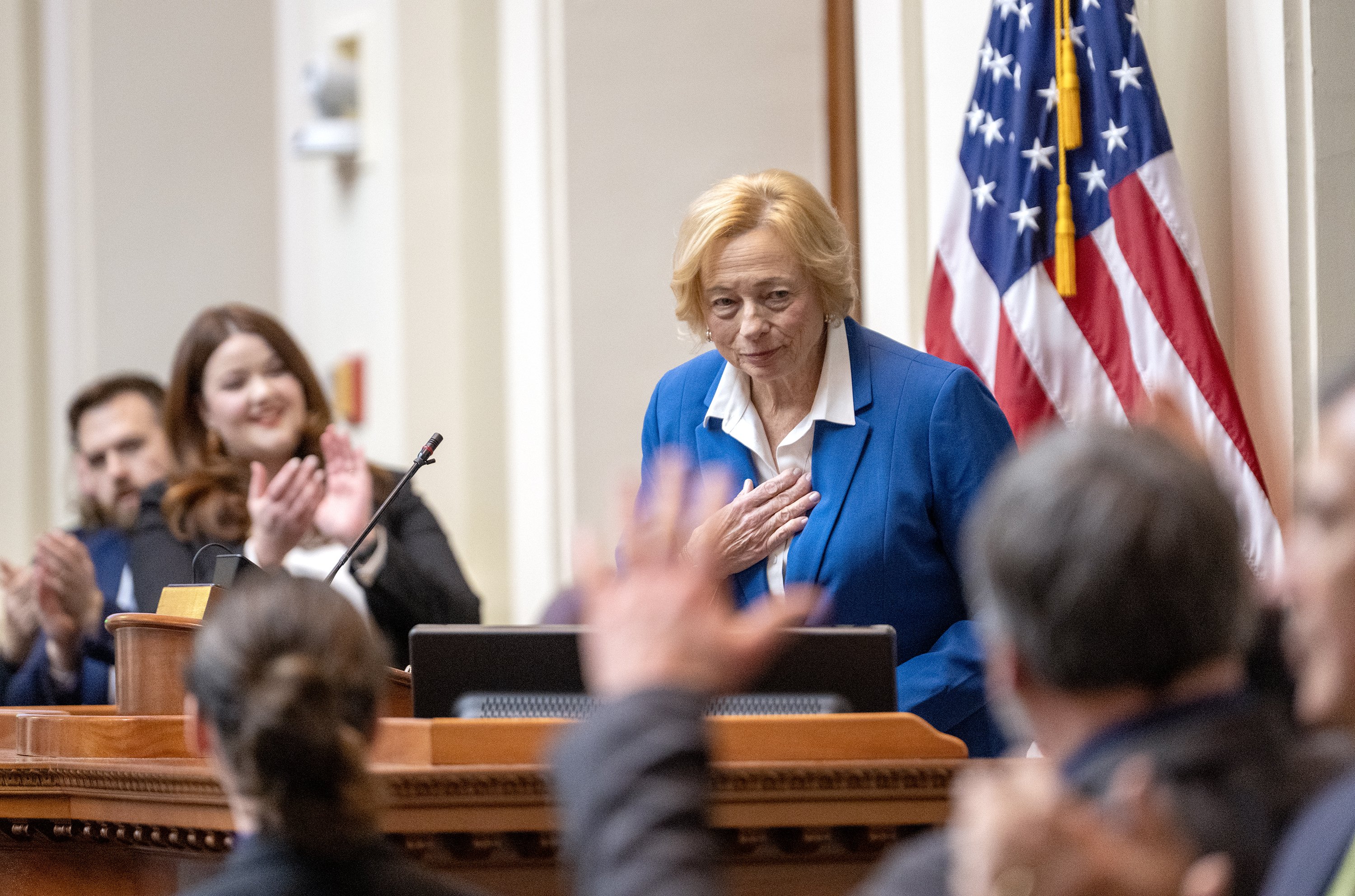
Mills said in a written statement that AI could help improve lives, drive economic growth and solve complex problems, but that it must be used in a “prudent, responsible, and ethical manner.”
“As AI becomes more prevalent in our society, its considerable promise must be balanced against harms — known and unforeseen — that can emerge from its widespread use,” she said. “It’s clear we’re only at the beginning of AI’s evolution.”
The governor has proposed $6.7 million in her supplemental budget to begin implementing some of the recommendations of a 21-member task force she created last year to study the issue.
Her proposal, which is being reviewed by lawmakers, would create a statewide AI literacy campaign; fund local and state partnerships to help municipalities use the technology and offer grants to support job training programs to keep Maine’s workforce competitive and productive in AI-enabled workplaces, among other things.
Lawmakers, meanwhile, are considering bills to address potential harms. In a rare bipartisan move, Republicans and Democrats voted unanimously last month in support of a bill (LD 524) making AI-generated child sex abuse material illegal. But that bill must receive about $55,000 before it can be sent to the governor.
They are also considering bills:
- To require political ads in state and local elections to include a disclosure when AI-generated or altered material is used (LD 517).
- To stop human-like chatbots or social AI companions from interacting with children (LD 2162).
- And to regulate how the technology is used in mental health settings (LD 2082).
Last year, lawmakers passed a measure including AI-generated images in the state’s ban on so-called “revenge porn,” and one requiring companies to inform consumers when they’re interacting with an AI assistant. Mills signed both into law.
Other proposals regulating AI use in medical and dental insurance claims and in setting rents died in committees. So did one prohibiting the use of AI in “dynamic pricing,” in which businesses use the technology to offer different real-time prices to different consumers.
Over 1,000 measures focusing on artificial intelligence were debated in state capitols last year, the National Conference of State Legislatures said.
Some states, such as Colorado and California, are taking steps to enact a broad regulatory framework for AI. California has provisions preventing discrimination in the workplace and requiring watermarks on AI content and transparency around data used to produce reports.
But Maine lawmakers are seeking to address potential harms on a case-by-case basis — at least for now.
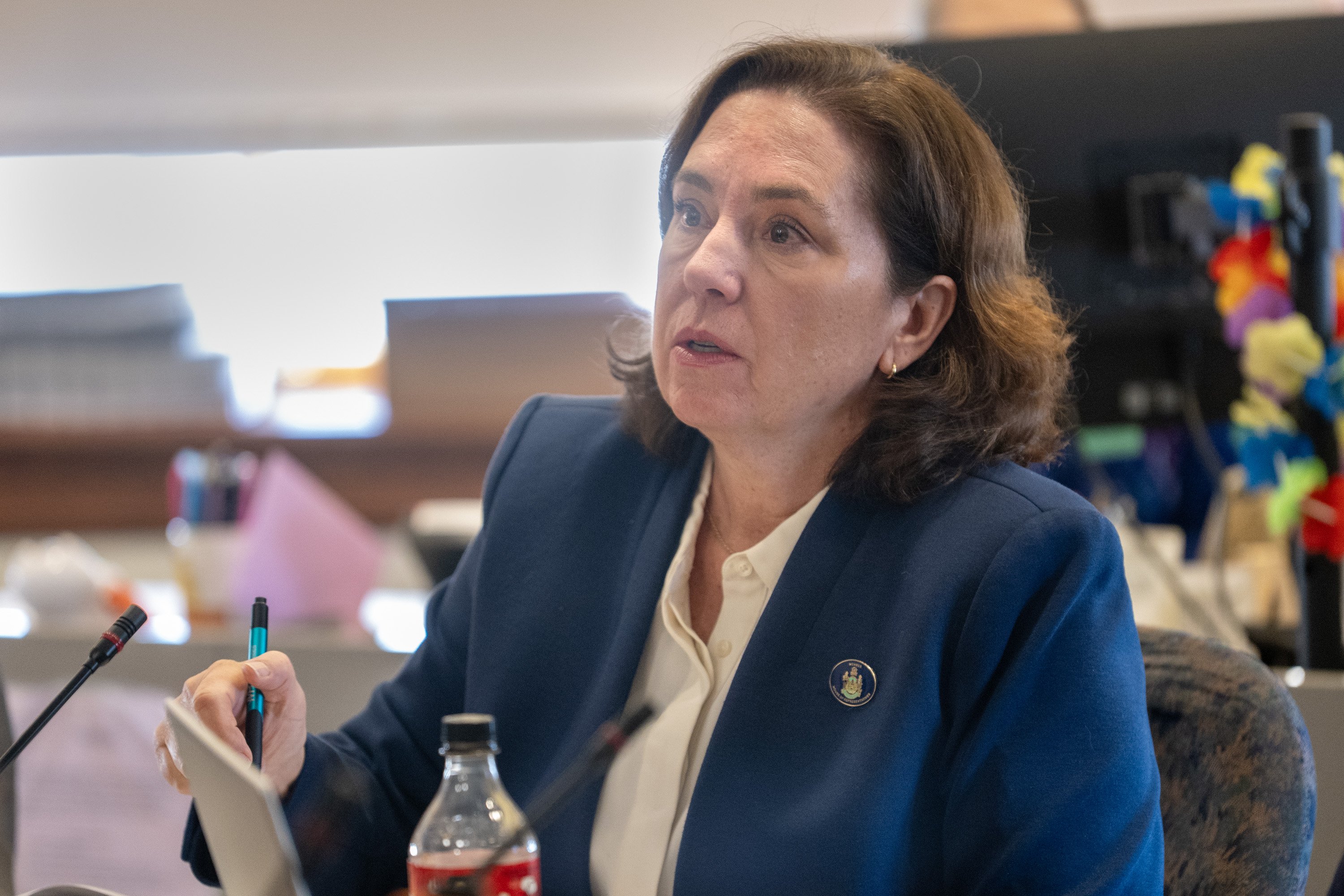
“I think of it as almost a whack-a-mole type of approach where we are developing legislation that very narrowly addresses specific harms of AI,” said Rep. Amy Kuhn, D-Falmouth, who is taking the lead for House Democrats.
“That sort of overarching regulatory framework just feels a little premature for Maine to me right now. I want to see that work its way through the states and let some other states take a swing before we get in there.”
Republicans, however, are worried about overregulation.
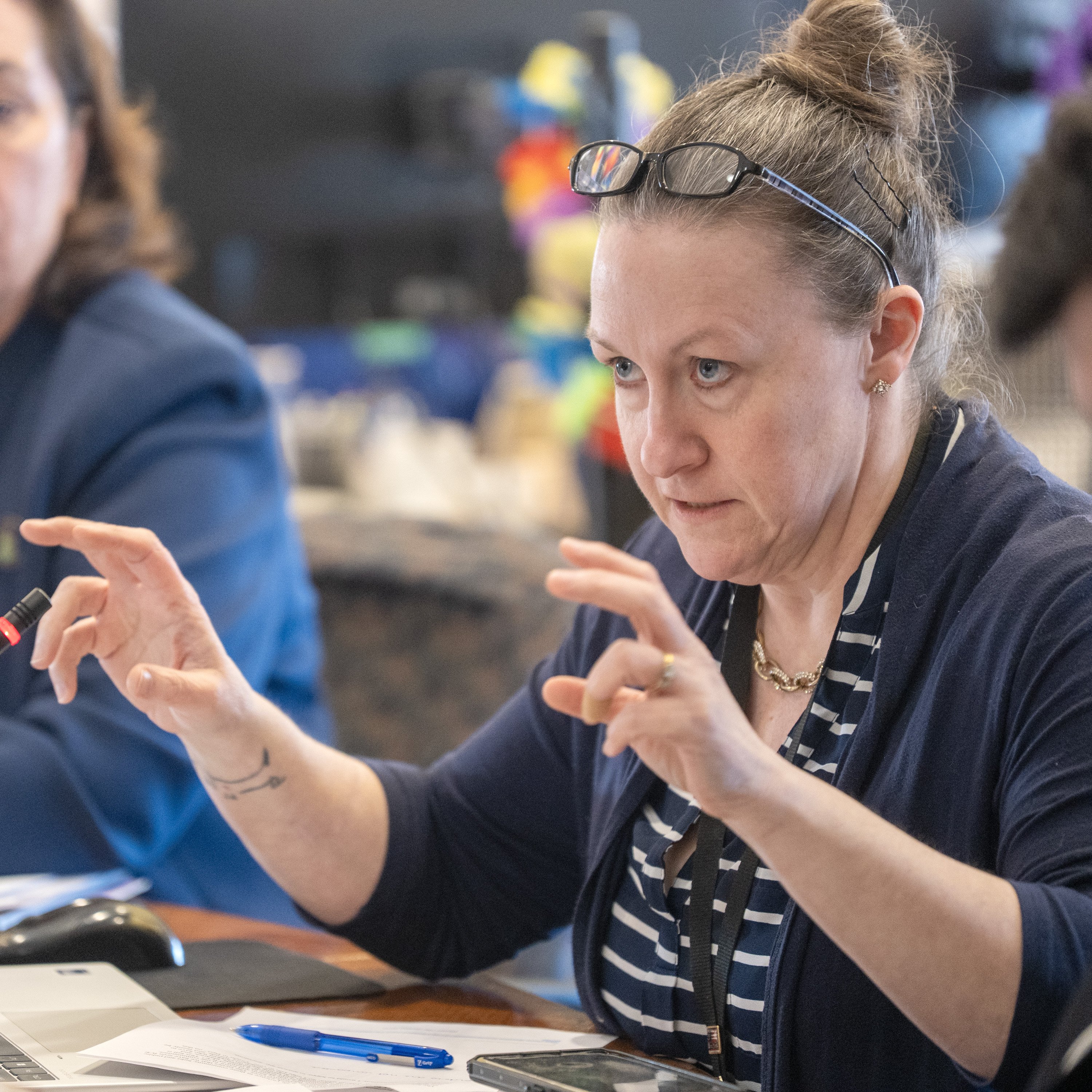
Rep. Jennifer Poirier, R-Skowhegan, said her caucus is focused on protecting children from potential harms associated with AI, but she worries that regulation will never keep up with AI’s evolution.
“You can’t always legislate your way out of everything,” Poirier said. “If you have a minor that has access to AI, and it can be used to harm them in any way, it’s our responsibility as adults to keep them safe. … But we are adults, and we need to use our own common sense.”
A recent poll from Pan Atlantic Research showed widespread concern about AI, with 66% of the 810 Mainers surveyed saying they’re mostly concerned about the potential problems of AI, while 25% were mostly optimistic.
More advanced programs can generate text, analyze reports and create increasingly lifelike images and videos. A recent AI video purporting to show Tom Cruise and Brad Pitt throwing down over the death of convicted sex offender Jeffrey Epstein raised alarm bells in Hollywood over its realism.
Other programs have been used by businesses in ways critics say can be exploitative. Consumer Reports recently published a story about how the online grocery shopping service Instacart used AI to charge certain customers higher prices — up to 23% more — if they were flagged as having higher incomes. Instacart reportedly stopped offering stores this option for “surveillance pricing” after the story was published in December.
A lobbying effort is underway to promote AI regulation in Maine. The “Protect What’s Human” campaign launched a website earlier this year, and a spokesperson said they have invested about $210,000 in ads supporting AI regulations. The commercials are targeting Republicans voters in the Bangor and Portland regions. The group is planning to spend another $110,000 on TV, streaming services, social media and podcasts.
Other proposals passed by the Legislature reflect lawmakers’ attempts to get ahead of the AI issue in indirect ways.
The House and Senate have each recently passed a strict data privacy law that would greatly restrict the amount of data — a person’s location, browsing and shopping histories and biometric information, for example— that companies can collect, store and sell. One of the main arguments was that such data can be used to train AI models. However, the chambers will have to iron out the differences between their two versions of the measure, LD 1822, if it is to become law.
And local residents are beginning to grapple with proposed data centers, which have been controversial in other parts of the county because they consume large amounts of water. This is especially true for centers powering AI.
Lawmakers are considering a bill, LD 307, to create a moratorium on such centers and establish a state council to study and review the impact of building them in Maine.
Construction is underway on a data center in Aroostook County, while another is being proposed in Sanford. Others have been proposed in Wiscasset and Lewiston, but did not move forward.
“This whole world is shifting to computer everything,” Poirier said, “and it’s important that we keep up with the times on that.”

Lawmakers are considering two bills that attempt to increase access to dental care in Maine by studying ways to establish specialist residency programs in the state and creating a new license tier with lower educational requirements, a measure that multiple dentists opposed.
LD 2206 would establish an associate dentist license, which would allow a dentist without the equivalent of a U.S. doctoral degree in dentistry — such as a dentist with a bachelor’s degree who trained outside of the U.S. — to practice dentistry under supervision of a licensed dentist.
Under this new license, associate dentists would have a pathway to full licensure if they were in good standing for six consecutive years. There is currently a pathway for foreign-trained dentists to work in Maine, but it requires additional education.
The bill comes as access to Maine dentists has declined. The ranks of dentists decreased from 590 in 2019 to 530 in 2023. Most children in Maine don’t get an annual checkup and cleaning from a dentist, according to a study last year from the University of Southern Maine Muskie School of Public Service and Catherine E. Cutler Institute.
Penobscot Community Health Care, Maine’s largest federally qualified health center, brought the issue to lawmakers after two “very highly qualified” dentists the center hoped to hire were denied licensure by the Maine Board of Dental Practice because they didn’t meet current educational equivalency requirements.
The health center estimated those dentists could have provided 8,000 appointments with patients, according to testimony from Lori Dwyer, president and CEO of Penobscot Community Health Care.
Penobscot Community Health Care, which said it operates the largest dental center in Maine and has a network of 51 workspaces for dental care, emphasized that federally qualified health centers are subject to strict federal oversight, reporting requirements and high standards.
“[Penobscot Community Health Care] would never support a pathway that compromises safety, and they would never hire a clinician that would provide unsafe treatment to patients,” Dwyer wrote in testimony that was read on her behalf to the Legislature’s Health Coverage, Insurance and Financial Services committee.
Northern Light Health also submitted testimony in support, saying the bill would help address workforce shortages and reduce emergency room visits for dental conditions.
“Like most hospitals in Maine, Northern Light Health members are challenged with inappropriate utilization of our emergency rooms by individuals seeking care for dental/tooth pain,” Lisa Harvey-McPherson, vice president of government relations, wrote in her testimony. “Patients generally present with cracked teeth, abscesses, dental caries or tooth eruptions, leading to thousands of emergency room claims for dental related diagnosis codes each year.”
Multiple dentists and dentistry representatives testified against the bill, arguing that there are existing pathways for foreign-trained dentists and that lower standards could set up a two-tiered system in which poorer and more rural residents receive care from dentists with less training.
Dr. Kailee Jorgenson, a licensed dentist who is the clinical director at Portland-based Mainely Teeth and president of the Maine Oral Health Centers Alliance, said the patients most likely to receive care under the proposed pathway are MaineCare recipients, rural residents and children. These patients often have the most complex needs, she said.
“Maine should not create one standard of dentistry for those with resources and another for those without,” Jorgenson told the committee.
Jorgenson and others who testified against the measure said they instead support a second bill, LD 2209, which would study how to expand access to dental care.
LD 2209 would direct the Maine Department of Health and Human Services to consider how to establish dental specialist residency programs in Maine, including for pediatric dentists, oral surgeons and orthodontists. The bill would also require the department to study ways to create a hub-and-spoke model to expand access to services across the state.
“We have a shortage of specialists in Maine, and it doesn’t matter how you’re trying to pay,” said Therese Cahill, executive director of the Maine Dental Association, which represents dentists. “To see an oral surgeon, to see a periodontist, to see an orthodontist, or a pediatric dentist, you’re waiting.”
No one spoke against the bill or submitted testimony in opposition.
The committee will consider both bills during upcoming work sessions when it will decide whether to forward them to the full Legislature. The work sessions had not been scheduled as of Wednesday.
This story was originally published by The Maine Monitor, a nonprofit and nonpartisan news organization. To get regular coverage from The Monitor, sign up for a free Monitor newsletter here.

Nicholas Jacobs is the Goldfarb Family Distinguished Chair in American Government at Colby College, where he also serves as the inaugural director of the Bram Public Policy Lab.
I love a good poll as much as the next person.
It’s why I’ve relied on them throughout my research and teaching. Surveys offer a rare glimpse into attitudes that are otherwise difficult to observe, and in competitive races they can help orient both journalists and voters to what appears to be unfolding. And this Senate race in Maine — it is competitive. I’m itching for clarity.
Polls matter beyond our general academic curiosity. They actually shape the race and our expectations. The findings out of the University of New Hampshire about Graham Platner’s meteoric rise in the Democratic primary have already begun to shape how observers are talking about the Senate race, subtly altering expectations about competitiveness and early advantage. No doubt, donations will follow the topline finding.
But a word of caution is warranted. Polling in Maine is unusually difficult. And yes, you can simply refuse to “trust the polls,” but let me also suggest you don’t have to even go that far: just look at what the pollsters are and are not telling you each time they report results.
Most anyone who cares about polling results knows a few things to check, none more important than the all important margin of error. It offers a useful reminder that polls estimate rather than measure, and that even well-executed surveys contain uncertainty.
Try telling me who’s ahead with just a few dozen people and you’ll see a margin of error in the double-digits; everyone knows know you might as well stop reading. But a small margin of error only reflects precision, not representativeness — and a survey can be statistically tidy while still overlooking meaningful variation within the electorate.
You can get a representative snapshot of what Maine, on average, thinks with a modest sample — about 1,000 of our neighbors. Yet that is rarely what readers or campaigns are focused on in moments like this. We are not just asking what “Maine” thinks. We are asking what primary voters, independents or late-deciding voters think. And that is where interpretation becomes harder.
As attention shifts to those subsamples, the number of respondents quickly shrinks and the margin of error widens. That mechanical inflation is familiar and usually reported. What is discussed far less is whether those smaller groups meaningfully reflect the diversity of voters they are meant to represent — geographically, politically and in terms of engagement with the race. Because, as is often the case, the initial goal was not to survey, say, young people in Maine, but all people in Maine. That distinction creates problems.
When looking at subsamples, the relevant question is not simply how large the margin of error becomes, but how much confidence we should have that the subsample itself captures the electorate we care about. One way researchers evaluate this is by looking beyond sample size to how heavily responses must be weighted and adjusted to reflect that diversity — a process captured in what survey methodologists call “design effects.”
When those adjustments are substantial, the survey contains less independent information than the respondent count suggests, meaning apparent precision can mask deeper uncertainty about how accurate the estimates really are.
Again, the latest UNH survey in Maine offers a useful illustration.
Buried in the methodology statement, the researchers report a design effect of 2.3 and note that they did not adjust their margins of error for what is a pretty major acknowledgement that their sample, however large, needed some help in representing the broader Maine electorate. Put plainly, a design effect of 2.3 means those 1,120 likely voters function statistically more like a sample of about 500 — making the apparent precision of the results considerably overstated.
If the effective sample size is cut substantially, the true uncertainty around candidate support widens. What was a margin of error of about ±2.9 grows quick, to ±4.5. Of course, this might mean that Platner’s lead over Collins in the general election is higher than what the poll estimated, but it also means that, in this case, his lead could be as small as two points.
Specific to the one finding that is drawing substantial media attention, it also means that Platner’s “advantage” among Maine independents is a statistical fantasy. That is because once you start looking at sub-samples, the “penalty” that a design effect has on a poll’s margin of error is even greater.
To begin with, there are only about 164 independents represented in the full sample — a testament to the large design effect, because the poll seems to have captured way more partisans than proportionally exist in the state. The baseline margin of error for that group, to begin with, is ±7.
And then once weighting and design effects are taken into account, the effective number of independent respondents becomes smaller still — in this case, giving us estimates that have an equal chance of being 12 points higher (Platner leads with 59% of independents!) or 12 points lower (Collins has a 15 point advantage!). We just don’t know.
Now, I realize this may sound like unwelcome news to those eager to read the poll as
confirmation of a decisive shift in the race. I look forward to the emails I will receive telling me my “academic caution” is masquerading as excuse-making for Sen. Collins.
But, if anything, the statistically rigorous takeaway remains quite interesting. The same issue with independents I describe above (an ever-shrinking sample size) is just as true for analyzing the subset of Democratic primary voters. Even after accounting for the design effect here, functionally inflating the margin of error on the Democratic primary, Platner’s lead is unequivocal.
Even the most generous read, given that uncertainty, gives Mills just about a third of Democratic primary voters in the survey. The margin may be less precise, and there are still questions about whether the poll captured the broad swath of likely voters, but the signal is unmistakable: he is a credible and competitive challenger.
Statistical caution does not weaken that conclusion, even as it tempers claims of an inevitable victory for one candidate or party.
Platner’s emergence is real. So is the uncertainty surrounding everything beyond it. Acknowledging that uncertainty, though, is the difference between careful interpretation and wishful thinking. And when uncertainty is translated into premature conclusions, the narrative can begin to influence the election before voters do.

Movie Review: ‘Scream 7’ – Catholic Review

Tracking LNG flows as key global gas prices go haywire

How Many of These Epic 1,000-Page Novels Do You Know?

This historian dug up the hidden history of ‘amateur’ blackface in America

Google’s latest Pixel Watches have fallen to their lowest prices ever

Florida High School Football Rankings: Top 25 teams – Oct. 21

Cleary's 21 help Le Moyne down Central Connecticut State 69-64 in OT

How old is Bo Nix? What to know about Oregon quarterback ahead of 2024 NFL Draft

99th annual Pony Swim held in Virginia

Indiana Members Credit Union announced as new anchor tenant at Bottleworks District

China-linked birth tourism under scrutiny as GOP lawmakers press Trump admin for answers

What defence support could Ukraine offer Middle East states amid Iran war?

Warrants served in New Jersey, Pennsylvania as feds look into possible NYC terrorism

Video: Airports Struggle to Staff T.S.A. During Partial Government Shutdown

Before-and-after satellite imagery offers a rare look at damage inside Iran
-

 Wisconsin1 week ago
Setting sail on iceboats across a frozen lake in Wisconsin
-

 Massachusetts6 days ago
Massachusetts man awaits word from family in Iran after attacks
-

 Maryland1 week ago
AM showers Sunday in Maryland
-

 Florida1 week ago
Florida man rescued after being stuck in shoulder-deep mud for days
-

 Pennsylvania4 days ago
Pa. man found guilty of raping teen girl who he took to Mexico
-

 News1 week ago
2 Survivors Describe the Terror and Tragedy of the Tahoe Avalanche
-

 Sports5 days ago
Keith Olbermann under fire for calling Lou Holtz a ‘scumbag’ after legendary coach’s death
-

 Virginia5 days ago
Giants will hold 2026 training camp in West Virginia