Northeast
Karen Read defense faces 'high-wire' act as retrial's opening statements kick off, experts say

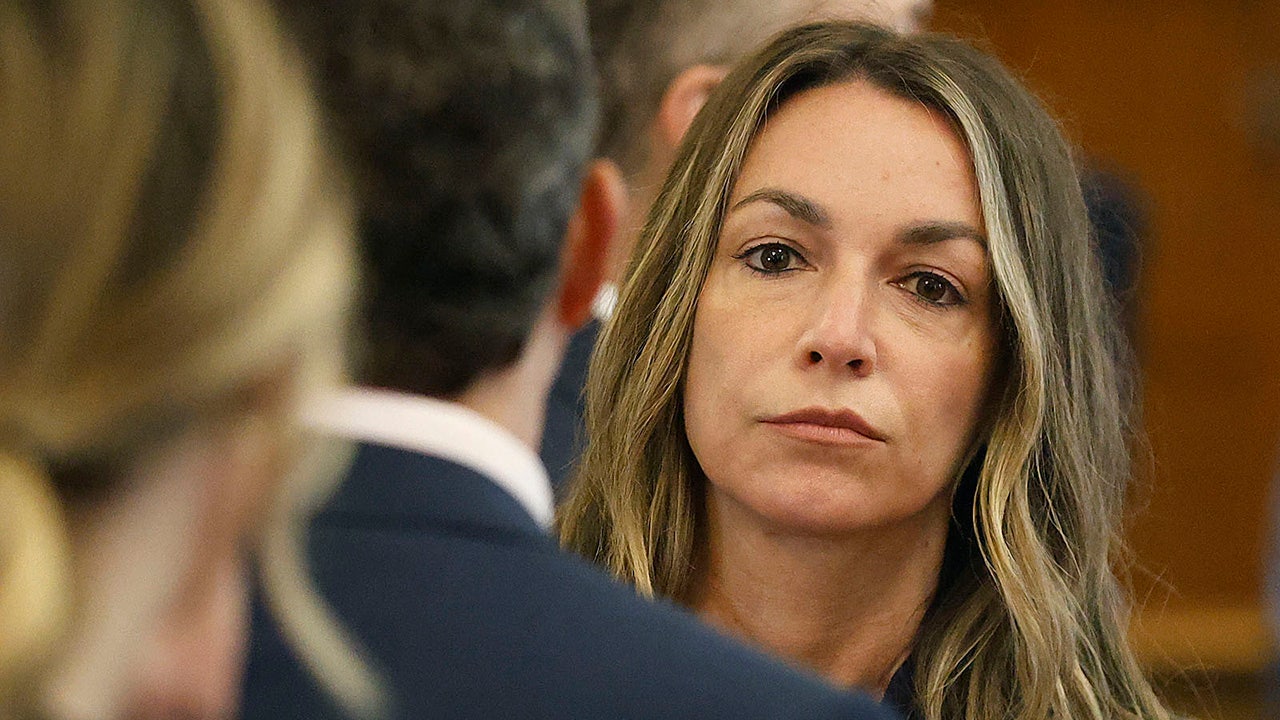
Karen Read’s retrial in the death of her Boston police officer boyfriend, John O’Keefe, kicks off Tuesday with opening statements, months after jurors deadlocked on the case and prosecutors had to start over. But experts expect a tough fight for the former financial analyst.
Read, 45, is charged with murder, manslaughter and fleeing the scene for allegedly striking O’Keefe with her Lexus SUV during a snowstorm on Jan. 29, 2022. He was found on fellow officer Brian Albert’s front lawn hours later with signs of hypothermia and traumatic injuries to his head.
Read has pleaded not guilty, denied killing O’Keefe and alleged she is being framed, attempting to sow reasonable doubt in prosecutors’ claims and asserting that someone else killed O’Keefe and had ties to and influence over the investigation.
Albert hosted an after-party that evening, inviting a group of friends and acquaintances to drop by after the local bars closed at midnight. Attendees testified that O’Keefe never came inside.
UNFAZED KAREN READ STARES DOWN LINGERING QUESTIONS ABOUT ‘DOG BITES,’ TEXTS WITH RETRIAL READY FOR KICKOFF
Karen Read’s booking photo (Massachusetts State Police)
Special prosecutor Hank Brennan and lead defense attorney Alan Jackson are slated to begin opening statements Tuesday. Experts say observers should expect fireworks.
For the retrial, Judge Beverly Cannone has placed limits on how the defense can raise its theory that an alternate perpetrator is responsible for O’Keefe’s death.
“Like a high-wire specialist, Alan is going to dance the line,” said Linda Kenney Baden, a high-profile defense attorney who has been following the case. “Sometimes when you do that, you fall off or, in this case, Brennan is going to try to push him off objecting.”
GET REAL-TIME UPDATES DIRECTLY ON THE TRUE CRIME HUB
John O’Keefe (Courtesy of Karen Read)
She said limiting what the defense can say in their opening about a potential third-party culprit is a severe hurdle for Read’s team.
“Judge Cannone is going to cut the defense off at its kneecaps,” she said. She noted that David Yannetti, another one of Read’s lawyers, opened the first trial by claiming she had been framed.
KAREN READ AND JOHN O’KEEFE: INSIDE EVOLUTION OF BOSTON MURDER MYSTERY SINCE JULY MISTRIAL
“She did not cause his death, and that means that somebody else did,” Yannetti told the court in April 2024.
He pointed to the controversial lead investigator, Massachusetts State Trooper Michael Proctor, who was fired last month as a result of an internal investigation into his conduct.
Karen Read is shown with her attorneys, David Yannetti, left, and Alan Jackson during jury selection at Norfolk Superior Court in Dedham, Mass., on April 15, 2025. (Nancy Lane/Boston Herald via AP/Pool)
Now that Proctor is no longer a member of law enforcement, the prosecution actually may have an easier time overcoming his sultry text messages in the eyes of the jury, according to Neama Rahmani, a former federal prosecutor.
KAREN READ PROSECUTOR WANTS TO BLOCK DEFENSE FROM BLAMING AFTER-PARTY GUESTS, PET DOG IN OPENING STATEMENT
“Now that Proctor’s been fired, the prosecution can own these bad facts and get ahead of them,” he said Monday. “By ‘fronting’ the unprofessional and embarrassing evidence impeaching Proctor for the jury, and showing Proctor has been terminated for his misconduct, the commonwealth will have a better chance of securing a conviction this time.”
Retrials tend to go better for prosecutors, who know what to expect from witnesses for the defense, said Andrew Stoltmann, a Chicago-based attorney and adjunct professor at Northwestern University’s School of Law.
Special Assistant District Attorney Hank Brennan introduces himself during jury selection in the murder trial of Karen Read at Norfolk Superior Court in Dedham, Mass., on April 15, 2025. (Nancy Lane/Boston Herald via AP/Pool)
“I think she faces a major uphill climb,” he told Fox News Digital. “They have many witnesses locked into their story. As for a prediction, I say the prosecutors are going to win this case as they are going to be loaded for bear with respect to her expert witnesses.”
Defense experts were key to Read’s strategy in the first trial, when they testified that O’Keefe’s injuries were inconsistent with being struck by an SUV.
Another attendee of the after-party was Brian Higgins, an ATF agent. Higgins and Read exchanged romantic text messages, and he testified that she once kissed him outside O’Keefe’s house.
ATF Agent Brian Higgins speaks during the Karen Read murder trial at Norfolk Superior Court in Dedham, Mass., on May 28, 2024. (Stuart Cahill/Boston Herald via AP/Pool)
Speaking outside the courthouse last week, Read left open the possibility of taking the stand in her own defense, something she opted not to do last year. Since then, she’s given multiple media interviews, appearing on TV and in print to share her side of the story.
Brennan, a specially appointed assistant district attorney brought in to spearhead the second trial, asked the court to appoint a third-party reader to read text messages between the defendant and the victim to the jury in court. Her defense opposed the move in writing Friday, arguing that an appointed reader could potentially drum up unfair prejudice with an over-dramatic inflection.
During the first trial, Massachusetts State Trooper Nick Guarino read the texts. The defense argued that was standard procedure.
Read the defense opposition to ‘independent readers’:
In the months since her first trial ended in a mistrial, the former lead investigator saw himself fired by the Massachusetts State Police over his handling of the investigation, which included sharing confidential materials in text messages that included lewd and unprofessional remarks about Read.
SIGN UP TO GET TRUE CRIME NEWSLETTER
He joked that he’d searched her confiscated phone for nude photos, called her a “c—” and said he wished she’d kill herself.
FOLLOW THE FOX TRUE CRIME TEAM ON X
Judge Beverly J. Cannone addresses potential jurors as jury selection continues for the murder retrial of Karen Read in Norfolk Superior Court, April 14, 2025, in Dedham, Mass. (Pat Greenhouse/Boston Globe via AP/Pool)
The defense also raised evidence-collection and chain-of-custody concerns surrounding Read’s vehicle, fragments of the taillight authorities said they recovered at the scene and other key items.
Close to the time of his death, she allegedly left him a voicemail saying, “I hate you.” The two had also argued the morning before his death, but they went out drinking that night.
A key part of the retrial is expected to include expert testimony about injuries found on O’Keefe’s right arm, which the defense argues were caused by a dog and is potential evidence that he wasn’t killed by a vehicular strike but rather in a fight.
The defense will call Garrett Wing, a dog trainer, and the prosecution will have testimony from Dr. James Crosby.
The trial is expected to last six to eight weeks after taking more than two weeks to seat a jury.
Read could face a maximum of life in prison if convicted.
Read the full article from Here



More than six dozen Connecticut laws addressing the state’s housing growth, absentee ballot rules, availability of AI resources and more will wholly or partially take effect on July 1.
Connecticut laws are passed by the General Assembly during the legislative session each year — this year’s ran from Feb. 4 to May 6. They typically take effect on Jan. 1, July 1 or Oct. 1.
Here’s a look at some of the dozens of laws that will be implemented in July.
Zoning reform
Portions of a wide-ranging housing bill that Gov. Ned Lamont signed into law last year will go into effect on July 1.
Starting that day, towns must allow the development of mixed-use or “transit community middle housing” — a residential building containing anywhere from 2-9 units — on land zoned for mixed-use or commercial use.
Additionally, towns can no longer reject a proposed housing development with up to 16 units due to a lack of off-street parking unless there is a documented adverse impact on public health.
Gov. Ned Lamont signed the omnibus housing bill following last year’s special session, replacing a similar bill that he vetoed during the regular session. Its goal was to address the state’s dire lack of affordable housing. Other measures in it that have already taken effect include a requirement that towns create housing growth plans, an expansion of fair rent commissions and incentives for towns to take steps to allow more housing.
Connecticut AI Academy
The Board of Regents for Higher Education must establish a “Connecticut AI Academy” through Charter Oak State College by Dec. 31. The academy will offer online AI courses, promote digital literacy, prepare students for AI-related careers, offer community resources and help develop workforce training programs.
Senate Bill 5 also requires the establishment of a formal working group to study AI and make recommendations to the legislature. And it requires the state to consider planning around emerging technologies — like AI, quantum computing, or robotics — when creating an economic development strategic plan.
Absentee ballots
No-excuse absentee ballots are now available for all elections starting July 1.
Any voter, including those who are not yet 18 but will be by the day of an election, can request an automatic application for an absentee ballot. Voters will remain on a registry to receive them for all elections unless they are removed from the official registry list.
Connecticut is joining 28 other states that already have no-excuse absentee voting.
House Bill 5001 also says a person can only wear a mask or other covering within 250 feet of a polling place if doing so is “reasonable given the weather conditions” and the person is willing to remove it at request, or if it is for medical or religious purposes.
Psychedelic-assisted therapy
Beginning July 1, any individual who is 18 years or older and meets the clinical criteria is eligible to participate in a psychedelic-assisted therapy pilot program administered by a medical school in the state, currently Yale University.
According to Senate Bill 191, this program will provide qualified patients with MDMA-assisted or psilocybin-assisted therapy as a part of a federal Food and Drug Administration research program.
MDMA, also known as Ecstasy or Molly, is a stimulant with psychedelic properties. Psilocybin is a hallucinogen that is found in some species of mushrooms. These substances are used to treat patients with PTSD, depression and substance abuse disorders.
Bus passes for residents
Public school students in grades 9-12 are eligible for free bus passes through their local and regional boards of education starting July 1.
Senate Bill 9 will provide education boards with grant funding for this program. However, they have to provide financial statements proving that the money was used for transit funding.
The Department of Veterans Affairs is launching a similar program for all veterans in the state also starting July 1.
Breast cancer screening
Starting July 1, the Commissioner of Correction can arrange breast cancer screening, diagnosis and treatment services for incarcerated women at any licensed health care institution that is closer to the correctional facility, rather than being limited to the UConn Health Center.
Senate Bill 391 also says if the commissioner can not provide a required diagnostic and screening mammogram, they can arrange for its provision at a health care institution closer than UConn Health Center.
Connecticut’s only correctional facility for women is York Correctional Institution in Niantic, which is more than 50 miles away from UConn Health Center. There are fewer than 900 women at York.
This story was originally published by the Connecticut Mirror.

FRIENDSHIP, Maine — A federal judge has ordered U.S. Immigration and Customs Enforcement not to relocate a Friendship man who ICE agents arrested Saturday.
Dhavalkumar Kalidas Patel was seized by four ICE agents at Wallace’s Market, which Patel and his wife operate on Harbor Road in Friendship.
His wife said the agents did not say why he was being taken away in handcuffs.
Attorney Audrey Richardson of Greater Boston Legal Services filed a motion for habeas corpus, meaning he is to be brought to a court in person.
U.S. District Court Judge Indira Talwani of Massachusetts issued an emergency order hours after Patel was seized that prohibits him from being moved elsewhere.
“To provide a fair opportunity for the judge who will be randomly assigned to this case to review the merits of the petition and to rule on any contested issues of jurisdiction, unless otherwise ordered by the assigned judge, respondents will not remove the petitioner from the jurisdiction of the United States or transfer petitioner to a judicial district outside that of Massachusetts for a period of at least 72 hours from the time this Order is docketed,” Talwani wrote.
Patel is being held at the Plymouth County Correctional Facility in Plymouth, Massachusetts.
The petition filed by the attorney representing Patel argues that he is being held unlawfully.
No further hearing dates have been scheduled, but the federal government has until July 6 to file a response.
Richardson issued a statement on the arrest.
“This is another example of ICE illegally and illegitimately taking someone who is working hard to support their family,” she said, including a child born in the United States. “The family is a critical part of the fabric of a small community.”
The Patels have operated the store since 2024. The attorney said ICE agents initially did not even identify themselves. They did not say where he was being taken but he was allowed to make a call when they stopped in Scarborough.
Rob Sample, a customer of the store, said he could not understand why such an action was taken.
“We appreciate them,” he said of the Patel family, adding that they work hard to provide a community service by operating the store.
Knox County Sheriff Patrick Polky said ICE notified his department after its action. He noted the agency is not required to notify the department.
Patel is a native of India.
This story appears through a media partnership with Midcoast Villager.
-

 Minneapolis, MN3 minutes ago
Minneapolis City Council member Aisha Chughtai taking mental health leave for a month
-

 Indianapolis, IN11 minutes ago
State police arrest man in connection with two Monument Circle attacks
-

 Pittsburg, PA13 minutes ago
Tech community to Shapiro and Pennsylvania legislators: Wait on data center rules
-
Augusta, GA19 minutes ago
Louise Franklin Sheehan Obituary Jun 26, 2026 – Platt’s Funeral Home
-
Washington, D.C26 minutes ago
DC will pay $50,000 to man detained while protesting guard patrol with ‘Star Wars’ song, record says
-

 Cleveland, OH29 minutes ago
Cleveland Browns Legend Set for Induction into Greater Cleveland Sports Hall of Fame
-

 Austin, TX33 minutes ago
July 4th: CapMetro to waive evening fares
-

 Alabama41 minutes ago
Are fireworks legal in Alabama? 7 explosives that might be allowed


