Boston, MA
City of Boston sues chef Barbara Lynch for $1.7 million in unpaid taxes – The Boston Globe


In the wake of last month’s announcement that she would close and sell her remaining restaurants, chef Barbara Lynch is now being sued by the City of Boston for nearly $1.7 million in unpaid personal property taxes.
According to a lawsuit filed Wednesday in Suffolk Superior Court, the celebrated-but-embattled chef has tallied up a “vast unpaid amount of taxes” across her seven restaurants in Fort Point, the South End, and Beacon Hill that have gone unaddressed for over a decade.
The lawsuit claims that Lynch owes $589,430 in back taxes at No. 9 Park and $156,188 at B&G Oysters that date back to 2011; $515,107 at Menton and $134,714 at Drink that have gone unpaid since 2015; $148,269 at the Butcher Shop unpaid since 2013; $124,995 at Sportello that date back to 2012; and $8,003 in taxes at Stir that have accrued since 2017.
“With the exception of one tax payment for each entity in August 2021,” the suit alleges that Lynch continuously failed to pay personal property taxes, which are assessed on equipment, fixtures, and other business material. Those taxes continue to grow at a rate of $366.94 a day. The city sent final notices to the chef’s seven restaurants in January of this year; in the ensuing months, several of Lynch’s restaurants have accrued over $20,000 more in back taxes.
Lynch, a daughter of South Boston whose trajectory from public housing to the upper echelons of fine dining put her among an elite class of celebrity chefs, has, over the past several years, faced a series of debilitating hardships that have upended her career and her hometown restaurant empire.
In March of 2023, two former employees brought a class-action lawsuit against the James Beard Award-winning chef, claiming she failed to pay out tips to staff after her eateries reopened from pandemic-era closures. Like many restaurants, Lynch’s group applied for federal Paycheck Protection Plan loans to help keep the business afloat in 2020, with South End seafood spot B&G Oysters receiving about $888,974 in PPP loans and Lynch’s Fort Point cocktail bar Drink receiving over $1.3 million, according to the lawsuit, which is still pending.
A month later, over a dozen former employees came forward with reports of longstanding problems in Lynch’s kitchens, reporting that the chef’s inappropriate behaviors and hostile actions had resulted in a toxic workplace culture. Lynch, herself a sexual assault survivor who has written in her memoir about her past troubles with alcohol, denied the allegations, calling them “fantastical.”
“I expressly reject the various false accusations lodged against me that I have behaved inappropriately with employees or crossed professional guideposts that are important to me,” she said in a statement at the time. “I cannot put out all the fires that flare in this high stress environment and my very modest roots allow me to recognize that I’m far from being above reproach.”
But all the controversies took a toll. In the ensuing months, Lynch pulled back from her Boston restaurants, and by September, The Butcher Shop in the South End had gone dark.

In January of this year, Lynch announced that she would close her three Fort Point restaurants — Menton, Sportello, and Drink — and sell The Butcher Shop and Stir to former employees, a move that resulted in the firing of 100 workers. At the time, she said she intended to focus her efforts on running her newest endeavor, The Rudder, a waterfront seafood restaurant in Gloucester, where she lived upstairs.
Six days later, the city filed its final notices to the chef for unpaid taxes.
Then, last month, Lynch shared in an Instagram post that she would be closing The Rudder. By the day’s end, she announced that her remaining Boston restaurants, No. 9 Park and B&G Oysters, would also shutter. In an announcement she released regarding the closures, Lynch said the financial challenges of running restaurants contributed to her decision.
“The harsh realities of the global pandemic and the many difficulties faced calls for significant investment, which neither myself nor my fellow shareholders are positioned to do,” Lynch wrote. “We are working hard to finalize sales that will ensure those much loved entities will carry on in some small way.”
In the court filing, the city requested to file a temporary restraining order against Lynch to preserve assets, ensuring that should a sale of the restaurants go through, any back taxes would be paid.
A representative for Lynch did not respond to a request for comment Wednesday evening.
Sean Cotter of the Globe Staff contributed to this report.
Read the full text of the lawsuit below.
Janelle Nanos can be reached at janelle.nanos@globe.com. Follow her @janellenanos.



Getty
CHARLOTTE, NORTH CAROLINA – NOVEMBER 01: Jayson Tatum #0 of the Boston Celtics reacts in the first quarter during their game against the Charlotte Hornets at Spectrum Center on November 01, 2024 in Charlotte, North Carolina. NOTE TO USER: User expressly acknowledges and agrees that, by downloading and or using this photograph, User is consenting to the terms and conditions of the Getty Images License Agreement. (Photo by Jacob Kupferman/Getty Images)
On Sunday night, the Boston Celtics played the Charlotte Hornets in North Carolina.
The Celtics won by a score of 114-99.
Boston Celtics Star Jayson Tatum Made History

GettyFOXBOROUGH, MASSACHUSETTS – MARCH 26: Jayson Tatum, player of Boston Celtics looks on prior to the international friendly match between Brazil and France at Gillette Stadium on March 26, 2026 in Foxborough, Massachusetts. (Photo by Michael Owens/Getty Images)
Jayson Tatum finished the win with 32 points, five rebounds, eight assists and one block while shooting 12/23 from the field and 5/10 from three-point range in 31 minutes of playing time.
Tatum also made history during the game.
Celtics Stats wrote: “Jayson Tatum scored his 14,000th career point tonight at Charlotte, becoming the ninth player in franchise history to reach that mark.”

GettyBOSTON, MASSACHUSETTS – MARCH 06: Jayson Tatum #0 of the Boston Celtics looks on during the second quarter at TD Garden on March 06, 2026 in Boston, Massachusetts. (Photo by Maddie Meyer/Getty Images)
Tatum is now averaging 20.9 points, 9.1 rebounds, 4.2 assists and 1.1 steals per contest while shooting 39.9% from the field and 32.3% from three-point range in 11 games this season.
Celtics Stats added: “Jayson Tatum recorded a season-high 32 points tonight at Charlotte. It marked his 16th career game with at least 30 points without committing a turnover – the most in franchise history.”

GettyCHARLOTTE, NORTH CAROLINA – NOVEMBER 02: Jayson Tatum #0 of the Boston Celtics dunks against the Charlotte Hornets during the second half of the game at Spectrum Center on November 02, 2024 in Charlotte, North Carolina. (Photo by Grant Halverson/Getty Images)
Celtics After Hornets Victory

GettyDETROIT, MICHIGAN – OCTOBER 26: Jayson Tatum #0 of the Boston Celtics looks on against the Detroit Pistons during the second quarter at Little Caesars Arena on October 26, 2025 in Detroit, Michigan. (Photo by Nic Antaya/Getty Images)
With their win over the Hornets, the Celtics improved to 50-24 in 74 games, which has them as the second seed in the Eastern Conference.
They are in the middle of a three-game winning streak (and have won seven out of their last ten).
On the road, the Celtics have gone 24-13.
Following the Hornets, they will play their next game on Monday night when they visit the Atlanta Hawks at State Farm Arena in Georgia.

GettyBOSTON, MASSACHUSETTS – MARCH 08: Jaylen Brown #7 of the Boston Celtics talks with head coach Joe Mazzulla during the second half against the Los Angeles Lakers at TD Garden on March 08, 2025 in Boston, Massachusetts. The Boston Celtics defeated the Los Angeles Lakers 111-101. (Photo by Elsa/Getty Images)
With Tatum playing like himself, the Celtics will have a real chance to win their second title in three years.
They are coming off a year where they lost to Jalen Brunson and the New York Knicks in the second round of the 2025 NBA playoffs.
Hornets After Boston Loss

GettyCHARLOTTE, NORTH CAROLINA – MARCH 26: (R-L) LaMelo Ball #1 talks with Moussa Diabate #14 of the Charlotte Hornets in the second half against the New York Knicks during their game at Spectrum Center on March 26, 2026 in Charlotte, North Carolina. (Photo by Jacob Kupferman/Getty Images)
The Hornets dropped to 39-36 in 75 games, which has them as the 10th seed in the Eastern Conference.
They are in the middle of a two-game losing skid (but have won seven out of ten).
Ben Stinar Ben Stinar has been covering the NBA for over seven years.
He has written for OnSI, Forbes, Amico Hoops, The Big Lead and had a podcast with former All-Star Jameer Nelson. More about Ben Stinar
More Heavy on Celtics
Loading more stories
Boston, MA
!$+∇√$[+[!LIVESTREAMs!]+] Minnesota Wild vs Boston Bruins Live Free Streams On Tv Channel 2026-03-29
![!$+∇√$[+[!LIVESTREAMs!]+] Minnesota Wild vs Boston Bruins Live Free Streams On Tv Channel 2026-03-29](https://i2.wp.com/encrypted-tbn0.gstatic.com/images?q=tbn%3AANd9GcReQZPBURuIIuh0fPF6YTAqOY-y1_BeWJWzPA&s&ssl=1 "!$+∇√$[+[!LIVESTREAMs!]+] Minnesota Wild vs Boston Bruins Live Free Streams On Tv Channel 2026-03-29")
Minnesota Wild vs Boston Bruins
HERE’S (*WAY TO WATCH*) Minnesota Wild VS Boston Bruins Free LIVE 2026-03-29 Rose Bowl Parade 2026 live: Rose Bowl Parade 2026 look to seize control of thrilling Rose Bowl Parade 2026. Every team in the Rose Bowl Parade 2026 has two wins apiece as we go into the final two game weeks. Rose Bowl Parade 2026 will host Rose Bowl Parade 2026 at Live NHL mAtch Durban’s Kings Park Stadium with the Rose Bowl Parade 2026 a single point ahead of Rose Bowl Parade 2026 in the standings and just one behind leaders Rose Bowl Parade 2026.

Boston Legacy FC vs Utah Royals
Boston Legacy FC vs Utah Royals LIVE GAME: Boston Legacy FC vs Utah Royals look to seize control of thrilling Boston Legacy FC vs Utah Royals. Every team in the Boston Legacy FC vs Utah Royals has two wins apiece as we go into the final two game weeks. Boston Legacy FC vs Utah Royals will host Boston Legacy FC vs Utah Royals at Boston Legacy FC vs Utah Royals Park Stadium with the Boston Legacy FC vs Utah Royals a single point ahead of Boston Legacy FC vs Utah Royals in the standings and just one behind leaders Boston Legacy FC vs Utah Royals.
Page not found

BIIF track: Stars reach personal-best marks, break venue records at Kamehameha – West Hawaii Today

Elder José A. Teixeira to speak at BYU-Idaho winter commencement – East Idaho News

Next up for Illinois? UConn in the Final Four

Is ‘The Bachelorette’ happening? This Carmel contestant weighs in

Florida High School Football Rankings: Top 25 teams – Oct. 21

How old is Bo Nix? What to know about Oregon quarterback ahead of 2024 NFL Draft

Cleary's 21 help Le Moyne down Central Connecticut State 69-64 in OT

99th annual Pony Swim held in Virginia

Indiana Members Credit Union announced as new anchor tenant at Bottleworks District

Video: Iran to Allow More Oil Ships Through Strait of Hormuz, Trump Says

Dem senator warns deportation could let Virginia woman’s illegal immigrant killer ‘escape accountability’

Newsletter: G7 ministers to hold talks on war’s economic fallout
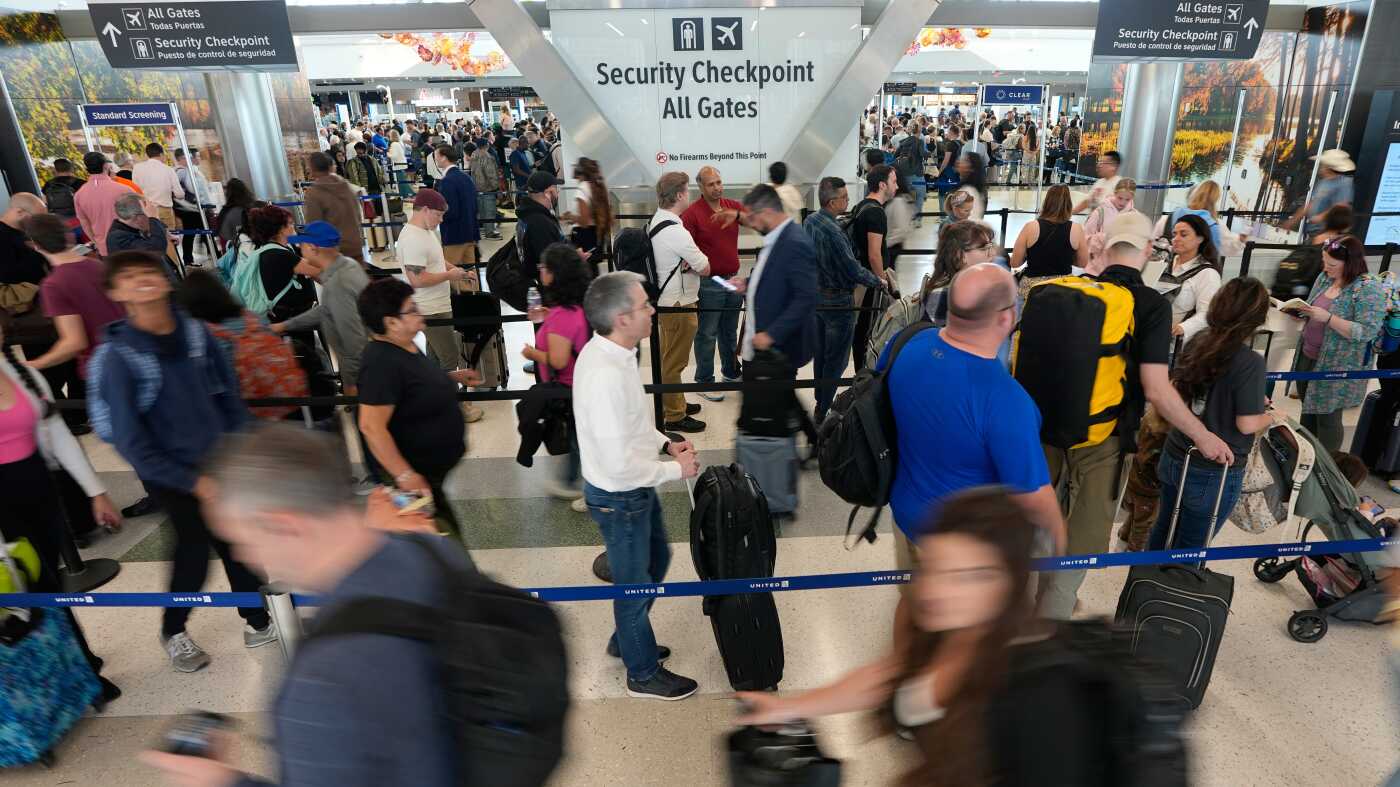
ICE officers could remain at airports after TSA workers are paid

Scathing report claims nation’s oldest labor union ‘betrayed’ MAGA members through ‘shocking’ spending
-

 Sports1 week ago
IOC addresses execution of 19-year-old Iranian wrestler Saleh Mohammadi
-

 Miami, FL4 days ago
Jannik Sinner’s Girlfriend Laila Hasanovic Stuns in Ab-Revealing Post Amid Miami Open
-

 New Mexico1 week ago
Clovis shooting leaves one dead, four injured
-

 Politics1 week ago
Schumer gambit fails as DHS shutdown hits 36 days and airport lines grow
-

 Tennessee7 days ago
Tennessee Police Investigating Alleged Assault Involving ‘Reacher’ Star Alan Ritchson
-

 Minneapolis, MN4 days ago
Boy who shielded classmate during school shooting receives Medal of Honor
-

 Science1 week ago
Record Heat Meets a Major Snow Drought Across the West
-

 Technology1 week ago
YouTube job scam text: How to spot it fast