Boston, MA
Boston Urban Archive started as a hobby but turned into a way to unearth history – The Boston Globe


When I travel and visit people in other cities and states, I’ve realized that many people still don’t grasp the diversity that exists within Boston. Sometimes, I hear questions like “There are Black people in Boston?”
I actually grew up outside of Boston itself, but I would come into the city on weekends and during the summer to see my dad, who was based in Dorchester. He is from Barbados originally — and Dorchester is home to all of these Caribbean communities, which was so exciting and a culture shock to be introduced to when I visited. I loved coming here. I moved to Boston full-time when I was 12 years old and eventually enrolled as an English major with a focus on journalism at UMass Boston.
One semester, I took a music history class on hip-hop with UMass Boston professors Jeffrey Melnick and Akrobatik, who is also a well-known rapper from Boston. They brought in lots of cool artists and speakers. They also told us about this archive that existed in the campus library: the Massachusetts Hip-Hop Archive. So, I made an appointment, walked in, and there were all of these boxes and folders all around the main table. I just went to town in there for an hour and a half.
When you learn about the history of a city, you start to realize that a lot of stories eventually come full circle. They echo across generations. And as I dug through the Massachusetts Hip-Hop Archive, I was reminded that stories of Boston as this multicultural place are often untold. I couldn’t find a place online where you could even access that community history. As I kept finding all of these photos and videos — not just in the hip-hop archive but also in the Boston Public Library and Northeastern University Library, state archival databases, and television archives — I decided to create that resource online: the Boston Urban Archive.
When I launched the Boston Urban Archive’s account on Instagram in 2023, I was strategic with my approach. I wanted it to be a space that was aesthetically pleasing — very neat and organized. And I wanted to captivate people.
One of my earliest posts — which ended up getting something like a million hits — was this old video from the 1980s that featured Mark Wahlberg [a Boston-born actor and rapper] as a child. That video was a way of bringing people in and gaining traction before sharing a wider range of photos, videos, and stories from the archives. I also try to choose stories that have some connection to what is going on in the present. Recently, I posted this mid-1970s clip from a supermarket in Dorchester in which a reporter talks about rising food costs and customers are complaining about $2 steaks.
On Oct. 25, I wanted to publish something about youth in Boston. I had a video clip from 1990 of a reporter speaking with little boys at the Franklin Field housing project on the north side of Franklin Park. The reporter asks them about crime and a curfew that the city had been considering putting into place back then. I really liked the boys’ energy. They said, “Yeah, this is our neighborhood and if there’s a curfew, we’re probably not gonna abide by it, but we’re gonna be playing basketball and minding our own business.” When I heard that, I chuckled a little bit, and I decided to use that bit as the intro to another clip that showed the boys playing basketball. Within hours of posting the video on the Instagram account, all of these comments came rolling in, many of them saying the same thing: “RIP EMOE.” There were dozens of them.
So I’m like, “Who’s EMOE?” None of the video descriptions from the archive had information identifying the boys, because they were minors. But then another person commented on the post claiming to be EMoe’s cousin. So I messaged them, and I soon learned that EMoe was the nickname of the boy in the video who made the comment about staying out past curfew playing basketball. His name was Eric Paulding. And in 1997, Paulding was shot while leaving his girlfriend’s house around Franklin Park. I learned that his killing was notable because it came after a two-and-a-half-year period of no juveniles being killed in Boston. He was killed in the same neighborhood where that clip with the reporter took place seven years earlier.
Not long after Paulding’s cousin and I exchanged DMs, his aunt messaged me and said, “Thank you so much for sharing this. It was great for his grandmother to see.” That really hit a soft spot for me. The video clip was over 30 years old. When I imagined Paulding’s grandmother hearing his voice, seeing him, all these years later — I can only imagine how it made her feel.
In the beginning, I had some idea that sharing these archival videos and photos might inspire people from the community to contribute their own memories and information. But I didn’t realize how big this platform would become and that it could be a way of bringing a community together or how it would be this place where we all learn from each other. I’ve learned a lot from the comments. I posted a video of an early 1990s rap group called Joint Ventures, thinking, “Wow, this sounds like something that could’ve come out of New York.” And then the daughter of the group’s lead rapper, MC Fly Ty, commented and said, “That’s my dad! He ended up passing in ’94. Thanks for posting this.” I’ve even seen some folks reconnect with each other in the comments on certain posts! They’ll spot a familiar face, tag their friends, and say, “Oh my gosh, isn’t that Miss So-and-so from when we were kids?”
The Boston Urban Archive began as a hobby, but now it’s opened doors. People watch these videos, study these photos, and ask about the people in them: “Where are they now? What happened to them?”
As a journalist and a writer, I want to be able to answer those questions, to give voice to stories and experiences from the community that haven’t received the recognition that I think they should.
Ebony Gill is the creator of the Boston Urban Archive, which curates archived film, newspapers, documents, and photography from Boston, with a focus on underrepresented communities in the city. Miles Howard is a freelance writer in Boston and the founder of the Walking City Trail. He publishes the weekly hiking newsletter Mind the Moss.


Getty
CHARLOTTE, NORTH CAROLINA – NOVEMBER 01: Jayson Tatum #0 of the Boston Celtics reacts in the first quarter during their game against the Charlotte Hornets at Spectrum Center on November 01, 2024 in Charlotte, North Carolina. NOTE TO USER: User expressly acknowledges and agrees that, by downloading and or using this photograph, User is consenting to the terms and conditions of the Getty Images License Agreement. (Photo by Jacob Kupferman/Getty Images)
On Sunday night, the Boston Celtics played the Charlotte Hornets in North Carolina.
The Celtics won by a score of 114-99.
Boston Celtics Star Jayson Tatum Made History

GettyFOXBOROUGH, MASSACHUSETTS – MARCH 26: Jayson Tatum, player of Boston Celtics looks on prior to the international friendly match between Brazil and France at Gillette Stadium on March 26, 2026 in Foxborough, Massachusetts. (Photo by Michael Owens/Getty Images)
Jayson Tatum finished the win with 32 points, five rebounds, eight assists and one block while shooting 12/23 from the field and 5/10 from three-point range in 31 minutes of playing time.
Tatum also made history during the game.
Celtics Stats wrote: “Jayson Tatum scored his 14,000th career point tonight at Charlotte, becoming the ninth player in franchise history to reach that mark.”

GettyBOSTON, MASSACHUSETTS – MARCH 06: Jayson Tatum #0 of the Boston Celtics looks on during the second quarter at TD Garden on March 06, 2026 in Boston, Massachusetts. (Photo by Maddie Meyer/Getty Images)
Tatum is now averaging 20.9 points, 9.1 rebounds, 4.2 assists and 1.1 steals per contest while shooting 39.9% from the field and 32.3% from three-point range in 11 games this season.
Celtics Stats added: “Jayson Tatum recorded a season-high 32 points tonight at Charlotte. It marked his 16th career game with at least 30 points without committing a turnover – the most in franchise history.”

GettyCHARLOTTE, NORTH CAROLINA – NOVEMBER 02: Jayson Tatum #0 of the Boston Celtics dunks against the Charlotte Hornets during the second half of the game at Spectrum Center on November 02, 2024 in Charlotte, North Carolina. (Photo by Grant Halverson/Getty Images)
Celtics After Hornets Victory

GettyDETROIT, MICHIGAN – OCTOBER 26: Jayson Tatum #0 of the Boston Celtics looks on against the Detroit Pistons during the second quarter at Little Caesars Arena on October 26, 2025 in Detroit, Michigan. (Photo by Nic Antaya/Getty Images)
With their win over the Hornets, the Celtics improved to 50-24 in 74 games, which has them as the second seed in the Eastern Conference.
They are in the middle of a three-game winning streak (and have won seven out of their last ten).
On the road, the Celtics have gone 24-13.
Following the Hornets, they will play their next game on Monday night when they visit the Atlanta Hawks at State Farm Arena in Georgia.

GettyBOSTON, MASSACHUSETTS – MARCH 08: Jaylen Brown #7 of the Boston Celtics talks with head coach Joe Mazzulla during the second half against the Los Angeles Lakers at TD Garden on March 08, 2025 in Boston, Massachusetts. The Boston Celtics defeated the Los Angeles Lakers 111-101. (Photo by Elsa/Getty Images)
With Tatum playing like himself, the Celtics will have a real chance to win their second title in three years.
They are coming off a year where they lost to Jalen Brunson and the New York Knicks in the second round of the 2025 NBA playoffs.
Hornets After Boston Loss

GettyCHARLOTTE, NORTH CAROLINA – MARCH 26: (R-L) LaMelo Ball #1 talks with Moussa Diabate #14 of the Charlotte Hornets in the second half against the New York Knicks during their game at Spectrum Center on March 26, 2026 in Charlotte, North Carolina. (Photo by Jacob Kupferman/Getty Images)
The Hornets dropped to 39-36 in 75 games, which has them as the 10th seed in the Eastern Conference.
They are in the middle of a two-game losing skid (but have won seven out of ten).
Ben Stinar Ben Stinar has been covering the NBA for over seven years.
He has written for OnSI, Forbes, Amico Hoops, The Big Lead and had a podcast with former All-Star Jameer Nelson. More about Ben Stinar
More Heavy on Celtics
Loading more stories
Boston, MA
!$+∇√$[+[!LIVESTREAMs!]+] Minnesota Wild vs Boston Bruins Live Free Streams On Tv Channel 2026-03-29
![!$+∇√$[+[!LIVESTREAMs!]+] Minnesota Wild vs Boston Bruins Live Free Streams On Tv Channel 2026-03-29](https://i2.wp.com/encrypted-tbn0.gstatic.com/images?q=tbn%3AANd9GcReQZPBURuIIuh0fPF6YTAqOY-y1_BeWJWzPA&s&ssl=1 "!$+∇√$[+[!LIVESTREAMs!]+] Minnesota Wild vs Boston Bruins Live Free Streams On Tv Channel 2026-03-29")
Minnesota Wild vs Boston Bruins
HERE’S (*WAY TO WATCH*) Minnesota Wild VS Boston Bruins Free LIVE 2026-03-29 Rose Bowl Parade 2026 live: Rose Bowl Parade 2026 look to seize control of thrilling Rose Bowl Parade 2026. Every team in the Rose Bowl Parade 2026 has two wins apiece as we go into the final two game weeks. Rose Bowl Parade 2026 will host Rose Bowl Parade 2026 at Live NHL mAtch Durban’s Kings Park Stadium with the Rose Bowl Parade 2026 a single point ahead of Rose Bowl Parade 2026 in the standings and just one behind leaders Rose Bowl Parade 2026.

Boston Legacy FC vs Utah Royals
Boston Legacy FC vs Utah Royals LIVE GAME: Boston Legacy FC vs Utah Royals look to seize control of thrilling Boston Legacy FC vs Utah Royals. Every team in the Boston Legacy FC vs Utah Royals has two wins apiece as we go into the final two game weeks. Boston Legacy FC vs Utah Royals will host Boston Legacy FC vs Utah Royals at Boston Legacy FC vs Utah Royals Park Stadium with the Boston Legacy FC vs Utah Royals a single point ahead of Boston Legacy FC vs Utah Royals in the standings and just one behind leaders Boston Legacy FC vs Utah Royals.

How to watch TCU vs. South Carolina women’s basketball Elite Eight: TV, streaming

Argus Leader First/Second Five: South Dakota’s best girls high school basketball players

Tracking every Tennessee Titans pre-NFL draft visit for 2026

Scouting the women’s NCAA Elite 8 contest between Michigan and Texas

Rockslide caught on camera during Southern Utah wedding

Florida High School Football Rankings: Top 25 teams – Oct. 21

How old is Bo Nix? What to know about Oregon quarterback ahead of 2024 NFL Draft

Cleary's 21 help Le Moyne down Central Connecticut State 69-64 in OT

99th annual Pony Swim held in Virginia

Indiana Members Credit Union announced as new anchor tenant at Bottleworks District

Video: Iran to Allow More Oil Ships Through Strait of Hormuz, Trump Says

Dem senator warns deportation could let Virginia woman’s illegal immigrant killer ‘escape accountability’

Newsletter: G7 ministers to hold talks on war’s economic fallout
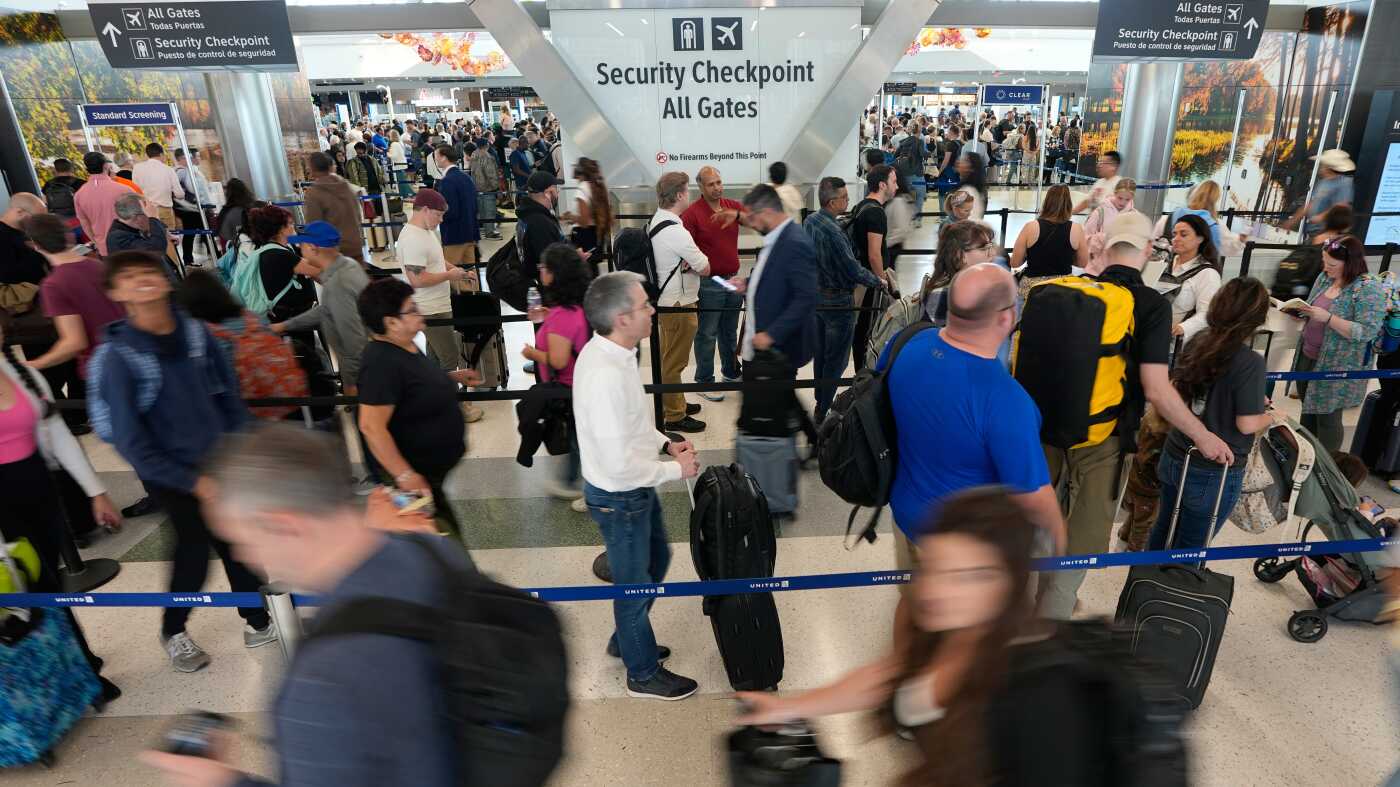
ICE officers could remain at airports after TSA workers are paid

Scathing report claims nation’s oldest labor union ‘betrayed’ MAGA members through ‘shocking’ spending
-

 Sports1 week ago
IOC addresses execution of 19-year-old Iranian wrestler Saleh Mohammadi
-

 Miami, FL4 days ago
Jannik Sinner’s Girlfriend Laila Hasanovic Stuns in Ab-Revealing Post Amid Miami Open
-

 New Mexico1 week ago
Clovis shooting leaves one dead, four injured
-

 Politics1 week ago
Schumer gambit fails as DHS shutdown hits 36 days and airport lines grow
-

 Tennessee7 days ago
Tennessee Police Investigating Alleged Assault Involving ‘Reacher’ Star Alan Ritchson
-

 Minneapolis, MN4 days ago
Boy who shielded classmate during school shooting receives Medal of Honor
-

 Science1 week ago
Record Heat Meets a Major Snow Drought Across the West
-

 Technology1 week ago
YouTube job scam text: How to spot it fast