Boston, MA
5 biggest takeaways from Game 3 of Celtics-Mavericks

The Celtics hold off a fourth-quarter rally from the Mavericks to take a commanding 3-0 series lead.
• Download the NBA App
DALLAS — The NBA Finals presented by YouTube TV lacked drama until suspense finally entered the arena with a blast Wednesday, not once, but twice in a frantic fourth quarter and threatened to shake up the series.
The first time: The Dallas Mavericks, down 21 points, turned tornado and ripped through a 22-2 run. Would they actually take the lead?
(They didn’t.)
The second time: Luka Doncic was whistled for his sixth and final foul after colliding with Jaylen Brown with 4:12 left. Would the call be overturned on review?
(It wasn’t.)
And because of that, history now asks this suspenseful question:
When will the Boston Celtics finish the job and make the 18th championship in franchise history official?
No cigars have been lit back in Boston, but the Celtics can smell the aroma from Dallas. Because teams that lead 3-0 in a best-of-seven series are 156-0, including 14-0 in the Finals. Because, aside from that Game 3 fourth-quarter sizzle, the Mavericks haven’t dropped many hints that history will be proven wrong.
Here are five takeaways from the Celtics’ 106-99 win in Game 3 and why the ending is perhaps inevitable:
1. The return of the J in Jayson
The once familiar sight of a high-arching trajectory finishing with a splash finally — and consistently — came to the rescue of Tatum, who until Game 3 couldn’t find a rhythm.
His jumper was good enough to give him a jolt of confidence, to help the Celtics assume early control of the game and to give Boston one more weapon to throw at Dallas.
The Celtics had plenty of help and didn’t need Tatum to score efficiently in the first two games, and a good thing, too, because he was faulty. Not so in Game 3. With the series shifting to Dallas, the Celtics missing Kristaps Porzingis and the Mavericks desperate, a return to form by Tatum would be most welcome by Boston.
Tatum responded. He scored 20 of his 31 points in the first half and constantly countered each overthrow attempt by the Mavericks to assume a big lead. Despite Doncic and Kyrie Irving (combining for 37 points) punishing the Celtics in the half, once the buzzer sounded at the break, the Mavericks had just a one-point advantage, mainly because of Tatum.
By setting the tone, Tatum also set the table for the player who might win Finals MVP …
2. Brown put Dallas (and Doncic) down for the count
The 1-2 punch was complete when Brown took the cue from Tatum and finished the job. Brown was sensational in the second half, and not just because that’s when he scored 24 of his 30 points.
Two plays put it in perspective:
His dunk put the Celtics up 15 near the end of the third quarter and (temporarily) put the Mavericks and American Airlines Center to sleep.
Then, realizing Doncic was one foul away from disqualification, Brown attacked and wisely beat Doncic to the spot, causing the contact that sent Doncic to the bench for good.
Brown also demonstrated what this series has revealed: he’s a tough assignment for Doncic.
Or anybody in that second half (and especially the fourth quarter).
“I think this team has trusted me, especially in this playoffs and those moments to just be who I am,” Brown said. “I felt like I’ve been able to just deliver just by being patient and being poised. Those opportunities have presented themselves, and I’ve been able to take advantage of them.
“But we were able to make plays and find a way to win. And we’ve been in those positions, and we’ve lost. It was great to overcome that with my brother, Jayson, and with our team. That was special.”
So Tatum and Brown, as they’ve done all season, and pretty much through much of their careers together, were two much — 61 points combined.
3. It was all in vain for Irving
After a week of owning up to the obvious — that his impact in this series was lacking — Kyrie Irving turned back into the punishing point producer that everyone saw throughout the postseason.
He had 28 points combined in Games 1 and 2. He had 35 in Game 3. Shaking defenders, reaching his sweet spots on the floor and dropping step-back jumpers, Irving was at times impossible to keep in check.
And in the end, it meant nothing for Dallas — just as Tatum’s poor shooting meant nothing in the first two games for Boston.
The crucial moment for Irving came when Doncic fouled out with four minutes and change remaining. Could he be the savior, compensate for the big absence and give the Mavs a chance in this series?
Irving did bring the Mavericks within a point on a layup moments later. But it was the closest they would get, and Irving never scored another basket, just a pair of free throws, because the Celtics forced him to pass.
“Jrue (Holiday) was picking me up full court,” he said. “They knew they were going to pressure me to get the ball out of my hands.
“I just tried to make the right plays, make sure guys were in the right spots, have them understand that we still have a chance to win this basketball game. That was all I was thinking.”
4. Mavs’ support still lacking
In a decision that could only be described as desperate, Mavs coach Jason Kidd blew the dust off Tim Hardaway Jr. and gave him extended Game 3 minutes. Hardaway fell out of the rotation months ago and only saw 27 minutes in this series.
But Kidd was grasping for answers, which happens when, once again, the roll call for the role players mostly came up empty.
Daniel Gafford, P.J. Washington, Dereck Lively II, Derrick Jones Jr. — players who constantly stepped forth in the postseason and made Doncic’s life easier — were mild at best.
This is their first taste of mid-June hoops, so their struggles are somewhat understandable. They’re clearly no match for what the Celtics are bringing to help Tatum and Brown.
5. No Porzingis, no problem
Porzingis was a scratch due to his latest injury, which was ironic, considering that injuries were what spoiled his time with the Mavericks. What it didn’t do was spoil the Game 3 outcome for the Celtics.
Al Horford and — surprise — Xavier Tillman were enough to keep the Mavericks from taking advantage. Porzingis was especially effective as a rim protector in Games 1 and 2, thwarting the Mavericks with timely blocks and making them think twice before attacking the rim.
There were no abundant dunks off lobs by Lively and Gafford and the rest, once again, even without Porzingis. Horford had a pair of steals and a block.
And Tillman, who was quietly acquired midseason from Memphis, was pressed into duty and responded with a pair of blocks — and his first 3-pointer of these playoffs — in 11 minutes. It was the most important 11 minutes of his career, considering the stakes and the situation.
“To hear the bench going crazy on our end… it was pretty awesome.”
Xavier Tillman on his corner three during Boston’s 3Q run 🙌 pic.twitter.com/Wu6KCpOaSY
— NBA (@NBA) June 13, 2024
“Obviously, I was probably going to play some more,” said Horford. “Then we needed somebody from the bench to come in and give us minutes, and Xavier was amazing tonight. His energy, defensively he held his own, time and time again. He was just ready for the moment.
“It’s not easy being in that position. He came in and he knocks down that big three as well. But defensively he was special. He didn’t get an opportunity the first two games and he has stayed with it, really took advantage of it.”
* * *
Shaun Powell has covered the NBA for more than 25 years. You can e-mail him here, find his archive here and follow him on X.
The views on this page do not necessarily reflect the views of the NBA, its clubs or Warner Bros. Discovery.



Getty
CHARLOTTE, NORTH CAROLINA – NOVEMBER 01: Jayson Tatum #0 of the Boston Celtics reacts in the first quarter during their game against the Charlotte Hornets at Spectrum Center on November 01, 2024 in Charlotte, North Carolina. NOTE TO USER: User expressly acknowledges and agrees that, by downloading and or using this photograph, User is consenting to the terms and conditions of the Getty Images License Agreement. (Photo by Jacob Kupferman/Getty Images)
On Sunday night, the Boston Celtics played the Charlotte Hornets in North Carolina.
The Celtics won by a score of 114-99.
Boston Celtics Star Jayson Tatum Made History

GettyFOXBOROUGH, MASSACHUSETTS – MARCH 26: Jayson Tatum, player of Boston Celtics looks on prior to the international friendly match between Brazil and France at Gillette Stadium on March 26, 2026 in Foxborough, Massachusetts. (Photo by Michael Owens/Getty Images)
Jayson Tatum finished the win with 32 points, five rebounds, eight assists and one block while shooting 12/23 from the field and 5/10 from three-point range in 31 minutes of playing time.
Tatum also made history during the game.
Celtics Stats wrote: “Jayson Tatum scored his 14,000th career point tonight at Charlotte, becoming the ninth player in franchise history to reach that mark.”

GettyBOSTON, MASSACHUSETTS – MARCH 06: Jayson Tatum #0 of the Boston Celtics looks on during the second quarter at TD Garden on March 06, 2026 in Boston, Massachusetts. (Photo by Maddie Meyer/Getty Images)
Tatum is now averaging 20.9 points, 9.1 rebounds, 4.2 assists and 1.1 steals per contest while shooting 39.9% from the field and 32.3% from three-point range in 11 games this season.
Celtics Stats added: “Jayson Tatum recorded a season-high 32 points tonight at Charlotte. It marked his 16th career game with at least 30 points without committing a turnover – the most in franchise history.”

GettyCHARLOTTE, NORTH CAROLINA – NOVEMBER 02: Jayson Tatum #0 of the Boston Celtics dunks against the Charlotte Hornets during the second half of the game at Spectrum Center on November 02, 2024 in Charlotte, North Carolina. (Photo by Grant Halverson/Getty Images)
Celtics After Hornets Victory

GettyDETROIT, MICHIGAN – OCTOBER 26: Jayson Tatum #0 of the Boston Celtics looks on against the Detroit Pistons during the second quarter at Little Caesars Arena on October 26, 2025 in Detroit, Michigan. (Photo by Nic Antaya/Getty Images)
With their win over the Hornets, the Celtics improved to 50-24 in 74 games, which has them as the second seed in the Eastern Conference.
They are in the middle of a three-game winning streak (and have won seven out of their last ten).
On the road, the Celtics have gone 24-13.
Following the Hornets, they will play their next game on Monday night when they visit the Atlanta Hawks at State Farm Arena in Georgia.

GettyBOSTON, MASSACHUSETTS – MARCH 08: Jaylen Brown #7 of the Boston Celtics talks with head coach Joe Mazzulla during the second half against the Los Angeles Lakers at TD Garden on March 08, 2025 in Boston, Massachusetts. The Boston Celtics defeated the Los Angeles Lakers 111-101. (Photo by Elsa/Getty Images)
With Tatum playing like himself, the Celtics will have a real chance to win their second title in three years.
They are coming off a year where they lost to Jalen Brunson and the New York Knicks in the second round of the 2025 NBA playoffs.
Hornets After Boston Loss

GettyCHARLOTTE, NORTH CAROLINA – MARCH 26: (R-L) LaMelo Ball #1 talks with Moussa Diabate #14 of the Charlotte Hornets in the second half against the New York Knicks during their game at Spectrum Center on March 26, 2026 in Charlotte, North Carolina. (Photo by Jacob Kupferman/Getty Images)
The Hornets dropped to 39-36 in 75 games, which has them as the 10th seed in the Eastern Conference.
They are in the middle of a two-game losing skid (but have won seven out of ten).
Ben Stinar Ben Stinar has been covering the NBA for over seven years.
He has written for OnSI, Forbes, Amico Hoops, The Big Lead and had a podcast with former All-Star Jameer Nelson. More about Ben Stinar
More Heavy on Celtics
Loading more stories
Boston, MA
!$+∇√$[+[!LIVESTREAMs!]+] Minnesota Wild vs Boston Bruins Live Free Streams On Tv Channel 2026-03-29
![!$+∇√$[+[!LIVESTREAMs!]+] Minnesota Wild vs Boston Bruins Live Free Streams On Tv Channel 2026-03-29](https://i2.wp.com/encrypted-tbn0.gstatic.com/images?q=tbn%3AANd9GcReQZPBURuIIuh0fPF6YTAqOY-y1_BeWJWzPA&s&ssl=1 "!$+∇√$[+[!LIVESTREAMs!]+] Minnesota Wild vs Boston Bruins Live Free Streams On Tv Channel 2026-03-29")
Minnesota Wild vs Boston Bruins
HERE’S (*WAY TO WATCH*) Minnesota Wild VS Boston Bruins Free LIVE 2026-03-29 Rose Bowl Parade 2026 live: Rose Bowl Parade 2026 look to seize control of thrilling Rose Bowl Parade 2026. Every team in the Rose Bowl Parade 2026 has two wins apiece as we go into the final two game weeks. Rose Bowl Parade 2026 will host Rose Bowl Parade 2026 at Live NHL mAtch Durban’s Kings Park Stadium with the Rose Bowl Parade 2026 a single point ahead of Rose Bowl Parade 2026 in the standings and just one behind leaders Rose Bowl Parade 2026.

Boston Legacy FC vs Utah Royals
Boston Legacy FC vs Utah Royals LIVE GAME: Boston Legacy FC vs Utah Royals look to seize control of thrilling Boston Legacy FC vs Utah Royals. Every team in the Boston Legacy FC vs Utah Royals has two wins apiece as we go into the final two game weeks. Boston Legacy FC vs Utah Royals will host Boston Legacy FC vs Utah Royals at Boston Legacy FC vs Utah Royals Park Stadium with the Boston Legacy FC vs Utah Royals a single point ahead of Boston Legacy FC vs Utah Royals in the standings and just one behind leaders Boston Legacy FC vs Utah Royals.

Elder José A. Teixeira to speak at BYU-Idaho winter commencement – East Idaho News

Next up for Illinois? UConn in the Final Four

Is ‘The Bachelorette’ happening? This Carmel contestant weighs in

Iowa basketball forward planning to return if granted extra season

Minnesota Twins vs Kansas City Royals Live Stream: How to Watch MLB

Florida High School Football Rankings: Top 25 teams – Oct. 21

How old is Bo Nix? What to know about Oregon quarterback ahead of 2024 NFL Draft

Cleary's 21 help Le Moyne down Central Connecticut State 69-64 in OT

99th annual Pony Swim held in Virginia

Indiana Members Credit Union announced as new anchor tenant at Bottleworks District

Video: Iran to Allow More Oil Ships Through Strait of Hormuz, Trump Says

Dem senator warns deportation could let Virginia woman’s illegal immigrant killer ‘escape accountability’

Newsletter: G7 ministers to hold talks on war’s economic fallout
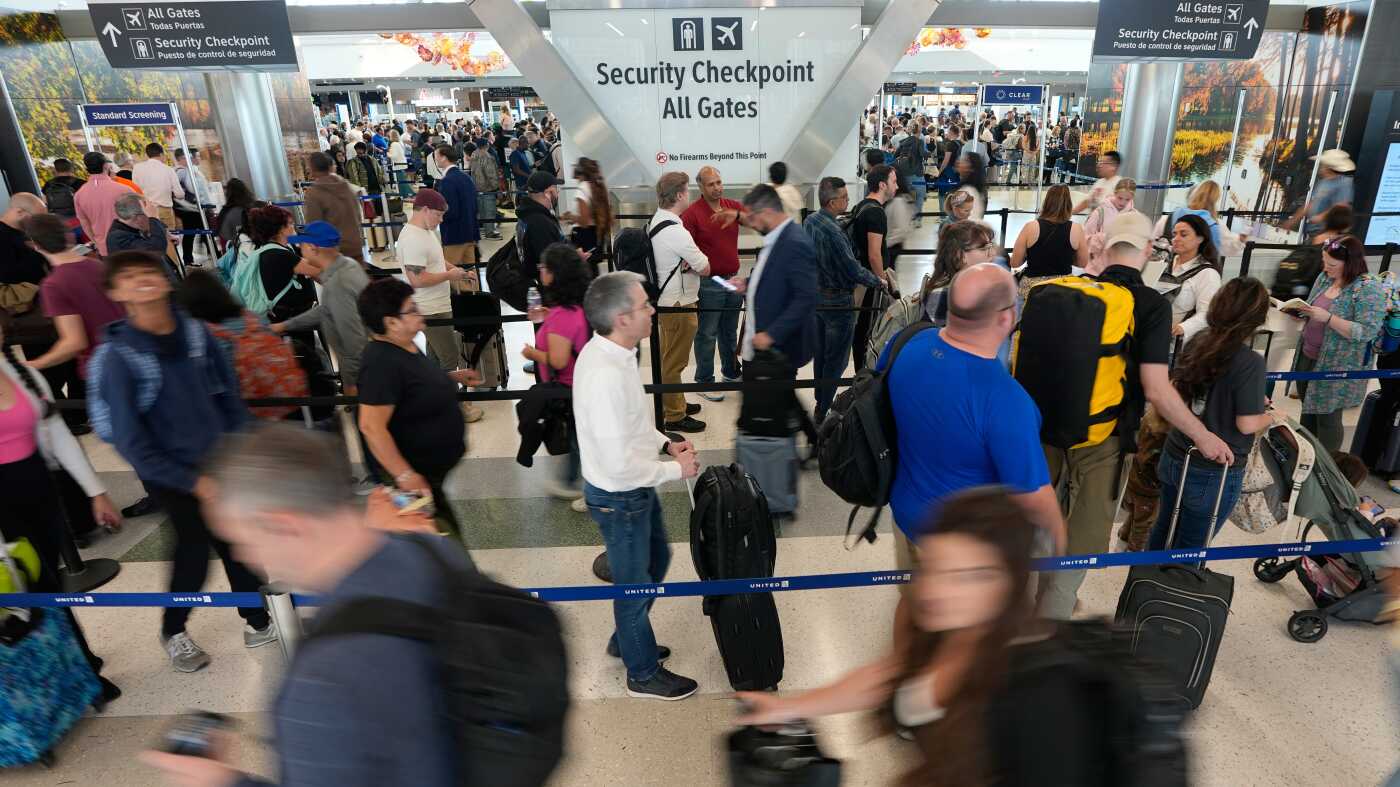
ICE officers could remain at airports after TSA workers are paid

Scathing report claims nation’s oldest labor union ‘betrayed’ MAGA members through ‘shocking’ spending
-

 Sports1 week ago
IOC addresses execution of 19-year-old Iranian wrestler Saleh Mohammadi
-

 Miami, FL4 days ago
Jannik Sinner’s Girlfriend Laila Hasanovic Stuns in Ab-Revealing Post Amid Miami Open
-

 New Mexico1 week ago
Clovis shooting leaves one dead, four injured
-

 Politics1 week ago
Schumer gambit fails as DHS shutdown hits 36 days and airport lines grow
-

 Tennessee7 days ago
Tennessee Police Investigating Alleged Assault Involving ‘Reacher’ Star Alan Ritchson
-

 Minneapolis, MN4 days ago
Boy who shielded classmate during school shooting receives Medal of Honor
-

 Science1 week ago
Record Heat Meets a Major Snow Drought Across the West
-

 Technology1 week ago
YouTube job scam text: How to spot it fast